REVIEW · PARIS
Paris: Montmartre Hill & Sacré-Cœur Guided Walking Tour
Book on GetYourGuide →Operated by Z-Ocean Tours LLC · Bookable on GetYourGuide
Montmartre is more than a postcard view. This guided walk turns Rue Abbesses and Place du Tertre into a story you can follow, with upbeat street-level history and an easy-to-grasp route up to Sacré-Cœur. I like that you’re not just looking around; you’re learning how this neighborhood shaped famous names and legends tied to Paris art and faith.
Two things I especially like: you get a hilltop panorama at Sacré-Cœur built into the route, and you hear artist-and-saint anecdotes that make the winding streets feel less random. One thing to think about first: it’s an uphill walking tour, and while there’s a funicular option, the exact effort can still vary depending on how your guide works the route and stairs.
If you want a small-group outing (limited to 10) led in English and focused on real streets—not just big monuments—you’re in the right place. Bring comfortable shoes, plan for climbing, and treat the tour as a practical way to see Montmartre with context.
In This Review
- Key things that make this Montmartre tour work
- Why Montmartre plus Sacré-Cœur is a smart use of 2 hours
- Finding the meeting point near Moulin Rouge (and starting on time)
- The climb through Montmartre: narrow streets, real views, real effort
- Place du Tertre: the famous square you should actually understand
- Rue Abbesses: where the route turns from sights to story
- Sacré-Cœur at the top: panoramic reward and one important rule
- How much walking should you expect (funicular is there for a reason)
- Guide quality and pacing: what you can do to protect your experience
- Price and value: is $50 worth it for Montmartre?
- Who this tour suits best (and who should skip it)
- Should you book this Montmartre Hill and Sacré-Cœur tour?
- FAQ
- Where do I meet the guide?
- How long is the walking tour?
- Is this a small group?
- What language is the tour in?
- Is the funicular included?
- Does the price include food and drinks?
- Are tickets or entry included for Sacré-Cœur?
- Can I take photos inside Sacré-Cœur?
- Is the tour mostly flat or uphill?
- Is there free cancellation, and can I pay later?
Key things that make this Montmartre tour work
- Small group (up to 10): easier questions, better pacing, less chaos in tight streets.
- Montmartre-to-Sacré-Cœur route: you’re walking up with a purpose, not wandering.
- Street stories about Van Gogh, Picasso, and Toulouse-Lautrec: the neighborhood becomes a living timeline.
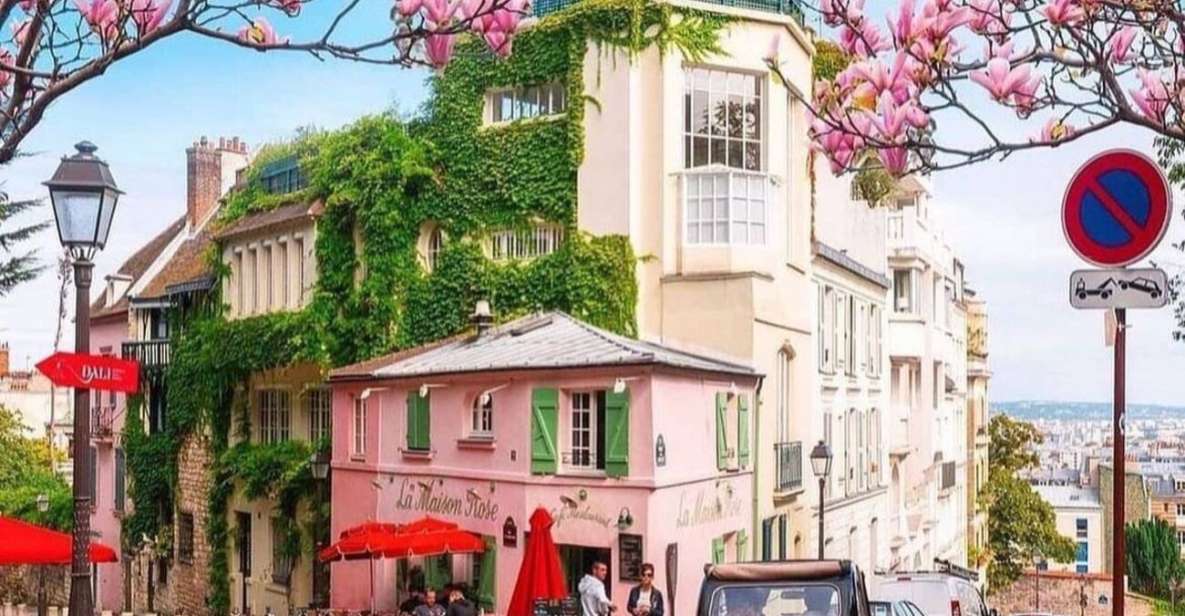
- Place du Tertre + Rue Abbesses stop: you get the classic sights plus the meaning behind them.
- Sacré-Cœur panoramic viewpoint: you finish with Paris views and a clear mental map for the area.
Why Montmartre plus Sacré-Cœur is a smart use of 2 hours
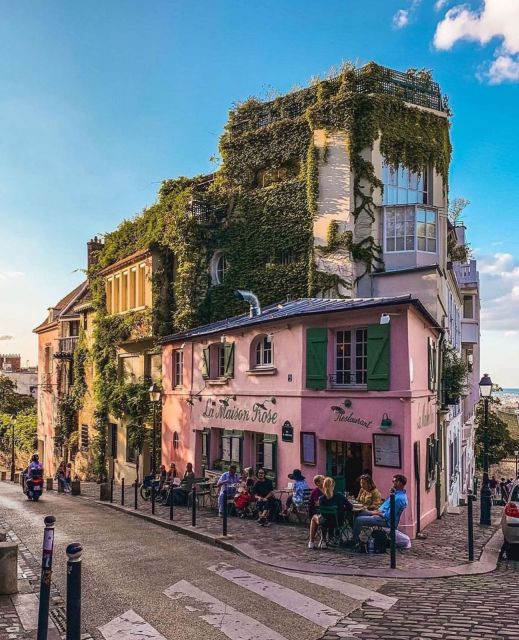
Montmartre has that rare mix: quirky streets, famous artists, religious symbolism, and the kind of view that makes you pause even if you’ve seen Paris from other angles. The best part of this tour is that it doesn’t treat Sacré-Cœur as a lone stop. You climb through the neighborhood first, so the basilica at the top feels earned.
The tour is built around a simple idea: walk the hillsides where stories happened, then reward yourself with the vista. At a duration of about 2 hours, it’s a good fit if you want Montmartre without letting the day disappear into slow wandering and lines.
You’re paying about $50 per person, and the value is mostly in two areas: interpretation (how to connect street corners to famous lives) and route guidance (how to move through Montmartre efficiently). If you’re the type who enjoys understanding what you’re seeing, this is money well spent. If you’d rather purely roam and read plaques at your own speed, you might not feel the same pull.
You can also read our reviews of more walking tours in Paris



Finding the meeting point near Moulin Rouge (and starting on time)
The meeting point is straightforward once you know what to look for: Exit Via Blanche metro station, and your guide meets you in front of the Moulin Rouge. That’s a useful anchor because it’s a major landmark and easy to confirm with a phone map.
I like that the tour starts in a place where you can realistically arrive early, orient yourself, and settle in. Montmartre streets get confusing fast, so getting the first step correct matters. If you’ve got a tight schedule, arriving 10 minutes early is your best insurance.
Also, the tour is listed as small group and live guided, which generally means you’ll benefit from a quick intro and clear handoff into the neighborhood. In practice, the quality of that first handoff depends on your guide, and the pace can vary—one guide named Farhan was praised for moving at the group’s pace and sending people to special spots, while another named Robin was reported by one booking to have been hard to hear and to have shortened the time on the hill.
The climb through Montmartre: narrow streets, real views, real effort
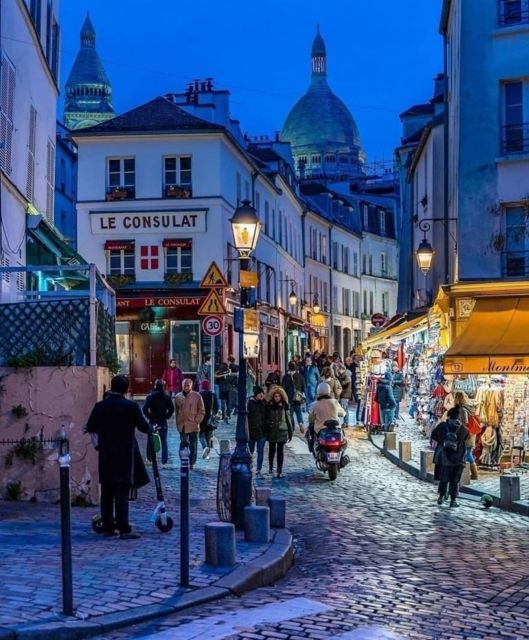
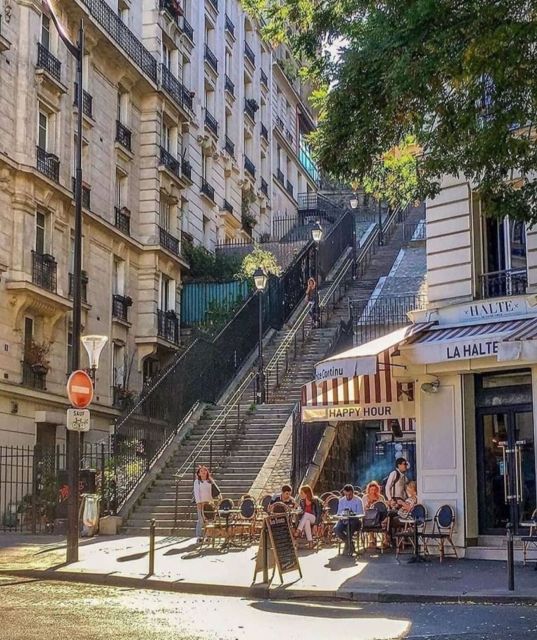
Once you start walking, the tour shifts from “sightseeing” to “navigation.” Your guide leads you through the winding, narrow streets of the artist area and helps you connect what you see to who lived and worked here.
You’ll also hear the tour’s core themes: the neighborhood’s history through painters, singers, and saints, plus the kind of offbeat Paris antics linked to famous names like Picasso, Van Gogh, and Toulouse-Lautrec. Even if you know only one or two of them, the storytelling tends to give you enough context to recognize why Montmartre became a magnet for art.
One practical point: this is uphill walking. Comfortable shoes are not optional. If your legs are feeling it, don’t tough-guy your way through. The tour specifically notes that if the hill is too steep, you can take the funicular for the steepest section. That matters because Montmartre’s “short distance” still turns into real effort.
Place du Tertre: the famous square you should actually understand
A key stop is Place du Tertre, one of Montmartre’s best-known squares. It’s the type of place people take a quick photo of and then rush through—but with a guide, you get more than a postcard moment. This stop works because it acts like a social stage for the neighborhood’s artist identity.
What I like here is the way the tour balances character and clarity. You’re standing in the center of Montmartre’s public face, then moving into the streets that feel lived-in rather than museum-like. If you’ve ever wondered why Montmartre has such a reputation for creativity, Place du Tertre gives you the visual clue, and the guide’s anecdotes help you connect it to the people behind the reputation.
Expect a lively atmosphere, but your guide’s job is to keep the walk meaningful. Look at the square as your reference point: once you’ve been there, the later streets and viewpoints make more sense.
Rue Abbesses: where the route turns from sights to story
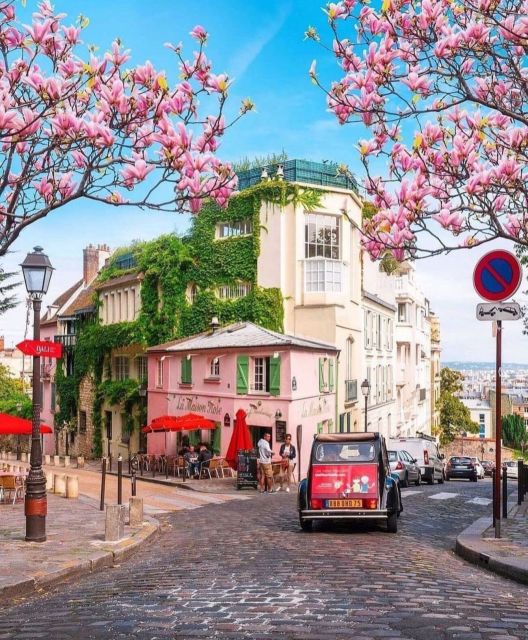
Another named stop is Rue Abbesses. It’s one of those streets where the details matter: angles, slopes, and the feeling that you’re inside a neighborhood rather than beside it.
The tour description highlights the history of Rue Abbesses, which is exactly what you want from a guided walk. Without context, it’s just a street. With context, you start noticing why certain parts of Montmartre feel iconic: the location, the rhythm of the area, and the mix of artistic life with religious symbolism.
This is also where the tour aims to show its personality. You’re not just checking off stops; you’re learning why this neighborhood keeps reappearing in Paris stories. It’s one of the points where the guide’s storytelling style really matters. A good guide helps you see connections fast, even when the streets are twisty and your brain is a little busy with hills.
You can also read our reviews of more guided tours in Paris






Sacré-Cœur at the top: panoramic reward and one important rule
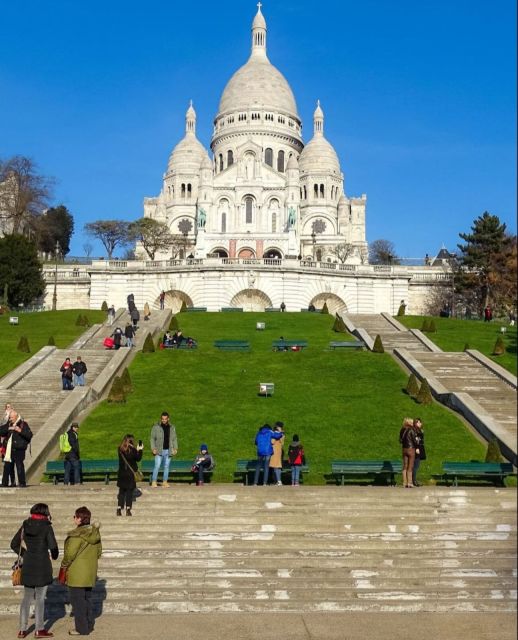
Eventually you reach the top hill area at the Sacré-Cœur Basilica. This is the payoff stop for many people, and the tour builds to it on purpose: a panoramic view of Paris is part of the experience.
There’s also a practical rule you should know before you get there: photography is not allowed inside Sacré-Cœur Church. That doesn’t mean you can’t take pictures at all—it means plan your photos accordingly. Bring your camera for the exterior and the views, then enjoy the interior without relying on a shot-by-shot workflow.
One more reality check: the tour includes the promise to skip the ticket line, but the process at Sacré-Cœur can still involve waiting depending on entry flow. If avoiding lines is your top priority, I’d still treat the guided part as “help,” not “instant entry no matter what.”
How much walking should you expect (funicular is there for a reason)
The tour is uphill, and while it offers a funicular option for the steepest segment, the exact amount of stair climbing can vary.
A booking detail that’s worth taking seriously: one person reported being asked to climb roughly 180 steep steps and that the description didn’t make the stairs part feel explicit enough. That doesn’t mean this will happen to you, but it does mean you shouldn’t assume the tour will be fully gentle.
If your knees or calves are sensitive, I recommend deciding early. The funicular isn’t a weakness; it’s a strategy. You’ll still get the stories, the route context, and the Sacré-Cœur view—just with less stair pain.
Guide quality and pacing: what you can do to protect your experience
This tour lives or dies on pacing. You’re on a schedule, in a hilly area, and moving through a neighborhood where tight streets demand attention. The good news is that small-group format can help. The tougher news is that one guide’s style and audibility can make a huge difference.
From the feedback you’re working with, I’d watch for two patterns:
- Guides who move at your pace and help you with photo moments tend to get strong praise. Farhan is one name that came up for being personable, answering questions, and helping guests capture their moments.
- Guides who are hard to hear or who change route mechanics without clear communication can leave people frustrated. Robin is one name that appears in a less-positive report that complained about being shortchanged on time and ending up on steep steps.
You can’t fully control which guide you get, but you can control your part. If the group moves too fast for you, say so early. If sound is an issue, step closer. If you want the funicular, ask at the start of the steep section rather than waiting until your legs are already angry.
Price and value: is $50 worth it for Montmartre?
At $50 per person for a 2-hour guided walking tour, the value depends on what you want out of Montmartre.
Here’s where it pays off:
- You get a structured path through Montmartre’s key streets instead of losing time in random turns.
- You receive story-based context tied to major figures like Van Gogh, Picasso, and Toulouse-Lautrec, plus references to singers and saints.
- You end at a viewpoint with a plan, not just a late scramble for views.
Where it may not feel worth it:
- If you’re purely in photo mode and don’t care about the connections between artists, legends, and the neighborhood layout, you might feel the guide is extra.
- If you expect every stop to be perfectly line-free, adjust expectations. The tour advertises skipping ticket lines, but entry flow can still create waiting.
Also, the small group matters. Limited to 10 participants, it tends to make questions easier and reduces that uncomfortable feeling of “being herded.”
Who this tour suits best (and who should skip it)
This is a great match if you want:
- a guided route through Montmartre that helps you understand what you’re seeing
- a well-timed climb to Sacré-Cœur with a panoramic reward
- a storytelling-heavy walk in English without the stress of planning every twist and turn
Consider skipping or rethinking if:
- you want minimal walking and zero stairs (Montmartre is not built for that)
- you’re expecting full assistance with accessibility needs beyond what’s stated (the tour only notes funicular help for steep parts)
- you’re sensitive to audio and rely heavily on hearing every word (the guide quality can vary, and poor audibility can hurt the experience)
Should you book this Montmartre Hill and Sacré-Cœur tour?
Yes, I’d book it if you’re doing Montmartre for the first time and you want a guided route that makes the neighborhood click fast. The best version of this tour helps you connect Place du Tertre, Rue Abbesses, and the climb to Sacré-Cœur into one coherent experience, with artist and saint stories that make the streets feel purposeful.
Book with a little realism baked in. Plan for an uphill walk, wear comfortable shoes, and be ready to use the funicular if the steep section feels like too much. If your priority is a fully low-effort stroll and instant Sacré-Cœur entry, a different format might suit you better.
If you want Montmartre with context and a clear ending at the top, this tour is a solid choice.
FAQ
Where do I meet the guide?
Meet at the Exit Via Blanche metro station. The guide meets you in front of the Moulin Rouge.
How long is the walking tour?
The tour lasts 2 hours.
Is this a small group?
Yes. It’s limited to 10 participants.
What language is the tour in?
The tour is offered in English.
Is the funicular included?
No. The funicular ticket is optional and not included.
Does the price include food and drinks?
No. Food and drinks are not included.
Are tickets or entry included for Sacré-Cœur?
The tour notes that it can skip the ticket line, but entry details can still involve waiting depending on the site flow.
Can I take photos inside Sacré-Cœur?
No. Photography is not allowed inside the church.
Is the tour mostly flat or uphill?
It involves uphill walking, with the option to take the funicular for the steepest part.
Is there free cancellation, and can I pay later?
Yes. You can cancel up to 24 hours in advance for a full refund. You can also reserve now & pay later.