REVIEW · PARIS
Paris: Big Bus Hop-On Hop-Off Tour with Optional Cruise
Book on GetYourGuide →Operated by Big Bus Tours/LES CARS ROUGES · Bookable on GetYourGuide
Paris can feel like a giant puzzle. This tour turns the big landmarks into a simple hop-on, hop-off route. I like the frequent double-decker buses and the way you can start from stops around central Paris, so you’re not stuck wrestling with streets and queues. I also like the 1-hour Seine cruise option with live commentary, which adds a calmer view of the city right after you’ve been on the move. One thing to consider: you may need a short walk from some bus stops to the actual attractions, and the hop-on hop-off system works best if you plan your timing with the last departures in mind.
You’ll also get real help for figuring out what you’re seeing. The multilingual digital audio commentary (with souvenir headphones) plus a free app with route info and real-time tracking makes it much easier to use your time well. The open-top upper deck is a joy when the weather cooperates, but it can be cold and a bit exposed in shoulder seasons.
In This Review
- What makes this tour worth your time
- Hop-On Hop-Off Paris: how the loop helps you make a plan
- The ride: what you’ll experience on the Big Bus
- Your hop-on route, stop by stop (and what to watch for)
- Louvre-Pyramide / Big Bus Information Centre and Pont des Arts
- Notre-Dame area (Rue Lagrange)
- Musée d’Orsay stop (Place Henry de Montherlant)
- Champs-Élysées and the Arc de Triomphe zone (via the big avenue section)
- Grand Palais / Champs-Élysées to the Eiffel direction
- Iéna (Avenue Iéna) and the Eiffel Tower stop (Quai Branly)
- Champ de Mars (Avenue Joseph Bouvard)
- Opéra Garnier (Facing 15 Rue Scribe)
- Les Invalides (2 Avenue de Tourville)
- Seine River Cruise: the calm hour that changes the mood
- Timing and comfort: beating the cold, the crowds, and the stair problem
- Price and value: is $43 a good deal in Paris?
- Who this Big Bus tour fits best (and who should skip it)
- Should you book this Paris hop-on hop-off with the Seine cruise?
- FAQ
- FAQ
- How long is the hop-on hop-off bus tour?
- How often do the buses run?
- Where can I start the bus route?
- What are the key hop-on hop-off stops?
- How long is the Seine River cruise?
- Where does the Seine cruise depart from?
- When do Seine cruises run?
- What languages are available for the audio guide?
- Is Wi-Fi included?
- Is hotel pickup included?
What makes this tour worth your time
- Double-decker, hop-on hop-off convenience so you can pick your pace and stop longer at the places you care about
- High-frequency service (buses every 10–20 minutes) that keeps your day from turning into a waiting game
- 10 key hop-on stops built around major sights like Notre-Dame, Champs-Élysées, and the Eiffel Tower area
- Seine cruise with live commentary operated by Les Bateaux Parisiens for a smooth 1-hour break
- Audio + app tools: multilingual commentary, app map, real-time bus tracking, and onboard Wi-Fi
- Wheelchair access with ramps on the buses (the tour is designed to be usable even if stairs are a no-go)
Hop-On Hop-Off Paris: how the loop helps you make a plan
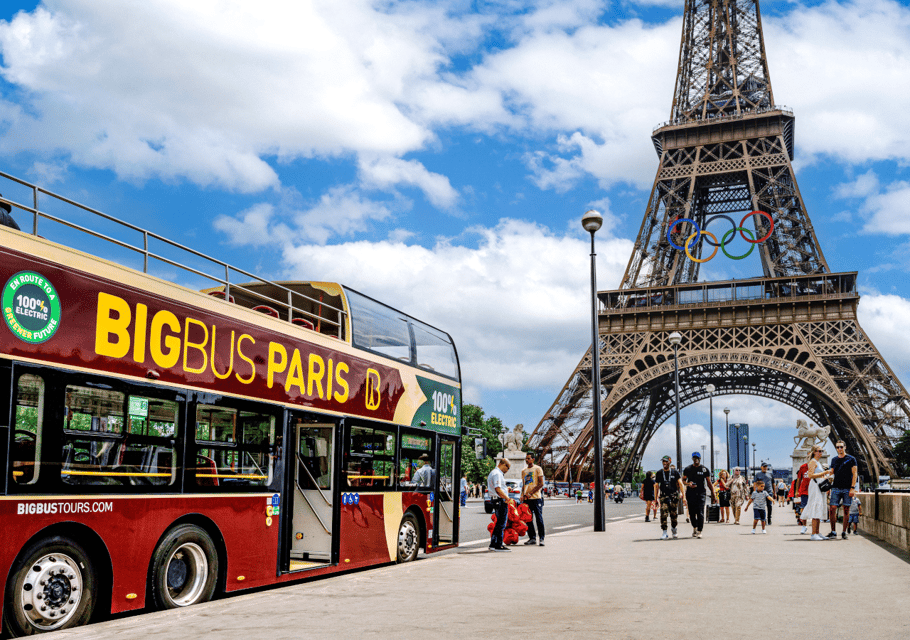
This is one of those practical Paris moves: you use the bus as your backbone, then you build your day around whichever stops you care about most. The bus itself is about 2 hours and 15 minutes for the full loop, and buses run every 10–20 minutes, so you don’t have to commit to a strict schedule. You can ride, get off, explore, then hop back on later at any stop along the route.
That flexibility matters in Paris because attractions are spread out and walking everywhere can drain your energy fast. With a hop-on hop-off ticket, you can do the “big picture” sightseeing first, then return where you want more time.
Tickets come as 24- or 48-hour options (depending on what you choose). In plain terms: a 24-hour pass is fine for a quick highlights sweep. A 48-hour pass is better if you want to do some museum time, linger at viewpoints, or handle one of those Paris days when weather or lines mess with your rhythm.
You can also read our reviews of more boat tours in Paris


The ride: what you’ll experience on the Big Bus
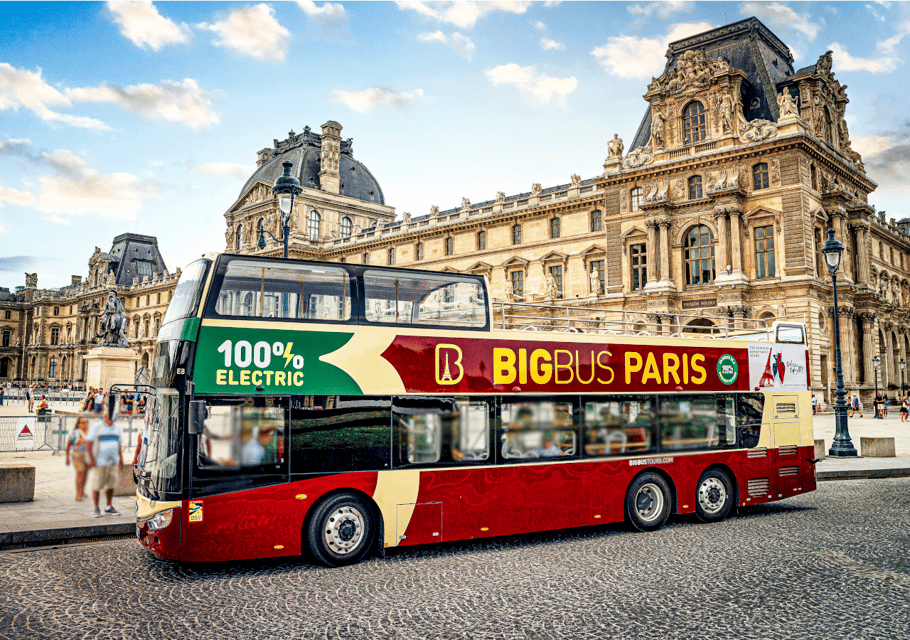
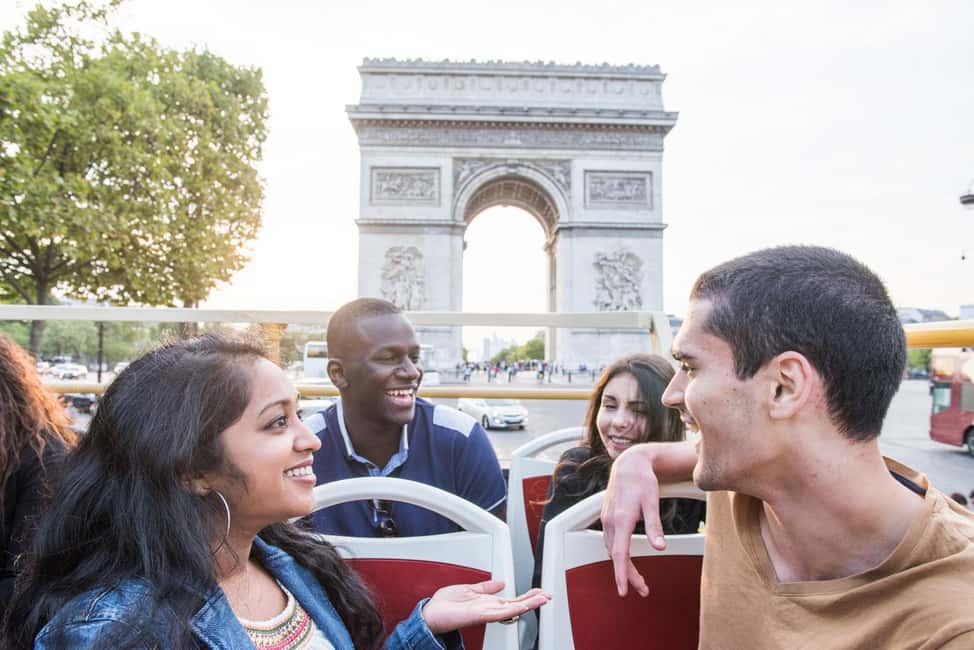
You’re on an open-top double-decker bus, and you’ll get multilingual digital audio commentary with souvenir headphones included. Audio covers multiple languages, and there are also driver languages available (English, French, German, Italian, Portuguese, Spanish). Onboard Wi-Fi is included, and there’s a free app for route info and real-time bus tracking.
A couple of small details help the ride feel easier:
- The upper deck can be covered in part, and that can help when rain or wind shows up.
- Headsets are provided, and the sound quality is generally fine—but one review complaint was about headphone jack issues. If audio is your thing, I’d bring your own backup (at least one working set of headphones) so you’re not waiting on spare equipment.
Also, this is a place where timing is real. The last tour departs from Stop 1 at 17:30. That doesn’t mean the day is over, but it does mean you should try to get your main hop-on sightseeing done before late afternoon, especially if you’re relying on the bus to get you between stops.
Your hop-on route, stop by stop (and what to watch for)
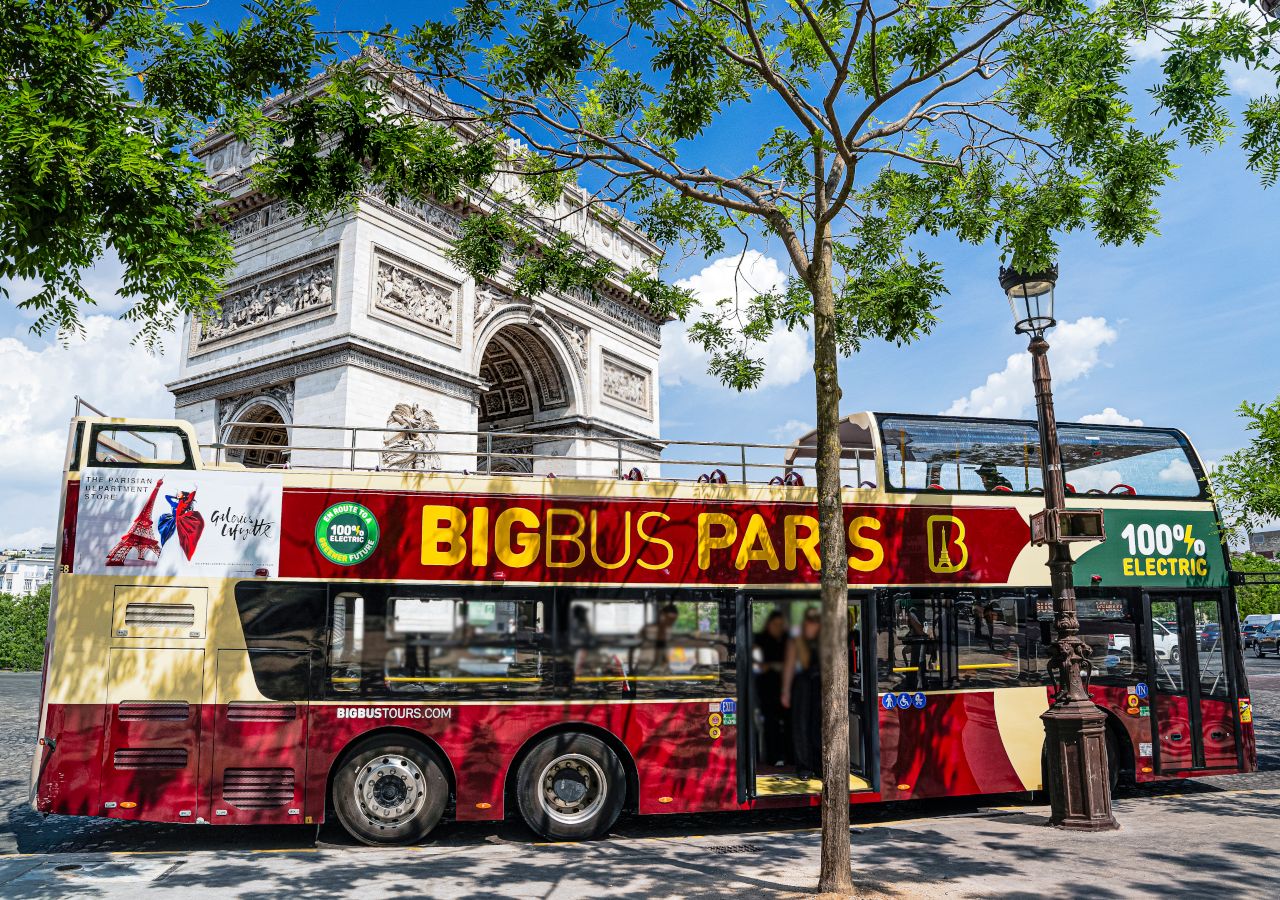
The route is built around major central landmarks. The key hop-on hop-off stops include these areas: Louvre area, Notre-Dame, Musée d’Orsay, Champs-Élysées, Grand Palais, the Eiffel Tower zone, Champs de Mars, Opéra Garnier, and Les Invalides.
Here’s how I’d use the stops to your advantage, plus what each one is good for (and where you might lose time).
Louvre-Pyramide / Big Bus Information Centre and Pont des Arts
Start here if you want maximum ease early in the day. The main hub is near 11 Avenue de l’Opéra, and you’ll also hit the Pont des Arts area along the way. This is a smart choice because the Louvre is huge and confusing, and Pont des Arts is one of those places where Paris instantly feels like Paris.
What to do:
- Use the Louvre stop to plan whether you’ll actually go into the museum or just do a quick exterior look and save museum time for later.
- Use Pont des Arts as your photo break and orientation moment. You’ll see the river and the classic “view lines” that help you understand how the rest of the city connects.
Practical note: even if the stop is close, don’t expect door-to-door convenience. Plan on a short walk to get to the main sights.
Notre-Dame area (Rue Lagrange)
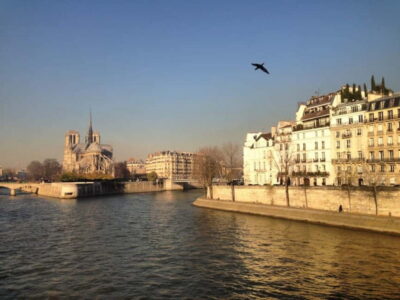
This is one of the stops people keep coming back to, because Notre-Dame sits in a spot where the surrounding streets feel like old Paris (even when you’re just passing through). Getting off here is also a good reset if you want a break from the larger museum-sized spaces.
What to do:
- If you’re not doing a full guided activity nearby, use this as your “walk around and take it in” moment.
- Try to pair it with a stop nearby so you don’t waste time zigzagging.





Musée d’Orsay stop (Place Henry de Montherlant)
Even if you don’t step inside, this is a strong stop. The area works well for people who like art and architecture, and it’s also a convenient bridge between river-adjacent sightseeing and the grand avenues farther west.
What to do:
- If you want a museum stop, this is an easy place to build it into your day.
- If you don’t, you can still use the area for scenic breaks and river views.
Timing tip: museums can eat your day. If you only have 1 day, decide early whether you’re doing Musée d’Orsay seriously or just using the neighborhood as a sightseeing pause.
Champs-Élysées and the Arc de Triomphe zone (via the big avenue section)
This is the “Paris postcard boulevard” part of the loop. The bus puts you near Champs-Élysées (156 Avenue des Champs-Élysées) and it also passes Place de la Concorde and heads toward the Arc de Triomphe area.
Why it’s useful:
- It lets you see the scale of central Paris without needing to navigate every turn on foot.
- You can hop off for a stroll, do photos, and then get back on before the avenue drains your energy.
One drawback to watch: the big avenue sections can be visually impressive but not always the fastest on foot. If your plan involves lots of hopping and resuming, do your walks efficiently.
Grand Palais / Champs-Élysées to the Eiffel direction
You’ll pass Grand Palais (Avenue Winston Churchill) and keep moving toward the river. This stop works for architecture lovers and for anyone who likes the “grand entrance” feel of Parisian public buildings.
What to do:
- If you don’t have museum time, you can still enjoy the scale and the photo angles from outside.
- This is a good checkpoint stop to regroup before your Eiffel Tower move.
Iéna (Avenue Iéna) and the Eiffel Tower stop (Quai Branly)
The route brings you to Iéna (Avenue Iéna) and then the Eiffel Tower zone with a specific bus stop at Quai Branly, Entrée 2 (Tour Eiffel).
This is where the bus becomes a serious convenience tool. The Eiffel Tower area can be a magnet for crowds and taxis, and the hop-on bus helps you arrive with less hassle.
What to do:
- Use this stop as your base for Eiffel photos and any nearby time you want to spend.
- If you’re not doing an Eiffel Tower ticket (not included here), you can still get a lot out of the viewpoints and walking around the area.
Champ de Mars (Avenue Joseph Bouvard)
Right by the Eiffel Tower, this area is great if you want open space. Champ de Mars is where you can reset after dense sightseeing, and it’s also a handy staging area before the cruise departure nearby.
What to do:
- Take advantage of the open views and do your own short photo circuit.
- If your cruise is scheduled later, use this as time buffer so you’re not rushing.
Opéra Garnier (Facing 15 Rue Scribe)
The tour hits Opéra Garnier with a stop facing 15 Rue Scribe. This is the kind of building that looks like it belongs in a movie, even when you’re just standing outside.
What to do:
- Hop off if you want to see the façade details.
- Pair this stop with a broader city walk only if you’re comfortable with some walking. Otherwise, treat it as a quick hit and then rejoin the bus.
Les Invalides (2 Avenue de Tourville)
This stop is good for anyone who wants a quieter, more historical-feeling landmark without making the day entirely about one single museum.
What to do:
- Use it as your late-day anchor if you like ending with something that feels substantial.
- It’s also a sensible stop if you want to avoid the heaviest crowds on the most popular viewpoints.
Seine River Cruise: the calm hour that changes the mood

If you choose the optional cruise, you’re adding a different kind of sightseeing. The cruise is 1 hour and includes live commentary about what you’re seeing. It’s operated by Les Bateaux Parisiens, and cruises depart from Pontoon No. 3, Port de la Bourdonnais, which is near the Eiffel Tower stop area.
Departures run every 45 minutes from 10:30am to 9:00pm (and every 30 minutes on weekends). That frequency gives you some flexibility. You’re not stuck with one rigid departure time.
Why the cruise is valuable even if you’ve already seen the Eiffel Tower:
- From the water, you get a different rhythm. The city looks wider and more connected.
- It’s a break from walking and from getting on/off buses.
- The commentary helps you connect the landmarks you just saw from street level.
Timing strategy: don’t schedule the cruise as your first activity. You want some daylight sightseeing before you switch to river views. Many people also like to use the cruise as a reset point between major stops.
Timing and comfort: beating the cold, the crowds, and the stair problem
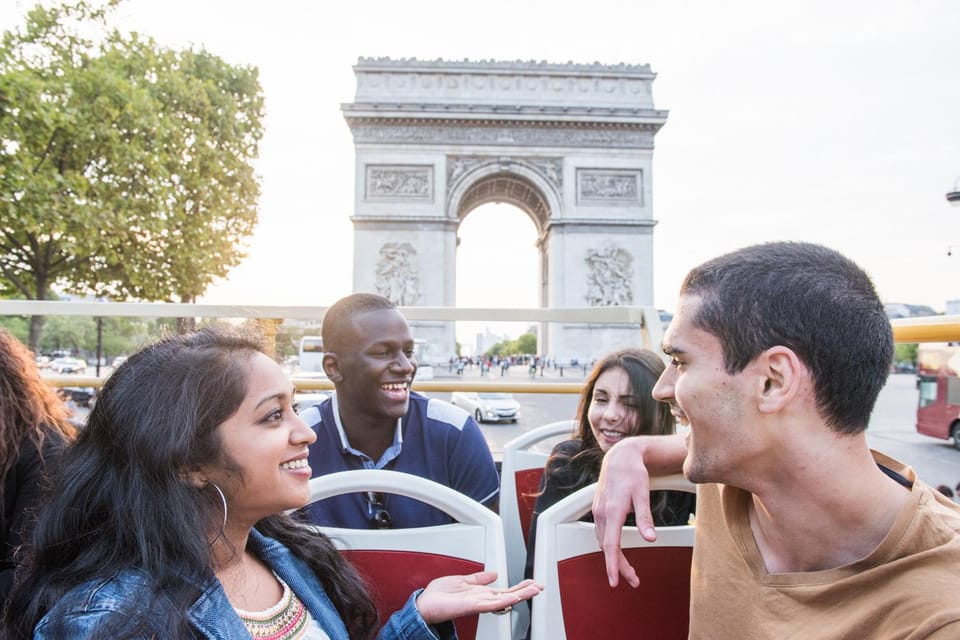
This tour can be very smooth, but Paris is Paris. Two issues are common sense rather than surprises: weather and mobility.
Upper deck comfort
On paper, it’s open-top. In real life, that means wind and cold can make it less fun in cooler months. If you’re sensitive to weather, plan to spend time on both levels rather than forcing the upper deck for the whole ride.
Stairs and switching levels
There’s no separate data on exact step counts, but you will go up and down as you hop between stops. One review flagged that climbing steps can be difficult for seniors. If mobility is a concern, the buses are described as wheelchair accessible with ramps, so you can still enjoy the tour without stairs. Just expect your pace to be slightly more deliberate.
Hop-off logistics
Some stops can be close to the landmark, but the reality is you might still walk a bit. One complaint noted that bus stops weren’t right at the attractions’ entrances. I’d handle this by using comfortable shoes and treating each hop-off as “near enough to walk,” not “right at the door.”
Price and value: is $43 a good deal in Paris?

At $43 per person, this tour isn’t cheap, but it can still be good value because it bundles two expensive time-killers:
1) transport between far-apart sights, and
2) built-in guidance via audio.
A big part of the value is that you can choose where you spend your money later. The bus helps you decide what you truly want to pay for on another day (a major museum, a ticketed attraction, a longer meal break in a particular neighborhood). Without that quick orientation, a short Paris trip can turn into expensive guesswork.
Where the cruise helps the price
The optional Seine cruise is often the difference between this being a bus-only outing and being a complete “Paris highlights” day. If your schedule is tight and you want one relaxing, high-view moment, the cruise is worth serious consideration.
How to get best value
- If you’re only doing one day, make the most of the loop by choosing a small number of hop-off stops and staying longer at them.
- If you can do two days, use day one to map your priorities, then go deeper day two. A 48-hour option makes that much easier and reduces the chance you’ll feel rushed.
Who this Big Bus tour fits best (and who should skip it)

This tour fits best if you want:
- an easy way to see the big landmarks without planning every bus line
- a flexible pace for short stays
- helpful narration so the city makes more sense while you’re moving
- a simple add-on with the Seine cruise for a calmer second act
It’s less ideal if:
- you love quiet streets and dislike crowds at major landmarks
- you only want to visit one place (because then the ticket might feel heavy)
- you have very specific timing needs that depend on late departures (the last bus from Stop 1 departs at 17:30)
Should you book this Paris hop-on hop-off with the Seine cruise?
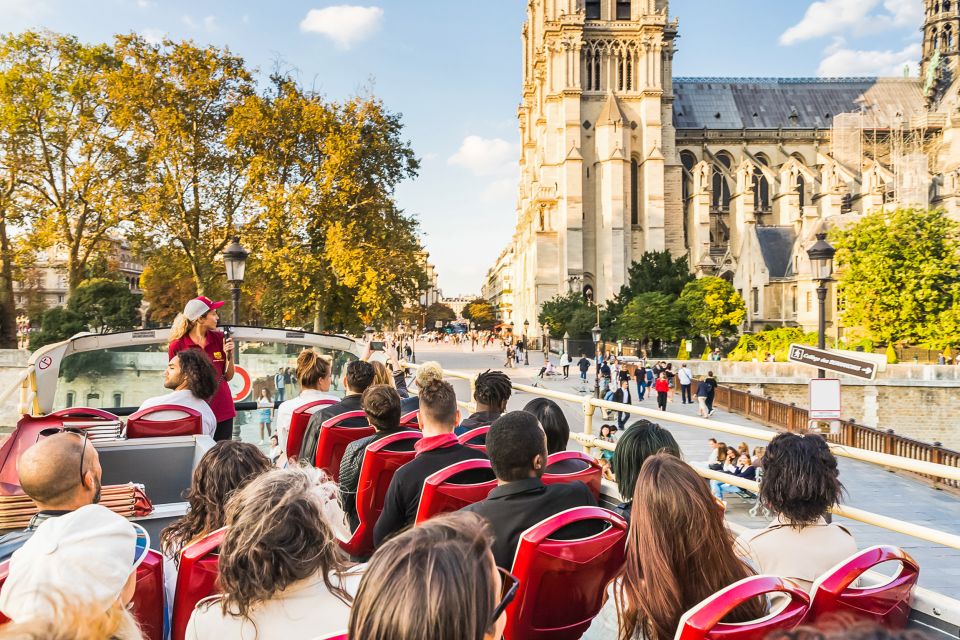
I’d book it if you’re short on time and you want a low-stress way to hit the classics: Louvre area, Notre-Dame, Musée d’Orsay, Champs-Élysées, the Eiffel Tower zone, Opéra Garnier, and Les Invalides, plus the option to slow down with a 1-hour Seine cruise.
I’d think twice if your plan is very narrow or you’re set on doing everything on foot and by museum schedules only. In that case, you might spend less by skipping the bus and building a walking route yourself.
If you go, do this: start earlier than you think, download the app for real-time tracking, and treat the first day as your map. Then spend your energy on the stops you truly want to return to.
FAQ
FAQ
How long is the hop-on hop-off bus tour?
The full bus loop is approximately 2 hours and 15 minutes.
How often do the buses run?
Buses depart every 10–20 minutes.
Where can I start the bus route?
You can begin from any of the Big Bus stops along the route. One listed starting point is at 11 Avenue de l’Opéra.
What are the key hop-on hop-off stops?
Key stops include the Louvre-Pyramide/Big Bus Information Centre, Louvre-Pont des Arts, Notre-Dame, Musée d’Orsay, Champs-Élysées, Grand Palais, Tour Eiffel, Champ de Mars, Opéra Garnier, and Les Invalides.
How long is the Seine River cruise?
The Seine cruise is 1 hour.
Where does the Seine cruise depart from?
Cruises depart from Pontoon No. 3 at Port de la Bourdonnais, near the Eiffel Tower area.
When do Seine cruises run?
Cruises run from 10:30am to 9:00pm, every 45 minutes (every 30 minutes on weekends).
What languages are available for the audio guide?
The audio guide is available in Chinese, English, French, German, Italian, Korean, Portuguese, Russian, and Spanish.
Is Wi-Fi included?
Yes, Wi-Fi is included onboard.
Is hotel pickup included?
No, hotel pickup and drop-off are not included.