REVIEW · PARIS
Medieval Paris Private Walking Tour
Book on GetYourGuide →Operated by Paris in person private tours · Bookable on GetYourGuide
Medieval Paris is closer than you think. This private 2-hour walking tour pulls you about 800 years back through key monuments like Notre-Dame, while your guide ties what you see to how people lived. I love the way the walk turns architecture into real medieval context, and I love that Notre-Dame gets treated as the central landmark of medieval Paris, not just a photo stop. One possible drawback: at $171 per person, it is pricey for a walking tour, so it makes the most sense if you value a private guide and want more explanation than a group tour typically offers.
Another strong point is how the route stays grounded at street level. You pass Hotel de Cluny, learn about the Cluny abbots and how the building became the Museum of the Middle Ages, and you get coached to notice medieval symbols still hanging on façades. In the feedback, the guide Isabella comes up as both friendly and very strong on details, which matters when you’re trying to spot clues you would otherwise miss.
It runs rain or shine, so plan for real weather and wear shoes that can handle cobblestones. You’ll start by meeting your guide at McDonald’s by Cluny la Sorbonne Metro (Line 10), and the tour ends right back at the same meeting point.
In This Review
- Key Highlights I’d Prioritize
- Why Medieval Paris Still Shows Up in Plain Sight
- Price and What $171 Gets You in Real Terms
- Meeting at Cluny la Sorbonne: Start Where the Story Begins
- Hôtel de Cluny and the Cluny Abbots at Street Level
- Notre-Dame: The Medieval Focal Point, Not Just a Landmark
- Latin Quarter: One of the Oldest Parts of Paris
- Sorbonne and Medieval Learning You Can Still Point To
- Saint-Jacques Tower: A Flamboyant Gothic Survivor
- Les Halles, the Fontaine des Innocents, and the Pompidou Connection
- How the 2-Hour Route Feels on the Ground
- Who This Medieval Paris Private Walking Tour Fits Best
- Should You Book This Tour?
- FAQ
- How long is the Medieval Paris Private Walking Tour?
- Where does the tour start?
- How do I recognize the guide?
- What sites are included on the route?
- What’s included in the price?
- Is food or drinks included?
- What languages is the tour offered in?
- Does the tour run in bad weather?
- Is there a cancellation option?
- Is it a private group?
Key Highlights I’d Prioritize
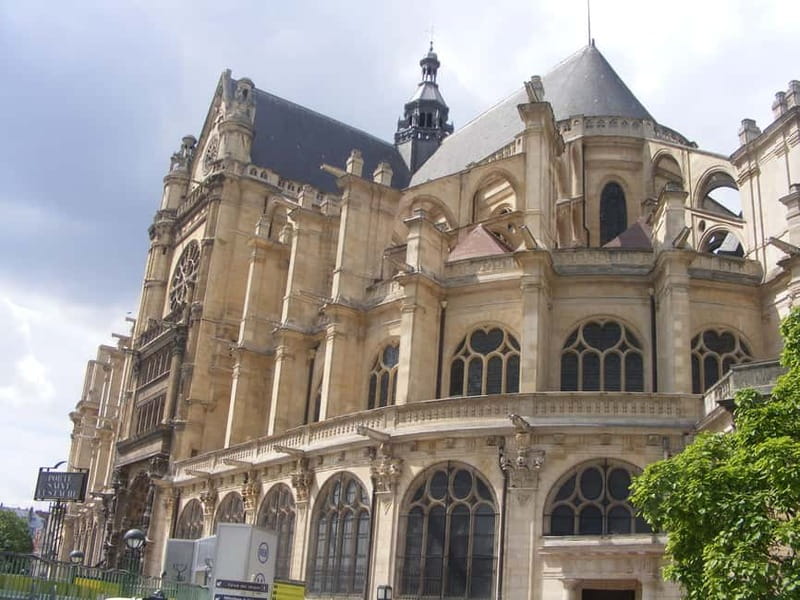
- Notre-Dame de Paris as your medieval anchor: you build a mental map of why this site mattered in the Middle Ages.
- Hotel de Cluny and the Cluny abbots connection: the guide links a real power center to what you see today.
- Latin Quarter on foot: you walk one of the city’s oldest areas where medieval life still echoes.
- Sorbonne and medieval learning: you see one of Europe’s oldest universities and connect it to the era’s intellectual energy.
- Saint-Jacques Tower as a surviving Gothic remnant: the Flamboyant Gothic tower is what remains of a 16th-century church.
- Fontaine des Innocents and the Les Halles trade story: you pair commerce and everyday life with the oldest intact fountain in Paris.
- A Middle Ages to Pompidou bridge: you’ll learn how medieval threads show up in a modern landmark like Centre Pompidou.
Why Medieval Paris Still Shows Up in Plain Sight
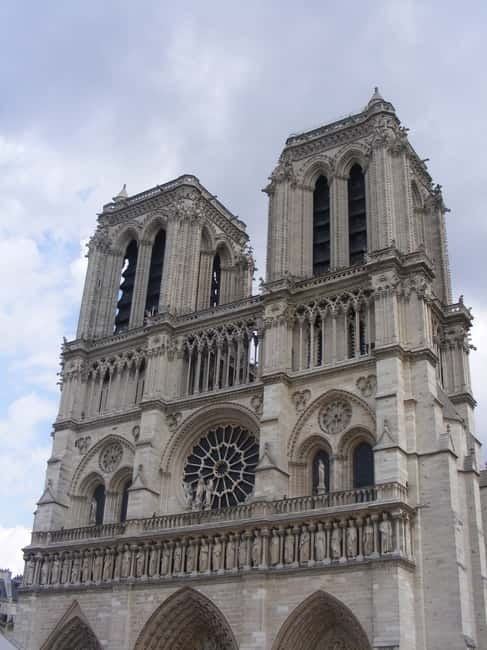
What I like about this tour is that it treats medieval Paris as something you can still read. You’re not just looking at big monuments from one angle; you’re walking medieval streets and being prompted to notice details—especially façades that still keep medieval symbols. That changes your whole experience. Instead of seeing old buildings as scenery, you start seeing them as documents.
The tour is also built around a simple idea: the Middle Ages weren’t one uniform period. They had rulers, church power, universities, markets, and daily street life. The route tries to cover that mix, so when you reach Notre-Dame, it feels like the outcome of everything you just learned—not a random major stop.
And because it’s a private group with a guide (English or French), you can steer questions. If you want more on religion, learning, or markets, you’ll get a tailored explanation instead of rushing along with a big crowd.
You can also read our reviews of more walking tours in Paris



Price and What $171 Gets You in Real Terms
Let’s talk money honestly. At $171 per person for 2 hours, this isn’t a bargain-basement walking tour. You’re paying for private guiding, which usually means:
- More time talking and asking questions.
- A route designed around interpretation, not just landmarks.
- A guide who can point out what you’d likely miss on your own.
So the value depends on your travel style. If you like to wander with a plan and you want the connections spelled out—between medieval sites and what you see today—then the cost starts to make sense. If your goal is just to tick off the famous names quickly, you can probably find cheaper ways to visit the same general areas.
My practical take: this is best when you’re in Paris for a short time and you’d rather get guided meaning than extra hours walking solo.
Meeting at Cluny la Sorbonne: Start Where the Story Begins
You meet your guide at McDonald’s in front of Cluny la Sorbonne Metro Station (Line 10). Look for the guide with the red canvas tote bag. That detail sounds small, but it matters in Paris. Line 10 stations can feel like a maze, and you don’t want to spend your first 10 minutes hunting for your group.
From there, the tour stays focused on a tight slice of central Paris. That’s a smart choice for a 2-hour experience, because you’re not spending your time crossing the city. You’re spending it building a coherent medieval map.
This also helps if you’re doing other plans the same day. Since the tour ends back at the meeting point, you don’t have to solve transportation logistics right after.
Hôtel de Cluny and the Cluny Abbots at Street Level
One of the most interesting parts of this tour is how it starts dealing with power and institutions, not just architecture.
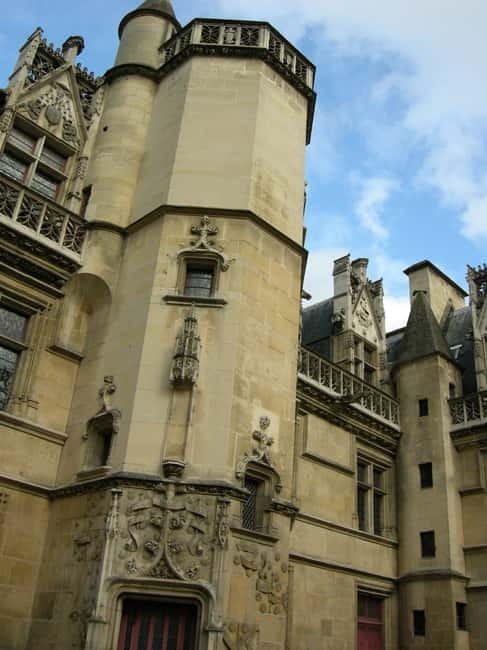
You pass Hôtel de Cluny, a former mansion connected to the Cluny abbots. Today it’s home to the Museum of the Middle Ages. Even if you’re not going inside (the tour info emphasizes passing and viewing), the building helps you understand the Middle Ages as an era when religious leadership held major social and cultural weight.
Here’s what I’d suggest you do while you’re there:
- Look up at façade details and signs of age.
- Pay attention to how the site’s role has shifted over time (private abbots’ residence → museum).
This stop is valuable because it gives you a baseline. Once you understand what kind of influence lived in places like Hôtel de Cluny, the next stops feel more logical: the church, the university, and the city’s market life all start fitting into one larger system.
Notre-Dame: The Medieval Focal Point, Not Just a Landmark
Of all the stops, Notre-Dame de Paris is positioned as the centerpiece. The tour treats it as the focal point of medieval Paris, and that framing changes what you notice.
You’ll visit Notre-Dame during the walking portion, which means the emphasis is on learning and observation—why this site was so important to the Middle Ages, and how your surrounding street views connect to the medieval city. You also get a chance to see how Notre-Dame sits within the urban fabric, rather than as an isolated icon.
A practical tip: don’t rush your photos. Spend a few minutes looking around first. In a guided setting, you’re more likely to catch the “why” behind what you’re seeing: how this church functioned socially and symbolically, and why people would have understood it as a fixed center for their world.
If you’re new to medieval Paris, this is the moment where the tour starts paying off.
You can also read our reviews of more private tours in Paris






Latin Quarter: One of the Oldest Parts of Paris
The tour heads into the Latin Quarter, and that choice is a big deal for first-time medieval understanding. This area is described as one of the city’s oldest zones where medieval life still shows through today.
What I like here is that the guide isn’t just pointing to buildings. They’re walking you past places where medieval symbols remain on façades and where the urban layout still tells a story. It’s the kind of neighborhood context that helps you stop thinking in centuries and start thinking in streets.
If you’re the type who likes to connect the dots—church to education to commerce—this is where you start doing that in your head.
Sorbonne and Medieval Learning You Can Still Point To
You’ll go to the Sorbonne, presented as one of Europe’s oldest universities. Even if you don’t go in, this is a strong stop because it anchors the idea that medieval Paris wasn’t only about cathedrals and kings. It was also about learning.
When you’re on a guided walk, what matters most is how the guide makes the past feel legible. Here, the tour connects the university presence to the Middle Ages, helping you understand why education mattered in that era and why a university in Paris would have been a magnet for ideas.
If you enjoy human-scale history—people, institutions, and what they built—this part is likely to be a highlight.
Saint-Jacques Tower: A Flamboyant Gothic Survivor
Another standout is the Saint-Jacques Tower, described as the Flamboyant Gothic style and the last remaining part of the 16th-century church Saint-Jacques-de-la-Boucherie.
This stop works because it teaches you to see survival. A lot of old Paris has changed, but some structures persist as proof of earlier forms. The tower is not just pretty; it’s also a historical remnant you can use to imagine what once stood there.
A useful way to enjoy this stop:
- Look for Gothic design cues—without needing to be an architecture expert.
- Treat the tower as a footprint left behind by a vanished church.
The tour gives you the historical hook, and you bring the visual attention. That combo is where a 2-hour guided walk can feel more satisfying than self-guided wandering.
Les Halles, the Fontaine des Innocents, and the Pompidou Connection
This is where the tour gets fun and slightly mind-bending—in a good way.
You’ll learn about the mercantile history of Les Halles, so the Middle Ages show up as an economy, not just a religion-and-stones story. Then you’ll see the Fontaine des Innocents, described as the oldest intact fountain in Paris.
That pairing makes sense. Markets and fountains are part of everyday life: trade, daily routines, and public gathering. It’s a reminder that medieval Paris wasn’t only built for ceremonies. It was built for living.
And then comes the part that really sets this experience apart: you’ll learn the connection between the Middle Ages and the Centre Pompidou. The tour specifically calls out that modern center as linked to medieval ideas. I like this kind of comparison because it stops you from treating Paris as a timeline of disconnected eras. Instead, you start seeing continuity—old thinking shaping how modern places developed.
How the 2-Hour Route Feels on the Ground
A 2-hour walking tour is tight. That can be a good thing. You get a focused experience without the fatigue of a long day.
Here’s what you should plan for:
- Comfortable shoes: Paris has uneven walking surfaces.
- Weather readiness: the tour operates rain or shine.
- Questions ready: private guiding shines when you ask things, not just listen.
Since it’s a private group, the pace usually feels more adjustable than group tours. Still, you’re on foot, so you won’t want to treat this like a slow sightseeing stroll with lots of café stops.
Also, because the tour ends back at the meeting point, you don’t end up stuck figuring out how to get home after a walk.
Who This Medieval Paris Private Walking Tour Fits Best
This is a strong match if:
- You want a guided medieval overview of central Paris in a short time.
- You care about meaning—how churches, universities, and markets shaped daily life.
- You like your history explained through buildings and street-level details.
It’s also a good option if you already know the basic names (like Notre-Dame) but want the Middle Ages to connect into a clearer story.
It may be less ideal if you prefer museum time, long inside visits, or you’re only looking for quick exterior photos with minimal talking.
Should You Book This Tour?
If you value interpretation and you want the medieval city explained through a tight set of major sites, I think it’s a smart booking. The combination of Notre-Dame, Hôtel de Cluny, the Latin Quarter, the Sorbonne, the Saint-Jacques Tower, and the Fontaine des Innocents gives you a well-rounded medieval snapshot. Add the Middle Ages-to-Pompidou connection, and you get more than a standard sights list.
One clear decision rule: book it if a private guide and the ability to ask questions is worth your budget. If you’re price-sensitive or you prefer to go fully on your own, you might choose a cheaper alternative.
FAQ
How long is the Medieval Paris Private Walking Tour?
The tour lasts 2 hours.
Where does the tour start?
You meet your guide in front of McDonald’s at Cluny la Sorbonne Metro Station (Line 10).
How do I recognize the guide?
Look for the guide carrying a red canvas tote bag.
What sites are included on the route?
You’ll see major medieval stops including Notre-Dame Cathedral, Hôtel de Cluny, the Latin Quarter, the Sorbonne, Saint-Jacques Tower, Les Halles, and the Fontaine des Innocents, plus a guide-led connection between the Middle Ages and the Centre Pompidou.
What’s included in the price?
A live tour guide is included.
Is food or drinks included?
No, food and drinks are not included.
What languages is the tour offered in?
The tour is offered in English and French.
Does the tour run in bad weather?
Yes. It operates rain or shine.
Is there a cancellation option?
Yes. It offers free cancellation up to 24 hours in advance for a full refund.
Is it a private group?
Yes. This is a private group tour.