REVIEW · PARIS
Paris: Latin Quarter Guided Walking Tour in German
Book on GetYourGuide →Operated by HelpTourists · Bookable on GetYourGuide
Roman echoes make the Latin Quarter walk memorable. This is a German-language private stroll through the 5th arrondissement that links famous landmarks with quieter street corners, ending at Notre-Dame. You’ll get a local guide’s explanation of how this part of Paris grew up alongside its student life.
I especially like the mix of major stops (the Pantheon and the Sorbonne area) plus softer, small-scale places like Shakespeare & Company. Another strong point for me is the pacing: it’s a relaxed walk, not a sprint through photos, with time to learn what you’re seeing instead of just passing by it.
One consideration: it’s only 2 hours, so you should treat it as a guided orientation and story-walk, not a long museum visit or deep interior time. Bring good shoes and plan to linger later on your own if something grabs you.
In This Review
- Key highlights that make this tour worth your time
- Where your Latin Quarter walk starts: Cardinal Lemoine basics
- Arènes de Lutèce: where Roman Paris still shows through
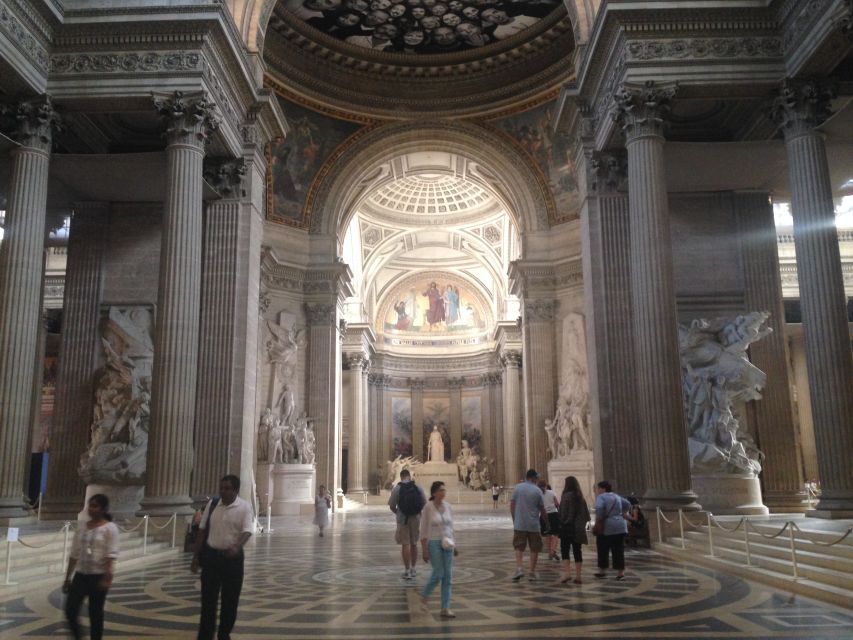
- Pantheon and La Sorbonne: major landmarks with a student-quarter lens
- The Pantheon’s role in your walk
- La Sorbonne: education as part of the city’s atmosphere
- Musée National du Moyen Age–Thermes et Hôtel de Cluny: medieval stops without getting lost
- Shakespeare & Company: a bookshop that fits the neighborhood’s identity
- The green-space pause: your legs will thank you
- Ending at Notre-Dame: from the Latin Quarter to the city icon
- Price and value: is $94 for two hours a good deal?
- What the guide experience is really like (and why it matters)
- Who should book this Latin Quarter German walking tour?
- Should you book it? My straight answer
- FAQ
- FAQ
- How long is the walking tour?
- Is the tour private or group-based?
- What language is the guide?
- Where do I meet the guide?
- Where does the tour start and end?
- Does the tour include food or drinks?
- Is pickup included?
- Is the tour wheelchair accessible?
- Can I cancel for a refund?
Key highlights that make this tour worth your time
- Roman remnants in Arènes de Lutèce: you’ll see the survival of older Paris right in today’s streets.
- Pantheon + Sorbonne perspective: history and student energy in one route.
- Cluny’s medieval atmosphere: you get a different time period than the big postcard views.
- Shakespeare & Company on the way: a literary landmark that fits the neighborhood’s “student quarter” identity.
- A real green-space pause: it’s built in so your legs and mind get a break from stone streets.
- German-speaking guidance with personal tone: the guide experience is a standout, with repeat praise for friendliness and clear storytelling.
Where your Latin Quarter walk starts: Cardinal Lemoine basics
The tour meets at the entrance of Cardinal Lemoine metro station. Look for your guide carrying a HelpTourists bag. This matters because the Latin Quarter can look busy and similar street to street, and you’ll want an easy, quick way to confirm you’ve got the right group.
Cardinal Lemoine is a sensible starting point for this area. It’s close enough to key sites that you can cover several major sights in a short window without wasting time on long transfers. Since there’s no pickup included, plan to arrive a few minutes early, especially if you’re coming from another part of the city.
Because the tour is private, you’re not competing with a huge crowd right at the meeting point. That usually helps with flow: questions get answered, and the guide can keep the group together without constant stop-start maneuvering.
You can also read our reviews of more walking tours in Paris



Arènes de Lutèce: where Roman Paris still shows through
A signature stop on this walk is Arènes de Lutèce, where you’ll get to see remains tied to the Roman presence in Paris. This is one of those “wait, this is still here?” moments that makes the Latin Quarter feel layered rather than one-dimensional.
What I like about starting with this is the storytelling logic. You begin with the deep past, then the walk moves forward through centuries—so each later stop makes more sense. Instead of learning history as separate facts, you start noticing how the city kept building over itself.
If you’re the type who likes to connect details, Arènes de Lutèce is a great anchor. Even if you don’t know Roman timelines, the guide’s explanations help you place what you’re seeing into a bigger picture: this wasn’t always the Paris of boulevards and big museums. It was already a place people gathered, lived, and left traces.
Practical note: this is a walking tour with a focused route, so don’t expect long standing around. Use the time for looking closely while your guide is explaining, then take any extra photos you want before moving on.
Pantheon and La Sorbonne: major landmarks with a student-quarter lens
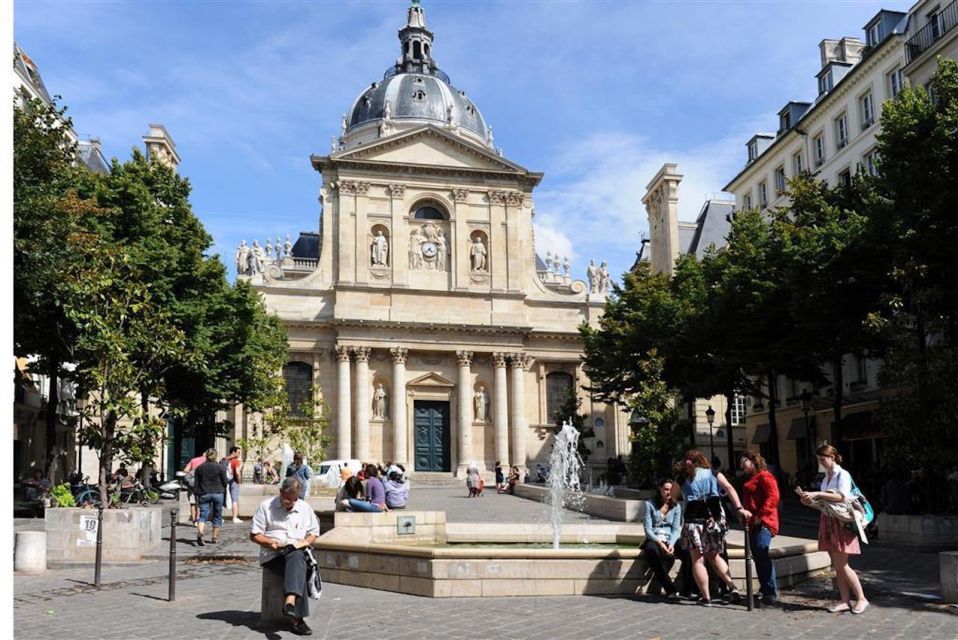
From Roman remains, the route shifts to two of the best-known institutions in the Latin Quarter: the Pantheon and the Sorbonne area.
The Pantheon’s role in your walk
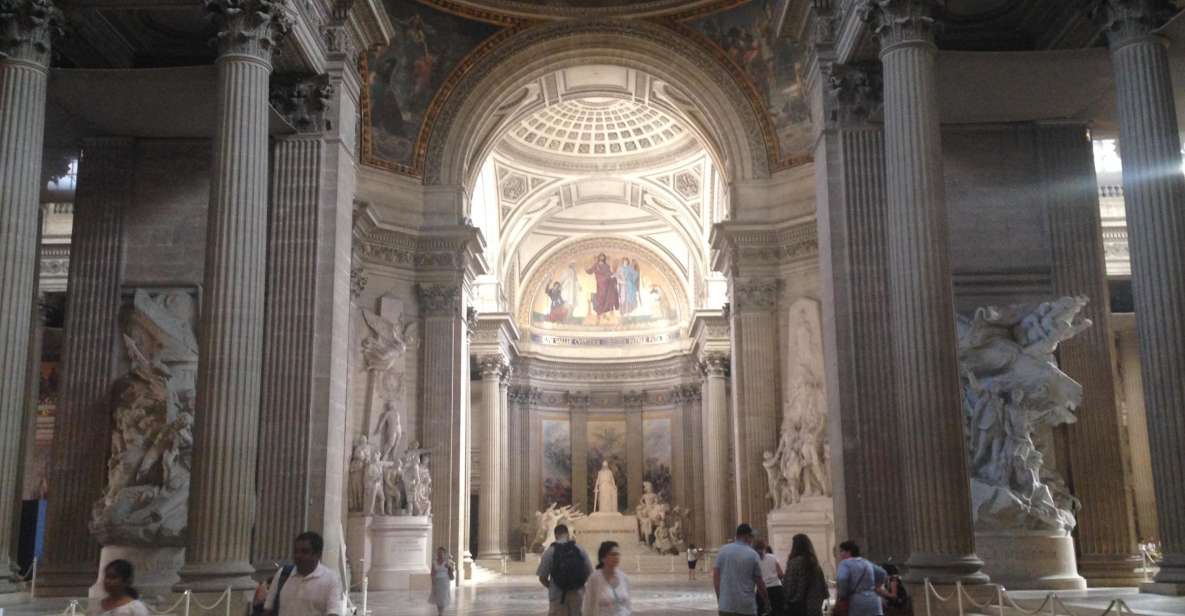
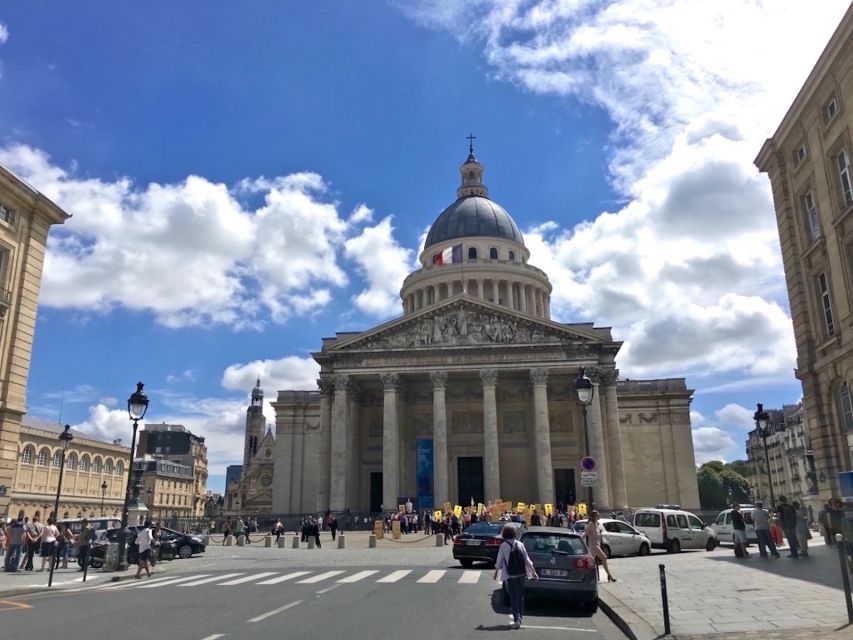
The Pantheon isn’t just a famous building to point at. In this neighborhood, it also represents how Paris talks about memory and identity—how it turns important figures into public landmarks. With a guide, you get the context for why it sits so firmly in the neighborhood’s “official” story.
This stop also pays off visually. When you’re on foot in the Latin Quarter, you tend to see the area’s scale better: streets, squares, and the rhythm of the district around a major monument.
La Sorbonne: education as part of the city’s atmosphere
Then you head to La Sorbonne, and this is where the “student quarter” idea becomes more than marketing. The Sorbonne connection helps you understand why the 5th arrondissement has a distinct feel—busy corners, talky cafes, and a constant sense that the city is thinking out loud.
I like that this isn’t framed only as architecture. A good guide will point out how daily life and institutions shape each other. In a short 2-hour tour, that’s exactly what you want: meaning attached to what you can actually see.
You can also read our reviews of more guided tours in Paris





Musée National du Moyen Age–Thermes et Hôtel de Cluny: medieval stops without getting lost
Another standout moment is Musée National du Moyen Age–Thermes et Hôtel de Cluny. Even if you’re not spending hours inside, the stop adds an important time layer to the tour.
Here’s the value for you: the Latin Quarter can feel like it’s all “big-name Paris,” but this stop signals a different tone—medieval Paris, thermal history, and a setting that feels more intimate than the city’s largest monuments.
This is also where a guided explanation helps most. Without context, many travelers treat places like this as photo backdrops. With a German-speaking guide, you can learn what you’re looking at and why it fits this district. It gives your memories structure, and that makes later independent sightseeing easier.
One consideration: a walking tour is time-limited, so keep expectations realistic. You’ll likely get highlights rather than a full museum experience. If you want deeper time inside the collections, use this stop to decide what to revisit later.
Shakespeare & Company: a bookshop that fits the neighborhood’s identity
If you like places with character, the tour includes Shakespeare & Company. This is a smart choice on the route because it matches the Latin Quarter’s personality: literature, students, and a lingering vibe of debate and reading.
For me, the best part of stopping at a place like this on a guided walk is that it turns a famous neighborhood into something you can feel. You’re not only learning about monuments; you’re also learning what the area values in everyday life.
And because the tour is in German, you’ll get the story in your language—less mental translation, more understanding. That matters more than people think when you’re moving fast through multiple stops.
If you’re a book lover, you might want to linger here after the tour ends, even if just to browse and soak up the atmosphere.
The green-space pause: your legs will thank you
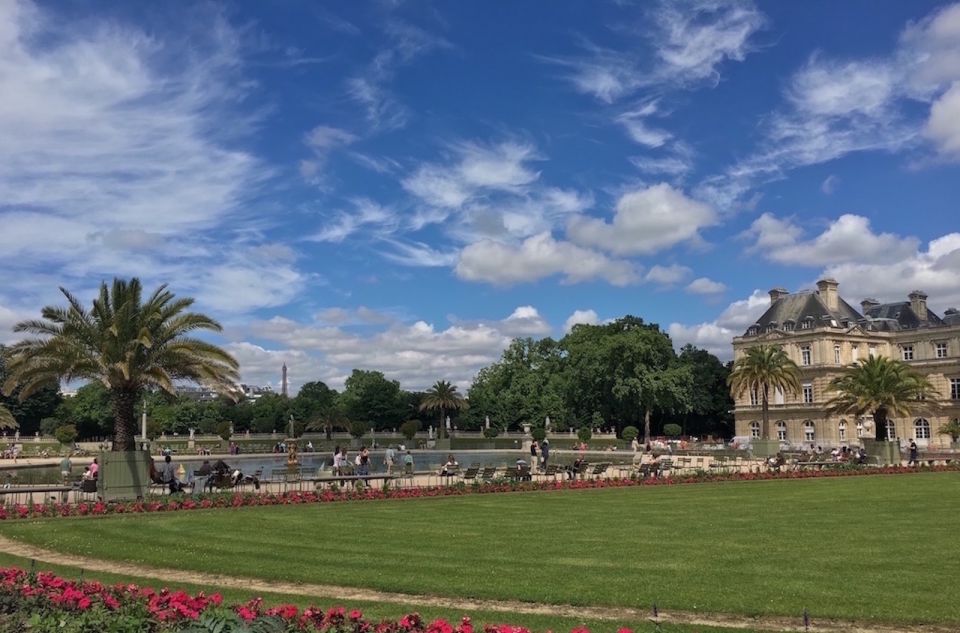
The description of the experience includes a break in one of the most beautiful green spaces in Paris. Even without a named park in the provided details, the key idea is clear: the route includes a moment designed to interrupt the stone-and-museum feel.
That’s not a small benefit. In a 2-hour walk, you want a reset where you can catch your breath, look around, and let the history sink in. Green space works like a mental buffer. It also makes photos look different than the usual street-corner images.
When I plan short tours, I look for this kind of built-in “breather.” It improves the overall experience because you don’t end feeling rushed and overloaded.
Ending at Notre-Dame: from the Latin Quarter to the city icon
The walk finishes at Kathedrale Notre-Dame de Paris. Ending here is practical because it’s a landmark most people want to see, and it gives your route a clear destination.
But it’s also smart thematically. By the time you arrive at Notre-Dame, you’ve already seen the Roman layer, the institutional power of the Pantheon and Sorbonne, and the medieval setting of Cluny. So the finale doesn’t just feel like arrival. It feels like a culmination.
For you, this can also make the next part of your day easier. Notre-Dame sits in a zone where it’s simple to connect to other sightseeing—whether you want another church stop, a riverside walk, or a café break.
Price and value: is $94 for two hours a good deal?
At $94 per person for a 2-hour private guided walking tour in German, the price isn’t “cheap,” but it can be fair value depending on what you want from the day.
Here’s how I judge value for a tour like this:
- You’re paying for guided context across multiple major sights and lesser-known stops. That’s hard to recreate quickly on your own in a short window.
- You’re getting German-language interpretation, which often speeds up learning and reduces the time you spend figuring things out.
- The tour is private, which usually improves the experience compared with crowded group walks. You can ask questions without shouting over others.
If your goal is to cover highlights with real explanations and you prefer comfort over frantic self-navigation, this price can make sense. If you mostly want flexible sightseeing time with lots of stops you control yourself, you might find better value in a self-guided route.
My practical advice: treat this tour like a fast orientation to the 5th arrondissement. Then pick one or two places from the walk to revisit later with more time.
What the guide experience is really like (and why it matters)
The tour is run by HelpTourists, with a German-speaking guide. The guide quality shows up in the feedback, with strong praise for friendliness, competence, and storytelling with anekdotes (that’s the kind of detail that turns facts into something you remember).
One guide name that appears in the provided information is Soléne, and the comments tied to her style emphasize a personal approach and clear, varied explanations. You shouldn’t assume a specific guide every time, but it does suggest that the operator places focus on people, not just logistics.
Also note: the tour is described as relaxed. For most travelers, that’s the difference between a “checklist walk” and a tour that actually sticks.
Who should book this Latin Quarter German walking tour?
This works best if you:
- want a 2-hour overview of the Latin Quarter’s big and small sights
- prefer explanations in German rather than translating on the go
- like history that feels close-up—Roman traces, medieval context, and institutional landmarks
- enjoy literary and student-quarter atmosphere, not only museum culture
- want a guided route that ends at a major destination (Notre-Dame)
It might be less ideal if you:
- expect long time inside museums or for major interior experiences during the walk
- want total freedom to wander far off the planned route
- need a very slow, hour-by-hour unpacked itinerary (time is tight by design)
Should you book it? My straight answer
I think you should book this tour if you want a German-language way to understand the Latin Quarter quickly, with a route that covers Roman, medieval, and “Paris institutions” without turning into a rushed museum day. The price is reasonable for the amount of guided storytelling you get in two hours, and the repeated praise for friendliness and clear explanations is exactly what you want in a short walking tour.
Skip it if you’re mostly after independent wandering and don’t care much about guided context. In that case, you’ll do better with a self-guided plan and your own pace.
FAQ
FAQ
How long is the walking tour?
The tour lasts 2 hours.
Is the tour private or group-based?
It’s a private group tour.
What language is the guide?
The guide speaks German.
Where do I meet the guide?
Meet by the entrance to Cardinal Lemoine metro station, and look for your guide with a HelpTourists bag.
Where does the tour start and end?
It starts at Cardinal Lemoine and finishes at Kathedrale Notre-Dame de Paris.
Does the tour include food or drinks?
No. Food and drinks are not included.
Is pickup included?
No pickup is included.
Is the tour wheelchair accessible?
Yes, it is listed as wheelchair accessible.
Can I cancel for a refund?
The tour offers free cancellation up to 24 hours in advance for a full refund.