REVIEW · PARIS
The covered passages of Paris
Book on GetYourGuide →Operated by Cultival · Bookable on GetYourGuide
Paris has another Paris beneath street level. This 90-minute stroll through the passages couverts turns busy city corners into quiet, shop-lined corridors under roofs and glass.
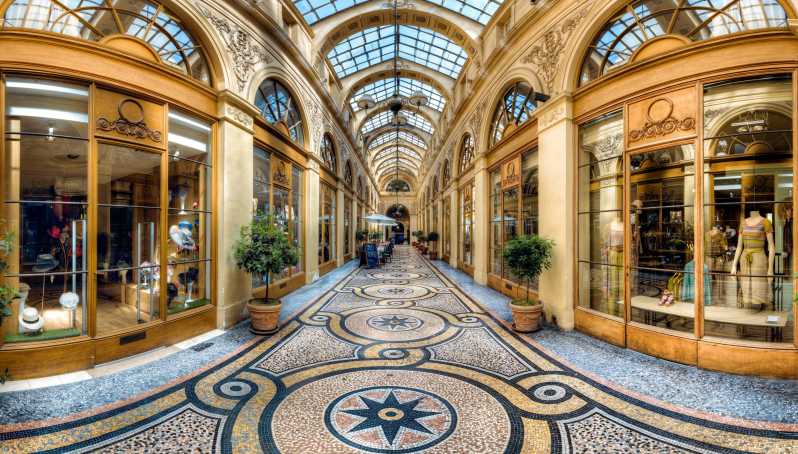
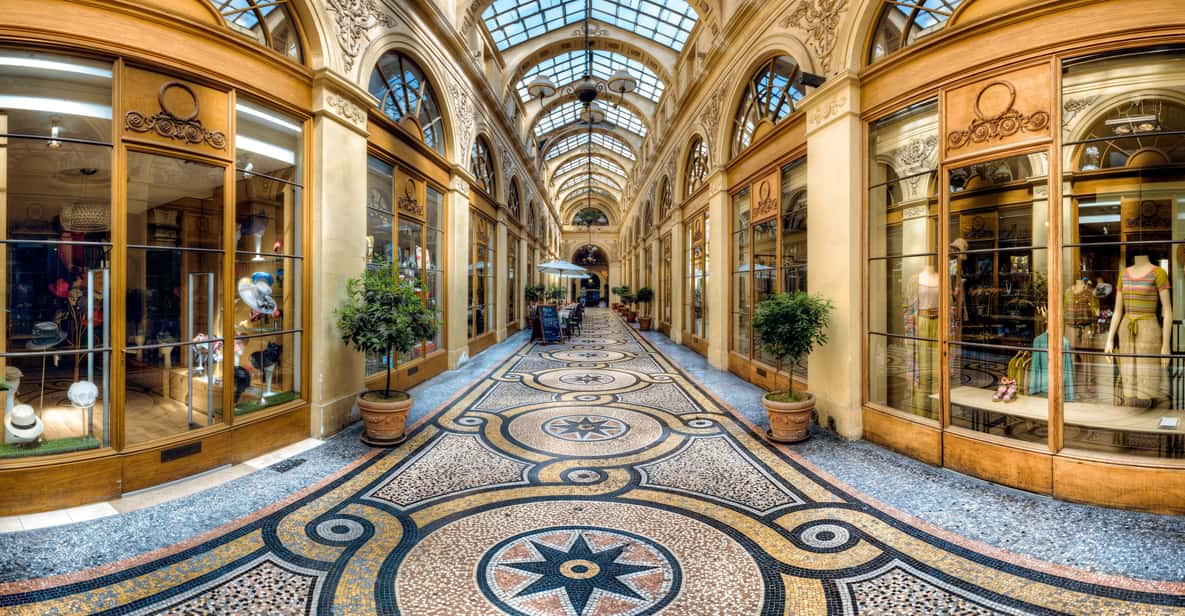
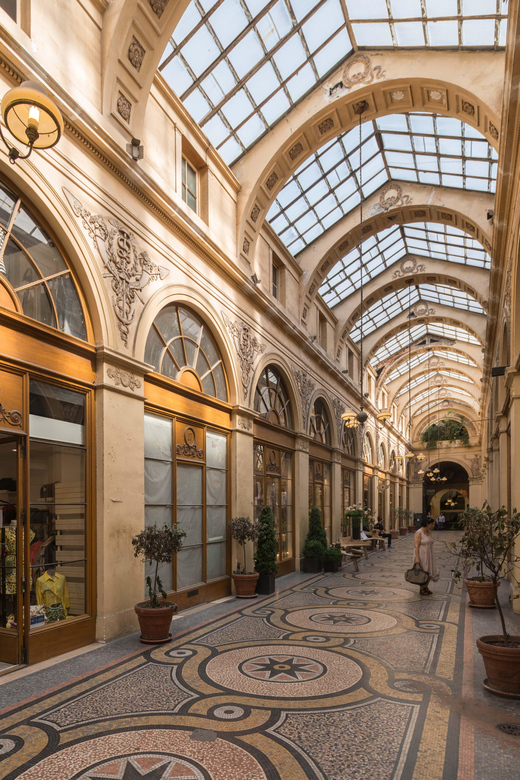
I like how the route links several famous galleries in one walk, so you get variety without needing a long day plan. The Galerie Vivienne stop is a real visual payoff with its Italian mosaics and glass roof, and the guide adds context as you move so the passages feel more than pretty hallways.
One thing to watch: the tour runs in French only, and the pace is story-forward. If you’re hoping for mostly time inside shops with minimal commentary, you may find parts outside the galleries less focused on what you came to see.
In This Review
- Key highlights to look for
- Why Paris’s passages couverts feel like a secret city
- Meeting at Place Colette near the glass-bead art
- Palais Royal to Galerie Vero-Dodat: art books and a calmer start
- Galerie Vivienne: mosaics under glass and pure Paris theater
- Galerie Colbert: exhibitions that keep the passage feeling current
- Passage des Panoramas and the pull toward the Grands Boulevards
- The real value: a time-warp walk from 19th-century Paris
- Price and value of a 90-minute guided passage tour
- Pacing tips: how to enjoy the walk without rushing
- Who this tour suits best
- Should you book this covered passages tour?
- FAQ
- How long is the tour?
- How much does it cost?
- What language is the tour guide?
- Where do I meet the guide?
- Which passages are included?
- Is transfer included?
- Are the galleries always open?
- What happens in bad weather?
- Is there a cancellation option?
Key highlights to look for
- Palais Royal to Galerie Vero Dodat: a perfect start with art-book energy and an easy rhythm for first-timers
- Galerie Vivienne’s glass roof and Italian mosaics: a photo stop that also feels like stepping into another era
- Galerie Colbert’s regular exhibitions: galleries you can revisit with changing displays
- Passage des Panoramas: a passage with a collector-friendly reputation, including for philatelists
- A time-warp effect: roofed corridors that cut street noise so you can stroll in peace
- Guided in French: you’ll trade some language flexibility for smoother storytelling and flow
Why Paris’s passages couverts feel like a secret city
Covered passages in Paris aren’t just shortcuts. They’re built for walking—walking with purpose, walking to browse, and walking to see other people going about their day. That’s why you’ll feel the difference right away: the sidewalks outside move fast, while inside these passages the atmosphere softens.
This tour is built around that contrast. You’ll move from one styled “mini-street” to another, each with its own character. In 19th-century Paris, these roofed passageways helped connect neighborhoods and kept people sheltered. Today, only about thirty of the original roofed passages remain from a time when there were far more, so what you see now has a rare, protected feel.
If you like architecture that’s functional—not just decorative—this is the kind of sightseeing you can actually use. It’s also a smart plan for gray weather, because you’ll still be walking under coverage for most of the experience.
You can also read our reviews of more tours and experiences in Paris.


Meeting at Place Colette near the glass-bead art
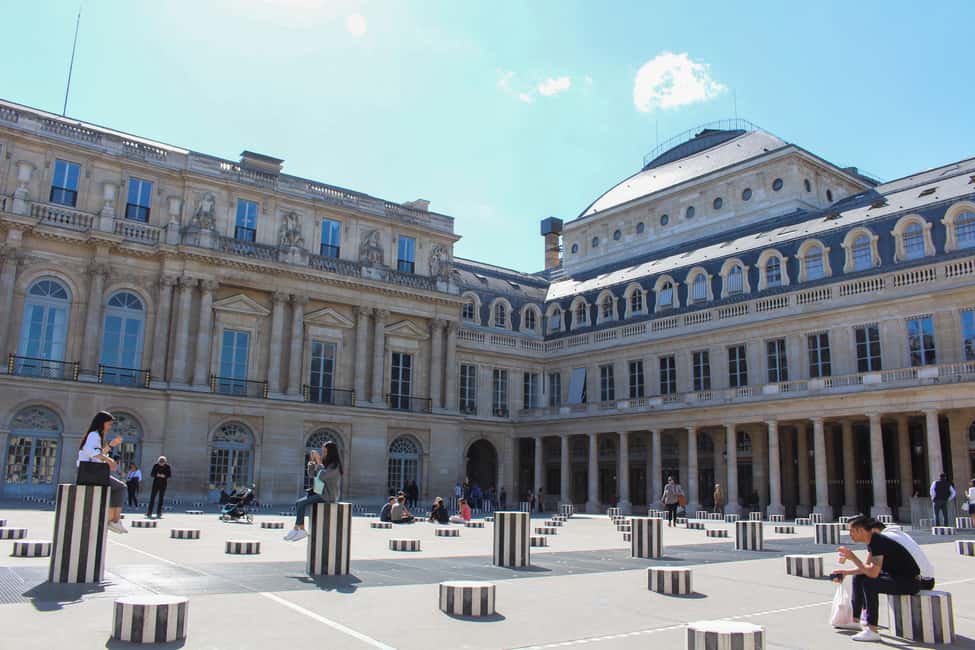
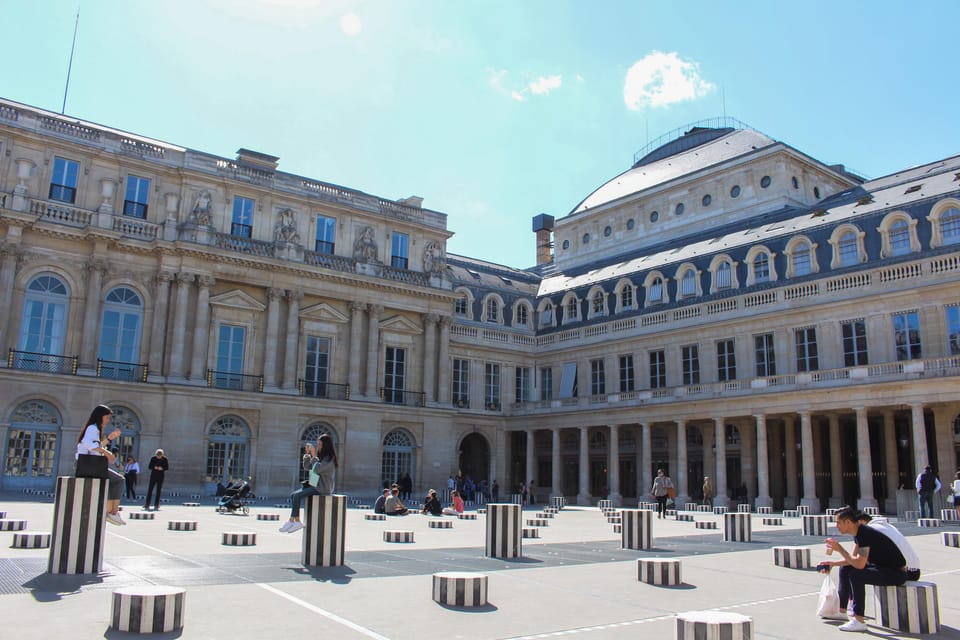
You’ll meet at Place Colette in the 1st arrondissement, right in front of the Comédie-Française, near the metro stop Palais Royal – Musée du Louvre. The landmark to find is a glass-bead artwork by Jean-Michel Othoniel.
This matters because you’ll start in a part of Paris that already has “passage culture” in the air. You’re close to Palais Royal, which is exactly where the walk begins. If you’re using transit, you’ll be able to get there without a long detour, and you won’t burn time crossing busy streets right before your tour starts.
Wear shoes you can walk in comfortably. You’re on foot for about 90 minutes, and you’ll be moving through corridors where cobblestones and stone steps can make every pace feel more noticeable.
Palais Royal to Galerie Vero-Dodat: art books and a calmer start
The walk begins at Palais Royal, then heads toward Galerie Vero Dodat. This early stop is a nice choice because it sets expectations: you’re not just entering an old corridor; you’re moving into a shopping world that’s still alive.
Galerie Vero Dodat is known for art bookshops, which changes the vibe from standard “window shopping.” Expect to see more design-leaning choices—books, paper, and a slower tempo. Even if you don’t buy anything, it’s the kind of place where you can browse for five minutes and actually learn something just by looking at what’s for sale.
What I like about starting here is how it helps you get your bearings fast. Once you’ve walked a short distance under a passage roof, the rest of the experience makes more sense: you’ll notice how the architecture guides foot traffic, how light changes, and how the ceilings help create that sheltered feeling.
Galerie Vivienne: mosaics under glass and pure Paris theater
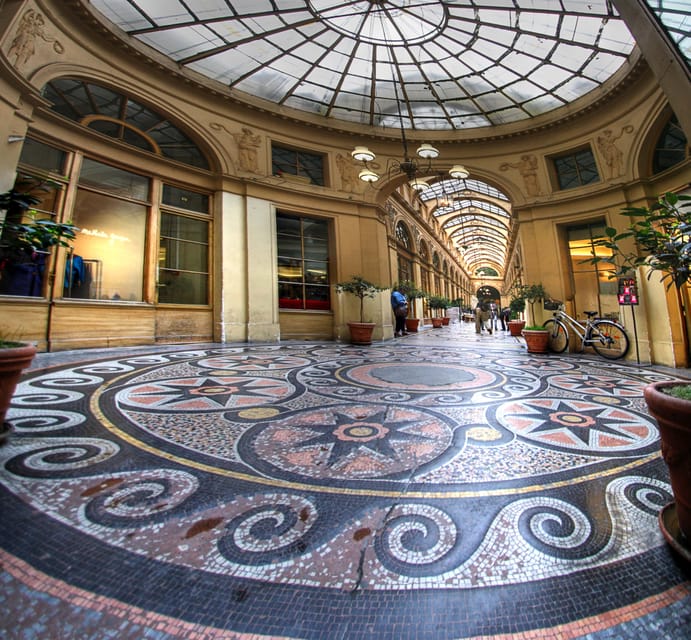
The highlight for many people is Galerie Vivienne, and it’s easy to see why. This is one of the most majestic passages on the route, with Italian mosaics on the floor and a glass roof overhead.
The floor is the first surprise. The mosaic pattern pulls your eyes down, so you naturally slow your pace to take it in. Then you look up and notice how the glass roof changes the light—softening the brightness and making the space feel composed, like a miniature interior designed for strolling.
This is also a great spot to let the guide’s storytelling do its job. The passages weren’t invented for tourists. They were used by real Parisians, and Galerie Vivienne is the kind of place that helps you picture that daily routine: strolling, parading, browsing, and meeting people without stepping back into street chaos.
Practical tip: bring your phone camera, but don’t spend the whole stop shooting. Give yourself a minute to simply stand and look. The mosaic-and-roof combination is best when you see the proportions, not just the details.
Galerie Colbert: exhibitions that keep the passage feeling current
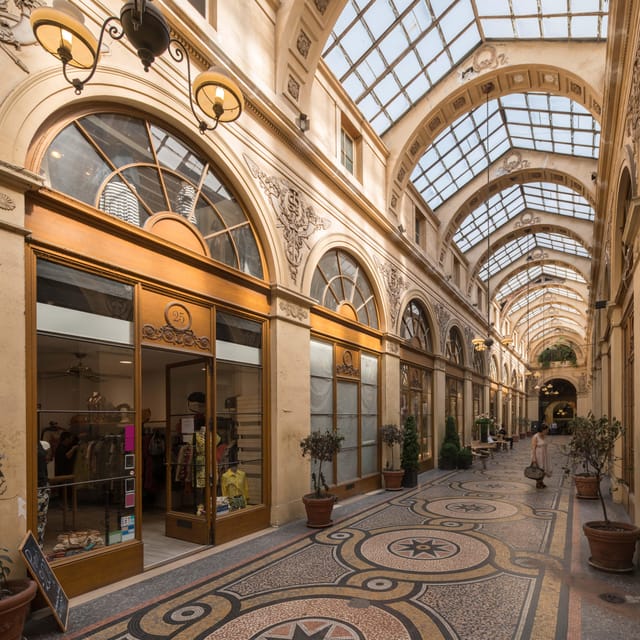
Next comes Galerie Colbert, where you’ll find regular exhibitions. That detail is more than trivia. It means the passage isn’t frozen in time. You can treat it like a living space, where the architecture provides the stage and the displays provide the changing content.
Why this helps you as a visitor: it gives you options. If an exhibition is showing, you’ll get a reason to linger beyond “look and leave.” If it’s not, the passage still works as an architectural breather between more visually intense stops.
This is the kind of stop where you can slow down and read, even if you only skim. Exhibitions typically bring signage, descriptions, and a small set of curated information—perfect for turning this walk into something you remember, not just something you photographed.

Passage des Panoramas and the pull toward the Grands Boulevards
From Galerie Colbert, the route continues to the Passage des Panoramas, which is especially appreciated by philatelists. That’s a niche detail, but it hints at something bigger: this passage has long attracted people who love collecting, browsing, and exploring tucked-away corners of Paris commerce.
Passage des Panoramas also acts like a hinge. It leads you onward to the Grands Boulevards—the broad avenue area long famous in French popular culture. Even if you’re not chasing music references, you’ll feel the shift when you move closer to the boulevard energy: more open space, more street visibility, and less of that sealed-off calm.
The historical context matters here. Roofed passageways were popular in the 19th century partly because they offered a covered access route from Palais Royal toward the Grands Boulevards. The tour uses that story to help you understand why these corridors were built the way they were: practical movement first, then comfort, then prestige.
The real value: a time-warp walk from 19th-century Paris
What makes this experience more than a checklist is how the roofed corridor design changes your body and your attention. The passages cut you off from street bustle, so you’re not constantly negotiating crowds. You can look around without feeling you’re getting pushed along.
You’ll also get a grounded sense of what these places were for. They weren’t only travel routes; they were social and commercial spaces where strolling and showing yourself off were part of daily life. That idea turns into something you can sense as you walk: the layout encourages meandering, storefronts invite browsing, and the ceiling creates a subtle rhythm that feels different from open-air streets.
This is also where you’ll appreciate the guided format. A guided walk makes it easier to notice what you might otherwise miss. The guide’s job is to connect surfaces—glass roofs, mosaic floors, gallery facades—to a human story about why the passage exists at all.
And one of the biggest practical benefits: you get multiple “micro-views” of Paris’s architectural personality in a single 90 minutes without needing repeated transit rides.
Price and value of a 90-minute guided passage tour
At $17 per person, this is one of those Paris deals that feels fair in two ways. First, you’re paying for time-saving: one guided loop covers several well-known passages instead of making you plan a route yourself. Second, you’re paying for interpretation, which is what turns a corridor from scenery into understanding.
What you get is simple and useful: a walking tour with a guide (no included transfer). In 90 minutes, that’s enough time to see the key galleries and still keep a smooth pace without turning it into a full-day production.
The main tradeoff is language. Since it’s French only, the value depends on your comfort level. If you understand spoken French at a basic travel pace, you’ll likely feel rewarded by the stories and the flow. If you don’t, you can still enjoy the architecture, but you’ll lose some of the connective tissue that makes the tour stand out.
Pacing tips: how to enjoy the walk without rushing
This is a strolling tour, but it’s still timed. You’ll move from passage to passage, so you need to decide in advance what kind of visitor you are.
- If you love details, slow down for the big visual stops like Galerie Vivienne, then accept a faster pace elsewhere.
- If you hate feeling rushed, prioritize looking at interiors and roofs over shopping aisles, since passage shops can pull you in different directions.
Comfortable shoes are a must. Even though it’s covered, you’re on foot for most of the duration: 90 minutes, and stone textures can be less forgiving than you expect.
Also plan for closures. Some galleries are closed on Sundays and public holidays, so the visit experience can vary depending on the day. Bad weather can also affect timing, with the operator able to postpone the visit.
Who this tour suits best
This tour is a great fit if you want Paris that’s a little different from the typical landmark sprint.
You’ll probably enjoy it if:
- You like architecture details like mosaic floors and glass-roof ceilings.
- You want a “walkable Paris” plan that still feels special even when it’s cloudy.
- You enjoy quirky Paris corners, from art book browsing to philatelist-friendly passage culture.
- You want a guided story so the passages become more memorable than just pretty photos.
It’s less ideal if:
- You need the tour in English.
- You want mostly shop time and minimal commentary.
Should you book this covered passages tour?
I’d book it if your goal is to see Paris passages couverts efficiently and come away with a clear sense of why they matter. For $17, you’re getting a guided route that hits multiple standout galleries—especially the eye-catching Galerie Vivienne—and you’ll get enough context to make the experience feel coherent.
Don’t book it blindly if French-only tours are a problem for you. Also consider how you feel about guide narration versus independent wandering. If you’re hoping for a mostly self-guided shop crawl, you might prefer a lighter, unguided exploration.
If you’re flexible on language and you like architectural stories, this is a smart, good-value way to experience a calmer side of Paris.
FAQ
How long is the tour?
The tour lasts 90 minutes.
How much does it cost?
The price is listed as $17 per person.
What language is the tour guide?
The tour is French only.
Where do I meet the guide?
You meet at Place Colette (75001 Paris) in front of the Comédie-Française, near the metro Palais Royal – Musée du Louvre, by the Jean-Michel Othoniel glass-bead artwork.
Which passages are included?
The walk covers Galerie Vero Dodat, Galerie Vivienne, Galerie Colbert, and Passage des Panoramas, moving toward the Grands Boulevards.
Is transfer included?
No. Transfer is not included.
Are the galleries always open?
Some galleries are closed on Sundays and public holidays.
What happens in bad weather?
In case of bad weather, the operator may postpone the visit.
Is there a cancellation option?
Yes. You can cancel up to 24 hours in advance for a full refund.