REVIEW · PARIS
Best Bits of Paris: 40 Favourites Walking Tour 5 hours
Book on GetYourGuide →Operated by Best Bits of Paris · Bookable on GetYourGuide
Five hours in Paris, and you feel oriented fast. This walk-and-metro tour mixes iconic landmarks with the Left Bank’s real character, starting in Saint-Germain-des-Prés and ending at one of the best Eiffel Tower viewpoints. I especially like how the guide stitches together stories, geography, and practical tips, and how a small group (max 10) keeps things friendly instead of rushed; guides like Claire and Johann have been called out for clarity, professionalism, and a good sense of humor.
Two big wins for me: you get classic hits like Notre Dame, the Louvre area, and the Arc de Triomphe, plus you also slow down for neighborhood texture—cafés tied to Hemingway and Oscar Wilde, Luxembourg Gardens, and the Latin Quarter. One consideration: this is mostly an outside-and-on-foot experience, so you’re seeing major sights from the street or at specific photo/view points (with a longer stop only at a couple of places), not doing full museum or landmark interiors all day.
Best Bits of Paris tour highlights (what to watch for)
- Saint-Germain-des-Prés start with history, street-level sights, and a smooth kickoff right by the station
- Café stops with literary/arts energy near places associated with Hemingway and Oscar Wilde
- Major monuments, but practical: exterior views, quick context, and the exact spots that help you navigate later
- A food stop that feels Parisian (crepe/pastry options; lunch not included)
- Big-picture orientation to finish at Place du Trocadéro for a clean Eiffel Tower view
- Small group pace that keeps energy up across 5 hours of walking and a metro ride
In This Review
- Entering Saint-Germain-des-Prés at the right pace
- Saint-Germain’s café culture, plus the stories you can actually use
- Saint-Sulpice and Rimbaud’s Drunken Boat: Paris at human scale
- Luxembourg Gardens and the Latin Quarter: where the city starts to feel alive
- Seine classics: Notre Dame, Île de la Cité, and the best kind of overview
- The Arc de Triomphe section and the view strategy that saves time
- Ending at Place du Trocadéro: the Eiffel Tower moment you’ll remember
- The guide factor: why good explanations matter on day one
- Price and value: $73 for a fast Paris orientation
- What to wear, what to bring, and how to make the day easier
- Who this tour is best for (and who should skip it)
- Should you book Best Bits of Paris 40 Favourites Walking Tour?
- FAQ
- How long is the Best Bits of Paris walking tour?
- What is the price per person?
- Where do we meet for the tour?
- Is the tour guided in English?
- How large is the group?
- Does the tour include metro tickets?
- Is the crepe stop included?
- What should I bring?
- Is the tour suitable for wheelchair users or limited mobility?
- What are the main end-of-tour views?
Entering Saint-Germain-des-Prés at the right pace
I like starting in Saint-Germain-des-Prés because it sets the tone for Paris: smarter streets, older churches, café chatter, and a feeling that you’re walking through ideas as much as buildings. You begin at 147 Bd Saint-Germain, and you meet your guide just outside the metro station Saint Germain des Prés, on the church side. That matters. When you start at the right hub, you spend less time hunting for your group and more time soaking in the neighborhood.
This tour is built for first-time orientation. You’re not only moving from one famous postcard to the next—you’re learning how the city is laid out and what each area is known for. The guide keeps the day moving, but not in a sprint. It’s a “see a lot and understand enough” pace, which is perfect if you want to come back later and explore on your own.
A good sign: the group stays small (up to 10 people), so the guide can answer questions about directions, neighborhoods, and safe, easy ways to get around. That’s especially useful in Paris, where streets can look similar and navigation can feel like a puzzle until you’ve got a few anchor points.
Saint-Germain’s café culture, plus the stories you can actually use
Right after the start, you skim through Saint-Germain-des-Prés and then head into Church of Saint Germain des Prés territory. Even if you’re not a history buff, these stops do something practical: they give you a mental map of where you are in the city’s timeline. Paris feels layered, and a guide who can explain that layering fast saves you from guessing.
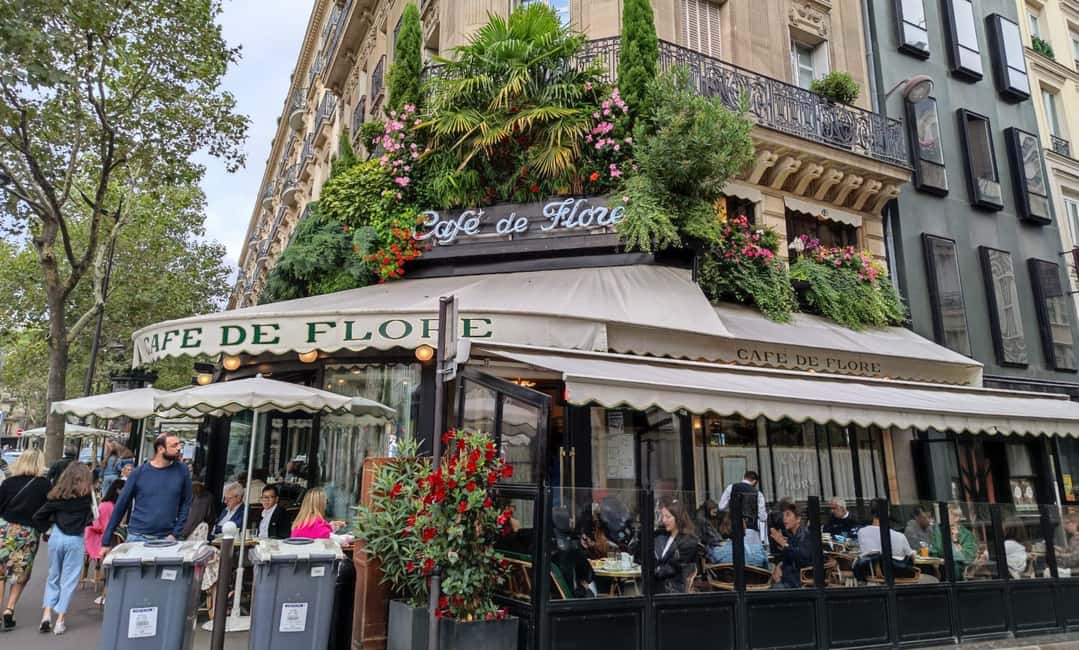
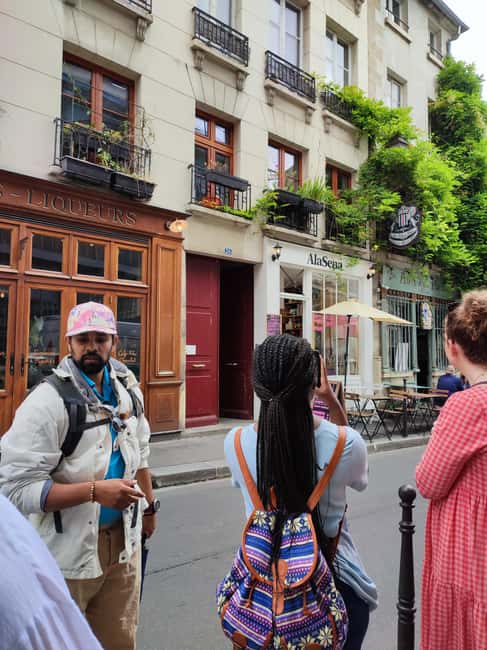
Then the tour hits the kind of café stretch that makes you understand why writers and thinkers used to hang around here. You pass places like Les Deux Magots and Café de Flore. These aren’t only photo opportunities; they’re context tools. When you know that certain cafés became associated with famous literary names, you start noticing how Paris cafés function like informal offices—people meeting, working, and debating over espresso.
I also like that the tour doesn’t treat cafés as a separate “food thing.” They’re woven into the city’s personality. You’ll hear the kind of history that explains why this neighborhood feels different from, say, the business districts or the tourist-heavy riverside blocks.
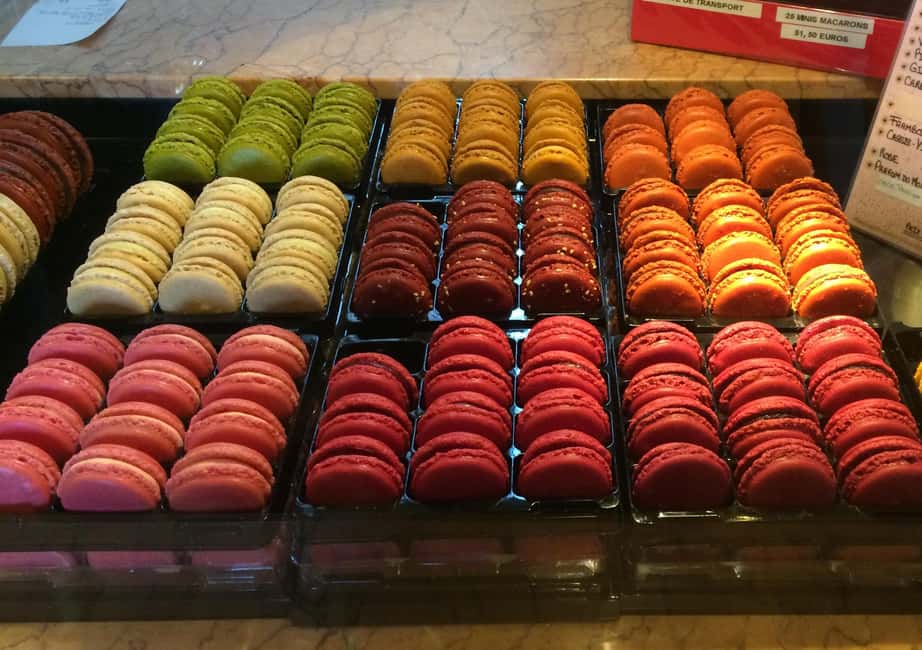
You do get a quick snack moment too: A la Mere de Famille is one of the stops where you can grab something local. The crepe/pausage vibe is part of the tour’s identity, and you’ll be given recommendations along the way—even if you choose your own items.
You can also read our reviews of more walking tours in Paris



Saint-Sulpice and Rimbaud’s Drunken Boat: Paris at human scale
One of my favorite mid-tour sections is the shift from café culture into deeper Paris landmarks. You visit Church of Saint-Sulpice with a dedicated stop, giving you time to slow down rather than just walk past. This is where the tour feels like more than a checklist. You get enough time to notice details and understand why the church is significant, not just why it’s famous.
Then comes a very different kind of attraction: the Wall The Drunken Boat Rimbaud. It’s the sort of stop that helps Paris feel modern and creative rather than frozen in a museum box. This is where a walking guide earns their keep, because they can frame a street artwork moment as part of the city’s ongoing storytelling.
The stops around Hôtel de Luzy help with that same goal: Paris doesn’t only live in the biggest monuments. It lives in smaller streets, distinctive facades, and local buildings that you’d miss if you only chased the loudest skyline.
If you like your sightseeing to include texture—art, architecture, and real street energy—this portion is a great payoff.
Luxembourg Gardens and the Latin Quarter: where the city starts to feel alive
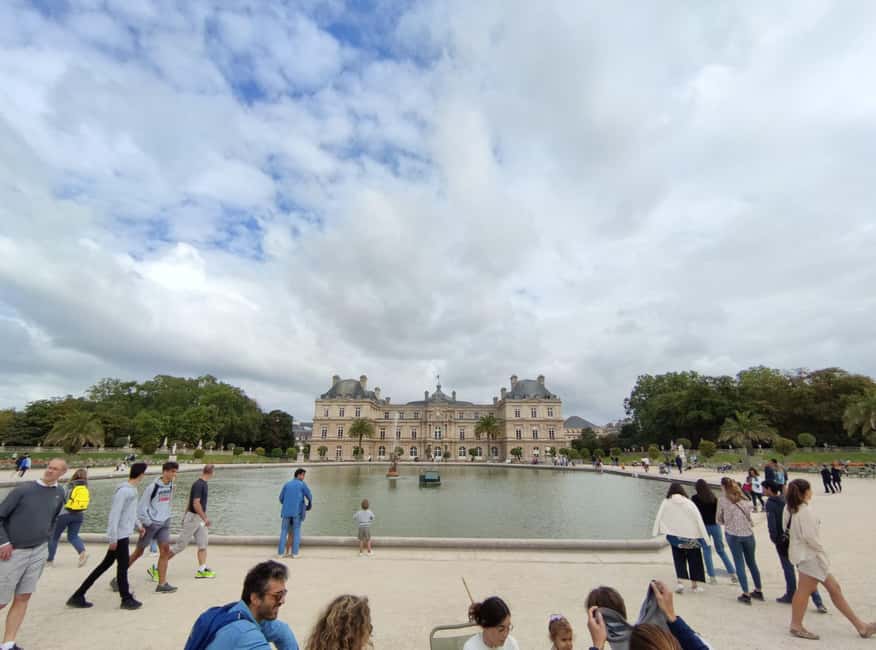
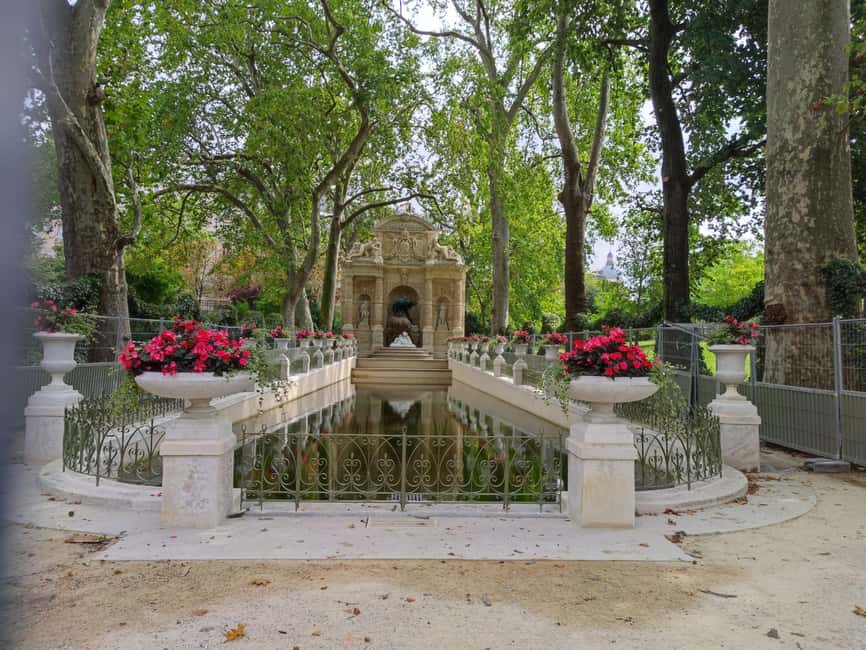
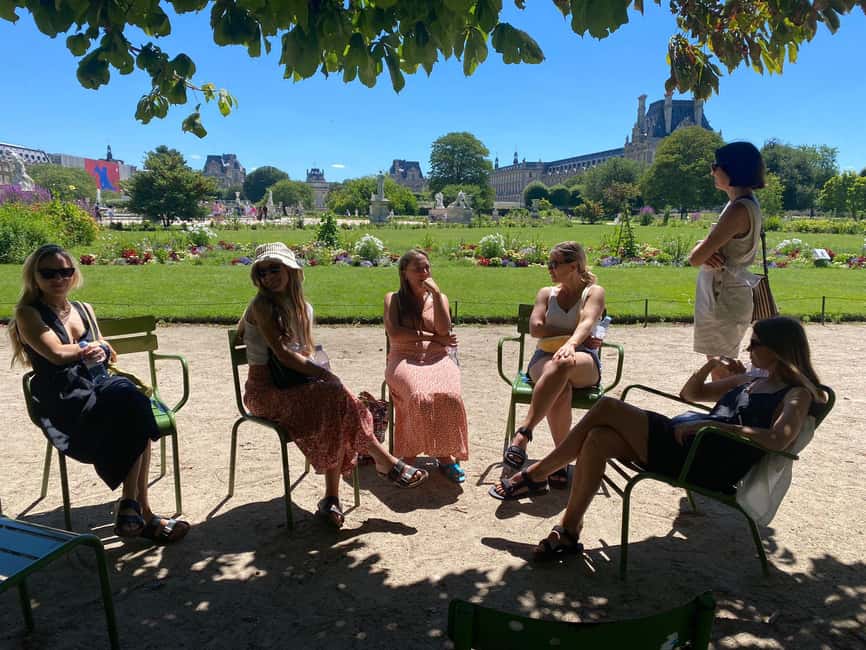
From the café and church section, you get a strong transition toward the Left Bank’s intellectual feel. The Luxembourg Gardens are a standout because they give you a break from hard walking while still staying in the story. Even a short stroll here changes how you experience Paris. The city can feel fast and heavy when you’re constantly looking up at facades. Gardens reset your eyes and your pace.
After that, the tour works its way through medieval Latin Quarter territory. This is where you see Paris not just as famous monuments, but as neighborhoods with their own rhythm. You also get key educational landmarks in the mix, including Sorbonne University and a move toward the Pantheon. Those names help you see the Left Bank as a place tied to learning and debate, not only a place to eat and shop.
The value here is that you learn how areas connect. Once you’ve got a sense of where the Latin Quarter sits relative to the Seine and the bigger monuments, you can explore later with far less stress. You stop seeing Paris as random attractions and start seeing it as a set of connected districts.
Seine classics: Notre Dame, Île de la Cité, and the best kind of overview
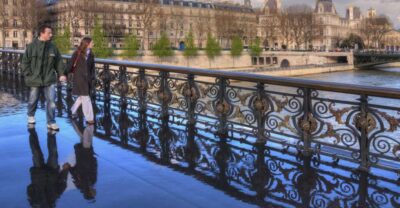
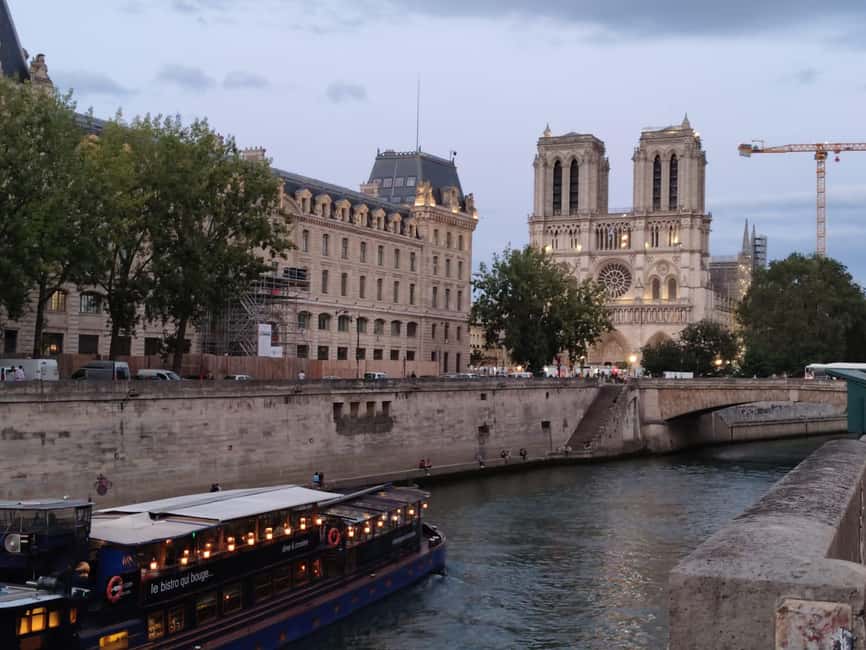
At some point on this tour, you’ll start thinking: okay, now I get where things belong. The best “aha” moment is the run along the Seine and into Île de la Cité territory. You see the river view lines and the cluster of major historical sites in a way that’s hard to replicate if you only ride buses or do self-guided photos.
You’ll spot Notre Dame area sights, and you’ll also see the Conciergerie and Hôtel de Ville. These are not random buildings. They’re tied to French history in a way that helps you understand why so much of the city feels like it was built as theater—stages for events that shaped modern France.
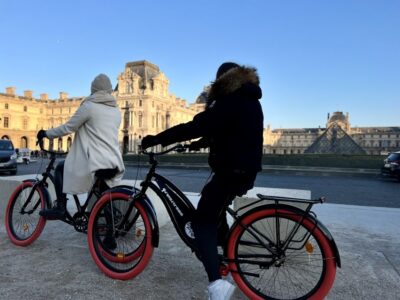
Then there’s the Louvre museum exterior and nearby landmarks like Tuileries Gardens and the Obélisque de Louxor. This is one of the smartest ways to handle the Louvre area for a first visit: you get your bearings without committing a full day to museum lines. If you later decide to go inside, you’ll know where you are and what you’re looking at.
The Arc de Triomphe section and the view strategy that saves time
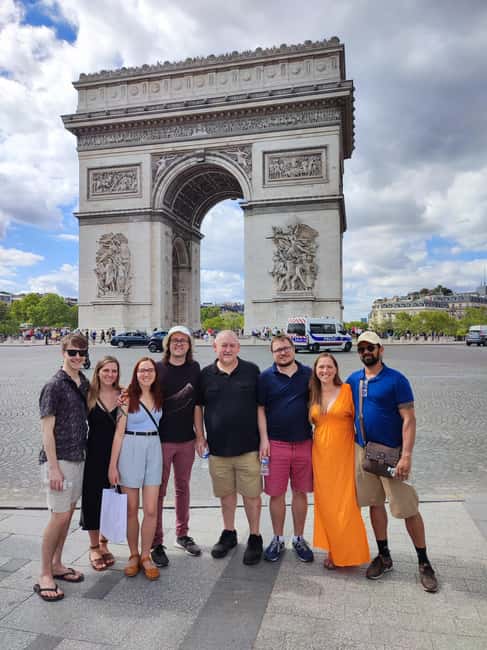
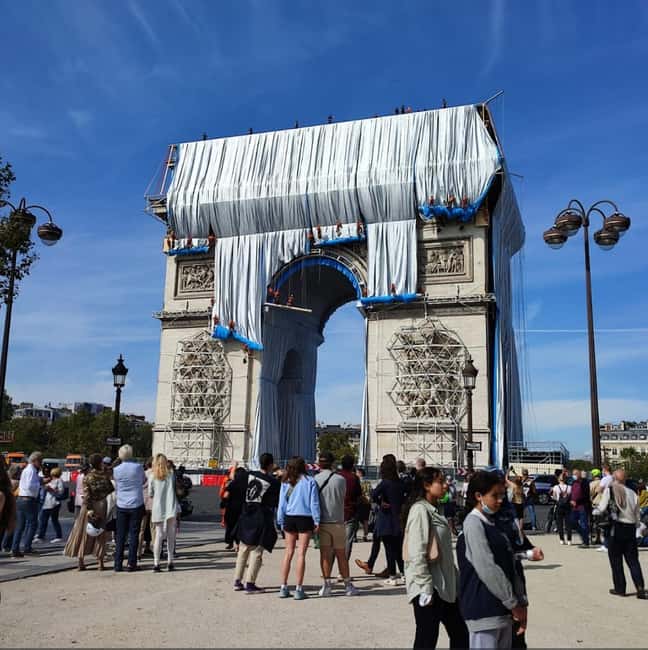
You get a close-up Arc de Triomphe moment that feels different from a distant skyline view. Seeing it up close helps you understand its scale and the way the surrounding roads funnel movement into big ceremonial space. It also makes a later Eiffel Tower day feel easier, because your brain connects the dots between Paris’s grand monuments.
The tour also includes the Arc de Triomphe du Carrousel view and walks through the Tuileries Gardens area, which is a good buffer between major stops. Those in-between sections matter. They’re where your feet catch up with your eyes.
A practical note: this is a walking-and-metro day. It’s designed so you don’t spend the full five hours slow-walking the entire distance between far-apart sights. You get enough metro support to keep momentum without turning the whole day into a bus tour.




Ending at Place du Trocadéro: the Eiffel Tower moment you’ll remember
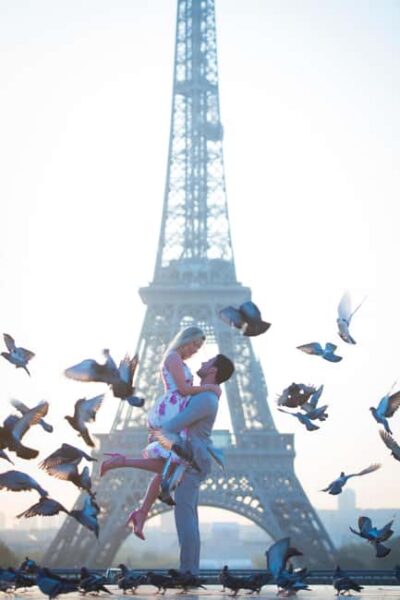
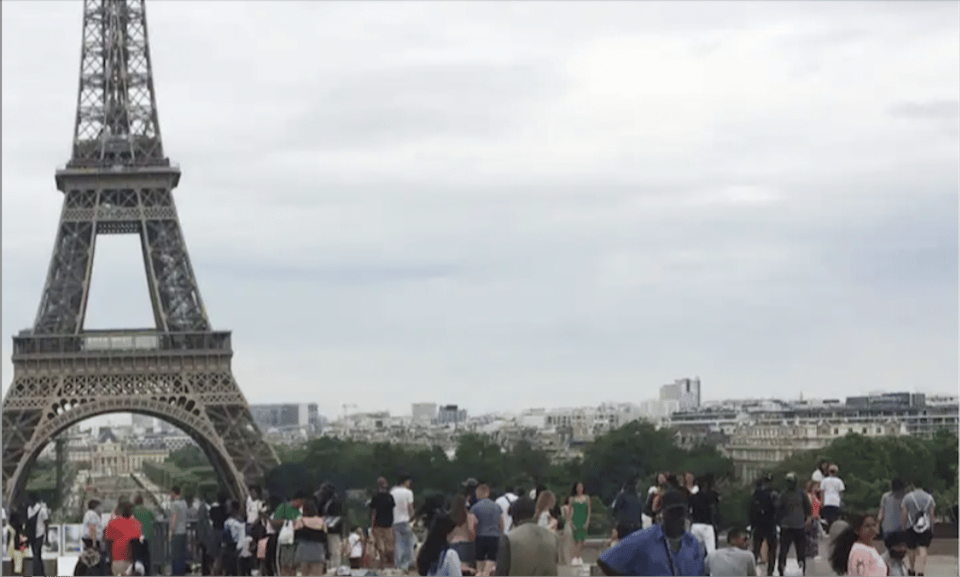
The finale is all about framing, and Place du Trocadéro is a top choice for that. You finish at Place du Trocadéro et du 11 Novembre, where the Eiffel Tower view is the kind that makes the day feel like it paid off. It’s not just about seeing the tower—it’s about seeing it with perspective.
By the time you reach the finish, you’ve already covered the Seine cluster, the Louvre area, and the Arc de Triomphe, so the Eiffel Tower stops feeling like a random monument. It feels like the end of a route, a visual crescendo.
This is also a smart moment for the future. Once you know where Trocadéro sits, you can plan your own return for sunset or evening photos without starting from scratch.
The guide factor: why good explanations matter on day one
I don’t care how many monuments you see if you can’t connect them. What makes this tour worth it is the guide’s mix of history, geography, and humor. In the past, guides including Claire have been described as lovely and strong at articulating the story, while Johann has been praised for being welcoming and covering everything from history and politics to getting around and personal safety. That kind of broad, real-world coverage is exactly what helps on your first day.
You’ll also get local recommendations, which is the quiet value-add. A monument is impressive, but what you really need is guidance on where to eat, what to try, and which streets feel easier to navigate later. The tour does that without turning into an aggressive sales pitch.
If you like tours where the guide doesn’t just recite dates, this one fits. You get enough context to understand what you’re looking at, and enough personality to keep it fun.
Price and value: $73 for a fast Paris orientation
At $73 per person for a 5-hour small-group tour, the math works best if you value time and guidance. This isn’t just a tour of five famous things—it’s a curated route that hits multiple “anchor” landmarks: Notre Dame area, Louvre exterior zone, Arc de Triomphe zone, and an Eiffel Tower finale. It also adds neighborhood education in Saint-Germain-des-Prés, Luxembourg Gardens, and the Latin Quarter.
You do need to account for what’s not included: metro tickets are on you, and lunch/snacks/water aren’t included. There’s a crepe stop included in the sense that you’ll be taken to a spot the guide recommends, but the crepe itself is not included. Still, that’s typical for walking tours. The value comes from the route, the guide, and the way you’re guided to the right places.
If you’re arriving in Paris and want to feel oriented quickly, paying for a well-structured route like this can save you from wasting half a day wandering. The tour gives you a map in your head, not only photos on your phone.
What to wear, what to bring, and how to make the day easier
This is a walking-first experience, plus metro, so you’ll want comfort from minute one. Bring comfortable shoes and water. Weather changes quickly in Paris, so check the forecast and dress accordingly. If it’s rainy, plan for damp streets and consider bringing a compact layer you can manage without slowing the group.
Also bring a camera, because the route is built around view points and exteriors: Eiffel Tower at Trocadéro, Arc de Triomphe up close, Louvre area, and the Seine perspectives. You’ll want photos, but I recommend taking a few in “look now” moments, not only when you’re stopping to pose. Part of the charm is seeing Paris move past your eyes.
And if you’re thinking about mobility constraints: the tour isn’t suitable for people with mobility impairments or wheelchair users. That’s worth respecting before you book, because walking routes and street crossings can be tough.
Who this tour is best for (and who should skip it)
This tour is best for you if you’re visiting Paris for the first time—or if you’re short on time and want a smart overview with neighborhood flavor. It’s also a good fit if you want a guide to handle the “what matters” question so you can explore later with confidence. The route is designed as a primer: icons, context, and practical orientation.
If you’re the type who needs inside access to museums and major monuments for most of the day, you might feel constrained. This isn’t a full Louvre or full monument interior day. It’s more about street-level understanding and big-picture sightlines.
If you enjoy history as story rather than textbook, you’ll probably like the pacing. You’ll get brief but meaningful stops, then move on so the day stays energetic.
Should you book Best Bits of Paris 40 Favourites Walking Tour?
Yes, I’d book it for the right kind of trip. If you’re arriving in Paris and want to get your bearings fast while seeing the biggest icons without spending your whole vacation trapped in queues or guessing your route, this tour makes a strong first-day plan.
I’d hesitate only if you need mostly indoor access, or if long walking and uneven streets are a problem for you. Otherwise, for a compact $73 investment and a small-group setting, you’ll come away with a clear sense of where major sights fit together—and a list of Paris stops that feel like they belong to you, not to a brochure.
FAQ
How long is the Best Bits of Paris walking tour?
It lasts 5 hours.
What is the price per person?
The price is $73 per person.
Where do we meet for the tour?
Meet just outside the exit of the metro station Saint Germain des Prés, on the church side. The closest address provided is 147 Bd Saint-Germain.
Is the tour guided in English?
Yes, it’s a live tour guide in English.
How large is the group?
The tour is a small group limited to 10 participants.
Does the tour include metro tickets?
No. Metro tickets are not included, so you’ll need a Day pass or 3 single t+ tickets.
Is the crepe stop included?
The tour includes a stop for the guide’s favorite crepe, but lunch/snacks are not included. So the food itself is for you to pay.
What should I bring?
Bring comfortable shoes and water, and dress for the weather.
Is the tour suitable for wheelchair users or limited mobility?
No. It isn’t suitable for people with mobility impairments or wheelchair users.
What are the main end-of-tour views?
The tour finishes at Place du Trocadéro and du 11 Novembre for a breathtaking Eiffel Tower view.