REVIEW · PARIS
Eat, play & Love – Montmartre Walking Tour- Kids friendly –
Book on GetYourGuide →Operated by RENDEZ VOUS TOUR PARIS · Bookable on GetYourGuide
Paris is made of tiny habits, not just monuments. This Montmartre tour mixes food, history, and play so you actually remember what you see. You’ll follow a small-group route designed to feel like a neighborhood “city break,” with scheduled pauses so the hilly streets don’t take over your whole afternoon.
I like two things most: the authentic café time (coffee, croissants, and terrace watching) and the hands-on 1-hour treasure hunt that turns Montmartre history into an activity, not a lecture. The main thing to consider is that it’s not suitable for children under 8, and you’ll want comfortable shoes because the walking is part of the point.
In This Review
- Key highlights to look for
- Montmartre in Three Hours: Eat, Walk, Play
- Meeting at Lamarck–Caulaincourt and Starting With Café Terrace Time
- The Local Café Break: Snacks, Stories, and a Real Paris Pause
- Architecture-Friendly Walking: How the Route Keeps It Understandable
- Mini Flea Market Shopping: A Souvenir With a Story
- Cheese, Market Bites, and Drinks: Tasting Without the Full-Meal Burden
- The 1-Hour Treasure Hunt Escape Game and Your Parisian Diploma
- Inside the Fun Attic Visit: Why Odd Stories Stick
- Ending at Chez Eugène in Place du Tertre
- Price and Value: Is $76 Worth It?
- Who Should Book This Montmartre Walking Tour?
- Should you book this Montmartre tour?
- FAQ
- How long is the Eat, Play & Love Montmartre Walking Tour?
- How much does the tour cost?
- Where do I meet the guide?
- What food is included?
- Do the guides speak English?
- Is it suitable for all children?
- What should I bring?
Key highlights to look for
- Small group (max 12) with expert local storytelling that feels personal, not mass-tourist.
- Authentic café break plus snacks included: café, croissant, tartine, with water provided.
- Architecture-focused walking with guided stops and architecture/gastronomy/sport connections.
- Mini flea market shop designed for a real souvenir, not the same postcard stuff.
- 1-hour treasure hunt escape game that culminates in a playful Parisian-style diploma.
- End at Chez Eugène (Place du Tertre) with extra tasting to close the loop.
Montmartre in Three Hours: Eat, Walk, Play
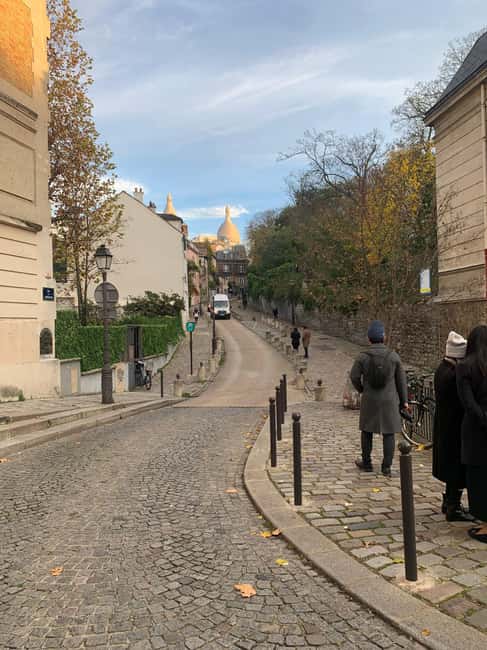
Montmartre can feel like two different places: postcard streets up top, then the real neighborhood vibe underneath. This tour aims for the second part. You don’t just “see” Montmartre—you move through it with a guide who explains how Parisians live with their city, even in the hills.
The best angle here is the pacing. It’s built around short walking stretches, scheduled food moments, and a big activity (the treasure hunt). That matters because Montmartre gets exhausting fast if you treat it like a checklist. Here, you’re learning while you’re also resting.
If you’re traveling with kids who want something more active than museums, this is one of the more practical ways to do Montmartre. If you’re a solo traveler who hates long group hauls, the small-group format helps a lot.
You can also read our reviews of more walking tours in Paris



Meeting at Lamarck–Caulaincourt and Starting With Café Terrace Time
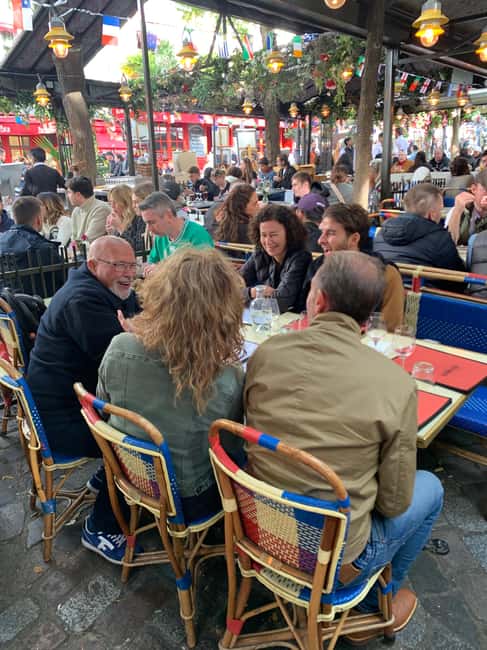
You meet at Lamarck–Caulaincourt, at the subway station, where the day starts simple: coffee and a little “getting oriented” time. The tour description calls this a group-gathering moment—checking expectations, answering general questions, and getting everyone set for the route.
Then you get time to enjoy the café terrace watching. That sounds casual (because it is), but it’s also smart. You’re in Paris mode fast—sitting, people-watching, and learning the city rhythm before you hit the steepest parts of Montmartre.
This first segment also helps you feel less lost later. When you see the streets and landmarks after coffee, you’re not just passing through—you’re connecting what the guide says to what you’re actually seeing outside.
The Local Café Break: Snacks, Stories, and a Real Paris Pause
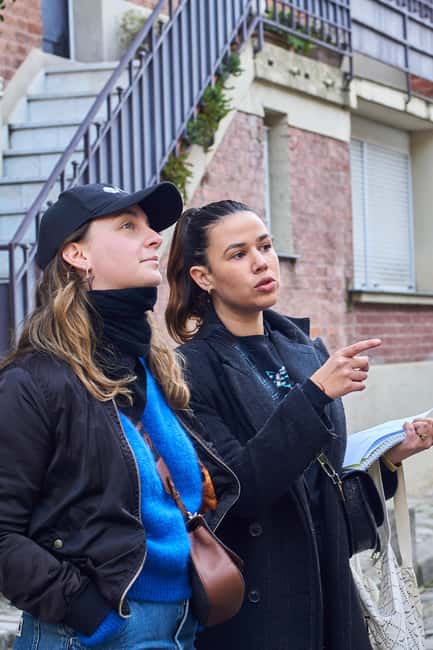
There’s a dedicated local café break of about 30 minutes, with snacks included: café, croissant, and tartine. In practice, this is the moment that keeps the tour from feeling like a nonstop march.
The tour is also very intentional about food and atmosphere. You’ll be building knowledge about Parisian life through architecture, gastronomy, and sport references, but you’re doing it while you eat and talk instead of only listening.
A small caution: the snacks and tastings are filling, but they’re not an entire meal. If you tend to get hungry later in the day, plan for a proper dinner afterward, especially if your schedule runs you past the tour end time.
Architecture-Friendly Walking: How the Route Keeps It Understandable
The guided walking parts are split into short chunks—about 20 minutes, then later another 30 minutes—so you’re not stuck in one long stretch. That matters in Montmartre, where the terrain can turn a calm walk into a strain.
The focus is architecture, but not in a dry way. The guide ties details in buildings and streets to what makes Parisians feel like Parisians—how they eat, what they value in their neighborhood spaces, and how the city’s design shapes daily life.
Also, the tour is designed to avoid typical tourist traps. The emphasis is on places a neighborhood expert knows, including corners that even some locals might not visit often. That’s usually where you get the best photos, the most interesting stories, and the least crowded streets.
Bring your curiosity and keep your pace steady. If you treat the walking like part of the learning (not a detour), it becomes a smoother experience.
Mini Flea Market Shopping: A Souvenir With a Story
One stop is built around shopping—about 15 minutes—at what’s described as a mini flea market shop. The point isn’t to buy the “safe” souvenir. It’s to leave with something that feels locally chosen, tied to French style and odd little finds.
This is the part I think many travelers appreciate most. You’re not wandering through souvenir shops hoping something strikes you. You’re guided toward a place where browsing feels purposeful.
A good strategy for this stop: set a small budget in your head before you arrive. The tour description hints at low-budget items you can bring home, and the souvenir becomes part of your Montmartre story instead of just another bag.
You can also read our reviews of more tours and experiences in Paris






Cheese, Market Bites, and Drinks: Tasting Without the Full-Meal Burden
Food is a recurring theme, but it’s structured. There’s a food tasting and a market visit segment (about 15 minutes), plus included cheese tasting and drinks. You’ll also get snacks earlier, and water plus hydroalcoholic gel.
This layout is a win for value. For $76, you’re not only paying for a guide—you’re paying for multiple scheduled food moments that you’d otherwise spend time and money hunting down on your own.
Still, manage expectations: the tastings are filling but not a full meal. If you’re skipping breakfast or you’re traveling with kids who eat big portions, think about bringing a little extra snack for the walk home.
The 1-Hour Treasure Hunt Escape Game and Your Parisian Diploma
The heart of the tour is the 1-hour treasure hunt, described like an escape game tied to Montmartre history. You’re not just walking by landmarks—you’re solving clues and playing in the neighborhood using what you’re seeing.
The tour also frames the experience as earning a diploma on Parisian way of life. That playful finish is the kind of touch that works for families and also keeps adults from zoning out.
This is one of the most praised elements for a reason. When you’re active—looking for details, connecting facts to street-level reality—you remember the city better. You’ll come away with a sharper sense of Montmartre beyond “pretty streets.”
And if you’re traveling with kids, the game structure helps with attention spans. It turns the afternoon into an activity, not a lecture.
Inside the Fun Attic Visit: Why Odd Stories Stick
The tour includes a visit into a fun attic, plus guided visits later that total a significant portion of the remaining time. The vibe here is about “odd anecdotes and participative learning.” That’s an unusual phrase, but the idea is straightforward: you’ll be encouraged to engage, not just stand and listen.
One of the biggest strengths of this style is that it makes architecture and local culture feel connected. You’re learning about history and gastronomy, but through the weird little objects and stories that give a place personality.
In a recent small-group walk with guide Julia, the experience included practical pacing help on the hills, plus photo-taking and a map link for a next stop. That kind of guidance is exactly what helps you keep enjoying the day even after the tour ends.
If you like tours that give you something to talk about later (not just a list of stops), this storytelling approach is a strong fit.
Ending at Chez Eugène in Place du Tertre
The tour finishes at Chez Eugène at Place du Tertre. That ending matters because Place du Tertre is one of Montmartre’s central squares—and it’s also one of the places that can feel crowded if you arrive without a plan.
A guide-led ending helps you arrive at the right moment with the right context. It’s not just walking off at a landmark; it’s closing with a food moment too.
In one recent experience with Julia, the tour ended with a tasting of deviled eggs at Chez Eugène. Even if your exact tastings vary, you can expect that final stop to be a proper “we’re done, now enjoy” moment—something tasty to anchor the tour memory.
Price and Value: Is $76 Worth It?
At $76 per person for a 3-hour Montmartre experience, the value comes from what’s included—not just the walking. You’re getting a professional guide, multiple guided segments, food and drink (including cheese tasting), tastings plus snacks, and the treasure hunt escape game.
It also helps that the group size is kept small (max 12). Smaller groups usually mean more attention, better pacing, and less time spent waiting for people to catch up.
If you were to DIY this, you’d still pay for coffee and pastries, then pay for cheese tastings, and then scramble for an activity that keeps kids engaged. Here, the guide does the hard part: building a route where food, architecture, and play fit together on purpose.
So yes, it’s a fair price for what you get—especially if you’re going early in your trip. The tour guide even recommends doing it early, since you’ll leave with Paris tips and a booklet of recommendations and Paris history to keep.
Who Should Book This Montmartre Walking Tour?
Book it if you want Montmartre with less stress and more participation. It’s a strong choice for families with kids age 8 and up who can handle walking on uneven streets.
It’s also a smart pick if you:
- Like architecture stories but don’t want only talking time.
- Want a tour that feels like a local day break (café first, activity later).
- Prefer small groups where you’re not lost in the crowd.
Skip it if you:
- Are bringing younger kids under 8.
- Know you won’t handle hill walking well, even with breaks.
- Want a mostly museum-and-photo tour with minimal food and games (this tour is built around tasting and play).
Should you book this Montmartre tour?
If you’re looking for a Montmartre experience that mixes authentic café time, architecture-focused storytelling, and a real activity for kids, I’d say yes. The schedule is designed to keep everyone moving and engaged without turning the afternoon into an endurance test.
The only real deal-breaker is age and walking comfort. If those fit, this tour offers one of the better “value per hour” mixes in Montmartre: guide + tastings + treasure hunt + a memorable ending at Chez Eugène.
FAQ
How long is the Eat, Play & Love Montmartre Walking Tour?
It’s 3 hours.
How much does the tour cost?
The price is $76 per person.
Where do I meet the guide?
You meet at the Lamarck–Caulaincourt subway station.
What food is included?
You get café and snacks (croissant and tartine), plus cheese tasting and drinks, and there’s food tasting with a market visit.
Do the guides speak English?
Yes. The tour is offered in French and English.
Is it suitable for all children?
It is not suitable for children under 8.
What should I bring?
Wear comfortable shoes.