REVIEW · PARIS
Paris: Montmartre Walking Tour with Sacré-Cœur Basilica
Book on GetYourGuide →Operated by THE PERFECT VACATION · Bookable on GetYourGuide
Montmartre tells stories in every corner. This walk strings together the neighborhood’s art-life legends with real photo stops, including Van Gogh’s house and the I Love You Wall. I also like how the route keeps momentum while still giving you short pauses to look closely. One thing to think about first: there’s uphill walking, so wear footwear that can handle it.
You start near the famous Moulin Rouge and end at Sacré-Cœur, but the big plus is that you’re not stuck in a rigid schedule once you reach the basilica. The guide drops you off for your own time inside, so you can go at your pace. That setup is great for photos and people-watching, but it also means you’ll want to plan your energy for the final climb.
In This Review
- Key moments you’ll remember
- Montmartre in Two Hours: how the route feels and why it’s good value
- Meeting at Blanche (Line 2) and the Moulin Rouge opening
- Le Mur des Je t’aime: a quick stop that’s pure payoff
- Rue Lepic and Van Gogh’s house: the art stop that feels personal
- La Bateau-Lavoir and Place Dalida: two stops, two kinds of legacy
- Moulin de la Galette and La Maison Rose: old dancehall energy and painterly color
- Clos Montmartre vineyard: the surprising taste of “wine in the city”
- Lapin Agile Cabaret and Place du Tertre: traditional nightlife to artist sales
- Reaching Sacré-Cœur: panoramic views with self-guided time inside
- Price and what $46 really buys on this walk
- Practical tips so you enjoy every stop (and don’t get slowed down)
- Who this tour is best for
- Should you book this Montmartre walking tour?
- FAQ
- How long is the Montmartre walking tour?
- Where does the tour start?
- Where does the tour end?
- Does the guide go inside Sacré-Cœur with you?
- What major places are included on the walk?
- Is this tour available in English?
- Are meals and drinks included?
- Are alcohol and drugs allowed?
- Can I record audio during the tour?
- Is the tour suitable for elderly visitors?
- Is there free cancellation?
Key moments you’ll remember
- Blanche Metro start right by Moulin Rouge, so the tour begins with instant atmosphere
- Le Mur des Je t’aime for an easy, romantic photo break in multiple languages
- Van Gogh’s house and Rue Lepic for a focused stop tied to a major artistic name
- La Bateau-Lavoir with Picasso connections, plus a Dalida photo stop at Place Dalida
- Clos Montmartre vineyard where wine is still produced in the heart of Paris
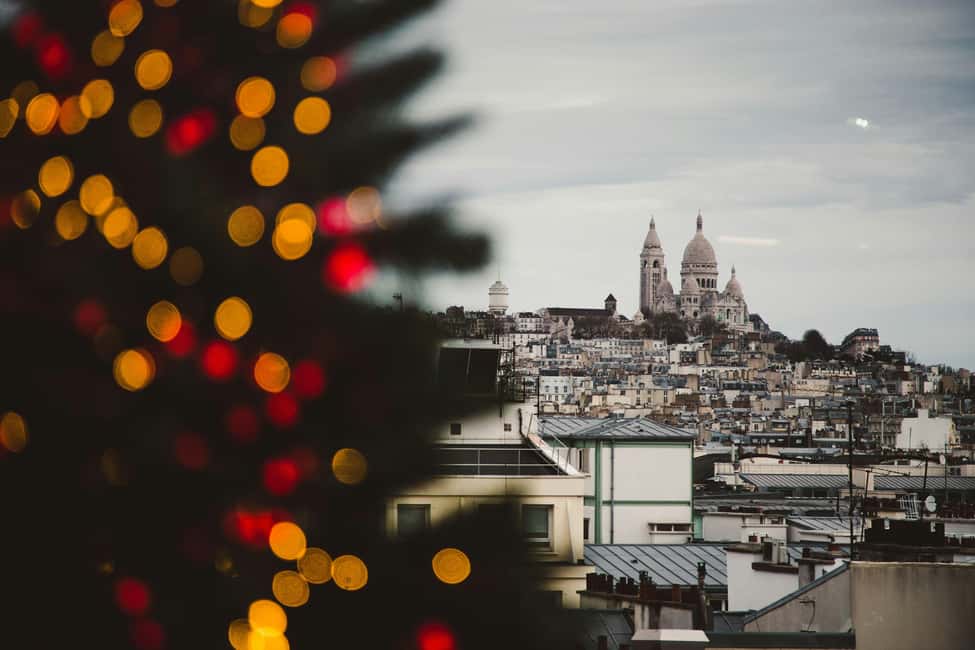
- Sacré-Cœur panoramic views at the end, with self-guided time inside the church
Montmartre in Two Hours: how the route feels and why it’s good value
This tour is built for people who want Montmartre’s main characters without spending a whole day guessing where to go. In about two hours, you move through a sequence of landmarks that each has a clear hook: art, music/cabaret, love, and views.
At $46 per person, you’re paying for an English live guide plus a structured path through several specific sites. The value is that you’re not just seeing postcard spots—you’re getting the story thread that links them into a single neighborhood walk.
A gentle reality check: Montmartre is Montmartre. Expect stairs and slopes, and plan for the fact that the final stretch to Sacré-Cœur is where your legs will feel it most.
You can also read our reviews of more walking tours in Paris



Meeting at Blanche (Line 2) and the Moulin Rouge opening
The meeting point is in front of Blanche Metro Station, Line 2, with your guide holding a flag for The Perfect Vacation. The area is right by the Moulin Rouge, so the tour starts with instant context: you’re in the zone where Paris cabaret culture is front and center.
That first leg matters because it sets the tone for the rest of the walk. You don’t just pass buildings—you’re moving through a neighborhood shaped by performance, film, and artists’ nightlife.
This is also where comfort pays off. If you’re traveling with a heavy bag, rethink it here. You’ll be walking more than you expect over two hours, and you’ll want your hands free for photos.
Le Mur des Je t’aime: a quick stop that’s pure payoff

Next, you’ll head toward the Wall of Love (Le Mur des Je t’aime). It’s the kind of stop that’s easy to enjoy even if you only have a short time window, because you’re not hunting for the right angle—you just arrive and it’s already photo-ready.
What I like about this stop is that it breaks the tour’s art-and-history rhythm. After the cabaret-style start, this one feels modern and playful, and the idea of love celebrated in over 250 languages gives you something concrete to look for while you’re there.
Because it’s a popular photo target, keep it practical. Take your pictures, move on, and let others have their turn. That keeps the flow smooth for everyone.
Rue Lepic and Van Gogh’s house: the art stop that feels personal
From there, the walk connects to Rue Lepic and the visit to Van Gogh’s house, where the artist once lived. This isn’t a vague “Montmartre was artistic” moment. It’s a named place tied to one person, which makes the story easier to hold onto while you keep walking.
You’ll also pass by Café des Deux Moulins, made famous by the movie Amélie. Even if you’re not a film superfan, it’s a helpful landmark because it anchors the neighborhood in popular culture, not just art books.
One practical note: this is where you’ll likely want to slow down for 30 seconds and look at how the street bends. Montmartre’s charm comes from the way streets angle and compress, and that changes how each view lands.
La Bateau-Lavoir and Place Dalida: two stops, two kinds of legacy
The tour continues to La Bateau-Lavoir, described as a historic artists’ studio where Picasso and other creatives once gathered. The value of this stop is that it shifts you from individual icons to the idea of creative community—people meeting, sketching, sharing ideas, and shaping what later generations called modern art.
Then you’ll go to Dalida’s house and get a photo stop at Place Dalida, a square named in her honor. This is a different kind of artistic legacy—French music and celebrity—tied directly into the same neighborhood streets you’ve already been walking.
I like that the guide doesn’t treat it like a random checklist. You’re getting a sense that Montmartre has always been a place where art and performance overlap, not separate worlds.






Moulin de la Galette and La Maison Rose: old dancehall energy and painterly color
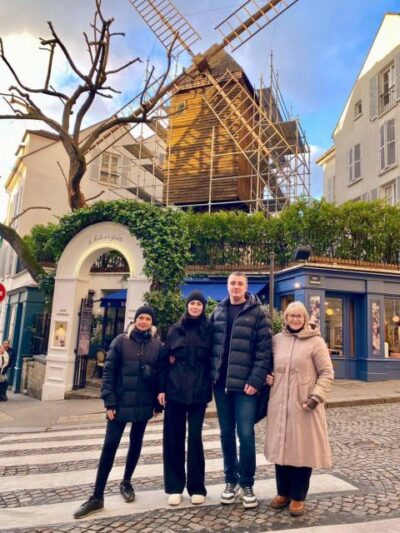
You’ll pass by the Moulin de la Galette, a windmill that once served as a popular dance hall. Even if you only spend a short moment there, the fact that it was once tied to dancing is useful context. It explains why this area feels like it was made for movement and music.
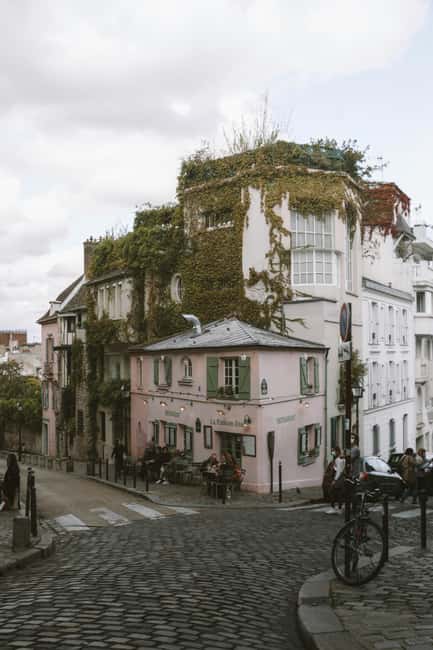
After that, you’ll stroll by La Maison Rose, the pastel-pink café that’s often painted by local artists. That color is hard to ignore, and it gives you a satisfying change of pace from the more formal art sites.
This section is also where your comfort planning matters again. The streets can be uneven, and you’ll likely be stopping for photos. If you keep your shoes grippy, you’ll enjoy the stops instead of worrying about footing.
Clos Montmartre vineyard: the surprising taste of “wine in the city”
One of the tour’s most intriguing inclusions is the secret vineyard of Clos Montmartre, described as still producing wine in the heart of Paris. This is a great stop because it breaks the idea that Paris is all stone and no agriculture.
I like it because it’s memorable without being complicated. You don’t need a lecture to understand the appeal—you can literally see how the neighborhood contains something unexpected.
It also helps explain why Montmartre’s stories feel layered. Cabaret culture, painters, and even winemaking all exist in the same walking corridor, and this stop ties that contrast together.
Lapin Agile Cabaret and Place du Tertre: traditional nightlife to artist sales
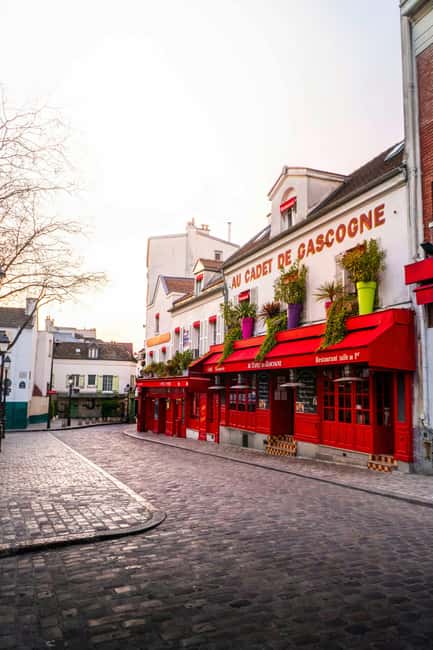
As you keep moving through the winding streets, you’ll visit Lapin Agile Cabaret, one of the last bastions of traditional Montmartre nightlife. This is where the tour leans into the neighborhood’s ongoing showbiz identity, instead of framing it only as history.
Then you’ll explore Place du Tertre, where artists still gather to sell their work. This gives you a practical window into what’s happening right now, not just what happened in the past.
If you like talking to artists, this is a good moment to do it. If you just want to look, keep your eyes up and your pace steady. It’s a place where attention is pulled in many directions at once, and a little structure from the guide earlier helps you enjoy it rather than feel rushed.
Reaching Sacré-Cœur: panoramic views with self-guided time inside
The tour concludes at the Basilica of the Sacred Heart of Paris. Here you get the best payoff: panoramic views of Paris from the basilica area.
Important detail: the guide will drop you at Sacré-Cœur and won’t accompany you inside. That’s actually a smart arrangement for many people. You can choose your own route inside the church, linger for photos, or step back outside to reset your energy after the walk.
For the best experience, give yourself some flexibility. If you’ve been moving quickly, slow down now. The views are the kind you’ll want to look at from more than one spot.
Price and what $46 really buys on this walk
You’re paying $46 per person for a guided Montmartre walking tour in English with a packed sequence of named stops. In practice, that means you’re covering much more than a generic stroll: Moulin Rouge area, Van Gogh’s house, the Wall of Love, La Bateau-Lavoir, Dalida/Place Dalida, the Moulin de la Galette, La Maison Rose, Clos Montmartre, Lapin Agile, Place du Tertre, and then Sacré-Cœur.
The “value” part isn’t only the list. It’s that the guide is expected to connect the dots so each stop doesn’t feel random. Based on feedback about guides such as Perkin and Pierre, the emphasis lands on effort and solid background information, not just pointing.
Meals and drinks aren’t included, so plan to grab something before or after. Luckily, the route does pass a local restaurant area, but the tour itself isn’t designed as a food break.
Practical tips so you enjoy every stop (and don’t get slowed down)
- Wear comfortable shoes. You’ll deal with some uphill walking, and you’ll move between multiple sights.
- Check the weather. You can’t assume Montmartre will be calm, dry, and flat just because you’re on a scheduled walk.
- Photography is encouraged, but respect private property. That’s especially useful in residential-feeling streets near historic houses.
- Keep personal belongings secure. Any busy sightseeing area is a place to stay alert.
- You won’t be able to take audio recordings, since audio recording isn’t allowed. Regular photos and normal conversation are your go-to.
Also, since the tour is live guided, you’ll get the most out of it by listening during each transition, not only at the stops. Montmartre rewards context, and this route is built to supply it.
Who this tour is best for
This is a strong choice if you want an organized Montmartre experience that covers art sites, music/cabaret stops, and end-with-views timing. It’s also a good match if you like walking but you don’t want to manage navigation across too many separate attractions on your own.
It’s less ideal for people who struggle with slopes, since the route includes uphill segments and you’ll still need stamina at the end for Sacré-Cœur. And the activity isn’t suitable for people over 95 years.
If you’re traveling with kids, it could work if they’re okay with a two-hour walk and short stops, but the plan is more “story + sights” than “playground breaks,” so gauge your group’s energy level.
Should you book this Montmartre walking tour?
If your goal is to see the big-name Montmartre landmarks plus a few standout surprises like Clos Montmartre and Lapin Agile, this tour makes sense. It’s short enough to fit neatly into a Paris day, but structured enough that you won’t wander around wondering what you’re supposed to be looking at.
Skip it if you want long museum-style time inside major indoor attractions, because the day is built around outdoor streets and specific stops, with Sacré-Cœur interior time left self-guided. Also skip or reconsider if uphill walking is a real issue for you.
For most first-timers, though, this is a solid way to get oriented quickly: you start at the Moulin Rouge zone, learn the connections between the art and entertainment side of Montmartre, and finish with the kind of views that make you understand why people keep coming back.
FAQ
How long is the Montmartre walking tour?
The tour lasts 2 hours.
Where does the tour start?
You meet in front of Blanche Metro Station, Line 2 (near Moulin Rouge). The guide will have a flag with The Perfect Vacation logo.
Where does the tour end?
The tour ends at the Basilica of the Sacred Heart of Paris (Sacré-Cœur).
Does the guide go inside Sacré-Cœur with you?
No. The guide will drop you at Sacré-Cœur and will not accompany you inside. You explore inside on your own.
What major places are included on the walk?
It includes Van Gogh’s house, I Love You Wall, La Bateau-Lavoir, Place Dalida (photo stop), Moulin de la Galette, La Maison Rose, Clos Montmartre vineyard, Lapin Agile Cabaret, Place du Tertre, and Sacré-Cœur.
Is this tour available in English?
Yes, the live tour guide language is English.
Are meals and drinks included?
No. Meals and drinks are not included.
Are alcohol and drugs allowed?
No. Alcohol and drugs are not allowed.
Can I record audio during the tour?
No. Audio recording is not allowed.
Is the tour suitable for elderly visitors?
The activity is not suitable for people over 95 years.
Is there free cancellation?
Yes. You can cancel up to 24 hours in advance for a full refund.