REVIEW · PARIS
Paris: Millefeuille baking class with a chef
Book on GetYourGuide →Operated by Ateliers Parisiens · Bookable on GetYourGuide
Butter and patience, in 150 minutes. This Paris millefeuille workshop is hands-on and technique-heavy: you master puff pastry folding and silky pastry cream, then build and finish your own “Napoleon” dessert. I especially like that you get real guidance from a professional chef, not just watching, and that your final creation comes in travel-ready packaging. The main consideration is simple: you’ll need to get yourself to the workshop in Paris, since no transport is provided.
I also like the pacing for a first-time baker. The class is kept small (up to 8 people), and you’re offered tea, coffee, and water during the session, which makes the work feel less rushed and more human. If you want a guided way to learn French pastry, this is a very direct route.
You’ll leave with a practical skill set you can reuse, plus the satisfaction of bringing home what you made. And yes, you can go as a beginner—this style of class is designed for different experience levels.
In This Review
- Key things that make this class worth your time
- A Paris millefeuille class that teaches real technique, not just a dessert
- Puff pastry and pastry cream: the two skills behind every great layer
- What puff pastry training really means
- What pastry cream training really means
- Your 150-minute workflow: from dough to assembled millefeuille
- 1) Start with the puff pastry process
- 2) Move into pastry cream preparation
- 3) Personalize before the final bake and assembly
- 4) Finish and enjoy your own creation
- Decorating your millefeuille: where you get to look like a pro
- Small group teaching (up to 8) and the English comfort factor
- Take-home packaging and the digital recipe that saves you later
- Price and value: what you’re paying for in a Paris pastry class
- Who should book this millefeuille workshop in Paris
- Practical tips to get the best result from your class
- Should you book this Paris millefeuille baking class?
- FAQ
- FAQ
- How long is the millefeuille baking class?
- How many people are in the group?
- Is the class taught in English?
- What will I make in the workshop?
- Are ingredients included?
- Are drinks included during the class?
- Do I get to take my millefeuille home?
- Is there a recipe included?
- Do I need to arrange my own transport to the workshop?
- Is the workshop wheelchair accessible and what’s the cancellation policy?
Key things that make this class worth your time
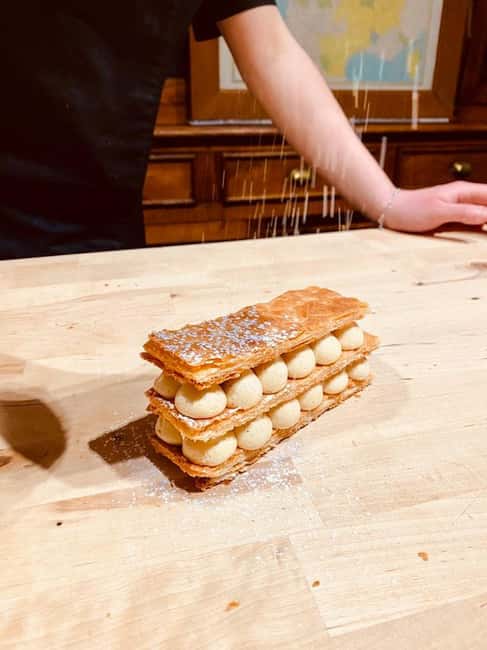
- Puff pastry and pastry cream, taught step-by-step so you learn the core methods, not just assembly
- Small group size (max 8) means you get attention when dough, texture, or timing gets tricky
- Personal decoration lets you make your millefeuille look like a pastry-shop version before serving
- Tea, coffee, and water included keeps you fueled while you work
- Take-home transport packaging helps your dessert survive travel instead of turning into sad crumbs
- Digital recipe included, so you’re not stuck repeating from memory later
A Paris millefeuille class that teaches real technique, not just a dessert
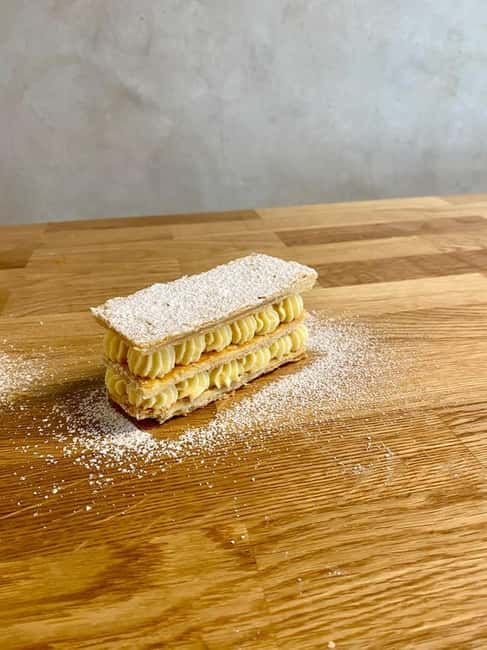
Millefeuille sounds fancy, but the magic is practical: layers. Lots of them. French pastry is full of this idea—do the method well, and the result tastes right. In this workshop, you’re not just building a pretty plate dessert. You’re learning the mechanics that create that crisp, flaky puff pastry and the smooth cream sandwiched between.
The “Napoleon” nickname is part of the lore, but what matters for you is what you’ll do with your hands. You’ll work with dough folding techniques and pastry-cream texture cues, guided in English. The chef’s role is to help you avoid the common mistakes that turn a millefeuille from crisp and elegant into soggy or uneven.
There’s also a nice human factor. The class is limited to 8 participants, which tends to change everything: your questions get answered, you can catch issues early, and the class doesn’t feel like a production line. Reviews back that up with consistent praise for the chef being personable, patient, and teaching with tips as you go.
You can also read our reviews of more cooking classes in Paris

Puff pastry and pastry cream: the two skills behind every great layer
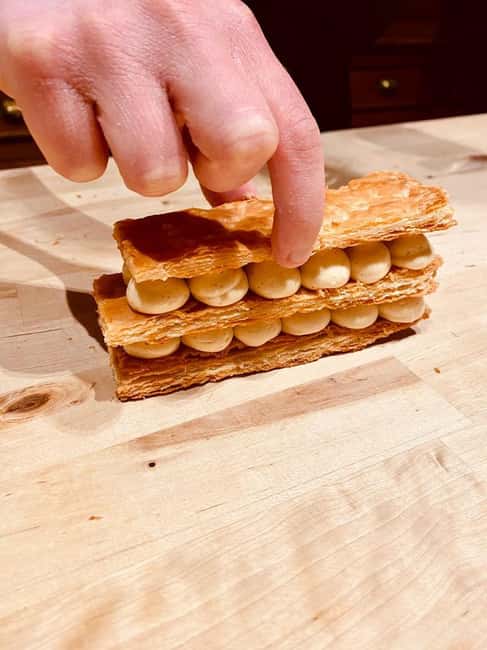
If you’ve ever tried puff pastry at home, you know there are two hard parts: temperature control and folding technique. This workshop focuses on both, and that’s why it’s valuable even if you only plan to make millefeuille once.
What puff pastry training really means
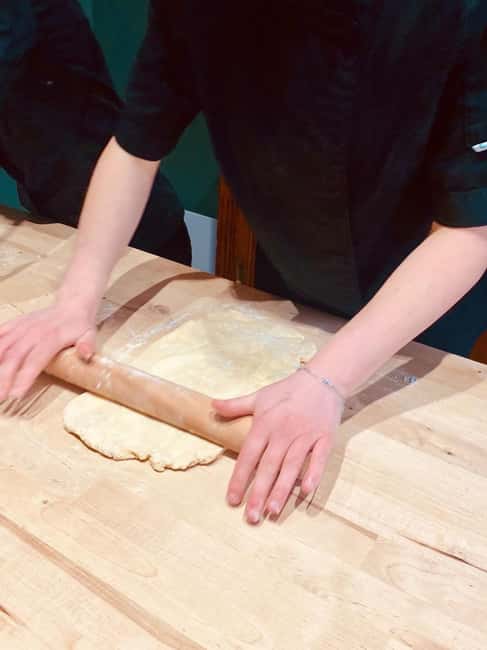
You’ll learn how to work with folding and get the dough to the right texture for layering. The class doesn’t treat puff pastry as a mysterious ingredient list. Instead, it treats it like a process you can repeat: fold, handle, and shape with intention so the layers develop correctly.
That matters because puff pastry is where millefeuille wins or loses its identity. The dessert should snap and stay crisp rather than turning into a soft mess as it cools.
What pastry cream training really means
Pastry cream is where millefeuille gets its charm: smooth, rich, and spreadable. Here, the emphasis is on getting the cream to that silky consistency. You’ll learn the method for it, with guidance on how it should look and feel as you work.
A lot of at-home attempts fail because the cream becomes too thick, too loose, or uneven. Learning the technique makes the result predictable instead of lucky.
In short: puff pastry gives you structure. Pastry cream gives you comfort. You’ll learn both, which is what makes the class more than a one-off dessert.
Your 150-minute workflow: from dough to assembled millefeuille
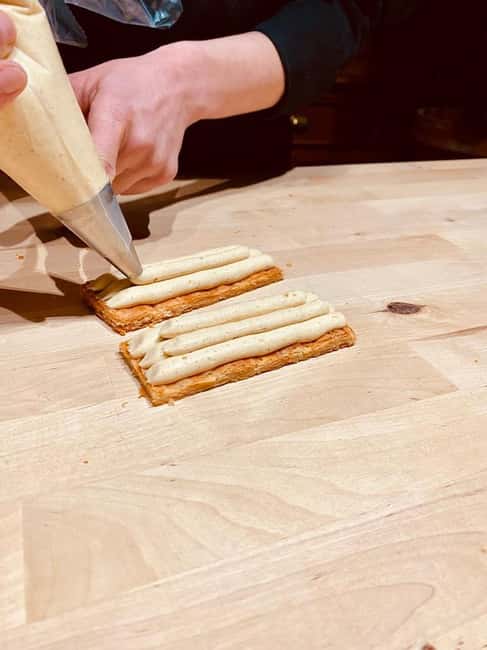
The class runs 150 minutes, so you’re doing a full “from scratch” session without it dragging on all day. That compact timing is part of the appeal: you’ll learn a lot in one sitting, and you won’t leave hungry for a project that lasts forever.
Here’s the shape of what your time typically looks like, based on how the workshop is structured:
You can also read our reviews of more tours and experiences in Paris
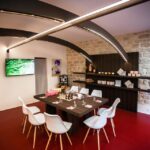
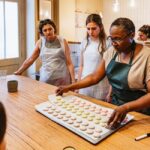

1) Start with the puff pastry process
You begin with the dough work, guided through folding steps and the texture targets you’re aiming for. This is the point where a patient chef is worth their weight in butter. If dough looks wrong, texture changes can be corrected early, not after you’ve already built the layers.
2) Move into pastry cream preparation
While you’re learning, you’re also building parallel skills. You’ll make the pastry cream and get coaching on that smooth, correct consistency. This is the moment the dessert starts feeling real, since cream is what you’ll spread and layer again and again.
3) Personalize before the final bake and assembly
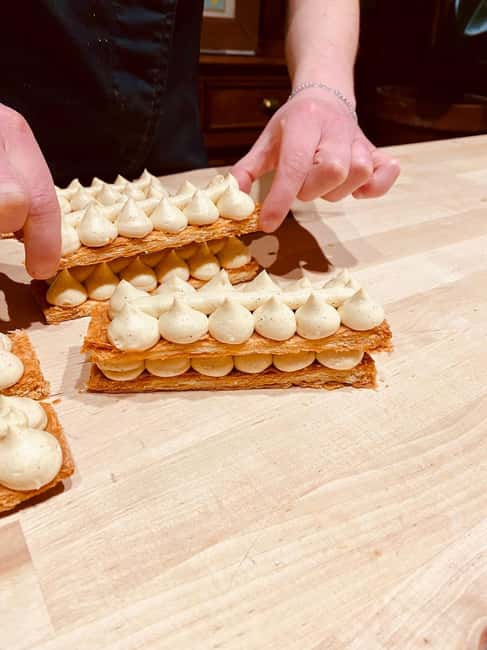
Once you have the right components, you’ll assemble your millefeuille. You’ll also have a chance to personalize it with decorative touches before baking and finishing. This is where the class shifts from technique to creativity, and it’s surprisingly satisfying.
4) Finish and enjoy your own creation
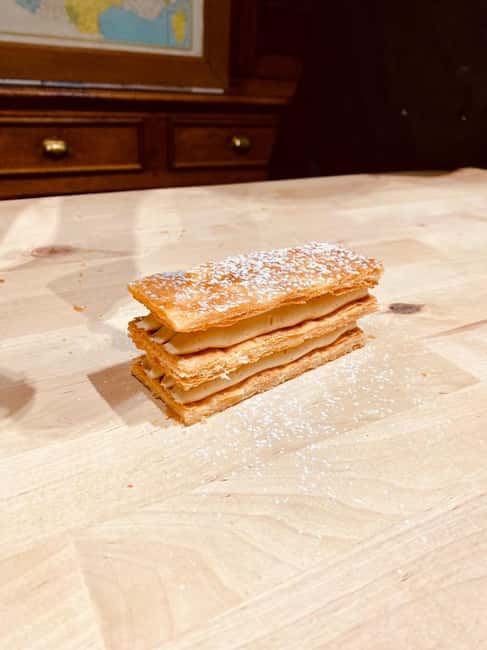
At the end, you enjoy what you made during the session. This is included, and it’s one of those overlooked perks: you don’t just leave with an uncooked project and hope it turns out later.
And if you’re wondering whether you’ll produce a lot: one participant reported making three millefeuilles in a more individualized setup. The standard experience centers on creating your own millefeuille to take home, but the hands-on nature suggests you’re not stuck with one tiny demo portion.
Decorating your millefeuille: where you get to look like a pro
Millefeuille can be simple, and it can be gorgeous. The difference is often in finishing details. In this workshop, you get time to personalize with decorative touches before the final stages.
That means you’re not waiting until the very end to figure out how to make it look right. You’ll build those touches into your workflow, so the final result feels like yours—not like you simply copied someone else’s plate.
If you care about presentation, this part is a major win. If you don’t, it still helps you understand the structure: where layers should align, how the top should sit, and how assembly affects eating.
Small group teaching (up to 8) and the English comfort factor
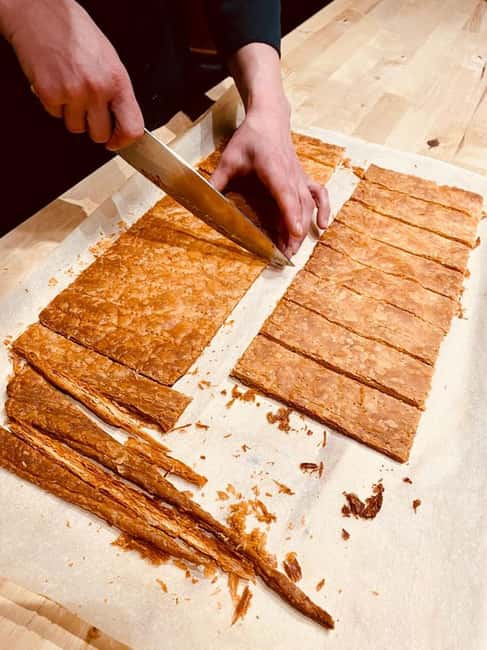
A class capped at 8 people is a big deal. It’s not a marketing phrase. In practical terms, it means you’re more likely to get help before a small mistake becomes a big one.
You also get English instruction, which matters with pastry technique. Puff pastry isn’t just about ingredients; it’s about micro-steps and feedback. When the chef explains what to look for, you can respond quickly.
Reviews highlight this teaching style: one guest described a warm, engaging host and said the chef was patient and shared tips along the way. Another said the chef was extraordinary and personable, and that the family loved the event. Those are strong indicators that the class is guided in a way that reduces stress when dough and cream don’t behave exactly like your first attempt at home.
And because tea, coffee, and water are included, you’re not constantly stepping away mid-session to find a drink. That keeps the work flowing.
Take-home packaging and the digital recipe that saves you later
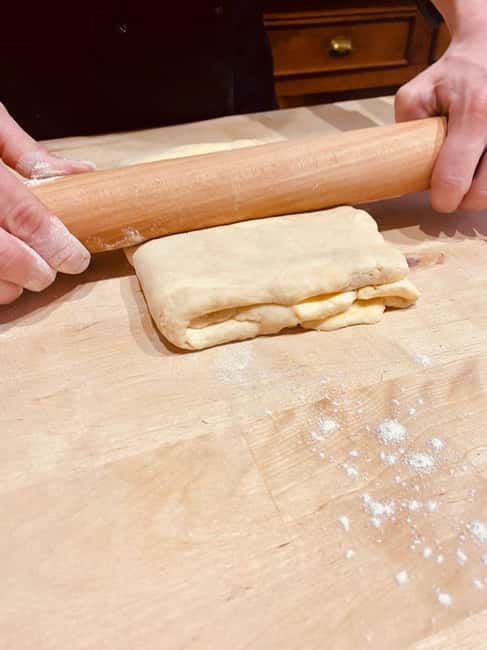
One of my favorite parts of this kind of class is what happens after. The workshop includes transport packaging for your creation, so you can take your millefeuille with you and still enjoy it later.
That’s not a minor detail. Millefeuille is delicate. If you’ve ever tried to transport bakery sweets without proper packing, you know how quickly things can go wrong—smudged decorations, compressed layers, or a cream that loses its shape. The included packaging is meant to protect your work and extend the pleasure.
You also get a digital recipe after the workshop. That’s the practical bridge between “cool class” and “I can do this again at home.” If you like having a reference you can pull up on your phone when you start prepping, this is exactly that.
Price and value: what you’re paying for in a Paris pastry class
At $159 per person for 150 minutes, this workshop isn’t cheap. But pastry classes in Paris rarely are. The key question is what you’re buying for that money.
Here’s the value math that matters:
- You get ingredients provided, so you’re not paying separately for cream, butter, dough, and decorating components.
- You get a professional pastry chef guiding the process, which is where technique classes earn their price.
- You leave with a finished millefeuille plus transport packaging and a digital recipe.
If you were just buying dessert, you’d pay less. But you wouldn’t learn the underlying method for puff pastry folding and pastry cream texture. This is a skill purchase, with dessert attached.
Also, small-group instruction makes it feel less like a ticket to watch and more like a lesson you participate in. For me, that’s where value shows up: attention and correction while you’re working, not only at the end.
If you want flexibility, the booking options are designed to be traveler-friendly: reserve now and pay later, plus free cancellation up to 24 hours in advance.
Who should book this millefeuille workshop in Paris
This class is a great fit if you:
- Love French pastry and want to learn the backbone techniques
- Want an English-taught activity that still feels hands-on and real
- Like small-group settings where you can ask questions
- Want a take-home souvenir that isn’t just a photo
It’s also a good choice if you’re planning a short stay and want one concentrated activity. 150 minutes is manageable, and you’re not spending your day hopping between stops.
You might be less satisfied if:
- You’re only looking for sightseeing or a passive activity
- You want a lot of free time for wandering after, since the structure is focused on the workshop
- You’re expecting transport from your hotel (none is included)
The nice part is that it’s designed for different skill levels. If you’re new, the chef’s guidance helps you build correct habits. If you already bake, you’ll still appreciate the coaching on texture and folding technique.
Accessibility is also covered: the workshop is wheelchair accessible.
Practical tips to get the best result from your class
You’ll get more out of the session if you show up ready to work with texture and timing. A few small things can make a difference:
- Go in hungry for technique, not just tasting. Puff pastry and cream take focus.
- Ask questions while you’re working, especially if the dough or cream looks off. The point is to fix issues early.
- Expect to follow feedback closely. Millefeuille quality depends on small changes.
- Plan how you’ll carry your packaging once you’re done. The included packaging helps, but you still want a careful hand.
One more practical thought: if you can spare the attention, the decorative step is where you can make your millefeuille feel like a creative win. Even a simple finishing touch can make your final result look pastry-shop elegant.
Should you book this Paris millefeuille baking class?
Yes, if you want a hands-on French pastry skill session with an emphasis on technique. For around $159 and 150 minutes, you’re paying for guided puff pastry folding, pastry cream texture training, personal decoration time, and a take-home creation with transport packaging plus a digital recipe.
If you hate learning by doing, or if you only want a quick snack experience, this might feel too work-focused. But if you want a real takeaway—something you can reproduce—you’ll likely find it memorable in the best way.
FAQ
FAQ
How long is the millefeuille baking class?
The class lasts 150 minutes.
How many people are in the group?
The group is small, limited to 8 participants.
Is the class taught in English?
Yes, the instructor teaches in English.
What will I make in the workshop?
You will make a millefeuille from scratch, including puff pastry and pastry cream techniques, and you’ll assemble and decorate your own dessert.
Are ingredients included?
Yes, all baking ingredients are provided.
Are drinks included during the class?
Yes. Tea, coffee, and water are available during the class.
Do I get to take my millefeuille home?
Yes. Your creation is packaged for travel so you can take it with you.
Is there a recipe included?
You receive a digital recipe of the workshop (with plans for a print version soon).
Do I need to arrange my own transport to the workshop?
Yes. Transportation to the workshop is not included, but it is described as easily accessible in Paris.
Is the workshop wheelchair accessible and what’s the cancellation policy?
The workshop is wheelchair accessible, and you can cancel up to 24 hours in advance for a full refund.