REVIEW · PARIS
Paris: Montmartre Culture and Local Pastries Walking Tour
Book on GetYourGuide →Operated by Simply France Tours SAS · Bookable on GetYourGuide
Montmartre feels like Paris in artist mode, and this walk is built for seeing that story up close. You’ll hit major landmarks like Sacré-Coeur and the Moulin Rouge, while your guide steers you through the side streets that make this hill feel different from the rest of the city. I like that the tour blends art-history landmarks with everyday Montmartre life, not just postcard stops.
Two things I especially like: the route is organized enough that you don’t get lost, and the guide helps you connect famous names (Picasso, Matisse, Renoir, and more) to real corners of the neighborhood. One consideration: it’s not a pastry tasting tour, so you’ll want to budget extra if you want to stop for treats and drinks.
Comfortable shoes matter, and the route is on foot. It’s also not a good match if you use a wheelchair or have limited mobility.
In This Review
- Key highlights in plain terms
- Montmartre in 150 Minutes: what this walk delivers
- Meeting at Chez Ginette: getting your bearings fast
- Sacré-Coeur to Place du Tertre: the postcard sights with street meaning
- Artist studios and painting landmarks: the art names you’ll map onto real streets
- Navigating Montmartre’s side streets: where a guide saves time and sanity
- Moulin Rouge finale: a big-name ending with built-in context
- Pastries and drinks: great stop ideas, but no testing included
- Price and value: what $37 buys you (and what it doesn’t)
- Who should book this Montmartre walking tour
- Short practical tips that make the day easier
- Should you book? My decision checklist
- FAQ
- Where does the tour start?
- How long is the tour?
- What’s included in the price?
- Are pastries or drinks included?
- What sights will we see?
- Does the guide help with navigation through side streets?
- What languages are available?
- What should I bring?
- Is this tour suitable for wheelchair users or mobility impairments?
Key highlights in plain terms
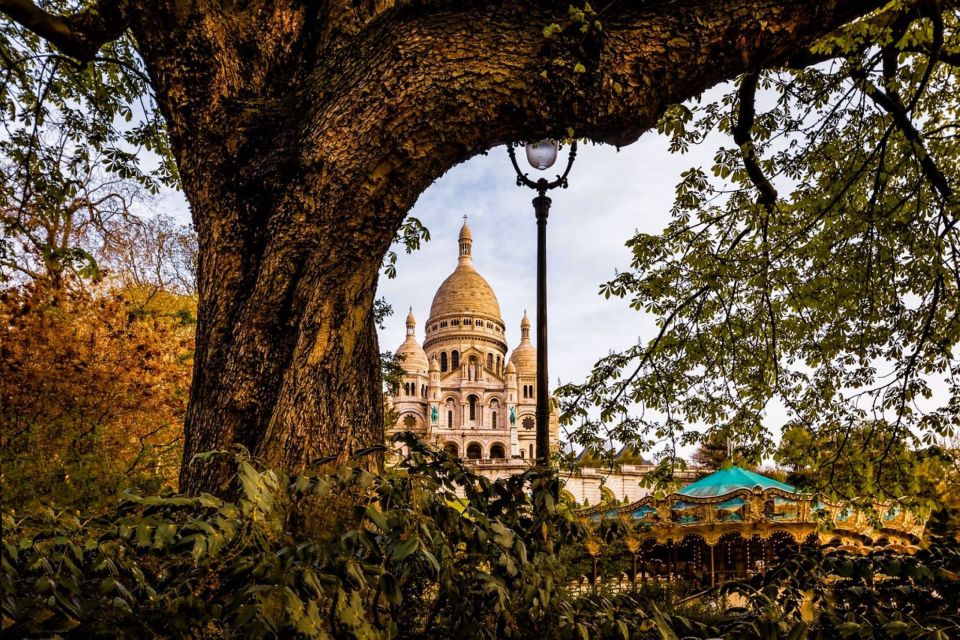
- Start at Chez Ginette, a clear meeting point by Lamarck–Caulaincourt so you can get moving fast
- Sacré-Coeur + Place du Tertre give you the famous sights plus the street-level artist atmosphere
- Artist studios and painting locations connect big names like Modigliani, Picasso, Matisse, and others to Montmartre streets
- Winding alleyways with a guide help you read the neighborhood instead of just passing through
- Pastry and drink stops are recommended, not included, so you control what you buy
- End at the Moulin Rouge for a photo-friendly, high-energy finale
Montmartre in 150 Minutes: what this walk delivers
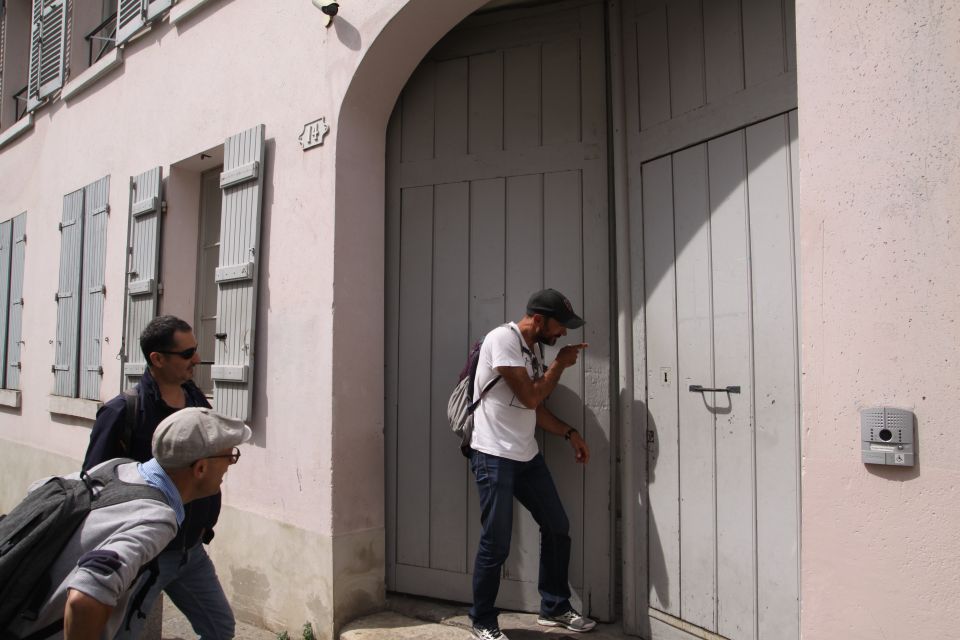
This tour is designed for a specific goal: help you understand Montmartre without spending your whole day wandering up and down hills and guessing where to go next. In about 150 minutes, you’ll cover a compact slice of the district, hitting both “you came for that” landmarks and the smaller spaces where art culture actually happens.
I like the pacing model here: see a major sight, then move into the streets that explain why that sight matters. When a guide turns a street corner into a story, you start noticing details you would normally walk right past—doorways, stairways, views, and the flow between squares and back lanes.
The mix also works well if you’re not trying to do museum-level history. You’ll get names and context, but you’re still out in the neighborhood, looking at what those artists would have recognized in their daily lives.
You can also read our reviews of more walking tours in Paris



Meeting at Chez Ginette: getting your bearings fast
Your meeting point is between the metro stairs at Lamarck–Caulaincourt and the restaurant Chez Ginette. That’s practical because it keeps you from hunting through Montmartre’s less obvious streets right at the start.
From a traveler’s point of view, this matters more than it sounds. Montmartre can feel like a lot of narrow turns; starting at a recognizable landmark helps you relax and save your energy for the walking. You’ll also know the tour has a built-in route, so you’re not piecing the day together yourself.
Bring comfortable shoes and plan to use a camera. Even in a short tour, you’ll want to capture both the big views (think basilica and cabaret area) and the tight street scenes.
Sacré-Coeur to Place du Tertre: the postcard sights with street meaning
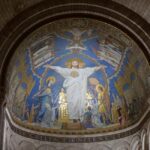
The tour includes Sacré-Coeur, one of the main reasons most people come to Montmartre. But the value here isn’t only the basilica itself. Your guide uses stops to explain how the neighborhood became tied to art life—so the famous building doesn’t feel like a random stop.
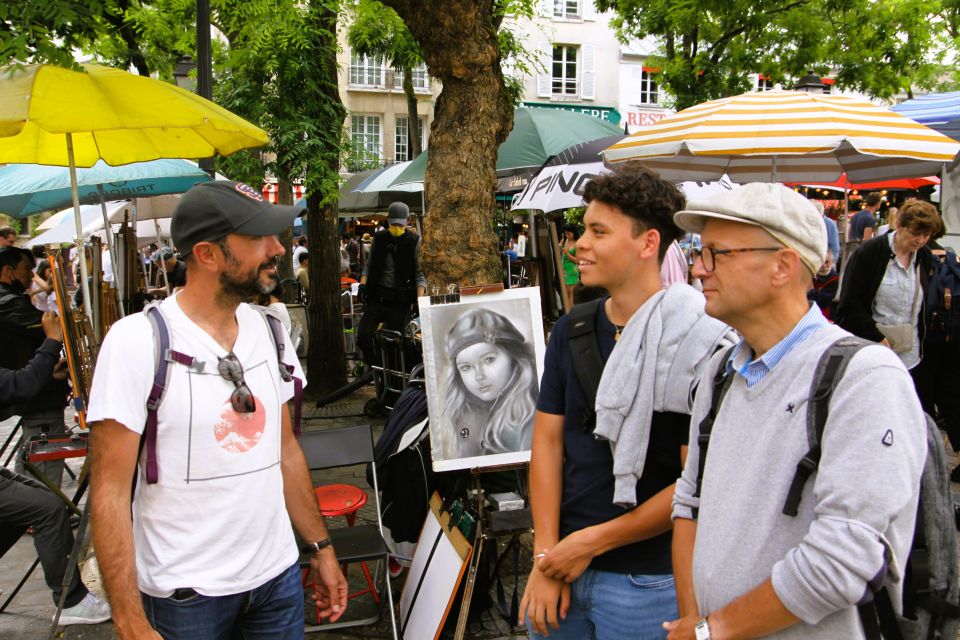
After that, you’ll move toward Place du Tertre, described as an arts-focused hub. This is where the neighborhood’s creative energy becomes visible on the ground: performers, artists, and the kind of street scene that’s hard to replicate anywhere else in Paris.
What I think you’ll get from this part is context. If you’ve only seen Sacré-Coeur from a distance, Place du Tertre helps you understand why artists were drawn up this hill. You start seeing Montmartre as a place with its own rhythm, not just a view over the city.
Small drawback to keep in mind: Place du Tertre is a well-known area, so if you’re looking for quiet, calm corners, you’ll need to treat this stop as a “sense the vibe” moment rather than a peaceful break.
Artist studios and painting landmarks: the art names you’ll map onto real streets
One of the best parts of this tour is how it uses Montmartre’s streets to connect famous artists to physical locations. You’ll be guided past spots connected to major names such as Modigliani, Picasso, Utrillo, Van Dongen, Juan Gris, and Matisse.
You’ll also hear about a “famous mill” associated with Renoir and Van Gogh—a detail that turns a simple sight into a trail of painterly history. This is exactly the kind of information that makes Montmartre feel less like a theme park and more like a creative neighborhood with long roots.
I like this approach because it helps you do something useful after the tour. Later, when you’re walking on your own, you’re more likely to notice signs of past lives—studio-style corners, the angles of views, and the way Montmartre’s layout supports the feeling of discovery.
One caution: Montmartre streets are narrow and uneven in spots. Even with a guided route, it’s still a walk with ups and downs, so comfortable clothes and steady shoes matter.
Navigating Montmartre’s side streets: where a guide saves time and sanity

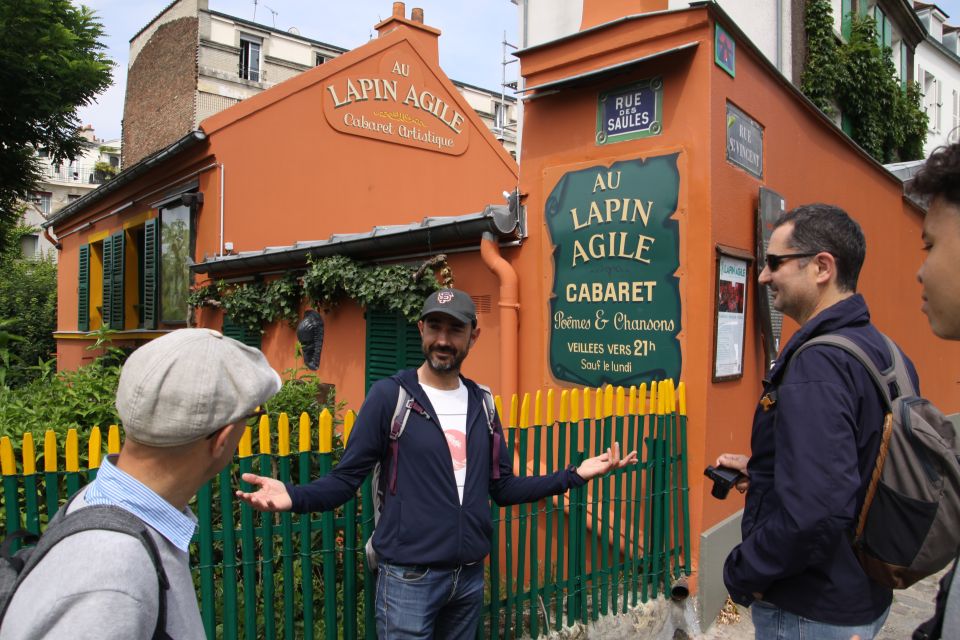
Montmartre’s charm is also its challenge. The district has lots of winding alleyways and side streets, and without guidance it’s easy to waste time walking in circles or missing the connections between landmarks.
This tour explicitly helps with navigation. Your guide keeps you on a route that links major sights to smaller scenes so you don’t just “see Montmartre,” you actually understand how it’s put together.
If you’re the type of traveler who likes to photograph streets and doorways (not only famous monuments), you’ll probably appreciate this part most. A guide can point out what to notice, and that turns a random side street into part of the story.
Group pace is another quiet factor. The tour is only 150 minutes, so you won’t have long stops to sit and rest at every location. It’s structured walking rather than a slow stroll with lots of free time.
You can also read our reviews of more tours and experiences in Paris






Moulin Rouge finale: a big-name ending with built-in context
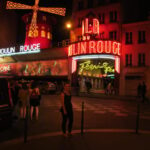
You’ll finish at the Moulin Rouge cabaret, one of the most iconic sights in all of Paris. Ending here makes sense: it’s a clear, famous marker that gives the tour a satisfying “close the loop” feeling.
Even if you’ve seen Moulin Rouge in photos a hundred times, you may get more out of seeing it after learning about the creative world around Montmartre. The neighborhood’s art culture isn’t a background detail anymore—it becomes part of why the cabaret area looks and feels the way it does.
If you’re planning what to do afterward, consider staying in the area for dinner nearby. You’ll already be positioned in a part of Montmartre that’s easy to connect with other evening plans.
Pastries and drinks: great stop ideas, but no testing included
Here’s the key point: pastry testing is not included in the tour price. Your guide will present spots for Parisian pastries and drinks, with examples like Café des Deux Moulins, but you’ll pay for what you choose.
For me, that’s fine as long as you plan it. Otherwise, you might assume this is a tasting experience. It’s not. It’s a walking tour with guidance toward excellent food stops.
So how should you handle it? Bring a small budget for at least one snack and one drink. If you’re the kind of person who likes to compare pastries, treat this as a choose-your-own tasting—your guide can point you to good decisions, but you control the amount and timing.
Also, don’t wait until the last minute to eat if you’re prone to getting hungry while walking. The tour’s structure is time-focused, and the route includes multiple landmarks.
Price and value: what $37 buys you (and what it doesn’t)

The price is $37 per person for a 150-minute guided walking tour. That’s strong value if you want a guide to handle the art-history context and routing through Montmartre without paying for a separate museum ticket or spending hours researching.
But it’s also a realistic price for a reason: the tour includes the walking tour and local guide, and it does not include food and drinks. When you add even one pastry and a beverage, your total day cost will rise—so plan for that upfront.
In practice, this tour is most cost-effective when you think of it as:
- pay for guidance and context, and
- pay out of pocket for the food stops you choose.
You’ll also want to consider group comfort. Because it’s a walking tour, most of the “value” comes from staying aligned to the route and hearing the stories as you go, not from long breaks or extensive included extras.
Who should book this Montmartre walking tour
This is a great match if you:
- like walking tours that connect big-name art history to real places
- want to see Sacré-Coeur and the Moulin Rouge with context (not just photos)
- enjoy side streets, small squares, and neighborhood atmosphere
- are happy to buy your own pastries and drinks at recommended stops
You might skip it if you want a full tasting menu included in the ticket price, or if you need step-free access. The tour is listed as not suitable for people with mobility impairments or wheelchair users, and you should take that seriously.
It’s also worth noting that the experience runs in multiple languages (English, German, French, Italian, Spanish). If you’re traveling with someone who prefers a particular language, this makes it easier to find a comfortable option.
Short practical tips that make the day easier
- Start with the basics: good shoes and a camera ready for both views and street details.
- Bring comfortable clothes because Montmartre walking can be steady, and you’ll be moving between landmarks.
- If you care about food, decide before you start how much you want to spend on pastries and drinks. The guide will steer you, but the spending is on you.
- For photography, plan for stops with strong angles around Sacré-Coeur and the cabaret area. The neighborhood layout rewards a few minutes of patience.
Should you book? My decision checklist
Book this tour if you want a structured Montmartre walk that gives you names, places, and street-level understanding in about 2.5 hours, plus a guide who can steer you toward smart pastry and drink choices. The $37 price is fair for the time and local guidance—especially since it helps you connect landmarks like Place du Tertre and Moulin Rouge to the art stories behind them.
Don’t book if you’re expecting food to be included or you need step-free accessibility. And if pastry testing is your main goal, you’ll want a different type of experience.
If you go in with the right expectations, this is an efficient way to get the Montmartre feeling—art history on the street, not just in theory.
FAQ
Where does the tour start?
Meet your guide at the point between the metro stairs at Lamarck–Caulaincourt and the restaurant Chez Ginette.
How long is the tour?
The duration is 150 minutes.
What’s included in the price?
You get a walking tour with a local guide.
Are pastries or drinks included?
No. Food and drinks are not included, and pastry testing is not included in the tour price.
What sights will we see?
You’ll visit major Montmartre landmarks including Sacré-Coeur, Place du Tertre, and the Moulin Rouge.
Does the guide help with navigation through side streets?
Yes. You’ll be guided through Montmartre’s winding side streets and alleyways.
What languages are available?
The live tour guide is available in English, German, French, Italian, and Spanish.
What should I bring?
Bring comfortable shoes, a camera, and comfortable clothes.
Is this tour suitable for wheelchair users or mobility impairments?
No, it is not suitable for people with mobility impairments or wheelchair users.