REVIEW · PARIS
Paris: Centre Pompidou Skip-the-Line Guided Museum Tour
Book on GetYourGuide →Operated by Babylon Tours LLC · Bookable on GetYourGuide
One of the quickest ways to understand modern art in Paris starts outside. This 2.5-hour small-group guided tour (max 8) pairs skip-the-line museum entry with the story of the Pompidou Center’s inside-out architecture, plus a clear, chronological walk through the movements you keep hearing about.
What I like most is how the guide turns complicated ideas into human stories you can follow, with stops built around big names like Picasso, Matisse, Dali, and Duchamp.
One heads-up: this experience says it is not suitable for people with mobility impairments or wheelchair users unless tours for wheelchair users are arranged on request, so check before you book.
In This Review
- Key points I’d plan around
- Pompidou’s architecture is the warm-up you didn’t know you needed
- Skip-the-line entry in a small group (and why 2.5 hours works)
- The modern art route: Cubism, Fauvism, and the World Wars that shaped everything
- Dada to Surrealism to Duchamp: when art turns dark and funny
- Pop Art, Warhol, Bauhaus, and Abstract Expressionism: big ideas you can spot fast
- Contemporary galleries and Dubuffet, plus the rooftop panorama on the top floor
- Who your guide might be, and why the explanations matter
- Cost of $371 per person: what you’re really paying for
- Practical tips before you go: ID, bags, and quiet rooms
- Should you book the Pompidou Center skip-the-line guided tour?
- FAQ
- FAQ
- How long is the Pompidou Center guided tour?
- How big is the group?
- Is skip-the-line entrance included?
- Where do I meet the guide?
- What language is the tour?
- What’s included in the price?
- What is not included?
- Do I need an ID?
- Can I bring a large bag or suitcase?
- Are there quiet or silent rooms inside?
- Is the tour wheelchair accessible?
Key points I’d plan around
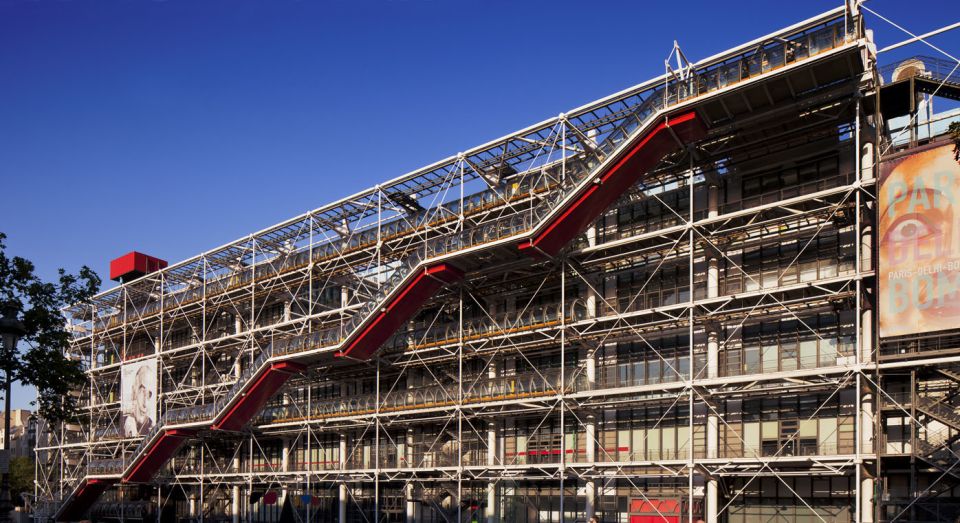
- Renzo Piano’s inside-out design: the building itself is part of the lesson, starting at the exterior.
- Max 8 people: you get enough attention to ask basic questions and not feel lost.
- A modern art timeline: Cubism to Fauvism to Dada to Surrealism to Pop Art, in a logical flow.
- Top-floor Paris panorama: you’ll spend time on the roof view as part of the experience.
- Guides named in the feedback: Dunya, Belen, and Tanya are highlighted for clear explanations and strong storytelling.
Pompidou’s architecture is the warm-up you didn’t know you needed
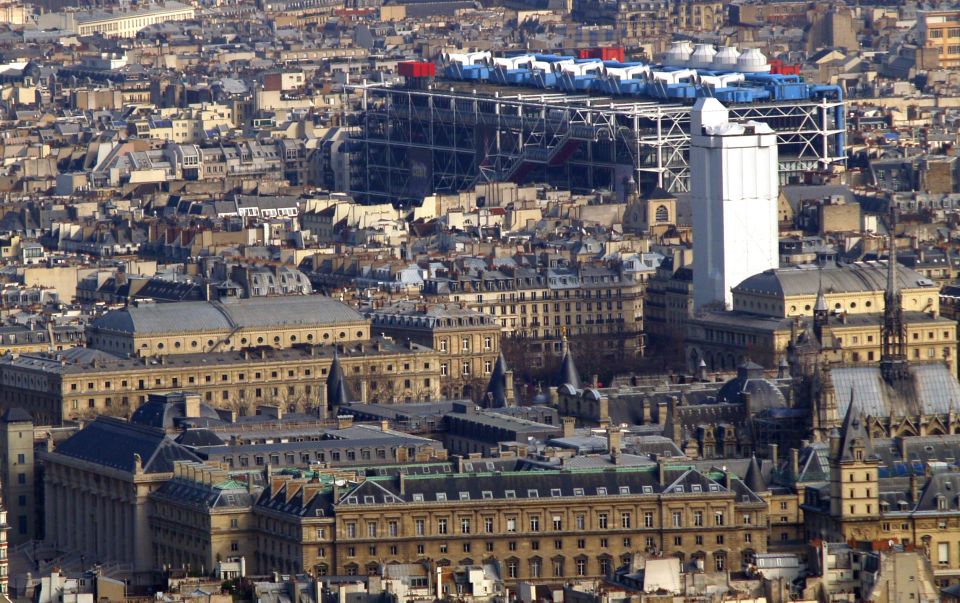
Most museum tours start after you walk through the door. This one starts smarter: you meet your guide at the blue parking sign at the corner of Rue Beaubourg and Rue Rambuteau, then you begin by studying the Pompidou Center’s striking exterior.
The building was designed by Renzo Piano, and the big idea is that it is an inside-out structure. Instead of hiding the mechanics, the design puts them on display, with bright color and a visible skeleton. If you’ve ever looked at the Pompidou from the street and felt like you were staring at a piece of futuristic set design, this tour gives you the language to understand why.
That matters because modern and contemporary art can feel like it’s refusing rules. Starting with architecture helps you see the shared theme: breaking expectations on purpose. You’re not just entering a museum. You’re entering a mindset.
You can also read our reviews of more guided tours in Paris


Skip-the-line entry in a small group (and why 2.5 hours works)
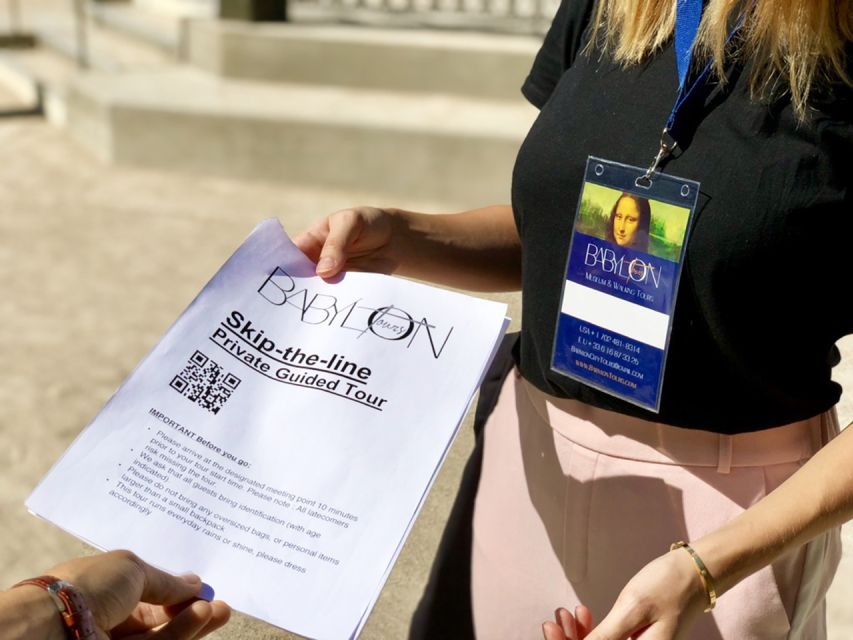
The tour runs about 2.5 hours, and it’s built for small groups, with a cap of 8 guests. That size is the difference between standing beside a crowd and actually hearing the explanation.
You’ll get skip-the-line entrance (so you’re not stuck negotiating the slow-moving ticket bottleneck), plus a professional English-language guide and a museum tour that focuses on specific galleries and key works rather than trying to cover everything.
You’ll also end right back at the meeting point, which is handy if you plan to keep wandering through the neighborhood afterward. And because the tour includes the entrance fee, you’re not juggling ticket confirmations and extra add-ons once you’re there.
Is 2.5 hours short? Yes. But it’s a smart length for the Pompidou, where self-guided exploring can turn into wandering and regret if you don’t have a map of what to prioritize. With this format, you get the main movements and enough context to make the rest of the museum feel less random.
The modern art route: Cubism, Fauvism, and the World Wars that shaped everything
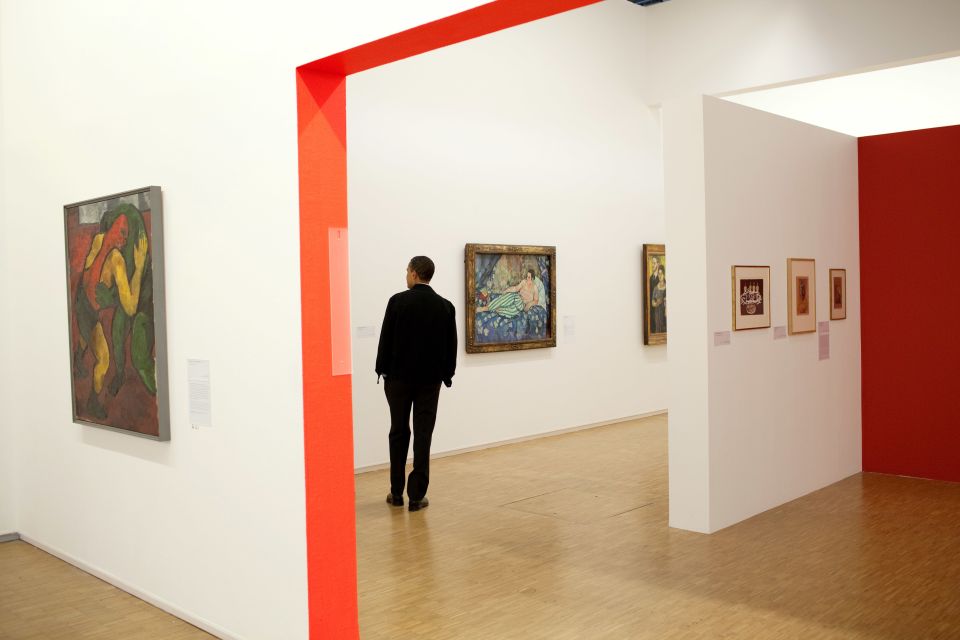
Once you’re inside, the tour shifts into a guided tour of the modern art collection—about 3,200 works in the museum’s national modern art holdings. You won’t see all of them, and that’s the point. Instead, you follow a structured path that helps you recognize the big shifts in style and attitude.
Early stops focus on how artists experimented with form:
- Cubism, explained in front of a Picasso painting, so it feels less like an abstract label and more like a way of rethinking how space and objects can be drawn.
- Fauvism, discussed while admiring a Matisse, so you understand how bold color and emotion mattered as much as realism.
- Then the guide connects the art world to the pressure of the World Wars, showing how global events didn’t just interrupt life—they changed what artists wanted to say and how they wanted to say it.
This is where the guided element becomes real value. Modern art can look like style first and meaning second—unless someone gives you the bridge. When the guide keeps that bridge in place, your brain stops treating each painting as a separate puzzle and starts seeing a conversation across decades.
Dada to Surrealism to Duchamp: when art turns dark and funny

Next comes a movement that people often misunderstand: Dada. The tour frames it as a reaction to the gore and chaos of World War I. That context matters. Dada isn’t just random-looking artwork; it’s a refusal to accept the logic that led to catastrophe, expressed through chaos, provocation, and dark humor.
Then you move into Surrealism, including works by Salvador Dalí. Surrealism can feel like dream logic on a wall—until you know what artists were trying to access: the unconscious, strange symbolism, and emotion beyond rational explanation.
And you’ll also encounter famous works associated with Marcel Duchamp. Even if you only know Duchamp from pop culture, the guide’s job is to reconnect the name to the art’s original shock and intent. That is often the difference between thinking you get it and actually getting it.
If you care about meaning, not just visuals, this portion is the heart of the tour. It’s where the explanations tend to click, because the guide ties style to attitude, and attitude to history.
Pop Art, Warhol, Bauhaus, and Abstract Expressionism: big ideas you can spot fast
After the chaos and surreal turns, the tour shifts gears to movements that feel more familiar to modern eyes.
You’ll learn about Pop Art while checking out a few of Andy Warhol’s works. Pop Art can look like an art-school remix of advertising, and the guide helps you understand why that mattered. It wasn’t only about objects from daily life—it was about questioning what counts as culture.
Then you’ll explore Bauhaus and Abstract Expressionism. The key here is that these movements are not just about style experiments. They reflect different views on design, emotion, and what art should do in the public world. When the tour explains the goals behind the look, abstract art becomes less intimidating and more trackable.
You’ll also see examples by both beloved French artists and international names such as Georgia O’Keeffe, Jackson Pollock, and Piet Mondrian. Seeing them in a guided sequence helps you compare goals side by side, instead of treating each artist as a separate museum trip.
There’s also a practical benefit: if you ever want to come back on your own, you now know which rooms and labels to target first.
You can also read our reviews of more museum experiences in Paris






Contemporary galleries and Dubuffet, plus the rooftop panorama on the top floor
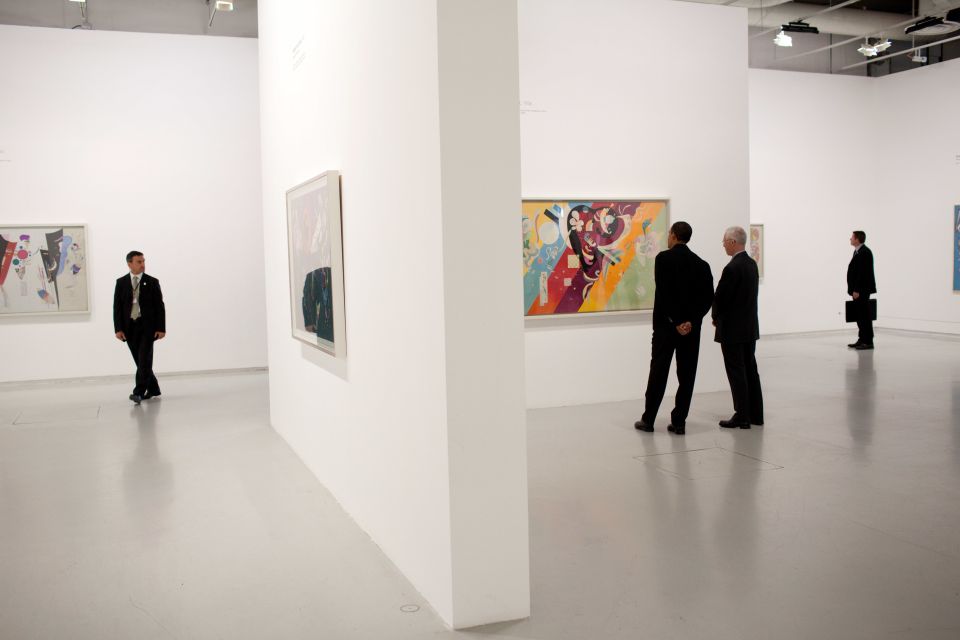
The tour doesn’t stop at the modern collection. You also spend time in the museum’s contemporary art galleries and hear about recent movements like Fluxus and Minimalism.
This section is helpful because contemporary art can be vague unless someone gives you a few anchors. Fluxus and Minimalism are easier to read when you understand what artists were pushing against or stripping away. The guide’s job is to keep you from getting stuck on what feels missing.
The tour also includes works such as Jean Dubuffet’s winter garden installation. That kind of installation can be hard to interpret without guidance, because you’re looking at an experience, not just an image. Having someone explain what you’re seeing turns it from scenery into a concept you can talk about later.
And then comes one of the most fun parts of the whole program: time on the roof for a Paris panorama. You’ll get the kind of view that makes you pause, even if you usually rush. This is also a good reset before you return to ground level—fresh air, wide angles, and the city reminding you you’re still in Paris, not in an art history textbook.
Who your guide might be, and why the explanations matter
This tour lives or dies by the guide. And the names that show up in the feedback—Dunya, Belen, and Tanya—are praised for being able to explain modern and contemporary art in a way that feels connected to real life.
In particular, the most consistently praised guides are described as captivating and able to put artists and artworks into social context, not just art-historical context. That approach helps you understand why movements happened when they did, not just what techniques they used.
It also keeps the tour from becoming a lecture. Even if you’re not an art expert, you should feel like you’re following a story.
Cost of $371 per person: what you’re really paying for
At $371 per person, this isn’t a budget activity. But it can still be good value if you want to reduce uncertainty and time-waste.
Here’s what you’re paying for, based on what’s included:
- Skip-the-line entrance
- Entrance fee
- A professional guide leading you through selected works
- A guided museum experience for about 2.5 hours
- A small group cap (max 8), meaning more attention per person
If you plan to visit the Pompidou anyway, this tour can make the visit more efficient. You’re not paying only for access; you’re paying for interpretation and focus. Without a guide, modern art can turn into a scan-and-skip cycle. With a guide, the same rooms can start to feel like a coherent set of ideas.
If you love wandering and hate structure, you might prefer a self-guided visit. But if you want to leave understanding major movements and seeing how the architecture and art connect, this price may feel justified.
Practical tips before you go: ID, bags, and quiet rooms

A few logistics will keep the experience smooth:
Bring passport or an ID card. The tour notes that you should have valid photo identification.
Avoid luggage or large bags. The tour explicitly says large bags and suitcases aren’t allowed, so pack light.
Know that some parts of the museum are silent rooms, where noise and talking aren’t allowed. This is common museum etiquette, but it’s worth remembering because guides still need to keep the group together without speaking over quiet spaces.
Also, the tour includes the museum’s collection visits, but temporary exhibits aren’t included. If a special temporary show is a must for you, you’ll need to plan that separately.
Finally, there can be occasional closures without prior warning from museum management. If a delay stretches more than an hour from your tour start time, the tour says refunds or discounts won’t be provided, though you should get an appropriate alternative.
Should you book the Pompidou Center skip-the-line guided tour?
Book it if you want:
- A guided path through modern and contemporary art movements
- Big-name artists explained with context, not just titles
- A small-group experience with more attention
- The Pompidou’s architecture lesson plus time on the roof panorama
Skip it if you:
- Prefer totally self-paced museum wandering
- Don’t want any structure or interpretation
- Need wheelchair access and can’t arrange a wheelchair-suitable option (this needs confirming in advance)
If you’re on a first visit to Paris and you’re trying to make your art time count, this tour is a smart way to get your bearings fast—starting with the building outside, then moving through the art in an order that makes sense.
FAQ
FAQ
How long is the Pompidou Center guided tour?
It lasts about 2.5 hours. Starting times vary, so check availability for the schedule.
How big is the group?
The tour is a small-group experience with a maximum of 8 guests.
Is skip-the-line entrance included?
Yes. Skip-the-line entrance is included, along with the entrance fee.
Where do I meet the guide?
Meet by the blue parking sign at the corner of Rue Beaubourg and Rue Rambuteau.
What language is the tour?
The live tour guide speaks English.
What’s included in the price?
Included items are the entrance fee, skip-the-line entrance, a professional guide, and the museum tour.
What is not included?
Food and drinks are not included, and temporary exhibits are not included.
Do I need an ID?
Yes. You should bring a passport or ID card.
Can I bring a large bag or suitcase?
No. Luggage or large bags are not allowed.
Are there quiet or silent rooms inside?
Yes. Some spaces in the museum are silent rooms where noise and talking are not allowed.
Is the tour wheelchair accessible?
The information notes wheelchair access is available, but it also says this tour option is not suitable for people with mobility impairments or who use a wheelchair, and that wheelchair-suitable tours are available upon request only. If wheelchair access applies to you, confirm before booking.