
REVIEW · PARIS
Les Invalides: Napoleon’s Tomb & Army Museum Entry
Book on GetYourGuide →Operated by Distributor: GetYourGuide Tours & Tickets GmbH · Bookable on GetYourGuide
Napoleon waits under Paris’ gold dome. At Les Invalides, you get a self-paced walk through the Army Museum and the Dome Church, right in the middle of the city, with the kind of official grandeur that feels made for big chapters of French history.
One caution: the site is a complex of multiple sections, so you may need to show and re-scan your ticket more than once while moving between areas, and that can slow you down if you’re rushing.
In This Review
- Key things to know before you go
- Les Invalides: A Paris Landmark Built for Soldiers
- Getting In Fast: Skip the Cashdesk and Keep One Ticket
- Napoleon’s Tomb in the Dome Church: The Moment You’ll Remember
- The Army Museum: Arms, Uniforms, and the Big Stories Across Time
- Plans-Reliefs and the Order of the Liberation: Two Extras Many People Skip
- Interactive Displays, Audio Guides, and How to Choose Your Tech
- How Much Time You Need: Plan for 4–5 Hours, Not 1
- Price and Value: Why This Ticket Works for Many Budgets
- Best For Who: Military History Fans, Families, and Curious First-Timers
- Practical Tips for a Smooth Visit (So You Don’t Burn Your Day)
- Should You Book Les Invalides for Napoleon’s Tomb and the Army Museum?
- FAQ
- What does this entry ticket include?
- Do I need a guided tour to enjoy Les Invalides?
- How long should I plan for?
- Can I enter anytime during the day?
- Where do I enter to avoid long lines?
- Is there free admission for kids or students?
- Are there weekend family activities?
- Is Les Invalides wheelchair accessible?
Key things to know before you go
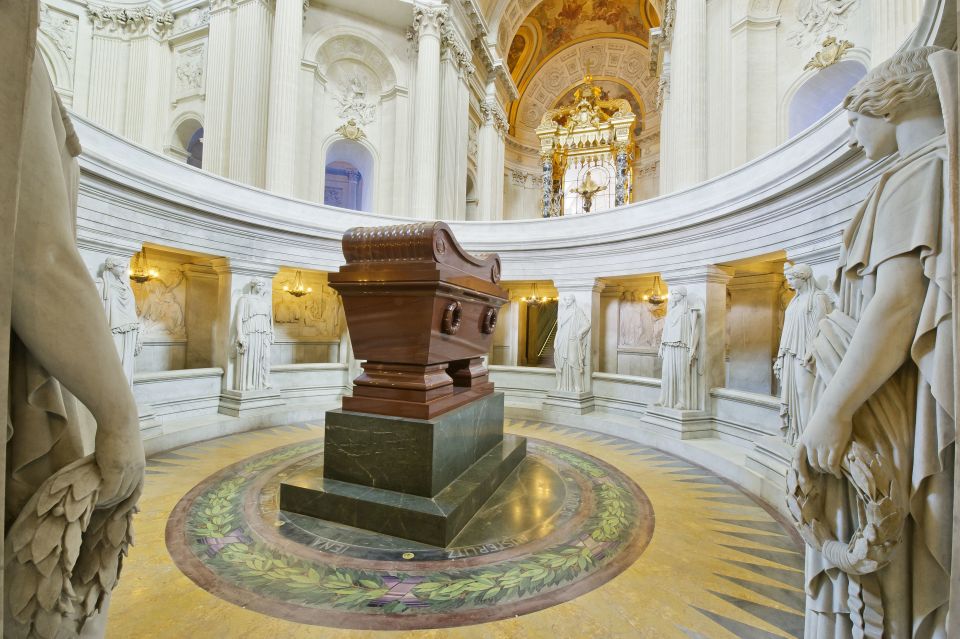
- Napoleon’s tomb under the gilded Dome Church: the main draw, and it’s worth the time to slow down.
- Arms and armor on a major scale: the collection spans from royal eras to later military history.
- A museum complex, not one room: you’ll likely want half a day to a full day to see what you care about.
- Interactive battle displays: digital experiences help make key moments easier to grasp.
- Weekend family activities in French: optional add-ons on Saturdays and Sundays at set times.
Les Invalides: A Paris Landmark Built for Soldiers

Les Invalides is one of those places where Paris stops being just pretty streets and starts feeling like a nation keeping records. The site began as a home for veterans and wounded soldiers, designed under Louis XIV, and that purpose still shapes the whole experience. You’re not just looking at objects—you’re stepping into a building meant to honor service, sacrifice, and military memory.
Today, the Musée de l’Armée brings together collections reaching across centuries, from the Middle Ages to more recent conflicts. That scale matters because it changes how you experience the visit. Instead of a museum that teaches one narrow story, you’re comparing eras—how weapons, uniforms, and military thinking shift over time.
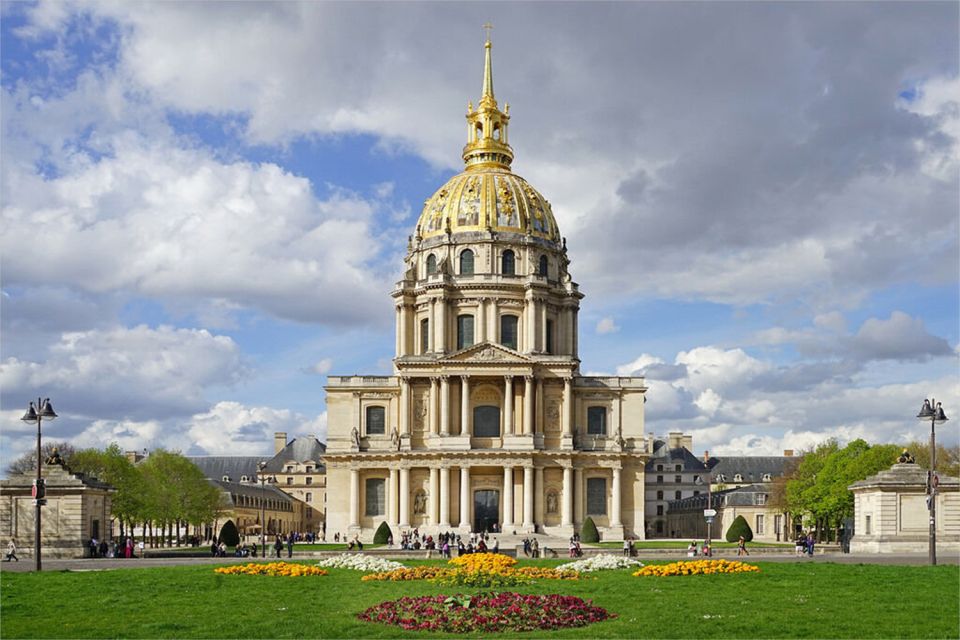
And yes, it’s also stunning. The Dome Church is a showstopper: the famous gilded Dome is the kind of landmark you notice even before you enter, and it anchors the visit around Napoleon’s resting place.
You can also read our reviews of more museum experiences in Paris



Getting In Fast: Skip the Cashdesk and Keep One Ticket
Here’s the practical move that makes the visit easier: don’t get stuck waiting at the main cash desk. The site guidance for this ticket is to enter Les Invalides and show your tickets to access the museums.
Because Les Invalides is made up of multiple parts, you might need to show your ticket again when you move into each section. That means your single most important habit is simple: keep your ticket with you until the end of the visit. If you toss it, misplace it, or hand it over, you could end up redoing the slow part.
Plan your approach using the site access windows. You can access from the Esplanade des Invalides from 10:00 to 18:00, and from Place Vauban from 14:00 to 18:00. If you arrive later in the day, keep that in mind so you don’t waste time wandering for the right entry point.
Also note a small detail that can matter: the tills close 30 minutes before the museum closes. So if you want to buy anything on site—like a multimedia guide—don’t leave it to the last moment.
Napoleon’s Tomb in the Dome Church: The Moment You’ll Remember

If your brain is already calling it Napoleon’s Tomb, you’re not wrong. The Dome Church is where the experience gets emotional, because Napoleon’s resting place is placed inside one of Paris’s most dramatic interiors.
What makes it special is the contrast: the outside world feels like modern Paris, but inside the Dome Church you’re surrounded by monumental architecture and ceremonial presentation. Even if you’re not a “history trivia” person, you can still read the atmosphere. The tomb isn’t just a point on a map—it’s the heart of the complex.
The Dome Church is also why many people feel like they need less convincing than they expect. One of the most common themes from visitor experiences is that the tomb alone feels worth it, even for people who weren’t sure what to expect before arriving.
If you want to get maximum value, don’t treat Napoleon as a quick photo stop. Take a bit of time to stand, look around, and let the space do the work. It’s the kind of place where rushing can make it feel flatter than it is.
The Army Museum: Arms, Uniforms, and the Big Stories Across Time
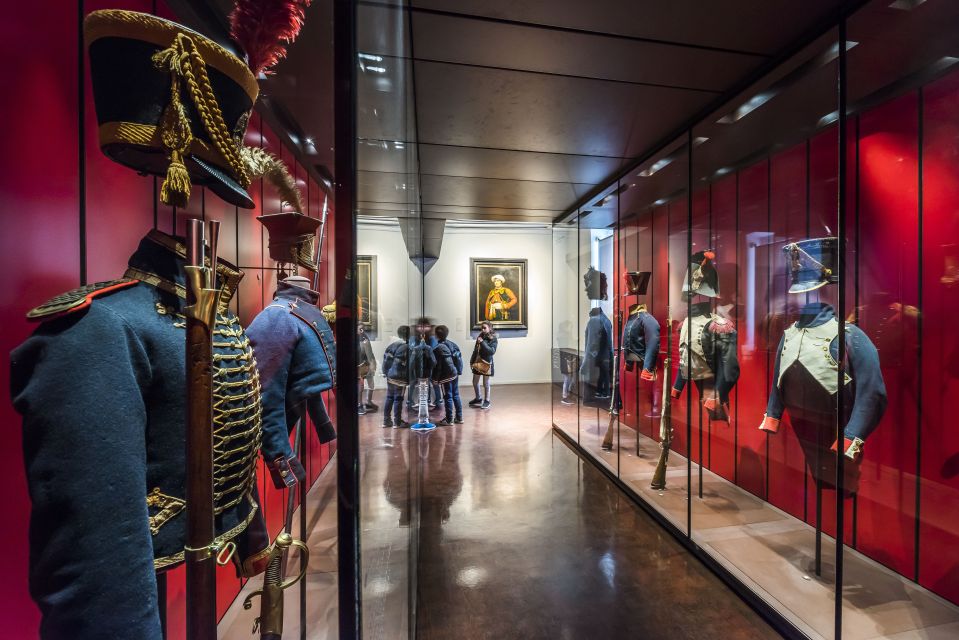
Once you’re through the Dome Church area, the Musée de l’Armée stretches your visit into something bigger than you might plan at first. The collection covers over 500,000 pieces, spanning eras and styles of warfare. That includes swords, cannons, uniforms, paintings, photographs, and personal belongings tied to major figures in French military history.
The arms and armor collection is one of the standout draws. Think of it as a museum where you see craftsmanship plus purpose—materials built to last, designs shaped to perform, and upgrades that reflect how battles evolved.
There’s also a modern layer to the experience. The museum includes interactive digital experiences that help you understand battles and how France’s history was shaped. These screens and devices won’t replace reading or signage, but they can turn a name you’ve heard into something you can picture.
I like that the museum doesn’t force you into one pace. You can wander at your own speed, choose what you care about, and come back to the highlights. If you’re with kids or you’re not trying to become a walking textbook, that freedom helps a lot.
One logistics note: the museum flow is set up so you can move efficiently through areas, and some people report that the circulation design is helpful for keeping the visit moving without getting stuck in crowds. Translation: you can usually keep your momentum.
And if you need breaks, that’s built into the experience too. There are places to sit around the galleries, which matters on a long day—especially during hot weather.
Plans-Reliefs and the Order of the Liberation: Two Extras Many People Skip
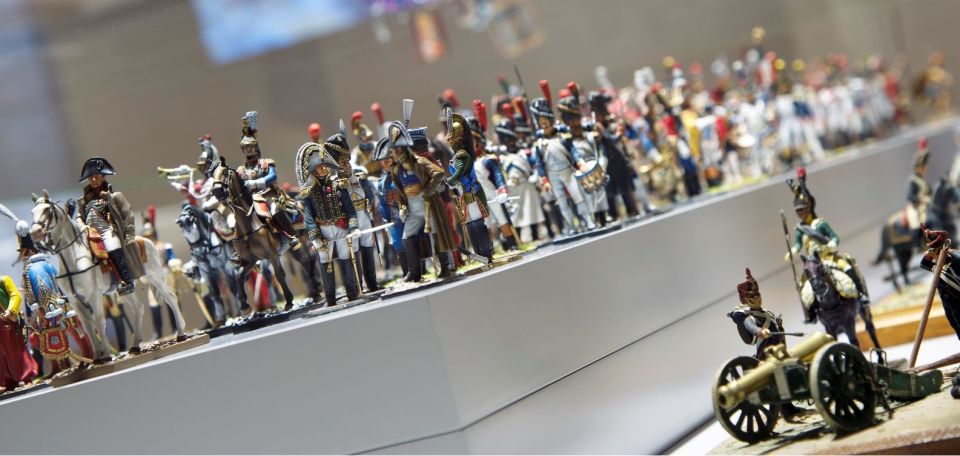
This ticket includes more than Napoleon and the big armor displays. You also get access to the Museum of Plans-Reliefs and the Museum of l’Ordre de la Libération, plus temporary exhibitions.
The Plans-Reliefs is a great change of pace if you’ve been staring at weapons and uniforms. Instead of focusing on what fighters held, you see military planning and geography in a different way. Maps can sound dry until you realize what they do: they show how people understood space, defense, and movement long before satellites or GPS. If you like strategy and context, this section can feel like the glue that connects objects to real-world decisions.
The Museum of l’Ordre de la Libération adds another layer by shifting toward recognition and honor tied to France’s resistance and liberation story. Even if you only spend a short time here, it gives your visit emotional range—more than just battles, you get a sense of what mattered afterward.
Temporary exhibitions can also be a helpful bonus. They keep the museum from feeling frozen in time, and they give you something different even if you’ve already seen major Napoleon-focused sites elsewhere.




Interactive Displays, Audio Guides, and How to Choose Your Tech
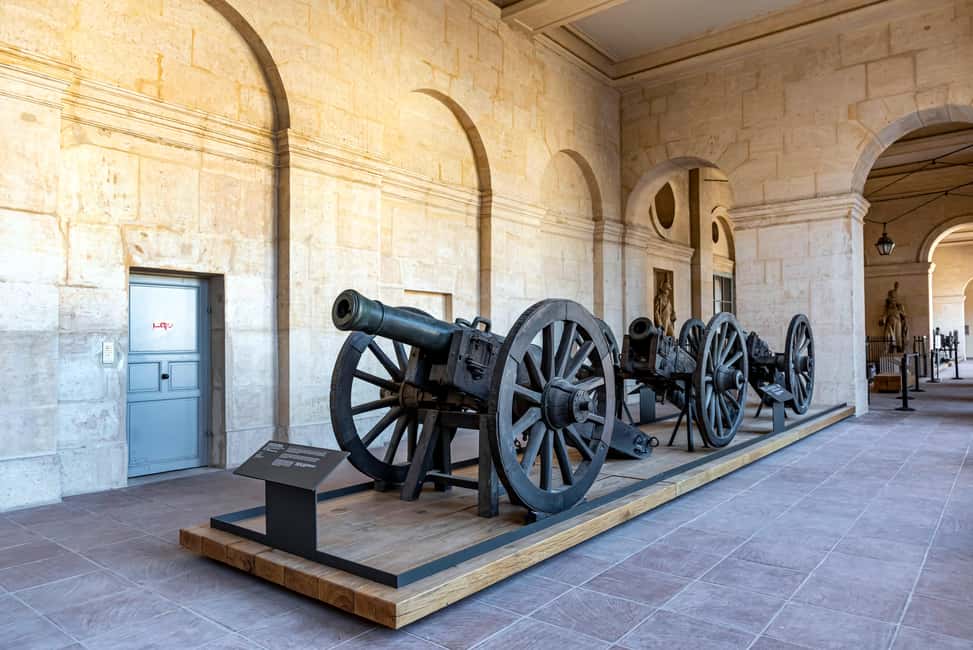
A lot of museums rely on text and artifacts alone. Here, the museum adds an interactive digital element designed to help you make sense of battles that shaped French history.
You can also choose a multimedia guide on site for €5. If you like structure, the guide can help you connect objects to events without hunting for explanations on every wall. If you’d rather wander and read only when something catches your eye, you can skip it and still get plenty out of the signage and digital devices included with the experience.
The key is matching your style. If you’re the type who wants the shortest path to understanding, you’ll probably appreciate the audio or multimedia add-on. If you prefer a slow, visual walk, the built-in digital experiences may be enough.
How Much Time You Need: Plan for 4–5 Hours, Not 1
One of the most useful bits of advice is also the most obvious: this complex is huge. People often go in assuming they’ll be done quickly, then realize there’s just too much to absorb properly.
A realistic approach is 4–5 hours for a solid visit—enough time to see major galleries and still feel like you didn’t skim everything at the speed of a sprint. Some visitors only had a shorter window and still found the experience cool, but the common regret is running out of time before seeing enough.
If you’re traveling with limited schedules, you can still make it work, but be intentional. Start with Napoleon’s tomb and the main arms and armor areas first. After that, decide whether you want to prioritize Plans-Reliefs, the Order of the Liberation, or temporary exhibitions based on what you’d hate missing.
My rule for this place: treat it like a half-day museum at minimum, full-day if you want to linger.
Price and Value: Why This Ticket Works for Many Budgets

This experience is priced around $20 per person, with a full-day entry window. That price is easier to justify here than in smaller museums, because you’re buying access to a major monument plus multiple museum sections under one umbrella.
Value comes from three places:
- Napoleon’s tomb is the headline, and it’s not a quick, empty room. The Dome Church is the main architectural moment.
- The arms and armor collection is large and extensive enough that it feels like a destination, not an add-on.
- You get additional sections like Plans-Reliefs and l’Ordre de la Libération, which prevents the visit from being one-note.
There are also big savings options. Admission is free for those under 18, and for EU citizens under 26, but an access pass must be collected from the museum office before entering. If you fall into either category, it’s worth planning ahead so you don’t lose time at the last step.
And while this ticket isn’t refundable, the value math is usually about whether you’ll actually give the place time. If you’re the kind of visitor who likes to linger, this is a good buy.
Best For Who: Military History Fans, Families, and Curious First-Timers

This is a strong pick if you’re interested in Napoleon, French military history, or World Wars. People who care about WWI/WWII-style exhibits often find the museum’s scale and display style genuinely satisfying, especially when paired with interactive screens and film-style information you can follow without needing background knowledge.
It’s also good for families, partly because it’s indoors and partly because the museum includes seating and break points. For kids, the overall size can be a challenge, but the tone of the collections and the mix of objects plus digital learning can keep attention better than a museum built only around glass cases.
Weekend family activities are an option on Saturdays and Sundays at 11:00 and 14:30 in French, with tickets €7 per child on site and subject to availability. If you’re traveling with children and your dates match, it’s a nice bonus.
Wheelchair access is listed as available. One practical consideration: some visitors noted it may not feel perfectly accessible everywhere, so if mobility is a concern for your group, give yourself extra time and expect you might need a slightly slower route.
Practical Tips for a Smooth Visit (So You Don’t Burn Your Day)
A few smart habits make a big difference at Les Invalides:
- Bring water and plan for a long walk. You can purchase snacks on site, but it’s still smart to arrive prepared.
- Use the cloakroom if you have a heavy bag or outer layers. It helps you move comfortably through galleries.
- Arrive with a focus list. Decide in advance whether you care more about Napoleon, armor and weapons, WWI/WWII displays, or the resistance-related content tied to the Liberation order.
- Keep your ticket handy for re-scans at different entrances.
- Don’t leave add-ons for the end. The museum is scheduled with clear closing behavior, and the tills close 30 minutes early.
If you can time your arrival, going when you can comfortably settle into the first major area helps. The museum is popular, but it’s big enough that the flow usually stays manageable if you’re moving with purpose.
Should You Book Les Invalides for Napoleon’s Tomb and the Army Museum?
If you want one Paris stop that feels important, visual, and story-driven, book this. The ticket hits the big must-see (Napoleon’s tomb under the Dome Church) and then earns its keep with extensive museum galleries on military history, including interactive parts.
I’d skip it only if you’re strictly limited to a tight 90-minute window and you know you hate long museum walks. Otherwise, this is one of those places where time spent is time rewarded—you’ll come out knowing more and feeling like you visited a real institution, not just a photo backdrop.
If your dates line up, your best strategy is to plan at least half a day, keep your ticket with you, and start with the Dome Church before you wander into the collections.
FAQ
What does this entry ticket include?
It includes access to the Dome Church (Napoleon’s tomb), the permanent collections, the Museum of Plans-Reliefs, the Museum of l’Ordre de la Libération, temporary exhibitions, and the interactive digital experiences in the museum.
Do I need a guided tour to enjoy Les Invalides?
No. This ticket does not include a guided tour, and you can explore the collections at your own pace.
How long should I plan for?
The experience is self-paced and the site is large. A common approach is to plan about 4–5 hours so you don’t feel rushed.
Can I enter anytime during the day?
You can access the site from the Esplanade des Invalides from 10:00 to 18:00, and from Place Vauban from 14:00 to 18:00. The ticket is valid for 1 day, depending on available starting times.
Where do I enter to avoid long lines?
You can enter Les Invalides and show your tickets instead of waiting at the cashdesk. You may need to show your ticket again when entering each part of the site.
Is there free admission for kids or students?
Admission is free for children under 18. EU citizens under 26 are also free, but they need to collect an access pass from the museum office before entering.
Are there weekend family activities?
Yes. On Saturdays and Sundays, family activities run at 11:00 and 14:30 in French, subject to availability, with tickets priced at €7 per child on site.
Is Les Invalides wheelchair accessible?
Wheelchair accessibility is listed as available. Some areas may still be challenging in practice, so plan for extra time if mobility is limited.