Montmartre feels like another city in 140 minutes. This walk kicks off at Sacré-Cœur and moves through artist lanes tied to Picasso, the bohemian era, and how the hill went from farms to famous nightlife. I also love the way the tour builds to a panoramic view from the highest point, so you get payoff beyond photo stops. One thing to plan for: there’s uphill walking and cobblestones, so grippy shoes matter.
What keeps this tour feeling special is the human factor: guides such as Yadiz/Yazid, Sylvia, Marcela, and Zoe bring the neighborhood to life with focused storytelling, good energy, and plenty of chances for questions. Groups are capped at 16 people, which helps the pace stay conversational rather than rushed through crowds. If you want a silent, self-guided kind of experience, this won’t be it—this is story-led by design.
You’ll start at La Place Saint Pierre near the carousel area, then work your way through Montmartre’s key corners like Place du Tertre, Moulin de la Galette, Picasso’s studio, and even the Pink House, before finishing with big city views. Along the way, you’ll hear how mills, vineyards, cabarets, and alleyways shaped what Montmartre became.
In This Review
- Key things I’d zero in on
- Entering Montmartre at Sacré-Cœur and La Place Saint Pierre
- The “walk it to understand it” Montmartre streets
- Place du Tertre: art square energy, explained
- Moulin de la Galette: mills to music to Montmartre magic
- Picasso’s studio and the artists you’ll hear about
- Pink House, vineyards, cabarets, and alleyway charm
- The highest hill view: Paris lights you can actually use
- How the group stays friendly in a max-16 format
- What to wear and how to plan your time
- Who this Montmartre tour fits best
- Should you book this Montmartre walking tour?
- FAQ
- Where does the tour start?
- How long is the walking tour?
- How big is the group?
- Is the tour guided in English?
- Is this walking tour suitable for kids?
- What major stops are included?
- What’s the cancellation policy?
- Is there a flexible booking option?
Key things I’d zero in on
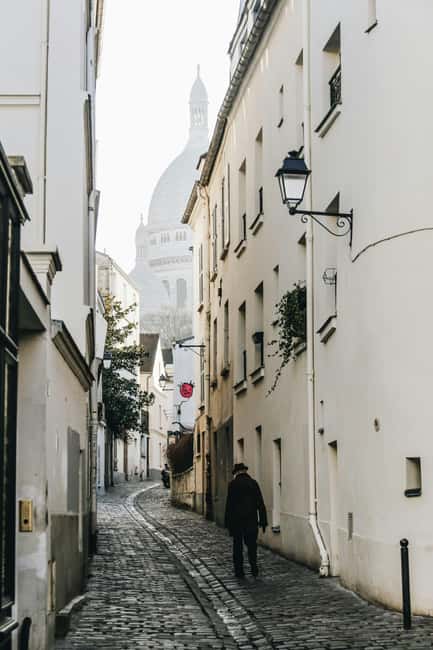
- Sacré-Cœur details plus the Sacred Heart mosaic story, including references to Joan of Arc and Saint-Michel
- Artist-time travel as you walk: the tour links streets to the 1920s vibe and later bohemian fame
- Place du Tertre + Moulin de la Galette as two anchors for the area’s creative pull
- Picasso’s Montmartre with stories about famous creatives tied to the neighborhood
- Highest-hill panoramic moment for big Paris views without needing to hunt viewpoints yourself
Entering Montmartre at Sacré-Cœur and La Place Saint Pierre
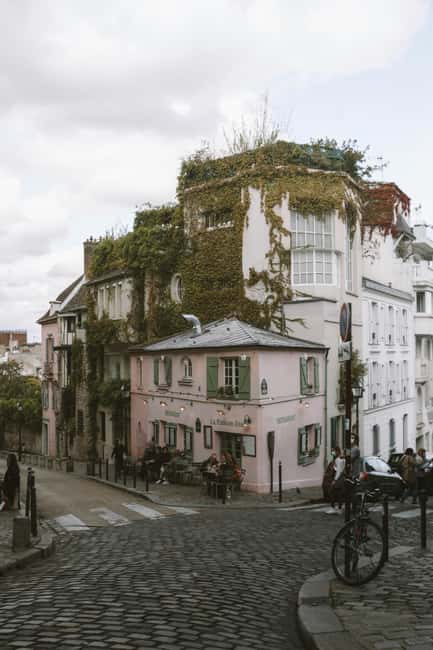
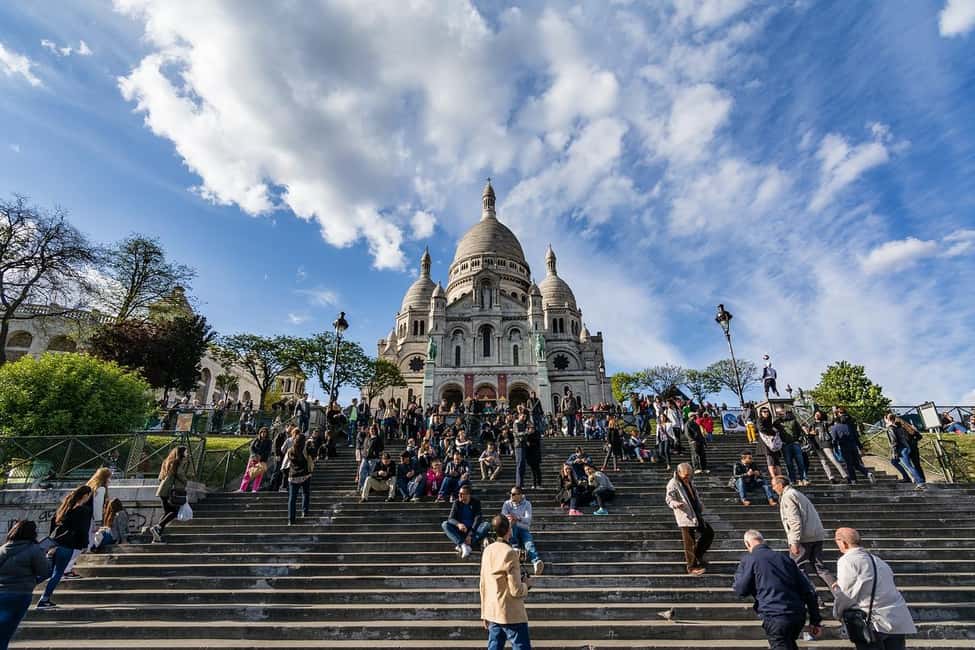
Most Montmartre walking plans start with the big church view. This one starts at the source: the tour meets near La Place Saint Pierre by the carousel area, and you’ll look for your guide from Paris Tours Experiences with a name tag.
The first payoff is the basilica area itself. Expect an in-guided visit of Sacré-Cœur, including a standout fact about the largest mosaic in the world—the Sacred Heart of Jesus—paired with the religious themes connected to the Virgin Mary, Joan of Arc, and Saint-Michel. Even if you’re not a stained-glass person, the guide’s framing helps you notice what most folks speed past.
Practical note: this is a good place to reset your bearings. The streets you’ll walk next are steep and winding, so early context makes everything that follows feel logical rather than chaotic.
You can also read our reviews of more walking tours in Paris



The “walk it to understand it” Montmartre streets
After the basilica, the route leans into what Montmartre does best: narrow turns, small squares, and streets that feel like they twist to keep secrets. The tour’s vibe is built around time—how the neighborhood shifted as artists and entertainers arrived and changed its identity.
A detail I really like is the emphasis on “why” as you move. Instead of treating each stop as a standalone postcard, you’re shown how daily life and the look of the district evolved. That makes the streets feel like evidence, not scenery.
You’ll also notice the physical reality of Montmartre. Expect uphill segments and cobblestones. One traveler’s note about feeling the climb on cobblestones is spot-on for planning: pace yourself, take breaks when your guide stops, and save your energy for the viewpoints later in the walk.
Place du Tertre: art square energy, explained
Place du Tertre is one of those places where it’s easy to assume you already get it. The guide approach here is different: you’re not just passing through an artists’ square, you’re learning what made the area attractive in the first place.
Your walk through this area connects the square to the broader bohemian story—artists, musicians, and the kind of romantic Paris mythology that grew up around this hill. The guide’s job is to help you separate the real neighborhood from the tourist version, while still letting you enjoy the color of the place.
If your group likes photos, this is a natural time to pause. Some guides have even helped with pictures during the walk, which is handy when angles and crowds make it hard to take a clean shot on your own.
Moulin de la Galette: mills to music to Montmartre magic
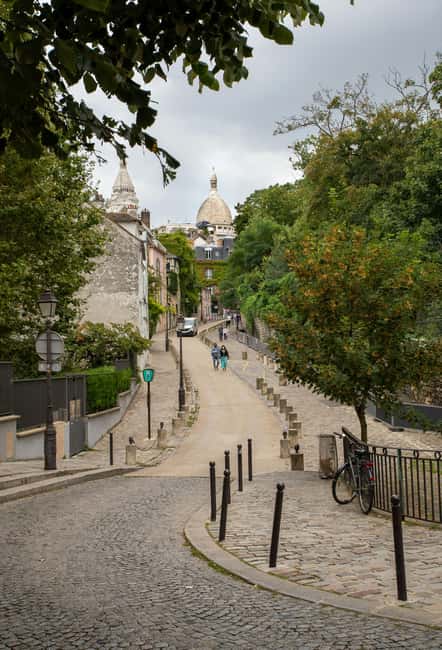
Moulin de la Galette is a name you’ve probably heard, even if you’ve never been there. Here, it’s framed as more than a landmark: it’s tied to how Montmartre changed from an agricultural village known for mills into a trendy district people wanted to visit and live in.
That transformation is a big theme of the tour. The guide links the mills-and-farms past to the later artistic pull, so Moulin de la Galette doesn’t feel like a random stop. It feels like a chapter in a story.
Also, this part of the walk often sets the emotional tone. Once you’re moving between the square, the mills-era references, and the surrounding lanes, Montmartre starts feeling less like “a place with famous stuff” and more like “a place where creative life took root.”
Picasso’s studio and the artists you’ll hear about
If art history is your thing, this tour has a clear focus: Picasso and the wider circle of famous creatives connected to Montmartre.
You’ll pass by stops related to Picasso’s presence, including Picasso’s studio area. Your guide weaves his life into what you see on the street—how the neighborhood fit the artist lifestyle. The effect is practical: after this, you’ll know what you’re looking at when you spot a “Picasso connection” elsewhere in Paris.
And Picasso isn’t the only name dropped. The tour also references other illustrious figures associated with Montmartre, including Van Gogh, Dalida, Aznavour, and Salvador Dali. There are also mentions of revolutionaries who mattered to the city’s history. Even if you only catch a few names, the guide keeps the connections clear enough to remember.
One small but memorable bonus from guide style: some guides share audio elements linked to local music culture. Zoe, for example, included recordings of songs when discussing famous singers, which adds texture beyond a straight walking lecture.
You can also read our reviews of more guided tours in Paris





Pink House, vineyards, cabarets, and alleyway charm
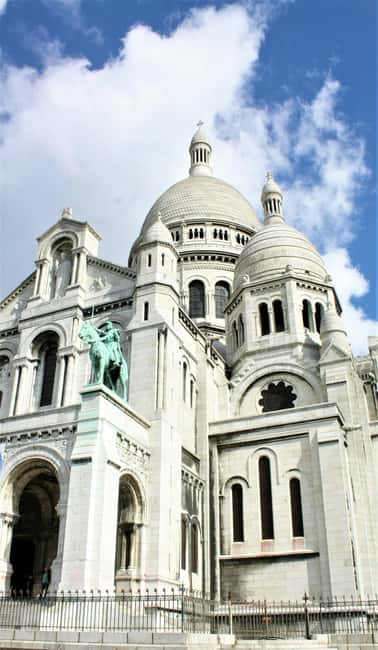
A lot of Montmartre walks hit the classics and then call it a day. This one also threads through the in-between details: vineyards, cabarets, alleys, and notable street features like the Pink House.
These stops matter because Montmartre’s “feel” comes from the spaces between the big sights. You’ll see how the district’s geography supports intimacy—tiny lanes, sudden perspectives, and places where the atmosphere changes block by block.
The vineyards section is especially helpful for understanding the area’s past. It’s a reminder that this was not always a fully urban art district. Seeing how vineyards fit into the story makes the later transformation feel earned, not invented.
And then there are the cabarets and alleys, which bring the bohemian reputation into view. Even if you don’t go inside anywhere, you’ll understand what people meant when they said Montmartre was where life felt freer and louder.
The highest hill view: Paris lights you can actually use
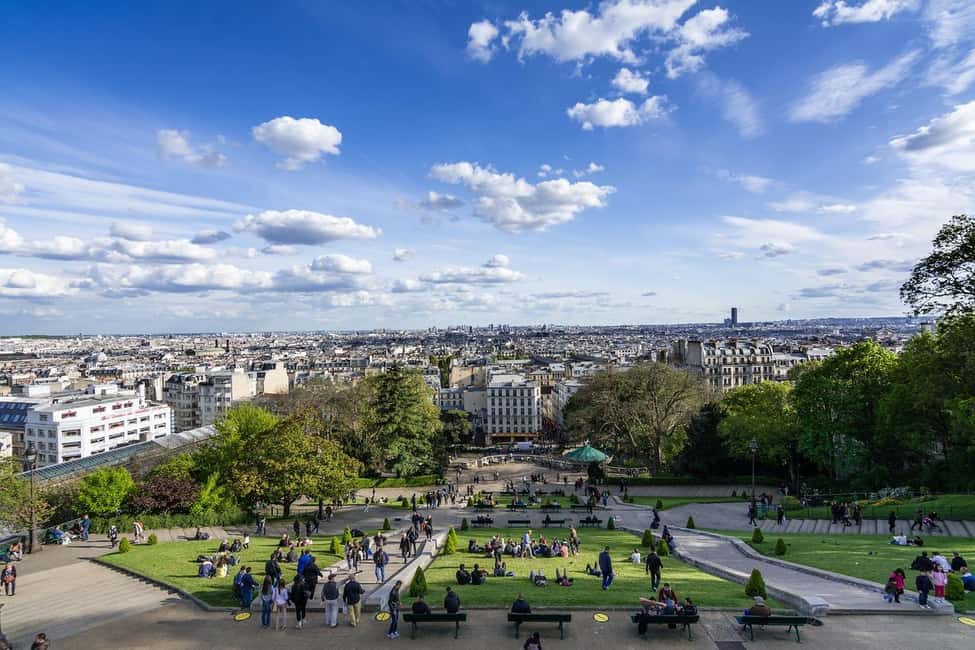
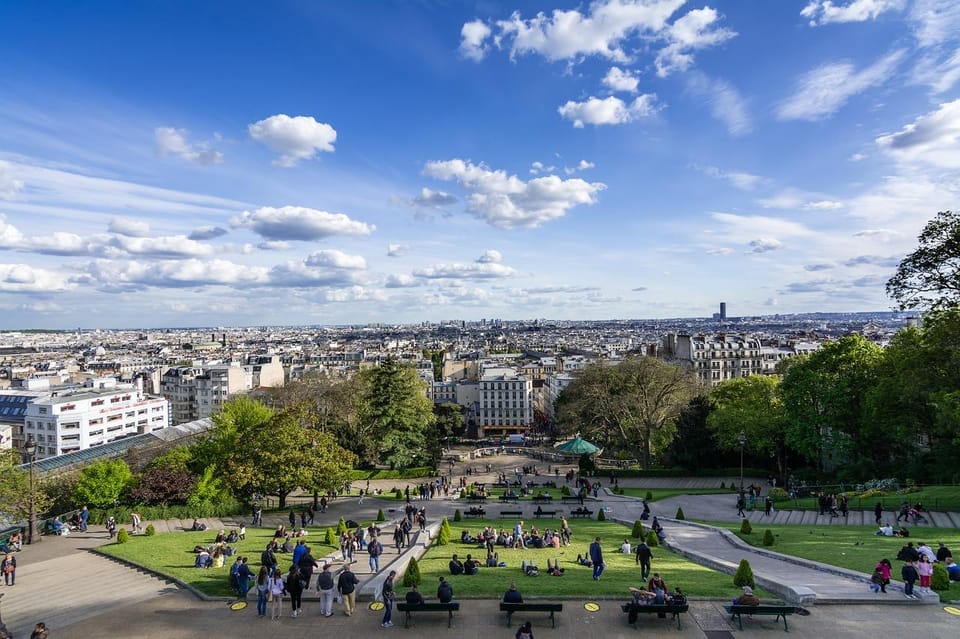
Every Montmartre plan promises views. This one includes a specific build toward them: a panoramic view from the highest hill in the city.
That matters because the walk structure leads you there rather than leaving you to guess where the best spot is. The guide helps you time the moment, so you’re not just standing somewhere cold and confused with no context.
If you’re traveling with kids or anyone who tires quickly, this is also a psychological “reward stop.” You get a visual payoff before the walk winds down, which makes the earlier uphill segments easier to handle.
How the group stays friendly in a max-16 format
With up to 16 people, the tour tends to work well for people who want interaction without being swallowed by a crowd. You’ll hear stories clearly, and the guide can adjust pacing based on the group’s energy.
You’ll also get an English live guide. That’s not just about language—it’s about storytelling clarity. From the way guides like Sylvia, Marcela, and Zoe lead their groups, you can expect explanation that connects art, street corners, and the district’s shift over time.
The tour is also adapted for kids. It’s not “kid time” as in babysitting; it’s more like the guide chooses details that keep younger attention from melting away. One family-focused strength is that the tour mixes big names and real street scenes without making it feel like a textbook walk.
What to wear and how to plan your time
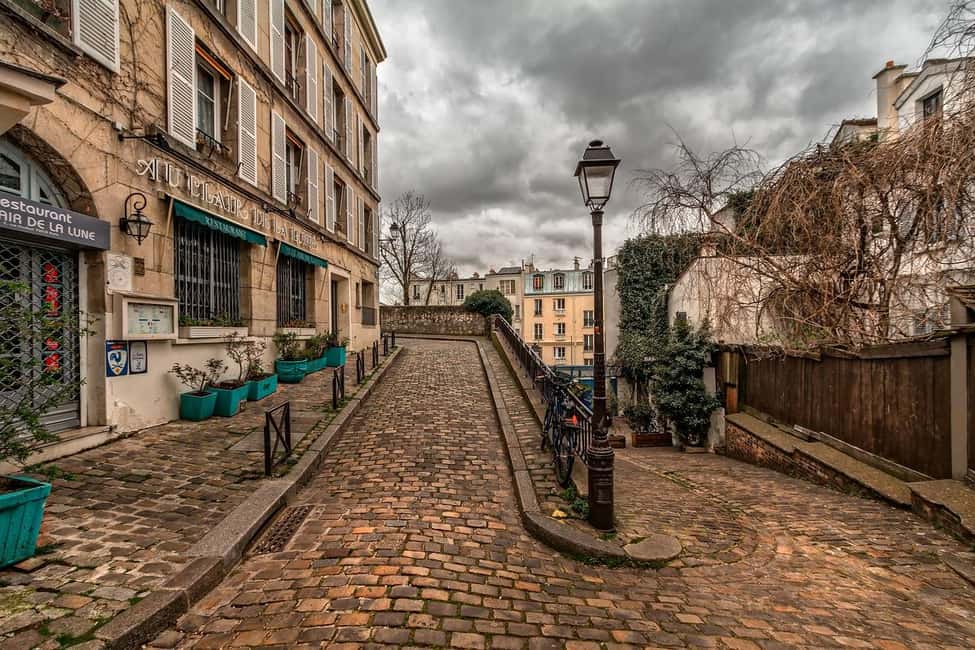
Montmartre is active. Even in just 140 minutes, the mix of uphill paths and cobblestones can add up. I’d plan for some steady walking and short pauses, not a slow stroll on flat sidewalks.
Practical choices that help:
- Wear shoes with grip for cobblestones and slopes
- Bring a layer if you’re going in colder months (the hill catches wind)
- Use the guide’s stops for photos and quick resets, especially before the viewpoint
Timing-wise, 140 minutes is a good slot. It’s long enough to cover Sacré-Cœur, multiple landmarks, and the panorama, but short enough that you’re unlikely to feel like you lost an entire day to walking.
Who this Montmartre tour fits best
This is a great match if you want Montmartre to make sense. You’ll enjoy it most if you like:
- art and artist stories tied to real street corners
- walking tours where someone explains the transformation of the neighborhood
- a small-group pace that feels human and easy to ask questions in
It’s also a solid choice for families, since the tour is adapted for kids and keeps the atmosphere upbeat.
If your priority is only ticking off the biggest landmarks with minimal talking, you may find the story focus too much. The tradeoff is that you’ll miss some of the meaning that makes the streets stick in your head.
Should you book this Montmartre walking tour?
I’d book it if you want Montmartre more than as a photo challenge. The combination of Sacré-Cœur, Place du Tertre, Moulin de la Galette, Picasso’s Montmartre connections, and a planned highest-hill panorama makes the 140 minutes feel efficient. Add in the small-group max-16 format and English live guide, and you’re set up for a walk that’s both fun and clear.
I’d think twice if you know you struggle with uphill cobblestone walking. In that case, you can still enjoy Montmartre, but you might want a shorter, flatter route—or be ready to move slowly and lean on the guide’s breaks.
If you can handle a bit of climbing and you like stories that connect art to place, this is the kind of tour that leaves you feeling like you understood the hill, not just visited it.
FAQ
Where does the tour start?
It starts at Sacré-Cœur, specifically at La Place Saint Pierre. You’ll meet near the carousel area, and your guide will have a name tag. The provided coordinates are 48.88438415527344, 2.3435277938842773.
How long is the walking tour?
The duration is 140 minutes.
How big is the group?
The tour is in a small group with a maximum of 16 people.
Is the tour guided in English?
Yes. It’s a live tour guide in English.
Is this walking tour suitable for kids?
Yes, it’s adapted for kids.
What major stops are included?
You’ll see Sacré-Cœur, Place du Tertre, Moulin de la Galette, Picasso’s studio, the Pink House, plus vineyards, cabarets, and alleys in Montmartre, ending with panoramic city views from the highest hill.
What’s the cancellation policy?
It offers free cancellation up to 24 hours in advance for a full refund.
Is there a flexible booking option?
Yes. It offers Reserve now & pay later, so you can book your spot and pay nothing today.