REVIEW · PARIS
Haussmannian Paris 2-Hour Private Walking Tour
Book on GetYourGuide →Operated by Paris in person private tours · Bookable on GetYourGuide
Haussmann’s Paris teaches as you walk. What makes this tour click is how quickly it turns big 19th-century planning into street-level reality. I especially loved seeing the drama of Opéra Garnier from the outside, then walking the long, composed lines of Boulevard Haussmann with a guide who explains what you are actually looking at. One practical consideration: it runs rain or shine, so plan for weather fast.
I also like the format: a private group with a live guide in English or French, so you can set your pace and ask questions instead of guessing. It’s only two hours, which keeps it focused on the classic Haussmann highlights without dragging into full-day museum mode.
The price is $176 per person for a private walking tour, so you’ll want to decide you’re paying for guidance and a tight route—not for food stops or extra admissions. With no food, snacks, or drinks included, come ready to walk and then eat on your own afterward.
In This Review
- Key things to know before you go
- Walking the Haussmann Plan You Can Still See
- Getting Oriented at Métro Opéra (and Finding Your Guide)
- Opéra Garnier: More Than a Gorgeous Facade
- Boulevard Haussmann: The Street That Teaches City Planning
- Galeries Lafayette: Elegant Shopping as a Paris Experience
- Jacquemart-André and Saint Augustin: Architecture with Different Voices
- Park Monceau: Where the Route Gains Breathing Room
- Picasso’s Drinking Dens: The Human Thread Through the City
- Price and Value: Is $176 per Person Fair for Two Hours?
- What Works Best for You (and What Might Not)
- What to Bring for a Smooth Haussmann Walk
- Should You Book This Haussmannian Paris Private Walking Tour?
- FAQ
- FAQ
- Where is the meeting point?
- How will I recognize the guide?
- How long is the tour?
- Is this a private tour?
- What languages are available for the guide?
- Does the tour operate in bad weather?
- Is the tour wheelchair accessible?
- What is included in the price?
- Are food, snacks, or drinks included?
- Can I cancel and get a full refund?
Key things to know before you go
- You’re walking through a real 19th-century redesign: the kind of massive urban plan that reshaped most of Paris.
- Opéra Garnier and Galeries Lafayette are about ambition, not just sightseeing.
- Boulevard Haussmann is the master class in the Haussmann look: long views, consistent streetscape, and theatrical city planning.
- Park Monceau slows the pace on purpose—a change of scenery that feels very Paris.
- Jacquemart-André and Saint Augustin add contrast: opulence and architecture, side by side.
- Picasso’s favorite drinking dens bring the human story back in after all that planning talk.
Walking the Haussmann Plan You Can Still See
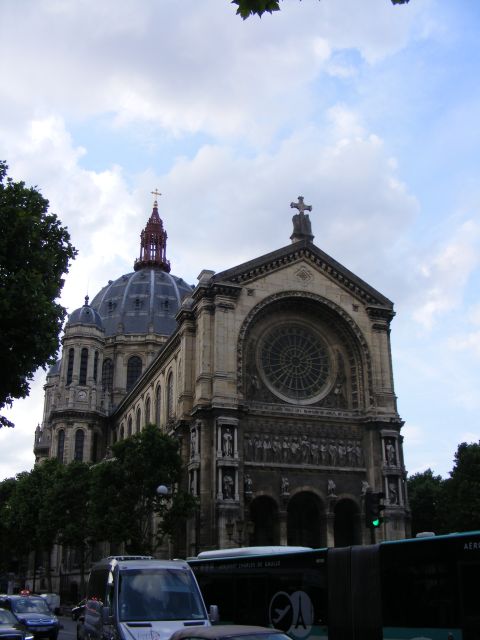
This experience is built around a simple idea: Haussmann’s makeover wasn’t abstract history. It was a serious, city-scale intervention that flattened and rebuilt most of Paris in the 1800s, with only two areas not swept into the same transformation. The goal was bold—make the city more functional, more beautiful, and easier to live in.
And yes, the program came with a cost. Some precious buildings and streets disappeared forever. That tension matters, because the tour doesn’t present Haussmann as a clean win. Instead, it helps you notice how a unified style can come from an intense, sometimes heavy-handed process.
After two hours like this, you’ll start seeing Paris differently. Streets won’t just look pretty. You’ll read them like design decisions: wide avenues, orderly facades, the push for strong visual unity, and how those choices still guide where people move today.
You can also read our reviews of more walking tours in Paris


Getting Oriented at Métro Opéra (and Finding Your Guide)
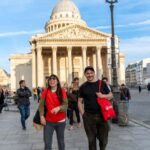
The tour starts at Métro Opéra, right in front of Café de la Paix. Your guide carries a red canvas tote bag, which makes the meet-up easy even if you’re arriving with the last-second stress every Paris traveler knows.
Two hours moves quickly. You’ll want to arrive ready to walk and pay attention in the first stretch, because the guide’s framing sets how you’ll interpret the buildings later. This kind of route works best when you’re not playing catch-up.
Since it’s private, you should expect a smoother flow than the big group tours. You can still appreciate the sights fully, but you’re not trapped in a rigid stampede rhythm.
Opéra Garnier: More Than a Gorgeous Facade
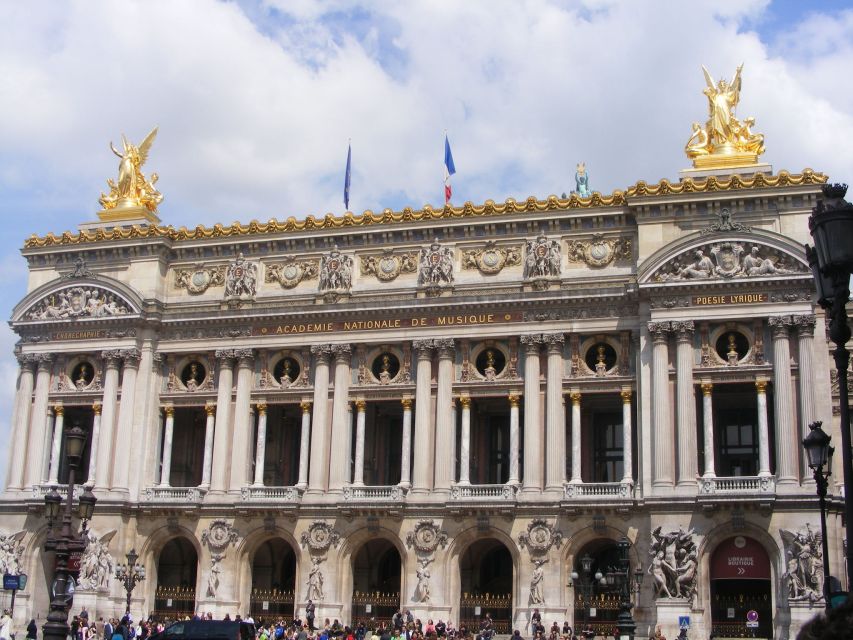
Opéra Garnier is the kind of landmark that makes you stop talking for a second. It’s often described as one of the most beautiful buildings in Europe, and the tour treats it as a symbol of the era’s ambition.
You’ll see the building in a way that helps you connect it to Haussmann’s larger story: Paris in the 19th century wanted to broadcast power, culture, and confidence through architecture. Even when you’re standing outside, the opulence reads fast—this is architecture designed to be noticed from the street.
What I like about having a guide here is that you’re not left with vague reactions like pretty or impressive. You get the why. You also start understanding how a city redesign can produce not just efficient streets, but dramatic backdrops for daily life.
Practical note: since this is a walking tour, think “views and observations” more than “inside the building.” If you’re hoping for a full opera-house visit, you’ll need a separate plan.
Boulevard Haussmann: The Street That Teaches City Planning
Boulevard Haussmann is the classic example of Haussmannian style, and it’s the perfect middle-of-the-tour payoff. You’re no longer just looking at individual landmarks—you’re watching how a whole street system behaves.
This is where the planning ideas become visible. The boulevard’s layout helps you understand why Haussmann’s redesign was considered both functional and theatrical. The street becomes a stage: long perspectives, consistent building patterns, and a sense of order that feels different from older, more irregular city fabric.
And here’s the thing: once someone points out the structure, you start spotting it everywhere. The Haussmann plan teaches your eye to read Paris as a designed system, not a random collection of beautiful corners.
Possible drawback? If you are only interested in one or two famous photo stops, the “explain the city” part might feel heavier than expected. But if you like architecture, urban planning, or even just smart storytelling, this is the heart of the walk.
Galeries Lafayette: Elegant Shopping as a Paris Experience
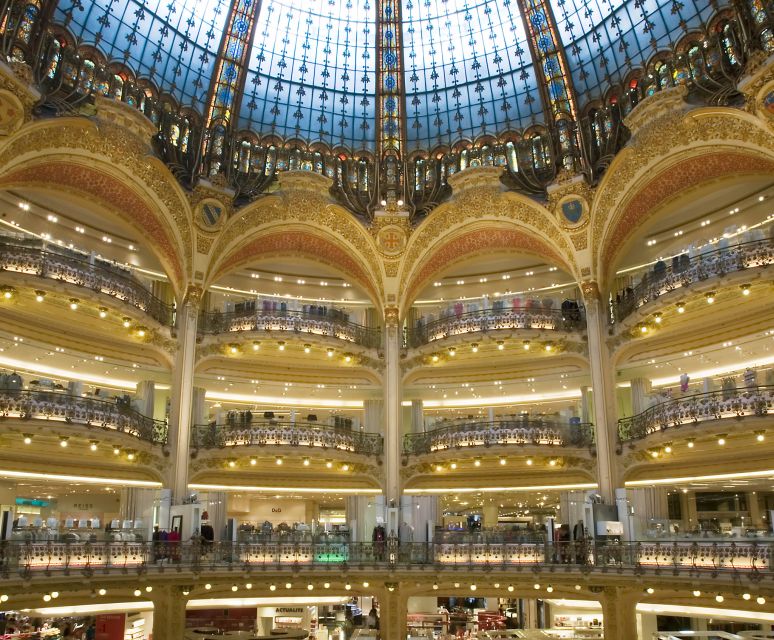
Next up is Galeries Lafayette, described as the most elegant shopping mall in Paris—and for a walking tour, that matters. This stop isn’t just retail; it’s architecture and atmosphere, turned into a public spectacle.
You’ll see how commercial spaces in Paris can still feel ceremonial. That contrast is very Haussmannian: the city redesign aimed for beauty and unity, but it also created new kinds of public life. Galeries Lafayette fits that idea perfectly—part destination, part modern hub of street-to-indoor Paris energy.
If you’re the kind of traveler who likes to understand what you’re walking into, this is a strong stop. You’ll leave with a clearer sense of how Paris mixes daily routines with grand design language.
One practical consideration: shopping areas can be crowded at certain times. Since your tour is private and scheduled by availability, the guide can manage the pace, but you should still expect a lively feel around major department stores.
You can also read our reviews of more private tours in Paris


Jacquemart-André and Saint Augustin: Architecture with Different Voices
The tour also includes two more stops that broaden the Haussmann story beyond boulevards and shopping.
First is the Museum of Jacquemart-André—a lavish, opulent villa from the period. Even if you mainly view it from outside on a walking route, it gives you a sense of what wealth and taste looked like in the same century that was redesigning public space. It’s a reminder that city planning didn’t just create avenues. It supported the grand lifestyle imagery of the era.
Then comes the Church of Saint Augustin, an architectural marvel. Churches in Paris often function like historical time machines, and this one adds a different flavor to the walk: more spiritual expression, more craftsmanship, and a strong visual presence that contrasts with the commercial and civic energy around it.
I like this pairing because it prevents the tour from becoming a single-theme lecture. You move from planning and spectacle into private grandeur and then into religious architecture—three different lenses on the same time period.
Park Monceau: Where the Route Gains Breathing Room
At Park Monceau, the tour changes pace on purpose. You get a break from street geometry and a turn toward the calmer, composed feeling that parks give a city.
It’s also framed as the city’s most elegant park, which is exactly why it belongs on this route. Haussmann’s makeover didn’t only create grand buildings and structured streets; it also fed the idea of cultivated public spaces where people could stroll and reset.
If you’re walking for two hours, Park Monceau isn’t just a pretty stop. It helps your brain absorb everything you’ve been shown up to that point. You’ll notice more details in the next stretch because you’re not continuously in “city glare” mode.
Picasso’s Drinking Dens: The Human Thread Through the City
After architecture and urban form, the tour brings in a more playful angle: Picasso’s favorite drinking dens. It’s a reminder that Paris isn’t only designed beauty. It’s also living energy—artists, conversations, and nightly life.
What makes this kind of storytelling valuable is that it ties the grand 19th-century shell of the city to later culture. You start to see how neighborhoods evolve in the context of earlier planning. The city’s bones stay, but the people put their own rhythm into them.
Even without named venues in the basics you were given, you’ll still come away with a sense of where Picasso liked to go and why those stories belong on a Haussmann-themed walk. It gives the route personality, not just monuments.
Price and Value: Is $176 per Person Fair for Two Hours?
Let’s talk money plainly. This tour costs $176 per person and lasts two hours. That’s not cheap for a stroll, but you are paying for a private guide, a curated route, and real context that you can’t easily replicate by just wandering.
Here’s where it tends to be good value for the right traveler:
- You want architecture and urban planning explained in a way that sticks.
- You’d rather spend two focused hours than spend a whole afternoon guessing what matters.
- You care about how multiple landmarks relate to each other under one theme.
It’s less of a value play if your main goal is food stops, long museum time, or a lot of flexibility to hop between neighborhoods. The tour doesn’t include food, snacks, or drinks, so budget for your own break after you finish.
One more value point: in the feedback tied to this experience, guides are praised for passion, clear planning, and helpful Paris tips. That combination matters. A guide who knows how to connect the dots makes the walk feel shorter than it is, and you leave with practical ideas for what to do next.
What Works Best for You (and What Might Not)
This tour suits best if you fit one of these profiles:
- You’re a first-time visitor and want the fastest, smartest way to understand Haussmann’s impact.
- You love architecture, city design, and the stories behind famous facades.
- You prefer a private group experience where you can ask questions and adjust the pace.
- You want a route that combines major landmarks with a calmer park stop.
It may feel less perfect if:
- You want a full museum visit inside the Museum of Jacquemart-André or a church interior deep-dive. This is a walking tour, so expect mostly exterior viewing and street-level context.
- You dislike walking when it rains, since the tour operates rain or shine.
What to Bring for a Smooth Haussmann Walk
Keep it simple. Wear comfortable shoes you can walk in for two hours. If you’re visiting in cooler or wet weather, bring a compact umbrella or rain layer since the tour runs in rain.
Also, consider bringing your own small water plan. Since food and drinks aren’t included, you’ll feel better if you can grab a drink right after the walk instead of trying to power through on empty.
Finally, arrive with a mindset shift: don’t just photograph. Watch the street and the rhythm of buildings. This tour is strongest when you treat it like an outdoor classroom.
Should You Book This Haussmannian Paris Private Walking Tour?
If you like Paris with a strong theme, this is an easy yes. The route hits the major Haussmann symbols—Opéra Garnier, Boulevard Haussmann, and Galeries Lafayette—but it also adds contrast with Park Monceau, Jacquemart-André, Saint Augustin, and even the more cultural angle of Picasso’s drinking dens. That blend is what makes it more than a checklist.
Book it if you want a guide to help you read the city’s design choices in real time. Pass if you only want informal strolling or if you were hoping for a tour built around food, long museum time, or interior visits.
FAQ
FAQ
Where is the meeting point?
The meeting point is at Métro Opéra, in front of Café de la Paix.
How will I recognize the guide?
Your guide will be carrying a red canvas tote bag.
How long is the tour?
The tour lasts 2 hours.
Is this a private tour?
Yes, it is a private group.
What languages are available for the guide?
The live guide offers English and French.
Does the tour operate in bad weather?
Yes, tours operate rain or shine.
Is the tour wheelchair accessible?
Yes, it is listed as wheelchair accessible.
What is included in the price?
The guided walking tour is included.
Are food, snacks, or drinks included?
No. Food, snacks, and drinks are not included.
Can I cancel and get a full refund?
Yes. You can cancel up to 24 hours in advance for a full refund.