REVIEW · PARIS
Paris: Latin Quarter and Saint Germain Guided Walking Tour
Book on GetYourGuide →Operated by Black Cat Tours Paris · Bookable on GetYourGuide
Paris rewards slow walking, and this route is perfect. You’ll hit Saint-Germain-des-Prés and the Latin Quarter with a guide who turns streets into scenes, plus you’ll see major left-bank landmarks like the Luxembourg Gardens, the Pantheon area, the Sorbonne, and a grand end near Notre-Dame. The only real catch: it’s mostly an on-foot stroll with some stairs/uneven sidewalks, so if you use a wheelchair or have mobility limits, you’ll want to double-check fit before booking.
What I like most is the balance: famous sights you can’t miss, plus the smaller name-drops that make the area feel lived-in. One more consideration—your Pantheon experience may be limited depending on conditions that day, since you primarily view it from outside.
In This Review
- Key moments worth knowing
- Saint-Germain-des-Prés to Notre-Dame: the left-bank “through line”
- Starting outside Saint-Germain-des-Prés: where the walk begins
- The 6th Arrondissement: cafés, artists, and the Revolution’s backdrop
- Luxembourg Gardens: the break that actually matters
- The Pantheon viewpoint: big symbol, smaller reality
- The 5th Arrondissement: Sorbonne, theatre energy, and books
- Passing the Medici palace area and the reality of street-life
- Ending near Notre-Dame: the satisfying finish
- Price and value: what $41 buys you in 3 hours
- Who this tour suits best (and who should think twice)
- Practical tips so the day feels good
- Should you book this Latin Quarter and Saint-Germain walk?
- FAQ
- How long is the Paris Latin Quarter and Saint Germain guided walking tour?
- Where is the meeting point?
- How much does the tour cost?
- What language is the tour guide?
- Which places will the tour include?
- Is entry to the Pantheon included?
- What should I bring?
- Is smoking allowed during the tour?
- Is the tour wheelchair accessible?
- What is the cancellation policy?
Key moments worth knowing
- Saint-Germain-des-Prés sets the tone right away, starting across from one of the classic café vibes
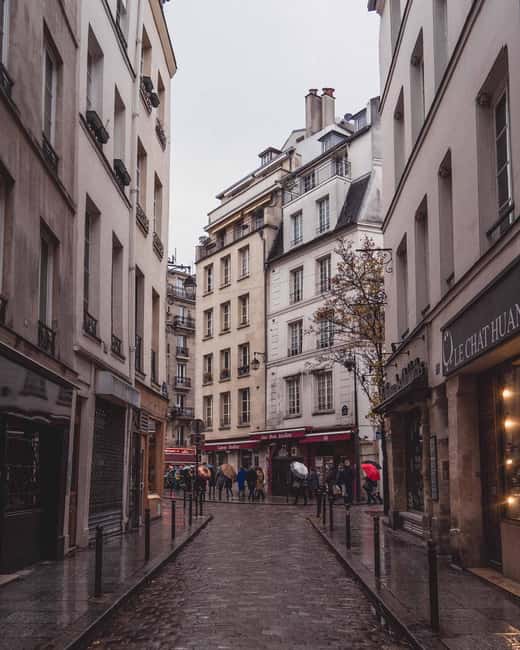
- Latin Quarter streets come with real-world context, not just dates
- Luxembourg Gardens gives you a breather between bigger monuments
- Pantheon and Sorbonne let you connect the Revolution era to the student Latin Quarter
- Artist and writer stops include recognizable names tied to real addresses you’ll walk past
- An easy visual payoff at Notre-Dame closes the loop from old church to iconic cathedral
Saint-Germain-des-Prés to Notre-Dame: the left-bank “through line”
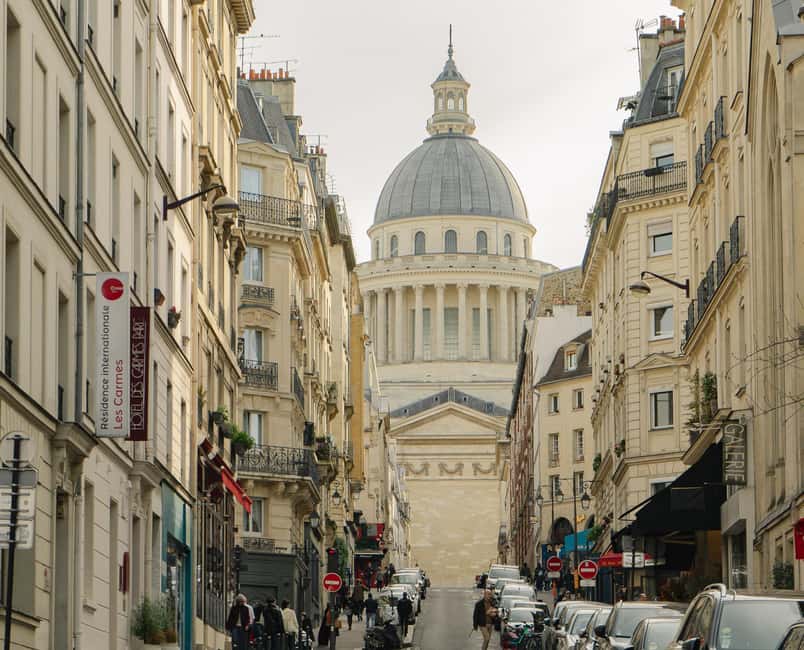
This tour makes the left bank feel logical. Instead of bouncing around Paris, you walk a neat arc: starting at the oldest-feeling core near Saint-Germain-des-Prés, then shifting through the 6th and 5th Arrondissements, and finally ending close to Notre-Dame.
I love that the guide doesn’t treat these spots like museum items. You hear how neighborhoods shape people—and how people shape the neighborhood. One minute you’re looking at a church facade; the next you’re hearing about writers, artists, and political change that still echo in the street names and landmark placements.
If you’re the kind of traveler who’s tired of memorizing dates, you’ll like the pacing here. The stories are attached to what you can actually see: squares, churches, university buildings, and the streets where the Latin Quarter’s creative crowd once gathered.
You can also read our reviews of more walking tours in Paris



Starting outside Saint-Germain-des-Prés: where the walk begins
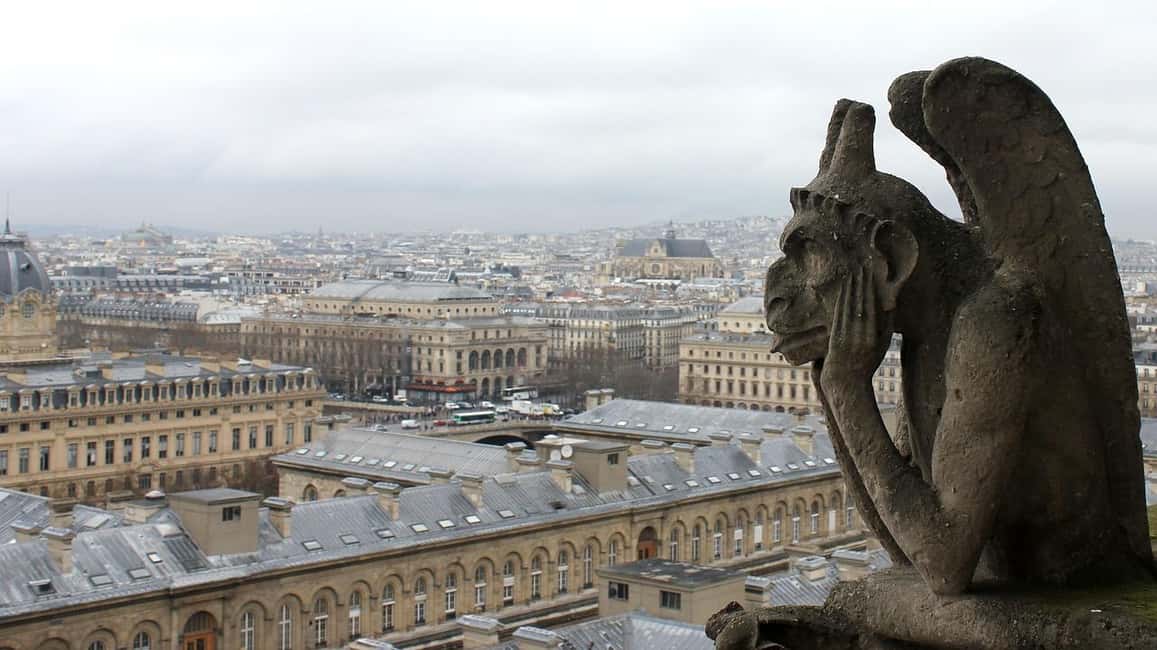
You meet outside the door of Church of Saint-Germain-des-Prés. That’s a smart start because it gives you a real anchor point before the tour starts moving. From here, the area clicks into focus: you’re not just walking through a pretty neighborhood—you’re entering one of the oldest layers of Paris.
This start also matters for the feel of the day. Saint-Germain-des-Prés is one of those places where Paris looks older without needing a “theme.” As you begin, you get context about the neighborhood’s role over time, including the kind of social and political change that later fuels the French Revolution stories you’ll hear as you go.
Quick practical note: bring comfortable shoes and water. Three hours goes fast when your guide is talking, but the walking adds up.
The 6th Arrondissement: cafés, artists, and the Revolution’s backdrop
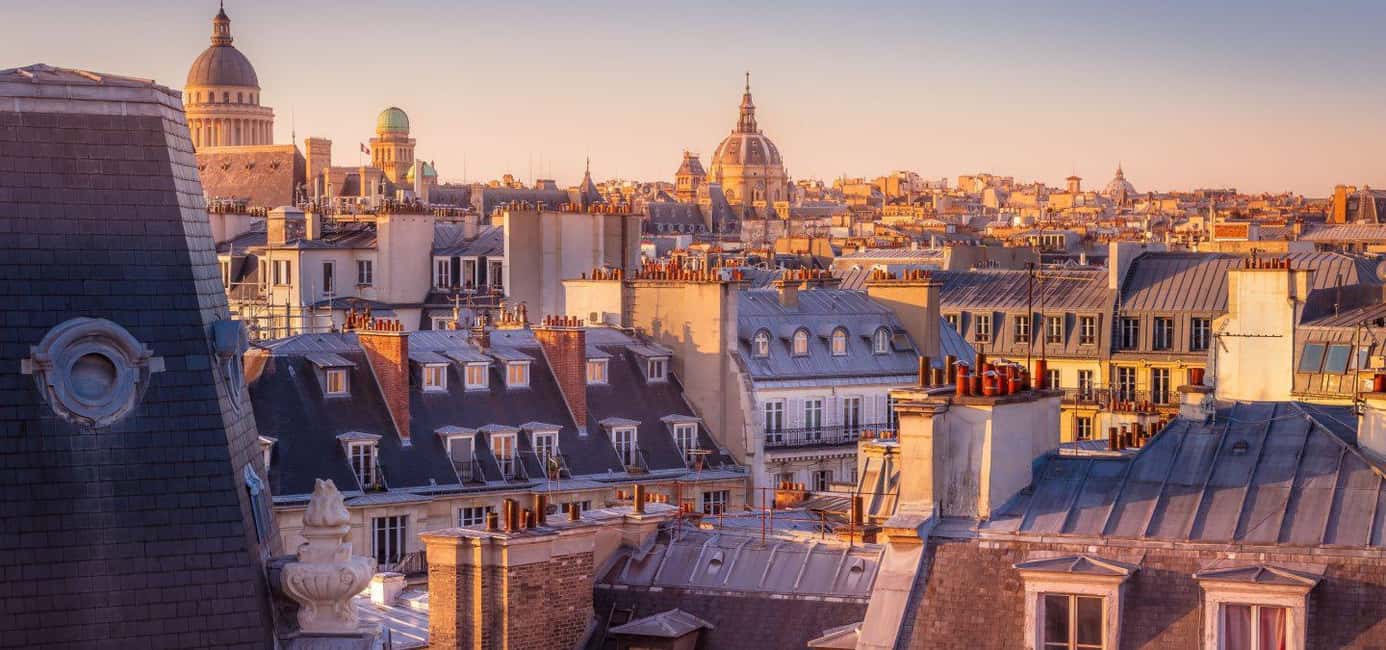
The tour spends about the first stretch in the 6th Arrondissement, where the streets can shift from quiet corners to major landmark energy. This is where I’d expect you to start noticing how much Paris “labels” its past through buildings.
One highlight is the way the guide threads art into place. You may see stops connected to famous creative figures. On recent runs, the tour has included a look at the studio tied to Eugène Delacroix, which gives you a sense of how painters weren’t just famous in history books—they worked in real spaces in this part of town.
You also get Revolution-era context here, which helps when you later encounter formal institutions and big civic monuments. The guide connects the dots between everyday street life and the kind of political push that reshaped France.
And yes, you’re in café country. A recent guide experience included a stop in the general area of Les Deux Magots, a classic name that fits the “writers and artists” vibe the Latin Quarter is famous for.
If there’s one thing you should do on this part of the walk: look up. These stories often point to facades, building lines, and the way streets funnel you toward landmarks.
Luxembourg Gardens: the break that actually matters
You’ll cut through Luxembourg Gardens during the walk, and I’m glad it’s built into the route. It’s not just a scenic pause. It’s where the tour’s tone softens and you get time to regroup.
In a neighborhood like this, everything can feel dense—church after church, school after school, famous square after famous square. The gardens give you breathing room and help you reset before the larger monuments in the 5th arrondissement.
The guide also uses this stop to keep the story going. You’ll hear about the gardens’ connections and what they represent culturally, which makes the stroll feel like part of the main narrative, not a detour.
If you want a simple tip: use the first minutes in the gardens to slow down. Take a quick look around, then listen again. It makes the next blocks of architecture and university buildings hit harder.
The Pantheon viewpoint: big symbol, smaller reality
Later you’ll reach the Pantheon area. Important detail: you primarily see it from outside, and Pantheon entry isn’t included in the price. Entry might be possible depending on conditions, but you’re not guaranteed access.
Even with that limitation, the Pantheon still works on a walking tour. From the outside, it’s a clear visual landmark that helps you understand where “big civic Paris” sits in the left bank layout.
One practical consideration: if there are closures or disruptions, the day can change. If your heart is set on going inside the Pantheon, you might want a flexible mindset. This tour is built to give you the view and the stories connected to it, without relying on entry.
You can also read our reviews of more guided tours in Paris




The 5th Arrondissement: Sorbonne, theatre energy, and books
The second half leans into the classic 5th Arrondissement vibe: student life, older institutions, and that layered feeling where Paris has been talking to itself for centuries.
A major stop here is the Sorbonne. Seeing it with context helps. It’s easy to walk past university buildings when you’re on your own. With a guide, you connect the institution’s role to the same historical forces you heard about earlier—especially the Revolution-era shift and the long aftermath.
This part of the tour also plays well if you’re a literature person. A memorable set of stops on recent days has included:
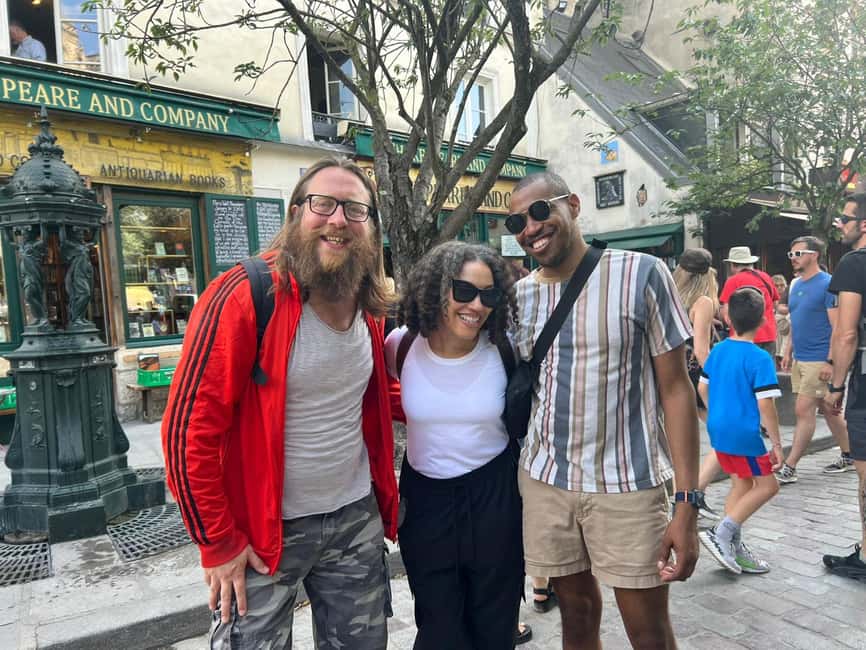
- Shakespeare and Company (connected to the original bookstore location)
- A former home tied to Ernest Hemingway
- The Church of Saint-Étienne-du-Mont, which has a notable connection to Shakespeare’s early roots in Paris
- Le Procope, a classic Parisian name associated with the city’s long café-and-intellectual tradition
You might also pass theatre architecture like Odéon-Théâtre de l’Europe. Even if you don’t go inside, it helps you feel the cultural engine that runs through this area.
And if you’re into pop-culture breadcrumbs, you may see the kind of square that’s been made famous by the TV series Emily in Paris. It’s not just a novelty stop—it’s a reminder that modern Paris still borrows stage sets from the old city.
Passing the Medici palace area and the reality of street-life
Along the way, you may also pass the Medici family palace. This is one of those “you’ll recognize it once you’re close” landmarks that adds weight to the walk.
One reason I like this stop: it signals that Paris’ story isn’t only about revolution and universities. It’s also about power, patronage, and art-hungry elites—layers that sit beside the political turning points.
As always with walking tours in a live city, conditions can affect what you can do at a given moment. On one past tour experience, the Pantheon situation was impacted by a protest, which affected what was possible. So if you’re the type who needs every interior visit, I’d treat this as a street-level storytelling tour first, and an entry-based tour second.
Ending near Notre-Dame: the satisfying finish
The walk ends near Notre-Dame. That finish is more than just a dramatic photo spot. It works because it closes the loop between two eras:
- You start at a church that anchors the area’s deep roots.
- You end at the cathedral that’s become shorthand for Paris in global imagination.
Even if you don’t go inside, arriving near Notre-Dame after walking the Latin Quarter and Saint-Germain streets gives you a stronger sense of how the city layers itself—old Paris not as a separate “section,” but as something that connects to modern Paris.
If you’re hungry after the tour, you’ll be in the right headspace to pick a meal nearby. I’d just plan a little extra time in your schedule so you can wander without feeling rushed right after the guide wraps up.
Price and value: what $41 buys you in 3 hours
At $41 per person for 3 hours, the value comes from focus. You’re paying for a guide to connect landmarks, not just to take you from A to B.
In practical terms, you get:
- Guided walking through the Latin Quarter and Saint-Germain
- Stops connected to artists and writers
- Luxembourg Gardens, Pantheon viewing from outside, and Sorbonne
- Stories tied to the French Revolution
- An ending near Notre-Dame
For many first-time visitors, the biggest win is efficiency. You can see several top left-bank targets without spending hours building a route or decoding what you’re looking at.
One “value check” for you: if you enjoy learning through stories tied to real buildings, this is the kind of tour that can feel worth the money fast. If you mainly want independent time and fewer explanations, you might find a self-guided route more your style.
Who this tour suits best (and who should think twice)
This works especially well for:
- First-time visitors who want a solid left-bank orientation
- People who like literature, art, and political history
- Travelers who want to see famous spots and also catch the lesser-known references tied to everyday buildings
A few fit notes to take seriously:
- The tour is English with a live guide.
- It’s wheelchair accessible per the activity info, but it’s also marked as not suitable for wheelchair users and for people with mobility impairments. That conflict matters. If mobility is a concern for you, confirm with the operator before you go.
- It’s not suitable for people over 95 years.
- Bring weather-appropriate clothing, since you’ll be outside for the walk.
Practical tips so the day feels good
Do this and you’ll enjoy it more:
- Wear comfortable shoes. Cobblestones and curb cuts can slow you down.
- Bring water. Three hours is short, but Paris walking adds up.
- Have a camera ready, but don’t spend the whole time filming. Listen first, then shoot.
- If your goal is inside visits (especially the Pantheon), keep expectations flexible since entry isn’t included and conditions can change.
Also, this is a walking tour with stories. If you tend to get impatient when someone talks, it helps to remind yourself: that talk is the point. You’re trading a little speed for meaning.
Should you book this Latin Quarter and Saint-Germain walk?
I think you should book it if you want a left-bank overview that feels like a story, not a checklist. The route hits major landmarks—Luxembourg Gardens, the Pantheon vicinity, Sorbonne, and the end near Notre-Dame—but it also connects them to artists, writers, and the Revolution-era forces that shaped the neighborhood.
Skip it or at least verify details if you need an interior-heavy itinerary, or if mobility is a big issue for you given the mixed accessibility notes. And if you’re the kind of traveler who only wants time for shopping and café hopping, you may prefer a looser wandering plan.
If you match the story-walk style, this tour is a strong value for $41 and a smart way to get your bearings fast on the historic left bank.
FAQ
How long is the Paris Latin Quarter and Saint Germain guided walking tour?
It lasts 3 hours.
Where is the meeting point?
You meet outside the door of Church of Saint-Germain-des-Prés.
How much does the tour cost?
The price is $41 per person.
What language is the tour guide?
The tour is guided in English.
Which places will the tour include?
You’ll cover Saint Germain and the Latin Quarter, and you’ll stop at Luxembourg Gardens, the Pantheon, and the Sorbonne. The tour ends near Notre Dame Cathedral.
Is entry to the Pantheon included?
No. You see the Pantheon from outside, and entry is possible but not included in the price.
What should I bring?
Bring comfortable shoes, a camera, water, and weather-appropriate clothing.
Is smoking allowed during the tour?
No, smoking is not allowed.
Is the tour wheelchair accessible?
The activity is marked wheelchair accessible, but it also notes it is not suitable for wheelchair users and for people with mobility impairments. You should confirm fit before booking.
What is the cancellation policy?
You can cancel up to 24 hours in advance for a full refund.