REVIEW · MONTMARTRE
Montmartre 3-Hour Local Gastronomy Tour with Tastings
Book on GetYourGuide →Operated by Meeting the French · Bookable on GetYourGuide
Montmartre tastes like a neighborhood still in motion. This 150-minute, small group walk is built around tastings that make the area’s food culture make sense, from a tart-focused pastry shop to classic market stalls as you head toward the butte. It’s not just looking at pretty streets; it’s learning how locals actually shop and what they reach for day after day.
I especially like the shop variety and the way your guide strings it together into a logical route, hitting places like a fishmonger, charcutier, butcher, baker, and vegetable seller. You’ll come away with practical ideas for what to buy next time and how to taste wine and products with more attention. One possible drawback: a couple of guests felt the experience can lean sweet (lots of pastries) and that some dairy/cheese and other drinks feel limited, so if you want heavy cheese or lots of beverage variety, set your expectations.
In This Review
- Quick hits
- Montmartre food tour in 150 minutes: what makes it work
- Meeting at Place Blanche and getting your bearings fast
- The tart specialist pastry stop: where you start thinking like a local
- Fishmonger and charcutier: learning flavors in the real food economy
- Butcher and vegetable seller: the stops that make the route feel honest
- Baker, bread tastings, and how guides teach you to taste
- Heading toward the butte of Montmartre without losing your appetite
- What’s included (and what to double-check in your head)
- Price and value: is $165 worth it for this Montmartre route?
- Who should book this tour (and who might not love it)
- Should you book the Montmartre local gastronomy tasting walk?
- FAQ
- How long is the Montmartre 3-hour local gastronomy tour?
- Where is the meeting point?
- What is the nearest metro station?
- How much does the tour cost?
- What’s included in the tastings?
- Is the tour a small group?
- What languages are available for the live guide?
- Does the tour include wine?
- Is there free cancellation?
- What’s the tour’s overall format?
Quick hits
- 150 minutes in a tight loop: enough time for multiple tastings without turning into a long slog.
- A tart-focused start: you kick off at a pastry shop known for fine tarts, setting a sweet-and-savor rhythm early.
- Classic shop lineup: fishmonger, charcutier, butcher, baker, vegetable seller—like a mini tour of local counters.
- Wine + food tasting know-how: your guide shows how to taste and talk through what you’re eating.
- Small group (max 8): you get time for questions and a more conversational pace.
- Guides named Luis (Luis Jorge in reviews): lots of energy and area knowledge, plus weather-friendly flexibility noted.
Montmartre food tour in 150 minutes: what makes it work
Montmartre can feel like two places at once: one foot in the arts, one foot in everyday life. This tour leans hard into the second one. Instead of drifting through viewpoints, you’re moving through the kinds of shops that keep a neighborhood fed and functioning.
The structure matters. With only 8 people max, you’re not stuck in a human conga line. You get tastings tied to specific merchants, and that makes the history of Montmartre feel less like trivia and more like why people shop where they shop.
Price is $165 per person. For Paris, that’s not “cheap,” but it’s not just a walking tour either. You’re paying for a live guide, a curated route, and multiple tastings (including wine) across different types of shops.
You can also read our reviews of more tours and experiences in Montmartre.
Meeting at Place Blanche and getting your bearings fast
You meet at Starbucks, 5 place Blanche (nearest metro: Blanche, line 2). The nice part about this kind of meeting point is you can arrive on easy rails, and you can also plan a quick snack beforehand if you’re picky about timing.
From there, the guide leads you through Montmartre’s small streets in a paced walk. The tour is designed to feel like a neighborhood stroll that gradually builds toward the butte of Montmartre, so you’re not spending all 150 minutes in one flat district.
Also, the tour runs with a live guide in English, French, and Japanese, which is great if you want explanations that land clearly. In reviews, guides named Luis and Luis Jorge stood out for their knowledge of the neighborhood and their friendly, on-time presence.
The tart specialist pastry stop: where you start thinking like a local
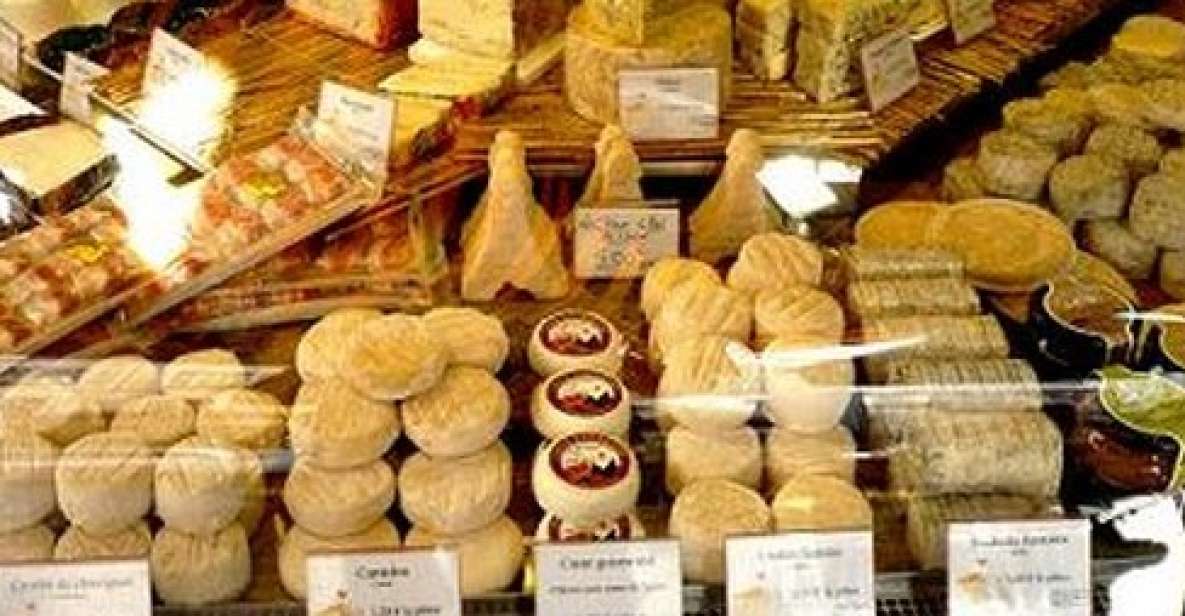
The tour begins at a pastry shop that specializes in fine tarts. That matters more than it sounds. Starting with one specific specialty gives your taste buds a reference point and helps you understand the “house style” approach many Paris shops take.
A tart-focused start also sets expectations for the rest of the route. You’ll likely notice a theme: each stall offers one or two things it does extremely well, instead of trying to be everything at once. For your next day of independent exploring, that mindset is a huge advantage.
If you’re the type who gets overwhelmed by a menu, this is a good opener. You learn early what to look for—texture, balance, and the kind of flavors that show up again and again across French pastry.
Fishmonger and charcutier: learning flavors in the real food economy
After the pastry start, you move into Montmartre’s more savory world with a fishmonger and charcutier stops. This is where the tour becomes more than eating. Your guide connects what you taste with how the neighborhood has long relied on dependable daily goods.
A fishmonger stop is useful because it reminds you that “French food” isn’t only bread, cheese, and butter. Seafood has its place, and tasting it in a shop setting tells you how fresh and prepared items show up in real daily life.
Then comes charcuterie. You’ll taste charcutier specialities as part of the included tastings. If you like learning through flavor rather than lectures, you’ll probably enjoy the way guides talk you through what you’re tasting and why it’s paired the way it is.
Practical takeaway for you: don’t just ask what something is. Ask what it’s good with. The guide’s explanations help you build simple pairing instincts you can use when you’re shopping later.
Butcher and vegetable seller: the stops that make the route feel honest
A lot of food tours focus on cheese and sweets. This one adds more backbone: a butcher and a vegetable seller. That balance is exactly why it feels like a true neighborhood tour.
The butcher stop helps you understand the everyday side of French eating: cuts, preparation style, and the kinds of protein choices that show up in local meals. Even if you don’t cook at home, you’ll start recognizing the “menu logic” behind French portions and the way food markets build variety across a week.
Then you’ll encounter a vegetable seller, which keeps the tour from feeling like a one-note parade of rich foods. It also reinforces something you can use later: a great meal in France often starts with buying the right components, not just picking the fanciest centerpiece.
One note: the more sweet-forward the pastry portion feels to you, the more those savory and vegetable stops matter. They’re the counterweight that keeps the tour from going flat.
Baker, bread tastings, and how guides teach you to taste
You’ll also visit a baker, and bread tasting is included. Bread isn’t filler on this route. It’s part of the rhythm of French shopping—what’s bought for tomorrow’s meal, what works with cheese or charcuterie, and how bread texture changes your perception of everything else on the table.
In reviews, your guide’s wine explanation style gets called out, especially with one guest noting they learned how to taste wine. That’s the kind of add-on that can make a tour feel more valuable, because it changes what you do after you leave.
If you’re someone who usually takes a sip and moves on, you’ll get a more structured way of paying attention. That doesn’t require wine expertise. It just gives you steps, and steps make tasting feel less random.
Heading toward the butte of Montmartre without losing your appetite
The walk winds you toward the butte of Montmartre while you sample products along the way. This is where the timing (150 minutes) helps. You’re not rushed through tastings, but you also aren’t stuck for hours in a single stretch of cobblestones.
Montmartre’s streets can be a little tricky underfoot depending on weather. One review specifically mentioned that the guide adapted the tour to partial rain, which is smart and practical. Still, wear shoes you trust for uneven pavement.
Expect a mix of shop time and street time. The street time is important because it gives you context—seeing how these shops sit in the actual neighborhood layout, not in some staged market hall.
What’s included (and what to double-check in your head)
Included tastings are clearly listed: charcutier specialities, bread, wine, and pastries. Your guide provides the tastings as part of the tour, and it’s designed as a guided experience rather than self-guided shopping.
A few reviews flagged a mismatch between expectations and portion balance. One guest felt there were too many sweets and only one small bite of cheese, and another noted that no wine, café, or other drinks were included. Since the tour listing says wine tastings are included, I’d treat these comments as “expectation management” rather than a guarantee of what you’ll taste every time.
If you want a lot of cheese variety, or if you’re counting on extra beverages beyond the included tastings, plan to get those on your own after the tour. The value here is the guided shop mix and tasting guidance, not a full meal and a bar crawl.
Price and value: is $165 worth it for this Montmartre route?
Let’s talk value in a grounded way. At $165 per person, you’re paying for:
- a live guide
- a small group size (max 8)
- a tasting-focused route with multiple shop types
- bread, pastries, and wine tastings
For me, that’s only worth it if you like structured food discovery. If you prefer wandering on your own, you may be able to replicate a similar day for less money. But you’ll miss the “why” part: the guide’s explanations around Montmartre and how to taste.
Reviews back up that guides tend to be a strong point—Luis and Luis Jorge were praised for explanations, timing, and local knowledge. One guest also mentioned an architecture tie-in (Hausmannian architecture), which can add depth if you like history beyond food.
My rule: if you enjoy learning through food and want someone to point you toward the best things to notice, this price is easier to justify.
Who should book this tour (and who might not love it)
This tour fits you best if you:
- want a guided walking food experience in Montmartre rather than a sit-down meal
- like tasting different product categories (fish, charcuterie, meat, bread, vegetables, pastries)
- want help with how to taste wine, not just “have a drink”
- enjoy small groups where you can ask questions
You might want to skip or adjust your expectations if:
- you want a meal-like experience with lots of cheese or heavy savory focus
- you’re looking for unlimited drinks beyond what’s included
- you get impatient with sweet-forward starts and prefer strictly savory tastings
Should you book the Montmartre local gastronomy tasting walk?
If your goal is to understand Montmartre as a real neighborhood—through the shops locals actually use—this is a strong choice. The small group size, the variety of shop types, and the guide-led explanations (especially around wine tasting and neighborhood context) make it feel useful, not just decorative.
My advice: book it if you’re excited by bite-size tastings and the idea of walking shop to shop toward the butte. Don’t book it expecting a huge, fully savory feast or a wide drinks menu. If you’re good with guided variety and learning, you’ll leave with both better taste and better instincts for what to seek out on your own in Montmartre.
FAQ
How long is the Montmartre 3-hour local gastronomy tour?
The duration is 150 minutes.
Where is the meeting point?
Meet your guide in front of Starbucks at 5, place blanche, 75 018 Paris.
What is the nearest metro station?
The nearest metro station is Blanche (line 2).
How much does the tour cost?
The price is $165 per person.
What’s included in the tastings?
Tastings include charcutier specialities, bread, wine, and pastries.
Is the tour a small group?
Yes. It’s limited to 8 participants.
What languages are available for the live guide?
The tour offers English, French, and Japanese.
Does the tour include wine?
Wine tastings are listed as included.
Is there free cancellation?
Yes. You can cancel up to 24 hours in advance for a full refund.
What’s the tour’s overall format?
It’s a guided walk through Montmartre’s small streets with tastings at local shops such as a pastry shop, fishmonger, charcutier, butcher, baker, and vegetable seller.