REVIEW · PARIS
Paris: Semi-Private Tour of the Louvre Museum and Mona Lisa
Book on GetYourGuide →Operated by the tour guy · Bookable on GetYourGuide
The Louvre gets easier with a tiny group. This semi-private Louvre Museum tour uses skip-the-line access so you can spend more time with masterpieces, not standing around, and it’s built around the works everyone comes to see like the Mona Lisa and big Napoleon-era scenes.
I really like that the group stays small, max 6 people, so your guide can keep the pace human and answer questions without herding you like luggage. On past runs, an art-history guide named Marion has been praised for staying in story mode through the whole 150 minutes, including smart navigation around the most crowded pockets. The one catch: this tour isn’t suitable for wheelchair users or people with mobility impairments.
In This Review
- Key Highlights You’ll Actually Care About
- Why This Small-Group Louvre Tour Feels Worth It
- Meeting at the Louvre Pyramid (and How Not to Lose Time)
- What Skip-the-Line Really Means Here
- The Tour Route: From the Louvre’s Ancient Roots to Its Big Names
- Renaissance and Baroque Storytelling That Makes Paintings Easier
- Napoleon, French Crown Jewels, and Why Power Shows Up in Art
- The Mona Lisa Moment: More Than a Photo Stop
- Stops You’ll Want to Know About: Wedding Feast at Cana
- Photography Rules and How to Avoid Accidental Problems
- After the Tour: How to Make Your Extra Time Count
- Who This Tour Is Best For
- Price, Duration, and Value: What You’re Buying at $123
- Should You Book This Louvre Tour?
- FAQ
- How long is the Louvre tour?
- What is the group size?
- Where do I meet the guide?
- Is skip-the-line entry included?
- Is hotel pickup or drop-off included?
- Are food and beverages included?
- What should I bring?
- Can I bring a baby stroller or large bags?
- Is there time to stay in the museum after the tour?
Key Highlights You’ll Actually Care About
- Small group of 6 means less waiting, more direct guidance, and a calmer pace inside the museum
- Skip-the-line Louvre entry saves time, even though security checks can still add a wait in peak season
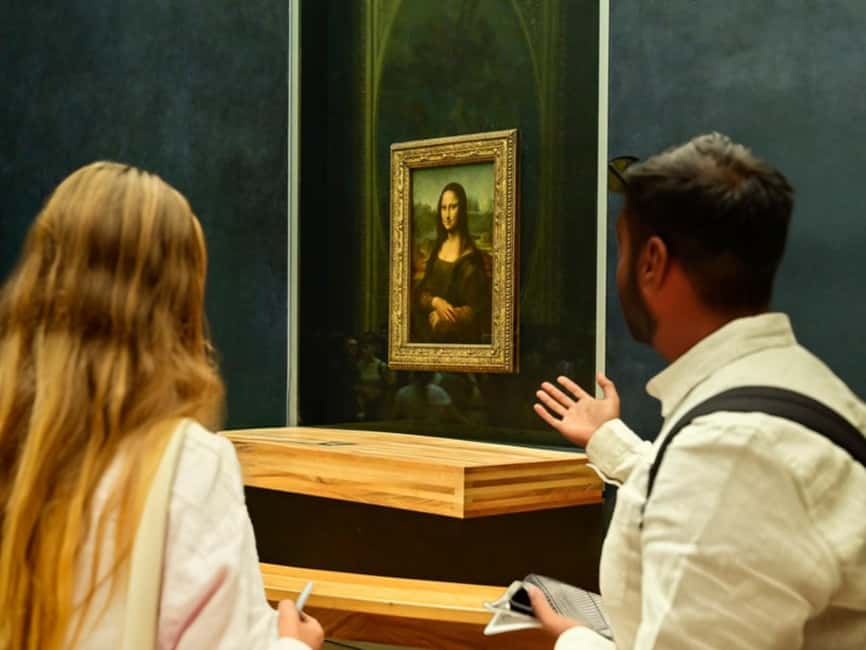
- Mona Lisa focus with context so you don’t just stare—you understand what you’re looking at
- Napoleon and French Crown Jewels connections that explain why these objects matter historically
- A guided path through major rooms that you might miss or misunderstand if you wander solo
Why This Small-Group Louvre Tour Feels Worth It

The Louvre is famous for a reason, but it’s also famous for a different reason: it’s massive, confusing, and crowded at the worst possible times. A standard ticket gets you in, but it doesn’t tell you what to prioritize or how to make sense of what you’re seeing. This tour does that work for you, in English, with a live guide and a group limited to six.
The value at $123 per person is mostly about time and friction. Skip-the-line entry helps you avoid the most obvious bottleneck, and the small-group setup keeps you moving efficiently. You’re paying for an informed route through iconic art—plus interpretation—so you leave with names, stories, and a clearer sense of how the collection hangs together.
Also, this is not a “run to one room and leave” kind of tour. It’s 150 minutes, and it’s structured around major moments: ancient sculpture, Renaissance and Baroque masters, large dramatic works, and then the Mona Lisa moment everyone remembers.
One more practical win: after your guide’s walkthrough ends, you’re allowed to stay inside until closing time. That means you can use the tour to get oriented, then turn loose on your own terms—without feeling like you wasted the ticket.
You can also read our reviews of more private tours in Paris



Meeting at the Louvre Pyramid (and How Not to Lose Time)

You meet at the equestrian statue of Louis XIV, right in front of the Louvre Pyramid. A representative holds a sign that reads The Tour Guy, and the advice is simple: arrive about 10 minutes early.
This matters more than it sounds. The Louvre area is busy, signage can be confusing, and once you miss the start, you can lose the best part of the experience: the early push past crowds. If you’re traveling with time pressure—like a later dinner plan—this is the tour type that helps you stay on schedule.
You’ll also want comfortable shoes. The tour is not advertised as a sit-down museum lecture, and even with a guided route, you’ll be doing plenty of walking across galleries.
What Skip-the-Line Really Means Here
Skip-the-line entry is included, which is huge at the Louvre. But there’s an honest reality: even with skip-the-ticket-line access, you may still have to wait at security. During high season, that wait can be up to 20 minutes.
So think of skip-the-line as reducing the biggest time drain, not eliminating all delays. If you show up a bit early, keep your ID ready, and travel light, you’ll get the benefit of the faster museum entry.
Speaking of traveling light: the Louvre has strict rules on bags. Large bags, backpacks, luggage, umbrellas, tripods, and items exceeding 55 cm x 35 cm x 20 cm aren’t allowed in the tour context, and there’s no coat check on site and no locker access for this small-group tour. Best move: leave anything bulky at your accommodation.
The Tour Route: From the Louvre’s Ancient Roots to Its Big Names
The Louvre isn’t just a museum building with famous paintings. It has older layers beneath it, and this tour uses that idea to help you orient fast.
You start by looking at the Louvre’s ancient foundations, with attention on Greek and Roman statues. That early stop is more than a warm-up. It gives you a baseline for how the museum assembled its collection—how antiquity and later European art ended up sharing the same halls.
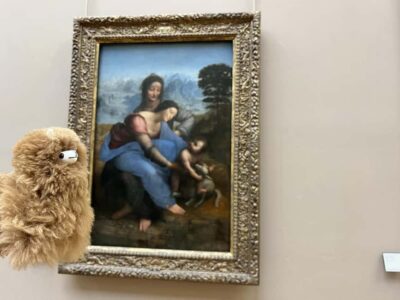
Then the tour moves through major artworks by widely known names, including Raphael, Botticelli, Bernini, and Leonardo da Vinci (Da Vinci). The point of having a guide here is not that you learn a random list of artists. It’s that you learn how the artworks connect: style changes over time, religious themes and mythology show up in different ways, and artists keep responding to earlier art while still making it their own.
Renaissance and Baroque Storytelling That Makes Paintings Easier
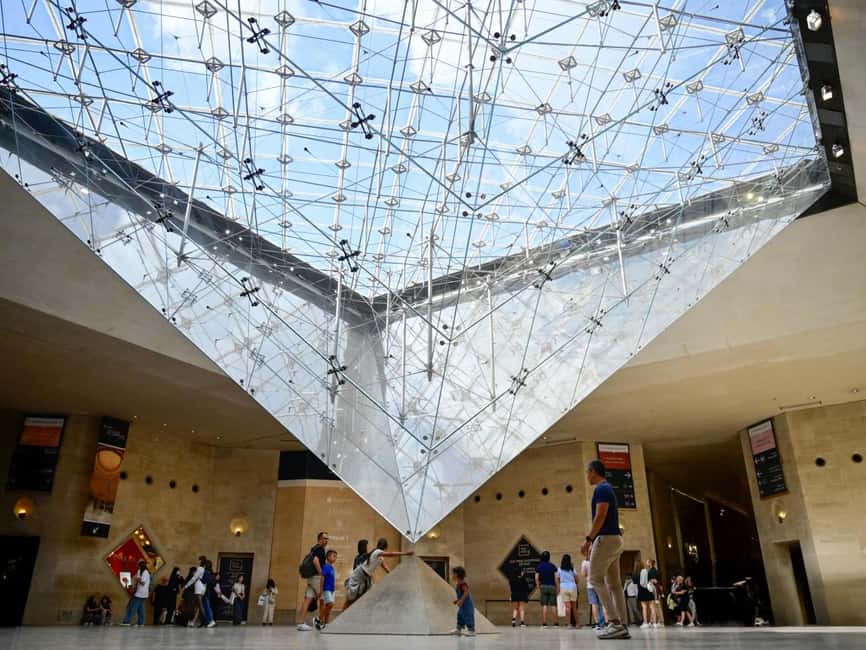
If you’ve ever walked through a gallery and felt like everything was equally important, you know the problem. The Louvre can overload your eyes. A good guide turns the chaos into a handful of threads you can actually hold onto.
On this tour, the guide’s job is to bring stories behind the works to life while keeping you moving through the museum highlights. You’ll spend time with major paintings and sculptures and you’ll hear the meaning behind what you see, not just the dates.
That’s also why the small group size matters. With six people, you’re more likely to get a direct answer when you ask something. And because the group is small, your guide can adjust the pacing when you hit a bottleneck area.
If you’re the type who wants to understand why art looks the way it does—composition, symbols, historical context—this format is a strong match.
You can also read our reviews of more museum experiences in Paris






Napoleon, French Crown Jewels, and Why Power Shows Up in Art
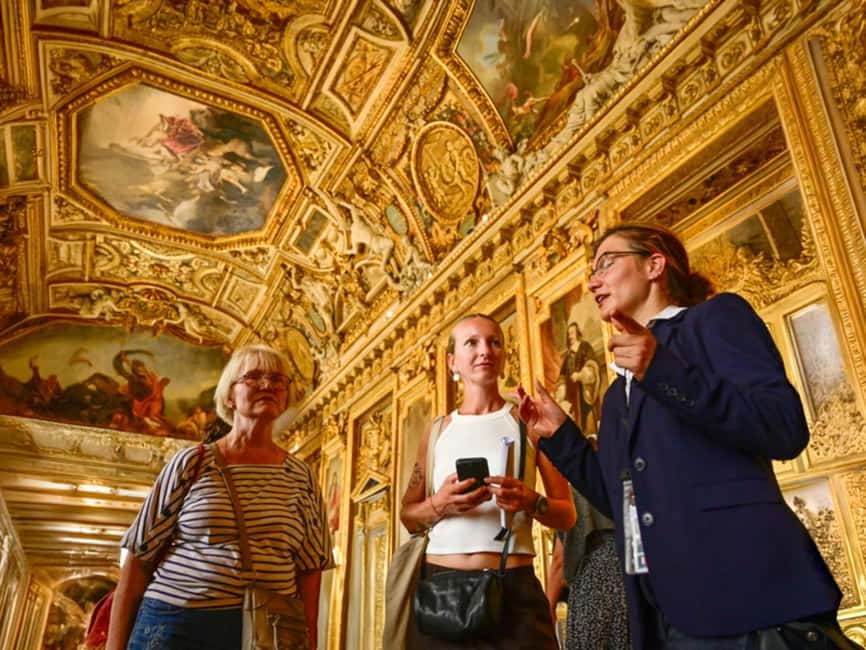
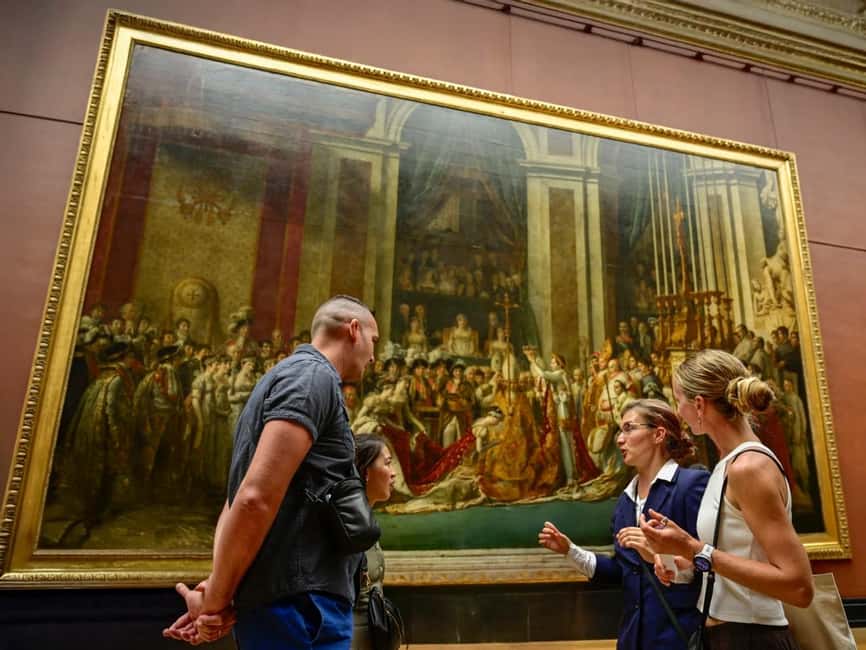
One of the standout beats is the segment focused on the French Crown Jewels and the famous Coronation of Napoleon. You don’t just see famous objects or a famous image. You learn the political and cultural punch behind them.
Napoleon’s reign changed how people thought about legitimacy and empire. Royal and ceremonial imagery was part of that message, and that’s why it’s so useful to pair the crown-jewel material with the Coronation context. It turns a spectacle you might otherwise admire from a distance into a story you understand.
You’ll also see other major works on the route, including dramatic pieces like the Raft of the Medusa. That kind of artwork hits differently when a guide frames it for you—because you notice details you would probably miss on your own.
The Mona Lisa Moment: More Than a Photo Stop
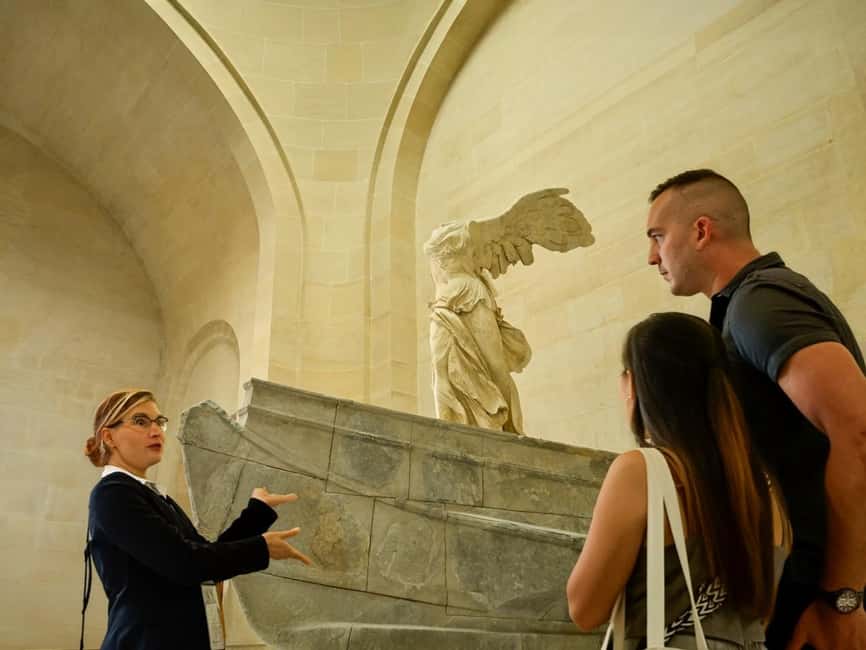
Let’s be honest: the Mona Lisa is crowded, and most people approach it like a checklist. This tour is built to help you slow down in the right way.
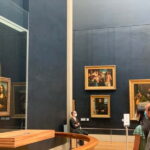
You’ll stand before the Mona Lisa and uncover the mystery behind her smile. That description is doing real work here. The guide’s job is to help you notice why people can’t stop talking about her expression and what the painting represents in its broader context.
This is also where a guided visit beats self-guided sightseeing. The Mona Lisa can feel like a famous face with no story. With a guide, you’re more likely to connect what you’re seeing to technique, meaning, and the long history of why this painting became the painting.
If you’re sensitive to crowds, the small-group format helps. You’re less likely to get swept along, and you have more of a chance to actually look.
Stops You’ll Want to Know About: Wedding Feast at Cana
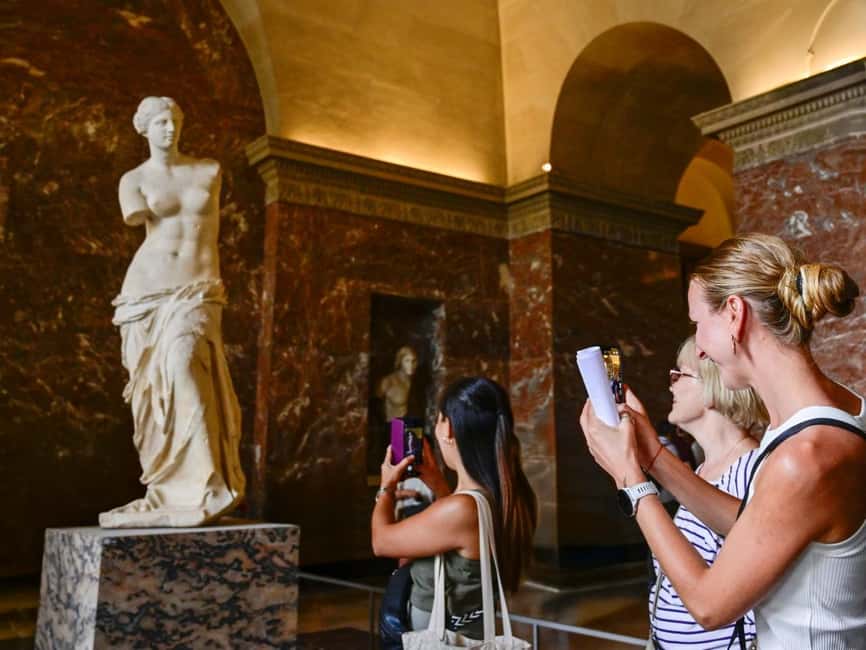
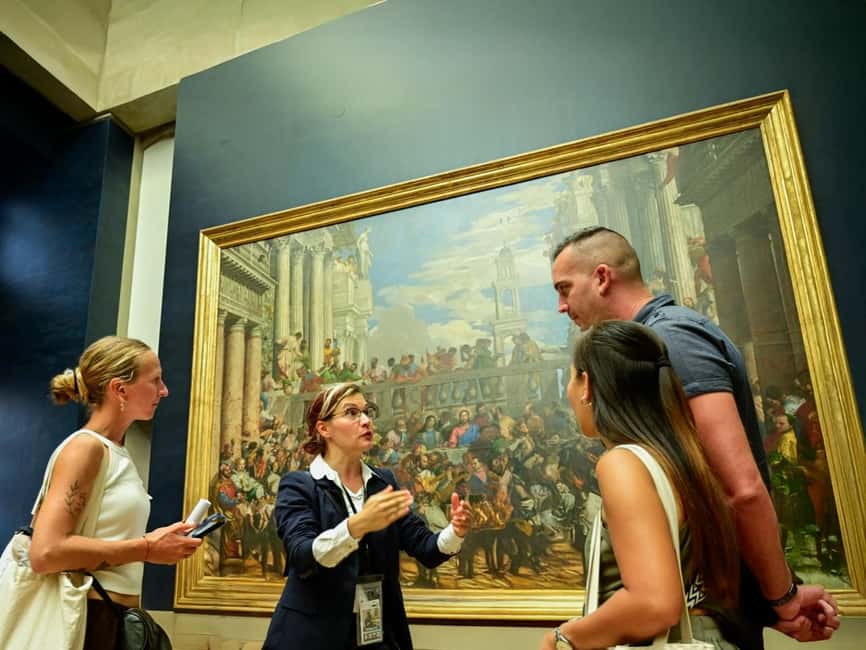
Another highlight is the Wedding Feast at Cana. It’s a grand scene—big figures, strong storytelling—and it’s the sort of work that benefits from being explained.
Even if you’ve never studied this subject, a guide can help you read the scene instead of just admiring it. You can think of it like this: the Louvre is full of art that assumes you know the cultural references. A good tour helps you catch those references without requiring a crash course in history before you arrive.
This is also one reason the tour works well for first-timers. You’re not stuck asking, Where do I start? You’re handed a path that includes major “I didn’t know I’d love this” moments, not only the obvious poster-name items.
Photography Rules and How to Avoid Accidental Problems
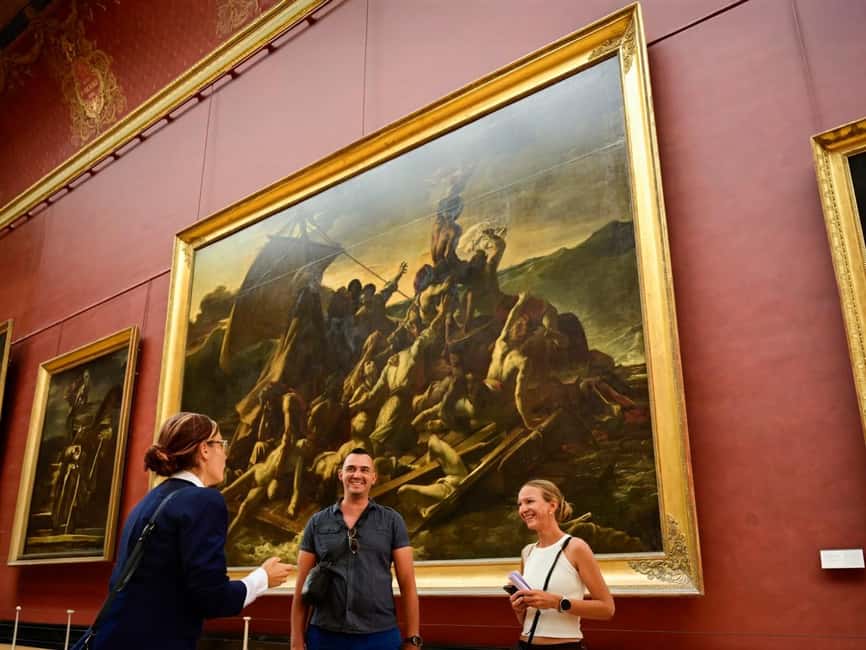
The Louvre has strict policies about where you can film and photograph. Photography and filming is strictly prohibited in temporary exhibition rooms.
So if you’re the kind of person who documents everything, keep an eye out for signs in those areas. Even with guided entry, you don’t want to get stopped for something avoidable.
After the Tour: How to Make Your Extra Time Count
When your guide says goodbye, you’re allowed to stay inside until closing time. That’s a gift, but it comes with an important limitation: once you exit the area where the artwork is, you won’t be allowed to re-enter.
So your best strategy is to treat the guided portion as your orientation map. After that, choose a few zones you truly want and commit. If you plan to wander far, do it after you’ve completed the parts closest to your tour route.
This is a great setup if you want a mix: guided “must-sees” first, then unstructured exploring with less confusion.
Who This Tour Is Best For
This is a smart choice if you:
- Want skip-the-line entry and a structured route through top highlights
- Prefer small groups (max 6) and an art-history guide who keeps momentum
- Are visiting the Louvre for the big names but also want context, not just images
- Like the idea of guided time followed by self-guided browsing until closing
It’s not the right fit if you need wheelchair accessibility or mobility support, because the tour is not listed as suitable for wheelchair users or people with mobility impairments.
Price, Duration, and Value: What You’re Buying at $123
At $123 for 150 minutes, you’re paying for three things: time saved, interpretation, and convenience.
You save time because skip-the-line entry is included, and the guide navigates you through key works instead of leaving you to guess. You get interpretation because a live English guide with art history expertise explains the stories behind the artworks you stop for. You get convenience because there’s a clear meeting point and a planned flow of major highlights, so you spend less mental energy deciding what’s worth your limited hours.
And because the group stays tiny, the experience is less rushed. That matters at the Louvre, where pacing can make or break your enjoyment.
Should You Book This Louvre Tour?
If your goal is to see the Louvre’s biggest works with an organized route and real context, I think this is worth booking. The small group size, skip-the-line entry, and focus on iconic stops like the Mona Lisa, Napoleon scenes, and major Renaissance and dramatic works make it a practical way to handle one of the hardest museums on earth to do “right” on your own.
Book it especially if you hate wandering lost, hate crowded bottlenecks, or want the guide to help you understand what you’re seeing as you go. Just remember the trade-offs: you should plan for security waiting during high season, travel light because of bag limits and no coat-check access for this tour, and confirm you’re comfortable with walking since it’s not suitable for wheelchair users.
If that matches your travel style, this tour is a strong path into the Louvre—without turning your day into a fight with the building.
FAQ
How long is the Louvre tour?
The tour lasts 150 minutes.
What is the group size?
The group is limited to a maximum of 6 participants.
Where do I meet the guide?
You meet at the equestrian statue of Louis the XIV in front of the Louvre Pyramid. A representative will be holding a sign with The Tour Guy.
Is skip-the-line entry included?
Yes, skip-the-line entry to the Louvre Museum is included.
Is hotel pickup or drop-off included?
No, hotel pickup and drop-off are not included.
Are food and beverages included?
No, food and beverages are not included.
What should I bring?
Bring your passport or ID card and wear comfortable shoes.
Can I bring a baby stroller or large bags?
No baby strollers are allowed, and large bags or luggage are not allowed. Items over 55 cm x 35 cm x 20 cm also can’t be brought into the Louvre for this tour context.
Is there time to stay in the museum after the tour?
Yes, after your guide says goodbye, you can stay inside until closing time. Once you exit the area where the artwork is, you won’t be allowed to re-enter.