REVIEW · PARIS
Paris: Montmartre Small Group Guided Walking Tour
Book on GetYourGuide →Operated by Exploring Tours and Services · Bookable on GetYourGuide
Montmartre reads best at walking speed. I love the small-group setup, because the guide can slow down and talk with you instead of racing everyone through the sights. This tour climbs from Anvers up to Sacré-Cœur, with big Paris views as your reward along the way.
I also like how the story of Montmartre connects art and everyday life. You’ll move from the famous artist hangout area to places tied to legendary painters, including stops around Place du Tertre and the artist-address vibe of the neighborhood. Guides such as Monica, Melanie, and Jimmy are praised for making the neighborhood feel personal, with clear explanations and even creative touches like music or visual aids on a device.
One possible drawback: this is a steep climb. The walk is not set up for wheelchair users or people with mobility issues, and you’ll be on your feet in the open air for most of the route.
In This Review
- Key points that make this Montmartre tour worth your time
- Getting your bearings: starting at Anvers and climbing to Sacré-Cœur
- Sacré-Cœur inside and out: what to focus on during the visit
- Place du Tertre: the painter square with a guide who explains the why
- Vineyards and viewpoints: walking the Montmartre that still produces wine
- Lapin Agile and Moulin de la Galette: cabarets that shaped the vibe
- Dalida, Le Bateau-Lavoir, and the painter addresses you actually remember
- Abbesses and the Wall of Love: street art with real modern pull
- Final photo stop toward Moulin Rouge: what you get and what you don’t
- Small-group format: why it feels friendlier than big tours
- Weather, bathroom reality, and timing you should plan for
- Price and value: is $74 a fair deal?
- Should you book this Montmartre tour?
- FAQ
- Where does the Montmartre tour start?
- How long is the tour?
- How big is the group?
- Which languages are available?
- What stops are included?
- Is the funicular included?
- Is food or drink included?
- Does the tour run in the rain?
- Is the tour wheelchair accessible?
Key points that make this Montmartre tour worth your time
- Up to 8 people means a more human pace and lots of chances to ask questions
- Meeting at Anvers (Line 2) makes it easy to plug into your Paris day
- Sacré-Cœur plus artist stops mixes the must-sees with real neighborhood texture
- You’ll see the vineyards and cabarets that explain why Montmartre became an arts magnet
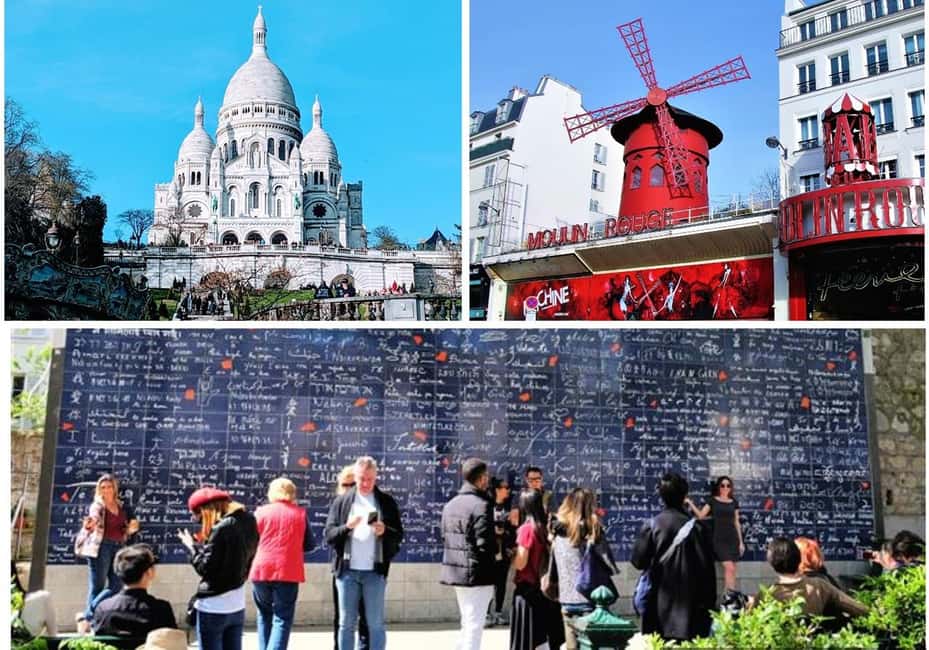
- Stops include the Wall of Love (Je t’aime) and a final look toward Moulin Rouge
- The tour runs rain or shine, so you’ll get the real Montmartre weather experience
Getting your bearings: starting at Anvers and climbing to Sacré-Cœur
Your day starts at street level, not at some faraway bus stop. The guide meets you at the exit of the Anvers metro station (Line 2) and holds a GetYourGuide sign. Arrive about 10 minutes early so you can start on time; latecomers aren’t guaranteed a spot.
From there, it’s uphill right away. Montmartre’s charm is partly the steepness, but that also means you’ll feel the climb from the start. I like that the tour doesn’t pretend this isn’t work. You’re going uphill with a plan, so the effort turns into momentum, and you’re not wandering around deciding what to do next.
This is also where the small group really matters. When you’re with a tiny crew, the guide can adjust the rhythm—slowing for photos, pausing for questions, and keeping everyone together without dragging you faster than your legs want to go. On some departures, the group can run so small that you get a more personal feel, like the private-style tours led by guides such as Jimmy and Melanie.
You can also read our reviews of more walking tours in Paris



Sacré-Cœur inside and out: what to focus on during the visit
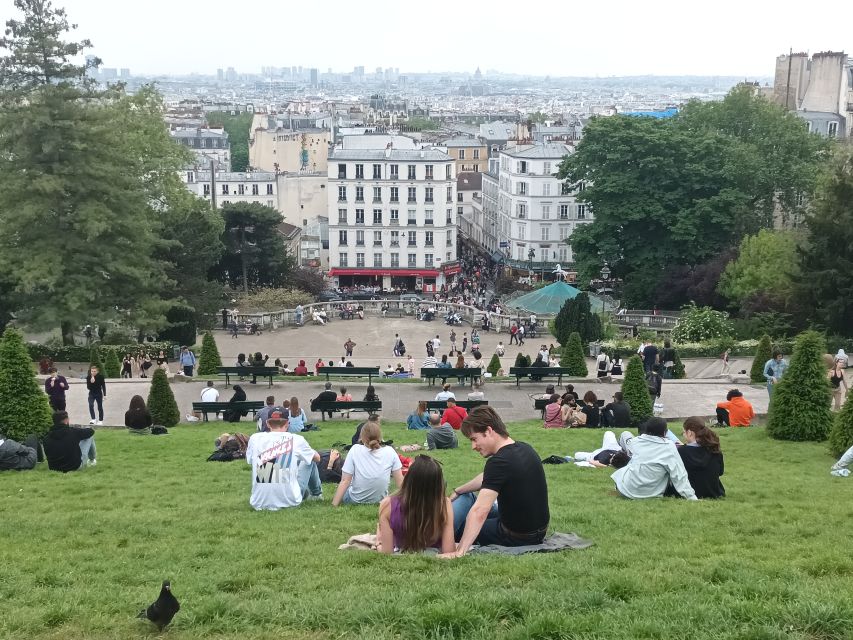
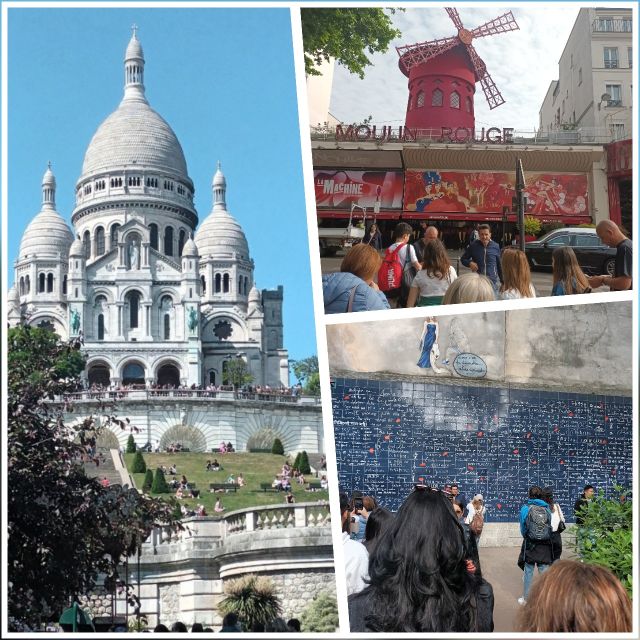
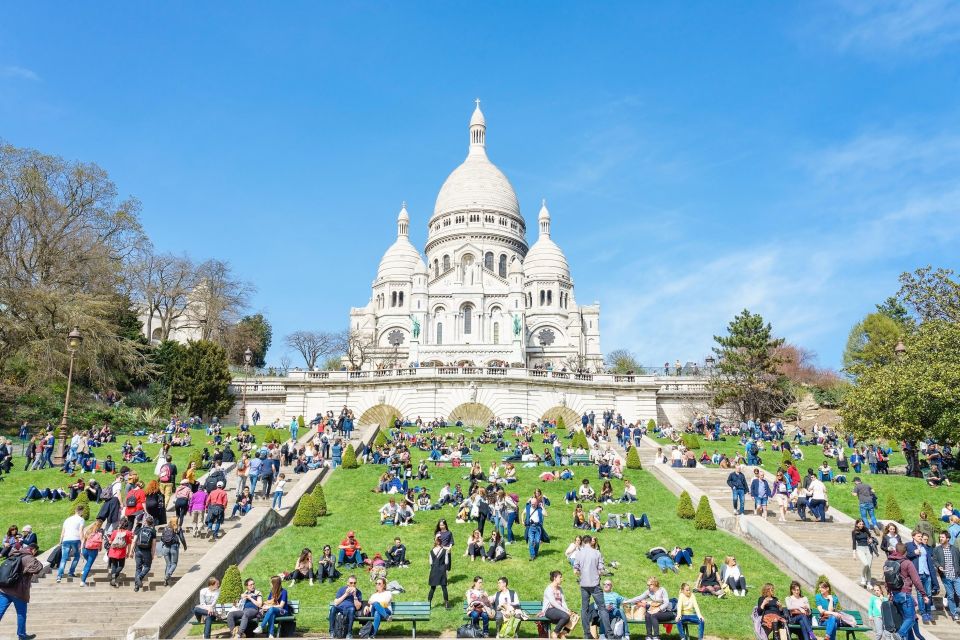
The first major stop is Sacré-Cœur Basilica. You’ll get a guided visit, plus a bit of free time afterward for photos and a calm look at the details. Even if you’ve seen pictures, being there in person changes the scale. The basilica sits high above the city, and the walk up frames it like a movie set: every turn gives a new view of Paris before you finally reach the big reveal.
What I like most is how the guide uses the route up to set context. Along the climb, you’ll get breathtaking city views, and the guide helps connect what you’re seeing with why Montmartre became such a magnet for artists.
The practical tip: wear shoes you trust. Even in good weather, the area around Montmartre can be uneven. And this tour is rain or shine, so plan for slick spots and bring your most comfortable walking setup.
Place du Tertre: the painter square with a guide who explains the why
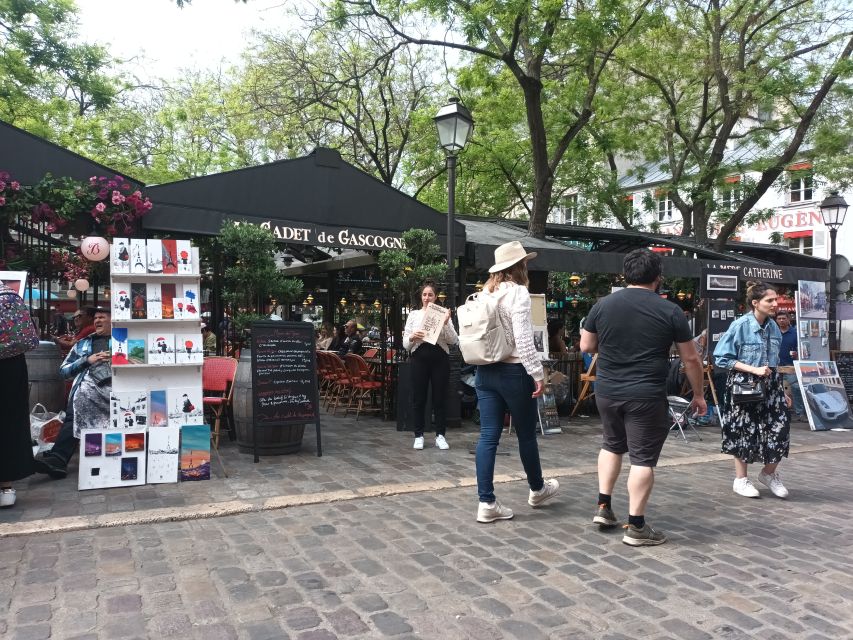
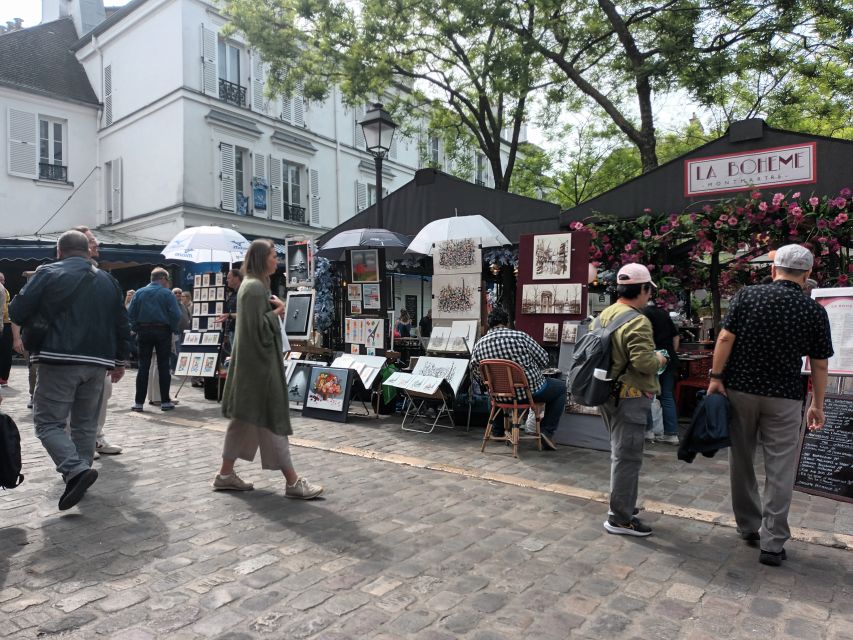
After Sacré-Cœur, you head to Place du Tertre. This is the postcard moment for a lot of people—street artists, mini scenes, and the feeling that the neighborhood is constantly performing for the camera. You’ll have time for a photo stop and some free time, but the value here is the explanation.
Your guide tells you the story of the famous artists who lived and worked around this area. That matters because Montmartre can feel like just a cluster of artists on the street—until someone connects it to the people, the time period, and the artistic community that formed here.
You’ll likely see artists displaying paintings right in the square. This is one of those places where you can browse without pressure. If you want to buy something, you’ll have time, but you can also just enjoy the scene and use the guide’s background to make sense of it.
Vineyards and viewpoints: walking the Montmartre that still produces wine
One of the cooler parts of this tour is that you don’t only get the big famous spots. You’ll also pass through areas linked to Vigne du Clos Montmartre, where wine is still produced.
That small detail changes how you understand the neighborhood. Montmartre isn’t only art and cafés. It has agricultural roots still visible in the middle of the city. With a guide, it becomes more than a photo stop—you start to see why artists liked being here in the first place: creative energy, but also real local life.
Expect short guided time and a view-based pause along the way. This is the kind of stop that works best when you slow down for a minute, look around, and then continue the walk.
Lapin Agile and Moulin de la Galette: cabarets that shaped the vibe
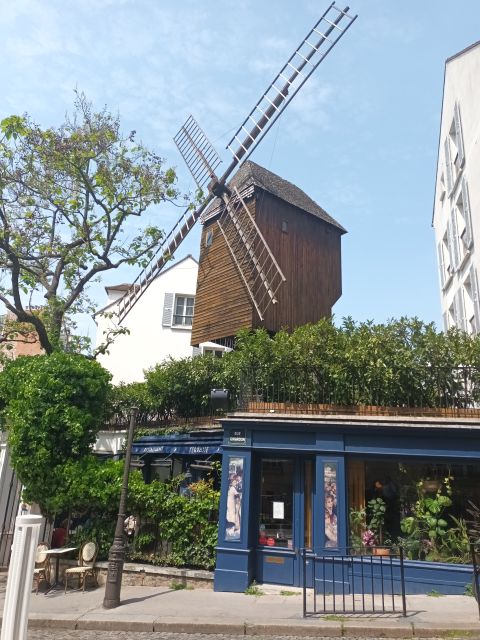
Montmartre’s nightlife stories are part of the same art story. You’ll see cabarets such as Lapin Agile and Moulin de la Gallette through photo stops and guided walking segments.
Here’s the practical value: these stops help you understand the social side of the artistic community. Artists didn’t only paint in studios. They met in cafés, listened to music, and spent evenings where conversation and creativity braided together. With the guide’s narration, you’re not just taking pictures of old buildings—you’re building a mental map of how people actually lived.
The tour keeps these moments moving, so you’ll have photos and context without turning the day into a long sit-down history lesson. If you like your history human-sized, this approach works well.
You can also read our reviews of more guided tours in Paris






Dalida, Le Bateau-Lavoir, and the painter addresses you actually remember
Next come several smaller-but-meaningful stops that connect Montmartre to major artistic names. You’ll have a photo stop at the Dalida statue and then move toward Le Bateau-Lavoir, where the guide explains why this area matters.
This is also where the tour gets specific about artistic legacy. You’ll see places tied to artists such as Picasso and Van Gogh. Even when you can’t go into every site, just having a guide draw the connections helps you connect dots on your own during future walks.
A neat detail from the way some guides teach: you might get extra visuals or supportive storytelling. People leading these tours have been described as using songs on their phone or showing backup pictures on an iPad. That’s useful because it turns cold stone and street corners into something you can picture.
Abbesses and the Wall of Love: street art with real modern pull
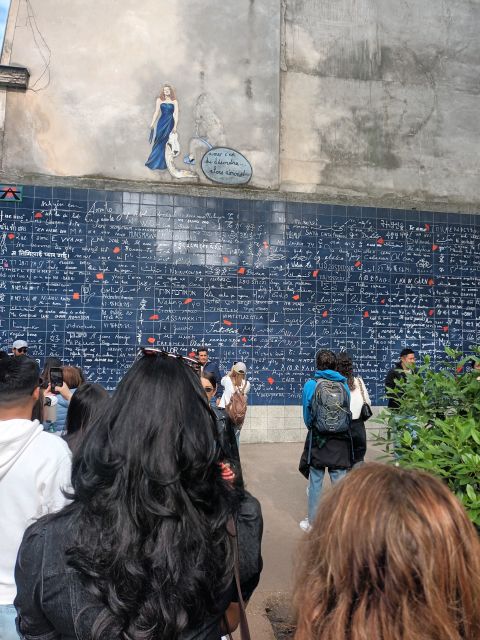
As you descend, you reach Abbesses. Your guide shows you the famous wall of Je t’aime, a modern art work that draws lots of visitors. This stop hits a different note than the basilica or the painter square. It’s more current, more playful, and very photogenic.
You’ll also reach Place des Abbesses, with a mix of guided time and free time. This is a good moment to breathe and reset, especially after the uphill effort. If you like shopping, this area is part of the Montmartre texture where you can wander without feeling like you must rush.
The tour keeps the pacing steady so you don’t burn out. In practice, this is where you go from climbing-and-looking to walking-and-exploring.
Final photo stop toward Moulin Rouge: what you get and what you don’t
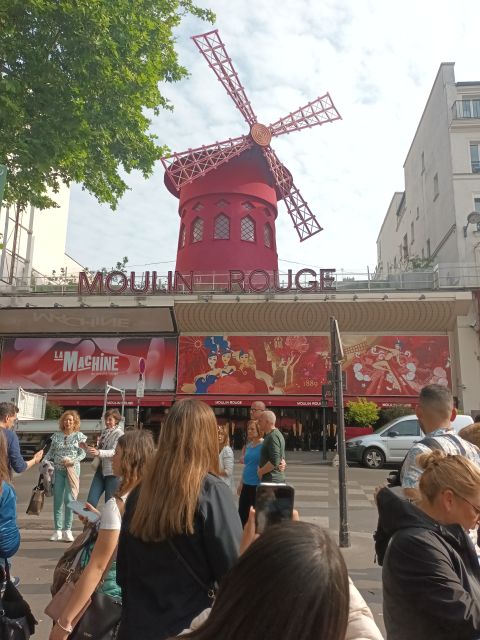
The tour ends near the base of the hill, opposite Moulin Rouge. You’ll get a break time and a photo stop, plus a bit of shopping time if you want it.
I like ending here because it feels like a transition. Montmartre’s steep streets can wear you out, and Moulin Rouge is the visual punctuation mark at the end. If you want to continue the evening, it’s a logical handoff point—especially if you plan to grab dinner or wander through the area under different lights.
One note: the tour includes walking up the hill, and funicular tickets are not included. If you plan to avoid extra stairs later, you may want to think about how you’ll get around after the tour. Even if you don’t use the funicular during the guided walk, it’s good to know the option is something you’ll handle on your own.
Small-group format: why it feels friendlier than big tours

This experience is built around a semi-private group capped at 8 people. That’s not just marketing. In Montmartre, where streets are tight and sightlines are tricky, small group size reduces the two big annoyances: waiting around and getting swallowed by the crowd.
It also changes the way the guide can teach. With fewer people, questions don’t feel like interruptions. You can ask how the neighborhood developed, why specific places mattered, or what to look for next if you return later.
You’ll also notice different guide personalities show up in the storytelling. Some guides are described as funny and structured, some as patient and helpful, and some as turning the walk into a more relaxed conversation. Either way, the small-group setup helps the guide match the pace to the group rather than forcing everyone to match the guide.
Weather, bathroom reality, and timing you should plan for
This tour runs rain or shine, so build your clothing plan around that. Comfortable shoes are essential because you’ll be walking a lot, and the hill is part of the deal.
Also, the bathroom may not be available during the tour. That’s not a dealbreaker, but it’s smart to handle it before you start at Anvers, especially if you’re going during a busy tourist day.
In terms of time, plan on about 150 minutes on the move, with guided stops and short stretches of free time for photos and browsing. It’s not a half-day commitment that eats your whole afternoon, but it’s long enough that you’ll feel the walking.
Price and value: is $74 a fair deal?
At $74 per person, this tour isn’t the cheapest way to see Montmartre. The value comes from three things you can’t replicate as easily on your own:
- You get a guided route designed to connect the famous highlights with less-obvious neighborhood details.
- You spend time at major stops like Sacré-Cœur and Place du Tertre, not just passing by them.
- The small group keeps the experience personal, which is often the difference between learning a few names and understanding the neighborhood’s vibe.
If you’re the type who likes explanations—why things are here, how the artistic scene formed, and what you should look for as you wander—this price makes more sense. If you only want a quick photo loop, you could DIY Montmartre cheaper. But if you want your time to feel guided and organized while still leaving you some freedom, this hits a strong middle ground.
Should you book this Montmartre tour?
Book it if you want:
- A walking route that covers big icons and the surrounding streets
- A small-group experience that doesn’t feel like a conveyor belt
- A guide who can connect Montmartre’s art story to real places, including vineyards, cabarets, and painter-linked addresses
Skip it if:
- You or your group has mobility limitations that make steep walking difficult
- You want a very light stroll only, with minimal uphill effort
- You’d rather spend your time fully at one site without moving on
If you’re visiting Montmartre for the first time and you want the neighborhood to make sense fast, this is a solid way to do it.
FAQ
Where does the Montmartre tour start?
The guide meets you at the exit of Anvers metro station, Line 2, holding a GetYourGuide sign.
How long is the tour?
The tour runs for about 2 hours (150 minutes).
How big is the group?
The tour is limited to a small group of up to 8 people.
Which languages are available?
You can choose a guide in English, Spanish, Italian, or French.
What stops are included?
Key stops include Sacré-Cœur Basilica, Place du Tertre, Vigne du Clos Montmartre, Lapin Agile, Dalida statue, Moulin de la Galette, Le Bateau-Lavoir, Wall of Love (Je t’aime), Place des Abbesses, and a final Moulin Rouge photo stop.
Is the funicular included?
No. Funicular tickets are not included.
Is food or drink included?
No. Food and drink are not included.
Does the tour run in the rain?
Yes. It takes place rain or shine.
Is the tour wheelchair accessible?
No. It is not accessible to wheelchairs and people with mobility issues. Comfortable shoes and the ability to walk uphill are important.