REVIEW · PARIS
Paris: Louvre Museum Skip-The-Line Tour
Book on GetYourGuide →Operated by Paris in person private tours · Bookable on GetYourGuide
Getting to the Louvre fast is half the battle. This private skip-the-line tour gets you moving into the collections quickly, with the guide steering you through major Renaissance and Neoclassical landmarks instead of letting you get lost in a maze. I also love how the focus includes Botticelli’s frescoes and the bigger ideas behind what you’re seeing, so the art feels less like random masterpieces and more like a timeline you can follow.
The main consideration is the price. At $294 per person for a short visit, it’s value-packed if you want guidance and interpretation. If you’d rather roam at your own speed and stop for coffee breaks whenever you feel like it, you may not use every minute.
In This Review
- Quick hits before you go
- Entering the Louvre the fast way (without feeling rushed)
- Meeting point: Arc de Triomphe du Carrousel and your red tote guide
- What you’re really paying for: interpretation of big transitions
- Stop-by-stop: Renaissance works you’ll remember
- Botticelli’s frescoes and the Renaissance “human” lens
- Early Renaissance: Mantegna’s Saint Sebastian
- Bellini and Venetian painting style
- Veronese’s Marriage at Cana: scale that hits you in person
- Leonardo, Neoclassicism, and the feeling of a new world
- Mona Lisa and what to watch for
- Nike of Samothrace: the Neoclassical spark
- Romanticism and the art of big emotions
- Gericault’s Raft of the Medusa: drama in paint
- Delacroix’s Liberty Leading the People: art with political voltage
- Ingres’s odalisque and what classicism does with the body
- Jacques-Louis David: Napoleon and civic mythmaking
- Group size and guide style: why private matters in a museum
- Practical notes that prevent stress
- Luggage and size limits
- What to wear and bring
- Accessibility
- Price and value: is $294 per person worth it?
- Who this tour is best for
- Should you book this Louvre skip-the-line tour?
- FAQ
- How long is the Louvre skip-the-line tour?
- Where do we meet the guide?
- What is included in the price?
- What languages are available for the guide?
- Is this tour a private group?
- Is the tour wheelchair accessible?
- What items are not allowed in the museum?
- Does the tour operate in bad weather?
- Do you need to buy food separately?
- Is free cancellation available?
Quick hits before you go
- Skip-the-line entry helps you start seeing art sooner than you would on your own
- A tight plan that traces Renaissance → Neoclassicism → Romanticism in about 2 hours
- Expect standout works tied to the period shifts, from Nike of Samothrace to Raft of the Medusa
- You’ll see specific artists and works like Botticelli, Mantegna, Bellini, Veronese, Delacroix, Ingres, and Jacques-Louis David
- Private group means the guide can respond to what you find interesting
- Arc de Triomphe du Carrousel is the meetup point, with the guide carrying a red tote canvas bag
Entering the Louvre the fast way (without feeling rushed)
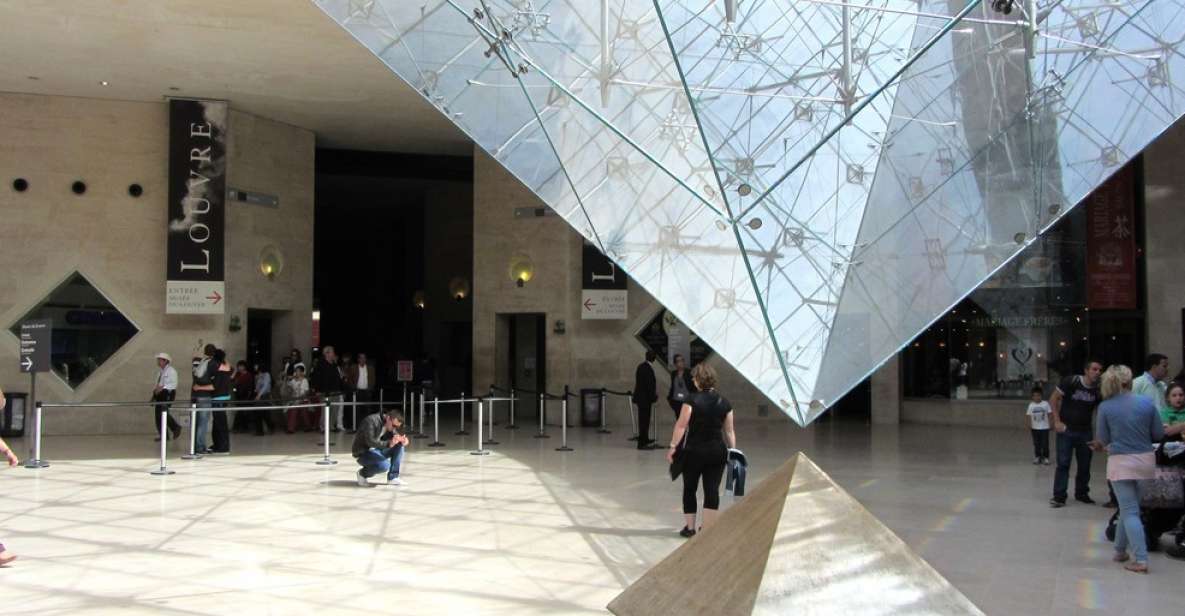
The Louvre is huge. Even if you come with a plan, the first shock is simple: getting from ticket control to the art galleries. This tour’s biggest practical win is that you start with skip-the-line entrance. That time saving matters, because in a place this big, every minute you spend queueing is a minute you’re not spending looking closely.
Since the tour runs for 2 hours, you shouldn’t expect to see everything the museum offers. You’ll see what your guide believes are the best anchors—key works you can use as mental reference points later when you wander on your own. I like that approach because it gives you something to hang your attention on, instead of you staring at walls with no map in your head.
The tour operates rain or shine, so you’re not gambling on weather. If it’s wet, your best move is to go light on bags and wear shoes that handle slick stone.
You can also read our reviews of more museum experiences in Paris



Meeting point: Arc de Triomphe du Carrousel and your red tote guide
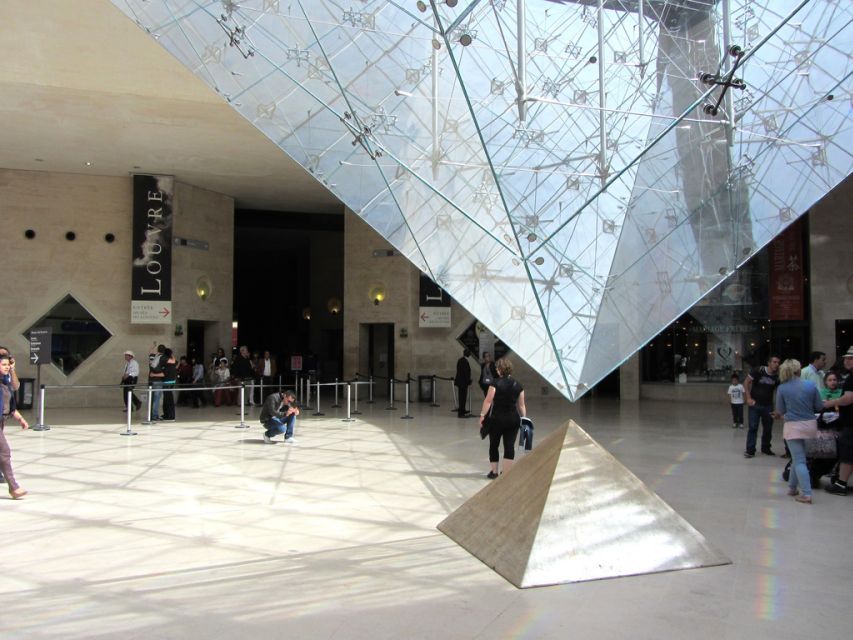
You meet at the Arc de Triomphe du Carrousel. It’s a very identifiable landmark, and the guide comes carrying a red tote canvas bag, which makes it easier to spot them quickly.
This is important because the whole point of a skip-the-line tour is smooth logistics. If you arrive flustered, you’ll lose that calm momentum right at the start.
If you’re combining this with other Louvre-area sights, plan your day so you’re not sprinting across Paris right before the meeting time. A private group format means the guide will be ready when you are, and delays create ripple effects.
What you’re really paying for: interpretation of big transitions
At $294 per person, you’re paying for more than an entry ticket. You’re paying for the guide’s ability to translate art history into something you can actually use in real time.
The tour is structured around shifts in style and worldview: Renaissance, then Neoclassicism, then Romanticism. The value here is the thinking. You’re not just learning names; you’re learning why those names mattered and what changed from one era to the next.
One guide example from recent bookings is Boris, who explains art through historical perspective—especially how artists depict sun and light. Even if your guide isn’t Boris, the format aims for this kind of clarity: you should come away understanding why a painting looks the way it does, not just that it’s famous.
Stop-by-stop: Renaissance works you’ll remember
Your tour’s Renaissance portion is designed to build a chain. You’ll move from Renaissance ideas about humanism and perspective into specific artists and recognizable masterpieces.
Botticelli’s frescoes and the Renaissance “human” lens
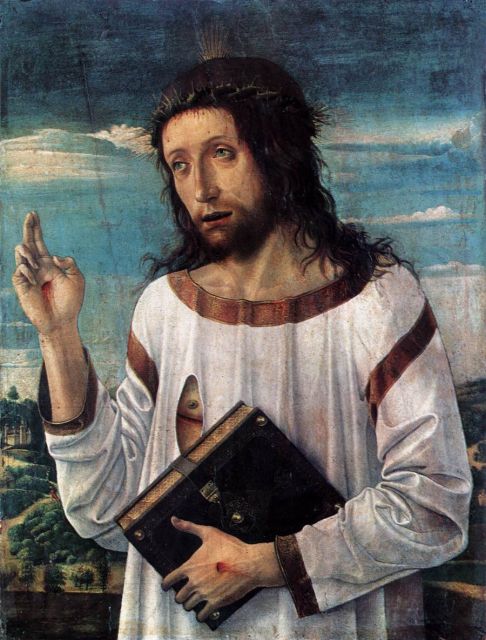
You’ll admire Botticelli’s fresco work, including Venus and the Three Graces Presenting Gifts to a Young Woman. This is the kind of painting where a guide helps you see details fast—faces, gestures, and symbolism—without making you do homework.
Why it matters for you: Botticelli sits right in that moment when art starts leaning into human emotion and classical myth with a new kind of attention. With a guide, you notice how Renaissance artists turned stories into feelings.
You can also read our reviews of more tours and experiences in Paris



Early Renaissance: Mantegna’s Saint Sebastian
You’ll also see Mantegna’s Saint Sebastian, an early Renaissance landmark tied to Florentine art. This stop is useful because it shows you how religious themes can still feel intense and modern for its time.
If you like art that’s a bit darker or more psychologically pointed, you’ll probably linger here. A good guide will help you read the attitude and composition rather than treating it like a simple devotional image.
Bellini and Venetian painting style
The tour includes Bellini’s Venetian paintings. Venetian painting often has a different personality than Florentine work—more attention to atmosphere, color, and painterly texture. Having that contrast explained makes the transition feel real instead of theoretical.
Even in a short tour, getting one style comparison like this can upgrade everything else you see afterward.
Veronese’s Marriage at Cana: scale that hits you in person
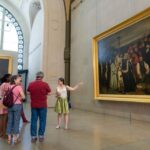
You’ll see Veronese’s Marriage at Cana, described as the largest painting in the Louvre. Size alone can overwhelm you, but in person it also becomes part of the story. You need a guide to point out where to look first so the painting doesn’t turn into a blur.
What I like about including a work like this: it teaches you how museum visitors should approach huge scale—look for structure, then characters, then details.
Leonardo, Neoclassicism, and the feeling of a new world
Once you’ve got the Renaissance foundation, the tour pivots into Neoclassical and related eras. This is where the guide’s “timeline” style pays off: you can feel the shift in taste.
Mona Lisa and what to watch for
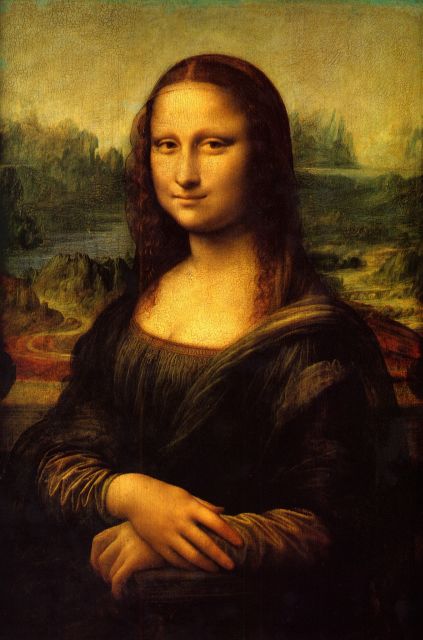
Leonardo da Vinci is represented through paintings such as the Mona Lisa. The practical help here is not just pointing at the painting. It’s helping you understand why the pose and expression became a reference point for artists afterward.
A good rule for this stop: don’t spend your whole moment searching for the details others hype online. Instead, spend your time on the expression and the composition logic your guide draws your attention to.
Nike of Samothrace: the Neoclassical spark
You’ll marvel at the Nike of Samothrace, a 2nd-century BC marble sculpture of the Greek goddess Nike (Victory). Even though it predates the Renaissance, it’s perfect for showing how later eras borrowed from classical ideals.
If you enjoy sculpture, this stop is a great anchor for you. You’ll likely find yourself looking at how the figure implies motion—how victory becomes physical.
Romanticism and the art of big emotions
The Romantic era stops are chosen to show how art moves from classical restraint into drama, politics, and raw human feeling.
Gericault’s Raft of the Medusa: drama in paint
You’ll see Gericault’s Raft of the Medusa. This kind of painting is intense because it’s built around crisis—human bodies, panic, and a moment where everything is going wrong at once.
In a guided setting, you’re not just learning the story. You learn why the composition forces your eyes to travel and why the emotional tone is the point.
Delacroix’s Liberty Leading the People: art with political voltage
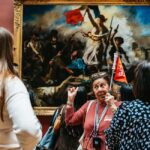
You’ll admire Delacroix’s Liberty Leading the People, tied to the July Revolution of 1830. This is one of those works where knowing the context matters. It turns the painting from a spectacle into a political statement.
If you care about how art reflects real events, you’ll appreciate this stop because the guide can link style choices to historical meaning.
Ingres’s odalisque and what classicism does with the body
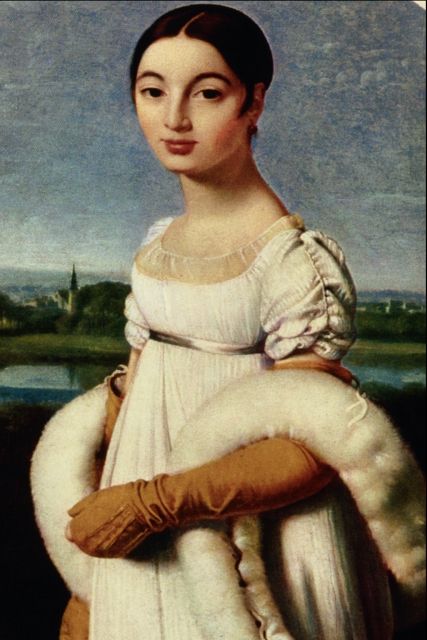
You’ll see Ingres’ Une Odalisque, including its famed sensuous, elongated figure. This is a chance to notice how different eras used the nude—not just anatomy, but idea and attitude.
Even if you’re not a die-hard art fan, this stop usually lands because it’s instantly readable. The guide’s job is to explain why it looks that way and what that says about taste.
Jacques-Louis David: Napoleon and civic mythmaking
You’ll also see Jacques-Louis David’s Crowning of Napoleon and The Oath of the Horatii. These works help you understand how art can build political legitimacy and narrative certainty.
I find this pair helpful because it shows two sides of the same talent: power performed as spectacle (Napoleon) and civic virtue performed as dramatic moral theatre (the oath).
Group size and guide style: why private matters in a museum
This is a private group tour. That matters more than it sounds, especially in the Louvre, because it lets your guide adjust pacing.
One recent booking highlighted that a guide was accommodating and attentive, even while navigating the museum with two teenage boys. Another emphasized clear explanation and deep knowledge, and that the guide delivered with strong structure. Another mentioned customization based on interests.
You should treat this as a sign of what the best guides do: they don’t just recite. They teach in a way that matches your group’s attention span and taste.
If you want a tour where you can ask questions mid-way, private format is the move. If you want someone to talk nonstop for two hours regardless of your interest, this still may work—but you’ll get more out of it if you actively point out what you want to focus on.
Practical notes that prevent stress
Here are the details that help you have a smooth museum experience.
Luggage and size limits
Oversize luggage isn’t allowed, and items exceeding 55x35x20 cm are not permitted in the museum. That means you should travel like a minimalist. If you’re carrying a big backpack or duffel, you may have to plan around storage rules before you arrive.
What to wear and bring
The tour is rain or shine, and the Louvre is a mix of marble floors and crowds. Wear shoes that won’t hate you halfway through. Bring a small water bottle if you can, but remember food and beverages are not included.
Accessibility
The tour is wheelchair accessible, which is a real plus if you’re managing mobility needs. In a museum with narrow circulation in places, having that confirmation upfront reduces uncertainty.
Price and value: is $294 per person worth it?
Let’s be honest. $294 per person is not cheap for a museum tour that lasts 2 hours. The math only works if you want a guided lesson and you’re selecting your time carefully.
Here’s when it’s a good value:
- You want to see recognizable works—like Botticelli, Nike of Samothrace, Delacroix, and David—without spending your morning figuring out where to go.
- You like context: why Renaissance transitions happened, what humanism changed, and how Romantic drama differs from classical ideals.
- You want a guide who can explain clearly and respond to your interests, not a one-size-fits-all route.
Here’s when it might not feel worth it:
- You’d rather wander independently and stop whenever you want, even if you don’t get a guided timeline.
- You’re okay doing your own reading and mapping inside the museum.
My practical take: if you’re only doing one Louvre tour (or you need the Louvre to make sense fast), this one earns its price.
Who this tour is best for
This tour is especially suited for you if:
- You want a structured route through major shifts: Renaissance → Neoclassicism → Romanticism
- You’d like to see specific stars of art—Botticelli, Mantegna, Bellini, Veronese, Leonardo, Gericault, Delacroix, Ingres, and David
- You enjoy learning how artists use light, drama, and classical references to build meaning
- You’re traveling with people who need help focusing in a large museum
It may feel less ideal if you’re coming only to “see everything” without any guidance, or if your group wants long unscripted roaming.
Should you book this Louvre skip-the-line tour?
If you want the Louvre to feel understandable instead of overwhelming, I’d say yes. The skip-the-line start is valuable, the private guide format helps you get real answers, and the chosen works give you a clear chain from Renaissance ideas to Neoclassicism and Romantic drama.
Just be sure you’re buying the right experience: it’s a focused 2-hour art story, not a full museum marathon. If that fits your pace, this is a smart, high-impact way to get your Louvre bearings fast and leave with art that actually sticks.
FAQ
How long is the Louvre skip-the-line tour?
The tour lasts 2 hours.
Where do we meet the guide?
You meet at the Arc de Triomphe du Carrousel. The guide carries a red tote canvas bag.
What is included in the price?
The tour includes a skip-the-line entrance ticket to the Louvre and a live guide.
What languages are available for the guide?
The tour guide is available in English, French, and Serbo-Croatian.
Is this tour a private group?
Yes, the tour is a private group.
Is the tour wheelchair accessible?
Yes, the tour is wheelchair accessible.
What items are not allowed in the museum?
Oversize luggage isn’t allowed, and items exceeding 55x35x20 cm are not permitted.
Does the tour operate in bad weather?
It operates rain or shine.
Do you need to buy food separately?
Food and beverages are not included.
Is free cancellation available?
Yes. Free cancellation is available up to 24 hours in advance for a full refund.