REVIEW · PARIS
Musée d’Orsay Skip-the-Line Tour with Expert Guide
Book on GetYourGuide →Operated by Memories France · Bookable on GetYourGuide
A Paris art stop that feels like a time machine is Musée d’Orsay. With a skip-the-line entrance and an English-speaking guide, you get a fast, focused way to understand why Impressionism shocked people in the first place. The museum is housed in a former Beaux-Arts railway station, so you’re not just looking at paintings. You’re stepping into the era they helped change.
I especially love two things. First, the expert guide storytelling connects paintings to ideas, techniques, and even the social friction behind the art. Guides like Antony, Avi, and Sarah come through in the way they link brushwork, subject matter, and relationships between artists, including the scandal-and-rebellion side of the story.
One thing to consider is that the guided portion can feel a bit rushed if you’re at the shorter end of the 90-minute schedule or if you prefer a slower walk-and-stare pace. Good news: you can stay after the tour, so you still get time to linger where you want.
In This Review
- Key things to know before you go
- Why Musée d’Orsay feels different: the station that powers the art
- Meeting point and getting in: where to find your guide fast
- What the 1 hour 45 minute guided tour actually does for you
- The Impressionist shock story: why these paintings caused outrage
- Spotting the masterpieces and the less-obvious moments
- Hearing your guide in real museum crowds with headsets
- After the tour: how to use your extra time without getting lost
- Price and value: is $82 worth it?
- Who should book this Orsay skip-the-line tour
- Should you book this Musée d’Orsay tour?
- FAQ
- How long is the guided part of the tour?
- Is the tour in English?
- Where do I meet the guide?
- What does the tour include?
- Can I stay in the museum after the tour?
- Is it refundable if my plans change?
- Is it suitable for wheelchair users, and are large bags allowed?
Key things to know before you go
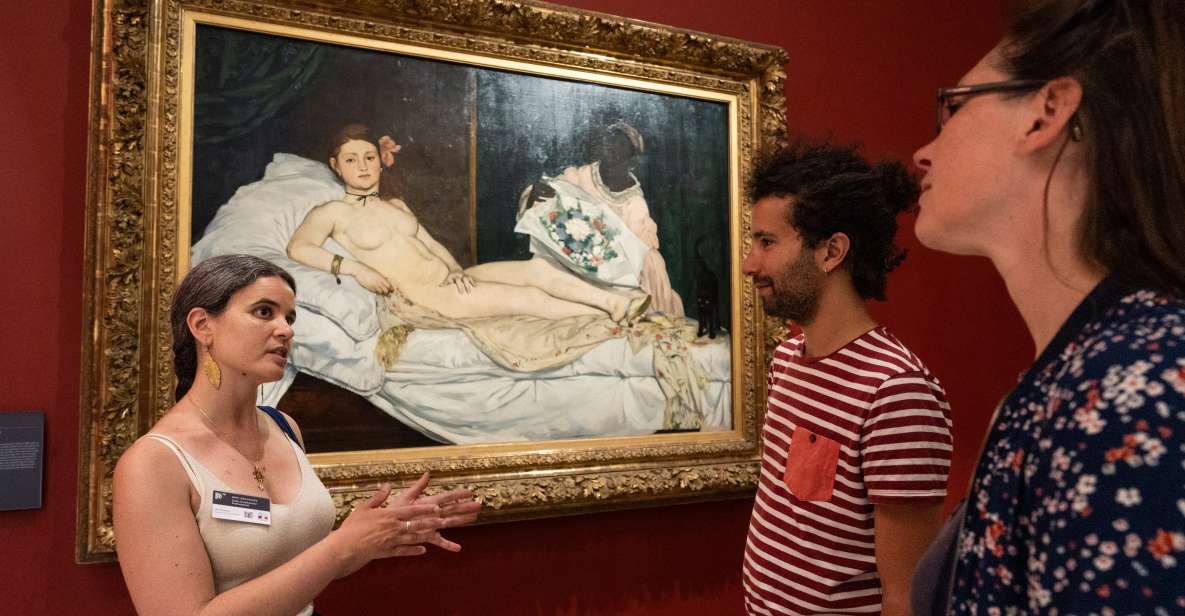
- Skip-the-line, dedicated entrance: you avoid the worst of the waiting and get moving fast inside.
- Headsets when needed: they help you hear your guide even in crowded galleries.
- The guide turns art into context: you’ll hear why Impressionists were treated as a problem, not a trend.
- Big highlights plus lesser-known moments: the tour aims to cover the classics without ignoring the smaller sparks.
- Stay in the museum as long as you like: use the tour as a roadmap, then explore at your own rhythm.
- No luggage or large bags: plan light, or use facilities outside the museum.
Why Musée d’Orsay feels different: the station that powers the art

Most Paris museums are quiet rooms for masterpieces. Orsay is that, but it also has a dramatic backbone: the museum sits inside a magnificent Beaux-Arts railway station. That matters, because it shapes how you move through the space. You tend to feel the museum as something built for flow and arrival, which fits the Impressionist mindset of change and modern life.
And that theme shows up in how the tour guides you through the collection. You’re not just hunting for famous names; you’re getting a guided path through an era when artists openly challenged what art was supposed to look like. If you like art that comes with a plot, Orsay delivers.
You can also read our reviews of more guided tours in Paris



Meeting point and getting in: where to find your guide fast
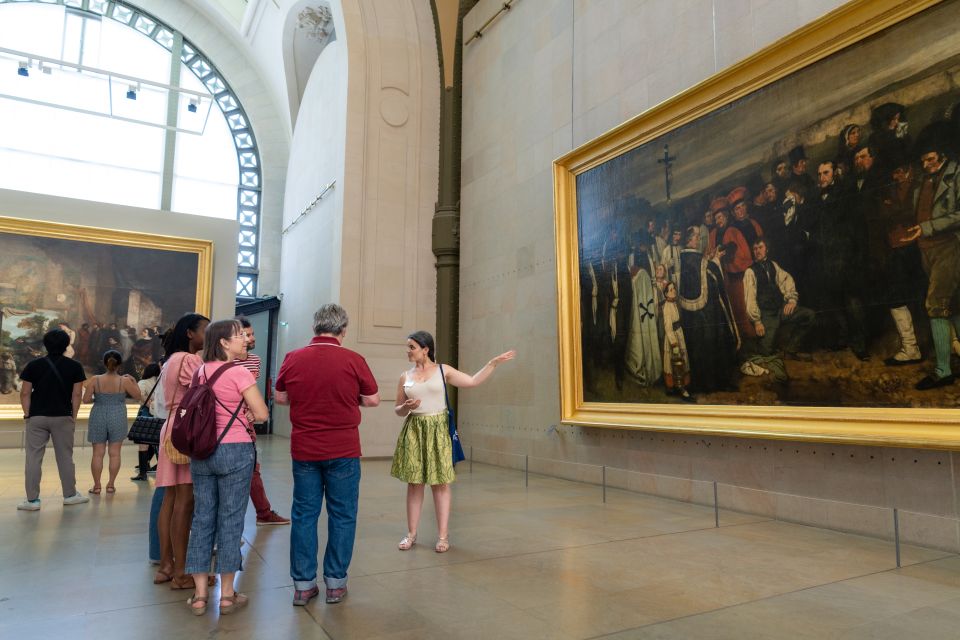
Meet your guide opposite the main entrance to Musée d’Orsay, next to the entrance of the Legion d’Honneur Museum. Your guide will be wearing a guide badge on an orange lanyard, standing right by the entrance.
This is one of those small logistics that can make or break a museum morning. Since the point of the tour is to avoid lines, you don’t want to accidentally drift into a queue. Instead, use the meeting spot as your anchor: get oriented, find your guide badge, and let them take over.
For transit, you can aim for RER Station Musée d’Orsay (Line C) or metro Solferino (Line 12). Either option keeps you close enough to make the meeting time realistic, even when Paris crowds slow you down.
What the 1 hour 45 minute guided tour actually does for you
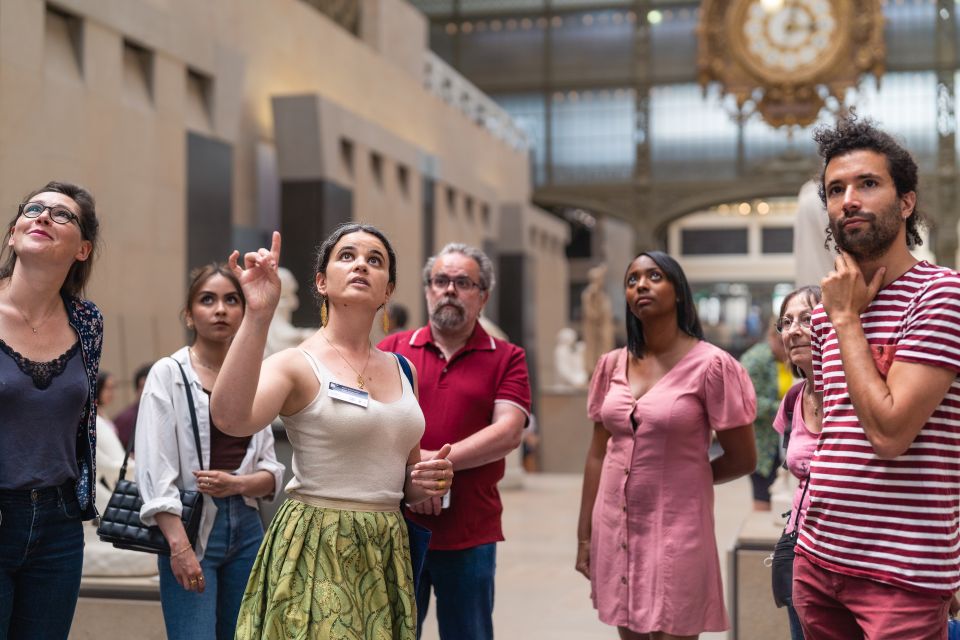
The guided portion is about 1 hour 45 minutes (with schedules ranging from 90 to 150 minutes depending on departure). That’s long enough to get a clear overview, short enough to keep momentum, and structured enough that you don’t waste the first half-hour wandering.
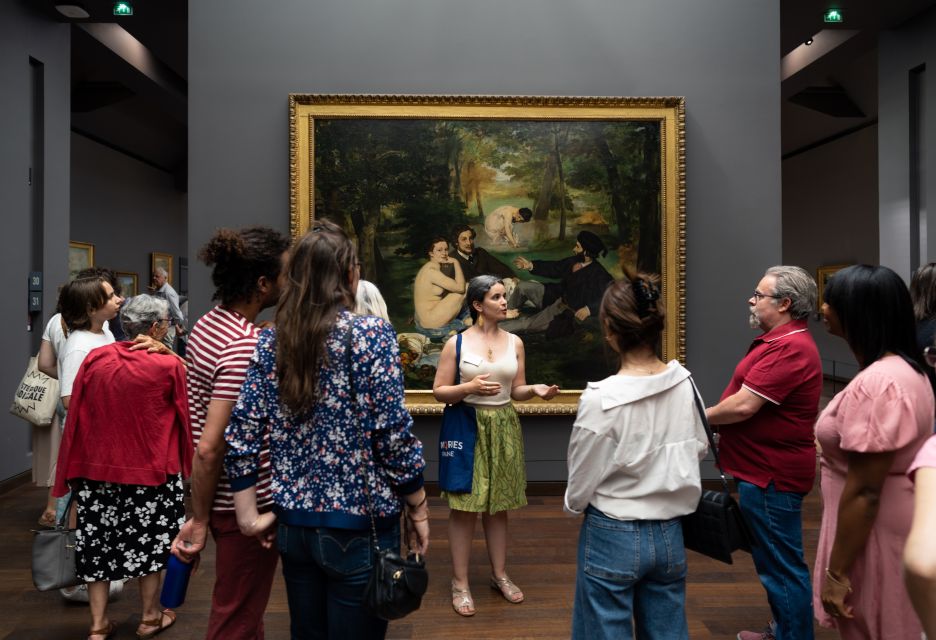
Here’s the practical way I’d think about it: the guide helps you build a mental map so your museum time feels productive, not random. You’ll see major highlights, but you’ll also get the reasoning behind them. The guide doesn’t treat famous works like museum posters. They explain how artists thought, what they were reacting to, and why certain choices felt radical.
The tour includes headsets when appropriate, so you’re not stuck straining above the crowd. You’ll typically be moving room to room, and the headsets make it easier to keep up without constantly asking someone beside you what was said.
The Impressionist shock story: why these paintings caused outrage
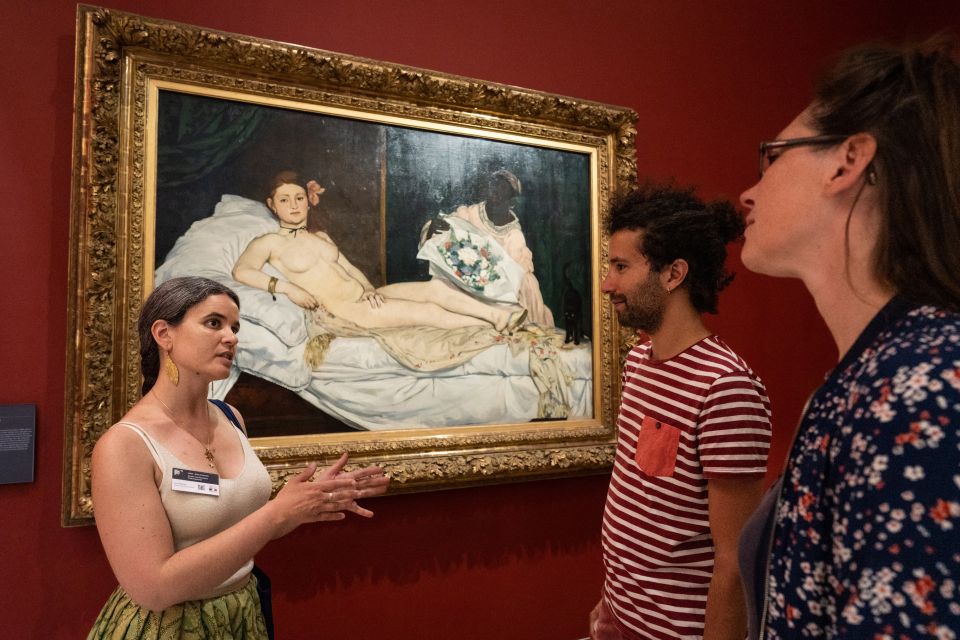
Impressionism is easy to appreciate once you already know what you’re looking at. The clever part of this tour is that it gives you the historical context that explains why people once reacted with disbelief.
The key idea you’ll hear is simple: early Impressionist exhibitions often faced outrage because the subject matter and the style didn’t match what audiences expected. Peaceful scenes and everyday subjects were considered inappropriate for the high-minded expectations of the time. Meanwhile, vivid colors and visible brushstrokes looked unfinished or careless to critics who wanted paint to disappear into perfection.
Your guide will walk you through how major artists pushed those boundaries: Monet, Manet, Renoir, Degas, and Van Gogh are at the center of this story. Even if you’re not an art-history person, this format helps. You start to connect technique to intention.
And yes, there’s often a scandal-and-society thread. Guides described as funny, personable, and attentive often bring in how artists influenced each other and how daily life and politics shaped what ended up on canvas. That’s the part that turns art into something you can actually feel.
Spotting the masterpieces and the less-obvious moments
Musée d’Orsay is big. Even if you only want Impressionists, it can still feel like a lot. This tour helps you focus on the works you’re most likely to want to see again after you’ve left the group.
You’ll cover the museum’s major highlights, but the tour also aims to surface “hidden” understanding rather than just hidden locations. In other words, you’re not only shown what’s famous. You’re taught what makes it famous in the first place: the relationship between one painter’s choices and another’s, the way style changes across the era, and the themes that tie scenes together.
From the guide styles mentioned in real departures, I’d expect a range of approaches. Some guides lean into social commentary. Others emphasize how artists worked through technique. Many combine both, and that tends to work well if you have mixed interests in your group.
You can also read our reviews of more tours and experiences in Paris





Hearing your guide in real museum crowds with headsets
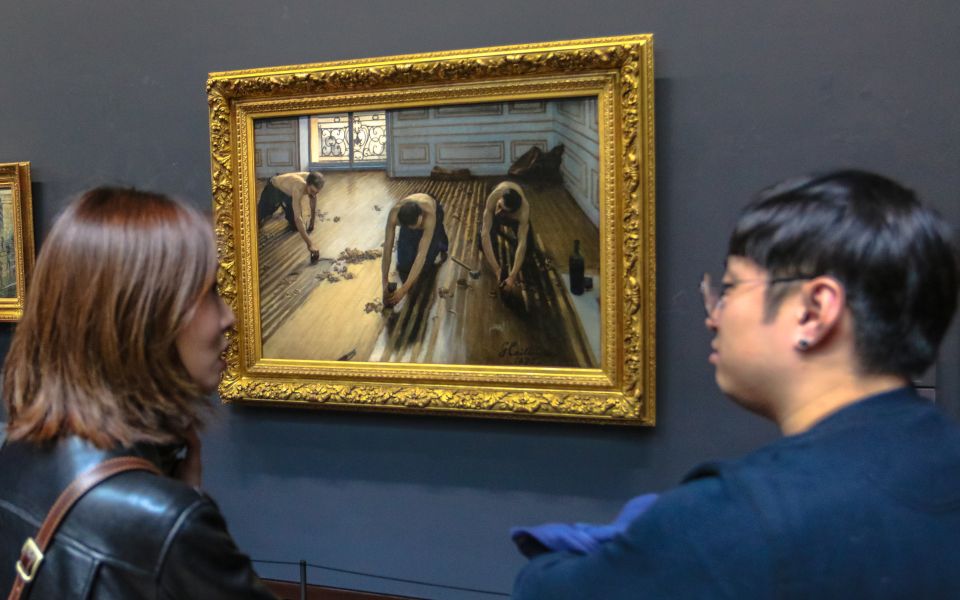
Orsay can be packed, and that’s where the tour’s small tech detail becomes a big deal: headsets are included when appropriate so you can hear the guide clearly.
This isn’t just comfort. It affects comprehension. If you’re struggling to catch every third sentence, you end up drifting. With headsets, you can actually follow the story as you walk, which makes the whole tour feel more like a conversation than a series of lectures.
You’ll also benefit from the way guides handle crowd movement. Some departures are described as skillful at maneuvering through busy galleries so you still get meaningful viewing time. If you’re visiting during peak season, this is exactly the reason to choose a guided skip-the-line format.
After the tour: how to use your extra time without getting lost
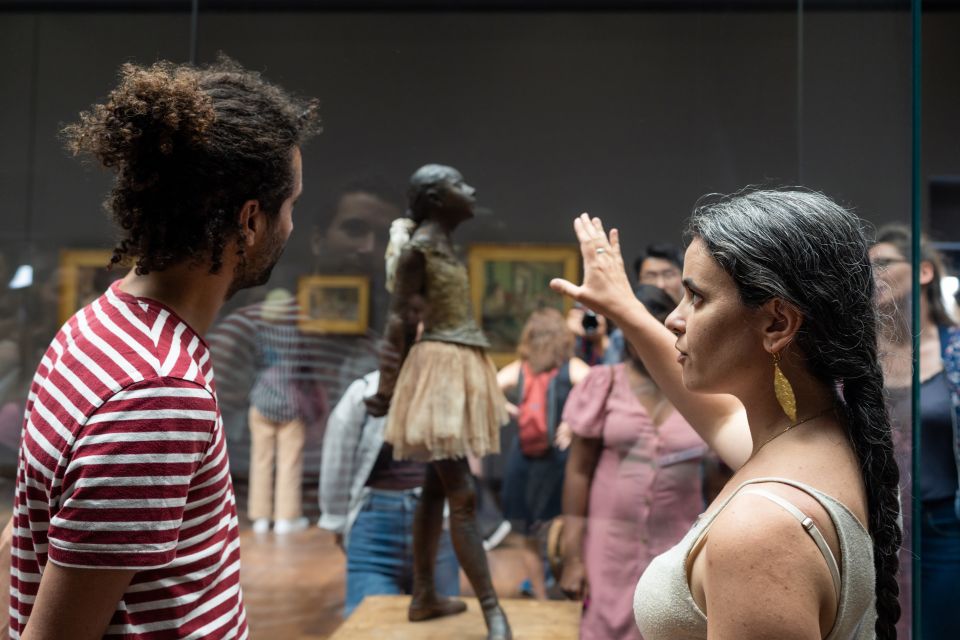
One of the best parts of this experience is that you’re not forced to leave right after the guided portion. After the tour, you can stay in the museum as long as you like.
That gives you an advantage: the tour works like a map, then you control the rest. I like using it this way:
- Revisit the paintings that clicked during the guide’s explanation.
- Spend more time in the sections tied to your favorite artists (like Van Gogh if that’s your entry point).
- If there’s a temporary exhibition, you can switch perspective with confidence because you now understand the era in the main collection.
If the guided timing feels quick for you, don’t fight it during the tour. Use the extra time afterward to slow down where your attention wants to stay.
Price and value: is $82 worth it?
At $82 per person, the key question is what you’re buying besides a guide. You’re paying for time and friction reduction.
This package includes:
- a dedicated entrance and entrance fees
- skip-the-ticket line
- a live English guide for roughly 1 hour 45 minutes
- headsets when appropriate
- the ability to stay after the tour
So yes, you can save money by buying a ticket yourself. But you’re also accepting the gamble of wasted minutes in lines and the risk of missing the “why” behind the works. For a museum like Orsay, where paintings are dense and context matters, the guide’s job isn’t a luxury. It’s a shortcut to making your time count.
Where value may feel weaker is if you’re the type who only wants a short hit of famous art and you hate moving with a group. In that case, you might prefer a lighter self-guided visit. Otherwise, the price tends to make sense as a practical way to get oriented fast and then enjoy the museum on your own terms.
Who should book this Orsay skip-the-line tour
This is a strong fit if you want:
- an efficient overview of Impressionism with historical context
- a guide who links technique to the cultural pushback of the era
- help hearing the explanation clearly in crowded rooms
- the chance to explore afterward without rushing
It’s also a good choice if your group includes different levels of art interest. Someone can enjoy the biggest names and still get meaning from the way the guide connects artists and ideas. Reviews often highlight how guides keep groups engaged and answer questions, including with humor and social context delivered in a polite way.
A couple notes based on the experience details provided: it’s not suitable for wheelchair users, and luggage or large bags aren’t allowed, so travel light.
Should you book this Musée d’Orsay tour?
I’d book it if your goal is to understand Impressionism faster and spend your energy looking at paintings instead of figuring out where to start. The skip-the-line entry plus headsets are the kind of practical upgrades that matter in a busy museum. And the fact that you can stay afterward turns the tour into a launch pad rather than a timed shove.
I’d think twice if you only want a slow, unguided wander, or if your schedule is extremely tight and 90 minutes would feel too short for your style. In that case, you might still love Orsay, but this exact structure could feel too directed for you.
If you’re flexible and you want a smart first visit, this is a very solid way to meet Musée d’Orsay on day one.
FAQ
How long is the guided part of the tour?
The guided visit runs for about 1 hour 45 minutes, and the overall duration is listed as 90 to 150 minutes depending on availability and the departure you choose.
Is the tour in English?
Yes. The live tour guide is English.
Where do I meet the guide?
Meet your guide opposite the main entrance to Musée d’Orsay, next to the entrance of the Legion d’Honneur Museum. The guide will be wearing a badge on an orange lanyard.
What does the tour include?
It includes the guided tour (about 1 hour 45 minutes), a fully accredited local guide, dedicated entrance and all entrance fees, and headsets when appropriate so you can always hear your guide.
Can I stay in the museum after the tour?
Yes. You can stay as long as you like in the museum after your tour.
Is it refundable if my plans change?
Free cancellation is available up to 24 hours in advance for a full refund.
Is it suitable for wheelchair users, and are large bags allowed?
No. The tour is not suitable for wheelchair users, and luggage or large bags are not allowed.