REVIEW · PARIS
Paris: Afternoon E-Bike Guided Small Group Tour
Book on GetYourGuide →Operated by GO GO TOURS SARL · Bookable on GetYourGuide
Paris hits different from the saddle. In one afternoon you can glide past the big monuments and still feel the rhythm of real streets. This guided e-bike tour is built for fast orientation, with frequent stops for photos and history, and it starts right at 101 Av. de la Bourdonnais.
I especially like two things: first, how the ride mixes must-see sights with calmer residential-feeling streets so you get more than just postcards. Second, the guiding quality stands out, with different guides showing up by name in people’s experiences, including Jack, Kenzo, Kenza, George, Boris, Emma, Ellie, and Hugo. One drawback to plan around: the tour runs rain or shine, and the age limits are strict (not for children under 12 or people over 95).
In This Review
- Key Points at a Glance
- Why an E-Bike Tour Works So Well for Paris Icons
- Meeting at 101 Av. de la Bourdonnais: Get Set Fast
- From Les Invalides to Pont Alexandre III: A Classic Paris Courtyard Start
- Grand Palais and Petit Palais: Move Through Splendor Without the Ticket Rush
- Champs-Élysées and Place de la Concorde: The Big Stage Energy
- Louvre Area and Musée d’Orsay: See the Seine Museums From the Right Angle
- The Flame of Liberty and the Revolution-Era Thread Through the City
- Arc de Triomphe and Champs de Mars: The Wraparound Grand Finale
- Guides Make the Difference: Tailoring, Photos, and City Tips
- E-Bike Comfort and Safety on Paris Streets (What You Should Know)
- Price and Value: Why $63 Can Make Sense for 2.5 Hours
- Who This Tour Fits Best (And Who Might Want a Different Plan)
- Should You Book This Paris E-Bike Tour?
- FAQ
- What is the duration of the tour?
- Where does the tour start and end?
- Is the tour guided, and what language is offered?
- Does the tour run in bad weather?
- Are helmets provided?
- Is food included in the price?
- What sights are included on the route?
- Can I book for a private or small group?
- What are the age limits?
- Is cancellation refundable?
Key Points at a Glance
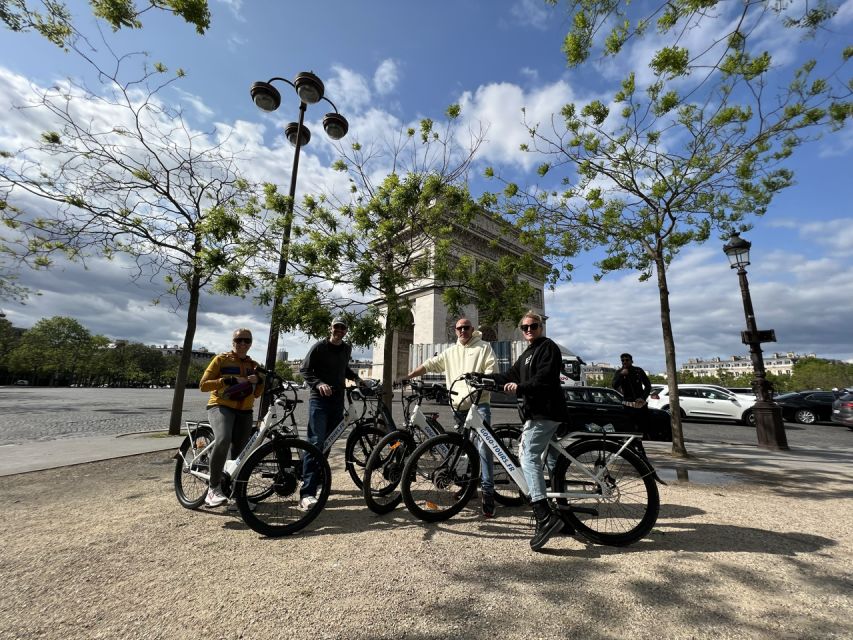
- Small-group energy with a local guide: you’re not stuck in a giant crowd vibe.
- Icon route without the walking grind: Eiffel Tower, Louvre, Musée d’Orsay, Arc de Triomphe, and more in one loop.
- Photo stops and practical pacing: guides are prompt about breaks so you can actually see what you’re photographing.
- E-bike makes distance manageable: one rider even called out about 15 km covered with an easy riding feel.
- English live commentary throughout: helpful if you want context, not just motion.
- No food included: you’ll want to plan for snacks yourself or bring a warm layer for stops in cold weather.
Why an E-Bike Tour Works So Well for Paris Icons
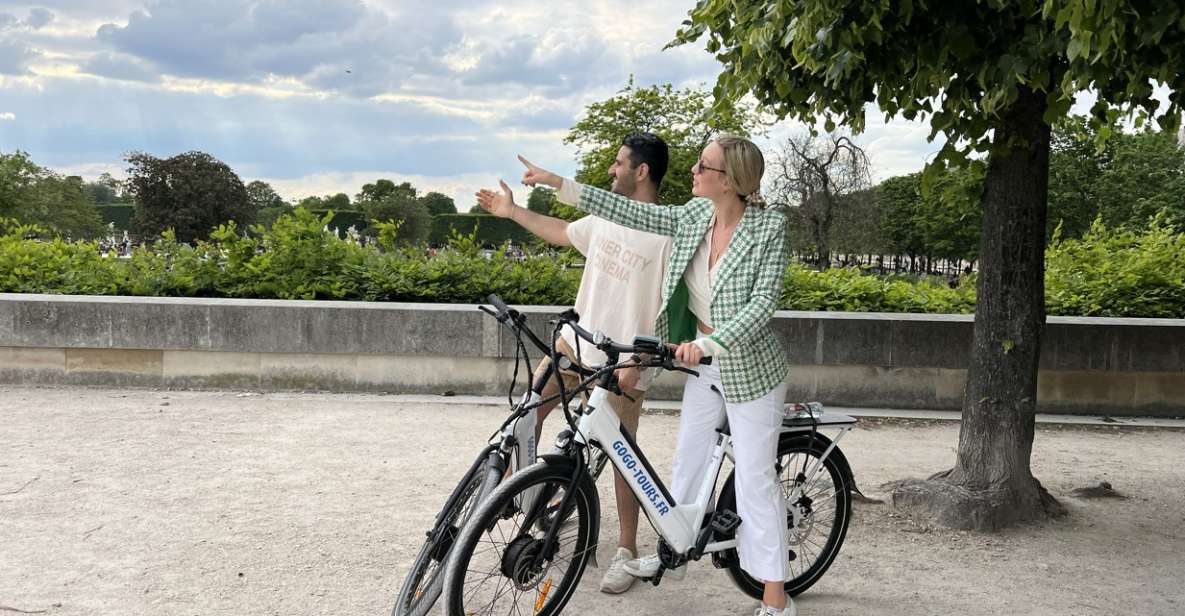
Walking Paris is romantic. It’s also slow. And on a first trip, you often end up spending most of your energy dodging crowds and waiting for traffic lights.
This kind of afternoon e-bike tour is a smart middle ground. You get the best parts of Paris sightseeing—big views, classic facades, and major landmarks—without burning half your day on sore legs. Because the bikes do the heavy lifting, you can stay present for the city instead of calculating how far you still have to go.
You’ll also get something many “just ride by it” tours miss: a guide who connects what you’re seeing to design, culture, and history. Guides across different names have been praised for explaining the significance of stops and answering questions in a way that makes monuments feel less like background scenery.
You can also read our reviews of more cycling tours in Paris

Meeting at 101 Av. de la Bourdonnais: Get Set Fast
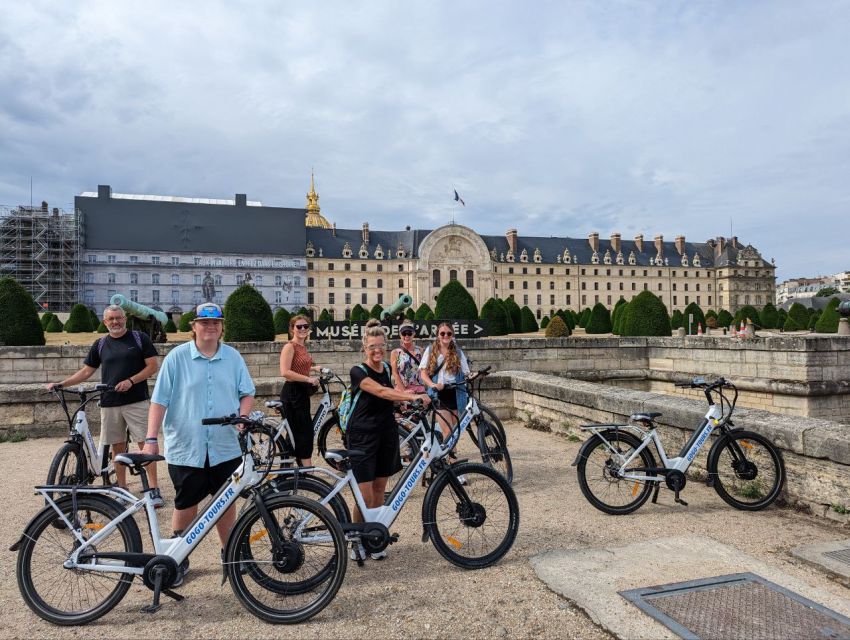
The tour starts at 101 Av. de la Bourdonnais. That matters because this is close to the Eiffel Tower area, so you’re not wasting time crossing the city just to begin your loop.
At the start, you’ll store luggage and get a helmet (listed as optional), then hop on your e-bike. The early minutes matter here: a quick setup plus a real briefing helps you ride confidently in the Paris mix of bike lanes, traffic, and intersections.
If you’ve never ridden an e-bike before, don’t worry too much. Multiple riders mentioned how easy the bikes are to use and how the guide keeps the group comfortable with speed and spacing. Still, if you’re the cautious type, let the guide know right away. Your comfort is part of the success of a bike tour.
From Les Invalides to Pont Alexandre III: A Classic Paris Courtyard Start
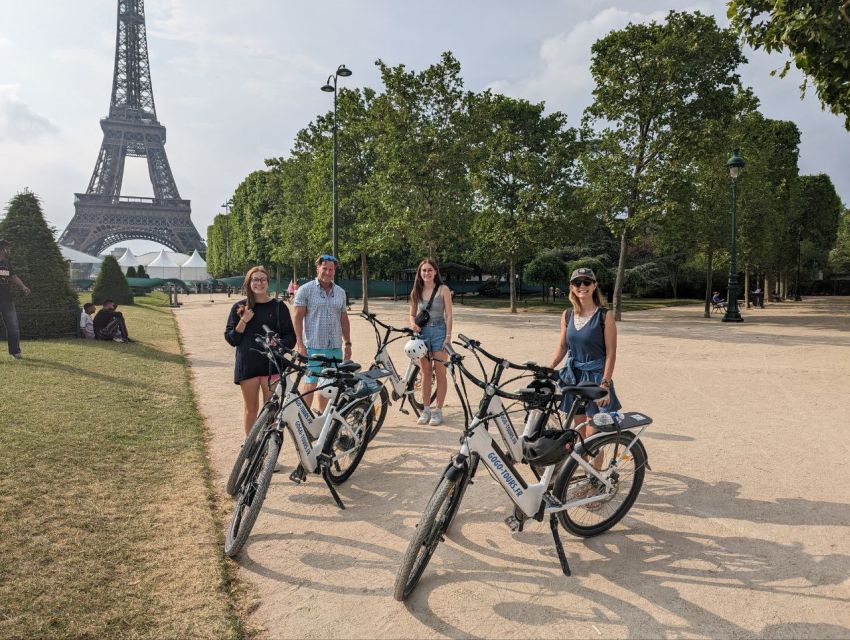
After you meet and roll out, the route heads toward the Les Invalides area, with a short pass by. Even with limited time, it’s a strong introduction point. Invalides is one of those Paris landmarks that feels like it belongs to a different era—stone, symmetry, and a sense of weight in the architecture.
Next comes the Army Museum area (another brief pass). This segment is useful because it gives you a sense of why the city’s “great buildings” aren’t random. Paris history is written into the built environment, and the guide’s commentary helps translate what you’re seeing.
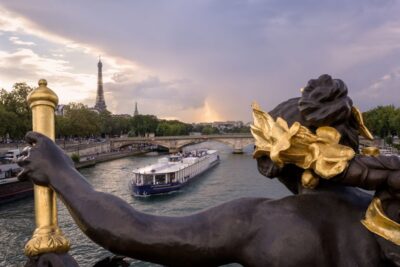
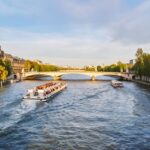
Then you ride toward Pont Alexandre III, one of the most recognizable bridges in Paris. Here, you’re moving through a prime photo zone while the guide talks about the significance of what you’re crossing. The benefit of a bike tour is timing: you see the bridge and surroundings in the middle of your ride, not as a standalone stop that turns into a long detour.
If your priority is photos, this section is a good moment to get your camera ready early. The architecture around the bridge is designed to be admired from moving angles, not just through a single stationary spot.
Grand Palais and Petit Palais: Move Through Splendor Without the Ticket Rush
Next up: Petit Palais and Grand Palais with quick passes (just a couple minutes each).
These buildings can be major “stand-stare” stops on foot. On the bike, you get the highlights quickly and keep the pace moving. That’s a real value if you’re short on time and want coverage instead of one deep dive.
Why these stops work on an e-bike:
- You get the scale and ornamentation from close enough to appreciate details.
- You avoid the most annoying parts of sightseeing logistics—long waits and crowd funnels.
- The guide can tell you what to look for, so the buildings feel purposeful instead of decorative.
Some riders also mention hidden photo opportunities that the guide knows about. That’s especially helpful around this kind of monumental architecture, where the best angles are often not the most obvious ones.
Champs-Élysées and Place de la Concorde: The Big Stage Energy
You’ll ride along the Champs-Élysées and then pass by Place de la Concorde.
On foot, these areas can feel like a traffic-and-tourist corridor. On an e-bike, they become something more manageable. You’re not stuck behind slower walkers, and you can keep moving while still taking in the broad views and impressive building lines.
The Concorde stop is also a meaningful one because it’s tied to major Revolutionary-era history. Even if you only pass through briefly, this is where your guide’s context matters. It turns the space from scenery into story.
Practical note: intersections in central Paris can feel intense. One rider described busy intersections as a little freaky but still doable. The best way to handle that is to ride the way your guide instructs: keep steady, follow the group rhythm, and don’t try to “wing it” at turns.
You can also read our reviews of more guided tours in Paris


Louvre Area and Musée d’Orsay: See the Seine Museums From the Right Angle
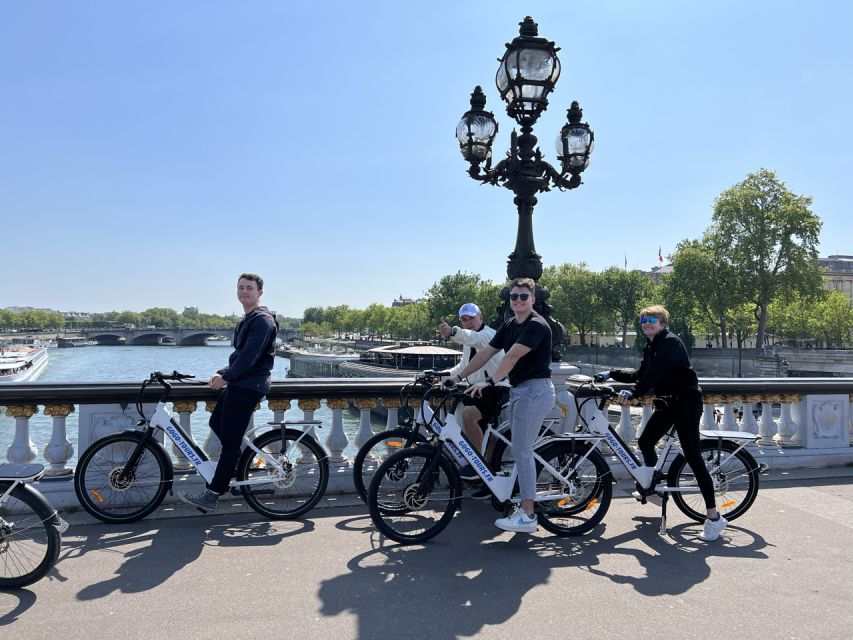
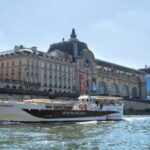
You’ll pass by the Louvre Museum and then reach Musée d’Orsay.
These stops are short passes, but that’s not a dealbreaker. The real point here is orientation. You’ll get a clear sense of where the museums sit in relation to the river and major boulevards, so later, if you decide to return for a full visit, you already know the geography.
Musée d’Orsay is especially useful because it’s a classic Paris landmark in how it frames the Seine. Even from a bike route, it gives you that “oh right, this is Paris” visual impact.
What I like about covering museum zones by bike:
- You see the context of the buildings in the city.
- You reduce time lost to transit decisions.
- You can choose later whether you want a full museum experience or just the architecture moment.
And because this is an afternoon tour, you’re often better positioned for the light than a morning run. That helps for both photos and the overall feel of the Seine side.
The Flame of Liberty and the Revolution-Era Thread Through the City
A distinct point on the route is the Flame of Liberty stop (listed as a pass by).
This is the kind of stop that can make a bike tour feel different from a pure landmark checklist. Paris loves layering: political events, design choices, and cultural memory sit right alongside each other. With a guide providing context, you understand why the city looks the way it does.
You’ll also pass places associated with public executions during the Revolution, which your guide ties into the broader story of how Paris evolved. It’s not just trivia. It’s a reminder that monuments aren’t placed randomly. They reflect what a city chooses to remember—or warn.
If you tend to enjoy history explanations, this is where the tour tends to feel most rewarding. If you just want pretty views, you can still enjoy the visuals and let the history be a helpful bonus.
Arc de Triomphe and Champs de Mars: The Wraparound Grand Finale
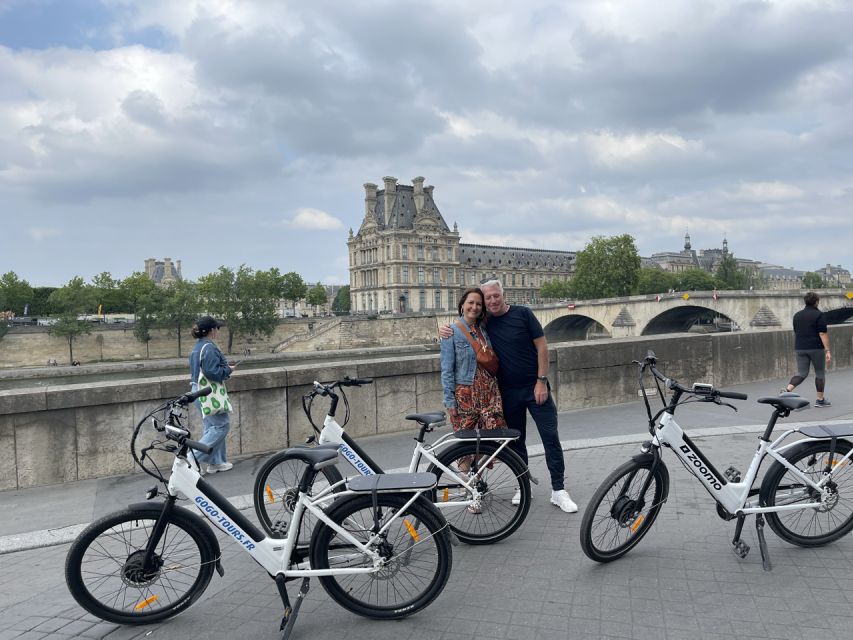
Then you head toward Arc de Triomphe and Parc du Champs de Mars, with the ride culminating at the Eiffel Tower area again.
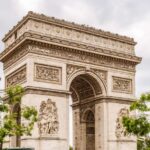
Arc de Triomphe is one of those monuments you can’t really understand until you’ve seen the surrounding traffic flow and the scale of the approaches. From a bike route, you get a quick “feel” for how the city is organized around it.
Next is Parc du Champs de Mars, a classic space between the grandeur of monuments. It works as a decompression zone after earlier city intensity. You’re still in big-view Paris, but it’s easier to breathe and take photos.
Finally, the tour ends back at the starting point near the Eiffel Tower. Ending where you started is practical. You’re not stranded in the far side of town, and you can pivot right into your evening plans.
Many riders use tours like this as a first afternoon in Paris, then spend the night returning to whatever struck them most. If you’ve never been to Paris before, this approach saves time and reduces the guesswork.
Guides Make the Difference: Tailoring, Photos, and City Tips
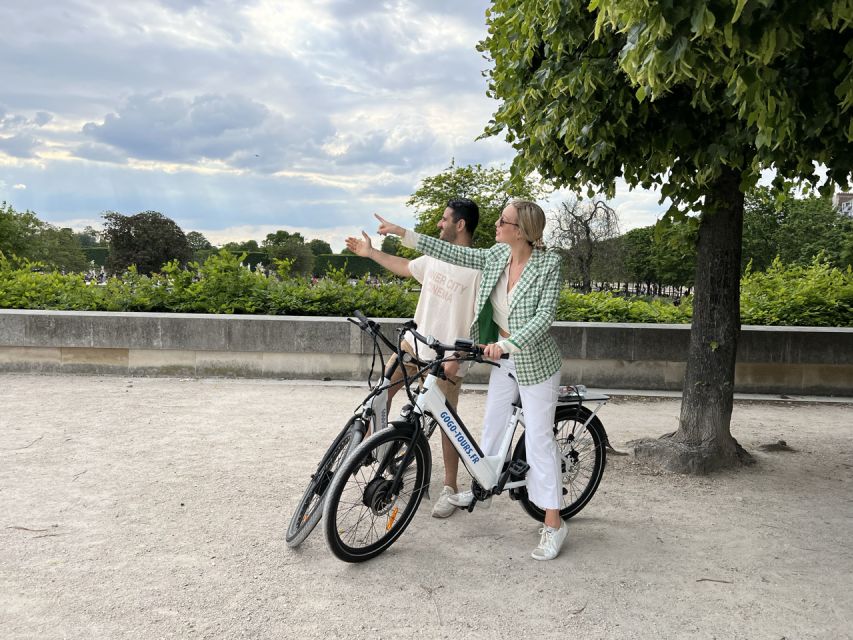
A recurring theme from rider experiences is that the guide is the secret sauce. In different tours, names have included Jack, Kenzo, Kenza, George, Boris, Emma, Ellie, Hugo, Arthur, Sebastian, Fadou, Pablo, and Ziggy.
What matters is what they’re doing with that role:
- Taking questions seriously and adding context at each stop
- Setting a pace that lets you take photos without feeling rushed
- Adjusting the tour to what the group wants to emphasize
One standout detail: on a freezing afternoon, a guide made time for hot chocolate. Another mentioned the guide taking them for or pointing out the best macaroons. That’s not the same thing as food being included, but it shows how guides sometimes build comfort into the ride.
Also, a few riders mentioned that guides are excellent at photography and will help capture good shots, which is a real service if you don’t want to keep handing your phone to strangers.
E-Bike Comfort and Safety on Paris Streets (What You Should Know)
This tour is listed as not suitable for children under 12 and not for people over 95. That tells you the ride has a real physical and riding component, even with electric assist.
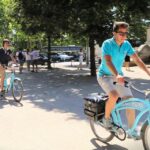
Even so, riders consistently describe the bikes as easy to ride. The e-bike feature makes a huge difference in Paris, where the distances can be deceptive. You might see the same boulevard but feel less effort because you’re not working through every stop-and-go moment.
Still, plan for street reality:
- You’ll hit busy intersections and need to keep your focus.
- You may have moments where audio is harder to hear while moving, so stop when the guide stops and listen at the breaks.
- The tour runs rain or shine, so you should dress for wet weather and bring something you can ride in comfortably.
If you’re prone to getting cold, pack layers. Riders have described wintry conditions and taking breaks for something warm.
Price and Value: Why $63 Can Make Sense for 2.5 Hours
At $63 per person for about 150 minutes, this isn’t a cheap splurge, but it can be good value because it buys you three things at once:
- A local guide who explains what you’re seeing
- A fast, efficient way to cover major sights without exhausting your legs
- A small-group experience that feels more personal than big-bus sightseeing
You’re also not paying for food or tickets here, so you’re essentially paying for transportation + human guidance. That keeps the cost focused on the ride itself.
Compared with buying separate transport for each landmark, the big advantage is time. A couple hours can turn a scattered itinerary into a coherent loop. And for first-time visitors, that “getting your bearings fast” feeling is worth a lot.
If you already know Paris well and you’re only interested in one neighborhood, then a guided bike tour might feel like too much coverage. But if you want a confident first pass at the city, it’s a strong deal.
Who This Tour Fits Best (And Who Might Want a Different Plan)
This tour fits best if:
- You’re in Paris for a short time and want major landmarks in one afternoon
- You prefer active sightseeing to sitting in traffic or walking long distances
- You like history and design context, not just sightseeing photos
It may be less ideal if:
- You want to spend long, quiet time inside major museums (this is built around passes)
- You’re extremely sensitive to weather because the tour runs rain or shine
- You fall outside the age suitability rules (under 12 or over 95)
If you’re traveling as a couple or solo and you value small-group handling, it’s also a practical choice. Riders noted small groups and sometimes even being just two people on a ride, which can make the experience feel much more personal.
Should You Book This Paris E-Bike Tour?
Yes, I’d book it if you want a smart first afternoon in Paris. The route hits the big names—Eiffel Tower, Louvre, Arc de Triomphe, and the Seine-area sights—and the live English guide helps you understand what you’re looking at while you move efficiently.
I’d hesitate if you’re unhappy riding in wet weather or if you need long museum time, because this is about coverage and context, not extended indoor visits. Also, check your riding comfort honestly. Even with e-bikes doing the work, you still need to feel confident on city streets.
If you want to get your bearings fast and still feel like you’re seeing the real Paris (not just racing between tickets), this one is a solid pick.
FAQ
What is the duration of the tour?
The tour lasts 150 minutes (about 2.5 hours).
Where does the tour start and end?
It starts and ends at 101 Av. de la Bourdonnais in Paris.
Is the tour guided, and what language is offered?
Yes. A live guide leads the tour, and the tour is in English.
Does the tour run in bad weather?
Yes. The tour runs rain or shine.
Are helmets provided?
Helmets are provided, listed as optional.
Is food included in the price?
No. Food and drinks are not included.
What sights are included on the route?
You’ll pass by major landmarks including Les Invalides, Pont Alexandre III, Petit Palais, Grand Palais, Champs-Élysées, Place de la Concorde, Louvre Museum, Musée d’Orsay, Flame of Liberty, Arc de Triomphe, and end near the Eiffel Tower.
Can I book for a private or small group?
Yes. Private or small groups are available.
What are the age limits?
The tour is not suitable for children under 12, and it is not suitable for people over 95.
Is cancellation refundable?
Yes. You can cancel up to 24 hours in advance for a full refund.