REVIEW · PARIS
Paris Louvre Exclusive Semi Private Guided Tour Max 6 People
Book on GetYourGuide →Operated by LivTours - We craft tours, you live them · Bookable on GetYourGuide
Mona Lisa feels closer in a tiny group. This semi-private Louvre experience is designed for an intimate pace, with a knowledgeable local guide and a maximum of 6 people, so you actually get time to look instead of just shuffle. I like that the tour is structured to hit the museum’s biggest draws without trying to do everything at once.
What I really like is the focus on more than the headline names. You’ll get stories and context around works like Venus de Milo and also less-expected highlights such as The Great Sphinx of Tanis. One more thing: the guide approach matters here, and the reviews consistently point to guides like Nazli, Sara, and Zach shaping the route in a way that makes the museum feel understandable.
A possible drawback: this is still the Louvre. Even with a small group, you’re walking through a high-traffic museum, and on one occasion the tour reportedly ended early due to a guide getting frustrated with another group member. In other words, the tour can be excellent, but group dynamics and timing still matter.
In This Review
- Key highlights at a glance
- Max 6 People and 150 Minutes: How the Tour Actually Feels
- Meeting at the Louis XIV Statue: Getting Started Without Stress
- Louvre Pyramid Pass-By: A Quick Orientation Moment
- The Guided Highlights: Mona Lisa, Venus de Milo, and the Louvre’s Big Stories
- Standing in front of Leonardo’s Mona Lisa
- Venus de Milo and the “why it mattered” angle
- Beyond the usual: The Great Sphinx of Tanis
- Painting stops with drama, not just names
- How the route feels with a small group
- Itinerary stops, explained in plain terms
- Your ticket lasts: Why staying after is the best part
- Price and value: Is $199 per person worth it?
- Who this tour is best for (and who should skip it)
- Practical tips to make your 150 minutes count
- Cancellation, timing, and languages (quick facts)
- Should you book the Paris Louvre Exclusive Semi Private Guided Tour (max 6)?
- FAQ
- How long is the Louvre exclusive semi-private guided tour?
- How many people are in the group?
- Where do we meet for the tour?
- What’s included in the price?
- Can I keep visiting the Louvre after the guided portion?
- What languages are offered?
- What should I bring on the day of the tour?
- Is wheelchair access mentioned?
- What’s the cancellation policy?
Key highlights at a glance
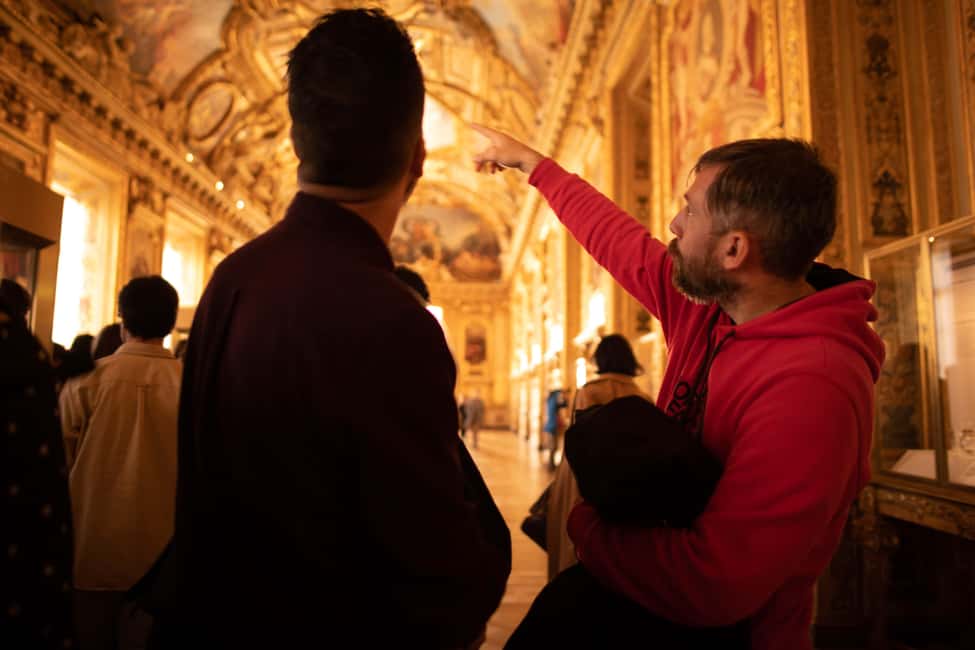
- Max 6 people keeps the experience intimate and makes it easier to ask questions
- Mona Lisa in a focused moment rather than a crowded photo stop
- Big-name works plus standout stories like Venus de Milo and The Great Sphinx of Tanis
- A structured route for 150 minutes that covers dozens of major works
- Your ticket stays valid so you can keep exploring after the guided portion
- Multiple languages including English, French, Portuguese, Spanish, Russian, and Swedish
Max 6 People and 150 Minutes: How the Tour Actually Feels
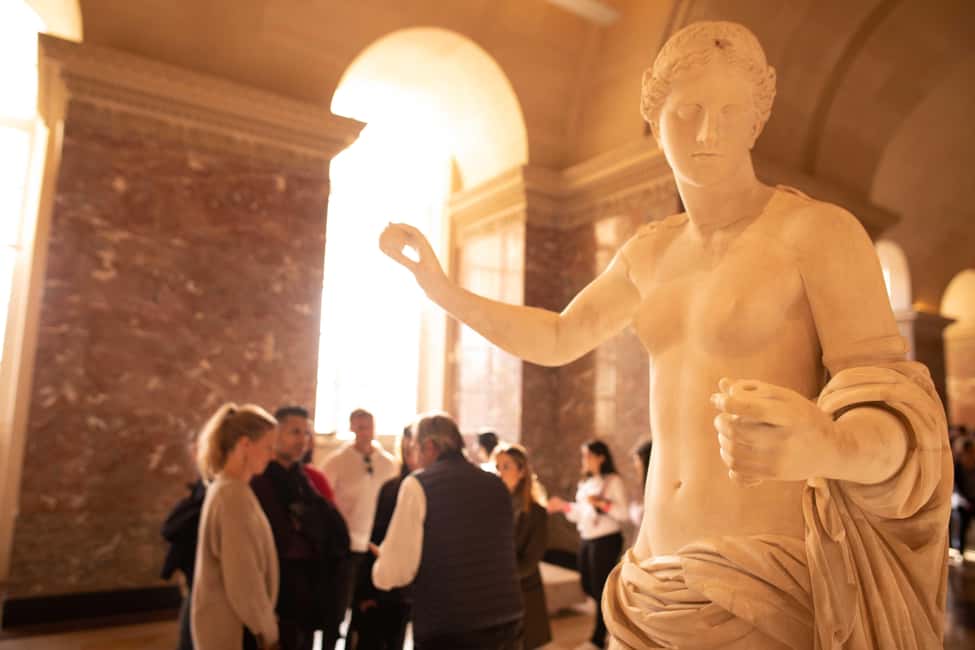
This is not a rushed, “see everything” plan. It’s a 2-hour to 150-minute format that concentrates on the Louvre’s strongest hits: famous paintings, classic sculpture, and the kind of background that turns art into a story you can follow. With a group capped at six, you’re less likely to get lost in the crowd shuffle, and you’re more likely to notice details you’d normally skip.
Also, the length is realistic. The Louvre is enormous, and trying to “finish” it in one day usually turns into stress. Here, you’re choosing depth over coverage. You’ll still move around a lot, but the guide keeps you pointed at the right masterpieces in the right order.
One more practical advantage: with fewer people, the guide can better steer around bottlenecks, and you spend less time waiting for the group to catch up. Several reviews praised exactly this kind of navigation on busy days.
You can also read our reviews of more guided tours in Paris


Meeting at the Louis XIV Statue: Getting Started Without Stress
Your meeting point is under the Louis XIV statue with a horse in front of the glass pyramid area, and your guide will be holding a LivTours sign. It’s a clear landmark, but the Louvre is also huge. I’d treat meeting time like boarding time: you want to be early enough to find the group before you’re scanning faces.
Arrive 10–15 minutes early. That buffer helps you handle two common problems: lines/security, and the simple fact that the pyramid area can look confusing at first glance. One review noted the guide’s arrival was later than expected, so being early gives you breathing room.
Bring an ID or passport. The tour includes entry tickets, but you’ll still want your documents ready for security checks.
Louvre Pyramid Pass-By: A Quick Orientation Moment
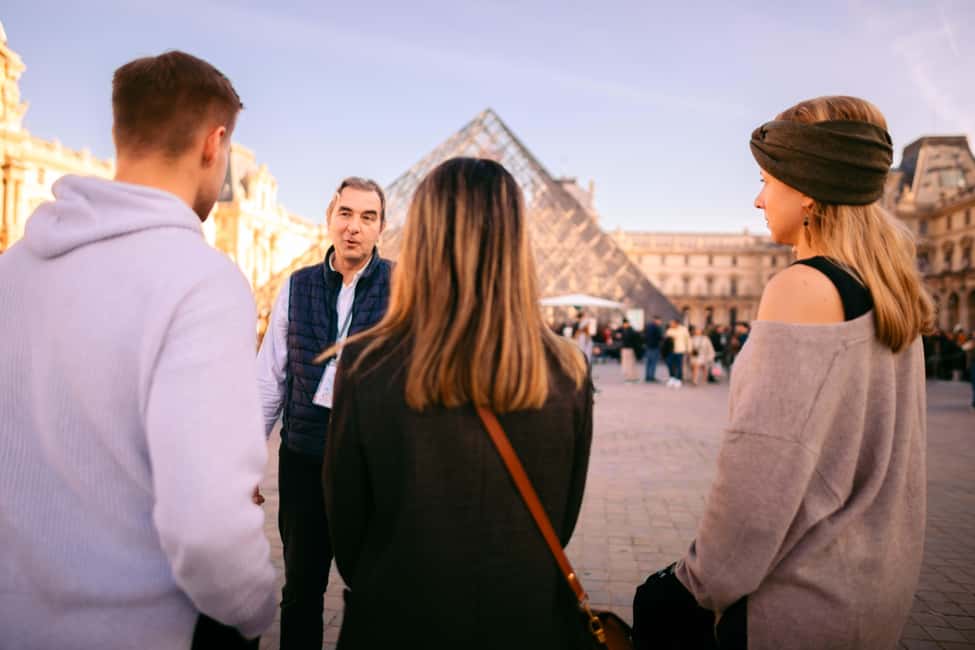
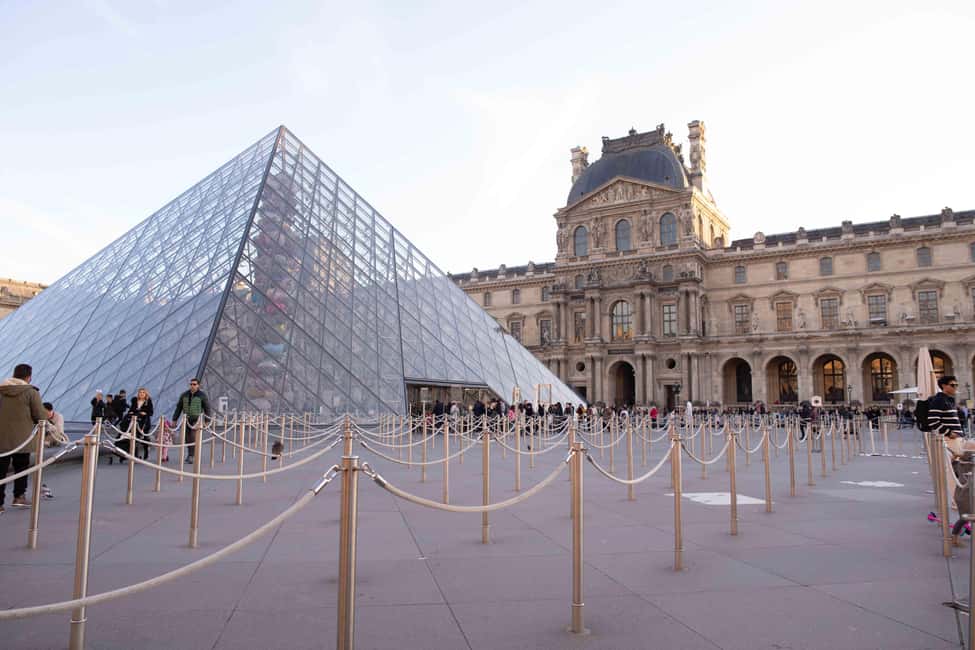
You’ll pass by the Louvre Pyramid early in the experience. This matters because it helps you get your bearings fast. Even if you don’t do a long stop here, seeing the main landmark right away gives you a mental map for where you are and where you’re heading next.
Think of it like the calm before the art marathon: you orient, you gather, and then you move into the museum with momentum. If you’ve visited only larger open-air sights before, this kind of “start anchor” can be more helpful than it sounds.
The Guided Highlights: Mona Lisa, Venus de Milo, and the Louvre’s Big Stories
This is the heart of the tour, and it’s where the semi-private format pays off. Instead of sprinting between random rooms, your guide keeps you focused on the most inspiring masterpieces and connects them to what’s happening historically and artistically.
Standing in front of Leonardo’s Mona Lisa
Yes, you’re going to see the Mona Lisa. But what you’re really buying is the chance to experience the painting as a moment, not as a cue for a thousand other people.
In practical terms, it’s often hard to look closely at the Mona Lisa on your own because you’re constantly negotiating with crowds, elbows, and time limits. A good guide helps you reach the painting, pause strategically, and know what to look for while you’re there. The highlights list makes this the top feature, and the reviews backing it up point to guides who are good at managing flow in a busy museum.
You can also read our reviews of more private tours in Paris






Venus de Milo and the “why it mattered” angle
Venus de Milo represents classic Greek sculpture at its most famous. It’s a work you recognize even if you don’t know art history terms. The guide adds context—what the sculpture represents and why it became so influential—so you’re not just staring at a famous statue. You’re understanding what people were trying to capture when they made it.
This kind of storytelling is where a guide earns the ticket price. When you hear how works were admired, collected, and interpreted over time, the museum stops being a storage building for masterpieces and starts feeling like a timeline of taste and power.
Beyond the usual: The Great Sphinx of Tanis
The tour also includes The Great Sphinx of Tanis. That’s a great sign for anyone who worries a “highlights tour” will feel too paint-by-numbers. It suggests you’ll get at least a few moments outside the strict loop of the most obvious posters and postcards.
Even if you’re not a dedicated museum person, you can appreciate this: the Louvre isn’t only European painting and “pretty statues.” It’s also a place where objects travel across civilizations, and the guide’s job is to make that movement meaningful.
Painting stops with drama, not just names
The highlights mention major painting experiences, including dramatic Delacroix works. In a short tour, you’ll usually see a mix: some art you already know, and some art you don’t. The guide’s job is to help you connect the dots—who painted what, why certain styles were exciting, and how those works fit into the museum’s story.
You’ll also admire artists named like Da Vinci, Canova, and Delacroix. That list matters because it covers different kinds of genius—technique, sculpture, and emotional painting—so the tour doesn’t become one long mood.
How the route feels with a small group
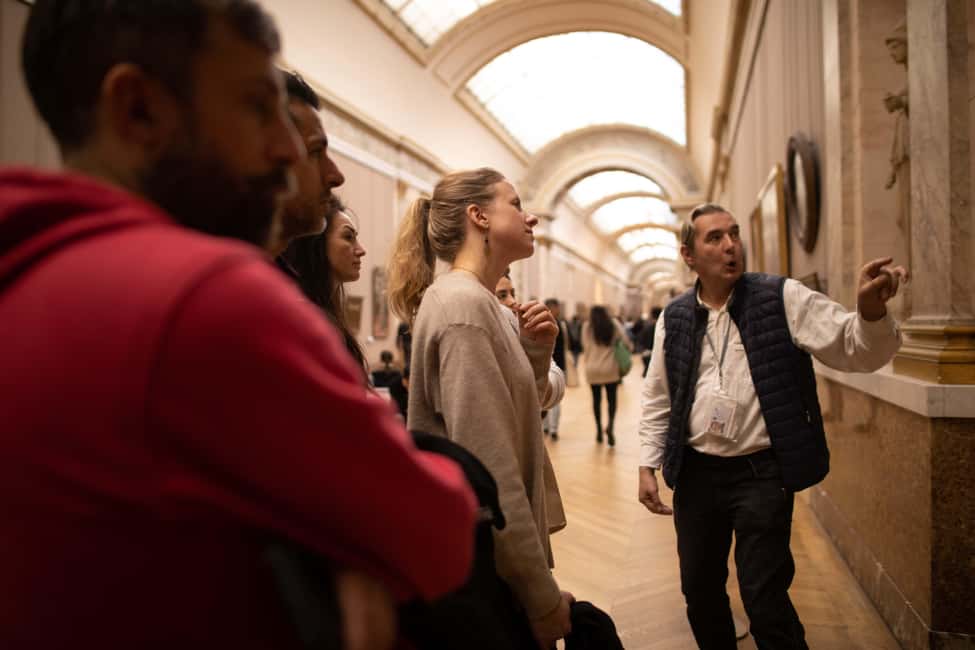
The Louvre is a maze. What you want is not only a correct itinerary, but also a smart sequence. A few reviews specifically credit guides for navigating effectively on busy days, including Sara and Zach.
Here’s what that means for you: you spend more time at the art and less time stuck in bottlenecks. You also get more chances to react. In small groups, you can ask a question, and the guide can adjust without turning it into a whole detour.
Itinerary stops, explained in plain terms
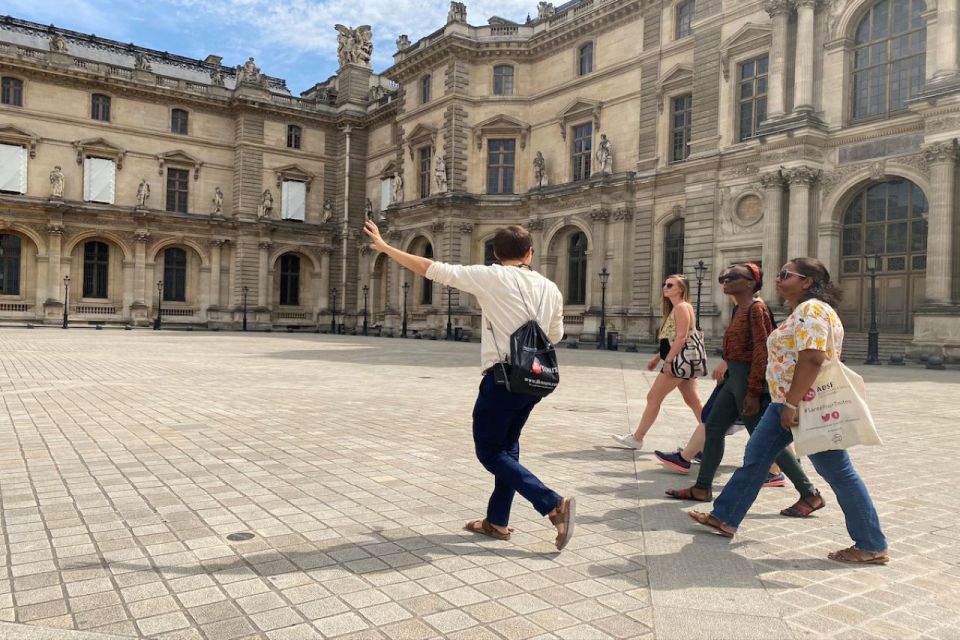
You’ll start at Louis XIV sous les traits de Marcus Curtius (copie). This is not a random artwork stop. It’s a way to anchor you at the start of the visit in the palace-museum atmosphere—part sculpture, part history setting the tone.
From there, you pass by the Louvre Pyramid, which gives you a central landmark orientation. Then the main time goes into the guided visit through the museum itself. Expect multiple stops—enough to see dozens of top works—so the tour gives you a real selection instead of a handful of quick hits.
A key benefit is that the tour stays focused on masterpieces and the kinds of background that make them click. The tour also highlights the museum’s long history as a fortress and a royal palace, which is helpful because the Louvre building itself is part of what you’re experiencing.
Your ticket lasts: Why staying after is the best part
One of the smartest perks here is that you can keep visiting after the guided tour with your ticket. That changes the value equation.
A highlights tour can be entertaining, but it’s also easy to forget everything you saw once you leave. Staying longer lets you do two things:
- Return to one or two works that really caught your eye
- Wander at your own speed and see how the collections connect
If you’re the type who likes to look twice—once with context, once on your own—this is ideal. Even 45 minutes to an hour of unscheduled time can make the tour feel like a foundation instead of a one-time snapshot.
Price and value: Is $199 per person worth it?
At $199 per person for about 150 minutes, this is not a budget tour. The honest way to judge value is to count what you’re getting:
- A guide and entry tickets are included
- The group is limited to max 6, which reduces the “herding” feeling
- You’ll see dozens of the Louvre’s greatest masterpieces, not just a couple icons
- You keep your ticket to explore afterward
So yes, it’s pricey. But it can be worth it if your priority is effective time use. If you only have a short window in Paris, or if you want the Mona Lisa plus major sculpture and painting without spending hours figuring out where to go, this format is a good fit.
If you have plenty of time and you enjoy building your own route, you might choose to go independently. But if you want the museum to make sense quickly, paying for the guidance can feel like buying clarity.
Who this tour is best for (and who should skip it)
This tour fits best if you:
- Want a small-group experience in a museum that can swallow big groups
- Plan to see major works like Mona Lisa and Venus de Milo
- Prefer guided context over wandering with a map and guesses
- Appreciate when a guide takes interests into account (reviews highlighted that flexibility on the route)
It may not be ideal if:
- You’re easily irritated by crowds and delays, because the Louvre is busy no matter what
- You expect a totally frictionless group experience every time. One negative review described a guide becoming frustrated with another group member and ending the tour early.
That last point isn’t a reason to avoid the tour. It’s just a reminder: you’re sharing an experience with strangers, and group peace matters.
Practical tips to make your 150 minutes count
Based on how guides are described in reviews, your biggest advantage is arriving ready and being open to a guided flow.
- Be on time at the meeting point under the Louis XIV statue area with the horse near the glass pyramid, LivTours sign in hand
- Dress for movement. This is a tour where you walk and pause often
- If there’s a specific focus—Italian Renaissance, Greek sculpture, or dramatic French painting—tell the guide early. Reviews praised guides who adjusted based on interests
- If you can, plan to continue exploring after the tour. That’s where your learning sticks
Cancellation, timing, and languages (quick facts)
This tour offers free cancellation up to 24 hours in advance and uses live guides. English is available, along with French, Portuguese, Spanish, Russian, and Swedish. The duration is listed as 2 hours to 150 minutes, and you’ll want to check available starting times.
Should you book the Paris Louvre Exclusive Semi Private Guided Tour (max 6)?
If you want the Louvre’s biggest masterpieces with less stress, this is a strong choice. The small group size is the main reason to book: it helps you see more art you actually notice, and it makes the Mona Lisa stop feel like part of a real route instead of a chaotic photo line.
I’d book it if you’re short on time, curious about both famous and slightly surprising works, and you like the idea of getting context first and then wandering afterward with your own pace.
Skip or reconsider if you’re trying to travel on a tight budget, or if you know you’ll feel tense in crowds. For those situations, an independent plan (with fewer timed expectations) might feel better.
Bottom line: for most visitors, paying for this focused, max-6 guided experience is a practical way to make the Louvre feel human instead of overwhelming.
FAQ
How long is the Louvre exclusive semi-private guided tour?
It runs about 2 hours to 150 minutes.
How many people are in the group?
The group is limited to a maximum of 6 people.
Where do we meet for the tour?
Meet under the Louis XIV statue with a horse in front of the glass pyramid, with the guide holding a LivTours sign.
What’s included in the price?
The tour includes a professional local guide, entry tickets, and access to see dozens of the Louvre’s greatest masterpieces, including the Mona Lisa.
Can I keep visiting the Louvre after the guided portion?
Yes. Your ticket lets you stay in the museum and continue visiting after the tour.
What languages are offered?
The live guide is available in English, French, Portuguese, Spanish, Russian, and Swedish.
What should I bring on the day of the tour?
Bring a passport or an ID card.
Is wheelchair access mentioned?
Non-folding wheelchairs and electric wheelchairs are not allowed, based on the activity information provided.
What’s the cancellation policy?
Free cancellation is available up to 24 hours in advance for a full refund.