REVIEW · PARIS
Musée Rodin and Musée d’Orsay with Private Guide and Tickets
Book on GetYourGuide →Operated by Rosotravel · Bookable on GetYourGuide
Rodin hits harder when someone explains the choices behind the stone. This private tour pairs a live expert guide with pre-booked Musée Rodin tickets, so you spend more time looking and less time sorting out logistics. You also get the option to add Musée d’Orsay, where Rodin’s influence shows up alongside major Impressionist highlights.
What I like most is the pace and clarity: you explore the Musée Rodin collection at your own speed, with art history commentary in your chosen language. I also love the setting of Hôtel Biron, the mansion where Rodin kept his sculptures, drawings, and objets d’art—once you see the building, the art makes more sense.
One caution: at least one past booking had a start problem. The guide showed up about 30 minutes late at the meeting point, and the schedule had to be adjusted by phone. It’s not a deal-breaker, but it’s smart to plan for a bit of slack at the start.
In This Review
- Key things to know
- Private art time in Paris: why this format works
- Musée Rodin and Hôtel Biron: the walk that sets the tone
- The garden + Thinker viewpoint: how you use time inside
- Inside Hôtel Biron: Gates of Hell, The Kiss, and the big emotional hits
- Choosing your time slot for Musée Rodin-only options
- Adding Musée d’Orsay: when you want the full Paris art arc
- “Skip the line” reality check: what you really save
- Private car transfers and the meeting point: avoid the day’s first headache
- The guide experience: language, storytelling, and how to get better results
- Price and value: is $258 per person worth it?
- Who should book this Rodin + Orsay private tour
- Quick booking decision: should you book?
- FAQ
- What museums are included?
- Does the tour include tickets for Musée Rodin?
- Do I get Musée d’Orsay tickets too?
- Can I skip the line at Musée Rodin?
- Where do I meet the guide?
- Is pickup from my accommodation included?
- What languages do the guides speak?
- How big can the group be inside the museums?
Key things to know
- Hôtel Biron is part of the story: Rodin rented rooms there to store and work on sculptures, and that lived-in context changes how you see the collection.
- Rodin entry is pre-booked, not fully skip-every-line: you avoid the ticket office line, but you still deal with security and validation checks.
- Option-dependent inclusion: Musée d’Orsay tickets and private transfers come only with the longer time slots.
- You choose your language: the guide can work in English, French, German, Italian, Polish, Russian, Spanish, Chinese, Japanese, Portuguese, Arabic.
- Small guide/group rules in the museums: Rodin supports a guide leading groups up to 25; Orsay is limited to up to 6 people with one licensed guide.
- Timing can matter: one reported issue was a late arrival and a meeting-point mix-up at the start.
Private art time in Paris: why this format works

Paris has a lot of great museums, but the big ones can also feel like a sprint. This experience is built for the opposite: one expert guide, your language, and a set route that still leaves you room to slow down. With Musée Rodin especially, you’ll get more out of the visit when someone connects what you’re seeing to the sculptor’s life and working habits.
The other smart piece is the ticket strategy. Pre-booked entrance to Musée Rodin means you avoid the ticket office line. You still go through security and validation, but that difference is real when you’re on a tight Paris schedule.
If you’re debating between this and a generic museum pass, think about what you want most: paintings and sculpture are easiest to enjoy when you understand what the artist was trying to do. This tour is designed for that kind of attention.
You can also read our reviews of more tours and experiences in Paris



Musée Rodin and Hôtel Biron: the walk that sets the tone
Your guide meets you at the Statue de Thomas Jefferson, Rue de Solferino, 75007 Paris. From there, the experience starts with context—your guide talks about Rodin’s path to mastering sculpture and shares the human side of his career, including his personal life and relationships.
Then you take a short walk through central Paris streets to Hôtel Biron, the urban mansion that now houses the museum. This is one of those details that sounds small until you’re there. Hôtel Biron isn’t just a container for art; it was part of Rodin’s working world. When you understand that, the sculptures stop feeling like isolated masterpieces and start feeling like evidence of a long, ongoing practice.
At Hôtel Biron, the museum collection is enormous: around 6,600 sculptures, 8,000 drawings, 8,000 old photographs, and 7,000 objets d’art linked to Rodin and also to his lovers, friends, and students. Even if you don’t see everything in one visit, the sheer scale tells you this is not a quick stop. It’s a deep workshop translated into a public museum.
The garden + Thinker viewpoint: how you use time inside
After your introduction, you spend time exploring the Musée Rodin grounds and mansion spaces. One highlight is the museum garden, where you’ll encounter major works in an outdoor setting that changes the mood. The guide helps you make sense of what you’re looking at so you’re not stuck staring at labels.
A key moment is seeing the famous The Thinker. It’s often used as a symbol of philosophy, but on-site you get the sense of why it became that symbol: the pose, the weight of the figure, and the way Rodin makes the surface feel alive. When your guide gives the context, you’re not just admiring the form—you’re learning what Rodin was expressing with it.
This is also where the private format shines. You’re not trying to keep up with a herd. Instead, you can spend extra time on a few works that click, then move on when you feel ready.
Inside Hôtel Biron: Gates of Hell, The Kiss, and the big emotional hits
Rodin’s most famous pieces are exactly the ones you should expect here. Inside the mansion, you’ll admire monumental works including The Gates of Hell and The Kiss, plus other major sculpture groups.
These pieces can be overwhelming if you don’t know what to notice. With a guide, you’re more likely to pick up on patterns: how Rodin uses motion, how he treats texture, and how his compositions communicate intense emotion without needing a long storybook explanation. It’s sculpture that feels physical, and Rodin’s style often pushes you to look at the same figure from different angles.
You also get a meaningful addition that’s often missed when people just rush through the “headline” sculptures. The museum includes works associated with Rodin’s former lover, Camille Claudel. Seeing that connection in the same space as Rodin’s world adds an extra layer. It turns the visit into more than appreciation; it becomes an encounter with relationships and creative legacy.
And yes, there are paintings in the mix too, including works by van Gogh, Monet, and Renoir. Rodin is the center of gravity, but this cross-art environment helps explain why Musée Rodin doesn’t feel like a one-note museum.
Choosing your time slot for Musée Rodin-only options
The tour runs in multiple durations, and which option you pick changes what you’ll gain.
A 2-hour option is designed for a focused Musée Rodin visit with pre-booked entrance tickets. What’s included here is guided time plus the Rodin tickets, but private transfers and Musée d’Orsay tickets are not included in this shorter slot. This is a good choice if you’re already staying nearby or you don’t want to deal with a driver.
A 3.5-hour option keeps the main focus on Musée Rodin, but it adds estimated round-trip private car transfers from your accommodation (about 1.5 hours total transfer time). If your hotel is farther from the 7th arrondissement, this option can save a lot of stress.
My practical advice: if Rodin is your top priority and you dislike rushing, go longer. The museum is spread across garden and mansion spaces, and the guide’s storytelling lands best when you have time to sit with the art.
You can also read our reviews of more guided tours in Paris


Adding Musée d’Orsay: when you want the full Paris art arc
If you want more than Rodin, the 4-hour and 5.5-hour options add Musée d’Orsay.
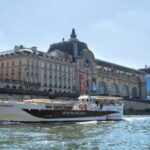
Musée d’Orsay focuses mostly on the 19th-20th century French scene, with strong Impressionist and post-Impressionist representation. You’ll get major highlights such as Starry Night by Vincent van Gogh, The Birth of Venus by William-Adolphe Bouguereau, and Olympia by Édouard Manet.
Why this pairing makes sense: Rodin sits right at the boundary of older traditions and modern sculpture language. Orsay helps you see the artistic atmosphere of the time—painting styles, themes, and breakthroughs happening around the same broader era. Even if you’re not an expert, the guide can connect the dots in a way that makes each stop feel less like a random collection of masterpieces.
One more useful detail: the Orsay option includes some of Rodin’s sculpture, so it isn’t just “extra museum time.” It supports the theme that Rodin’s impact reached beyond his own museum.
Also note the group size limit for Orsay: 1 licensed guide can lead groups up to 6 people. That’s excellent for attention, but it also hints that these slots may feel more intimate if the group stays small.
“Skip the line” reality check: what you really save
Pre-booked tickets to Musée Rodin help with one specific bottleneck: you avoid waiting at the ticket office line. But it doesn’t erase the entire arrival process.
You should still expect to stand through ticket validation and security checks. In plain terms: this option saves time, but it doesn’t turn the museum into a free-for-all. If you’re the type who needs a perfect, predictable arrival schedule, arrive early enough to handle checks without stress.
For Orsay, the short versions matter. Regular Orsay tickets are included only in the 4-hour and 5.5-hour options, so if you choose the 2-hour Rodin-only experience, you’re not set up for Orsay entry.
Private car transfers and the meeting point: avoid the day’s first headache
Meeting point matters in this setup. You start at the Statue de Thomas Jefferson on Rue de Solferino in the 7th. That’s a busy area, and the route from there to Hôtel Biron is walkable, but it can feel chaotic if you show up right at the start without a buffer.
Here’s the practical consideration: one reported issue involved a guide not arriving until about 30 minutes after the planned start time, and the traveler had to call to rearrange the start. You can’t control that kind of hiccup, but you can reduce how much it affects your day by giving yourself slack at the beginning.
For those who choose the options with transfers, pickup and drop-off are included only for the 3.5-hour and 5.5-hour durations. Transfer time is estimated at about 1.5 hours round-trip. Real traffic and your exact location can change that, so I recommend you treat the estimate as a planning tool, not a promise.
If you hate the idea of arriving late and trying to catch up, the longer option with private transport can be less stressful, even when it costs more.
The guide experience: language, storytelling, and how to get better results
This is an expert-led tour with a guide fluent in your chosen language. Languages offered include English, French, German, Italian, Polish, Russian, Spanish, Chinese, Japanese, Portuguese, Arabic.
That’s not just a comfort feature. It changes how much you’ll understand. Sculpture can be hard to interpret quickly, and Rodin’s story includes emotional and personal elements that make sense when explained well. When you can follow the guide without mental translation, you’ll spend more time comparing details—surface texture, composition angles, and the way different works relate.
The tour also gives you freedom to move at your own pace, not a forced ticking-clock route. That matters in museums like this, where one or two sculptures can be worth lingering near.
Price and value: is $258 per person worth it?
At $258 per person, this is not a budget “see it fast” museum pass. You’re paying for three main things:
- A private, language-specific expert guide for Musée Rodin (and sometimes Musée d’Orsay).
- Pre-booked Musée Rodin entry, which reduces friction on the day.
- In longer options, private transfers that can be a big deal if you’re not staying nearby.
If Musée Rodin is a top priority and you want the context behind the famous works—especially The Gates of Hell and The Kiss—the guide value is real. Sculpture is often described well in writing, but it’s harder to “get” on the fly without someone pointing out what to look for.
If you’re mainly interested in a quick hit of iconic photos, a self-guided approach might be cheaper. But if you want the art to make sense—and you want to spend more time looking than figuring—this kind of guided, ticket-supported format usually feels like better use of your limited Paris hours.
Who should book this Rodin + Orsay private tour
This fits best if you:
- Care about understanding art, not just collecting pictures
- Prefer private guidance in your language
- Want to pair Rodin’s world with Orsay’s Impressionist and post-Impressionist highlights
- Are planning your day carefully and want pre-booking to reduce friction
It may be less ideal if you:
- Are truly only interested in a short photo stop
- Enjoy getting lost on your own with minimal structure
- Expect the day to run perfectly on time no matter what (because the only real downside reported here involved a late guide arrival at the start)
Quick booking decision: should you book?
I’d book this if Musée Rodin is the anchor of your Paris art plan and you want it explained in your own language. The Hôtel Biron setting, the chance to see The Thinker and the big interior works, and the inclusion of Camille Claudel connections make it feel like more than a standard checklist.
If you have time and energy, the Orsay add-on is the natural upgrade. Orsay gives you major paintings like Starry Night and Olympia, plus a Rodin link, so the day feels connected instead of random.
If you’re choosing between options, here’s the simplest rule: go shorter only if you’re already close and you’re comfortable handling arrival and timing on your own. For most people, the longer slots bring the calmest experience because they include transfers and (for the 4-hour and 5.5-hour versions) Orsay tickets.
FAQ
What museums are included?
Musée Rodin is included in all options. Musée d’Orsay is included only in the 4-hour and 5.5-hour options.
Does the tour include tickets for Musée Rodin?
Yes. All options include pre-booked entrance tickets to Musée Rodin.
Do I get Musée d’Orsay tickets too?
Only for the 4-hour and 5.5-hour options. The 2-hour and 3.5-hour options do not include regular tickets for Musée d’Orsay.
Can I skip the line at Musée Rodin?
Pre-booked tickets help you skip the line to the ticket office. You may still need to go through ticket validation and security checks.
Where do I meet the guide?
Meet at the Statue de Thomas Jefferson, Rue de Solferino, 75007 Paris, France.
Is pickup from my accommodation included?
Pickup and drop-off via private car transfers are included only in the 3.5-hour and 5.5-hour options. Pickup is not included in the 2-hour and 4-hour options.
What languages do the guides speak?
The guide is available in English, French, German, Italian, Polish, Russian, Spanish, Chinese, Japanese, Portuguese, Arabic.
How big can the group be inside the museums?
Musée Rodin allows 1 licensed guide to lead groups of 1 to 25 people. Musée d’Orsay allows 1 licensed guide to lead groups of 1 to 6 people.