REVIEW · PARIS
Paris Marais Quarter 2-Hour Private Walking Tour
Book on GetYourGuide →Operated by Paris in person private tours · Bookable on GetYourGuide
Marais streets tell stories in layers. This private 2-hour walk puts the Marais’s big turning points on your feet, from Les Halles and the Hôtel de Ville to the Pletzl and Place des Vosges, with a guided link between medieval Paris and the modern Pompidou Centre.
I love the way the tour uses market life at Les Halles as a starting point for how public Paris worked, then sharpens the focus with the Pletzl—the historic center of the Jewish community—plus stops connected to that story, including the synagogue at Rue Pavée and surrounding lanes.
One thing to plan for: the tour does not include food, snacks, or beverages, and it runs rain or shine, so you’ll want a snack plan before or after if you’re the kind of person who gets hangry before dessert.
In This Review
- Key highlights in plain terms
- Marais in two hours: where the swamp became a city center
- Meeting at Metro Étienne Marcel and how the walk is paced
- Les Halles to Fontaine des Innocents: reading Paris through public space
- Hôtel de Ville: opulence and power right in the middle of it
- From the Middle Ages to Pompidou Centre: making modern Paris make sense
- The Pletzl and Rue Pavée synagogue area: the historic Jewish center of the Marais
- Hôtel de Sully and the in-between streets
- Place des Vosges and Place de la Bastille: two squares, two moods
- Price and value: what 176 per person buys you
- What to expect from your guide, and which style fits you
- Who this tour is for (and when to skip it)
- Should you book this Marais private walking tour?
- FAQ
- Where does the tour start?
- How long is the tour?
- How much does it cost?
- Is it a private tour or a group tour?
- What languages are available?
- Does the tour run in bad weather?
- What’s included in the price?
- Is food included?
- FAQ
- Can I cancel for a full refund?
- Can I reserve and pay later?
Key highlights in plain terms
- Les Halles, once Paris’s biggest open market sets the stage for the neighborhood’s rise and reinvention.
- Hôtel de Ville, an opulent Renaissance city hall, gives you a serious contrast to the street-level history around it.
- The Pletzl and Rue Pavée synagogue area brings the historic Jewish heart of the Marais into view.
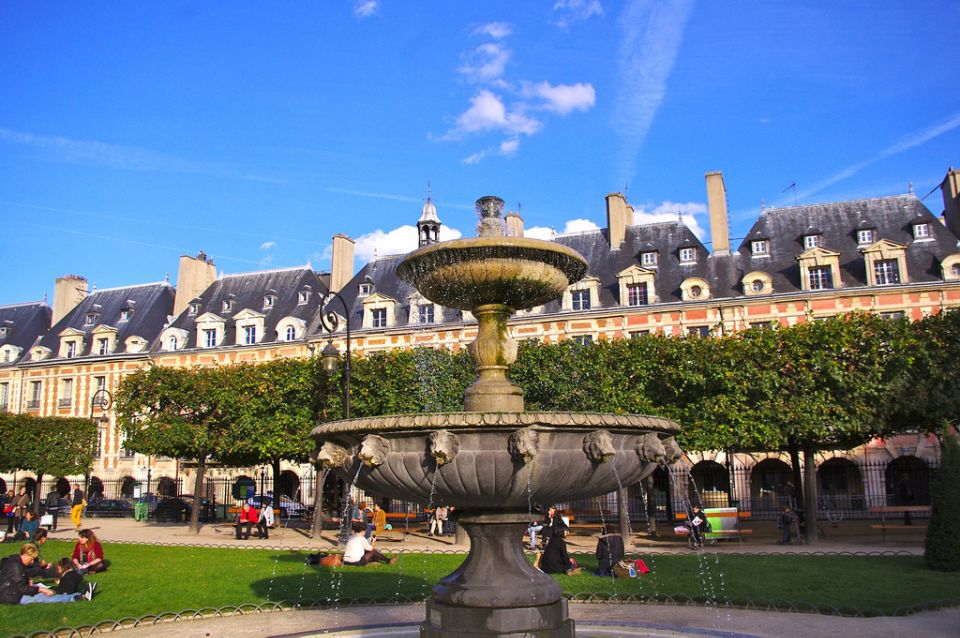
- Place des Vosges is treated like the centerpiece it is—one of the most beautiful squares in the world.
- Pompidou Centre connection: you’ll learn how the Middle Ages connect to modern Paris culture.
- Private guide, 2 hours with on-the-street storytelling, starting at Metro Étienne Marcel (look for the red canvas tote bag).
Marais in two hours: where the swamp became a city center
The Marais has a knack for making time feel weird—in a good way. Your guide starts with the origin story: this land was once swampy, then drained and made habitable, which pulled in settlers and turned the area into a key part of the city.
What makes this tour work is the through-line. You’re not just bouncing between landmarks. You’re learning how the Marais shifted roles over centuries, including its time as a chic residential zone tied to aristocrats and even a royal court, followed by a rougher period when it fell into being the kind of place you’d avoid.
Today, the Marais is in its second renaissance. That’s not just a slogan; your walk shows it in how the neighborhood now mixes grand public buildings, historically significant quarters, and modern attention.
You can also read our reviews of more walking tours in Paris



Meeting at Metro Étienne Marcel and how the walk is paced
You’ll meet at Metro Étienne Marcel, and your guide will be carrying a red canvas tote bag. That small detail matters because this is a “find your guide and go” kind of tour—no long preamble, just start walking.
The whole experience is two hours, and it’s a private group. In practice, that means you can ask questions as you go, and the guide can steer the pace to your interests—history, architecture, or the social story of the neighborhood.
One more practical note: tours run rain or shine. Paris weather can be moody, so think in layers and bring whatever keeps you comfortable when the sky decides to participate.
Les Halles to Fontaine des Innocents: reading Paris through public space
Les Halles is where the tour begins to feel bigger than a neighborhood tour. This was once the biggest open market in Paris, and your guide uses that fact to explain why the Marais mattered beyond fancy residences.
When you stand in the area and hear how a major open market shaped day-to-day life, the later layers make more sense. Trade brings crowds. Crowds bring services. Services attract residents, institutions, and all the messy human stories that history loves.
Then the walk shifts to Fontaine des Innocents. Even without going deep into technical details, it works as a pause point—one of those public landmarks that helps you connect the idea of “life in the street” to the physical layout of Paris.
The practical value here: this isn’t a tour that treats history like a museum label. It helps you look at a modern street corner and understand why it exists where it does.
Hôtel de Ville: opulence and power right in the middle of it
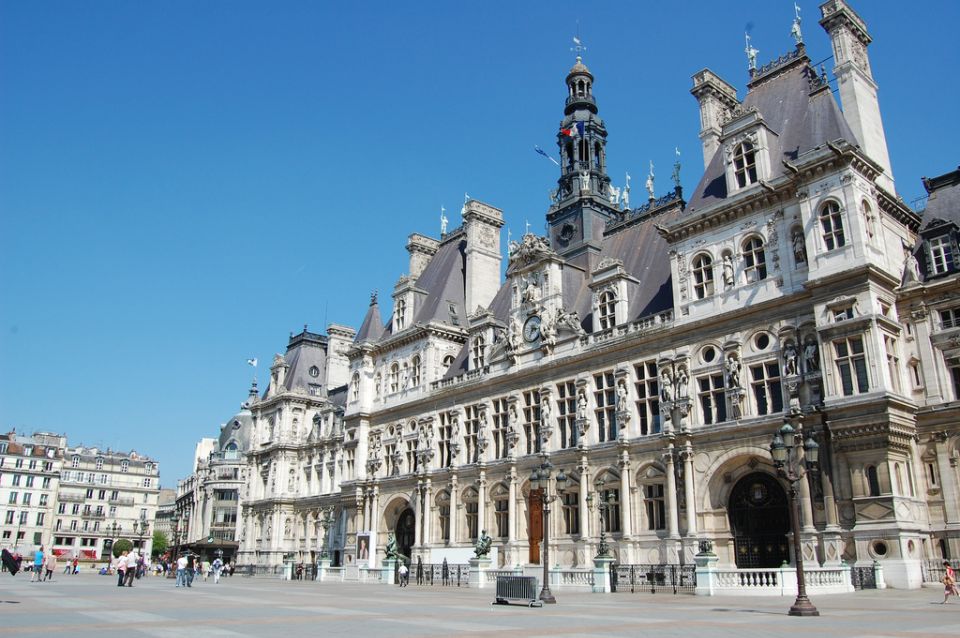
Next comes the Hôtel de Ville, described in the tour as an opulent Renaissance city hall. This stop is a useful reset. After market energy and neighborhood stories, you get a structure built to project civic power.
What I like about including a grand building like this in the middle of a walking history tour is how it reframes what you’re seeing. The Marais wasn’t only about where people lived and shopped. It also became a stage for government and major civic identity.
Your guide ties in the neighborhood’s ups and downs, so Hôtel de Ville isn’t just a pretty face. It becomes part of the explanation for how the Marais moved between status, influence, and changing social realities.
From the Middle Ages to Pompidou Centre: making modern Paris make sense
One of the most interesting promises of this tour is the connection between the Middle Ages and the modern Pompidou Centre. That’s not a random add-on. It’s the tour’s big trick: you’re learning how the same area can host totally different eras of meaning.
Centre Pompidou is modern by design, so it can feel like it belongs to a different Paris. Here, your guide helps you connect the dots, so you start seeing modern landmarks as part of a long chain of public life—not just an architectural mood swing.
This is also where the tour feels especially good for people who worry they’ll get lost in dates. If you’re more of a “show me why it matters” traveler, this is the kind of storytelling that helps the timeline click.
You can also read our reviews of more private tours in Paris






The Pletzl and Rue Pavée synagogue area: the historic Jewish center of the Marais
The heart of this walk is the Pletzl area, the historic center of Paris’s Jewish community. Your guide treats this part of the Marais as its own story—not a side chapter—so you walk through with context for what the area meant and why it lasted.
A key stop is the synagogue at Rue Pavée. The tour’s approach here is about place and memory: you’re seeing how the neighborhood carried community life through changing circumstances over time.
What I like is that the tour doesn’t keep the Jewish history in a vacuum. It sits the Pletzl into the Marais’s broader storyline—how this district moved between high-status periods and rougher ones, while still holding onto its identity.
It’s also where I’d expect good guides to shine. The people running this tour have included guides such as Caroline and Boris, praised for clear explanations and for connecting big history to specific corners you’d otherwise walk past.
Hôtel de Sully and the in-between streets
Between the headline landmarks, you’ll pass through the in-between moments that make a walking tour worth paying for. Hôtel de Sully is listed as one of the stops, and even if you’re not a hardcore architecture person, it helps anchor the Marais’s long association with power and residence.
This is where private guiding really pays off. Instead of the usual “look, it’s old” vibe, your guide can point out why the building fits the story of the Marais—its shift from aristocratic polish to later decline, then back toward renewed prestige.
You also get the chance to see the Marais as it works today: narrow streets, historic signage zones, and the feeling of a neighborhood that still behaves like a neighborhood rather than an open-air set.
If you’re traveling with friends who like different things—one person loves buildings, another cares about social history—this is the middle portion that tends to satisfy everyone.
Place des Vosges and Place de la Bastille: two squares, two moods
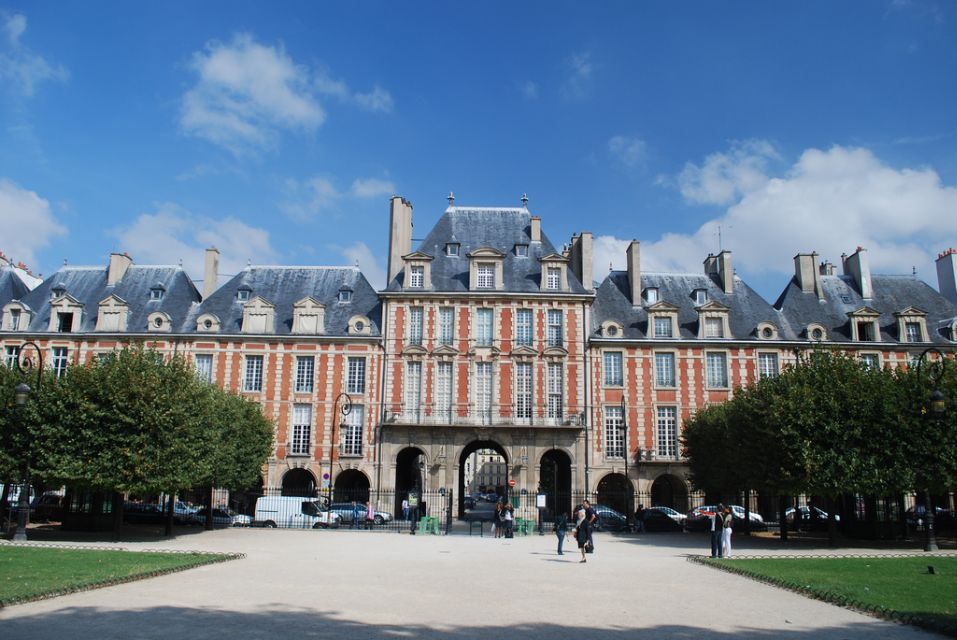
Then you reach Place des Vosges. The tour specifically calls it one of the most beautiful squares in the world, and the setting lives up to the reputation. Even if you’ve seen photos before, it’s the kind of space where you can reset your eyes and really take in how planned Paris feels at street level.
From there, you move to Place de la Bastille. Like Place des Vosges, it’s a major public square, but the tour positions it as part of the Marais’s long story of change—how a district can cycle through different roles and reputations.
What’s practical here: ending with big squares gives you an easy landing point for the rest of your day. You can head toward lunch or simply wander, because you’re now oriented in the Marais instead of just ticking off stops.
Price and value: what 176 per person buys you
At $176 per person for a two-hour private walking tour, the price is not cheap. But it’s also not the kind of cost that makes sense only if you’re chasing luxury.
Here’s what you’re buying:
- A private guide (not a shared group experience).
- A tight 2-hour route through major historic sites of the Marais, including Les Halles, Hôtel de Ville, the Pletzl area, Place des Vosges, and Place de la Bastille.
- Guided explanations that connect themes, including the specific link between the Middle Ages and the Pompidou Centre.
- A set of stops that includes Jewish Paris context via the Pletzl and Rue Pavée.
If you’re the kind of traveler who tries to do this yourself with a phone app, you’ll likely get pieces but miss the connective tissue. The tour’s best value is in how it strings the neighborhood’s dramatic shifts together so you understand why these places sit where they do and what they meant.
Also, the tour has a strong rating: 4.8 with 29 reviews. That doesn’t replace your own judgment, but it’s a useful signal that the guiding style and route flow are working for people.
What to expect from your guide, and which style fits you
The tour is offered in English, French, and Serbo-Croatian, and it’s led by a live guide. Guides associated with the tour include people like Alexander, Alexandre, Caroline, Fabienne, Yvana, Boris, and Anja—names that come up with praise for clear explanation and for adapting to different age groups.
If you want a tour that feels like a conversation, private guiding is your friend. A two-hour walk also makes the experience manageable. You get a meaningful slice of the Marais without feeling like you’ve signed up for a full-day ordeal.
That said, this isn’t a tour centered on food markets or eating your way through Paris. You’ll get history and visual landmarks, not a guaranteed snack break. Plan for your own refreshments before or after.
Who this tour is for (and when to skip it)
This Marais private walk is a great fit if you:
- Want to understand the neighborhood’s evolution, from swamp-drained beginnings to a key Jewish center and later Renaissance-era prestige.
- Like architecture and landmarks but don’t want a disconnected sightseeing list.
- Appreciate the idea of modern Paris making sense in the context of earlier centuries.
You might skip it if you:
- Only want museum entry tickets or a longer day of indoor stops. This experience is built around walking and street-level storytelling.
- Are looking for an itinerary that includes food. The tour does not include snacks or beverages.
Should you book this Marais private walking tour?
I’d book it if you want the Marais to click. The route covers serious anchors—Les Halles, Hôtel de Ville, the Pletzl and Rue Pavée synagogue area, Place des Vosges, and Place de la Bastille—then ties them together with a specific theme: how the Middle Ages connect to modern Paris, including the Pompidou Centre.
It’s also a smart choice for couples, small groups, or anyone who likes better explanations rather than just better photos. You’ll finish two hours later seeing the Marais as more than a pretty district.
Just go in with realistic expectations: bring a plan for drinks and a snack, dress for rain, and expect a brisk walking pace. If you do, you’ll leave with a sharper feel for why this neighborhood has always been a major character in Paris.
FAQ
Where does the tour start?
The meeting point is at the Metro Étienne Marcel. Your guide will be carrying a red canvas tote bag.
How long is the tour?
It lasts 2 hours.
How much does it cost?
It costs $176 per person.
Is it a private tour or a group tour?
It is a private group tour.
What languages are available?
The live guide is available in English, French, and Serbo-Croatian.
Does the tour run in bad weather?
Yes, tours operate rain or shine.
What’s included in the price?
The 2-hour guided walking tour is included.
Is food included?
No. Food, snacks, and beverages are not included.
FAQ
Can I cancel for a full refund?
Yes. You can cancel up to 24 hours in advance for a full refund.
Can I reserve and pay later?
Yes. You can reserve now and pay later to keep your plans flexible.