REVIEW · PARIS
Paris Jewish History 2-Hour Private Guided Walking Tour
Book on GetYourGuide →Operated by Paris in person private tours · Bookable on GetYourGuide
Paris’s Jewish past is written in stone. This private 2-hour walk threads major turning points with real streetscapes, and I really like the Pletzl stop-by-stop approach and the chance to see the Rue Pavée synagogue’s Art Nouveau details in context. You also get to connect the story to big landmarks like Notre-Dame and Place des Vosges, not just a list of dates.
One thing to consider: if you’re hoping for lots of small scenes of everyday Jewish life (food, family traditions, local routines), you may want to ask your guide to spend a bit more time on that angle.
In This Review
- Key Points You’ll Remember
- Walking From Shakespeare & Company Into the Pletzl
- Notre-Dame’s Jewish Links and the Cathedral Stop (30 Minutes)
- Remembering Vichy and the WWII Turns in the Story (15 Minutes)
- Le Marais, the Pletzl Core, and Rue des Écouffes
- Rue Pavée Synagogue: Art Nouveau Craft You Can See
- Place des Vosges: One of the World’s Most Beautiful Squares
- Goldenberg Deli: Seeing the Present Without Losing the Past
- How Private Really Changes the Questions You Can Ask
- Price and Logistics: What $176 Buys in Two Hours
- Who This Tour Is Best For (and Who Might Want More)
- Should You Book This Tour?
- FAQ
- Where is the tour meeting point?
- How long is the private guided walking tour?
- What languages are offered?
- Is the tour wheelchair accessible?
- What sights are included on the walk?
- Is food included?
- Does the tour run rain or shine?
- Can I get a full refund if I cancel?
Key Points You’ll Remember
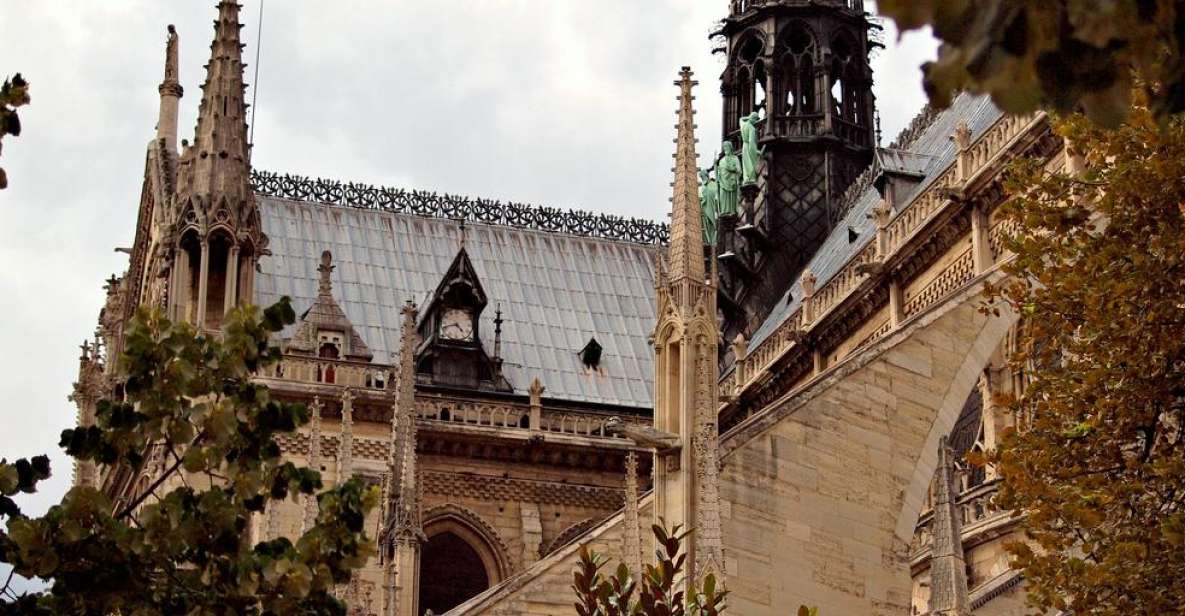
- Pletzl first: you start in the historical center of the Hebrew community and learn how the neighborhood fits the broader story of Europe.
- Rue Pavée synagogue: a 100-year-old Art Nouveau stop that’s more than a photo moment.
- Notre-Dame with Jewish context: you’ll hear how Jewish presence and medieval prejudice show up in the story around famous buildings.
- WWII and Vichy memorial stop: the tour doesn’t skip the darker turns of 20th-century Paris.
- Marais walking rhythm: you see multiple small sites close together, so the narrative stays tight.
Walking From Shakespeare & Company Into the Pletzl
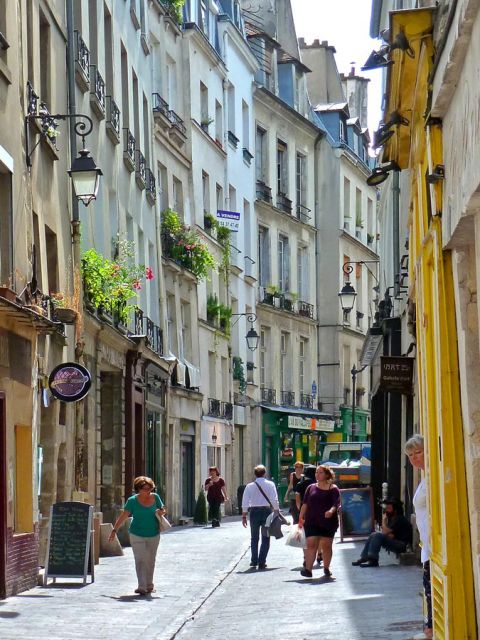
Your tour begins in front of Shakespeare & Company, right by the green water fountain. It’s an easy starting point if you’re already finding your way around central Paris, and it helps the walk feel grounded from minute one. Your guide will carry a red canvas tote bag, so you can spot them quickly and get moving.
From the start, the tone is not just sightseeing. The guide sets up the idea that this isn’t only about one building or one era. You’re moving through Paris as a living archive, where events like medieval restrictions and later crises left physical and cultural traces. And because this is a private group, you can ask follow-up questions without feeling like you’ll slow everyone else down.
For me, the best kind of walking tour is the one that makes you notice what you’d miss on your own. Here, you’ll learn how to read the city: street names, neighborhood boundaries, and architectural styles start to feel like clues instead of background noise.
You can also read our reviews of more walking tours in Paris



Notre-Dame’s Jewish Links and the Cathedral Stop (30 Minutes)
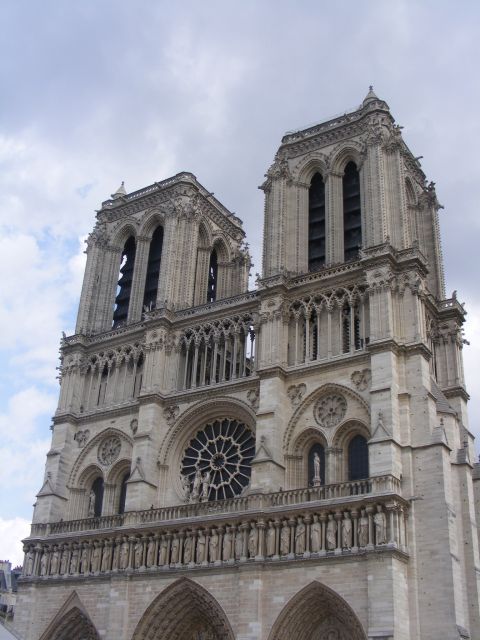
Notre-Dame is one of those places everyone thinks they already know. But on this walk, you’ll get a guided stop designed to spotlight the unique Jewish aspects tied to the cathedral’s larger story. That matters, because it reframes a famous monument as more than postcard stone.
You’ll spend about 30 minutes here with a guide, which is a good chunk of time for a focused explanation rather than a quick drive-by photo stop. Expect your guide to connect medieval attitudes and myths to how different communities were treated and how those ideas circulated through Europe. This is where the tour’s “how prejudice forms” thread starts to feel real, not abstract.
Practical tip: if you want the cathedral stop to land, go in with one question ready—something like how medieval social life shaped beliefs. A private guide can steer the discussion toward what you care about most.
Also, Notre-Dame is always a busy hub. If you’re sensitive to crowds, plan to keep your expectations flexible and let the guide manage the timing as much as possible while you stay oriented in the space.
Remembering Vichy and the WWII Turns in the Story (15 Minutes)
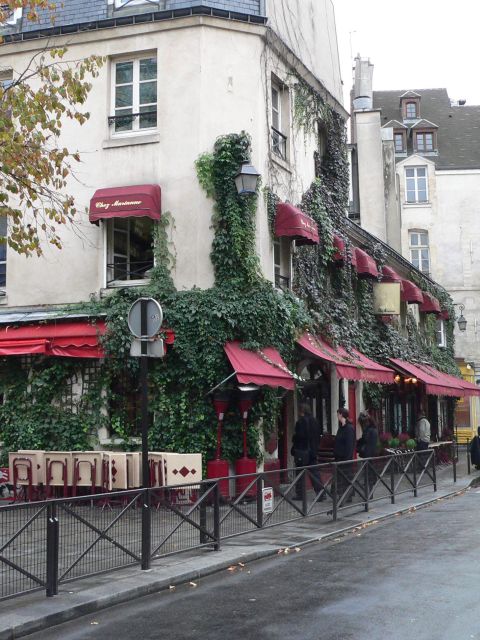
One of the most important strengths of this tour is that it carries the narrative through the 20th century, including Nazi occupation and the Vichy government. You’ll make a shorter guided stop after Notre-Dame—about 15 minutes—at a memorial to victims of the Vichy regime.
This pause changes the emotional temperature of the walk in a good way. Instead of moving from medieval prejudice straight into modern Paris, you stop and name the suffering tied to government policy and collaboration. A short stop can still be powerful if your guide gives it context, and this tour is designed to do exactly that.
If you prefer a gentler pace, keep in mind that the tour is rain or shine and you’ll be walking through multiple stops in roughly two hours total. That means you’re not doing long reflection time at each location. The goal is to keep the story moving—so the memorial becomes a checkpoint, not the entire journey.
Le Marais, the Pletzl Core, and Rue des Écouffes
After the cathedral and the memorial, you head into Le Marais for about an hour. This is where the walk feels most like a story you can hold in your hands. The heart of it is the Pletzl area, the historical center of the Hebrew community.
You’ll also pass by or near Rue Pavée, Rue des Écouffes, and other key points connected with Jewish presence in the area. Rue des Écouffes is one of those streets that feels like Paris at a human scale—narrow, intimate, easy to imagine as a place where people would have lived and worked day to day. The guide’s job is to help you reconstruct that sense without turning it into fantasy.
A big part of what you’ll learn here is how the Hebrew community’s story in Paris connects to broader European patterns. You’ll hear about raids involving French kings, the Dreyfus affair, and how anti-Semitism evolved over centuries. The tour also mentions how medieval origins of superstitions and prejudgments shaped the way people viewed Jewish communities.
In other words: you’re not only seeing where events happened. You’re learning how events got justified, repeated, and normalized.
Rue Pavée Synagogue: Art Nouveau Craft You Can See
Then comes a standout stop: the synagogue on Rue Pavée, described as a 100-year-old jewel of Art Nouveau architecture. Even if you’re not a serious architecture person, you can enjoy this part because it’s tied directly to identity and place.
Art Nouveau can look like pure style from a distance. But with a guide, you start to notice how the building’s design choices communicate something—community presence, artistic ambition, and a visible statement in the city.
This is one of the best “turns” in the tour because it gives you a visual reward while still serving the narrative. History sticks better when you link it to what your eyes can measure: line, form, ornament, and street setting.
If you’re the type who likes to do a quick sketch or take slow photos, this is the moment to do it. The walk moves fast enough that you’ll want to give yourself a couple extra minutes here so the architecture actually lands.
You can also read our reviews of more guided tours in Paris


Place des Vosges: One of the World’s Most Beautiful Squares
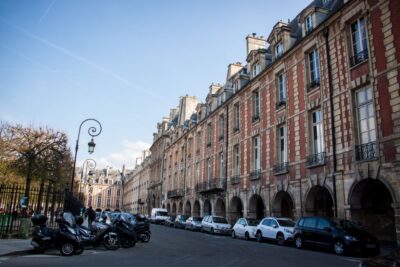
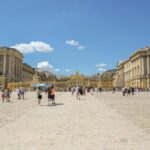
As you continue through Le Marais, you reach Place des Vosges, considered one of the most beautiful squares in the world. This is where the walking tour becomes a mental reset.
After stops connected to persecution, occupation, and prejudice, you get a bright open space and time to look at how the city’s most elegant civic designs coexist with the darker chapters told on the same streets. A guide can make this contrast feel intentional, not random.
For your own planning: if you’re photographing, Place des Vosges is the kind of place where the light changes quickly. Try to keep your timing loose and let your guide guide the flow, since you’re balancing narrative stops with walking time.
Goldenberg Deli: Seeing the Present Without Losing the Past
The tour includes the Goldenberg Deli as one of the notable places along the route. This matters because it anchors the story in the present—Jewish life in Paris is not only an old neighborhood label.
You’re not getting a full food tour here, but you’ll see how a specific address keeps a cultural thread alive. For me, that’s the right balance. It prevents the experience from turning into history-as-a-museum exhibit.
If you’re hungry, this is where you might think about grabbing something before or after the walk. Food and beverages are not included, so plan ahead if you want a meal right after. The upside is you can choose what fits your day, budget, and dietary needs.
How Private Really Changes the Questions You Can Ask
Because this is a private group, the guide can respond to what you care about. Two names came up strongly in the feedback: Hannah and Boris. People praised how these guides wove the history of Jewish people together with the history of Paris and greater Europe, and how they took time to answer questions instead of rushing to the next stop.
That matters for two reasons. First, you’ll probably have follow-up questions on topics like the Dreyfus affair or how Nazi occupation and Vichy policies changed daily life. Second, you can ask for clarification if you want the story told more at the level of politics, or more at the level of community experiences.
One note from the feedback to take seriously: a couple people felt they wanted more stories about Jewish life in Paris. If that’s your priority, say it early. Good guides can adjust the balance toward everyday experiences and still keep the main timeline intact.
Price and Logistics: What $176 Buys in Two Hours
At $176 per person for a 2-hour private guided walking tour, you’re paying for three things: a guide who can tie multiple eras together, a walking route that hits key sites closely, and the privilege of not sharing the experience with strangers.
Two hours sounds short, but the schedule is packed with high-impact stops. You get major Paris landmarks (Notre-Dame), a memorial tied to Vichy victims, and the Pletzl and Marais area, plus the Art Nouveau Rue Pavée synagogue and iconic city scenes like Place des Vosges. That’s a lot of narrative per minute—especially when the guide is doing the heavy lifting of connecting themes.
Is it budget travel? No. But it can be good value if you want depth and context without the hassle of planning a self-guided route that actually makes sense. This is the kind of tour where the guide’s pacing and explanations matter almost as much as the locations.
A practical consideration: because it’s rain or shine, wear shoes that handle wet streets gracefully. You’ll walk enough that comfort affects your ability to focus on the story.
Who This Tour Is Best For (and Who Might Want More)
This tour is ideal if you want a structured, guided path through Paris’s Jewish history with stops that go beyond one neighborhood. If you care about how medieval prejudice connects to later crises like the Dreyfus affair and WWII/Vichy, the format suits you.
It also fits travelers who like architecture and public space. Rue Pavée gives you Art Nouveau to look closely at, and Place des Vosges gives you a strong contrast point—pretty geometry after hard chapters.
Who might want more? If you’re specifically hunting for lots of storytelling about everyday Jewish practices—what people cooked, celebrated, argued about, and did on ordinary days—you’ll likely benefit from asking your guide to spend extra time on daily life details during the walk. The tour’s emphasis is on major historical events, and you’ll want the guide to calibrate the balance.
Should You Book This Tour?
I think you should book it if you want clear historical context and a route that connects Paris landmarks to the Jewish community’s long, painful, and resilient story. The Rue Pavée stop and the way guides like Hannah and Boris weave Europe’s broader arc into the Paris streets are exactly the kind of value-add that’s hard to replicate alone.
I’d pass or adjust expectations if you mainly want a leisurely stroll with lots of daily-life anecdotes and you’re not as interested in the political timeline. In that case, you might still enjoy parts, but you should go in with a plan to ask for more “life stories” early on.
FAQ
Where is the tour meeting point?
It meets in front of Shakespeare & Company bookstore, by the green water fountain.
How long is the private guided walking tour?
The tour lasts 2 hours.
What languages are offered?
The guide speaks English, French, and Serbo-Croatian.
Is the tour wheelchair accessible?
Yes, it is wheelchair accessible.
What sights are included on the walk?
You’ll see stops connected to Notre-Dame Cathedral, a memorial to victims of the Vichy regime, the Pletzl area, Rue des Écouffes, Goldenberg Deli, and the Art Nouveau synagogue in the Rue Pavée.
Is food included?
No. Food and beverages are not included.
Does the tour run rain or shine?
Yes, the tour operates rain or shine.
Can I get a full refund if I cancel?
Yes. You can cancel up to 24 hours in advance for a full refund.