REVIEW · PARIS
Paris Champs-Élysées 2-Hour Private Walking Tour
Book on GetYourGuide →Operated by Paris in person private tours · Bookable on GetYourGuide
Champs-Élysées feels like a movie set, but it has receipts. I love how this private walk uses Roman mythology and Napoleon’s story to explain why the avenue is laid out the way it is. I also like the stop-and-start pacing that makes Place de la Concorde and the Luxor Obelisk feel like more than just photo ops.
One possible drawback: with only 2 hours on foot, you won’t have time for long shop detours or long museum-style wandering.
In This Review
- Key Things You’ll Appreciate
- A Two-Hour Walk That Gives You the Avenue’s Meaning
- Starting at Place de la Concorde and the Luxor Obelisk
- Grand Palais and Petit Palais: Museums Inside Big Stories
- Hôtel de Crillon, Avenue Montaigne, and a Shopping-Adjacent Sweet Stop
- Champs-Élysées Explained: From Park-and-Play to Napoleon Avenue
- Arc de Triomphe: Why Napoleon’s Monument Feels So Heavy
- Picasso’s Drinking Dens: The Human Side of Big Monuments
- Price and Value: Is $176 Worth a 2-Hour Private Tour?
- Who This Tour Fits Best
- Should You Book This Champs-Élysées Private Tour?
- FAQ
- Where do we meet for the tour?
- How long is the Champs-Élysées private walking tour?
- Is this tour private?
- What languages are offered?
- Is the tour wheelchair accessible?
- Does the tour run in bad weather?
- Can I get a full refund if plans change?
- What’s included, and is food provided?
Key Things You’ll Appreciate
- Place de la Concorde first for big-picture orientation before the avenue pulls you forward
- Luxor Obelisk meeting point makes it easy to find the guide and start on time
- Grand Palais and Petit Palais as museums so you get culture without changing the route
- Champs-Élysées through two eras: 19th-century Paris and today’s Paris side by side
- Arc de Triomphe’s Napoleon connection gives the monument context, not just a view
- Picasso’s drinking-den stories to balance the official grandeur with real human Paris
A Two-Hour Walk That Gives You the Avenue’s Meaning
The Champs-Élysées can overwhelm you. It’s wide, famous, and full of motion—shops, traffic, tourists, and that constant feeling of being late to something. This private 2-hour format helps you get your bearings fast, without turning your day into a marathon.
What makes this tour work is the guide’s focus. You’re not just checking landmarks off a list. You’re learning how the boulevard connects to Roman myth and Napoleon, and how that connection shaped what you’re seeing now. That history angle is exactly what makes it a strong first-day activity. It helps you understand the place before you start shopping, snapping pics, or planning the rest of your trip.
Also, it’s private. That usually means you can ask questions and keep the pace comfortable, instead of speed-walking with a larger crowd. With a tour time of 2 hours, you can fit it early and still have time later for cafés or exploring on your own.
You can also read our reviews of more walking tours in Paris



Starting at Place de la Concorde and the Luxor Obelisk
Your tour begins at Place de la Concorde, in front of the obelisk. This matters more than it sounds. Concorde is one of those squares where the planning is visible. Standing there, you can feel how Paris uses geometry—long sight lines, grand building fronts, and a layout designed for spectacle.
The Luxor Obelisk is your anchor point. You’ll meet there, and your guide will be carrying a red canvas tote bag. That small detail is a real help: you can locate your guide quickly and reduce the stress of hunting people in a busy public space.
From Concorde, the tour moves into the idea of the avenue as a designed stage. The guide explains how Paris reshaped this corridor over time—how something that wasn’t always the grand shopping boulevard you picture today became that iconic Paris postcard you’re aiming for.
Grand Palais and Petit Palais: Museums Inside Big Stories
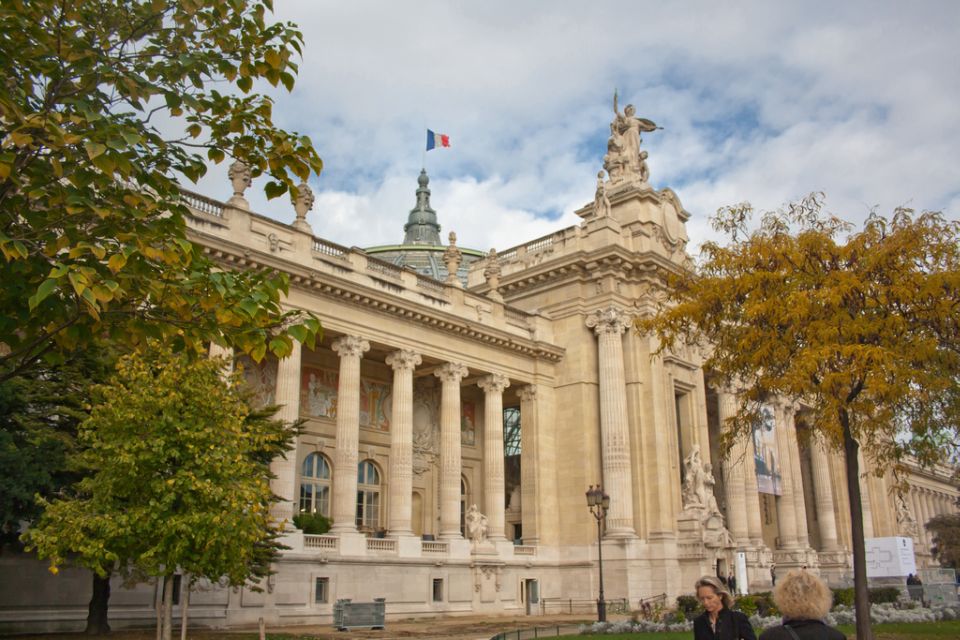
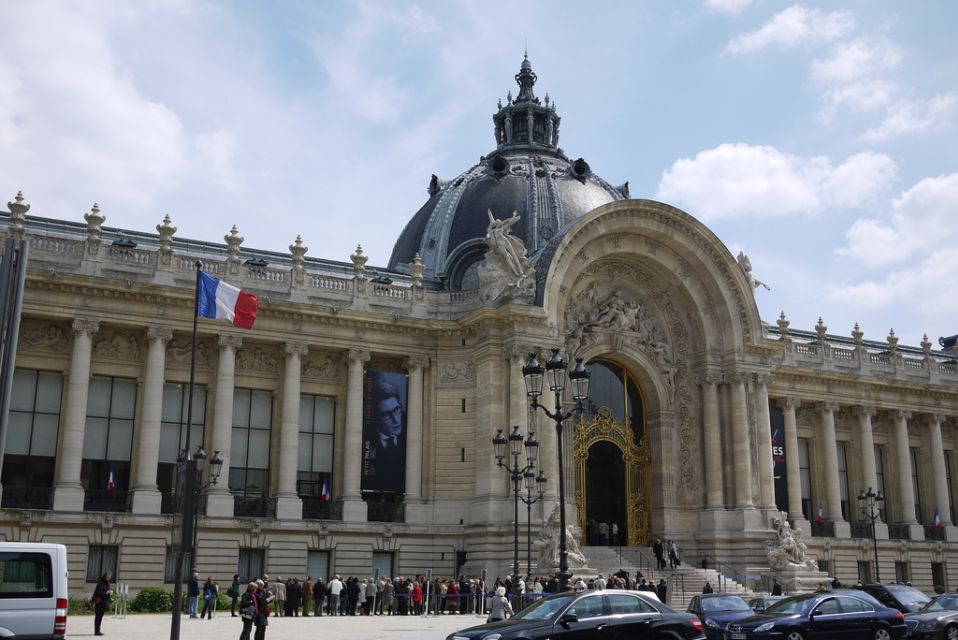
A big reason this tour is popular is the inclusion of Grand Palais and Petit Palais. Both are now museums, which changes how you can think about them. You get the architectural impact of two major buildings without needing to buy separate tickets or plan a whole museum afternoon.
Here’s the practical win: you learn what these structures represent in the broader Paris of the 19th century, then you’re back outside, walking. That’s a strong way to keep the tour moving while still getting culture.
Grand Palais often gets you thinking about scale. Petit Palais often feels more approachable. Having both on the same route gives you a balanced sense of how Paris can swing between grandeur and charm—while still staying in the same visual corridor.
If you’re the type who wants just enough museum energy to understand a city, this approach hits the sweet spot. If you’re hoping for a full, timed museum visit, you’ll probably want to add separate museum time later.
Hôtel de Crillon, Avenue Montaigne, and a Shopping-Adjacent Sweet Stop
Champs-Élysées isn’t only monuments. It’s also a shopping artery. This tour leans into that reality by passing key addresses along the way, including Hôtel de Crillon and Avenue Montaigne.
You also stop at Ladurée for macarons. That’s not just a treat stop—it’s a chance to experience a recognizable Paris brand in the middle of the route. If you’re traveling with someone who wants a sweet payoff without derailing the plan, this kind of pause makes the walk feel fun instead of purely instructional.
The trade-off is obvious: you won’t have time to do serious shopping. With a 2-hour window, the tour works best when you treat it as orientation plus a taste of the boulevard—not a full-on retail day.
Champs-Élysées Explained: From Park-and-Play to Napoleon Avenue
This is where the guide’s storytelling really pays off. You’ll learn that the Champs-Élysées wasn’t always the elite shopping promenade. At one point, it was more of a park area where you’d find bars and third-rate theaters. That detail is useful because it snaps the boulevard out of the museum-only mindset.
Then the tour shifts into the avenue’s myth and power. You’ll hear about how the boulevard connects to Roman mythology and how Napoleon shaped the meaning of what you see as you walk. Even if you’ve seen Napoleon’s monuments before, this kind of explanation ties them back to the boulevard, so everything feels connected instead of random.
The guide also introduces both sides of the mythical Champs Elysees. In practical terms, that means you’re not just looking at the same view over and over. You’re learning what different parts of the avenue symbolize, and how 19th-century Paris differs from today’s Paris while sharing the same bones.
If you’re prone to getting lost in a city because you’re only following signage and crowds, this is a helpful antidote. The route becomes an explanation, not just a walk.
You can also read our reviews of more private tours in Paris






Arc de Triomphe: Why Napoleon’s Monument Feels So Heavy
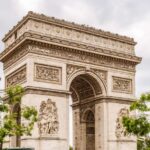
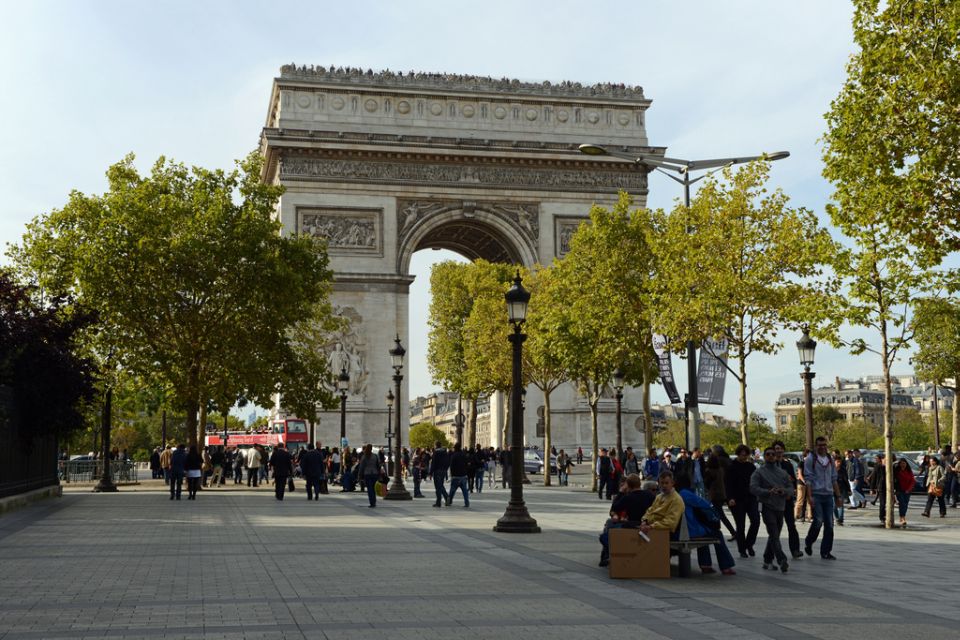
At the end of the tour you reach the Arc de Triomphe, described as a monolithic monument to Napoleon. Even without going deep into technical details, the impact of the arc is obvious when you finally arrive. It’s not delicate. It’s not subtle. It’s built to dominate the skyline and set the tone for the area around it.
What you gain from having this stop on a guided route is context. You’re not just looking at a famous shape. You’re linking it back to the Napoleon thread the guide has been weaving throughout the walk. That makes the arc feel less like a standalone stop and more like the final chapter of the story you started at Concorde.
Also, because this is only 2 hours, you’re likely to leave with a clearer plan for what you want to do next. Some people come away wanting to photograph from specific angles. Others come away realizing they want to return later with more time for the surrounding area.
Picasso’s Drinking Dens: The Human Side of Big Monuments
One of the most interesting parts is the promise to discover the favorite drinking dens of Picasso. This is a great example of why the tour stays lively. You’re surrounded by official architecture and grand planning, but then the guide brings the conversation down to something more human—where artists socialized, drank, and talked.
Even if you don’t know Picasso’s Paris timeline in advance, these kinds of stories keep the walk from becoming stiff. They remind you that Paris wasn’t only built for ceremonies and empires. It was also built for people to gather, relax, argue, and create.
This stop also pairs nicely with the rest of the route. After Roman mythology and Napoleon, Picasso feels like a shift from power to personality. That balance is part of why the tour is such a strong way to start a trip: it gives you history, then gives you life.
Price and Value: Is $176 Worth a 2-Hour Private Tour?
At $176 per person, this isn’t a budget walking tour. But the value isn’t only about price—it’s about what you buy.
You get:
- A private group experience
- A live tour guide
- A route that covers major landmarks over a compact 2-hour timeline
- A mix of architecture, museums-adjacent stops, and storytelling (myth, Napoleon, and Picasso)
You also don’t get food or drink included, so budget for any snacks or beverages on your own if you want more than the macaron stop.
So who does the price make sense for? It usually works best when:
- You want guidance rather than spending your limited Paris time sorting out what matters
- You’re visiting in a first-week window and want orientation quickly
- You prefer private pacing over joining a larger group
If you’re the type who loves to roam without structure, you might prefer a self-guided stroll. But if you want the avenue’s meaning explained while you’re standing in the exact places where the stories happened, the guide factor is the part you’re paying for—and it’s the part that tends to feel worth it.
Who This Tour Fits Best
This tour is ideal if you want a focused introduction to one of Paris’s most iconic corridors. It’s also a good fit if you appreciate learning how monuments connect to ideas, not just locations.
It’s especially suitable for:
- First-time visitors who want a guided start
- People who like history explained in walking form
- Anyone who wants to see major landmarks while still keeping the day flexible
It’s also practical for mobility needs: the tour is listed as wheelchair accessible. It runs rain or shine, so you won’t lose the day if the weather turns.
And based on the rating—4.8 with 3 reviews—the strongest praise centers on the tour being a great introduction to Paris history and a smart way to begin a vacation.
Should You Book This Champs-Élysées Private Tour?
Book it if you want a guided, story-driven walk that connects Concorde, the Palais buildings, Napoleon’s monument, and Picasso’s Paris in just 2 hours. It’s a good choice when you like context and you want to feel oriented fast.
Skip it if you’re hoping for a long museum visit, a heavy shopping day, or an unstructured wander. The route is designed to move, and the time is meant to cover a lot of ground without lingering.
FAQ
Where do we meet for the tour?
You’ll meet in front of the obelisk at Place de la Concorde. Your guide will be carrying a red canvas tote bag.
How long is the Champs-Élysées private walking tour?
The tour lasts 2 hours.
Is this tour private?
Yes. It’s a private group tour.
What languages are offered?
The live guide is available in English, French, and Serbo-Croatian.
Is the tour wheelchair accessible?
Yes, the tour is listed as wheelchair accessible.
Does the tour run in bad weather?
Yes. Tours operate rain or shine.
Can I get a full refund if plans change?
You can cancel up to 24 hours in advance for a full refund.
What’s included, and is food provided?
The tour includes a tour guide. Food and drink are not included.