REVIEW · PARIS
Freemason; myths and revelation of a secret organization
Book on GetYourGuide →Operated by Cultival · Bookable on GetYourGuide
Freemasonry has a talent for rumor, and Paris has the clues. This 90-minute walk zeroes in on the Grande Loge de France, with a guide who explains how an organization built on symbolism, secrecy, and hierarchy shaped French public life. I like that you’re taught to look for visible and hidden traces of Masonry in real architecture, not just learn theories on a page. I also like the way the tour frames the subject as something you can study like history and society, not only gossip. One possible drawback: one past guest noted the guide could feel a bit evasive at moments.
You start near Saint-Germain-des-Prés and work through two central areas—Saint-Germain and Palais Bourbon—so the stories land in the exact places where you can still see the result. Expect a walking format (no transfer included), and a French-only guide, so plan for listening mode.
In This Review
- Key things I’d circle before you go
- Freemasonry in Paris, Minus the Tabloid Myths
- Meet at Saint-Germain-des-Prés: Getting Oriented in 90 Minutes
- Saint-Germain Focus: Grande Loge de France History and the Power of Symbols
- Palais Bourbon Focus: Influence, Public Life, and Why France Noticed
- Practical Tips for Spotting Traces as You Walk
- The Guide Experience: French-Only, Passionate, and Sometimes Vague
- Price and Value: Is $17 Worth 90 Minutes?
- Who This Tour Is Best For (and Who Should Skip)
- Should You Book the Freemason Myths and Revelation Tour?
- FAQ
- FAQ
- What is the duration of the tour?
- Where does the tour start?
- How much does it cost?
- Is there a guided component?
- What language is the tour in?
- What areas will the tour cover?
- What is included in the price?
- Is transfer included?
- Is the tour wheelchair accessible?
- Can I get a refund if my plans change?
- Can I book without paying today?
Key things I’d circle before you go
- Focus on Grande Loge de France: the tour centers on its history, organization, rituals, and influence.
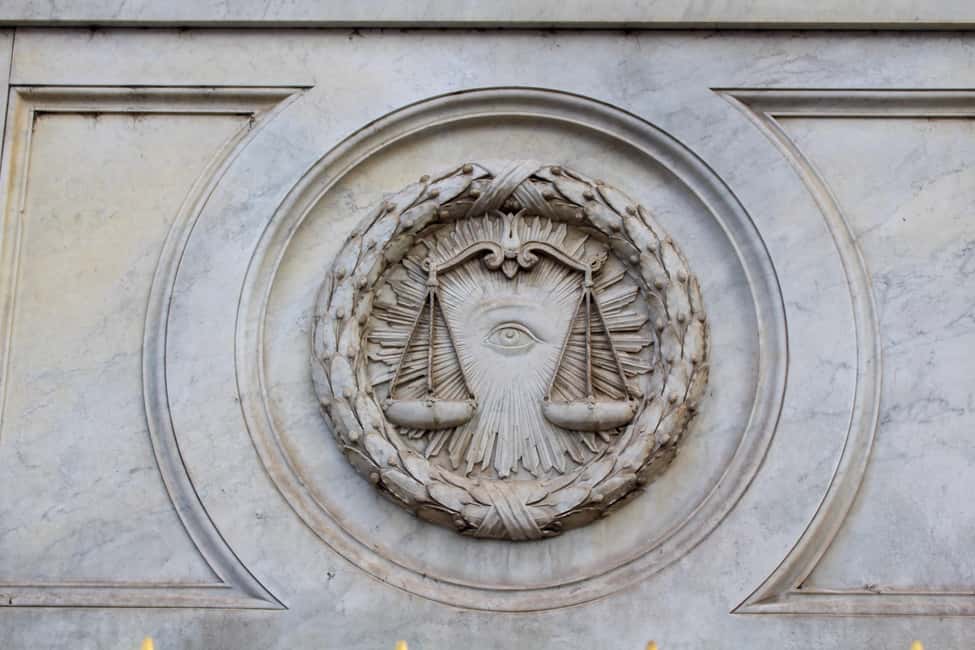
- Symbols are part of the lesson: you’ll spend serious time on interpretation, because Masonic meaning is the point.
- Paris as your classroom: you’ll practice observation to spot Freemasonry traces on facades and sculptures.
- Two districts, two angles: Saint-Germain for context and Palais Bourbon for influence in society.
- French-only guide: this is a great fit if you read the city well and follow spoken French comfortably.
Freemasonry in Paris, Minus the Tabloid Myths
If you’ve ever heard the word Freemason and immediately pictured cartoons, conspiracies, or secret handshakes, this tour works in a smarter direction. It treats Freemasonry as a real historical force that spread across Europe after it formed in Great Britain in the early 18th century—and it explains why the organization still attracts fantasy. The “mystery” isn’t just marketing. It comes from secrecy, symbolic language, and a complex internal structure that can look hard to understand from the outside.
What I like is that the tour doesn’t ask you to swallow myths. It gives you a framework: how an order took different forms as it spread, yet kept fundamental principles from its English founders. It also points out why the subject can feel surreal—symbols, ritual, arcane hierarchy, co-option, and biblical references in teaching. Those elements are why Freemasonry is such an easy target for preconceived ideas. The tour’s value is that it tries to replace assumptions with context.
And yes, it’s a walking tour in Paris. So the theories aren’t floating in the abstract. You’re meant to recognize traces around you—on facades and sculptures—so you can connect what you hear to what you see.
You can also read our reviews of more tours and experiences in Paris.


Meet at Saint-Germain-des-Prés: Getting Oriented in 90 Minutes
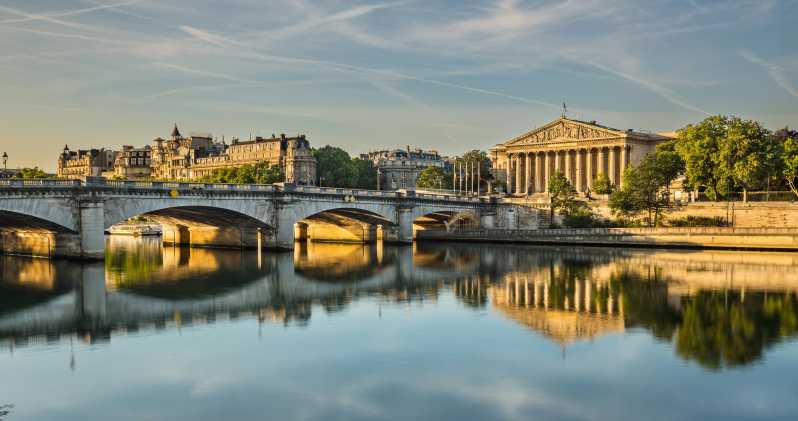
The meeting point is 3 place Saint-Germain-des-Prés (75006 Paris), in front of the entrance to Saint-Germain-des-Prés Church. That’s a practical start: you’re in a classic, walkable area, and it’s an easy anchor for arriving on time without guessing where the tour begins.
The duration is 90 minutes, so the pacing matters. This isn’t a sit-and-stare lecture. You’ll be moving through two emblematic districts—Saint-Germain and the Palais Bourbon area—while the guide explains structure, ritual, influence, and the idea of “myths vs. revelation.” Because it’s short, the guide’s job is to keep the lesson tight: enough background to understand why Freemasonry looks the way it does, and enough observation prompts to help you notice the city’s details.
Also keep in mind: the tour is walking, and transfer isn’t included. So your “logistics work” is mostly about getting yourself to the church and back. No worries if you use public transit or walk part of the route—but don’t count on the provider to ferry you between points.
Saint-Germain Focus: Grande Loge de France History and the Power of Symbols
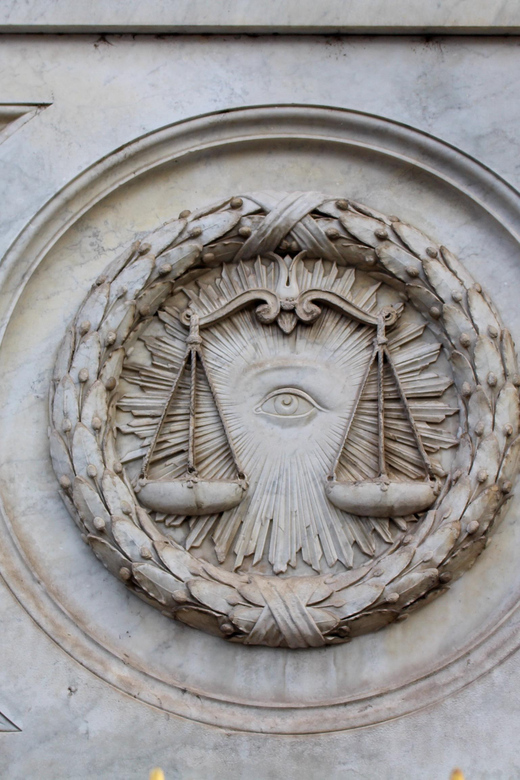
Your first district, Saint-Germain, is where the tour sets the tone. This is the zone where you’re meant to connect the big-picture story to what’s right there in front of you. The guide covers the history of the Grande Loge de France, and that matters because it’s not just a generic Freemasonry lesson. It’s specifically tied to one key French line, with its own organization and influence.
Here’s what to pay attention to in this part. The tour emphasizes that Freemasonry has an organization built around more than just beliefs—it has internal rules, rituals, and a hierarchy. Terms like secrecy, symbolism, “system of co-option,” and arcane levels show up for a reason. They explain why outsiders often feel shut out, and why the subject takes on a foggy reputation.
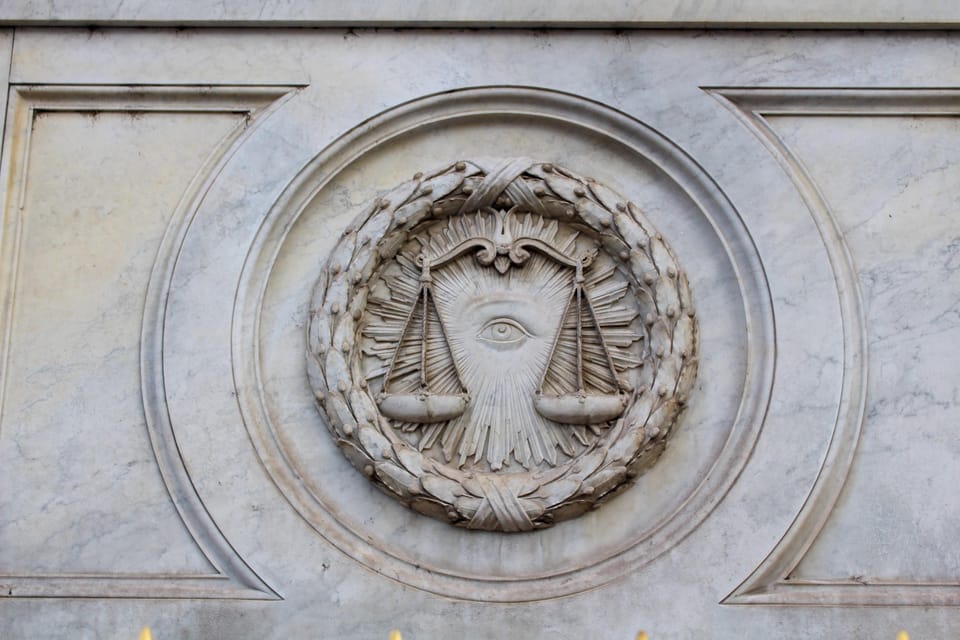
Then the tour turns that explanation into an observational game. You’re encouraged to recognize visible or hidden traces of Masonry that embellish Parisian facades and sculptures. You’re not expected to be an expert at the start. Instead, you’re taught what kind of “symbol language” to look for so the city stops being wallpaper and becomes a text you can read.
One practical consideration: observation tours can either feel rewarding or frustrating depending on your expectations. If you show up wanting a detailed, minute-by-minute rundown of every sculpture, you might feel impatient. The smarter approach is to listen first, then look—like a guided scavenger hunt for meaning. When the guide points your attention in the right direction, the symbolism starts making sense in real time.
Palais Bourbon Focus: Influence, Public Life, and Why France Noticed
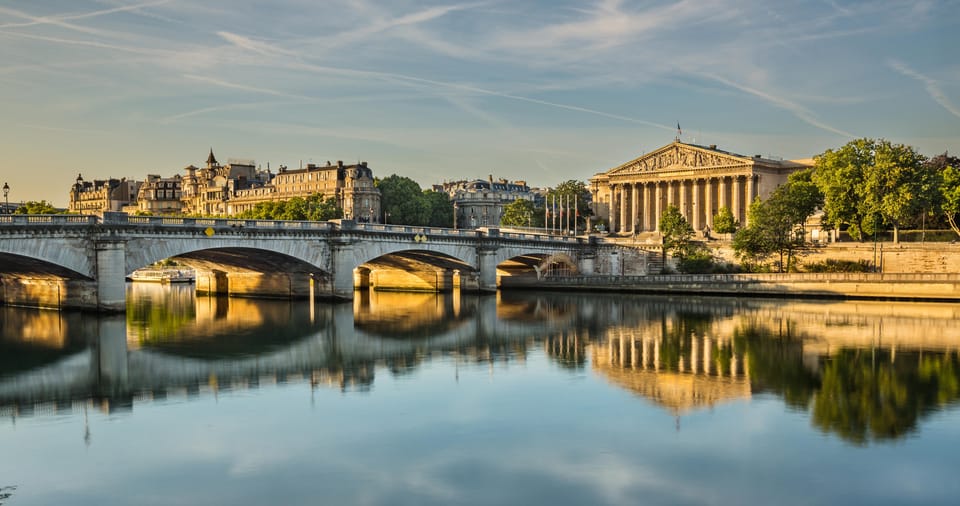
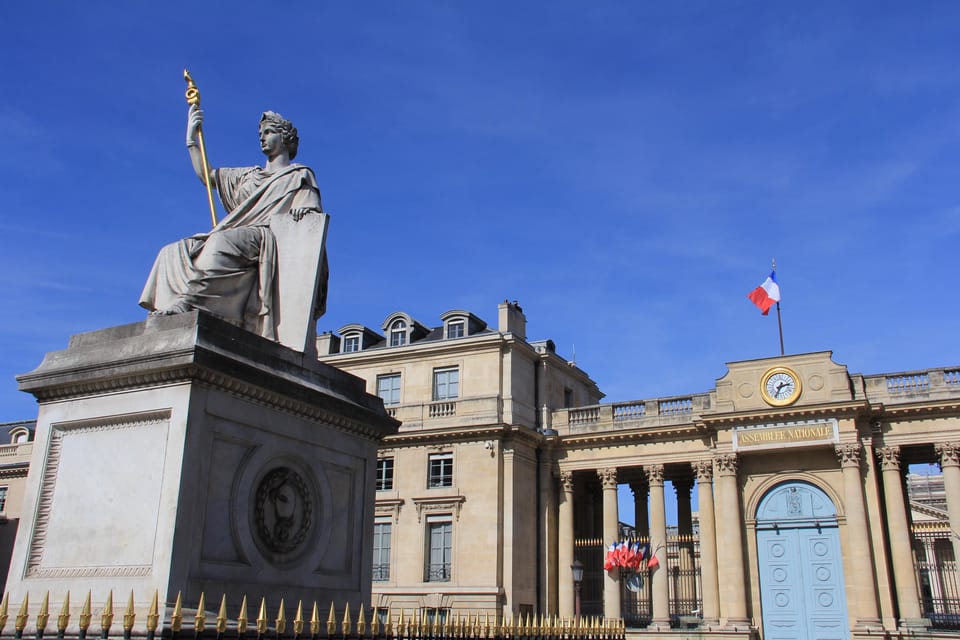
The second half moves into the heart of Palais Bourbon, another symbolic setting. The tour’s framing here shifts from “what it is” to “what it changed.” Freemasonry is presented as something essential to understanding major historical and social phenomena in France since the Enlightenment. That’s a big claim, but it’s also a clear reason to come: you’re not just learning a niche topic. You’re learning why an idea connected to reason, debate, and democratic thought would matter in France.
In this district, the guide covers the order’s influence and the idea that notable public figures are among its members—people who shaped society across politics and the arts. The tour doesn’t promise name-dropping in the information provided, so don’t go hunting for specific celebrity roll calls. Instead, treat this segment as explanation of how networks and ideals can show up in public life.
There’s also a second layer: rituals and teaching style. The tour mentions that Freemasonry includes biblical references in its instruction. That detail is helpful because it explains why Freemasonry symbolism doesn’t behave like pure “esoteric decoration.” It’s tied to moral and interpretive frameworks. When you’re in a political-adjacent setting like Palais Bourbon, that context helps you see why the subject is often discussed in relation to governance and public debate.
The drawback here is mostly about interpretation. If you prefer hard facts over meaning, this part can feel more conceptual. But if you like the city as evidence—and you enjoy learning how people in the past communicated through symbols—this segment can click fast.
Practical Tips for Spotting Traces as You Walk
You’ll get the most out of this tour if you treat it like a guided “attention workout.” You’re not looking for one big dramatic reveal. You’re looking for patterns in how buildings and sculptures communicate.
A few tips that will help you right away:
- Start with listening, not scanning. When the guide tells you what kind of symbol language matters, your eyes follow faster.
- Slow down your gaze. Facades and sculptural details can be subtle. The tour’s observation emphasis is the entire point.
- Ask yourself what role meaning might play. The tour links symbolism and secrecy to organization and ritual. If you keep that in the back of your mind, what you notice feels less random.
Also, bring patience for uncertainty. Hidden traces are… hidden. Even with guidance, you might not identify every detail. That’s normal. The goal is to learn how to see, not to leave with a perfect symbol glossary.

The Guide Experience: French-Only, Passionate, and Sometimes Vague
This tour is guided in French only. That’s not a minor detail. It affects whether the experience feels clear or confusing. If you’re comfortable with French conversation—especially explanations—you’ll likely enjoy how the guide connects history, organization, and what you’re supposed to notice on the street.
The reviews point to two consistent strengths: a guide who is passionate and pedagogical, and a guide who is listening and attentive. That combination matters for this topic. Freemasonry can sound like a closed system, so it helps when the guide actively translates the logic behind it.
One review, though, flagged that the guide could be a bit evasive at times. That doesn’t mean the tour is poor—it does suggest that if you ask direct questions and expect crisp, tightly bounded answers every time, you might occasionally feel brushed off. If you’re hoping for a very structured lecture style, keep your expectations flexible and stay more focused on the walking explanations and the observational prompts.
Price and Value: Is $17 Worth 90 Minutes?
The price is $17 per person for a 90-minute guided walking tour. That’s reasonably priced for a specialized theme like this, especially because you’re getting a live guide, not just a self-guided route.
Here’s how I’d judge the value:
- You pay for context: history, organization, rituals, and influence tied to France and the Enlightenment.
- You pay for interpretation: the guide helps you read symbols in the built environment.
- You don’t pay for transport: transfers aren’t included, so you need to handle getting to the meeting point.
In other words, the value is strongest if you like guided learning with real-world observations. If you only want broad sightseeing in central Paris, you might find this tour too focused on a specific organization. But if you want to understand why Freemasonry became such a talking point—and what that looks like on the streets—this price can feel like a smart deal.
Who This Tour Is Best For (and Who Should Skip)
This tour is a good match if you:
- like Paris with a theme, not just landmarks
- want to understand Freemasonry as history and social influence
- enjoy symbol spotting with guidance
- are comfortable with French-only tours
It’s less ideal if you:
- want step-by-step factual specifics with no interpretation
- need a tour offered in English (because this is French only)
- dislike walking for about 90 minutes in central neighborhoods
If you’re the kind of person who enjoys museum-style explanation but wants it applied to the street, you’ll probably enjoy the format a lot.
Should You Book the Freemason Myths and Revelation Tour?
I’d book it if you want more than the usual Paris sightseeing—if you’re curious about how a secretive organization developed, how its symbols gained meaning, and how that legacy left traces you can actually notice while walking. The short duration helps too: you get a focused lesson without turning your afternoon into a long seminar.
I’d think twice if your French is shaky or if you expect crystal-clear answers to every question about secret rituals. Because the tour relies on symbolism, part of the experience is interpretation, and the “myths vs. revelation” approach can feel slightly flexible in how it lands.
Bottom line: at $17 for 90 minutes, this is strong value for a guided, observation-driven Paris experience—provided you’re ready to listen in French and look closely at the city.
FAQ
FAQ
What is the duration of the tour?
The tour lasts 90 minutes.
Where does the tour start?
It meets at 3 place Saint-Germain-des-Prés (75006 Paris), in front of the entrance to Saint-Germain-des-Prés Church.
How much does it cost?
The price is listed as $17 per person.
Is there a guided component?
Yes. It’s a walking tour with a live guide.
What language is the tour in?
The tour is guided in French only.
What areas will the tour cover?
It focuses on the heart of two Paris districts: Saint-Germain and the Palais Bourbon area.
What is included in the price?
A walking tour with a guide is included.
Is transfer included?
No. Transfer is not included.
Is the tour wheelchair accessible?
Yes, it is listed as wheelchair accessible.
Can I get a refund if my plans change?
Free cancellation is offered up to 24 hours in advance for a full refund.
Can I book without paying today?
Yes. You can reserve now and pay later, keeping your plans flexible.