REVIEW · PARIS
Paris: Hop-On Hop-Off Seine Cruise Pass with 9 Stops
Book on GetYourGuide →Operated by BATOBUS · Bookable on GetYourGuide
Gliding past Paris landmarks beats stuck-in-traffic days. With a 24- or 48-hour hop-on hop-off Seine cruise pass, you can ride the loop at your pace and jump off near big hitters like the Eiffel Tower, Louvre, and Notre-Dame. You also get panoramic views from a glass-covered boat with a terrace, which is a welcome change from walking.
I especially like how practical the plan feels: 9 stops are spaced so you can sightsee, then return to the water to rest your feet. The interactive webapp (available in English, French, Italian, Spanish, and German) helps you connect what you see with what it means, without forcing you into a group tour.
One consideration: this service is not suitable for wheelchair users. If mobility is a concern, plan around that before you buy.
In This Review
- Key points at a glance
- Price and pass value: what $27 really buys you
- How the hop-on hop-off loop works (and why timing feels easy)
- The boat experience: heated, glassy, and built for photos
- Stop-by-stop: building your perfect Seine day
- Tour Eiffel port (Port de la Bourdonnais): start with scale
- Musée d’Orsay port (Quai de Solférino): art before crowds
- Saint-Germain-des-Prés port (Quai Malaquais): history and café culture
- Notre-Dame port (Quai de Montebello): a must-see anchor
- Jardin des Plantes port (Quai Saint-Bernard): reset and recharge
- Hôtel de Ville port (Quai de l’Hôtel de Ville): politics, art, and the Marais edge
- Louvre port (Quai du Louvre and Pont Royal area): plan your time
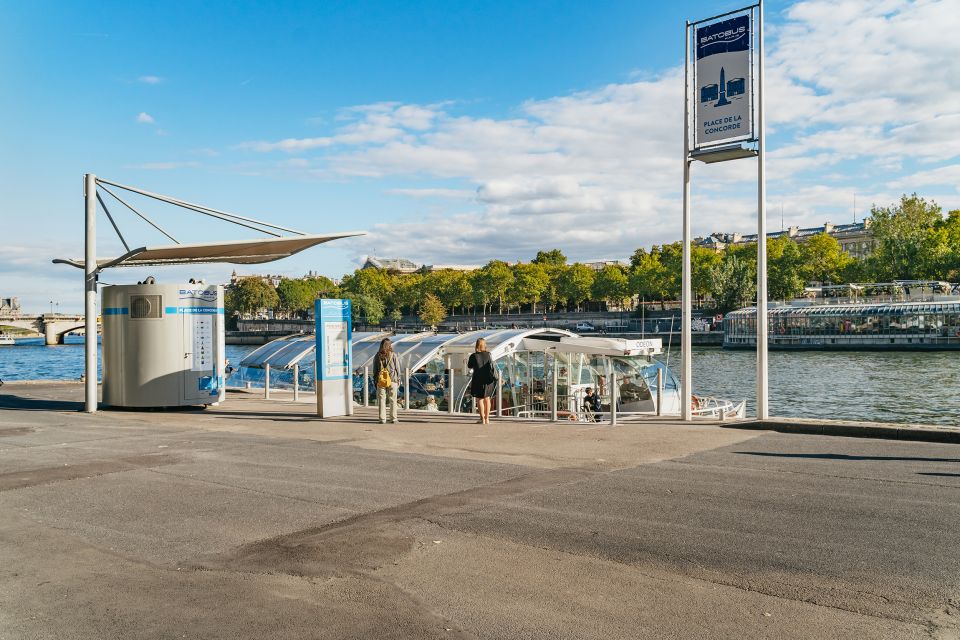
- Place de la Concorde port: grand squares and great river angles
- Invalides port (Pont Alexandre III): Napoleon’s tomb and the best bridge scenery
- Using the multilingual webapp: turn views into facts
- Best way to ride it: create a rhythm, not a checklist
- Who this pass suits best
- Should you book it?
- FAQ
- How long is the pass valid?
- Where can I board and get off?
- Do I need a smartphone during the cruise?
- Is there audio commentary on the boat?
- Can I bring luggage or a stroller?
- Is this suitable for wheelchair users?
Key points at a glance
- 9 stops with big landmark access so you can build your day without committing to a strict route
- Heated, glass-enclosed boats with a terrace for comfortable rides and better photo angles
- Multilingual interactive webapp so you get context at each port, not just views
- Frequent departures that make hop-on hop-off feel easy instead of stressful
- No onboard audio mentioned—you’ll want your phone ready for the webapp
- Good for photos from a different perspective than the usual street-level angles
Price and pass value: what $27 really buys you
At about $27 per person, this pass is basically you paying for (1) transport on the Seine and (2) flexibility to choose how long you spend at each place. The big value isn’t the boat ride alone. It’s that you can jump off near major sights, walk to what you want, and then hop back on when you’re done.
You get a 24-hour or 48-hour consecutive pass, and the clock starts when you first board. That matters because it turns the cruise into a tool for your schedule. If you start in the morning, you’ll likely want the longer pass. If you start later and want an evening loop for lights and river views, the shorter option can feel just right.
Also, you’re not locked into buying separate tickets for the travel portion. The route covers a chain of neighborhoods and monuments that would otherwise require repeated subway rides and cross-town walking. In a city where transit can be quick but also annoying with stairs and transfers, the water route is a noticeable relief.
You can also read our reviews of more boat tours in Paris
How the hop-on hop-off loop works (and why timing feels easy)
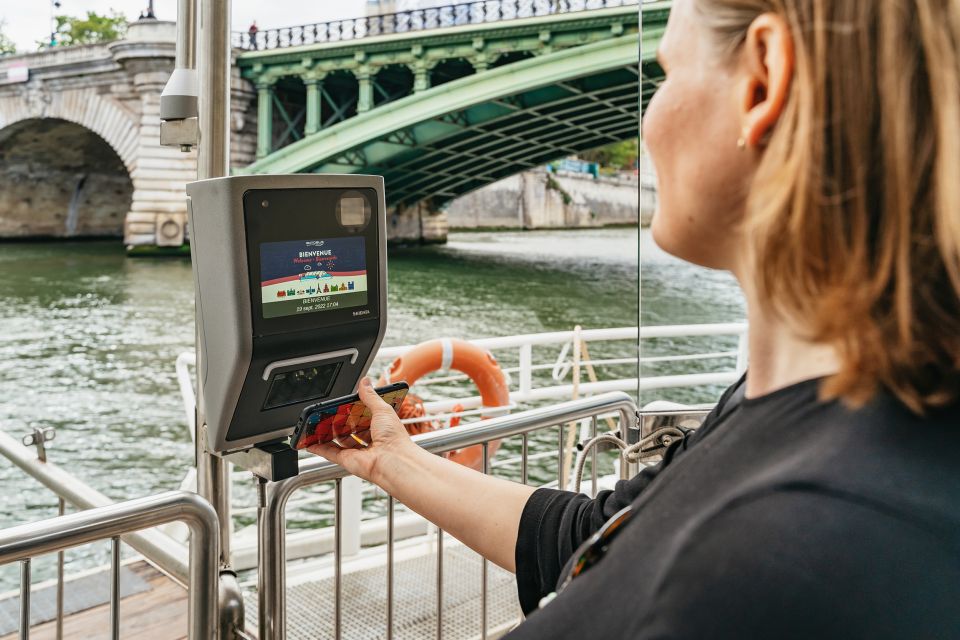
The system is simple: you board at one of the designated ports and scan your ticket each time you hop on. Your pass validity starts at the moment you use it for the first time, so don’t worry if you’re planning to pick it up later the same day.
In the colder months (from 3 November 2025 to 31 March 2026), departure windows are listed as 10:00–17:00 Monday–Thursday and 10:00–19:00 Friday–Sunday from the Eiffel Tower stop. If you’re traveling outside those dates, you’ll want to check the latest schedule for the day you’re going, since the first and last departures can shift.
From what you’re told to expect in practice, boats come often enough that it usually feels like a real transit loop rather than a “wait around and hope” cruise. One recurring theme in customer experience is that the wait at ports is typically short, so you can hop off, wander, and get back on without wasting your whole day in line.
Two small but important practical notes:
- Bring a charged smartphone because the interactive webapp is part of how you get meaning from the scenery.
- You cannot bring luggage or large bags, and non-folding strollers aren’t allowed (but fold-up carriages are). If you’re traveling light, this is easy. If you’re carrying a lot, you may want a different plan.
The boat experience: heated, glassy, and built for photos
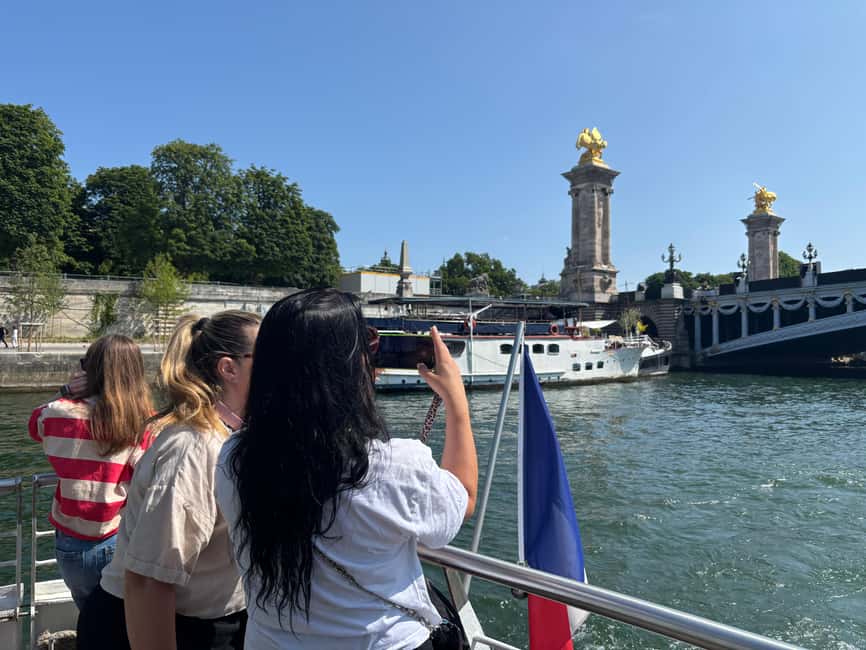
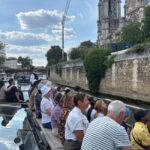
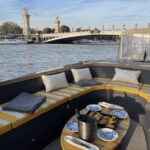
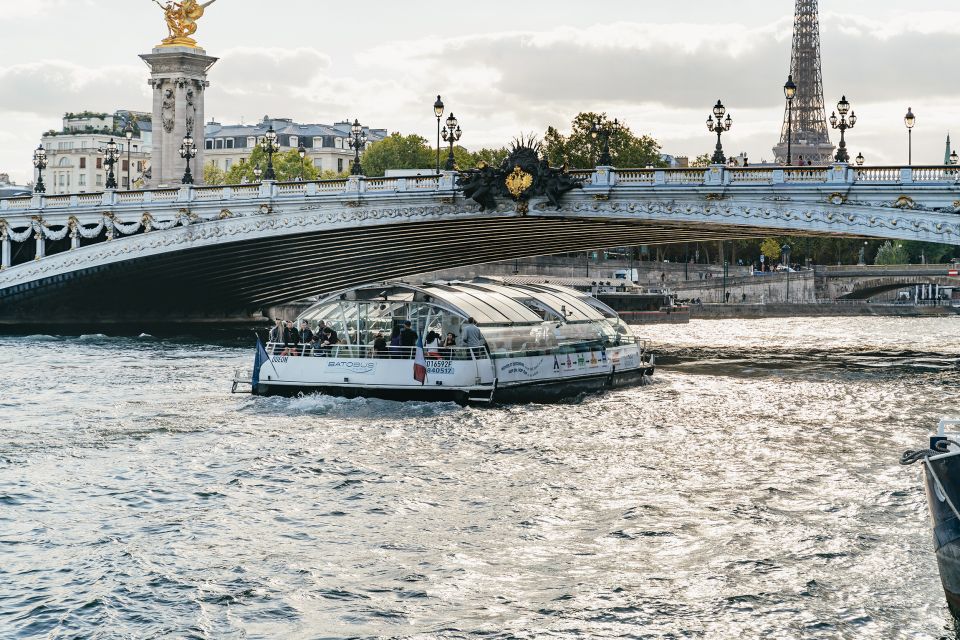
The Batobus boats are heated and include a terrace area, which makes a big difference when the weather changes. In winter, warmth isn’t a luxury—it’s what keeps your sightseeing from turning into a shiver session.
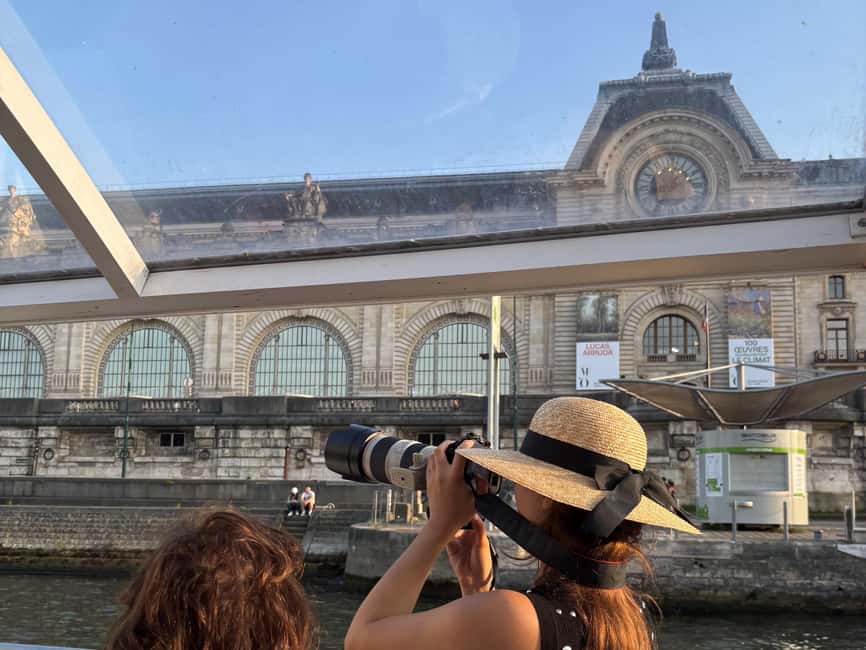
The boat ride is also glass-enclosed, which helps with wind and keeps sightlines more consistent. The tradeoff is obvious: when the glass is not at its clearest, you’ll see it in photos. If you care about crisp pictures, plan to spend time on the terrace too, not only inside.
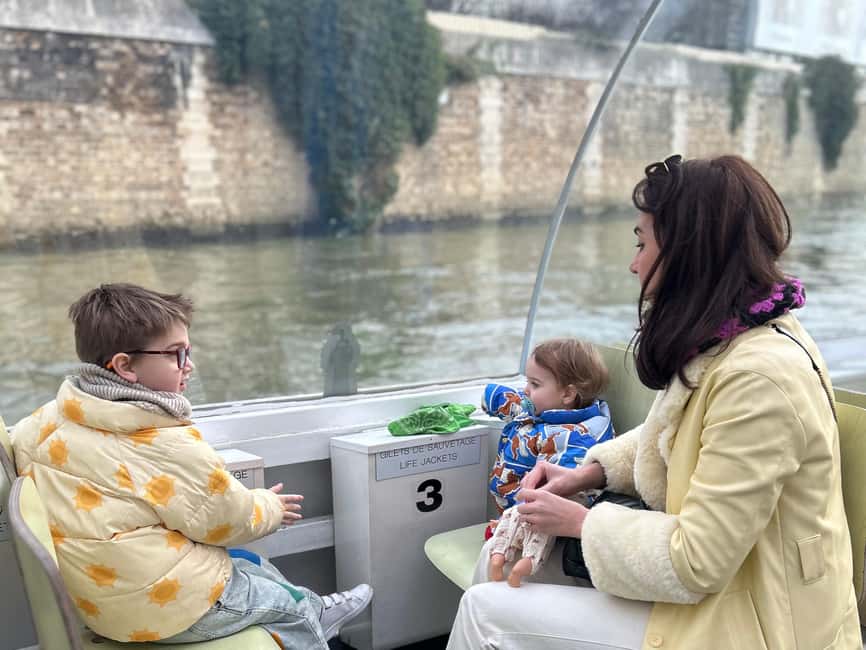
One other comfort factor: you’re moving between stops while staying seated. That means the Seine ride works like a built-in break. You’ll still walk at each stop, but you’re not doing the “walk, then walk more, then transfer, then walk again” rhythm that can wear you down fast.
Stop-by-stop: building your perfect Seine day
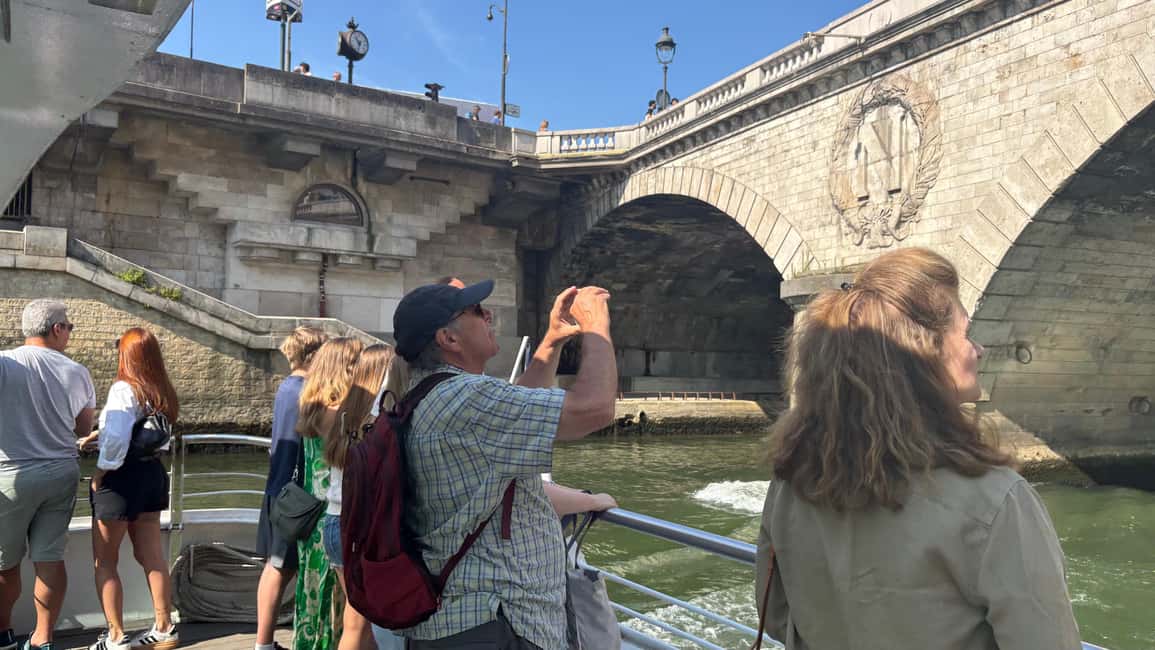
This route runs past some of Paris’s most famous landmarks, and the spacing is the point. It’s not just seeing the sights—it’s getting a realistic way to reach them.
Tour Eiffel port (Port de la Bourdonnais): start with scale
Starting here gives you the classic Paris moment early. From the Tour Eiffel stop (Port de la Bourdonnais), you’re right by the Eiffel Tower’s base, so you can decide whether you want a quick look or longer time on foot.
A smart add-on nearby is the Cité de l’Architecture museum, which focuses on French architectural heritage from the 12th to the 18th centuries. That makes a nice pairing if you’re the type who likes to understand the “why” behind what you see, not only the “wow.”
If you plan to do the full loop, starting at the Eiffel Tower is also a good way to anchor your first images.




Musée d’Orsay port (Quai de Solférino): art before crowds
Next up is the Musée d’Orsay (Quai de Solférino) area. It’s a convenient move because the museum is a top destination but also can be time-consuming. The hop-off setup lets you choose: short stop for a look, or longer time if you’ve planned it.
Even if you don’t go inside, this stretch gives you a refined sense of the river’s role in the city. You’ll see how the architecture aligns along the water, and you’ll understand why the Seine keeps showing up on postcards.
Saint-Germain-des-Prés port (Quai Malaquais): history and café culture
The Saint-Germain-des-Prés (Quai Malaquais) stop shifts the vibe. This is the literary and intellectual heart of Paris, and it’s ideal for slow wandering.
If you want specific places to aim for, this area includes Café de Flore and Les Deux Magots, plus nearby cultural institutions like the Institut de France. You’re not far from charming streets and old-school Paris café life.
This is also a good stop for photos that feel “Parisian,” not just “landmark.” You can look for bookshops, small streets, and side views that you wouldn’t see from the typical Eiffel Tower–Louvre–Notre-Dame route.
Notre-Dame port (Quai de Montebello): a must-see anchor
From Notre-Dame (Quai de Montebello), you can walk straight into the energy of the Latin Quarter. Notre-Dame is the obvious draw, but the real win is what happens around it: cafés, bookshops, student atmosphere, and lively streets you can explore on foot.
This is one of the stops where you might want to plan a longer break, because it’s easy to turn a quick visit into a full hour or more. If you like to pace yourself, this is a perfect “let your feet lead” stop.
Jardin des Plantes port (Quai Saint-Bernard): reset and recharge
The Jardin des Plantes (Quai Saint-Bernard) stop gives you a breather. Instead of another museum queue or another monument climb, you get a major garden and a calmer rhythm.
You also have the Cité de la Mode et du Design nearby, which adds a modern creative layer to the day. If your itinerary includes heavy hitters, this port helps balance it with something more relaxing.
Hôtel de Ville port (Quai de l’Hôtel de Ville): politics, art, and the Marais edge
At Hôtel de Ville (Quai de l’Hôtel de Ville), you’re near historic City Hall and close to the Pompidou Centre. You’re also well placed to reach the Marais district, which is great for galleries, boutiques, and cafés.
This port works if you want a mix of “big square Paris” and street-level browsing. You can do a quick monument look, then spend time drifting through side streets instead of feeling forced to rush through everything.
Louvre port (Quai du Louvre and Pont Royal area): plan your time
The Louvre Museum area comes through two nearby ports: Pont Royal and Pont du Carrousel. That’s useful because it gives you options on where to step off depending on which entrances you prefer and how you want to approach the museum.
The Louvre can swallow hours. With a hop-on pass, you can choose how much of it you want. Even if you don’t go inside, you’ll get satisfying river-to-land views that make the surrounding architecture feel connected.
Practical tip: if you’re aiming to do the Louvre plus other stops in the same day, keep your museum time focused. Otherwise, you’ll lose the flexibility that makes this pass valuable.
Place de la Concorde port: grand squares and great river angles
Next is Place de la Concorde, one of Paris’s big, open squares. From here, you can also access nearby museums like the Grand Palais and Petit Palais, and you’re set up for the elegant walk toward Avenue Montaigne.
This stop is especially good for photo time because squares give you wide views. You’ll also enjoy the way the river ride frames the buildings as you float past them.
Invalides port (Pont Alexandre III): Napoleon’s tomb and the best bridge scenery
The Invalides area is a standout for history lovers. The Hôtel des Invalides includes Napoleon’s tomb, and the stop also sets you up to see Pont Alexandre III, widely regarded for its striking beauty.
This is the part of the route where the views often feel the most cinematic. Bridges act like natural photo platforms, and the Seine gives you that angled perspective you can’t easily replicate from street level.
If you’re choosing when to do a second loop, this is a strong candidate. The scenery makes repeating worthwhile.
Using the multilingual webapp: turn views into facts
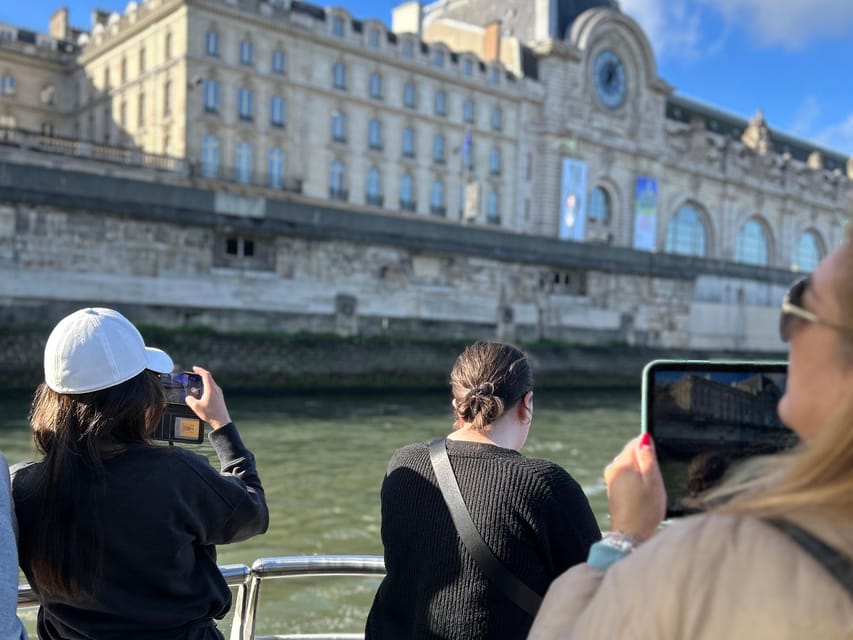
The boat itself gives you the setting. The interactive webapp is where you turn that into understanding.
It’s available in English, French, Italian, Spanish, and German, and it provides information about monuments and things to do around each stop. That’s useful because many of these places are obvious from afar but harder to appreciate without context.
Also note one key reality: there’s no onboard audio described in the experience details. So if you plan to rely on the webapp, keep your phone ready and consider loading any content you’ll need before you’re outside reception.
This is one of those small choices that changes the day. With the webapp working, each stop feels intentional instead of random scenery.
Best way to ride it: create a rhythm, not a checklist
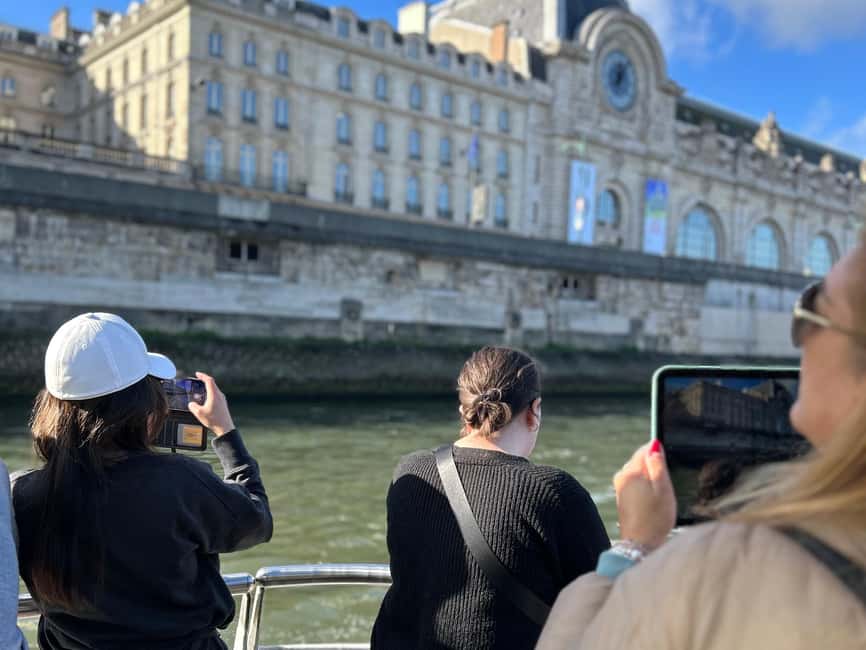
A practical strategy is to ride the full loop once, then use the second pass time to return to whatever you want to linger over. The loop gives you orientation fast, and then your hop-off decisions feel smarter.
If you only have a short window, treat it like a “Paris map made of water.” Hop off where you see the landmark you want most, spend time on foot, then hop back on for the next segment. That approach prevents the classic mistake of trying to do everything on foot and ending up exhausted.
For the best feel on the Seine, try to align at least one hop-off with calmer light—especially later in the day when crowds can ease and the river reflections look better.
Who this pass suits best
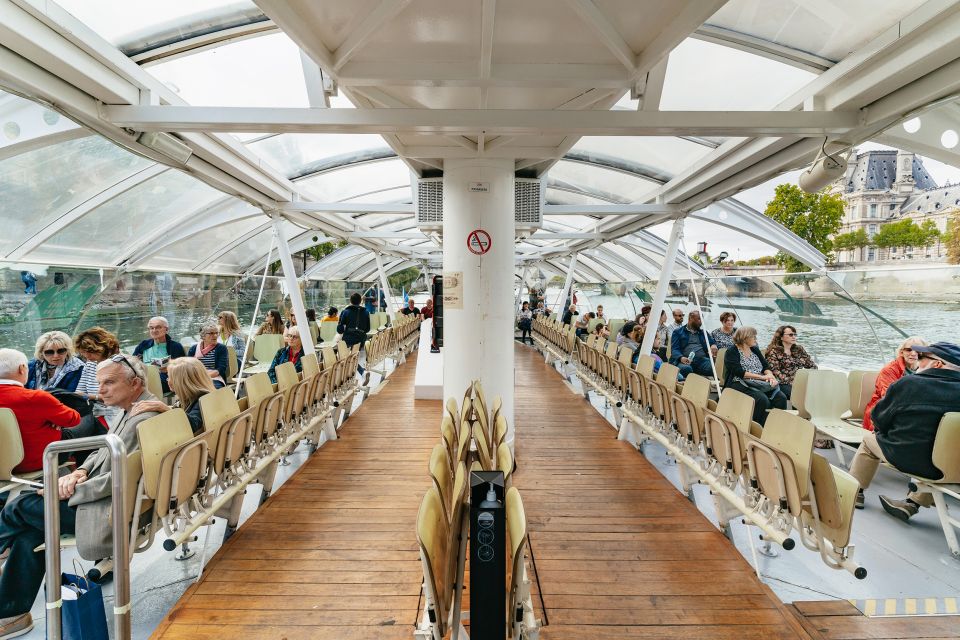
This is a strong choice if you want:
- A relaxed way to cover multiple major sights without repeated cross-city subway transfers
- Flexibility (choose short stops or longer wandering)
- A comfortable break while still sightseeing
- Photo-friendly angles from the terrace and glass views
It’s also great for days with mixed interests: a museum stop, a neighborhood stop, then a garden reset.
Skip it if:
- You need wheelchair access, since it’s not suitable for wheelchair users.
- You’re traveling with large bags or non-folding strollers, since those aren’t allowed.
Should you book it?
If you’re trying to see the biggest Paris landmarks without turning your vacation into a walking test, this pass is a solid buy. You’re paying for convenient water transport plus built-in pacing, and the 9-stop layout makes it easy to shape your day.
I’d book it when you want both viewpoints—street-level landmarks after hop-offs, plus river perspective during rides. If your plan is already tightly scheduled with museum tickets back-to-back and you’ll mostly stay in one neighborhood, you might not get full value. But for most first-timers and for anyone who wants an easier Paris rhythm, this hop-on hop-off Seine cruise is one of the smarter ways to spend limited time.
FAQ
How long is the pass valid?
You can choose a 24-hour or 48-hour consecutive pass. The validity starts from the moment you use it for the first time.
Where can I board and get off?
You can hop on and off at 9 Batobus stops along the Seine. The listed ports include: Tour Eiffel (Port de la Bourdonnais), Musée d’Orsay (Quai de Solférino), Saint-Germain-des-Prés (Quai Malaquais), Notre-Dame (Quai de Montebello), Invalides (Port des Invalides), Jardin des Plantes (Quai Saint-Bernard), Hôtel de Ville (Quai de l’Hôtel de Ville), Louvre (Quai du Louvre), and Place de la Concorde (Port des Champs-Élysées).
Do I need a smartphone during the cruise?
Yes. You’re told to bring a charged smartphone, since there’s an interactive webapp with information about monuments and what to do around each stop.
Is there audio commentary on the boat?
The details provided focus on an interactive webapp with commentaries, and one review note specifically says there is no audio. Plan to use the webapp rather than expecting audio on board.
Can I bring luggage or a stroller?
Luggage or large bags are not allowed. Non-folding strollers are not allowed, but fold-up carriages/baby carriages are allowed on board.
Is this suitable for wheelchair users?
No. The activity is listed as not suitable for wheelchair users.
If you tell me your travel month and whether you have 1 or 2 days in Paris, I can suggest a simple “first loop + best re-visit stop” plan that fits your pace.