REVIEW · PARIS
Tour of Paris in Citroën 2CV
Book on GetYourGuide →Operated by La Petite Frenchie · Bookable on GetYourGuide
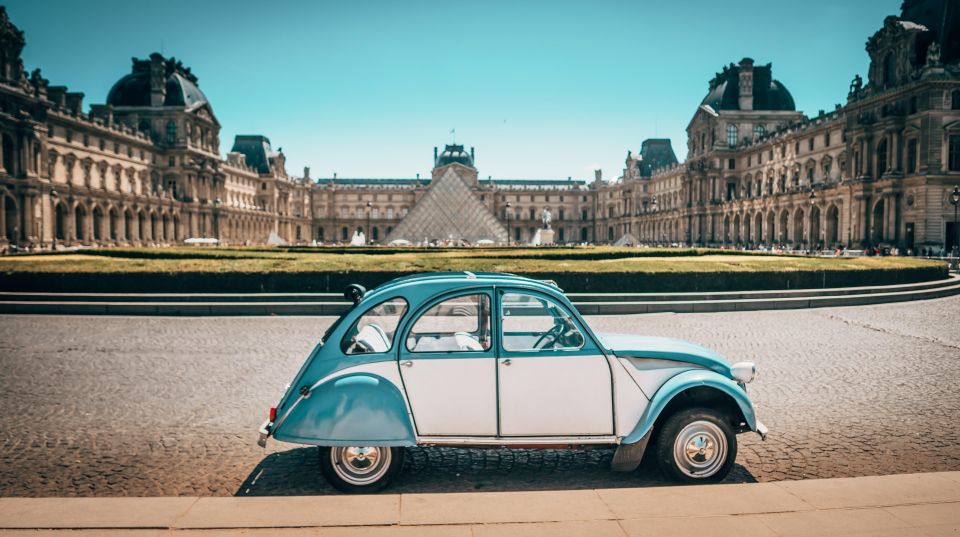
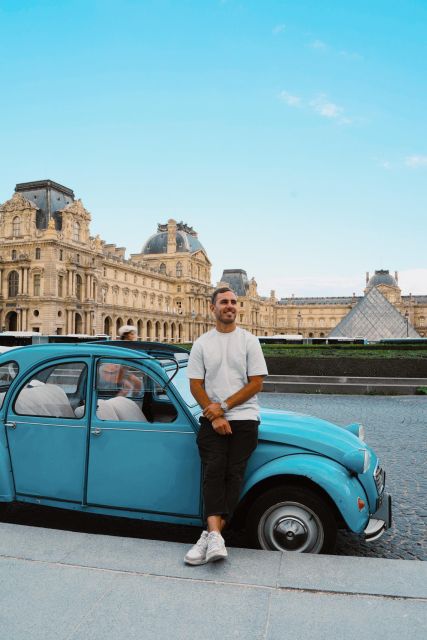
A 2CV ride makes Paris feel personal. I love the private, local-guided vibe, and I love that the car can slip into small streets big buses can’t reach. The one thing to keep in mind is the pace: in about an hour, this is a fast overview with lots of photo stops, not long museum time.
You’ll see a classic spread of Paris icons and a few quieter corners from the left bank to the Eiffel Tower area. If you time it for sunset or a night first evening in town, the route feels especially right. One more consideration: because you’ll be moving frequently, you’ll want to be ready to jump out, shoot photos, and get back in quickly.
In This Review
- Key things I think you should notice
- Why a Vintage 2CV Tour Works Better Than a Big-Bus Loop
- The pace: great for orientation, not for deep study
- How the 2CV Route Maps Paris in One Hour (or Two-Plus, Depending on Timing)
- What makes the stop plan work (and what to watch for)
- Starting on the Left Bank: Saint-Germain-des-Prés and Saint-Sulpice
- The Latin Quarter and Pantheon Zone: Where Stories Sit in the Streets
- Place Dauphine and Palais-Royal: The “Classic Paris” Intermission
- Palais Garnier, Place Vendôme, and Concorde: Paris in Polished Layers
- Champs-Élysées to Arc de Triomphe: The Straight-Line Part of the City
- Quick photo advice for this section
- Trocadéro and the Eiffel Tower: The Payoff Moment
- If you go at night or during sunset
- Les Invalides: Closing With a Monumental Contrast
- Guides and Language: Local Explanations, Not Just Coordinates
- Wheelchair accessibility
- Price and Value: $212 Per Group Up to 3 People
- Practical Tips to Get the Most From the Quick Photo Stops
- Who This Tour Suits Best
- Should You Book This 2CV Tour of Paris?
- FAQ
- How long is the Paris 2CV tour?
- Is this tour private?
- What languages are the live guides?
- Where do we meet?
- Do you offer hotel pickup?
- Will we see major landmarks like the Eiffel Tower and Arc de Triomphe?
- Is the tour wheelchair accessible?
- What’s the price for the group?
Key things I think you should notice
- Vintage 2CV access: tight streets, charm-filled squares, and side streets near neighborhoods like Saint-Germain-des-Prés and the Latin Quarter
- Stops built for photos: frequent viewpoint and photo moments at major sights like the Eiffel Tower and Arc de Triomphe
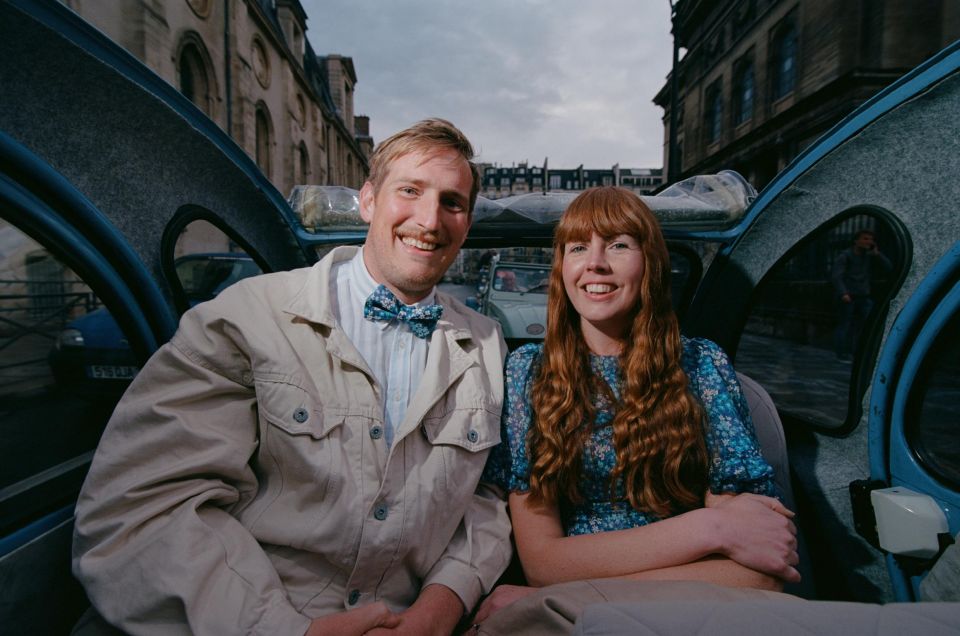
- Private group format: a guide for your group, with time to ask questions and adjust the flow
- Local-style narration: the tour guide is live and in English, French, or Spanish
- Built for first impressions: a great way to get your bearings fast before you dive deeper on your own
Why a Vintage 2CV Tour Works Better Than a Big-Bus Loop
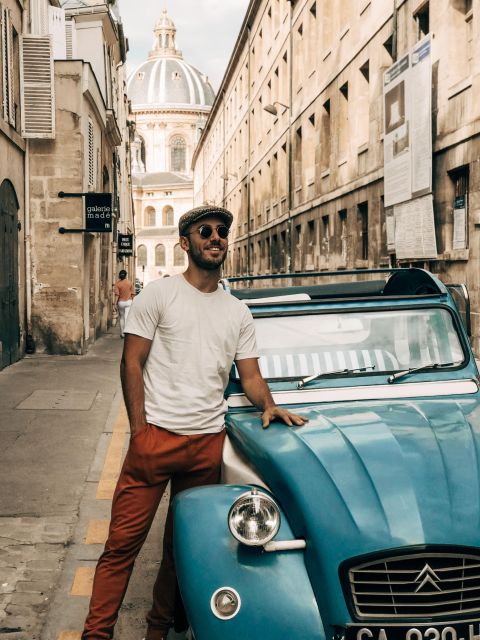
Paris can feel like it’s trying to impress you at every turn. The trick is choosing a format that lets you actually move through the city instead of just sitting in a crowd. A vintage Citroën 2CV changes the mood instantly. It’s small, old-school, and it makes the streets feel scaled to people, not tour groups.
The best part is how that vehicle size helps your route. The tour is designed to go beyond the easiest “look but don’t touch” sightseeing. You’ll drive around narrow side streets and past the kind of squares and lanes you often miss when you’re stuck on major avenues. That’s the difference between seeing Paris and getting a feel for how it flows.
You can also read our reviews of more tours and experiences in Paris.


The pace: great for orientation, not for deep study
If you’re expecting long explanations at every stop or lots of time inside landmarks, this is not that kind of tour. It’s a guided drive with frequent sight and photo stops. That means you get a strong overview in limited time, but you’ll still want a second visit for anything you really want to linger at.
How the 2CV Route Maps Paris in One Hour (or Two-Plus, Depending on Timing)
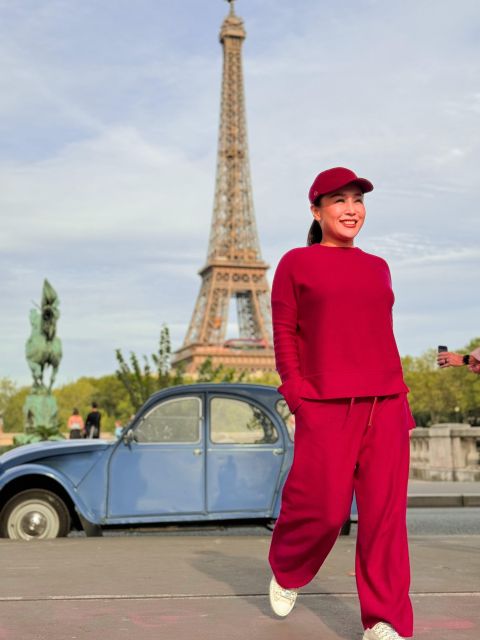
The experience is advertised as 1 hour, but the description also reads like a 2-hour-style loop with many stops. Either way, the practical takeaway is the same: expect a packed tour that cycles through major sights and several classic neighborhoods.
Think of it as a “spine” route: starting on the left bank area, then moving through landmark clusters, crossing through the river island zone, continuing into central Paris, and finishing at the Eiffel Tower area before wrapping up back near Saint-Germain-des-Prés. You’ll get repeated chances to orient yourself—where landmarks sit, how they relate to each other, and which streets feel most “Paris” between the big monuments.
What makes the stop plan work (and what to watch for)
The stops are a mix of quick sightseeing and short photo moments. That can be perfect if you hate wasting time and you want photos at the key angles. It can feel a little tight if you’re the type who likes slow walks and long pauses.
My advice: treat the stops as “capture and reset.” If you want more time at one place—say, the Eiffel Tower area—plan to build extra time into your own schedule right after the tour.
Starting on the Left Bank: Saint-Germain-des-Prés and Saint-Sulpice
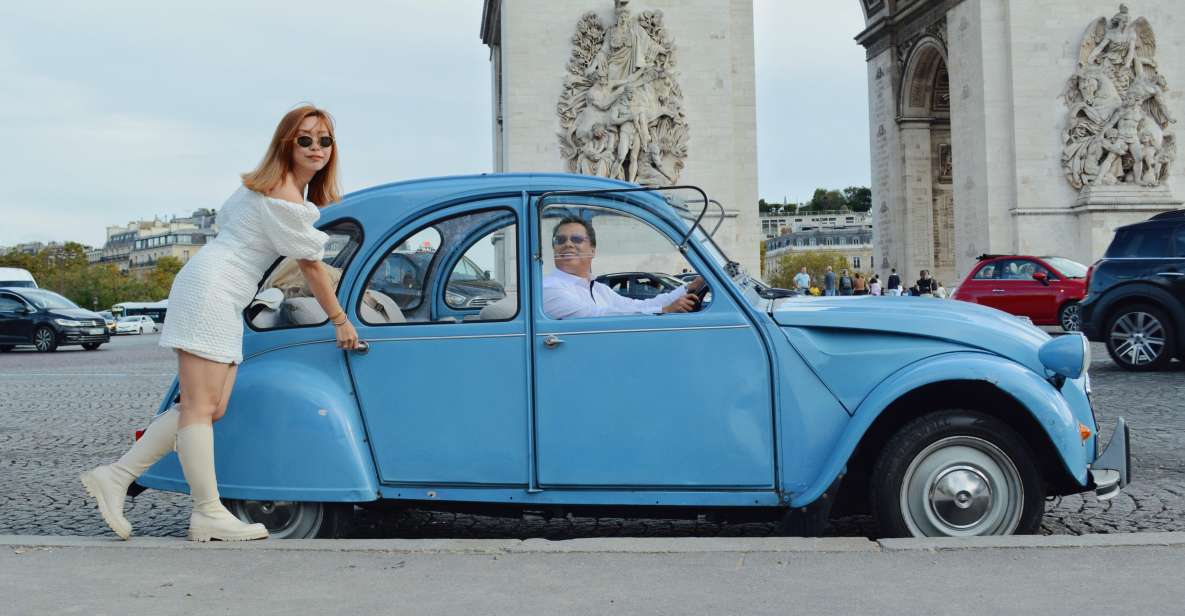
Your tour kicks off around Saint-Germain-des-Prés, with the meeting point at the church area in front of Les Deux Magots restaurant. It’s a strong starting zone because it anchors the whole day in the most classic “Left Bank” mood.
From there, you’ll get a photo stop and guided sightseeing around Saint-Germain-des-Prés. That’s a smart warm-up: you’re not starting at the Eiffel Tower or Arc de Triomphe. You’re starting where Paris feels like Paris—streets, local energy, and the kind of architecture that sets the tone.
Then you hit Church of Saint-Sulpice for sightseeing. This is one of those landmarks that often gets overlooked when tours rush straight to the mega-famous sites. Having it early helps you see Paris in layers: not just monuments, but the places locals associate with their day-to-day surroundings.


The Latin Quarter and Pantheon Zone: Where Stories Sit in the Streets
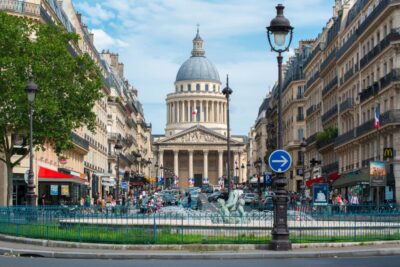
The tour includes a stop for the Pantheon with a photo moment. The Pantheon is a great “orientation” landmark because it’s prominent on the horizon and it helps you understand how the Latin Quarter area is structured.
Next comes the Latin Quarter itself, with guided touring. This is where the 2CV format shines. The idea isn’t only to point at buildings. You’ll move through the neighborhood lanes in a way that feels more like traveling with a local driver than riding a bus.
Then you transition toward Notre-Dame Cathedral and the Île de la Cité area for sightseeing. The cathedral zone is famous, so you might think you already know what you’ll see. But the value here is timing and perspective: you’re not fighting an all-day crowd, and you’re learning where the island fits into the larger city.
Place Dauphine and Palais-Royal: The “Classic Paris” Intermission
From the cathedral island zone, you’ll see Place Dauphine for sightseeing. It’s the kind of small, formal square that’s easy to miss if you’re only sweeping along the biggest boulevards. A quick stop is enough to mark it in your mind—so later, when you’re walking nearby on your own, you’ll recognize the spot.
Then you move to Palais-Royal for sightseeing. This is another excellent “get your bearings” location. Even with a short stop, you can understand why this area is repeatedly tied to the story of Paris—careful design, central position, and easy connection to nearby streets.
If you enjoy visual contrast—big landmarks mixed with more delicate city geometry—this middle section is where the tour pays off. It breaks up the mega-famous sights so your brain isn’t overloaded.
Palais Garnier, Place Vendôme, and Concorde: Paris in Polished Layers
Next is Palais Garnier, the famous opera house, for sightseeing. Even if you don’t go inside, seeing it from the street helps you understand why it’s such a symbol of Paris style and spectacle.
Then comes Place Vendôme, another classic square/area stop. It’s a good “feel” stop because it’s structured and symmetrical—perfect for a quick look that still tells you something about how central Paris is organized.
After that, Place de la Concorde gets a guided tour for about 5 minutes. Short guided commentary matters here. Concorde is wide and open; if you don’t have someone pointing out orientation cues, it can feel like an obstacle rather than a landmark. In a short time, you’ll learn how the space connects to what comes next.
Champs-Élysées to Arc de Triomphe: The Straight-Line Part of the City
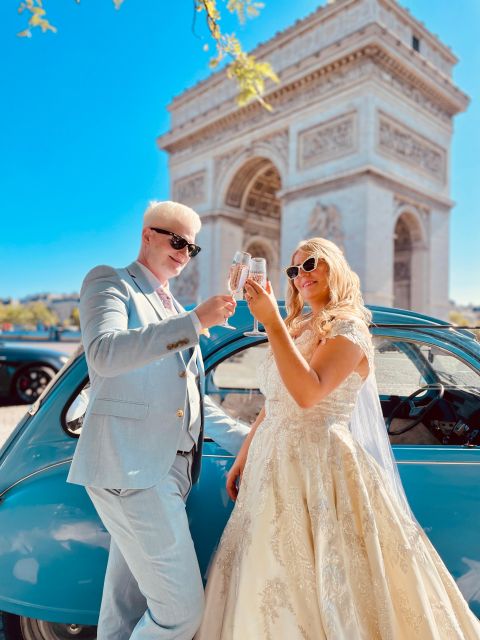
The tour includes Champs-Élysées for sightseeing for around 10 minutes, then a photo stop and sightseeing at the Arc de Triomphe for about 10 minutes.
This is the most “iconic corridor” segment of the ride. It’s also where a private 2CV helps, because you’re not stuck with the rigid rhythm of mass departures. You can focus on the angles and viewpoints the guide is aiming for, and you’ll likely get a better sense of the geometry connecting these major spots.
Quick photo advice for this section
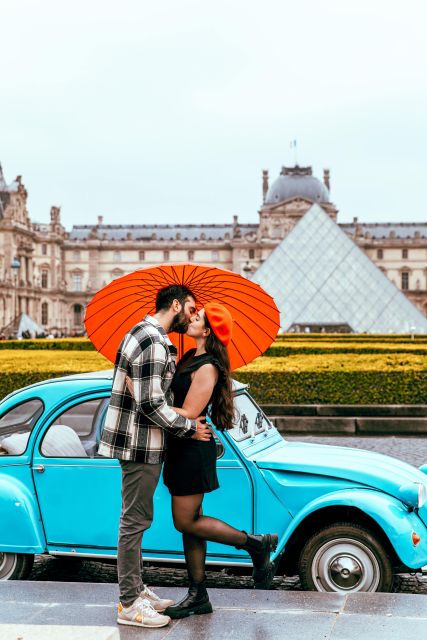
If you want the best photos, plan to step out at the moment your guide says you’ll have the best angle. The tour schedule is tight, so it’s not a slow stroll where you can experiment endlessly. Treat it like a moving photo lesson: step out, shoot, then move.
Trocadéro and the Eiffel Tower: The Payoff Moment
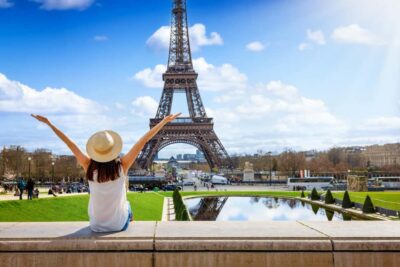
The tour goes to Place du Trocadéro for sightseeing (about 5 minutes), then to the Eiffel Tower for photo stop and sightseeing (about 10 minutes). This is the section most people remember, because it’s where Paris turns from “landmarks” into “postcards with context.”
Trocadéro is a smart pre-Eiffel stop. It sets you up for the main view. Then you move into the Eiffel Tower area, with a short window that’s ideal for photos and for getting a sense of scale—how large it looks in real street-level space.
If you go at night or during sunset
The description frames this tour as ideal for sunset or night, and I get why. Paris at night has a different tempo: the light softens, streets feel less chaotic, and photos look more dramatic without you having to do much work. One past guide experience also suggested a more lively vibe on evening departures, with the guide Florian responding to the group’s music tastes while explaining things.
Les Invalides: Closing With a Monumental Contrast
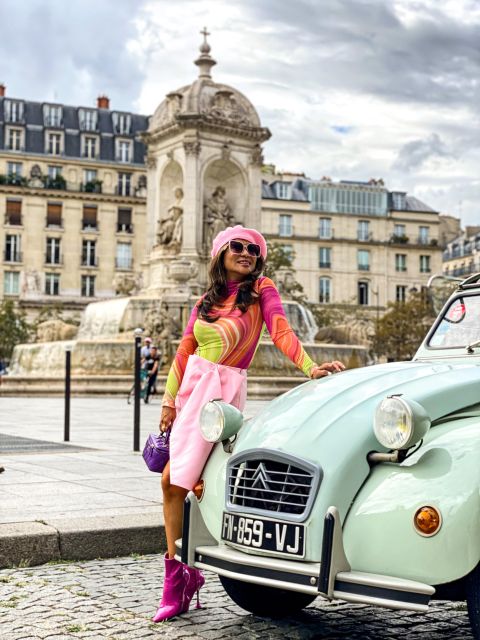
After the Eiffel Tower area, the tour includes Les Invalides for sightseeing (about 5 minutes). It’s a great final contrast: the area feels grounded and historic in a different way than the tower-and-arc segment.
You’ll finish with drop-off back near Saint-Germain-des-Prés, specifically the church area in the 6th arrondissement. Having a left-bank ending matters. You’re more likely to continue walking, grabbing dinner nearby, or heading to your hotel without needing another transit plan.
Guides and Language: Local Explanations, Not Just Coordinates
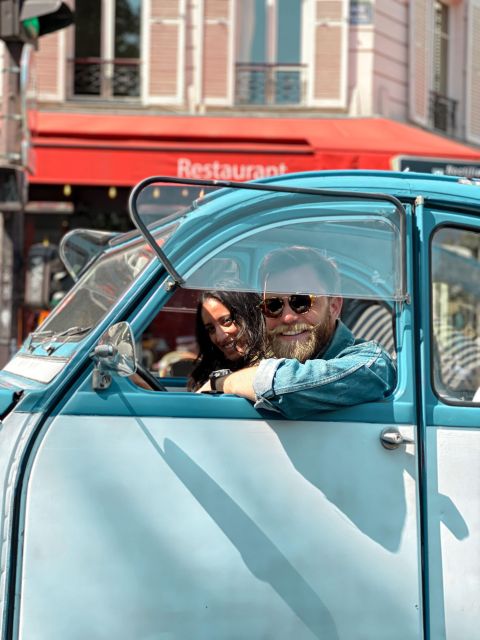
The tour is led by a live guide in English, French, or Spanish. For me, that’s a major quality marker. A quick landmark loop is fun, but it’s the guide’s explanations that turn it into something you can use later when you explore on your own.
The feedback also points to standout guide energy. You’ll hear names like Noé, Fred, and Florian in past experiences, with praise for professionalism, warmth, and especially photo guidance. In particular, Florian stood out for creating great photo opportunities and for bringing a more personal touch during a night ride by working with the group’s music preferences.
Wheelchair accessibility
The tour is marked wheelchair accessible. The key thing for you: since a vehicle and route can have different curb situations, it’s smart to confirm specifics with the operator before you go so you know exactly how the boarding and stops will work for your needs.
Price and Value: $212 Per Group Up to 3 People
The price is listed as $212 per group for up to 3 people. That’s how you should think about value: not per person, per group.
If you’re a couple, you’re sharing the cost, which often makes this kind of private sightseeing easier to justify than paying per person on a standard tour. If you’re traveling as a small group of three, the effective cost per person drops further, and suddenly you’re getting a private guide with a niche vehicle that can reach streets most larger tours can’t.
The real value isn’t just the price tag. It’s the route design. In limited time, you get multiple iconic sights plus neighborhood driving. If you’re on a tight schedule and you want a guided overview that also feels like you’re seeing Paris up close, this is a practical match.
Practical Tips to Get the Most From the Quick Photo Stops
You’ll be on and off the 2CV multiple times, so do a few small things to make your experience smoother.
- Wear shoes that work for quick photo stops and short walks.
- Have your camera/phone ready. The best moments can be brief.
- If you care about the Eiffel Tower view, plan to lean into the Trocadéro-to-Eiffel flow without trying to wander off-script.
- Bring a light layer. Even in mild seasons, the open-air feeling can make a difference.
Also, because the vintage 2CV can be especially enjoyable when the conditions are right, keep an eye on weather. One past experience specifically mentioned how great it felt when the roof was open on good weather—so if you’re booking for a pleasant day, that’s the kind of bonus you can hope for.
Who This Tour Suits Best
This is a smart choice if you want:
- A private Paris introduction without the stress of navigating city logistics
- A way to see multiple top sights in a short window
- A guided ride that focuses on both the famous and the more local-feeling streets
- A first-evening overview, especially if you want a plan for where to return next
It’s less ideal if you want to spend hours at one site, like a long museum visit. Also, if you hate moving frequently, the tight stop sequence may feel like you’re always in motion.
Should You Book This 2CV Tour of Paris?
If your goal is to get oriented and take strong photos fast, I’d book it. The private format, the vintage 2CV’s ability to handle small streets, and the high concentration of major Paris landmarks make it a solid use of a short visit.
I’d skip it only if you know you’ll want slow, deep time at museums or if you’re booking specifically for a long, stop-and-stay itinerary. Otherwise, this is one of those experiences that helps you understand Paris quickly, then enjoy it longer on your own.
FAQ
How long is the Paris 2CV tour?
The duration is listed as 1 hour.
Is this tour private?
Yes. It’s a private group.
What languages are the live guides?
The live tour guide is available in English, French, and Spanish.
Where do we meet?
The meeting point is Saint-Germain-des-Prés church, in front of Les Deux Magots restaurant.
Do you offer hotel pickup?
Hotel pickup and drop-off are included within the 1st to 8th arrondissements.
Will we see major landmarks like the Eiffel Tower and Arc de Triomphe?
Yes. The route includes photo stops and sightseeing at the Eiffel Tower and the Arc de Triomphe, plus other well-known sites like Notre-Dame and Place de la Concorde.
Is the tour wheelchair accessible?
Yes, the tour is marked wheelchair accessible.
What’s the price for the group?
It’s listed at $212 per group up to 3 people.