REVIEW · PARIS
Paris : Private guided tour in Rickshaw bike – Napoléon
Book on GetYourGuide →Operated by GoTurtle · Bookable on GetYourGuide
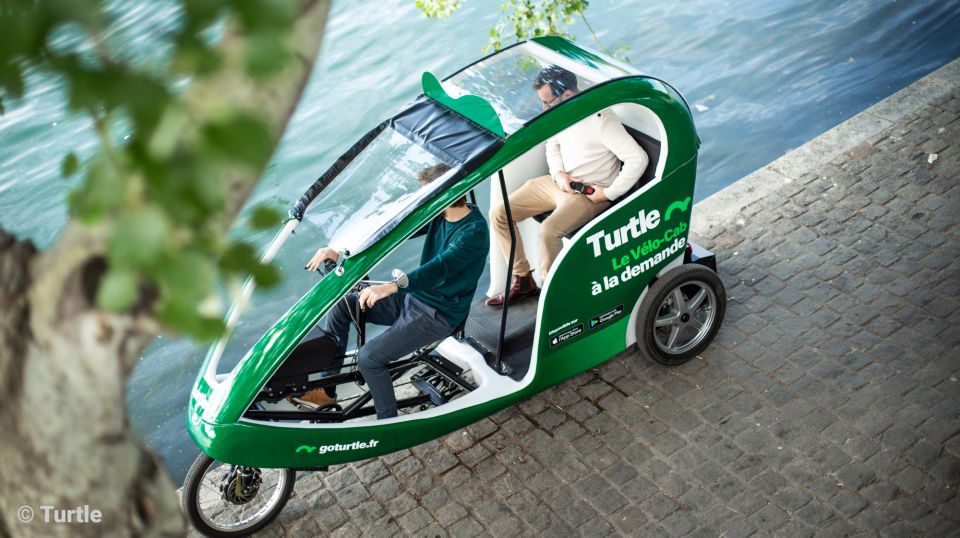
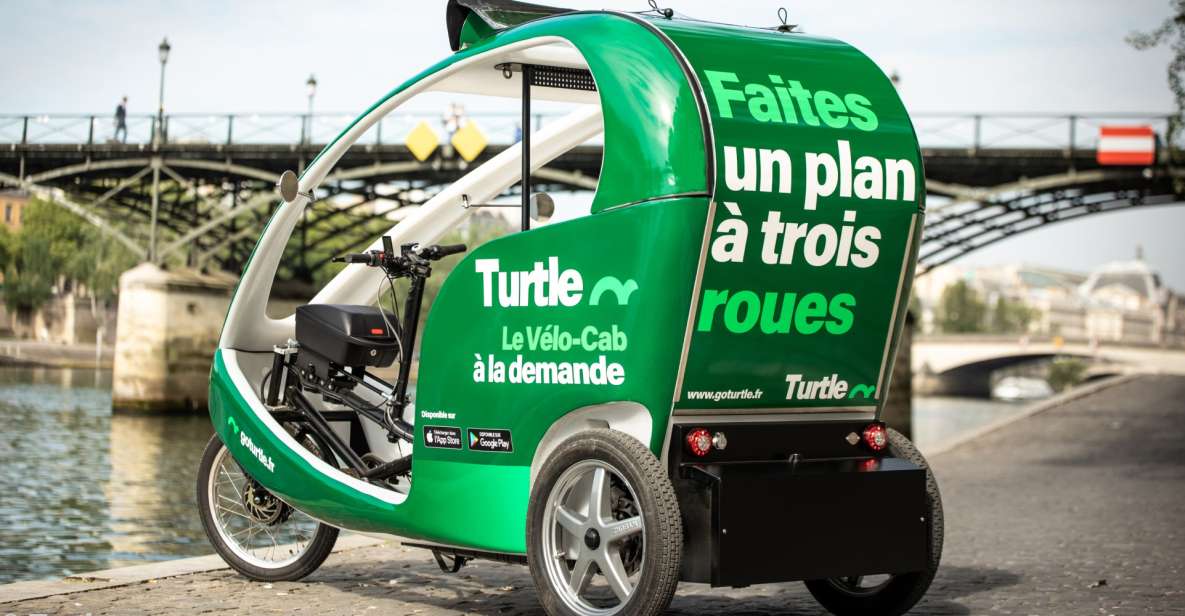
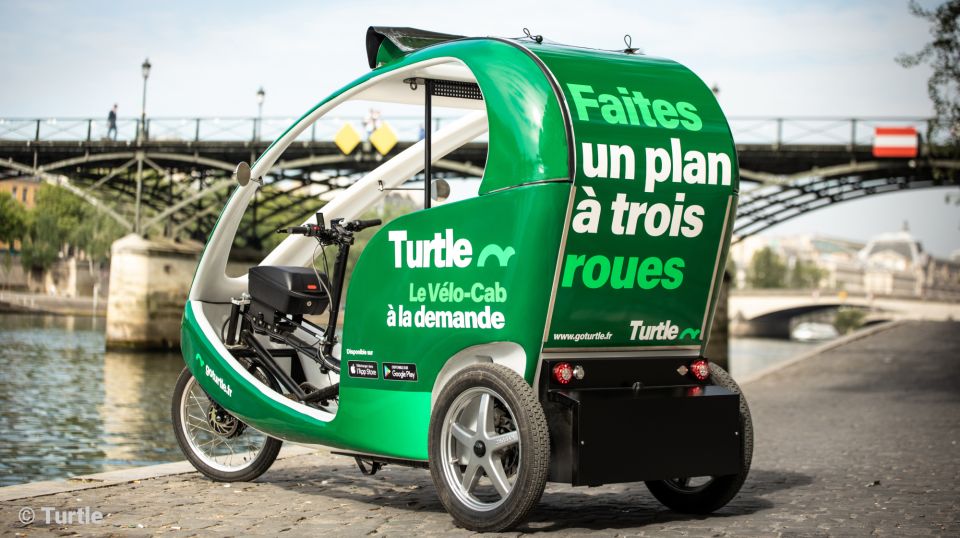
Paris looks different when you’re actually gliding through it. With a private pedicab, I like the 180° views and the built-in photo breaks that turn big sights into a real, easy sightseeing loop.
You’ll cover more than 20 landmarks in the longer option along major sights like the Louvre area, Notre-Dame, the Seine bridges, and back to Concorde. The ride stays comfortable, and you get commentary on what you’re seeing—though the quality can depend on the guide and how clearly they communicate in your chosen language.
One real consideration: if you’re hoping for very specific pickup or drop-off at your exact hotel door, make that clear before you go. In one booking, the end-location and communication didn’t match expectations, and the driver’s English was hard to follow—plus the music volume made it harder to catch instructions.
In This Review
- Key things to know before you book
- Why a pedicab works so well for central Paris
- Mini Napoléon (30 minutes) vs Napoléon (1 hour)
- The Concorde-to-Seine route: what you’ll actually see
- Photo breaks and the 180° view advantage
- Driver and guide quality: what your language choice really changes
- Timing, comfort, and getting through Paris traffic without stress
- Price and value: what $23 per person buys you
- Rules that keep the ride comfortable
- Should you book this Rickshaw Napoleon Tour?
- FAQ
- Where does the tour start?
- How long is the tour?
- What’s included during the ride?
- Are there audio guides, and which languages are available?
- Which languages are live guides available in?
- Does the tour run in bad weather?
- Is the tour private?
- Is it allowed to bring alcohol?
Key things to know before you book
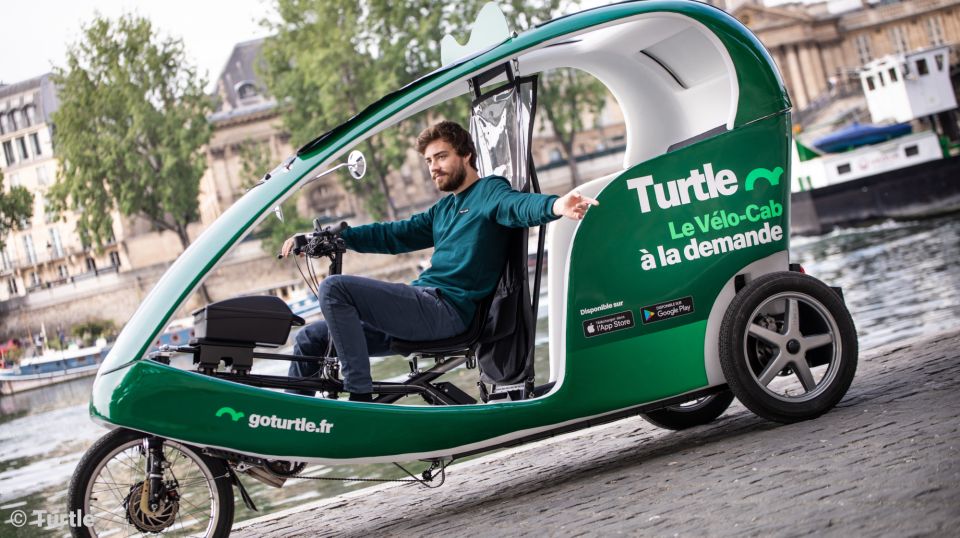
Private pedicab for up to 2 people means your ride feels personal, not like a bus with a camera line.
30 minutes (Mini Napoléon) vs 1 hour (Napoléon) helps you match the route to your energy and schedule.
20+ landmarks with photo stops gives you frequent chances to pause rather than just pass by.
Multilingual live guide + audio guide can be a lifesaver if your preferred language is limited in moment-to-moment delivery.
Rain or shine: the operator has weather protections, so you’re not forced into a “sorry, it’s too wet” plan.
Driver style matters—a smooth, confident driver makes the experience feel relaxing and safe.
Why a pedicab works so well for central Paris
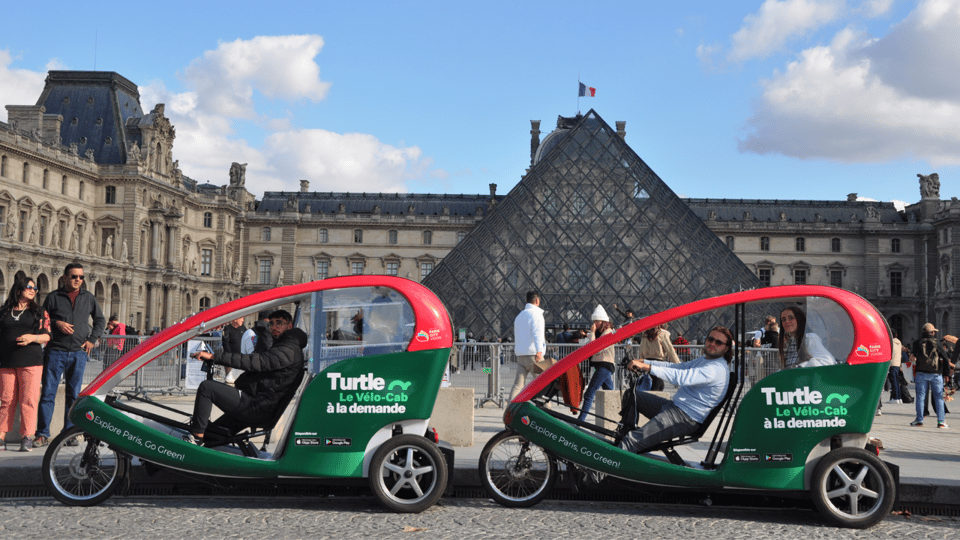
Paris is great on foot, but it can be punishing. A pedicab gives you something walking can’t: consistent sightlines plus zero leg fatigue. You sit comfortably and get a wide view—especially useful when you want photos with rooftops, boulevards, and bridges all in frame.
The route also benefits from being built around cycle-lanes. That means you can keep moving without the stop-and-go frustration that sometimes kills sightseeing momentum. And because it’s private (up to 2 people), you’re not waiting your turn at every photo stop.
The best part is how the pace changes. Instead of doing a checklist while weaving through crowds, you get frequent pauses to look, take pictures, and actually absorb the monument at street level. Even if you only know a few names, the guide’s job is to connect what you’re seeing with why it matters.
You can also read our reviews of more cycling tours in Paris

Mini Napoléon (30 minutes) vs Napoléon (1 hour)
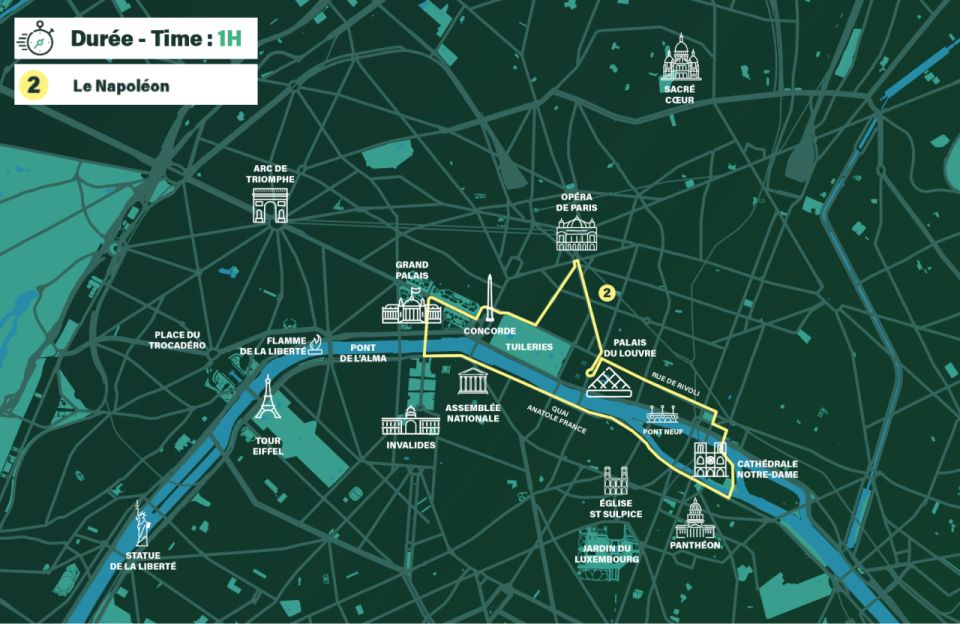
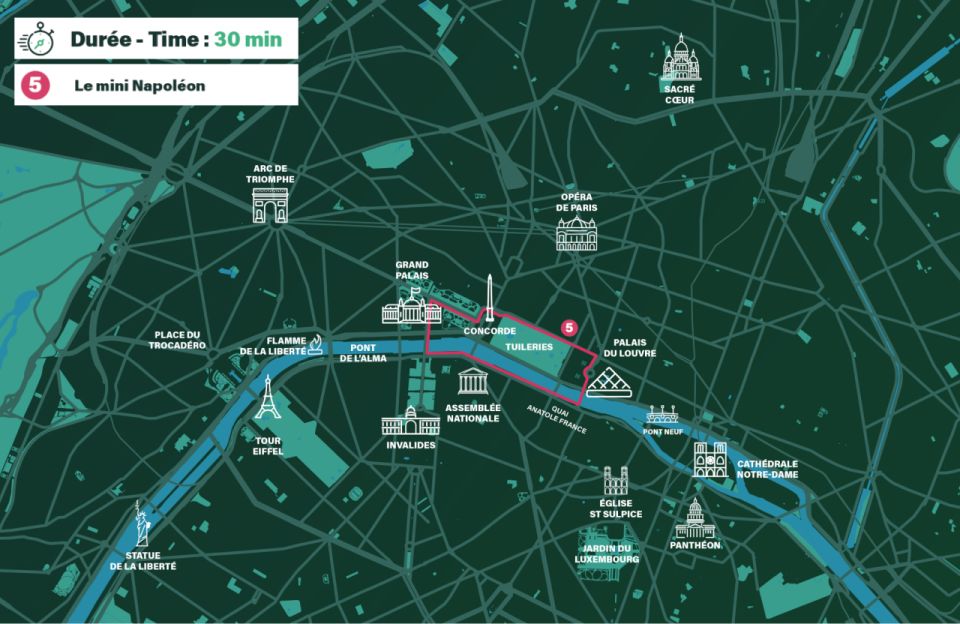
If you’re short on time, the 30-minute Mini Napoléon is the fast orientation hit. It starts at Place de la Concorde, then moves through a tight concentration of classic highlights: the Louvre (including the pyramids area), the Tuileries, Concorde, and a pass over the Pont Alexandre III area, with photo stops along the way.
Choose this option if:
- you’re arriving and want a quick “greatest hits” map of the city center
- you want monuments without committing an hour
- you’re traveling with kids or teens who still have energy but don’t want a long slog
The 1-hour Napoléon version is the fuller loop through more monuments. You’re still anchored around the central core, but it expands into a bigger sweep: the Champs-Élysées, Arc de Triomphe, Grand Palais, Seine crossings, Les Invalides, the National Assembly area, Musée d’Orsay, Pont des Arts, Musée de la Monnaie, Pont Neuf, Notre-Dame, Hôtel de Ville, Louvre, and then onward toward the Opéra area (Palais Garnier), Rue de la Paix, and Place Vendôme—before returning to Place de la Concorde.
Go for the 1-hour ride if you want more than photos. The longer route gives the guide more chances to explain how these spots fit into the city’s bigger story—so your pictures come with context, not just scenery.
The Concorde-to-Seine route: what you’ll actually see
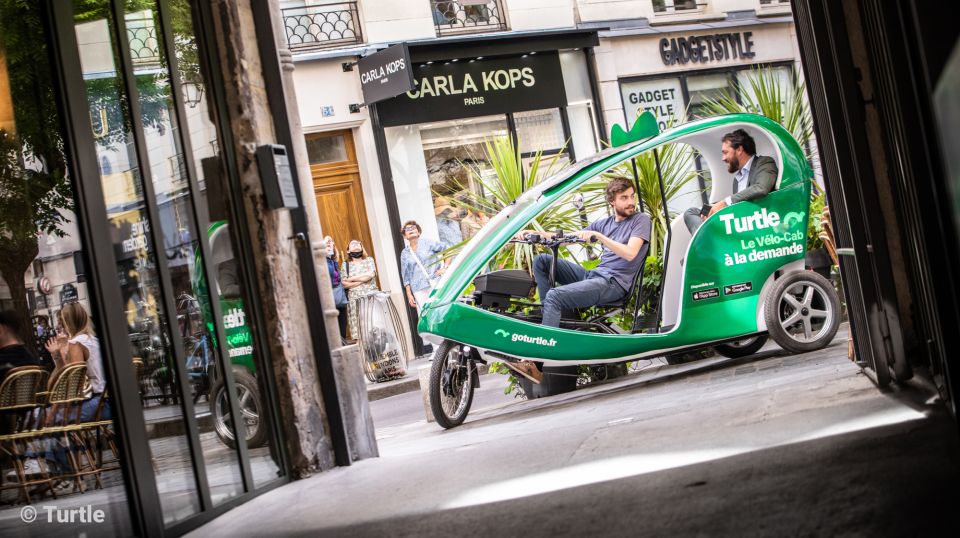
The tour starts at Place de la Concorde, in front of the main exit of the Jardin des Tuileries. That’s a smart starting point because you’re instantly in the thick of central Paris, close to multiple major districts, so you don’t waste time getting your bearings.
From there, the 1-hour itinerary is basically a guided walkthrough of the grand-city center:
- Hôtel de la Marine: you’ll get a photo stop early, which is great if you want a “starting Paris” shot before the route picks up.
- Champs-Élysées: this is one of those streets where the scale can surprise you once you’re elevated and viewing across the boulevard.
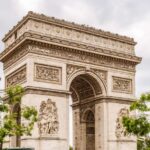
- Arc de Triomphe: the big monument moment, with the kind of framing you usually don’t get from the ground without doing a trek.
- Grand Palais: another prime photo pause, especially if you like architectural details.
- Pont Alexandre III: a classic bridge stop—perfect for wide-angle views and for getting that “Paris postcard” angle you can’t always recreate on a busy sidewalk.
- Les Invalides: a stop that shifts the mood toward historic landmark territory.
- Assemblée Nationale: you’ll pass by one of the key civic buildings in the center, and the guide’s commentary helps it feel less like a facade you just drive past.
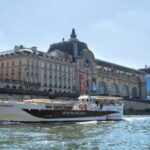
- Musée d’Orsay: the Seine-side angle is the draw here. You get the museum area in your line of sight without needing to schedule an indoor visit.
- Pont des Arts and Musée de la Monnaie: these stops are handy because they put the Seine crossings and riverfront landmarks into a single sweep.
- Pont Neuf: you’ll see it from the road approach, which gives a different perspective than approaching on foot.
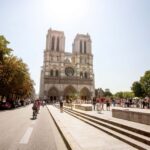
- Notre-Dame Cathedral: this is the emotional anchor for many people. Even if you’re not taking an extended photo session, the stop helps you connect the monument to the surrounding city grid.
- Hôtel de Ville: another historic landmark moment, and it’s a good counterbalance after the cathedral stop.
- Arc de Triomphe du Carrousel: a more specific arc stop that’s fun if you like seeing the family resemblance between Paris’s big monuments.
- Louvre Museum / pyramids area: the tour gives you multiple Louvre-area vantage points by the way it loops back through the city center.
- Palais Garnier (Opéra area): a visually dramatic stop, especially if you’re into grand facades and theater architecture.
- Rue de la Paix and Place Vendôme: this is where the route turns into luxury boulevard energy, with a photo stop that’s easy to enjoy even if shopping isn’t your thing.
If you’re doing the Mini Napoléon 30-minute version, you’ll hit fewer stops—but you still get the big “core” monuments like Louvre/pyramids area, Tuileries, Concorde, and the Pont Alexandre III region.
Practical note: every stop comes with a photo break. That doesn’t mean you’ll be stuck at each location for ages. It’s built into the pacing so you can take a few solid shots, then move on.
Photo breaks and the 180° view advantage
A pedicab ride sounds fun. It’s actually strategic.
The 180° view matters because Paris is full of overlapping angles: bridges, rooftops, and long boulevards all line up differently from street level versus a higher seating position. When you’re seated on the bike, you can often frame photos with more depth—especially around the Seine bridges.
Here’s how to get the most out of it:
- Aim to plan your camera moments for when the driver signals a photo stop. Don’t scramble during movement.
- If you’re traveling with more than one person, decide on who takes the main shots and who handles group pictures during the breaks.
- Use the route’s loop logic: you’ll see landmarks from multiple “approach sides” because the ride connects major streets rather than repeating the same path.
One extra perk: Wi‑Fi on board can help if you want to upload quickly or check maps while you’re out. It’s not the reason to book, but it’s a nice practical touch.
Driver and guide quality: what your language choice really changes
The tour is private, but the experience still depends heavily on the person guiding it. The live guide is offered in multiple languages (English, French, Spanish, Arabic, Portuguese, Italian, Polish). There’s also an audio guide included in several languages (English, French, Spanish, German, Japanese, Dutch).
That flexibility is useful because real life is messy. One booking described a guide who didn’t say much, possibly due to language mismatch. Another described music being too loud to hear commentary clearly. These are easy fixes if you communicate early.
In the positive side, I’ve seen strong examples of how good drivers turn a standard route into a memorable one. One guide named Joao Fernandez was described as patient, history-focused at each stop, and an expert at capturing lots of photos. Another named Ismael was described as punctual and very friendly.
My advice to you: during the first minutes, confirm your language comfort and ask the guide to keep commentary audible. If music is playing, ask for a volume level that lets you hear the story. You paid for the narration—don’t let it get swallowed by the soundtrack.
You can also read our reviews of more guided tours in Paris


Timing, comfort, and getting through Paris traffic without stress
The ride duration is 30 minutes to 1 hour, depending on the option you choose. That timing is ideal for travelers who want results without giving up an entire morning or afternoon.
Comfort is also part of the pitch. The seat is described as comfortable, and the tour includes tailored weather protections for year-round operation. The experience runs rain or shine, which matters because Paris weather can switch quickly and unpredictably.
Pedicab riding is naturally more “street-level” than a seated bus tour. You’ll feel the movement and the stops more. That’s not bad—it just means you should treat it as a city ride rather than a smooth, silent transit. If you get motion sensitive, bring your usual comfort items (like a light layer) and sit back for the turns.
Also, the tour is designed around cycle-lane movement. That can feel calmer than dense traffic, but it depends on local flow and how the driver handles stops.
Price and value: what $23 per person buys you
On paper, $23 per person for a guided private pedicab loop looks like a bargain. But the value becomes clearer when you tally what’s included.
You’re not just buying transportation. You’re getting:
- a guide/driver
- hotel pickup within a certain area near the start (so you might save time getting to Place de la Concorde)
- photo breaks built into the route
- Wi‑Fi on board
- pet-friendly policy
- commentary with multilingual live guide and audio guide support
- operation rain or shine with weather protections
That’s a lot bundled for a short window. If you’re traveling as a couple or with one other person, the private nature (up to 2 people) makes the ride feel like a personalized mini-city experience instead of a generic sightseeing product.
Where value can shift is if you add special pickup/drop-off needs. One booking described paying extra for pickup/drop-off at accommodations outside the standard arrangement, and then experiencing a mismatch at the end of the tour. If you’re planning a non-standard pickup/drop-off, double-check the plan before you go and keep your expectations crystal clear.
Rules that keep the ride comfortable
This tour is straightforward: alcohol and drugs aren’t allowed. That’s a good rule for safety and for keeping the guide’s commentary and photo stops easy.
The ride is also pet friendly, which is a big deal if you travel with a dog and you want to keep your sightseeing day inclusive rather than leaving your pet behind.
Should you book this Rickshaw Napoleon Tour?
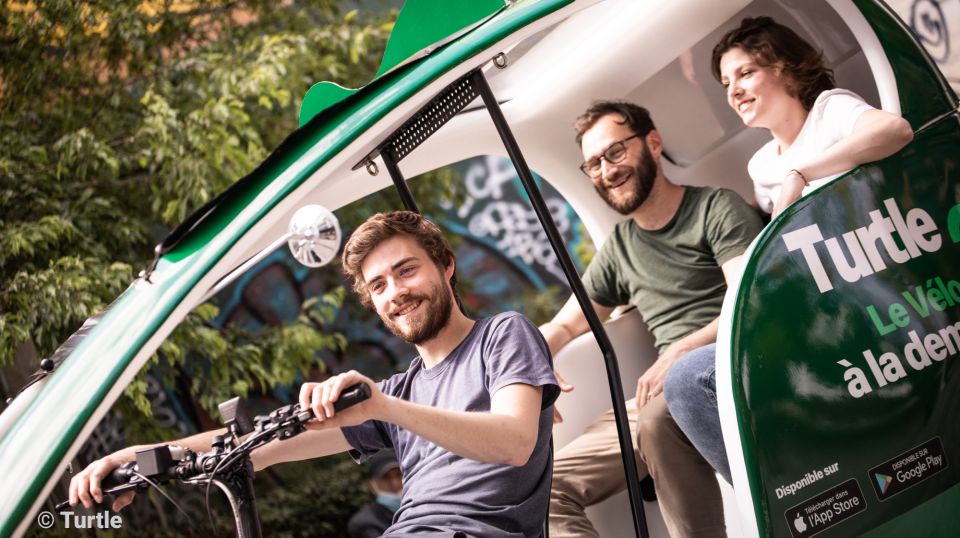
I’d book it if you want a fast, scenic way to orient yourself in central Paris, especially if you like photos and you don’t want to walk for hours. The 20+ landmarks, private format, and photo breaks make it a solid choice for first-timers, couples, and families with teenagers who still want the monuments but need a break from pavement.
Skip or be extra careful if:
- you need very exact hotel pickup/drop-off and you haven’t confirmed the details clearly
- you’re relying on the live guide in a specific language and you’re sensitive to low audibility
- you’re uncomfortable with driving style; a calm, confident driver makes a big difference
If you do book: message your preferences early. Ask about your language setup. And treat the first few minutes as a quick alignment session so the rest of the ride feels smooth.
FAQ
Where does the tour start?
The meeting point is Place de la Concorde, in front of the main exit of the Jardin des Tuileries.
How long is the tour?
You can choose 30 minutes to 1 hour, depending on the Mini Napoléon or Napoléon option.
What’s included during the ride?
It includes a guide/driver, hotel pickup within a certain area near the start, Wi‑Fi on board, photo breaks, and an audio guide (plus live guide narration).
Are there audio guides, and which languages are available?
Yes. The audio guide is included in English, French, Spanish, German, Japanese, and Dutch.
Which languages are live guides available in?
Live tour guide languages include English, French, Spanish, Arabic, Portuguese, Italian, Polish.
Does the tour run in bad weather?
Yes. The tour takes place rain or shine, with weather protections provided.
Is the tour private?
Yes. It’s listed as a private group, with private transport for up to 2 people.
Is it allowed to bring alcohol?
No. Alcohol and drugs are not allowed.
If you want, tell me which option you’re considering (30-minute Mini Napoléon or 1-hour Napoléon) and what time of day you’re going. I’ll help you pick the one that fits best.