REVIEW · PARIS
Paris: City Highlights Bike Tour
Book on GetYourGuide →Operated by Holland Bikes · Bookable on GetYourGuide
One ride and Paris clicks into place. This 3-hour tour mixes classic monuments with bike-lane cruising and great photo stops, plus a guide who brings La vie à Paris to life. I also like the option for an electric bike when you want an easier spin; the only catch is you need to be comfortable riding a bike in real street conditions.
I like that the route is built for moving—less time stuck in traffic, more time gliding past the big names along the Seine and major boulevards. And when the guide narrates as you roll, it feels less like sightseeing and more like learning how Parisians actually move through their city. Still, if you’re nervous around cars, you’ll want to listen closely to instructions and keep a steady pace.
In This Review
- Key moments worth waking up for
- Starting at Meyerbeer Opéra: the easy launch point
- How the tour really feels: fast-moving highlights with guide-led stories
- Palais Garnier and Place Vendôme: the grand opening photo sequence
- Place de la Concorde and Champs-Élysées: where the ride does the sightseeing
- Grand Palais, Petit Palais, Pont Alexandre III: Paris at full cinematic mode
- Les Invalides and the Seine ride: the “breather” that still counts
- Eiffel Tower and Musée d’Orsay pass-by: two icons, different vibes
- Louvre and Rue de Rivoli: seeing the city’s “public rooms”
- Hôtel de Ville and Île de la Cité: the historic core without the slog
- Electric bikes, Dutch bikes, and helmets: comfort that changes who can enjoy this
- Safety and traffic reality: why the guide’s role is so big
- What you’re paying for: $50 worth of time, guidance, and logistics avoided
- Who should book this bike tour (and who should skip it)
- Should you book this Paris City Highlights Bike Tour?
- FAQ
- Where is the meeting point for the tour?
- How long is the Paris City Highlights Bike Tour?
- What’s included in the price?
- What’s not included?
- What languages will the live guide speak?
- Do I need a special height requirement for an e-bike?
Key moments worth waking up for
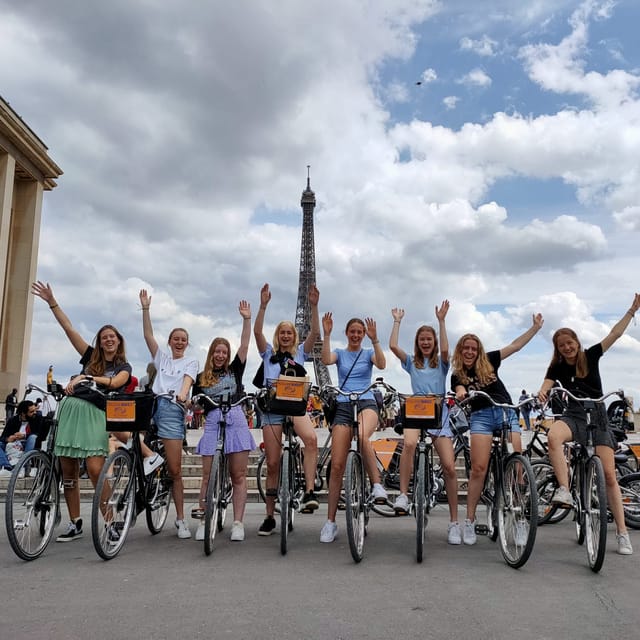
- Dutch bikes + optional e-bike make the ride smoother, especially for first-time cyclists
- Seine riding gives you a quieter, scenic viewpoint than most road routes
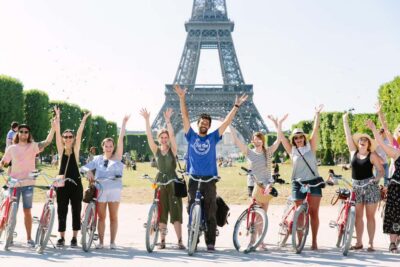
- Photo stops at major landmarks help you get the shots without sprinting between sights
- A local guide-led storyline ties the stops together with culture and history cues
- A tight 3-hour plan covers big highlights without eating your whole day
Starting at Meyerbeer Opéra: the easy launch point
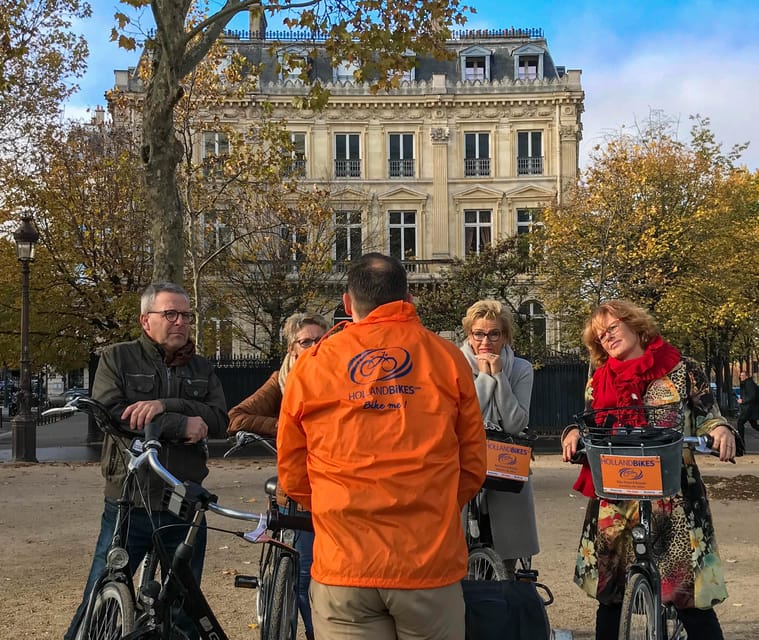
We meet at the Underground Parking Meyerbeer Opéra, on level -1, inside the parking garage. You access the garage from the car road, then walk down the ramp to find your guide. It’s a straightforward meetup, and it matters because in Paris, the difference between smooth and stressful often comes down to finding the starting spot on time.
This tour is timed for momentum: arrive about 15 minutes early so you can check in, get fitted on the bike, and settle before you roll. Once you’re moving, you’ll spend the time the way you want to: passing iconic sights, stopping briefly for photos, and listening while you’re in motion.
You can also read our reviews of more cycling tours in Paris
How the tour really feels: fast-moving highlights with guide-led stories
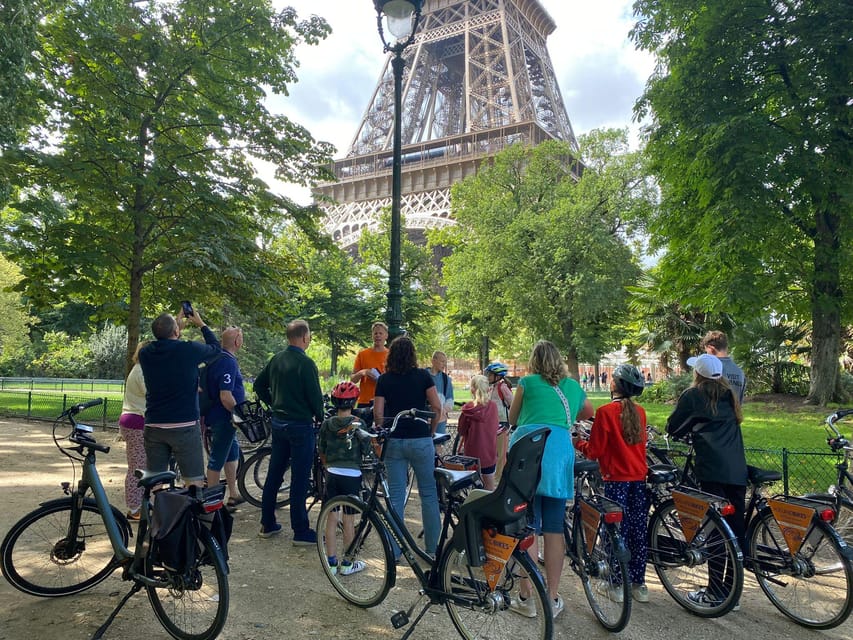
The structure is simple: short rides between stops, then small bursts of sightseeing and photos. In 3 hours, you’ll cover a lot of ground, but the pace is designed to stay fun instead of exhausting. Many riders in the feedback highlight that it’s an excellent way to get your bearings fast—especially when you’re new to Paris.
A big part of what makes this tour work is the guide. People mention tour guides like Jasmin, Stephie, Kevin, Hannah, Rob, Teun, and Juan (sometimes listed as Juan Pablo). The consistent theme is an engaging delivery—guides keep the group together, give context at the right moments, and explain how to look at what you’re seeing. If you like travel days where someone else does the planning, this is that kind of tour.
Palais Garnier and Place Vendôme: the grand opening photo sequence
You kick things off near the Opera area, with Palais Garnier as the first major stop. This is a smart start. The opera house sits in a photogenic pocket of central Paris, and it gives you a strong first “wow” while the group is still fresh and organized.
From there, you head toward Place Vendôme. It’s one of those places that rewards a slow look even though you don’t spend long here. You get a guided moment plus a photo stop—enough time to frame the scene without turning the day into a long walk. The drawback? Because the stops are brief, you won’t linger for museum-level observation. If you want deep study, you’ll still want separate time later in Paris.
Place de la Concorde and Champs-Élysées: where the ride does the sightseeing
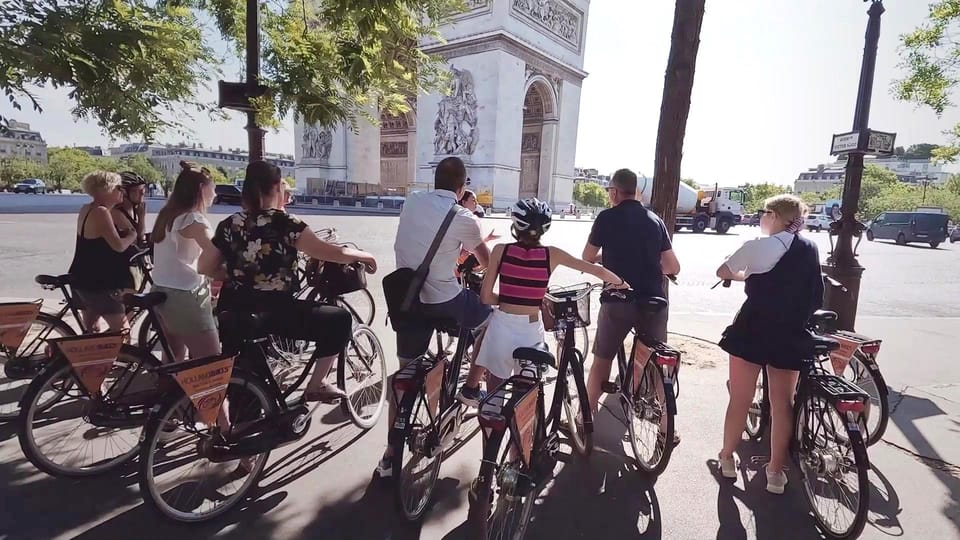
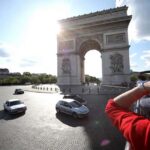
Next up is Place de la Concorde. This is one of Paris’s big junction squares—broad views, major sightlines, and a classic gateway feeling between neighborhoods. Watching the architecture from a bike seat helps because you get angles you’d miss from a bus window or a packed sidewalk.
Then you roll along the Champs-Élysées corridor, with time for sightseeing on the bike and a stop that’s built for photos. This stretch can be chaotic on foot, but the tour focuses on routes that keep you moving and safer than you might assume. One practical note from rider feedback: some people mention traffic feeling intense at times. That’s not a reason to avoid the tour—it’s a reason to follow your guide’s expectations and stay alert.
Photo tip: keep your camera ready during your transition into the most open boulevards. You’ll often get your clearest shots while the group is slowing down for the guide’s narration, not when you’re searching for the right spot at random.
Grand Palais, Petit Palais, Pont Alexandre III: Paris at full cinematic mode
Grand Palais and Petit Palais are impressive even if you only see them from the outside, and biking past them makes the experience feel more like “moving through Paris” than “looking at Paris.” You’ll get guided context, plus short pauses that help you notice the details you’d otherwise miss at speed.
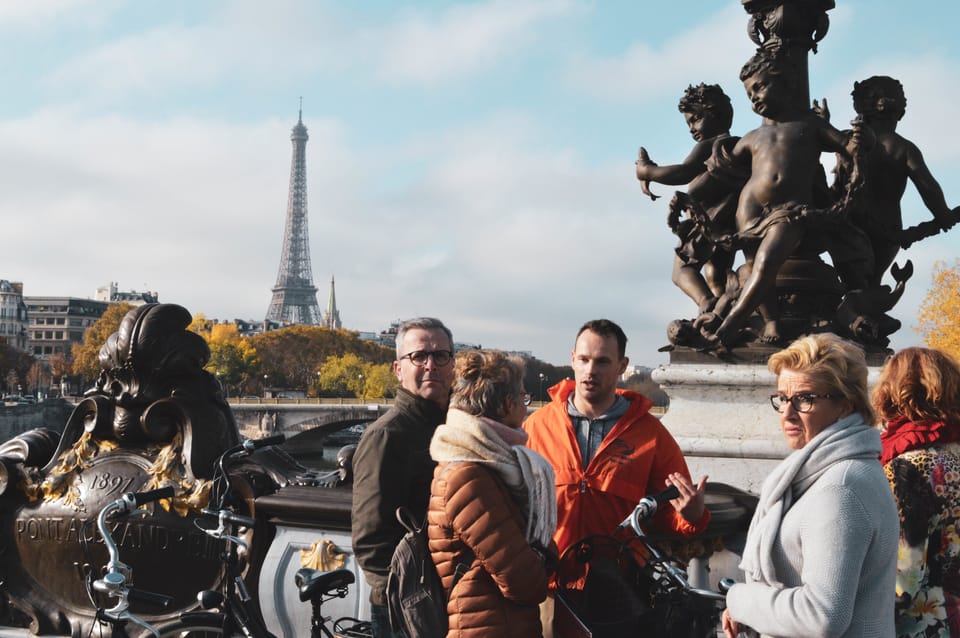
Then comes Pont Alexandre III, with a proper photo moment. This bridge area is one of the most scenic stretches for skyline and river-angle photos. And because you’re biking, you can position yourself quickly without waiting in long queues like you would at major viewpoints.
One of the best parts of this section is that you’re not only checking boxes. You start to see how Paris layers styles—classical facades, formal bridges, and the way the Seine pulls everything together.
You can also read our reviews of more city tours in Paris


Les Invalides and the Seine ride: the “breather” that still counts
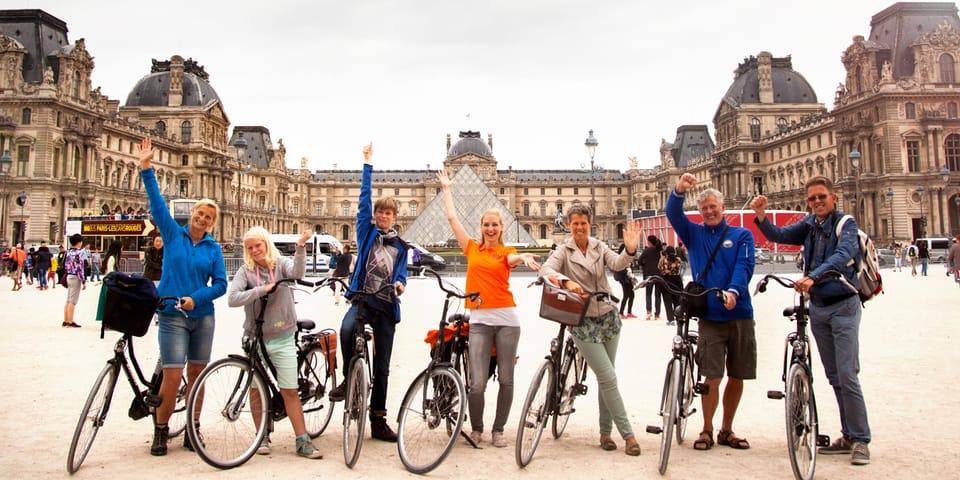
You stop at Les Invalides next. The exterior presence is powerful, and it’s another location where a short guided stop can make a big difference. Instead of passively looking at a monument, you get the storyline that tells you why it’s culturally important and how it fits into the city.
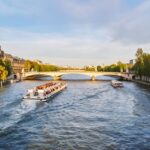
After that, the ride shifts toward the Seine. This is where the tour earns its keep. The Seine stretch gives you a calmer rhythm than most streets, and it’s scenic in a practical way—less staring into traffic, more flowing alongside the water.
Also, the tour includes time that lets you enjoy the view, not just pass it. Feedback mentions time for a break and even practical stops like getting to places for fresh water and restroom needs. That’s not “tour fluff”—it’s what keeps you from turning a great ride into a stressed ride.
Eiffel Tower and Musée d’Orsay pass-by: two icons, different vibes
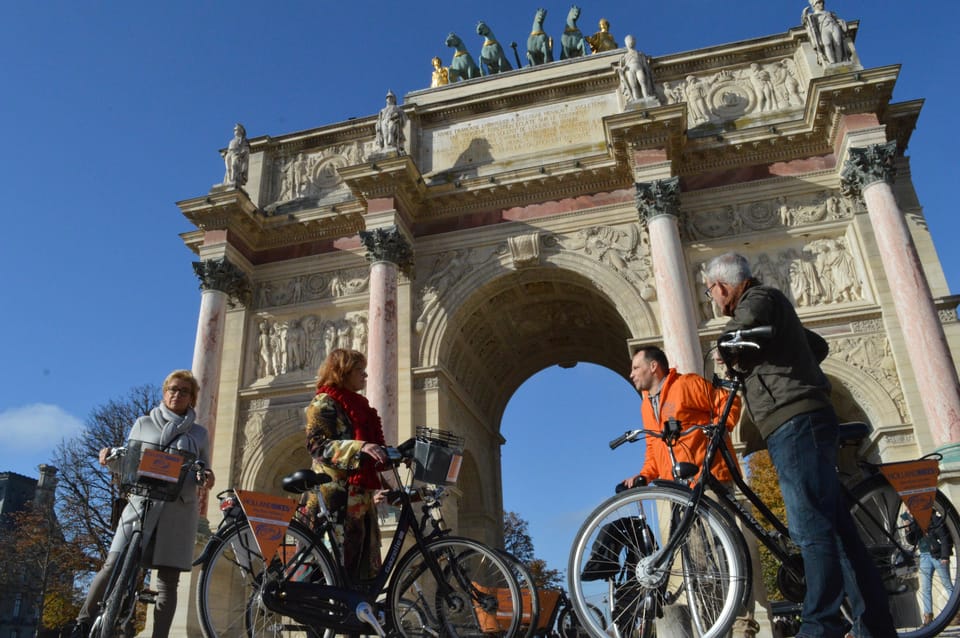
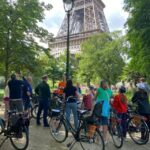
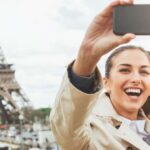
You’ll reach the Eiffel Tower area next, with a photo stop that’s timed to the group’s movement. The big advantage of getting here by bike is that you’re not boxed in by buses and foot traffic the same way you might be elsewhere. You get the classic Eiffel image with enough time to grab shots and reset, then you keep going instead of getting stuck in a slow crowd.
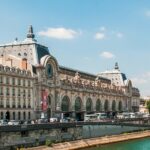
After that, you pass by Musée d’Orsay briefly. This works well in a highlights tour because it signals a major cultural stop without demanding museum time. If you want to go inside, you’ll have that option later—this tour’s job is to help you decide where you want to spend real time.
Louvre and Rue de Rivoli: seeing the city’s “public rooms”
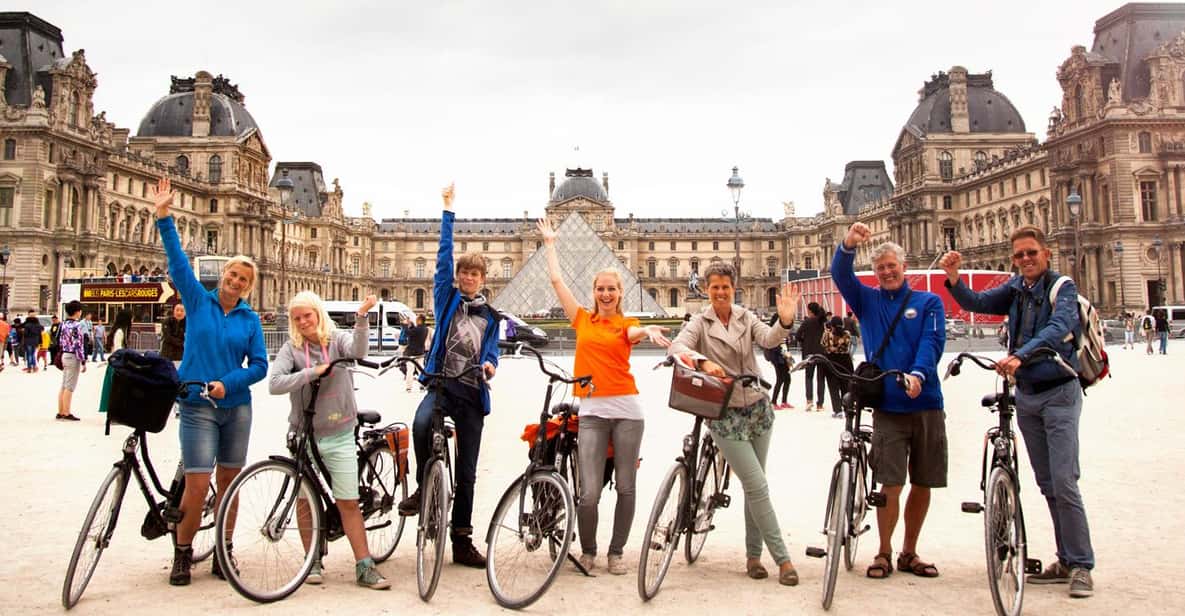
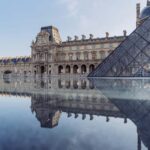
Next is the Louvre Museum area, with a photo stop and guided sightseeing. Even if you don’t enter, this is one of the best places to understand Paris’s scale. The building isn’t just a single monument—it sits at the center of a large urban stage.
Then you head down Rue de Rivoli. This street gives you the feel of Paris’s long, elegant urban lines. From the bike seat, you get a smoother sense of direction and distance. You’re still in sightseeing mode, but you’re also learning how the city organizes itself.
This is a good moment to pay attention to how the guide explains what you’re seeing. When you hear the context while you move, the landmarks stick.
Hôtel de Ville and Île de la Cité: the historic core without the slog
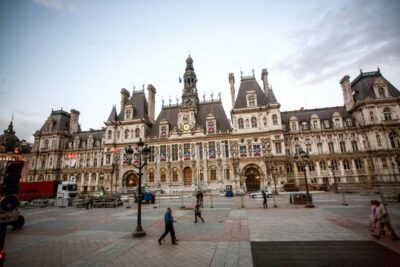
The tour continues to Hôtel de Ville for a photo stop, then toward Île de la Cité. This is the historic heart where Paris feels oldest in the way it gathers landmarks close together. The advantage of arriving by bike is timing: you avoid some of the worst sidewalk congestion and keep your day moving.
You’ll then reach Notre-Dame Cathedral for a photo stop and guided sightseeing. This stop is one of the most emotionally charged parts of any Paris route, even when you can’t spend long. The key here is that the tour gives you a respectful, organized moment to see the area, take pictures, and move on.
Photo tip: if you’re aiming for classic angles, work with the guide’s stop locations. Changing your position too late can mean you miss the best light or the cleanest sightline as the group gets ready to roll.
Electric bikes, Dutch bikes, and helmets: comfort that changes who can enjoy this
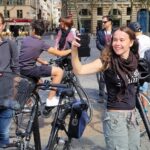
Included with the tour are high-quality Dutch bikes, plus a helmet and basket. That sounds basic, but it’s part of the value. A comfortable, stable bike makes the biggest difference when you’re riding through a city with mixed street conditions.
Electric bikes (e-bikes) are an option. Just note the requirement: you must be at least 155 cm to book an e-bike. This is especially important for younger riders or shorter adults who might want the assist. If you’re within the range and you choose the e-bike, you’ll likely feel more relaxed on longer stretches and bridges.
From the rider feedback, many people call the ride easy and flat, and others mention the guides doing a strong job setting expectations—both of which matter. A bike tour only feels great when you don’t spend the whole time second-guessing your bike control.
Safety and traffic reality: why the guide’s role is so big
Paris bike lanes help, but you’re still riding in a real city with real vehicles. That’s why the guide’s job isn’t just storytelling—it’s managing spacing, timing, and where you look.
Multiple riders mention feeling safe because the guide was attentive and reassuring. Others describe moments where traffic felt intense, but the guide kept the group moving with clear expectations. If you’re the type who panics when things get fast or tight, this tour can still work—just go in with the right mindset: stay close to the group, follow instructions, and don’t drift to the side to “get a better photo angle” at the wrong moment.
What you’re paying for: $50 worth of time, guidance, and logistics avoided
At about $50 per person for 3 hours, this tour is priced like a true value play—especially compared to paying for multiple guided activities or spending half a day figuring out transit routes.
You’re getting:
- a local guide with live narration,
- quality bike equipment (Dutch bike, helmet, basket),
- and a route that clusters the biggest sights in one plan.
The money isn’t paying for admission fees or museum time. It’s paying for momentum and interpretation. If you want the “best first day in Paris” effect—cover the highlights, learn the stories, then decide what to do next—this price makes sense.
One thing not included: food and drinks. That means you’ll need to plan snacks on your own if you get hungry. Some feedback notes a lunch-related stop idea that didn’t suit everyone, so I’d treat food as flexible and not something guaranteed to be comfortable.
Who should book this bike tour (and who should skip it)
This tour fits best if you:
- want a first-day-or-first-two-days orientation,
- like short photo stops with guided context,
- and can ride a bike confidently.
You should think twice if you:
- can’t ride a bike (the tour isn’t suitable for that),
- or you know you freeze in active street situations.
If you’re traveling solo, it can still be a strong choice because the group format and guide leadership help you feel less lost. If you’re traveling as a couple, it’s also a friendly way to share the day without negotiating what to see for hours.
Should you book this Paris City Highlights Bike Tour?
I’d book it if you want an efficient, high-energy way to see the “must-see” Paris lineup with a local voice and a ride that feels like you’re actually on the city’s rhythm. The included Dutch bikes, helmets, and photo-forward stops turn the tour into a real shortcut: less guesswork, more seeing.
Skip it only if you’re not comfortable cycling in traffic-adjacent conditions or you’re hoping for long, slow monument time. This is a highlights ride, not a museum day.
If you’re on the fence, the clearest decision rule is simple: if biking sounds fun and you can handle brief stops and movement, this tour is a solid start to Paris.
FAQ
Where is the meeting point for the tour?
You meet your guide in the Underground Parking Meyerbeer Opéra on level -1, inside the parking garage.
How long is the Paris City Highlights Bike Tour?
The tour lasts 3 hours.
What’s included in the price?
Included are a local knowledgeable guide, use of high-quality Dutch bikes, and a helmet and basket.
What’s not included?
Food and drinks are not included.
What languages will the live guide speak?
The live tour guide is available in Spanish, English, German, and Dutch.
Do I need a special height requirement for an e-bike?
Yes. You must be at least 155 cm to book an e-bike.