REVIEW · PARIS
Paris: Croissant Baking Class with a Chef
Book on GetYourGuide →Operated by Studio Pâtisserie · Bookable on GetYourGuide
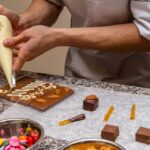
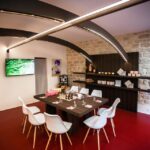
A gray-fronted bakery kitchen in Paris is a pretty good place to learn. This 3-hour croissant class blends hands-on technique with the real why behind flaky layers, led by Chef Léo (and sometimes Maria) in a small group of up to 8. You’ll roll, fold, rest, shape, and learn the science—especially around butter quality and proofing—plus you’ll get to taste what you make.
Two things I really like: the intimate guidance (you can ask questions and get corrected on the spot), and the way the class balances technique with theory, not just one or the other. One drawback to consider is the physical effort: croissant dough needs arm strength for rolling and working the dough, and there’s an age limit.
In This Review
- Key Takeaways
- Croissant Class in Paris: Real Technique, Not Just a Recipe
- Where You Meet: Studio Pâtisserie by Metro Rome and Villiers
- The 3-Hour Rhythm: How the Resting Time Shapes Everything
- Hands-On Rolling and Folding: Where You Actually Learn
- The Science You’ll Use: Butter Quality and Proofing
- Shaping Crescents: Making Them Look Like They Belong in a Patisserie
- What You Eat: Warm Samples Right After You Work
- Bi-Color Croissant Option: Selected Days, Extra Fun
- Price and Value: Is $140 Worth It?
- Who This Croissant Class Suits Best
- Small Logistics Notes That Matter (Not a Headache)
- Should You Book This Croissant Baking Class?
- FAQ
- How long is the croissant baking class?
- How much does the class cost?
- Where is the meeting point in Paris?
- Is the class taught in English?
- How large is the group?
- Can I choose a bi-colour croissant option?
- What is included in the class?
- Is this class suitable for children?
- What should I know about the physical effort required?
Key Takeaways
- Small group (max 8) means less waiting and more hands-on help from Chef Léo or Maria
- You learn the folds, rests, and proofing that make croissants flaky, not just buttery
- The class includes science and history, not only a recipe checklist
- You leave with a take-home recipe plus warm samples from your own batch
- Selected days offer a bi-colour croissant option for added flair
Croissant Class in Paris: Real Technique, Not Just a Recipe
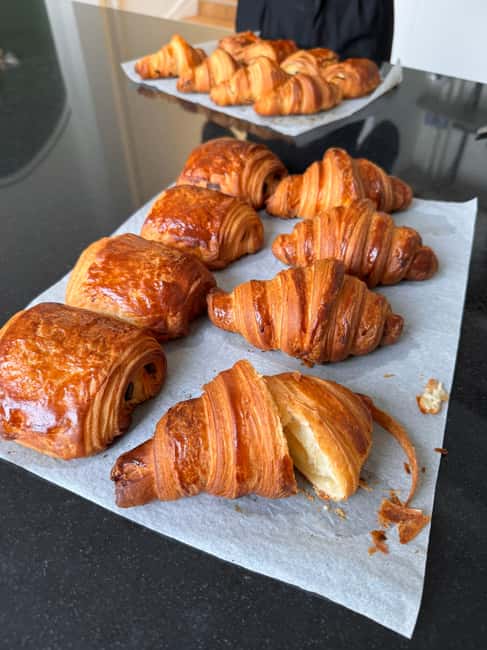
Paris croissants aren’t magic. They’re method, timing, and dough discipline. In this class at Studio Pâtisserie, you’re not just watching from the sidelines—you’re building skills that make the final result feel repeatable, even back home.
What makes it genuinely “Paris” is the focus on craft: folding technique for those thin layers, proofing know-how for rise and texture, and the role of good butter. You also get short history and science context, which helps the instructions stick instead of sliding off your brain after you leave.
One reason this works so well is the group size. Limited to 8 participants, you don’t end up with a dozen people crowding one workbench. You can get practical corrections, like how to handle the dough without warming it too much, or how to shape crescents so they bake evenly.
You can also read our reviews of more cooking classes in Paris



Where You Meet: Studio Pâtisserie by Metro Rome and Villiers
You’ll meet at Studio Pâtisserie, in the building with a gray storefront. It’s straightforward to reach by public transport, with the nearest metro stops being Line 2 (Rome) and Line 3 (Villiers).
This matters more than you’d think. A class like this is time-sensitive: dough rests and timing are part of the schedule. Getting there smoothly helps you start calm, not rushing in with one sleeve rolled up and one eye on the clock.
If you’re pairing this with a day of sightseeing, plan for an area with decent metro access. The class location makes it easy to plug into your itinerary without burning hours on transit.
The 3-Hour Rhythm: How the Resting Time Shapes Everything
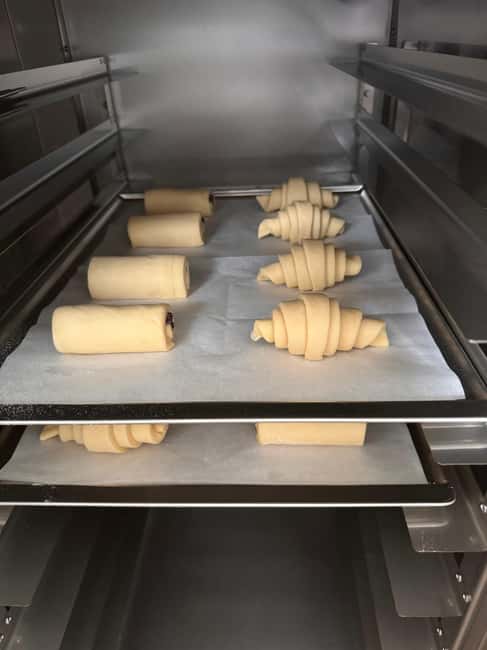
Croissant dough takes time, even in a fast class. Expect the schedule to move in stages, with short bursts of active work followed by rest periods. Those rests aren’t filler—they’re how you develop texture and layered structure.
A typical flow looks like this:
- Dough prep and initial mixing/kneading
- Resting so the dough behaves properly
- Rolling and folding to create layers
- More resting and shaping time
- Final shaping into classic crescents (and sometimes additional pastry varieties depending on the session)
This is exactly why the class still feels complete at 3 hours. You don’t do one continuous “cook for three hours” activity. Instead, you learn what matters at each stage and why you’re waiting. That’s the difference between a casual baking demo and a real skill-building session.
Hands-On Rolling and Folding: Where You Actually Learn
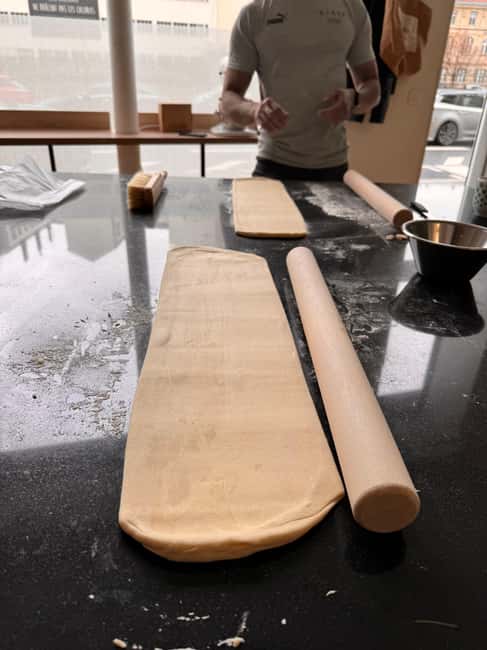
The core of croissant technique is the fold. And in this class, you get the guidance you need to do it correctly without turning the butter layer into a greasy mess.
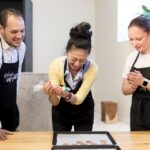
You’ll gather around the workstation while Chef Léo (or Maria in some sessions) guides you through:
- Preparing the delicate dough
- Mastering precise folding techniques
- Keeping the dough workable during rolling
- Handling the dough with confidence while the chef watches closely
This is where the small-group format earns its keep. Rolling croissant dough isn’t just about having space—it’s about pressure, even thickness, and not overworking the dough. With personalized tips, you’re less likely to end up with thick layers in the wrong spots or uneven edges that bake oddly.
Also, the class is built around you doing. You’ll feel your technique improve as the dough moves from sticky to silky to workable. That “I can do this” confidence is the real takeaway, not a pretty photo.
The Science You’ll Use: Butter Quality and Proofing
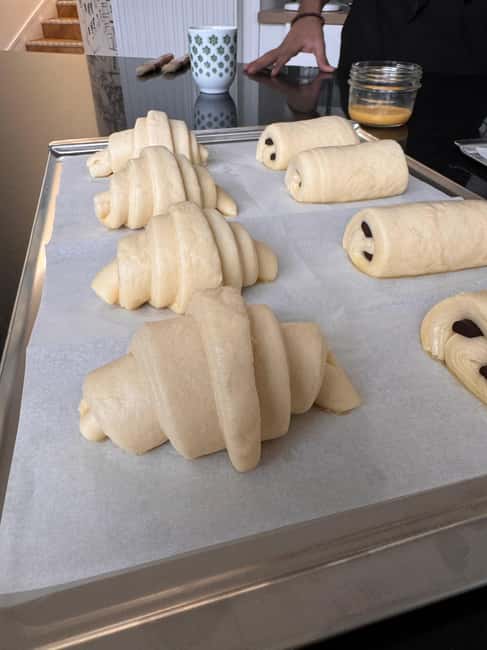
You’ll hear plenty of practical science, but it’s tied to results. One of the biggest lessons is how butter quality changes the texture and flavor. Another is proofing—how long the dough needs to rise and how that affects final crumb and flake.
The class explains these concepts while you’re in the process, so it doesn’t feel like a lecture. You understand what you’re doing during each rest period and what could go wrong if the dough is treated too roughly or left too little/too long.
This kind of knowledge is valuable because it helps you troubleshoot later. At home, you won’t have a chef standing over your bench, but you’ll remember the principles:
- Butter matters for flavor and layer integrity
- Proofing time controls rise and structure
- Handling influences the final texture
You can also read our reviews of more tours and experiences in Paris


Shaping Crescents: Making Them Look Like They Belong in a Patisserie
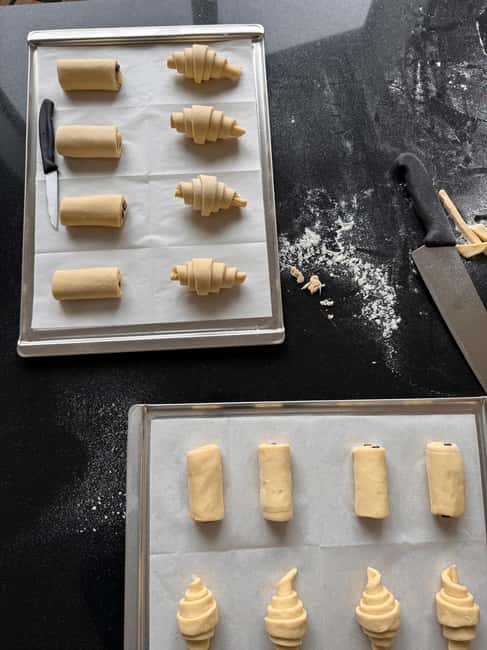
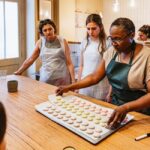
Once the dough is ready, you’ll shape. That means cutting, rolling, and forming classic crescents so they bake with the right shape and flaky layers.
This part is satisfying. You get the satisfaction of doing the “final craft step” yourself, and the chef’s eye helps you avoid common mistakes like:
- Skipping consistent shaping pressure
- Rolling unevenly, causing one end to bake faster
- Stretching the dough too much, weakening layer structure
The class also gives final words of wisdom so you can recreate the method later. And yes, that matters—because croissants aren’t a “follow the recipe once” item. They’re a repeatable craft.
What You Eat: Warm Samples Right After You Work
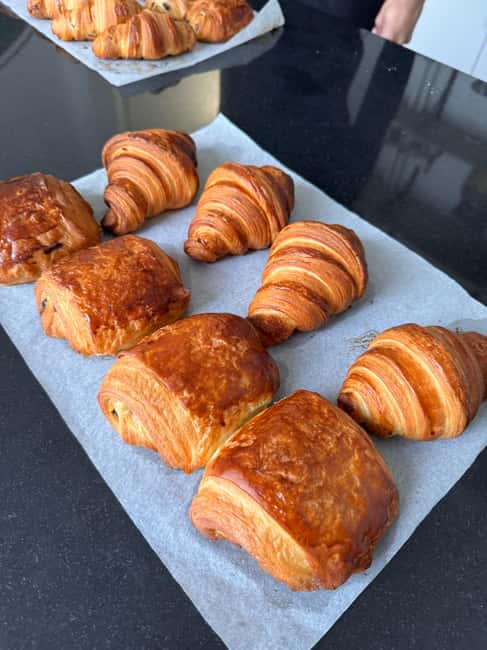
You don’t leave hungry. The class includes ample sampling of freshly baked croissants during the session, including croissants you helped make.
Many participants also mention getting to make a mix that can include pain au chocolat alongside croissants. If that’s available on your day, it’s a nice bonus because it gives you two outcomes from the same technique base: lamination for flake, and chocolate filling for contrast.
Either way, the tasting part is more than a perk. Seeing and tasting the result right away locks in your learning. You get immediate feedback: your layers, your bake, your timing. That’s the fastest way to understand what the chef was talking about.
Bi-Color Croissant Option: Selected Days, Extra Fun
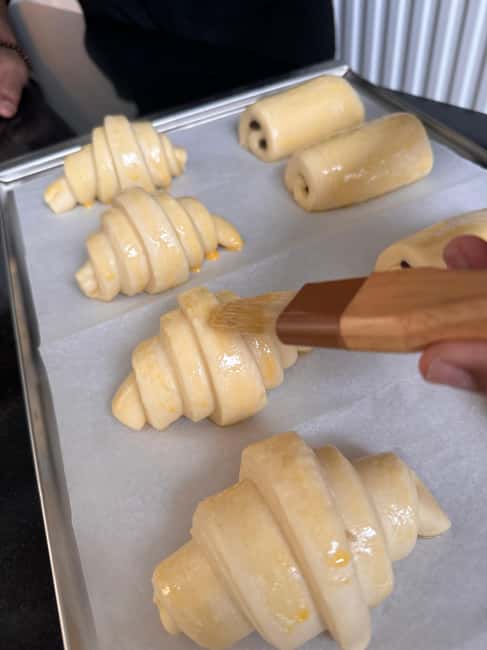
There’s an upgrade for selected days: the bi-colour croissant option. If you book that day, you’ll learn how to incorporate vibrant colors into the croissant dough.
This changes the experience in a fun way. It’s still lamination and shaping work, but you add an extra layer of technique to get an even color effect. If you’re already comfortable in the kitchen or you want something more visual than classic crescents, this option is a great target.
Even if you don’t choose it, the standard class is still built around the same core skill set: folding, proofing, and shaping.
Price and Value: Is $140 Worth It?
$140 per person sounds steep until you break down what you’re buying.
You’re paying for:
- A 3-hour, small-group guided session (so you’re not stuck waiting your turn)
- Ingredient and recipe support
- Professional-grade kitchen equipment and tools
- Warm samples from the bake
- Short history and science instruction
- Personalized tips and correction as you work
You’re also taking home a recipe. That turns the class into a skill you can revisit instead of a one-time entertainment ticket.
And based on what people describe after the class, you leave with a satisfying quantity of pastries—often enough to enjoy fresh and still pack some away. That means the price isn’t only about learning; it’s about getting a real output from your effort.
If you like cooking classes that teach you the method (not just the act of baking), this price lands in the reasonable zone for Paris. If you want pure sightseeing calories with no effort, it may feel like too much work for the time.
Who This Croissant Class Suits Best
This is a great fit if you’re one of these people:
- You love hands-on cooking and want to learn technique you can repeat
- You enjoy learning the why behind the steps
- You’re traveling with someone who wants an activity that’s different from museums and café hopping
- You want a small-group experience with real instructor attention
It’s less ideal if:
- You don’t want physical work (rolling dough needs arm strength)
- You’re looking for a mostly passive watch-and-snack class
- You’re bringing very young kids (there’s an age rule)
Small Logistics Notes That Matter (Not a Headache)
The class language is English, and instruction is set up as a small group with limited seating. Plan on being at the studio on time because croissant timing is part of the lesson.
Also, don’t underpack on effort. Kneading and rolling are real work. Even if you’re a beginner, you’ll get guidance, but you still need to be ready to do the physical steps.
Should You Book This Croissant Baking Class?
Yes—if you want a genuinely hands-on Paris food experience that teaches technique, not just a recipe. I like that you get personal coaching in a small group and that the chef explains the science behind what makes croissants flaky.
Book it especially if:
- You want to come home with both a recipe and skills you can use again
- You care about correct folding, proofing, and shaping
- You’d enjoy a short, friendly, high-energy kitchen session near Metro Line 2 Rome or Line 3 Villiers
Skip it if:
- You want zero physical effort
- You’re not interested in technique and explanation and only want to eat
If you’re on the fence, your best move is simple: choose the day that fits your schedule and come ready to roll up your sleeves.
FAQ
How long is the croissant baking class?
The class runs for 3 hours.
How much does the class cost?
It’s priced at $140 per person.
Where is the meeting point in Paris?
Meet at Studio Pâtisserie, a building with a gray storefront. The nearest metro options are Line 2 (Rome) and Line 3 (Villiers).
Is the class taught in English?
Yes. The instructor language is English.
How large is the group?
It’s a small group limited to 8 participants.
Can I choose a bi-colour croissant option?
Yes, there is a bi-colour croissant option on selected days, where you learn how to incorporate colors into the croissant dough.
What is included in the class?
You get expert guidance from Chef Léo, all necessary ingredients, access to professional-grade kitchen equipment, a recipe to take home, and sampling of freshly baked croissants during the class. You also learn about the history and science of croissant-making and receive personalized tips.
Is this class suitable for children?
It’s not suitable for children under 15. Children under 17 must be accompanied by a paying adult.
What should I know about the physical effort required?
Croissant making needs physical strength to roll out the dough, so be prepared for some hands-on effort during the class.