REVIEW · PARIS
Guided tour of historic Paris with treasure hunt
Book on GetYourGuide →Operated by From Paris with Fun · Bookable on GetYourGuide
Paris with a mission beats a museum stroll. This guided treasure hunt links big-name sights like the Panthéon and the Louvre to real puzzle-solving on foot, with about 15 riddles and a final cryptex challenge. I love that you’re looking up at Paris while you hunt clues, not just walking past things. I also like that the guide keeps it fun and practical, with help when puzzles get tricky. One possible drawback: you don’t go inside the monuments, so if you’re craving ticketed interiors, you’ll need separate visits.
You start near the Panthéon, move through the Latin Quarter and Île de la Cité, then end at Place du Louvre. The route adapts for slower walkers, including families with children, but it’s not for kids under 8. It runs in all weather, so wear shoes you trust and plan for some street time.
In This Review
- Key highlights you’ll feel fast
- How this Pantheon-to-Louvre treasure hunt actually works
- Route overview: what you’ll see from step one
- Starting point: opposite the Panthéon (12 Pl. du Panthéon)
- Panthéon (about 10 minutes)
- Sorbonne area (pass by, about 10 minutes)
- Musée de Cluny / Thermes et Hôtel de Cluny (pass by, about 10 minutes)
- Notre-Dame and Île de la Cité (Île de la Cité walk about 30 minutes; Notre-Dame stop about 10 minutes)
- Pont Neuf (pass by, about 10 minutes)
- Finish at Place du Louvre (final riddle leads to the treasure chest)
- Why the riddles feel more Paris than you expect
- The big trade-off: no monument entry tickets
- Guide style: useful, friendly, and realistic about details
- What to bring (and what can ruin the day)
- Pace and who this is for
- Timing tips: how to stay in the fun zone
- Value check: is $35 for 2 hours worth it?
- Should you book this treasure hunt tour?
- FAQ
- How long is the guided treasure hunt?
- Where do I meet the guide?
- What sights are included on the route?
- Do we enter Notre-Dame or the Louvre?
- How do the puzzles work?
- What language is the tour offered in?
- Is it suitable for families with kids?
- Is the tour canceled for bad weather?
- What should I bring?
- How much does it cost?
Key highlights you’ll feel fast
- Panthéon to the Louvre, but as a game: classic sights get a “find the clue” twist.
- About 15 riddles plus a cryptex: letters, a padlock-style puzzle, and a final treasure chest moment.
- Small groups and an adjustable pace: better flow than a giant herd.
- Latin Quarter + Île de la Cité without heavy tickets: you get the vibe, not the entry lines.
- A guide-led experience in French or English: and you’ll get help to keep the hunt moving.
- All-weather walking: plan like it’s a long neighborhood stroll, because it is.
How this Pantheon-to-Louvre treasure hunt actually works
This is a guided walking experience built around puzzle momentum. You’re given a game book and a clue kit, then you solve riddles as you go. Somewhere along the way, your job is to decipher the password to a cryptex, a padlock with letters, to reach the treasure. Then, near the end, you solve the final riddle and open the treasure chest.
The format is simple, which is part of the value. You’re not trying to learn every detail of Paris at once. Instead, you’re forced to notice details—facades, street angles, monuments in context—because that’s where clues live. It turns the usual “Oh, that’s pretty” into “Wait, what’s that symbol?” or “Why is this place framed like that?”
Also, the guide isn’t just talking. They’re there to help you keep solving. And if you get stuck, you can ask for support instead of falling behind the group and losing the energy of the hunt.
You can also read our reviews of more guided tours in Paris



Route overview: what you’ll see from step one
The tour runs between 2 hours and 2.5 hours, depending on walking time and how long it takes to solve puzzles. It also happens in all weathers, so it’s designed for real streets, not “only when it’s perfect outside.”
Starting point: opposite the Panthéon (12 Pl. du Panthéon)
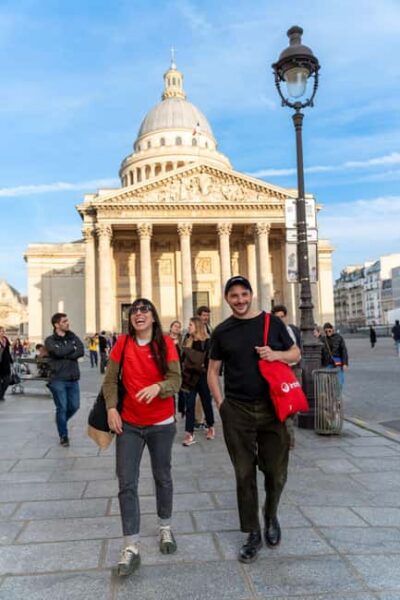
You meet on a bench opposite the Panthéon, left side when you look up at it. The easiest way to spot your guide is that they’ll have something safe-looking (yes, it’s literally part of the recognition tip). After a short greeting, you get the game book and clue kit.
This first segment sets the tone. The earliest puzzles are right there, so you won’t spend half the time just getting oriented.
Panthéon (about 10 minutes)
You get a short sightseeing stop at the Panthéon. This is one of those “you can stare at it for days” buildings, and here you’re encouraged to look with purpose. You’ll likely notice features that you’d normally walk right past because the riddles make you slow down.
Sorbonne area (pass by, about 10 minutes)
Next you pass by La Sorbonne. Even without going inside, the presence of the university helps the route feel like you’re moving through lived-in Paris, not just postcard stops. For puzzle-solving, it’s also a good transition point—places like this give visual clues you can compare as you walk.
You can also read our reviews of more historical tours in Paris





Musée de Cluny / Thermes et Hôtel de Cluny (pass by, about 10 minutes)
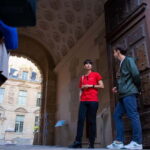
Then you pass the Musée de Cluny, along with the medieval context around it. Since the experience is a discovery game and doesn’t include entrance tickets, these “pass by” moments matter. They’re designed to spark curiosity for later, not to replace a museum visit.
Notre-Dame and Île de la Cité (Île de la Cité walk about 30 minutes; Notre-Dame stop about 10 minutes)
This is the heart of the hunt’s geography. You head to Île de la Cité, often considered the historic center, and then you admire Notre-Dame de Paris from the streets. The tour includes a walk segment of about 30 minutes on the island area, so you’re not just taking one photo and moving on.
You’ll get the monument framing, the river-and-bridge rhythm, and the sense that the city’s “old layer” is right there under your feet. Even without going inside, this stop works well for a treasure hunt because the streets around Notre-Dame force you to notice lines, angles, and perspectives.
Pont Neuf (pass by, about 10 minutes)
Then it’s Pont Neuf. This is a great “reset” stop: you transition from one dense pocket of history to a broader city view as you keep working puzzles and moving toward the finish.
Finish at Place du Louvre (final riddle leads to the treasure chest)
You end at Place du Louvre. The last puzzles happen roughly 10 to 15 minutes before the route heads down rue Saint-Jacques, which means you’ll feel the closing stretch build. Once you solve the final riddle, you open the treasure chest.
It’s a satisfying ending because it gives you a clear win moment. In a city full of “maybe someday” sights, this is one task that actually ends on time.
Why the riddles feel more Paris than you expect
A lot of “scavenger hunt” tours can feel like kids’ entertainment. This one feels closer to a smart way to see the city: the puzzles nudge you to notice architecture and placement.
From the route design, you’re constantly scanning upward—facades, stonework, rooflines, and the way buildings relate to the street. Several people highlight that the best part was spotting details they normally would miss just walking around. I agree with that logic. When you have to answer a clue, your brain stops gliding.
Also, because the hunt includes help during the challenge, it doesn’t turn into a stressful exam. You’re meant to put yourself in the shoes of a treasure hunter, but the guide can keep you on track.
And there’s a second layer of fun: you’re not learning only from lectures. You’re doing the thinking. That makes the information stick better than a quick stop-and-stare.
The big trade-off: no monument entry tickets
Here’s the one part you should decide up front.
This is a discovery game. It does not include entrance ticket access, and the tour doesn’t include entering the monuments. So you’ll admire stops like Notre-Dame and the Louvre area from outside viewpoints and surrounding streets, but you won’t go inside with a guide.
That can be perfect if your goal is to see a lot of iconic spots in a short time without spending energy on ticket logistics. But if you specifically want interior highlights—museums, towers, cathedrals with full access—then consider this a “street-level orientation” and book separate timed-entry tours for the interiors you care about most.
Guide style: useful, friendly, and realistic about details
The experience is led by a local guide in French or English. One notable point: the tour provider states they’re not professional guides, and they may not know every detail of Paris history. That’s not a dealbreaker; in a treasure hunt format, the priority is keeping the game running and giving enough context to make the clues meaningful.
In practice, this means you should treat the tour as part history, part puzzle walk, part friendly city coaching. The guide will help you solve puzzles, and you’ll get some touristy explanations along the way—use them, skip them when you feel like speed-walking.
I also like that small groups are used. It keeps the hunt from turning into a messy line where you’re stuck playing catch-up.
What to bring (and what can ruin the day)
Because you’re doing a focused walking route, you’ll have a better time with the basics handled.
- Wear comfortable walking shoes. This is a city-street loop, not an indoor sit-down activity.
- Use the restroom before you start. The tour warns there are no public toilets nearby.
- Bring water if you tend to get thirsty. Food and bottled water aren’t included.
- Avoid oversize luggage and large bags. Those aren’t allowed.
- Leave alcohol and drugs at home. They’re not permitted.
Also remember: it runs in all weathers. If rain hits, you’re still walking. That’s not a warning sign—it’s part of the design. Plan like you’re going out for a long neighborhood walk.
Pace and who this is for
The tour is not suitable for children under 8. For families with children who are slower walkers, the pace is adapted so everyone can enjoy the treasure hunt. So if you’ve got kids older than 8, this can work well because it turns walking into a mission.
It’s also ideal if you:
- Want a fun alternative to a standard guided tour
- Like solving puzzles without needing special prep
- Enjoy looking closely at architecture and street details
- Prefer a shorter time commitment (about 2 hours) with a clear start and finish
If you’re traveling with a group and want competition energy, the provider says they can turn it into a team-building style contest when a group books the whole tour. That makes it especially fun for friends or coworkers who like playful challenges.
Timing tips: how to stay in the fun zone
Two small timing things matter here.
First, the tour includes multiple short stops and “pass by” segments, so the experience flows best if you’re ready when it’s time to move. The earlier puzzles are in front of the Panthéon, so don’t treat the first minutes as optional.
Second, if you’re running late, you should call to catch up. The tour notes the final puzzles happen about 10 to 15 minutes before heading down rue Saint-Jacques, so arriving late can cut into the best end-game energy.
In short: arrive, listen, and jump into the puzzle rhythm right away.
Value check: is $35 for 2 hours worth it?
For $35 per person, you’re paying for two things: guided direction plus the game materials (the game books and clue kit). You’re not paying for monument entry tickets, which are excluded.
So the value is best if your priority is:
- getting an efficient “big sights” route in a short time
- getting help solving riddles
- using the guide to make sense of what you’re seeing outside
If you were going to pay for multiple paid interiors anyway, this can be a smart add-on because it helps you connect the dots before you buy tickets for the stuff you want to enter.
But if your main travel goal is interior access—time inside museums, cathedrals, and major ticket attractions—then this won’t replace that. It’s a fun city-walk and puzzle experience, not a substitute for official monument tours.
For most people who want a memorable Paris walk that’s different from the usual, the price feels fair because the structure keeps you engaged for the full 2 hours.
Should you book this treasure hunt tour?
Book it if you want Paris to feel like a game you can win, not a lecture you endure. It’s a great fit for first-timers who want a concentrated route through the Panthéon, Latin Quarter energy, Île de la Cité, Notre-Dame area, and ending at the Louvre zone—while still doing something active with riddles and a cryptex.
Skip it or pair it with other tours if you only care about entering monuments. Since entry tickets aren’t included and you don’t go inside, you’ll want separate plans for the interiors.
My final take: this is one of those rare tours where the “fun” isn’t random. The puzzles guide your eyes, the route is built around iconic Paris, and the finish gives you that real sense of completion. If that sounds like your kind of day, you’ll probably have a blast.
FAQ
How long is the guided treasure hunt?
The tour lasts about 2 hours, with typical timing between 2 hours and 2 hours 30 minutes depending on walking and how long it takes to solve the riddles.
Where do I meet the guide?
Meet at 12 Pl. du Panthéon, on the bench opposite the Panthéon, on the left side when you look up at the monument. The guide will be recognizable by someone carrying a safe.
What sights are included on the route?
You’ll follow a route that includes the Panthéon area, Sorbonne (pass by), Musée de Cluny (pass by), Île de la Cité and Notre-Dame de Paris, Pont Neuf (pass by), and you finish at Place du Louvre.
Do we enter Notre-Dame or the Louvre?
No. Entrance tickets are not included, and you do not enter the monuments for this discovery game.
How do the puzzles work?
You’ll get a game book and clue kit. There are about 15 riddles, and your mission includes deciphering the password to a cryptex (a padlock with letters). You solve a final riddle near the end to open the treasure chest.
What language is the tour offered in?
The live guide speaks French and English.
Is it suitable for families with kids?
It’s not suitable for children under 8. The pace can be adapted for slower walkers, including families with children.
Is the tour canceled for bad weather?
No. The tour takes place in all weathers.
What should I bring?
Water and food are not included, and there are no public toilets nearby, so use the restroom before you start. Also plan for walking and avoid oversize luggage or large bags since they’re not allowed.
How much does it cost?
The price is $35 per person.