REVIEW · PARIS
Paris: Walking Tour of Montmartre
Book on GetYourGuide →Operated by HelpTourists · Bookable on GetYourGuide
Montmartre hits you differently on foot. This small-group walking tour turns a classic Paris neighborhood into something you can actually picture, with Moulin Rouge views plus stories you won’t get from a guidebook. I especially like the mix of famous stops and off-the-beaten-path streets, and I love the pace—steady, not rushed.
One thing to consider: it’s not set up for wheelchair users, and the route includes cobbled lanes and a hill climb up to the basilica area. Also, it’s a tight 2-hour loop, so if you’re hoping to linger for long photo sessions, you’ll want to plan for that on your own time.
In This Review
- Key things to know before you go
- Why Montmartre in 2 hours is the right length
- Meeting at Blanche: how to find your guide quickly
- Moulin Rouge photo stop: more than a famous façade
- Moulin de la Galette: the windmill stop that adds meaning
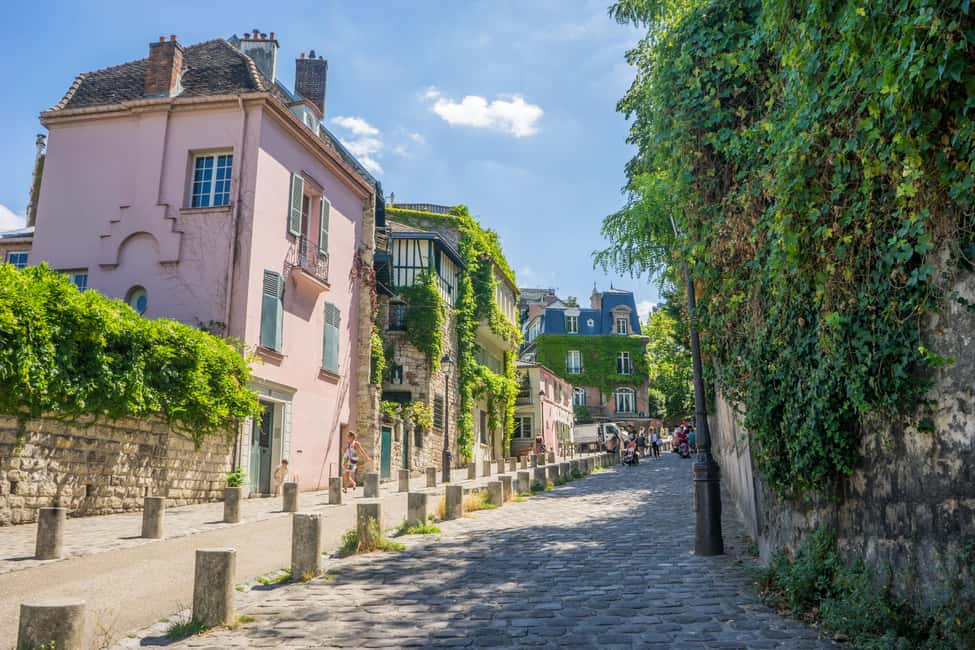
- La Maison Rose: the pink façade and the quieter side of the frame
- Place du Tertre: where art still has a stage
- Sacré-Cœur Basilica finish: serene views after the climb
- The guides: why these tours feel personal
- Pace, group size, and what to expect on the street
- Price and value: what $34 really buys you
- Language and timing: pick the right day for English or German
- Should you book this Montmartre walking tour?
- FAQ
- How long is the Paris Walking Tour of Montmartre?
- How much does the tour cost?
- Where do I meet the guide?
- What are the main stops on the tour?
- What languages are available?
- When are English and German tours held?
- Is food included in the tour price?
Key things to know before you go
- Small-group format with lively guiding: the tour is designed to feel personal, and guides handle questions well.
- Iconic landmarks plus street-level charm: you see the big names and also the corners that feel like real Montmartre.
- Photo stops built in: Moulin Rouge, windmills, and the pink façade are scheduled for quick stops.
- Sacré-Cœur as the closing moment: you finish at the basilica area for those high-hill views.
- English or German, depending on the day: the tour language is tied to the schedule.
- Best for active walkers: if you don’t love uphill cobbles, choose your footwear carefully.
Why Montmartre in 2 hours is the right length
Two hours sounds short until you’re on the hill. Montmartre can feel like a lot in a day—stairs, curves, sudden viewpoints, and streets that all seem to lead somewhere else. This tour keeps you moving at a human pace, so you get the essentials without turning your afternoon into a solo navigation mission.
At around $34 per person, you’re paying for something you’d otherwise have to piece together: a guide who connects the landmarks into a story, plus a simple route that takes you from the Moulin Rouge area up toward Sacré-Cœur. You also get scheduled photo breaks, which matters here because Montmartre’s best views often require timing and angles, not just walking.
This is a “get your bearings fast” type of tour. You’ll leave knowing what you saw, where it is, and why people still come back.
You can also read our reviews of more walking tours in Paris



Meeting at Blanche: how to find your guide quickly
You start outside the Blanche metro station, at the traffic island in front of Moulin Rouge. The provider gives a simple visual cue: look for your guide with a HelpTourists bag and a pink base cap.
That detail helps more than you might think. Moulin Rouge sits among several busy crossings, and Montmartre streets can look similar from far away. Showing up a little early lets you spot your guide without stress and without doing the classic Paris thing—circling the same corner twice while pretending you’re just admiring the architecture.
Also note the end point information is a bit mixed: the tour itinerary points to the Sacré-Cœur finish area, while the activity description says it ends back at the meeting point. Either way, you should expect to finish in the Montmartre/Sacré-Cœur zone and confirm your exact walk-back with the guide on the day.
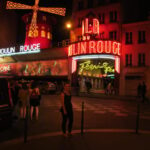
Moulin Rouge photo stop: more than a famous façade
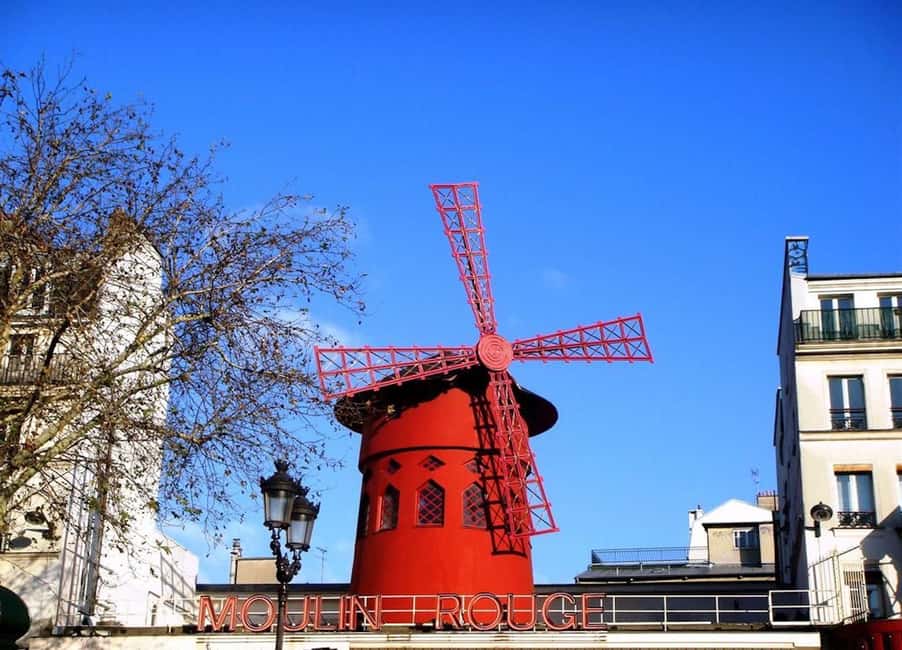
You’ll begin with a photo stop at Moulin Rouge, plus sightseeing and a walk. This isn’t just about snapping the red windmill landmark for Instagram (though yes, that façade is still eye-catching). The point is context—how Montmartre’s entertainment image grew alongside the neighborhood’s artistic reputation.
Even if you know the headline name, a good guide will help you see it differently: the setting, the street angles, and why this corner became a magnet for performers and dreamers. It’s also a useful first stop because it gives you an immediate reference point for the rest of your uphill wandering.
Practical tip: wear shoes you’re comfortable walking in right away. The first photo stop can tempt you to linger, but the best way to enjoy the route is to stay ready for the next bend in the street.
Moulin de la Galette: the windmill stop that adds meaning
Next is Moulin de la Galette, another photo stop with sightseeing and walking. The windmill area is the kind of place that looks like a postcard, but a guide helps you connect why it matters in Montmartre’s story.
What I like about this stop on a guided walk is the pacing. You’re not only moving; you’re being taught how to look. You start to notice the mix of old-world imagery and real street life. That’s how Montmartre stays fun—half legend, half daily routine.
If you’re the type who enjoys small historical cues, this is one of your payoff points. You’ll come away with more than a picture: you’ll understand how windmills, art, and neighborhood identity got tied together.
La Maison Rose: the pink façade and the quieter side of the frame
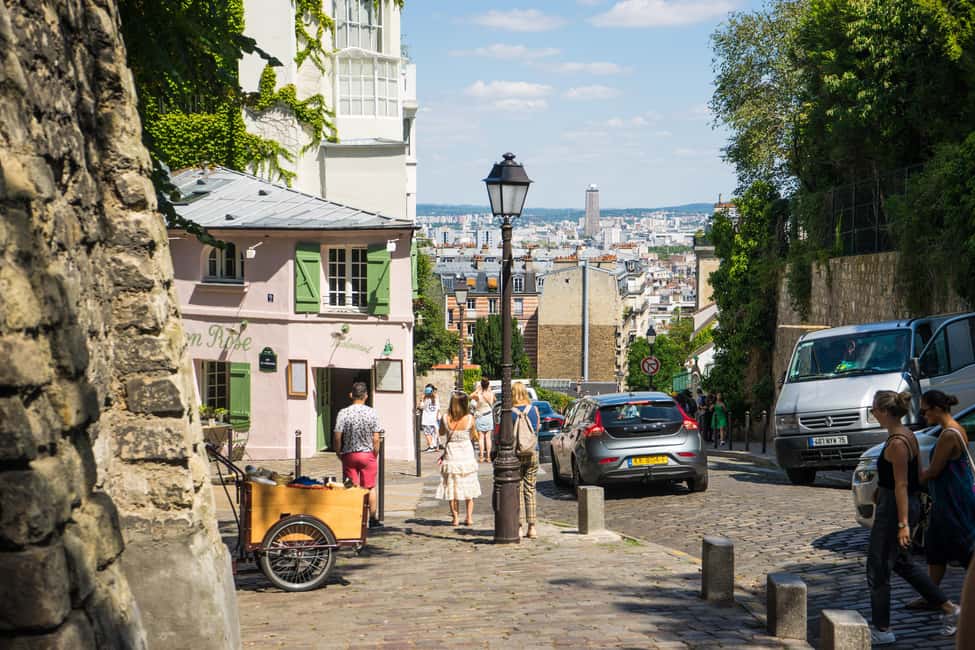
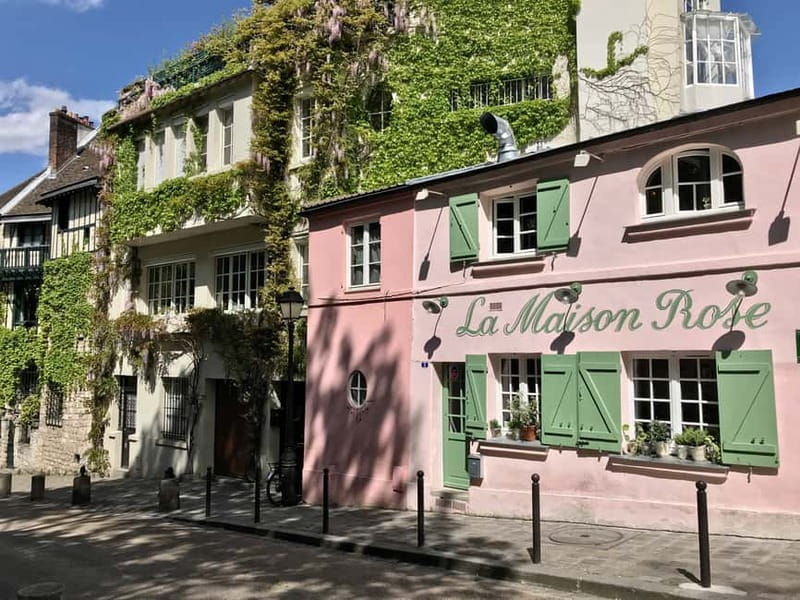
You’ll stop at La Maison Rose, again with a photo stop plus sightseeing and walking. This is the kind of landmark that pulls people in for a glance, but on a tour it becomes more than a color moment.
Why it works: it gives you a visual marker so you can later trace the route you walked. Pink façades and pastel corners can blur together when you’re wandering independently. With the guide’s context and the built-in pauses, this becomes a memorable reference, not just another pretty corner.
You also get practice recognizing the neighborhood texture—cobbled streets, tight viewpoints, and the way buildings seem to sit right on top of the sidewalk. Montmartre rewards slow attention, and this stop encourages it without demanding you stop for long.





Place du Tertre: where art still has a stage
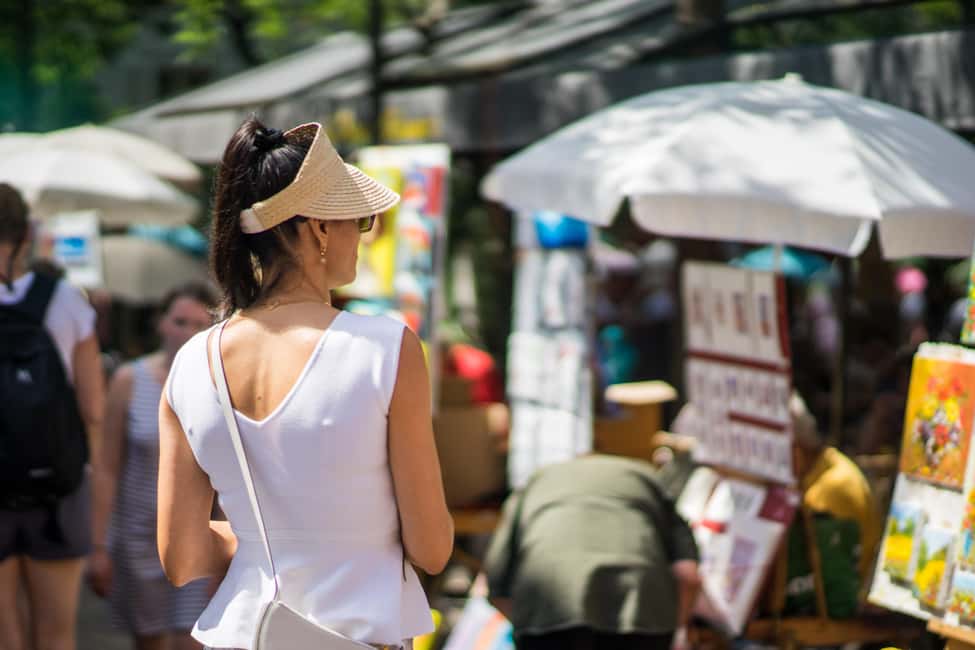
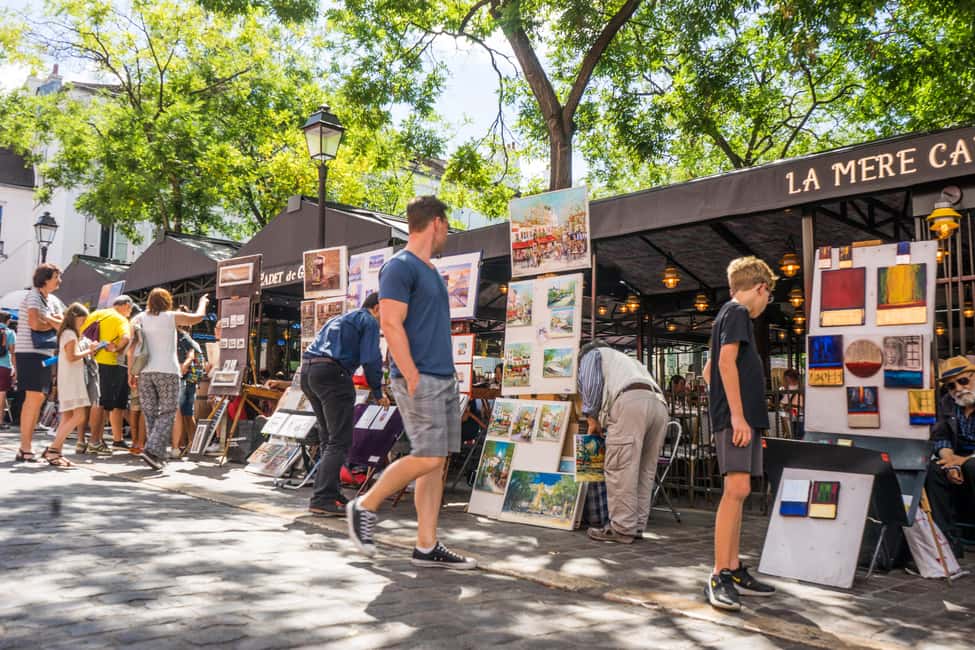
Then comes Place du Tertre, with a photo stop, visit, and sightseeing. This is one of Montmartre’s best-known squares, and it can feel touristy if you don’t have a way to read it. On a guided walk, you’re not just looking at artists or souvenir stalls—you’re learning how the place functions and why it became synonymous with Montmartre creativity.
I like this part because it’s not only about “artists painted here.” It’s about everyday life in an iconic setting: how street art and performance keep the atmosphere alive. The tour also leans into anecdotes and curious tales from both Montmartre’s bohemian past and present, so the square feels like a living neighborhood rather than a museum corner.
If you like asking questions, bring them here. This is a natural moment to clarify what you’re seeing and what to look for as you continue upward.
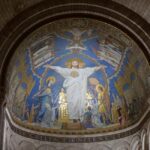
Sacré-Cœur Basilica finish: serene views after the climb
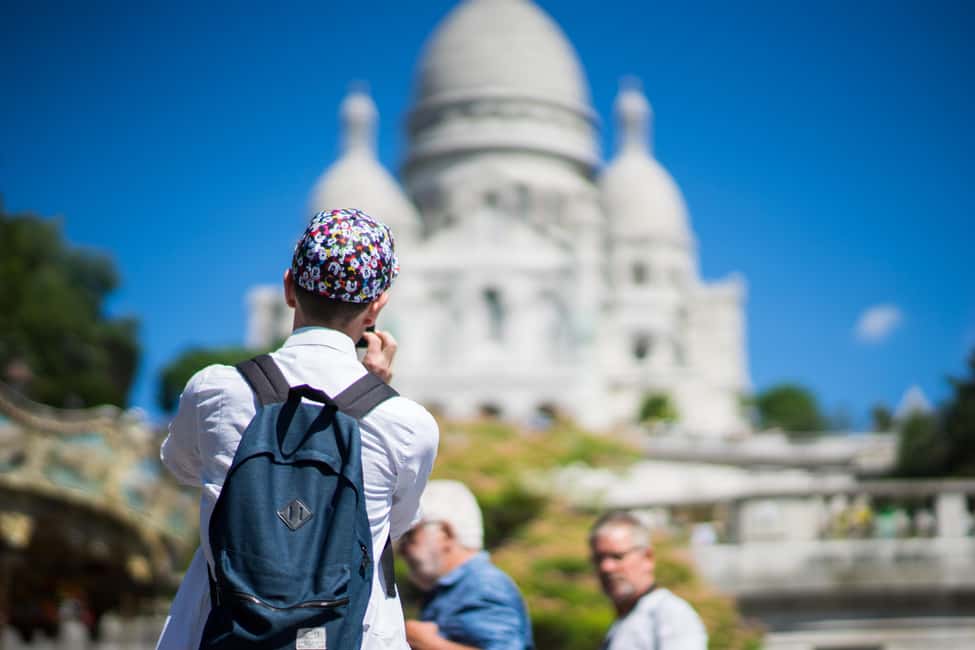
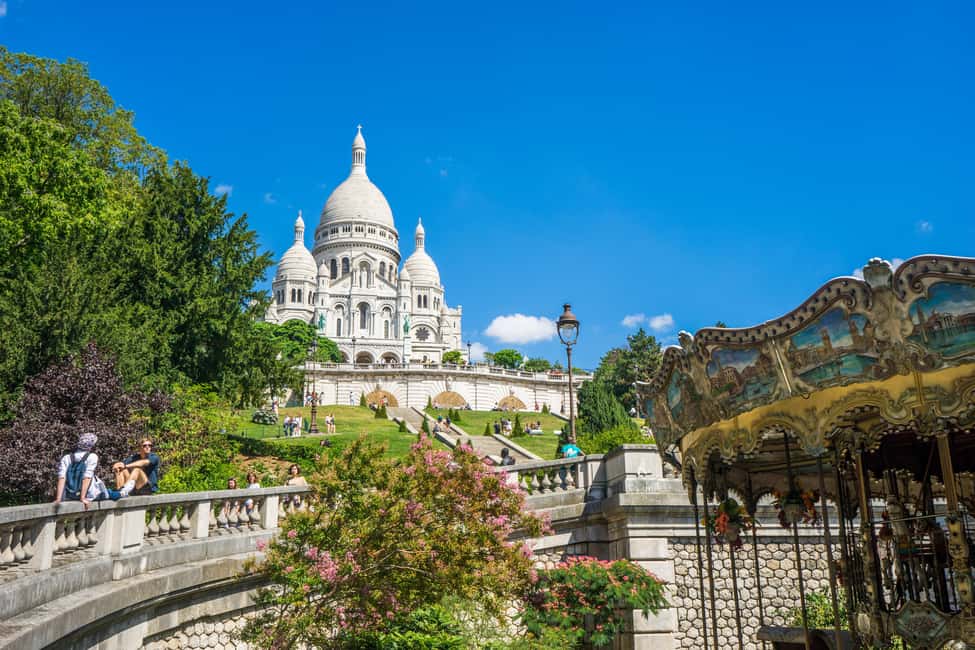
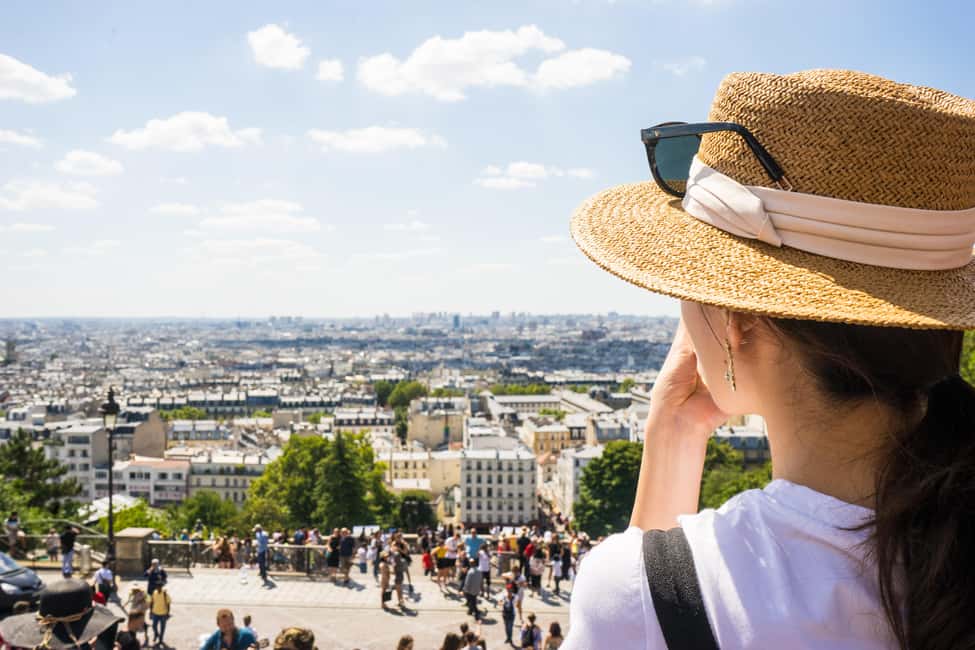
The tour ends at the Sacré-Cœur Basilica area, with a final photo stop, visit, and sightseeing. After Moulin Rouge and the artist squares, Sacré-Cœur feels like a reset. It’s quieter in mood even when it’s crowded in reality—part of why people treat it like a destination even when they’re exhausted.
This stop ties the whole walk together. You started with the entertainment legend, moved through artist-linked street scenes, and end at a place that pulls visitors for its calm, dramatic position on the hill. Even if you’ve seen pictures before, being there in person gives you the “okay, that’s why it’s iconic” moment.
A practical thought: plan your own time here after the tour if you want more than a quick look. The guided portion gets you oriented and helps you appreciate the setting, but your pace will be your choice.
The guides: why these tours feel personal
One reason this tour consistently scores well is the people leading it. You’ll hear lively storytelling, and the tone is described as engaging and funny. Names that come up with strong praise include Vera, Solene, Nadine, and Christin—each noted for making the walk feel alive through anecdotes and clear explanations.
There’s also an emphasis on practical group management. One account highlights that the guide kept a safe pace and looked out for the group, including when movement required attention. Another highlights a gradual climb up the hill paired with historical and anecdotal facts that build as you go.
That’s what you want from a Montmartre guide: not a lecture, but a thread. If the guide is good, every photo stop connects to what came before. You start recognizing patterns in the neighborhood—the shift from showbiz imagery to artist culture to the basilica viewpoint.
Pace, group size, and what to expect on the street
The tour is designed as a small-group experience, though group size can be larger on public or national holidays. On a normal day, small groups are what make Montmartre enjoyable instead of chaotic. You can ask questions, and the guide can keep the route moving without leaving people behind.
Expect real walking on cobbled streets. The tour isn’t described as a sit-and-stare format. It’s a guided walk with scheduled stops that give you brief moments to step out for photos and look closely.
One more note: the tour isn’t for wheelchair users. That doesn’t mean you can’t enjoy Montmartre—just that this particular setup favors active walkers and people comfortable with uphill, uneven ground.
Price and value: what $34 really buys you
At $34 per person for about 2 hours, the value depends on what you’re trying to get out of Montmartre. If you want a checklist of viewpoints, you could do it yourself. If you want the neighborhood to make sense—why these corners became famous, what the stories are, and how the places connect—then a guided format is a smart use of time.
You get:
- A trained guide (the real cost driver here)
- A walking route that hits the key sights and keeps you moving
- Photo stops that help you catch the right angles without extra planning
You do not get food and drinks. That’s normal for a 2-hour walking tour, but it means you should eat before or after. If you’re planning lunch after, consider timing it for when your energy is high—Montmartre walking can add up.
Language and timing: pick the right day for English or German
This tour runs different days and times depending on the language.
- English tours: Monday and Wednesday at 3pm, and Saturday at 5pm
- German tours: Tuesday and Thursday at 4pm, Saturday at 3pm, and Sunday at 2pm
So if you’re picking the tour for comfort with your language, choose your day first. If you’re flexible, the schedule lets you match it to the rest of your Paris plans without losing the Montmartre experience.
Should you book this Montmartre walking tour?
Book it if you want an organized way to see Montmartre’s biggest landmarks and still feel like you’re learning the neighborhood, not just touring it. This is especially worth it when you care about stories—how the district’s artistic image formed and how everyday life still shapes what you see.
Skip it (or consider an alternative) if you strongly dislike uphill walking or uneven cobblestones, since it’s not suitable for wheelchair users. Also, if you’re the type who needs long time at each stop for photos and wandering on your own, the 2-hour format may feel a bit tight.
If you want one solid, efficient afternoon that gives you Montmartre context plus photos you’ll actually remember, this is a strong choice.
FAQ
How long is the Paris Walking Tour of Montmartre?
It lasts about 2 hours.
How much does the tour cost?
The price is listed as $34 per person.
Where do I meet the guide?
Meet outside the Blanche metro station, at the traffic island in front of Moulin Rouge. Look for a HelpTourists bag and a pink base cap.
What are the main stops on the tour?
You’ll visit key spots including Moulin Rouge, Moulin de la Galette, La Maison Rose, Place du Tertre, and Sacré-Cœur Basilica.
What languages are available?
The tour is offered in English and German.
When are English and German tours held?
English runs Monday and Wednesday at 3pm, plus Saturday at 5pm. German runs Tuesday and Thursday at 4pm, Saturday at 3pm, and Sunday at 2pm.
Is food included in the tour price?
No. Food and drinks are not included.