REVIEW · PARIS
Paris: Pere Lachaise Cemetery Guided Tour
Book on GetYourGuide →Operated by Thierry Le Roi & les Nécro-Romantiques · Bookable on GetYourGuide
Paris has a ghostly secret: Pere Lachaise. This guided walk turns one of Europe’s best-known cemeteries into a story-filled, cobbled open-air museum. You’ll follow a route through ornate tombs, garden paths, and the final resting places of major artists and icons.
Two things I really liked: the guide brings the place to life with humor and context, and you get to see the cemetery’s star graves without losing hours wandering around. One thing to consider: this specific tour runs in French, and that can be a challenge if you’re not comfortable translating on the go.
In This Review
- Key Highlights You’ll Feel on the Ground
- Why Pere Lachaise Feels Like a Paris Open-Air Museum
- Meeting at Rue des Rondeaux: Getting Started Without Hassle
- How the 3-Hour Walk Really Works: Pace, Terrain, and Time Management
- Oscar Wilde, Edith Piaf, Jim Morrison: The Graves That Anchor the Tour
- Molière and Chopin: When Art and Music Go Silent in Stone
- Isadora Duncan and Gertrude Stein: Stories That Add Human Weight
- Héloïse and Abélard: Love, Legend, and Ornate Funerary Art
- Funerary Art, Gardens, and the Quiet Ambience You’ll Want to Respect
- Guides, Language, and What You Can Expect from the Tour Style
- Price and Value: Is $23 Worth 3 Hours at Pere Lachaise?
- Who This Tour Suits Best (and Who Should Skip It)
- Should You Book This Pere Lachaise Guided Tour?
- FAQ
- How long is the Pere Lachaise Cemetery guided tour?
- How much does the tour cost?
- Where do I meet the guide?
- Which metro station is closest?
- What’s included in the price?
- What language is the tour in?
- What should I bring?
- Is the tour suitable for wheelchair users or people with mobility impairments?
- Which famous graves can I expect to see?
- Is free cancellation available?
Key Highlights You’ll Feel on the Ground
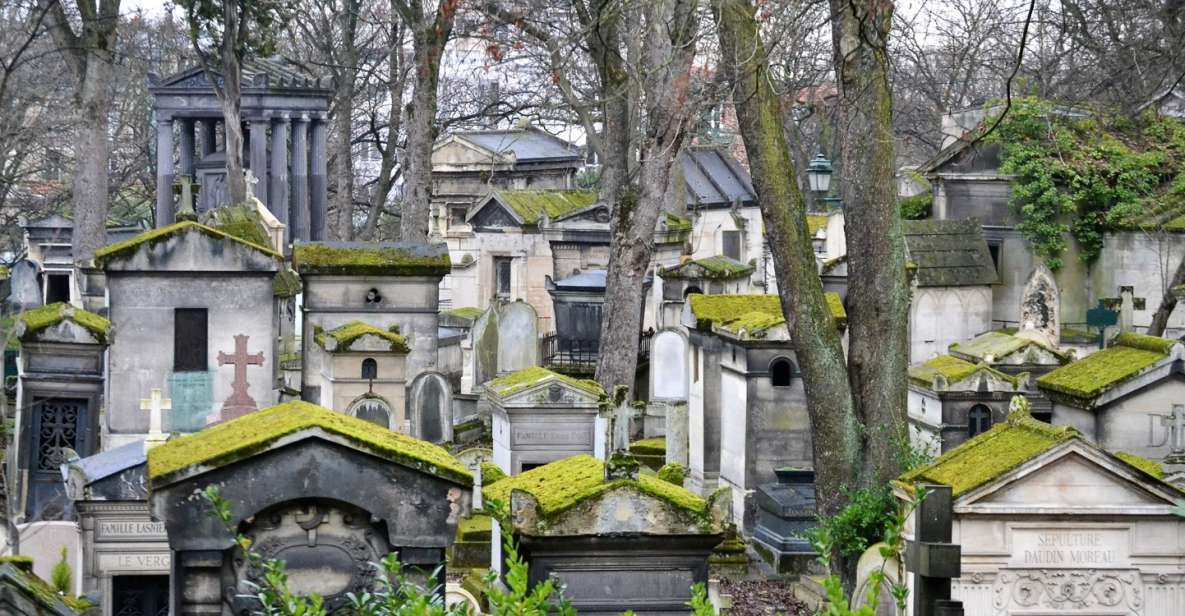
- Cobbled paths and 44 hectares of gardens make it feel like a walk through living history
- 70,000 graves and famous names: Oscar Wilde, Edith Piaf, Jim Morrison, and more
- Ornately carved tombstones and funerary art that you’ll notice only with guidance
- A narrative-led tour with anecdotes that add meaning beyond the dates on stone
- The Héloïse and Abélard tomb is a must-see stop for romance and legend
Why Pere Lachaise Feels Like a Paris Open-Air Museum
Pere Lachaise Cemetery is famous for a reason. It’s not just a place to visit graves; it’s a whole city of stone, trees, and symbolism. The scale is part of the magic: 70,000 graves, 5,300 trees, spread across 44 hectares. That means you can’t treat it like a quick walk to a single photo stop.
I love that the cemetery’s personality comes through as you move. The cobbled paths slow you down in a good way. Tombs aren’t all the same. Some are simple and quiet. Others look like mini monuments meant to be read, admired, and remembered. A guided tour matters here, because the site can feel like a maze if you’re trying to find names on your own.
The other big draw is the storytelling. This is where Paris turns poetic in a practical way. You’re not just looking at dates; you’re hearing how artists, writers, and musicians were seen in their time, and how their legends grew—or shifted—after death.
You can also read our reviews of more guided tours in Paris


Meeting at Rue des Rondeaux: Getting Started Without Hassle
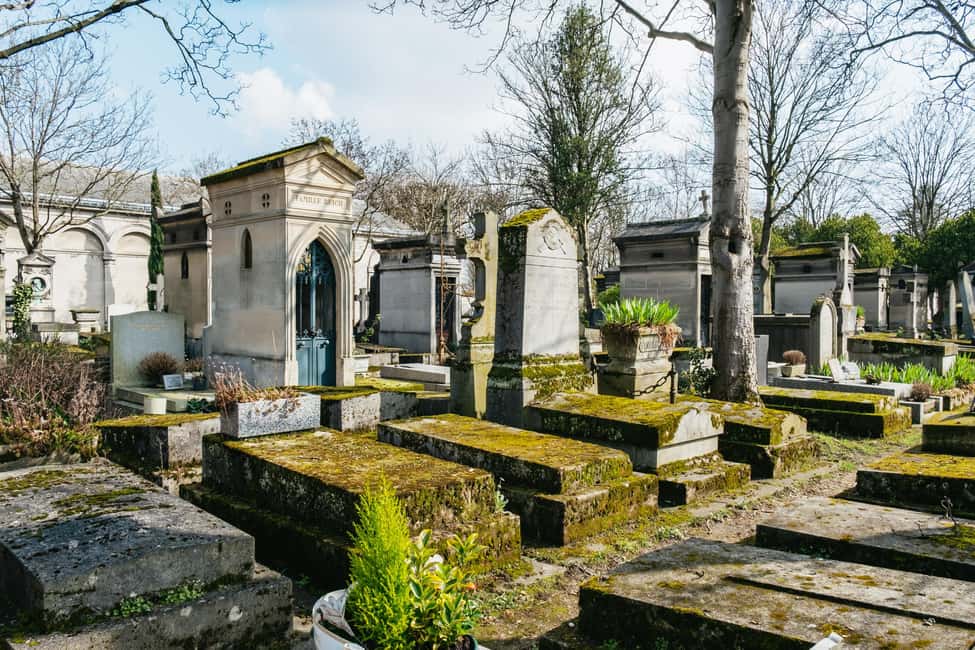
You meet your guide at the entrance to Pere Lachaise on Rue des Rondeaux. The closest metro stop is Gambetta (Line 3), which is a helpful anchor point for planning your route. From there, you’ll connect on foot to the entrance area.
One small tip: wear shoes that can handle uneven stone. Even if you think you’re just “walking through a cemetery,” the ground is cobbled and real. Comfort matters because 3 hours of steady strolling adds up, even at a relaxed pace.
Also note the tour language. This version is French, so if you’re a non-French speaker, go in knowing you’ll rely on your own translation help (or choose another language option if offered for your date).
How the 3-Hour Walk Really Works: Pace, Terrain, and Time Management
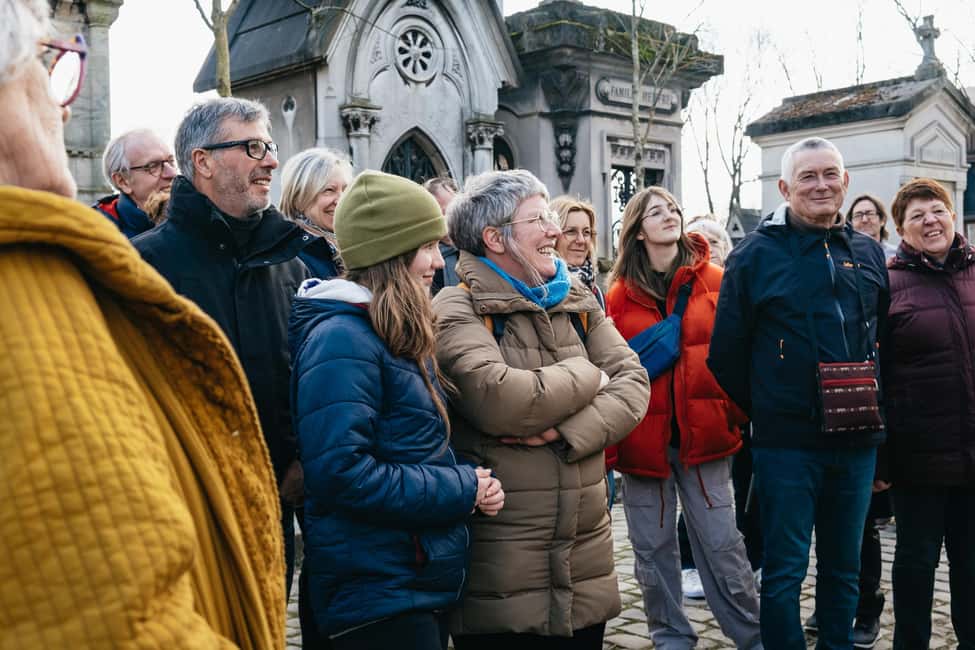
This is a 3-hour walking tour. That duration is right for Pere Lachaise because it’s long enough to see major figures and funerary art, but not so long that you feel fried by the end. You’re on cobbled paths, and you’ll be moving between sections instead of treating the cemetery like one straight line.
A guide is what keeps the walk efficient. The cemetery is large, and many people arrive with a single name in mind—Jim Morrison is a classic example. Without guidance, you can waste time looping around trying to pinpoint exact locations. With a guide, you’re building a route that makes sense, so you’re seeing the important graves and the design details that go with them.
Pacing is part of the value. The tour experience you get tends to be “relaxed but flowing,” meaning you’re not stuck standing in one spot for too long. You’re also not rushed. For a cemetery, that balance matters. You want time to look at the stones and the symbolism without turning it into a sprint.
Oscar Wilde, Edith Piaf, Jim Morrison: The Graves That Anchor the Tour
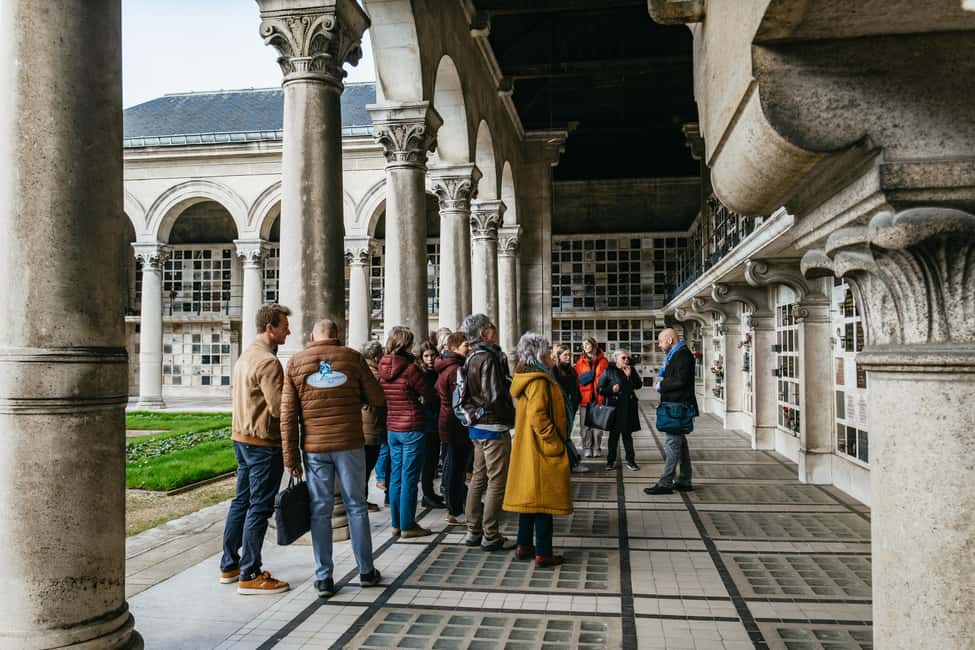
If you only remember a few names from Pere Lachaise, you can’t do better than the big three: Oscar Wilde, Edith Piaf, and Jim Morrison. On this tour, they aren’t just postcard targets. You’ll hear anecdotes tied to the people and the legends that surround them.
Here’s why that matters: these figures are widely known, but the cemetery setting changes how you understand the stories. A guide helps you connect the famous cultural persona to the physical reality of the tomb—scale, materials, and the kind of memorial chosen.
And since Pere Lachaise is a place where crowds can cluster around certain names, a guided route can help you focus on what’s in front of you instead of spending time guessing where the next stop is. You’ll also get a better feel for what the cemetery “does,” aesthetically and emotionally, as you move from one major grave to another.
Molière and Chopin: When Art and Music Go Silent in Stone
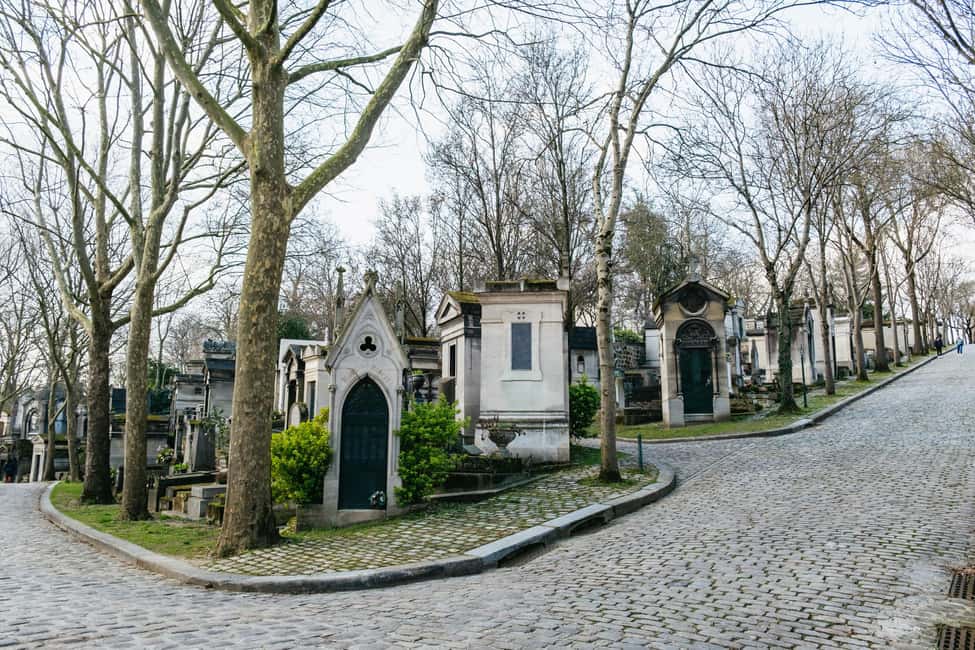
Beyond the headline figures, the tour also highlights other heavyweights, including Molière and Chopin. These stops add something different. Wilde, Piaf, and Morrison connect strongly to popular memory. Molière and Chopin add the layer of French cultural heritage and classical legacy.
What I find valuable about including these names is the variety of funerary styles they represent. Even when you’re not thinking about “design,” you notice how tombs communicate. Some memorials aim for solemn clarity. Others feel like crafted statements—sculpture-like, detailed, and intentionally theatrical in form.
This is also where a guide’s ability to explain the context makes the walk more than a sightseeing circuit. Instead of treating each grave as an isolated item, you understand how the cemetery functions as a cultural gallery—except the artwork is built for remembrance, not for sale.





Isadora Duncan and Gertrude Stein: Stories That Add Human Weight
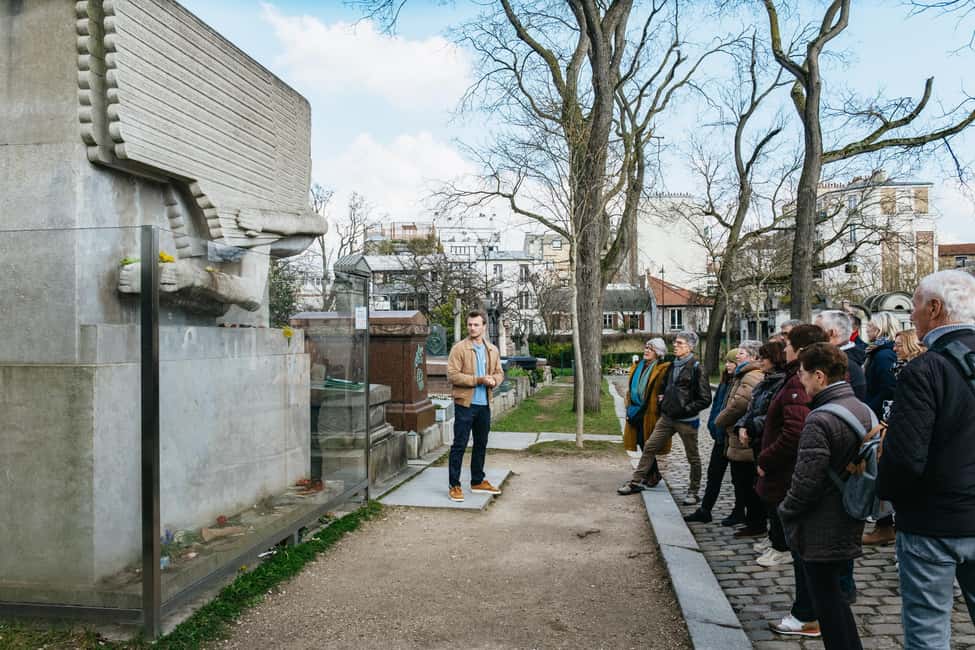
The tour can also include stops connected to Isadora Duncan and Gertrude Stein. These names help shift the tone. You go from celebrity-as-icon to celebrity-as-person shaped by art, movement, and ideas.
I like this part because it pulls your attention away from the easiest photo targets. You begin to look at the cemetery like a collection of meaningful lives rather than a “greatest hits” list. That shift is what makes the walk feel personal, even if the scale is huge.
And since tombs are designed with symbolism, hearing the guide’s narrative gives you a way to interpret what you see. You’re not just scanning for a famous name. You’re noticing the care put into lettering, ornament, and the way a memorial sits in relation to the paths and neighboring stones.
Héloïse and Abélard: Love, Legend, and Ornate Funerary Art
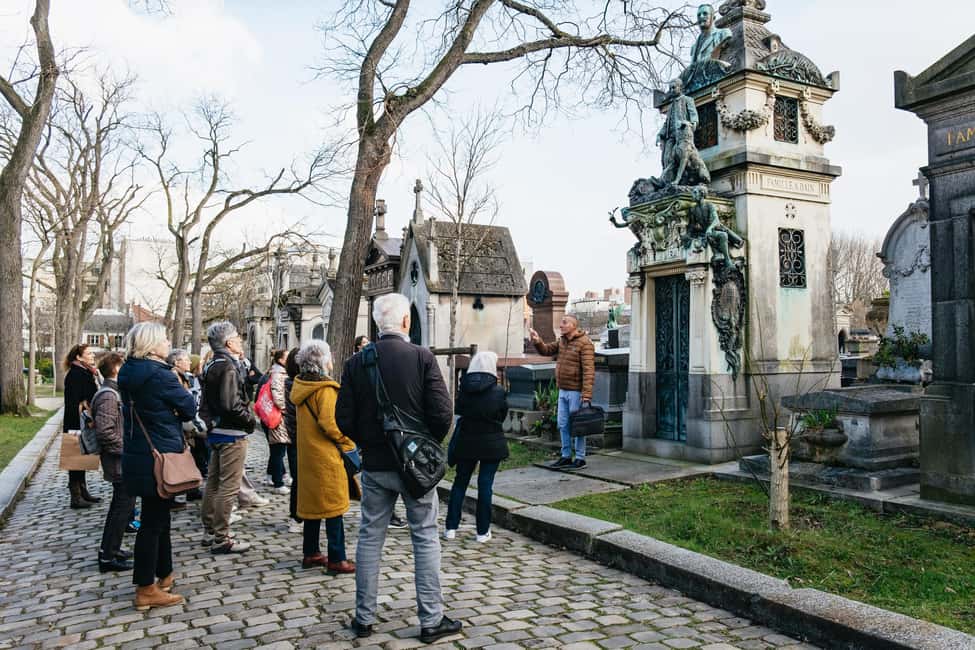
One of the most memorable stops is the tomb associated with Héloïse and Abélard. This is exactly the kind of location where Pere Lachaise proves it’s more than a list of famous people. The cemetery turns literature and legend into physical form.
What you’ll appreciate is the craft. The tour highlights ornate designs and funerary art, and this pair’s tomb is often singled out for its impact. As you stand there, you can see how the memorial style aims to carry emotion across time.
If you like stories of love, scandal, and ideas that have survived centuries, this stop is for you. It also gives you a “pause moment” in the walk—time to look closely, read the visual language of the tomb, and understand why these kinds of sites stay alive in public imagination.
Funerary Art, Gardens, and the Quiet Ambience You’ll Want to Respect
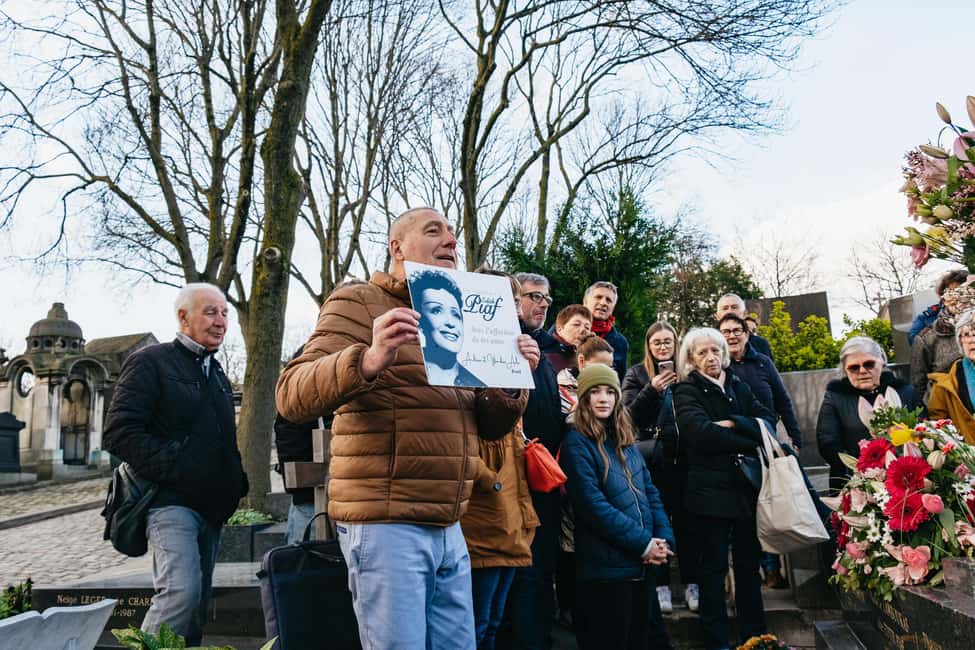
Pere Lachaise isn’t noisy in the way some tourist sights can be. Even with visitors present, the setting encourages a quieter mode. That matters because a cemetery is not just scenery—it’s a place of ongoing remembrance.
The gardens and tree-filled sections make the experience feel gentle rather than stark. You’re still in a memorial site, but the greenery and the design of the pathways soften the atmosphere. It’s one reason the cemetery feels like an open-air museum: you get both movement and stillness.
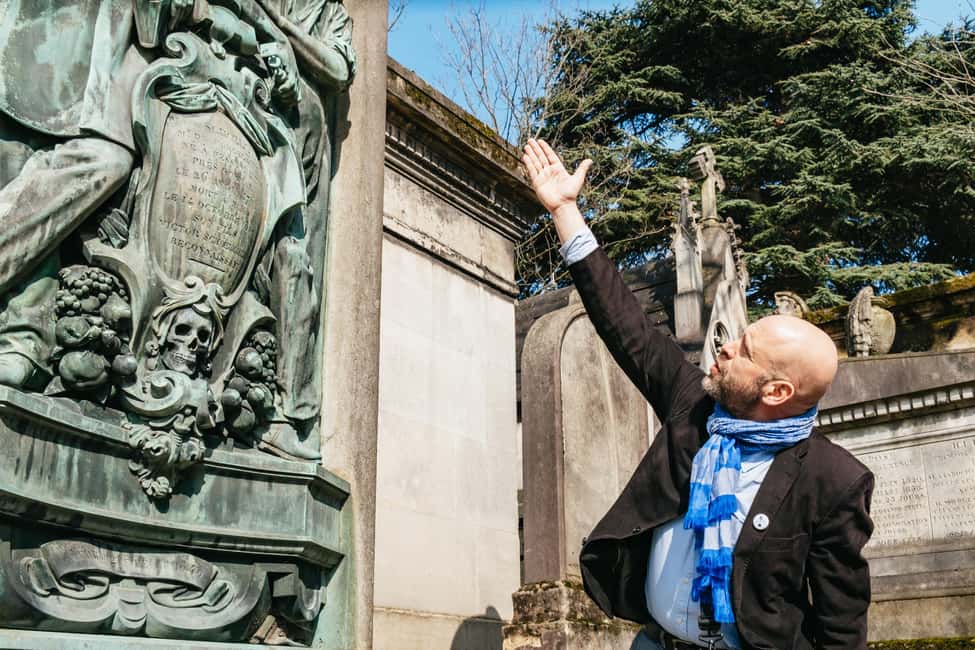
And then there’s the art. Ornately-designed tombstones aren’t just decoration. They’re visual storytelling. Some tombs are elaborate enough that you can spend time noticing the details, while others stand as strong, clean statements. A guide helps you spot what you might otherwise miss—especially if you’re walking quickly trying to “get through.”
Guides, Language, and What You Can Expect from the Tour Style
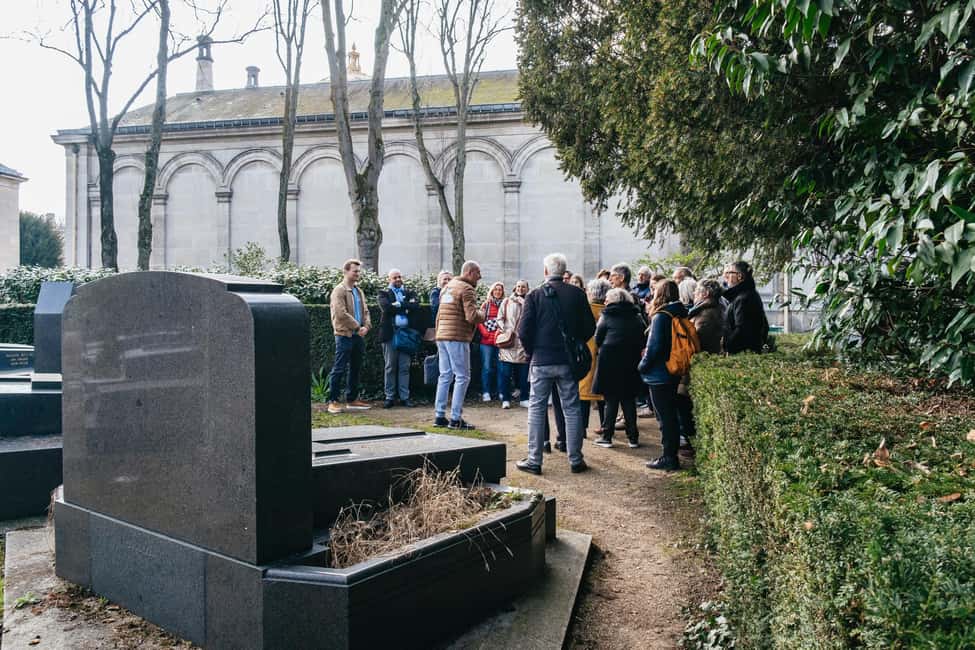
The experience is led by a live guide in French. Names tied to the tour experience include Thierry Le Roi & les Nécro-Romantiques, and individual guides mentioned include people like Alberto, Bernard, and Jean-Philippe. Across those accounts, a common theme shows up: the guide makes the stories engaging and the walk easier to follow.
If your French is solid, you’ll likely enjoy the humor and the flow of anecdotes. If your French is limited, you can still get value—especially if you’re comfortable using basic translation tools—but you should plan for a slightly less detailed experience.
One more point: guides can personalize the route to your interests. That’s not always guaranteed, but it’s a strength of this style of tour. If you care most about music, for example, or you’re focused on major writers and performers, a good guide tends to shape the story around that.
Price and Value: Is $23 Worth 3 Hours at Pere Lachaise?
At $23 per person for a 3-hour guided walking tour, the value is mainly about what you’re buying: direction, context, and a route that saves time in a large cemetery.
If you go alone, Pere Lachaise can eat your day. You might find a single famous grave and miss the surrounding funerary art. With a guide, you see multiple major figures plus the broader design and symbolism that makes the cemetery special. That changes the experience from scavenger hunt to meaningful walk.
You’re also paying for the guide’s narrative skill—how to keep you moving while making stops count. This is a cemetery where looking is part of the point. Without a guide, you’re often left figuring out what you’re seeing. With a guide, you’re given a lens that helps your eyes land on the important details.
In short: if you want a serious visit with structure, it’s a strong price. If your goal is only one quick photo and you don’t care about context, you might not need a guide.
Who This Tour Suits Best (and Who Should Skip It)
This is a great match if you:
- Want to see major graves like Oscar Wilde, Edith Piaf, and Jim Morrison without wandering
- Enjoy storytelling that connects famous people to real locations
- Like funerary art and want a guided way to notice tomb designs
It’s not suitable for people with mobility impairments or wheelchair users, since it’s a walking tour with cobbled paths. If you need accessibility support, you’ll want to plan another approach that fits your needs.
Should You Book This Pere Lachaise Guided Tour?
I’d book it if you’re curious about the cemetery as an open-air museum and you want the experience to feel guided rather than random. The combination of ornate tombs, famous resting places, and a story-driven route is what makes Pere Lachaise click.
I’d skip or rethink it if language is a major barrier for you, since this tour is in French. And if you can’t handle uneven walking, it’s not the right fit.
If you can meet in person, wear comfortable shoes, and accept that you’re spending 3 hours respectfully walking through history, this is one of the more memorable ways to experience Paris that most visitors only understand after they’ve done it once.
FAQ
How long is the Pere Lachaise Cemetery guided tour?
The tour lasts 3 hours.
How much does the tour cost?
It costs $23 per person.
Where do I meet the guide?
Meet your guide by the entrance to Pere Lachaise Cemetery on Rue des Rondeaux.
Which metro station is closest?
The nearest metro station is Gambetta (Line 3).
What’s included in the price?
You get a guide and a walking tour.
What language is the tour in?
The live tour guide is French.
What should I bring?
Bring comfortable shoes.
Is the tour suitable for wheelchair users or people with mobility impairments?
No. It is not suitable for people with mobility impairments or wheelchair users.
Which famous graves can I expect to see?
You can see graves of Oscar Wilde, Edith Piaf, Jim Morrison, and others such as Molière, Chopin, Isadora Duncan, Gertrude Stein, and Héloïse and Abélard.
Is free cancellation available?
Yes. You can cancel up to 24 hours in advance for a full refund.