REVIEW · PARIS
Paris: Pompidou Centre Private Guided Tour
Book on GetYourGuide →Operated by Paris in person private tours · Bookable on GetYourGuide
That red-and-steel building has a story. This private Pompidou Centre tour turns the architecture into the main event, with a guide that helps you read 20th-century art (and why the city built something so confrontational) through the lens of design and planning.
I especially like how the tour gives you two different ways to look at the Pompidou: as an art-world landmark and as an urban object that shaped its neighborhood. The second big win is the guiding style—reviewers highlighted guides like Milica and Boris for explaining modern art history with context, not a lecture tone, and making it work even for kids (one review mentioned enjoying it with a 12-year-old). One consideration: during reconstruction, the museum collection is closed, so this is a building-focused visit rather than time inside galleries.
In This Review
- Key Points You’ll Care About
- Pompidou Under Renovation: Touring the Building First
- Finding the Guide at Stravinsky Fountain (Rue Saint Merri)
- What Happens in 90 Minutes: A Building-Centered “Lecture Walk”
- The Pompidou’s Big Idea: Provocation as Architecture
- Gentrification and the 1970s Paris Power Shift
- Why the Guides Matter: Clear Context, Not a Pushy Lecture
- Price and Value for a $176 Private Tour
- Rain, Timing, and What to Wear
- Who Should Book This Pompidou Private Tour
- Should You Book This Pompidou Private Tour?
- FAQ
- Where does the tour meet?
- How long is the Pompidou private guided tour?
- Is the tour private?
- What languages are available?
- Is the museum visit included?
- What is included in the price?
- Is food or drink included?
- Does the tour run in bad weather?
- Is the tour wheelchair accessible?
- What’s the cancellation and payment flexibility?
Key Points You’ll Care About
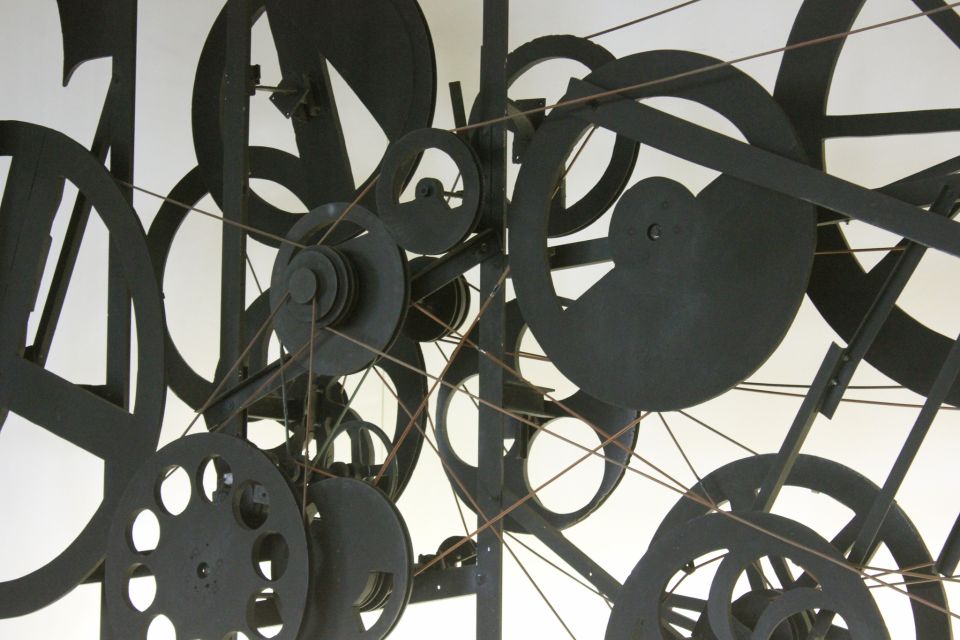
- Building-first visit: Right now the tour focuses on the Pompidou structure, not the art galleries.
- The Notre Dame of Pipes angle: You’ll learn why locals call it that, and what that says about Paris.
- Architecture meets urban planning: Expect explanations of how design interacts with streets, neighborhoods, and policy choices.
- Gentrification context: You’ll connect the center’s rise to neighborhood change in the 1970s.
- Small, private pacing: You can ask questions, and the guide can tailor the storytelling to your group.
- Guides with strong delivery: Reviews mention Bella, Stephanie, Milica, and Boris for clear, historical explanations.
Pompidou Under Renovation: Touring the Building First
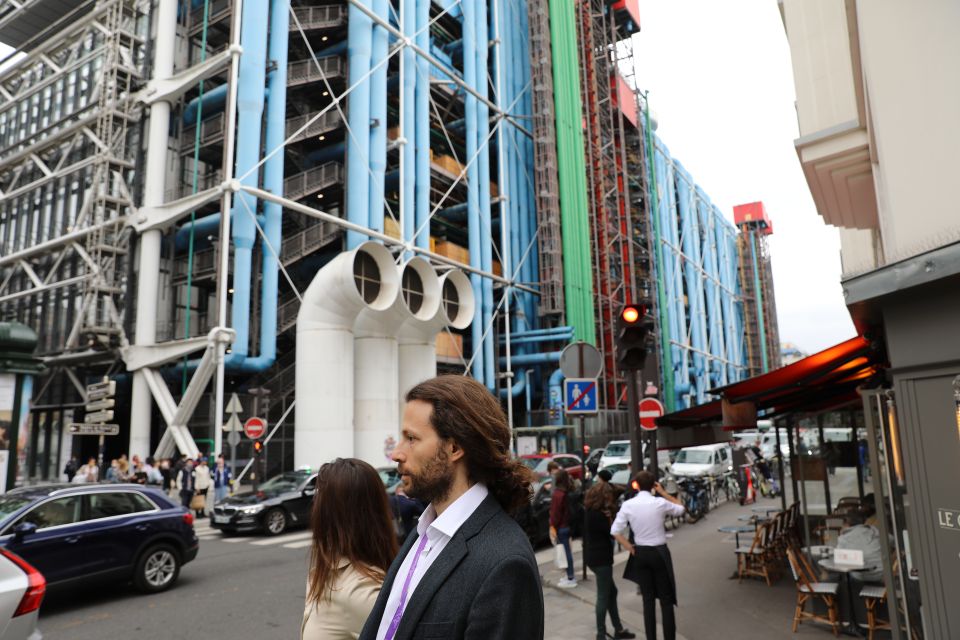
The Pompidou Centre is famous for art, sure. But this tour leans into the reason the building became a headline in the first place. During the reconstruction period, the museum itself is closed, so you won’t be spending your 90 minutes drifting through galleries. Instead, you’ll focus on the building as the “main artwork”—an artifact that many architects and art historians consider more important, in this moment, than what the museum normally houses.
That change is not a downgrade. It’s a different kind of education. If you’re someone who’s ever stood in front of modern architecture and thought, I don’t get it, this is the format that helps. You’ll be shown how the Pompidou’s design is meant to provoke—visually, socially, and politically—and how it connects to the bigger story of 20th-century Paris.
You also get an easy mental shift: the building isn’t just a backdrop. It’s part of the argument. Once your guide frames it that way, you start noticing details you’d usually ignore—how the structure exposes functions, how it sits in the neighborhood, and how it looks like it’s refusing to blend in.
And yes, even though it’s building-focused, you’re still learning about modern and contemporary art. The guide connects artistic movements and design thinking, so you walk away with the sense that art history didn’t happen in a vacuum. It grew alongside architecture, urban planning, and changing ideas about what public spaces should do.
You can also read our reviews of more guided tours in Paris


Finding the Guide at Stravinsky Fountain (Rue Saint Merri)
Your meeting point is the Stravinsky Fountain on Rue Saint Merri, 75004 Paris. Your guide will be carrying a red tote canvas bag, so you’ll be able to spot them quickly.
This matters more than you might think. The Pompidou area can feel like a knot of streets and priorities, especially if you’re juggling museums, cafés, and metro stops. Starting at the Stravinsky Fountain gives you a distinct landmark and a good sense of location before you head toward the center.
It also sets the tone. You’re not starting at a museum doorway where the building feels inevitable. You’re starting in a lively, recognizable part of the 4th arrondissement area, which makes the Pompidou’s presence feel more dramatic once you’re close enough to see it dominate the streetscape.
If you’re coming from another site, I suggest giving yourself a little breathing room to reach the fountain. This tour runs rain or shine, so you’ll likely want time to regroup if weather slows your pace.
What Happens in 90 Minutes: A Building-Centered “Lecture Walk”
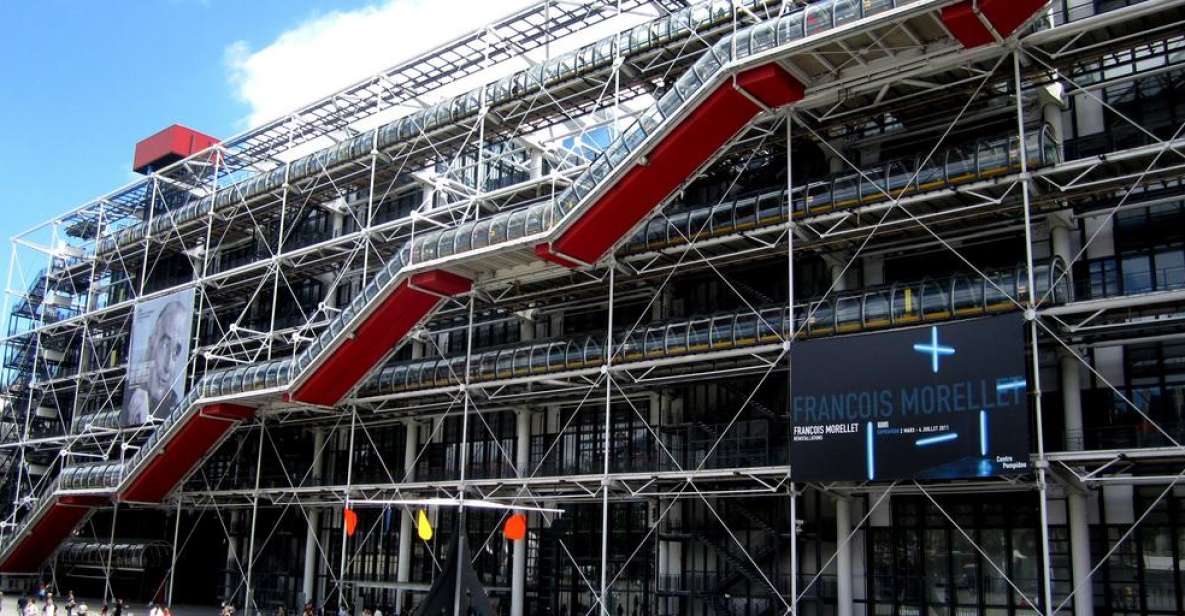
This is a private group experience with a 90-minute length. That sweet spot matters: long enough for real context, short enough that you’re not stuck waiting while the guide finds their rhythm.
Here’s the kind of flow you can expect, based on the focus areas the tour highlights:
- You start with the building as the subject—what you’re looking at and why it looked so controversial when it appeared.
- You get the history of construction: how the Pompidou went from concept to built reality.
- You move from design details to city-level meaning—how it integrates in the neighborhood and, importantly, how it defies it.
- You connect the center to urban change in the 1970s, including how gentrification shaped the museum’s role.
- You land on the human side: why locals call it the Notre Dame of Pipes and what that nickname suggests about acceptance, resistance, and civic identity.
- You finish with a new way of seeing postmodern architecture—less about style labels, more about impact.
The most valuable part is the translation step. Modern art and modern architecture can feel like two languages at once: one for concepts, another for feelings. A strong guide makes sure you get both. Reviews repeatedly praised guides—like Bella for bringing context to artwork and historical info that sharpened understanding, and Stephanie for explaining history and art movements clearly—so you don’t just end up staring at pipes and metal without a map.
Also, because the group is private, the guide can shift pace depending on you. If your group is curious about design, they can spend more time on architectural provocation. If you’re more focused on social history, they can spend more time on how the city changed around the museum.
The Pompidou’s Big Idea: Provocation as Architecture
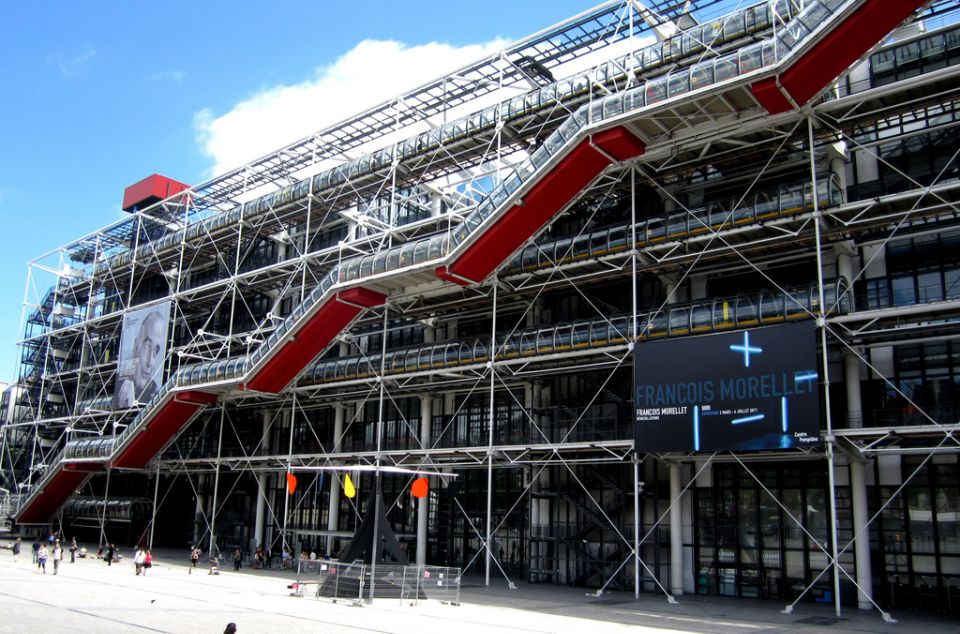
The Pompidou Centre’s reputation is built on the idea that it’s not politely decorative. It’s loud—structurally and visually. The tour leans into that by treating the building as architectural provocation and showing you why it’s considered such an iconic example.
Here’s what you’ll likely take away: the building isn’t just an object. It behaves like a statement in public space. You’re meant to notice it. You’re meant to react. And you’re meant to ask questions about what public culture should look like when it’s funded, planned, and constructed in a real neighborhood rather than on a perfect, empty site.
This is where you learn the connection between architecture and urban planning in a practical way. Your guide isn’t only talking about aesthetics. They’re connecting design choices to how streets, blocks, and communities experience change.
A helpful way to think about it: if a building is a physical “plan” for how people move and use space, then it also becomes a plan for what people feel about the city. The Pompidou’s design challenges the surroundings—visually and socially—which is exactly why it’s such a powerful case study for the 20th century.
Gentrification and the 1970s Paris Power Shift
One of the tour’s strongest promises is that it covers more than art history. It brings in the city-level story—how Paris changed in the 1970s and how the Pompidou became a key piece of that shift.
Gentrification is not just a modern buzzword here. In this context, it’s a real driver of what museums do and how neighborhoods transform around them. When you understand that, the Pompidou’s “provocation” starts making sense beyond style. The center isn’t floating in isolation. It’s part of a bigger redevelopment story: new institutions, new audiences, shifting economics, and the cultural politics of what gets built where.
Your guide is set up to connect those dots. The tour highlights:
- how the Pompidou integrates in the neighborhood
- how it defies it
- the history of gentrification and how it shaped the museum
- why this museum mattered to Paris’s transformation in the 70s
This is also where the “look again with new eyes” promise clicks. Even if you don’t love every modern design choice, you can still appreciate the logic of why it was built and how it altered the city’s direction.
You can also read our reviews of more private tours in Paris






Why the Guides Matter: Clear Context, Not a Pushy Lecture
The written highlights are good, but the reviews make the experience feel real. The overall rating is 4.7 from 19 reviews, and the recurring theme is the guide’s ability to explain without turning the tour into a text-heavy sermon.
I’d pay attention to the guide styles that show up again and again:
- Milica is praised for a wonderful, eloquent lecture covering the start and evolution of modern art from the end of the 19th century through the end of the 1980s.
- Boris is described as excellent, giving lots of background and putting things in perspective, and one review called him the best guide they’d ever had.
- Bella is praised for giving artwork context and historical information that deepened understanding.
- Stephanie is praised for explaining history and art movements clearly.
- Reviews also mention the experience working for kids, including a positive mention with a 12-year-old.
That last bit is quietly important. A private tour should be adaptable, and these reviews suggest the guides know how to build bridges from big ideas to real comprehension. If you’ve ever visited museums and felt like the labels were talking past you, this kind of guide-led explanation is the fix.
You’ll also benefit if you’re not sure what you like yet. Modern art and postmodern architecture can be polarizing. With the right context, you can move from, I don’t get it, to, I get what it’s trying to do—even if you don’t personally love it.
Price and Value for a $176 Private Tour
At $176 per person for 90 minutes, this isn’t a bargain-basement deal. You’re paying for a private guide and a structured way to see the Pompidou when the museum galleries are unavailable.
So the value depends on how you travel:
- If you’re the type who wants context (history, design reasoning, how urban change works), a guided private tour often beats wandering. You’re not just looking; you’re learning a framework.
- If you already love architecture and modern art and you’re happy reading on your own, you might find less value in paying for a guide—because the exterior is visually striking even without interpretation.
- If you’re traveling with others who differ in taste, private guiding is a smart compromise. The guide can explain why something matters to the city, which often helps both architecture fans and art-curious visitors.
One practical point: this is guide-only. Food and beverages are not included, so you’ll want to plan your meal separately if you’re scheduling this the same day as other stops.
The value sweet spot is when you want a high-quality explanation with real pacing—especially in a building-focused tour like this, where the museum galleries are closed and the “why” becomes even more important.
Rain, Timing, and What to Wear
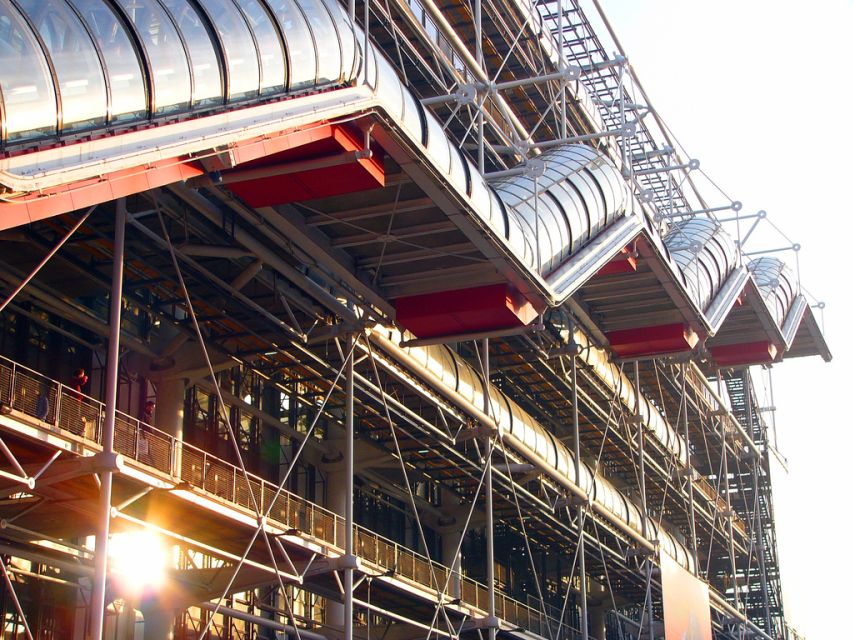
This tour operates rain or shine, which is both reassuring and slightly annoying. Reassuring because you’re less likely to lose the day to weather. Annoying because you’ll want to dress for the conditions.
Your best prep:
- wear comfortable shoes for a short walking route
- bring a light rain layer if the forecast looks shaky
- plan for a 90-minute outdoor-and-near-building experience
Because the focus is on the building and its relationship to the neighborhood, weather can affect how enjoyable the exterior views feel. Even so, a good guide can keep momentum going—explaining design choices whether the air is clear or wet.
Who Should Book This Pompidou Private Tour
This is a strong match if you:
- want to understand 20th-century modern and contemporary art through architecture and city planning
- enjoy ideas about urban change and cultural institutions
- like guided interpretation rather than self-guided museum wandering
- want a private group pace where questions are welcome
- appreciate the idea of learning from a controversial building, not just admiring it
It’s also a good option if you planned to visit the Pompidou but you’ll be there during reconstruction. You’ll still get a meaningful visit, because the tour is designed specifically around the building-first approach.
If you’re expecting a typical museum visit with heavy time inside galleries, this will feel different. But if you’re open to a more conceptual experience—learning why the Pompidou looks the way it looks and why it mattered—this format makes a lot of sense.
Should You Book This Pompidou Private Tour?
Book it if you want the Pompidou explained like an argument: architecture, planning, neighborhood change, and the human side of a building that earned its nickname, Notre Dame of Pipes. The guide-led context is the core value, and the reviews point to strong communication—guides like Milica, Boris, Bella, and Stephanie getting praise for clarity and strong background.
Skip it or consider alternatives if you’re traveling on a tight budget or you mainly want to browse museum collections inside galleries. Since the museum is closed during reconstruction and the tour focuses on the structure, you’ll want to be in the right mindset for a building-centered experience.
If you’re on the fence, this is a straightforward decision: with a well-matched guide, a 90-minute exterior-and-history tour can turn a famous site into something you actually understand.
FAQ
Where does the tour meet?
Meet your guide at the Stravinsky Fountain on Rue Saint Merri, 75004 Paris. The guide will be carrying a red tote canvas bag.
How long is the Pompidou private guided tour?
The tour lasts 90 minutes.
Is the tour private?
Yes, it’s a private group experience with a live guide.
What languages are available?
The live tour guide is available in English, French, and Serbo-Croatian.
Is the museum visit included?
During reconstruction, the museum itself will be closed, and the visit focuses on the Pompidou building.
What is included in the price?
The tour includes a guide.
Is food or drink included?
No. Food and beverages are not included.
Does the tour run in bad weather?
Yes. The tour operates rain or shine.
Is the tour wheelchair accessible?
Yes, it is listed as wheelchair accessible.
What’s the cancellation and payment flexibility?
You can cancel up to 24 hours in advance for a full refund. You can also reserve now & pay later (pay nothing today).