REVIEW · PARIS
Paris: Louvre Museum Highlights and Mona Lisa Tour
Book on GetYourGuide →Operated by Mon Petit Paris · Bookable on GetYourGuide
Four masterpieces, one smooth route through chaos. The Louvre can feel like a maze, but this guided highlights tour gives you a clear path in and a human narrator who explains why the art matters, with guides like Sally setting the tone right at the start. I especially liked the skip-the-line access with a pre-reserved ticket and the headsets that keep commentary easy to hear in a crowded museum. The only thing to watch: your time is short, so security and getting positioned can eat into the minutes you’d normally spend staring.
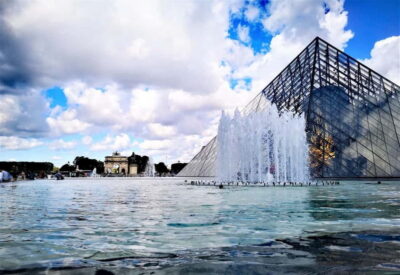
You meet just outside the museum area at the Arc du Carrousel (don’t go straight to the entrance), then step into the Louvre’s layers of history—palace halls, ancient galleries, and even medieval leftovers below ground. I also love that the route hits both the obvious icons and some less-hyped works, so you leave with context instead of a checklist. (And if you’re someone who hates stairs or needs step-free routes, this tour isn’t a match.)
In This Review
- Key things that make this tour worth your time
- Meeting at the Arc du Carrousel: start where the Louvre breathes
- Louvre security and fast-track entry: what skip-the-line really means
- What the route actually covers: icons plus the story behind them
- Venus de Milo: the sculpture that people keep returning to
- Winged Victory of Samothrace: why this statue feels like movement
- Mona Lisa: the explanation you’ll be glad you paid for
- Underground galleries and the Louvre’s older bones
- Timing reality check: 1–2 hours is perfect for highlights, not everything
- Group size, headsets, and staying together
- What to bring (and what will get you turned away)
- Mobility and stairs: know this before you commit
- Value: is $116 per person a good deal?
- Who should book this tour?
- Should you book this Louvre Highlights and Mona Lisa Tour?
- FAQ
- Where is the meeting point for the Louvre tour?
- Does this tour skip the ticket lines?
- How long is the tour?
- What is included in the price?
- What do I need to bring, and what’s not allowed?
- Is the tour wheelchair accessible?
- Can I re-enter rooms after leaving the wings?
Key things that make this tour worth your time

- Fast-track entry with pre-reserved tickets helps you start seeing sooner
- Headsets make the guide’s explanations clear, even in thick crowds
- A planned highlights route keeps you moving without missing the major works
- Icon stops in a sensible order: Venus de Milo, Winged Victory, Mona Lisa
- Louvre history included: palace origins and the medieval fortress remains underground
- A small group (max 20) makes it easier to stay together and ask questions
Meeting at the Arc du Carrousel: start where the Louvre breathes
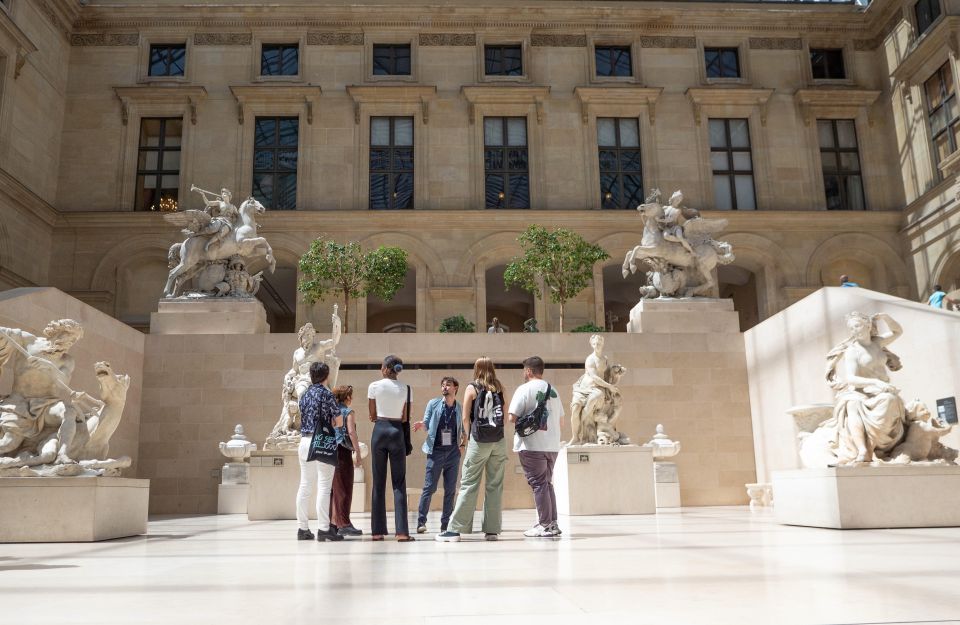
The best part of any Louvre plan is not what happens inside. It’s where you start outside. You’ll meet your guide near the Arc du Carrousel du Louvre, just outside the museum. The important practical bit: do not walk straight to the front doors and hope you’ll find your group there. Meet first, then you go in together as a group.
This matters because the Louvre is not only huge—it’s crowded in the “everyone is arriving at once” way. Starting at the correct meeting spot means you’re aligned with the group before you hit security and the flow of visitors. Once you’re inside, that initial coordination pays off.
You can also read our reviews of more museum experiences in Paris



Louvre security and fast-track entry: what skip-the-line really means
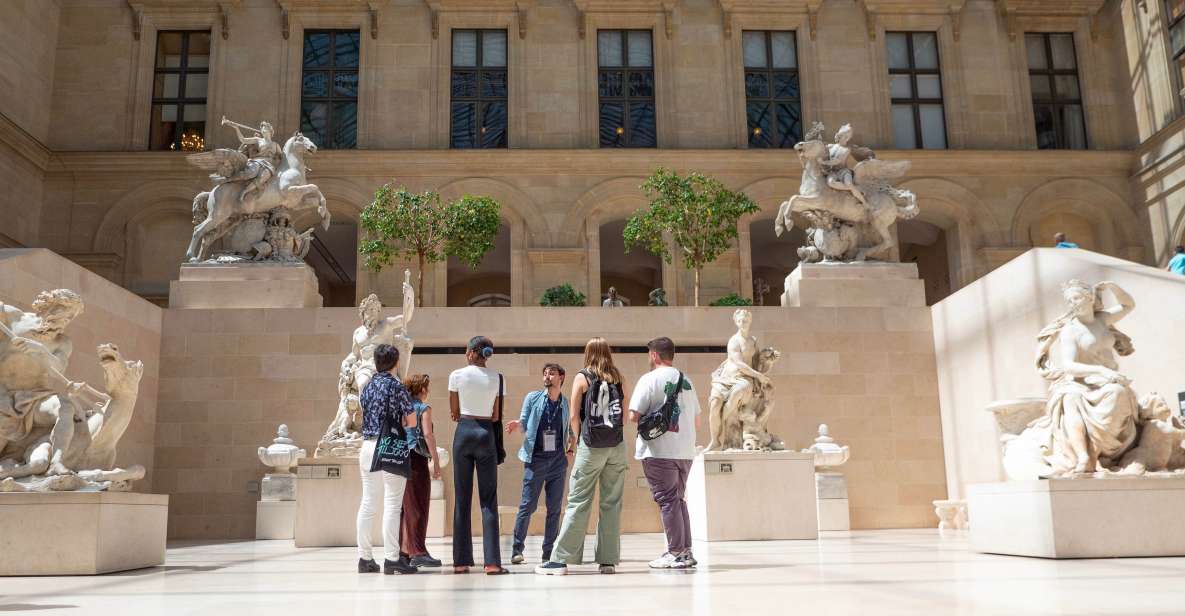
Even with pre-reserved admission, you still go through airport-style security. That’s non-negotiable. On peak days in summer, plan for possible waits—up to around 20 minutes at security. I’m not going to pretend that’s fun. But it’s also why the fast-track element is valuable: you avoid the slowest part of the process and you get a clearer path once you’re checked in.
The tour includes a Louvre pre-reserved entry ticket and uses a separate entrance approach for quicker museum entry. In plain terms, you spend less time standing and more time seeing.
Also, keep your expectations realistic about a 1–2 hour tour. One reviewer noted that getting inside took roughly 35–40 minutes. That doesn’t mean the tour is “short,” but it does mean you should treat the time inside as the main event, not the whole experience. Bring comfortable shoes, and expect some stairs.
What the route actually covers: icons plus the story behind them
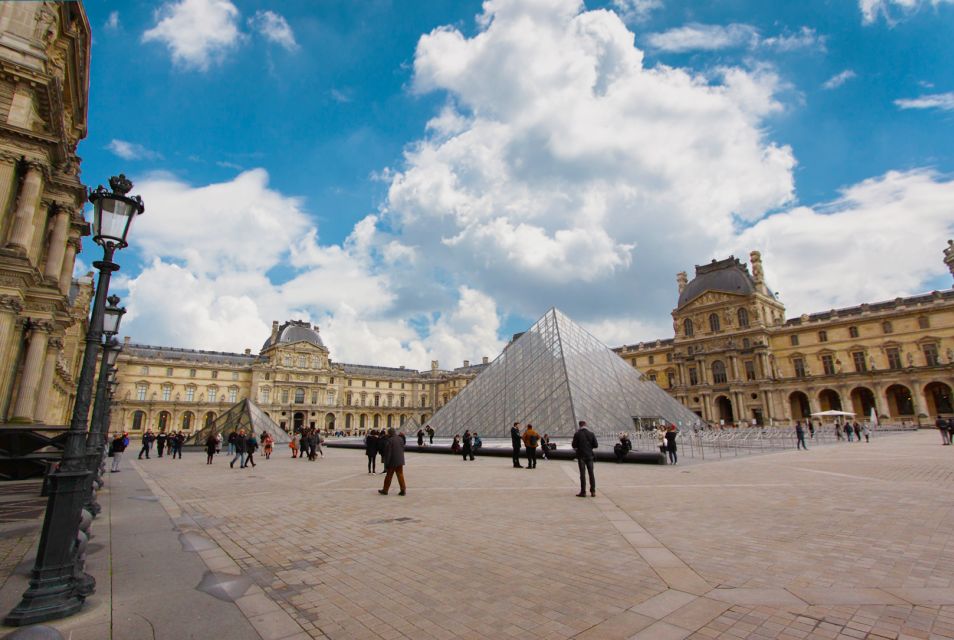
The Louvre’s collection spans ancient civilizations through the mid-1800s, so trying to do it solo can turn into a stress sprint. The big win with a guided highlights route is that you don’t just “see the famous works.” You understand what you’re looking at—why these pieces became cultural magnets for centuries.
Your tour is built around a set sequence of top masterpieces, plus additional stops that fill in the context. You’ll move through areas tied to ancient Greek art, Renaissance works, and paintings from the 13th to the 19th centuries, along with prints from the Royal Collection. That range helps you connect dots between different eras instead of treating each room like a random prize you won.
A lot of people also love that the guide keeps things moving without turning it into a race. Multiple guides named in reviews—like Melvin, Barbara, Pierre, and Sally—were praised for turning the museum into a narrative you can follow.
Venus de Milo: the sculpture that people keep returning to
A highlights tour should earn its stop at Venus de Milo, and this one does. You’ll get up close to the statue that inspired generations of artists. What you’ll likely appreciate here is not just the famous look—it’s the fact that the Louvre doesn’t present antiquity as distant. The guide’s explanations typically help you see the structure, style, and cultural importance in a way that’s much harder to catch on your own.
Practical tip: this is one of the most photographed spots, so expect crowds. If you’re someone who likes to take your time, you’ll still want to do it here—but let your guide’s timing help you catch a view before the room shifts from manageable to tightly packed.
Winged Victory of Samothrace: why this statue feels like movement
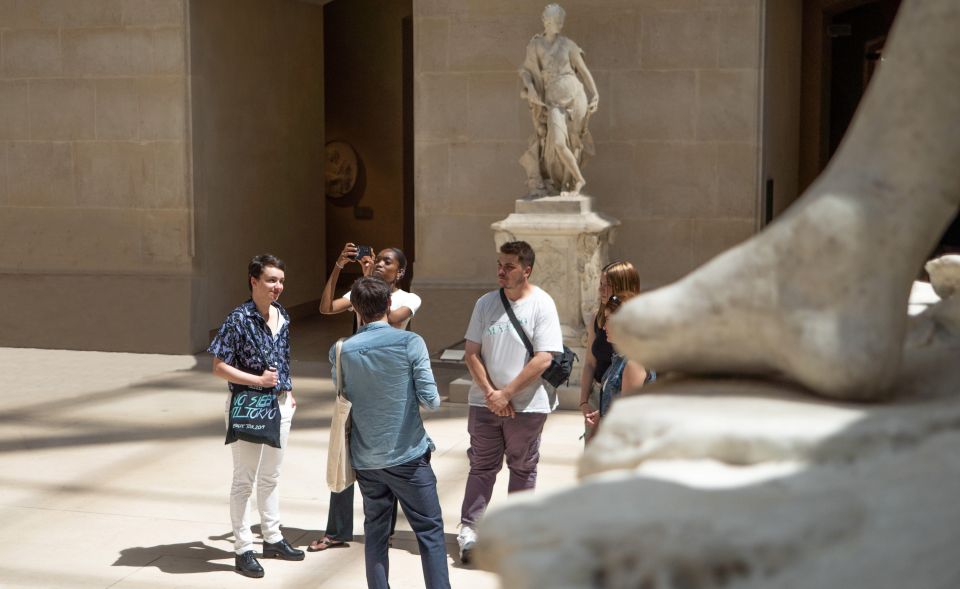
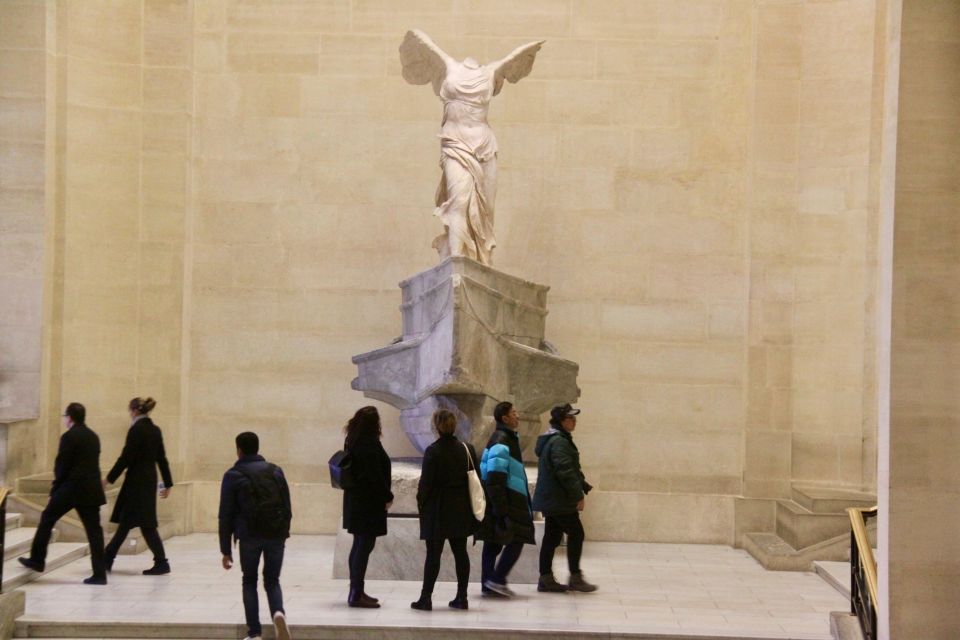
Next up is Winged Victory of Samothrace, the celebrated Hellenistic statue associated with Nike, the Greek goddess of victory. The “why” behind the fame is the real treat. You’re not just standing in front of a sculpture. You’re seeing a masterpiece that has been studied, replicated, and referenced for its sense of motion and drama.
This stop is often a favorite because the guide can translate what the eyes see into what the history is saying. Reviews consistently highlight that guides used storytelling and sharp details to make these works feel alive rather than untouchable museum objects.
If you want photos, keep it realistic. You’ll probably need to work around visitor traffic, and the guide’s pacing helps you choose when to step in.



Mona Lisa: the explanation you’ll be glad you paid for
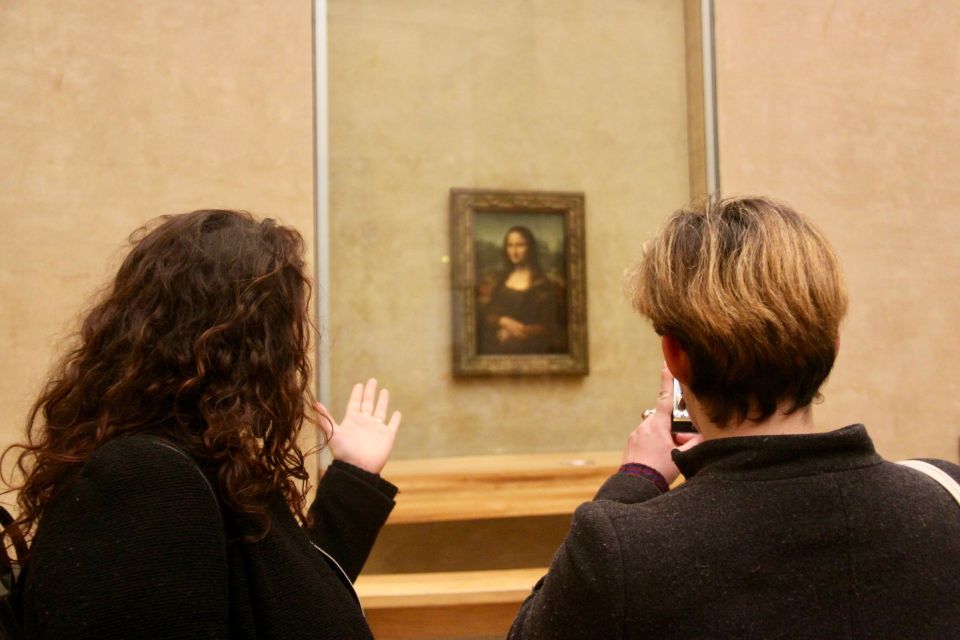
You’ll end up at the Mona Lisa, the Renaissance portrait that became a global headline after its 1911 theft, which helped lock in its fame worldwide. The guide’s commentary is where the magic tends to happen. A self-guided walk through the room often leaves you with a question: why is everyone staring at that one painting?
On this tour, you’ll stand before the painting with a narrative that connects its importance to its broader cultural moment. And since the tour ends near the Mona Lisa area, you’ll be positioned to continue exploring after the guided portion if you want to linger.
One practical note: the Louvre bottlenecks hard here. People gather, and it gets loud and busy fast. Plan to treat Mona Lisa as a “pause and absorb with context” stop, not a sit-down. You can spend more time after, but your best chance for calm viewing is tied to how your guide times the group.
Underground galleries and the Louvre’s older bones
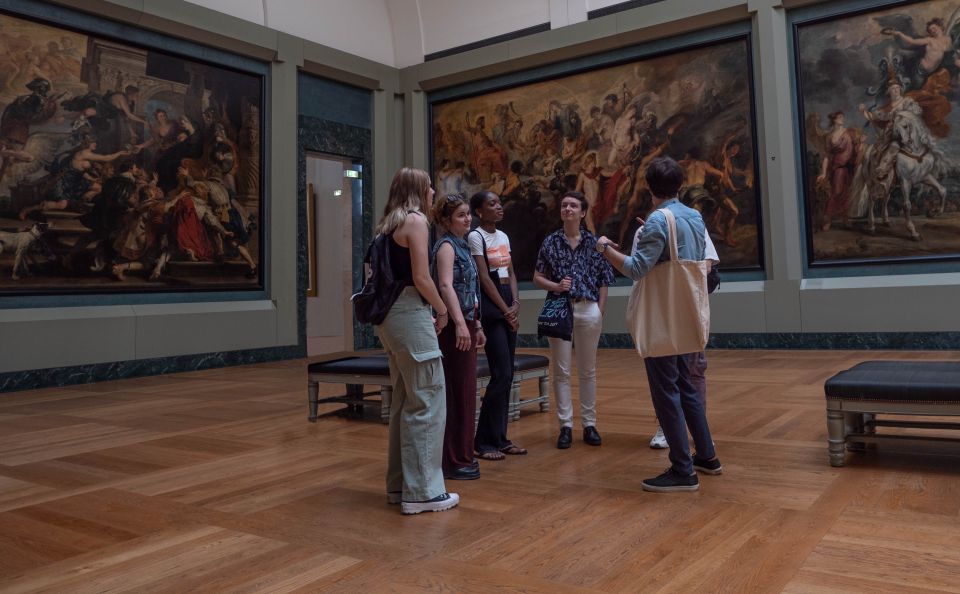
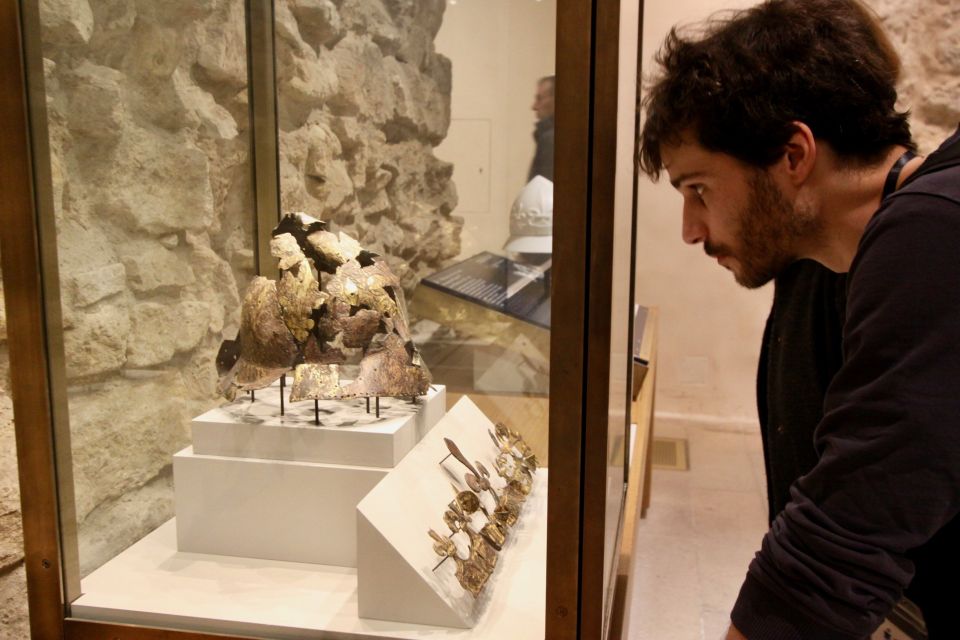
This tour also includes a look at the Louvre’s underground galleries and the remains of the original medieval fortress—the foundations that shaped the palace’s later identity. This is the kind of stop that’s easy to miss if you only chase paintings and sculptures.
Why it’s worth it: the Louvre is famous for art, but its setting is part of the story. When you understand the building’s earlier layers, the museum becomes more than a room full of masterpieces. It becomes a timeline you can walk through—palace to fortress to gallery.
If you like architecture, or if you’re curious about how French power and patronage shaped art, this section adds real texture to your visit.
Timing reality check: 1–2 hours is perfect for highlights, not everything
A tour like this is designed for 1–2 hours, and that’s the right length for the Louvre’s scale—if your goal is highlights plus meaning, not seeing every gallery.
Here’s the trade-off. Even with a focused route, the Louvre still takes time to move through. Security, crowds, and the reality of a huge museum mean you don’t get the luxury of slow wandering. And since one short review flagged that a chunk went into entering, it’s smart to schedule this early in your day rather than as a “late afternoon maybe.”
The upside is clear: once the guided part ends, you’re free to explore more on your own. So think of the tour as your orientation and your art education kickoff, not your entire Louvre day.
Group size, headsets, and staying together
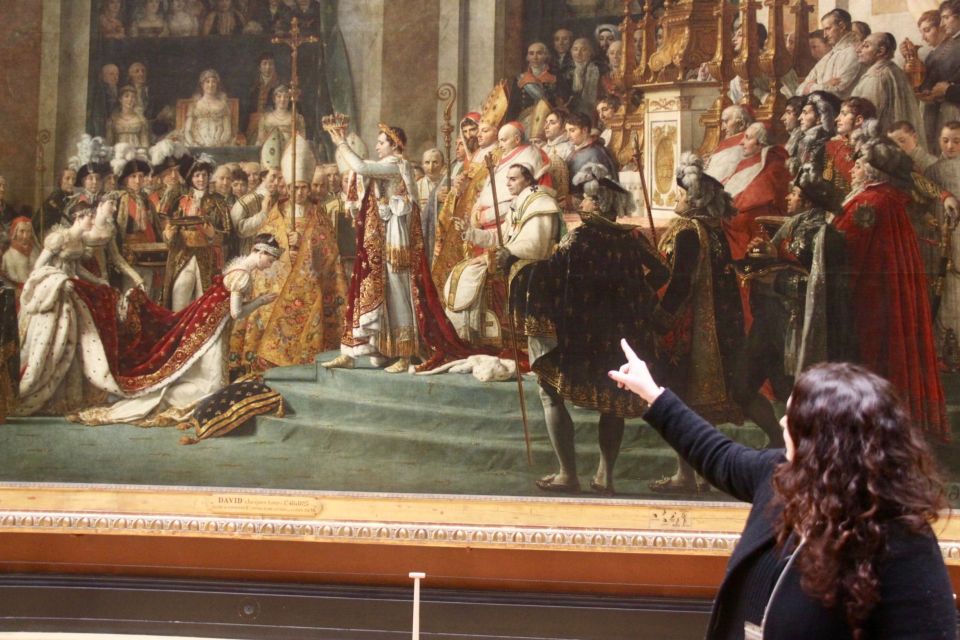
You’re in a standard group of up to 20. That size is big enough to have energy but small enough for the guide to manage the flow. Most visitors notice the benefit immediately: you’re not trying to keep track of 40 strangers, and the guide can slow down when people ask questions.
The tour includes headsets, which is a big deal at the Louvre. Rooms are noisy and guides are often speaking over foot traffic. Headsets help you catch details without leaning in or constantly guessing what you missed.
If you’re traveling with kids, you’ll be glad to know guides were described as keeping children engaged. Just remember: children need to be booked on the tour.
What to bring (and what will get you turned away)
Do not show up empty-handed. Bring a passport or ID card, and wear comfortable shoes. The tour involves walking and stairs, and that’s not optional. The museum elevators situation also affects who can join—so more on that next.
Also, the museum rules inside are strict about bags:
- Luggage or large bags are not allowed
- Non-folding strollers are not allowed
- If you show up with the wrong bag setup, you could lose time or be blocked from entry
This is one of those “boring but saves your day” parts. Pack light.
Mobility and stairs: know this before you commit
This tour is not suitable for people with mobility impairments. The key reason provided is that the museum’s elevators location limits access for wheelchair users and people with mobility limitations.
If you need step-free routes, I’d treat this as a hard “no” and look for a different format. Don’t gamble. The time you’d spend trying to adapt inside a museum is rarely worth the stress.
Value: is $116 per person a good deal?
At $116 per person for a 1–2 hour guided experience, the value depends on what you hate most about the Louvre.
If you dread:
- ticket lines,
- getting lost,
- or staring at famous art without understanding it,
then this price often feels fair. You’re paying for a licensed guide, a pre-reserved entry ticket, and headsets. You’re also paying for something harder to quantify: a sensible route through a maze.
Where the value may feel thin is if you already know the Louvre well and prefer a full-day self-guided plan. In that case, you might feel you paid for structure you don’t need.
But for most first-timers, the sweet spot is real. The tour gives you a confident start and then lets you branch out after the guide finishes near the Mona Lisa.
Who should book this tour?
This is a great fit if:
- it’s your first time at the Louvre,
- you want to hit the biggest masterpieces without wasting hours navigating,
- you like your art with context and stories,
- you value a small-group experience with headsets.
It’s less ideal if:
- you rely on step-free access,
- you plan to bring large bags or luggage (not allowed),
- you want a slow, full-day deep museum crawl.
Should you book this Louvre Highlights and Mona Lisa Tour?
If you want your first Louvre visit to feel organized and meaningful, I’d book it. The combination of fast-track entry, a guided highlights route, and explanations at Venus de Milo, Winged Victory of Samothrace, and the Mona Lisa is exactly how you turn a crowded museum into an experience you can actually remember.
I’d skip it only if you already have a strong game plan and you’re comfortable navigating the Louvre on your own for several hours. Otherwise, this tour is a smart way to buy back your time, reduce stress, and get the stories that make the masterpieces land.
FAQ
Where is the meeting point for the Louvre tour?
You meet your guide near the Arc du Carrousel du Louvre, just outside the museum. The exact meeting point can vary depending on the option booked, so confirm it when you reserve.
Does this tour skip the ticket lines?
Yes. Your tour includes a pre-reserved entry ticket and uses a separate entrance approach for skip-the-line entry.
How long is the tour?
The duration is 1 to 2 hours. Starting times depend on availability.
What is included in the price?
Included: a guided tour in English with a licensed guide, a Louvre pre-reserved entry ticket, headsets, and a standard group (maximum 20 participants).
What do I need to bring, and what’s not allowed?
Bring passport or ID and wear comfortable shoes. Luggage or large bags are not allowed, and non-folding strollers are not allowed.
Is the tour wheelchair accessible?
No. The tour is not suitable for people with mobility impairments, and it requires walking and climbing stairs due to elevator location constraints.
Can I re-enter rooms after leaving the wings?
No. Once you have exited the wings and are under the pyramid, you cannot re-enter the rooms.
—
If you want, tell me your travel month and whether you’re doing other Paris sights that day. I can suggest a smart time to schedule this so you get the smoothest experience.