REVIEW · PARIS
Paris: Normandy D-Day Sites Guided Day Trip with Lunch
Book on GetYourGuide →Operated by City Wonders Ltd. · Bookable on GetYourGuide
D-Day history hits harder when you stand there. This guided day trip from Paris lines up the key landing sites in a tight, well-paced order, so the story of Operation Overlord makes sense fast. You’ll get a real English-speaking guide and built-in lunch time, not a scramble-for-plans kind of day.
I especially love the emotional finish at the American Cemetery overlooking Omaha Beach, with time to walk the grounds and reflect at the memorial areas. I also like the Utah Beach Museum setup—housed in a historic German bunker on the shore—plus the chance to see major artifacts like a B-26 bomber up close.
The main drawback is simple: it’s a 14-hour day with limited time at each stop. If you want slow, wandering beach time at Omaha or Pointe du Hoc, you’ll still have to move when the group does, and there’s also no fit for wheelchair users.
In This Review
- Key highlights you shouldn’t miss
- From Paris to Normandy D-Day sites: what that long coach ride is really for
- Utah Beach Museum inside a German bunker: the shore-level viewpoint
- Grandcamp-Maisy Norman lunch: why the pre-booking saves your day
- Pointe du Hoc guided walk: craters, fortifications, and big decisions
- Omaha Beach: short shoreline time with maximum meaning
- Normandy American Cemetery at Colleville-sur-Mer: the emotional anchor
- Price and value: why $117 works on a one-day timeline
- Who this Normandy D-Day day trip is best for
- Booking tips that make the day smoother
- Should you book this Paris to Normandy D-Day tour?
- FAQ
- How long is the Normandy D-Day day trip from Paris?
- Where do I meet in Paris, and where does the tour end?
- What are the main stops on the tour?
- What time is spent at each major site?
- What’s included in the $117 price?
- Is lunch included, and what does it include?
- Do I need to bring anything?
- Is this tour suitable for wheelchair users or limited mobility?
- What’s the stroller policy?
- Can I get a refund if I cancel?
Key highlights you shouldn’t miss
- American Cemetery at Colleville-sur-Mer: solemn walk with guided context and free time to pause
- Utah Beach Museum in a German bunker: ocean views plus wartime artifacts, including a B-26
- Pointe du Hoc guided visit: walk among fortifications and bomb craters, with big-chapter Rangers context
- Omaha Beach shoreline time: free walking time to take in the scale of the landing sands
- Pre-booked Norman lunch at Grandcamp-Maisy: saves time at a port restaurant with local dishes and cider
- English-speaking expert guide: clear explanations that connect the dots from pre-war planning to June 6
From Paris to Normandy D-Day sites: what that long coach ride is really for
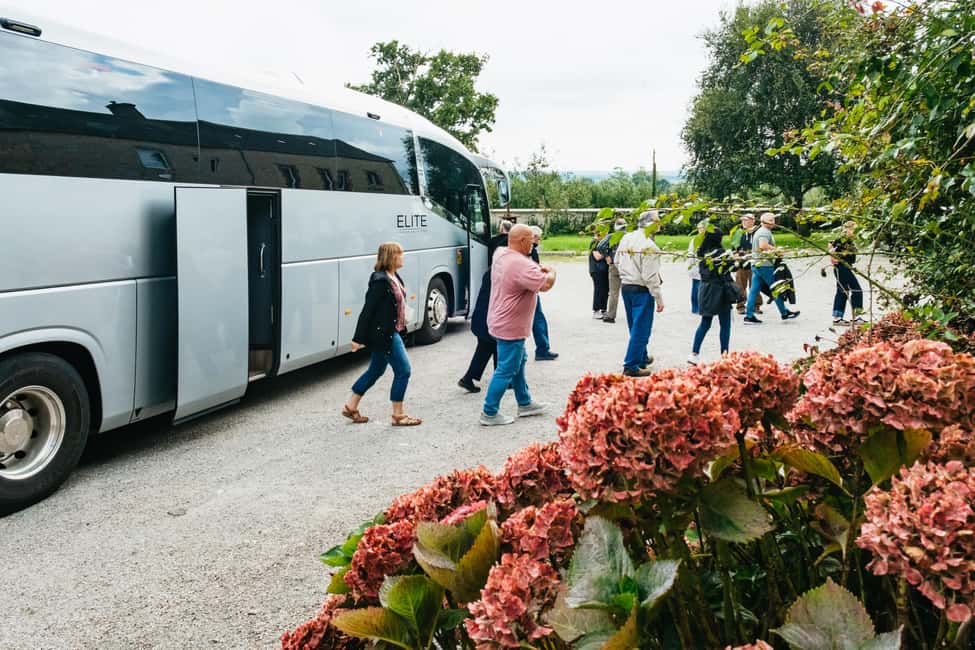
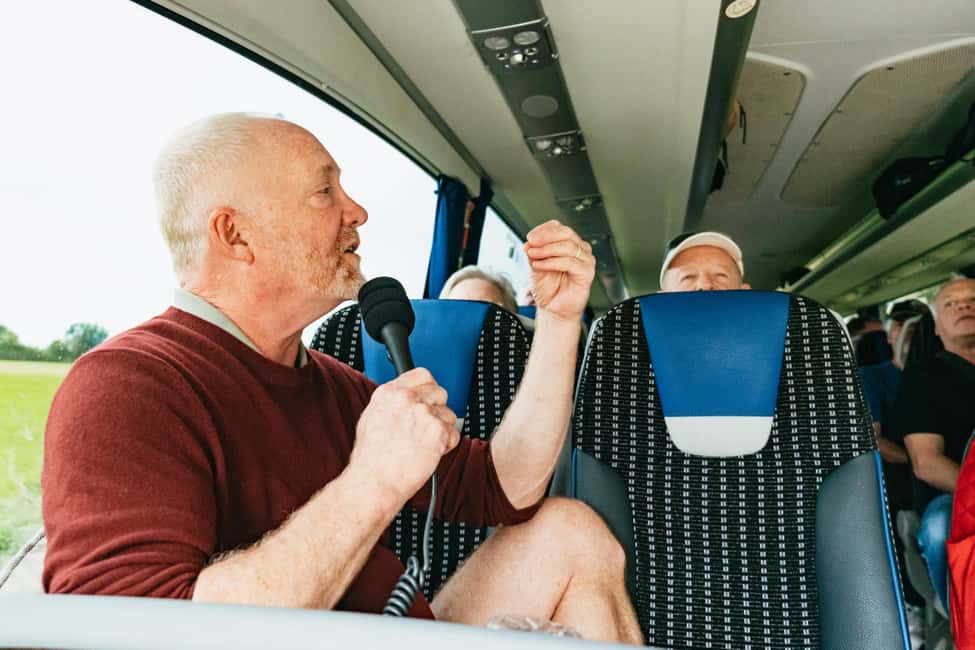
This tour is built around one goal: getting you from Paris to the Normandy coast and keeping the history moving in a logical order. Yes, you’ll spend about 4 hours on the bus each way, but that ride is where your guide sets the frame—what led to WWII’s turning points, how the Allies planned Operation Overlord, and why June 6 required so much coordination.
What I like about this setup is the contrast. You’re not just shuttled to scenic stops. You’re being walked through decisions, geography, and stakes while the countryside rolls by. It makes the beach stops hit differently, because you understand what you’re looking at instead of just seeing famous names on a map.
One more practical note: wear comfortable shoes. This is a day for walking and standing, with periods of uneven ground at battlefield sites. You’ll also want layers, since coastal weather can shift fast.
You can also read our reviews of more guided tours in Paris


Utah Beach Museum inside a German bunker: the shore-level viewpoint
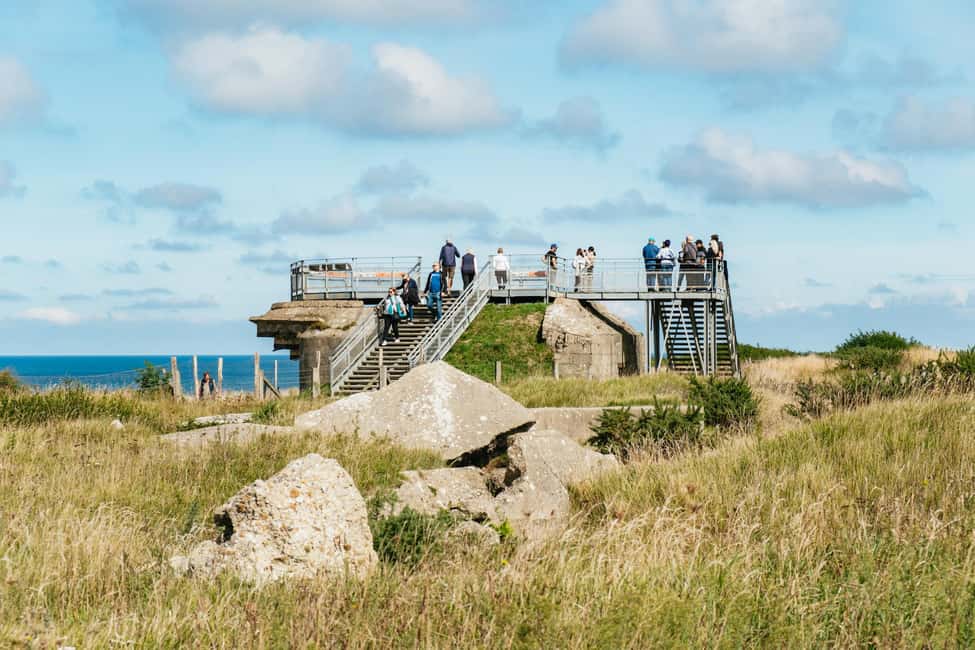
Utah Beach Museum is one of the smartest early stops on this route. The museum sits inside an original German bunker right at the waterline, which means you’re not only learning—you’re physically in the kind of structure both sides would recognize from the war.
Plan on about 75 minutes here. That time matters. You want enough minutes to look at exhibits, follow the guide’s explanation, and take in the ocean view from the bunker location. The “this was here, on this coast” effect is real when the coastline is in the same line of sight as wartime artifacts.
Two specific things to look for:
- The way the museum shows the planning behind the landings and the logic of the battlefield.
- The artifacts, including one of the last remaining B-26 bombers in the world. Even if you’re not a military-aviation person, seeing real equipment in context usually sticks with you longer than text alone.
In my book, the best value of Utah Beach Museum is that it gives you orientation. After it, Pointe du Hoc and Omaha aren’t random famous spots. They become points in a single operation, with purposes and consequences that connect.
Grandcamp-Maisy Norman lunch: why the pre-booking saves your day
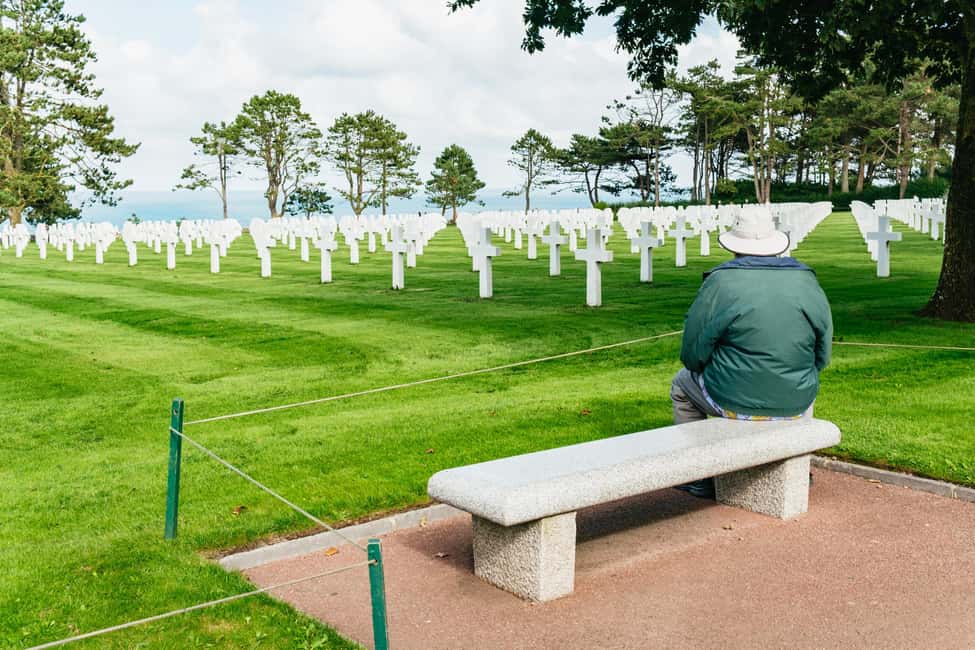
Lunch is included and timed for efficiency, which is a big deal on a 14-hour schedule. You’ll eat at a port restaurant in Grandcamp-Maisy with a Norman-style menu made from seasonal ingredients, served as a 2-course meal with one glass of cider.
This is the kind of stop that’s easy to overlook—until you’re on a day tour and realize how much energy a good lunch returns. Also, because it’s pre-booked, you’re not left hunting for a place when the clock is already tired.
A fair heads-up: the lunch window is about 1 hour. If you normally like to linger, this will feel brisk. But the trade-off is that you get back to the battlefield sites while you’re still fresh enough to pay attention.
If you have diet needs, you’ll want to flag them during booking. The tour data explicitly asks for dietary requirements in advance.
Pointe du Hoc guided walk: craters, fortifications, and big decisions
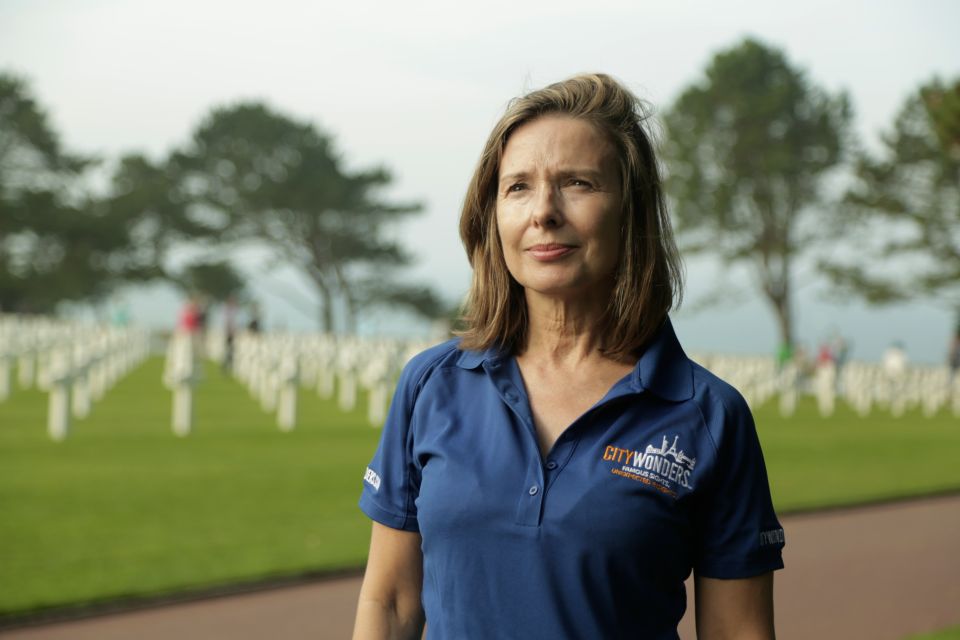
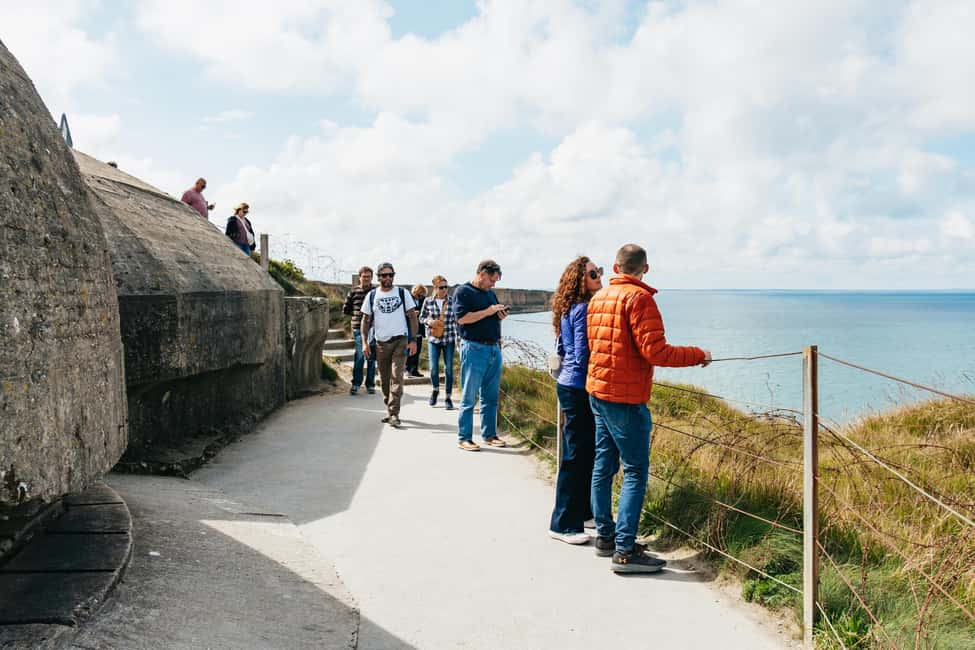
After lunch, the tour shifts to Pointe du Hoc, where the scenery gets dramatic fast. This is one of the most striking battlefield areas on the D-Day map: the remains of German clifftop fortifications, scarred by bomb craters, with the English Channel always there in the background like a reminder of where the fighting energy was heading.
You’ll spend about 1 hour at Pointe du Hoc with a guided visit. That hour is often the difference between a quick look and understanding why this site mattered. Your guide will connect what you’re seeing—fortifications, damage patterns, cliff positions—to the story of the Rangers scaling the cliffs under heavy fire to secure a strategic point.
What you should do with your hour:
- Walk slowly at the beginning, so you can orient yourself to the terrain.
- Save your best questions for your guide when you’re close to key sections. The explanations usually make more sense when the structure is literally in front of you.
The views can be stunning, but treat them as part of the battlefield context. This place doesn’t feel like a photo-op. It feels like a tactical problem that people tried to solve with brute courage.
Omaha Beach: short shoreline time with maximum meaning
Next comes Omaha Beach, and here the tour gives you free time on the sands—about 20 minutes. That’s not a long window, but it’s enough to do what you came for: walk, reflect, and take in the scale of the landing area where American troops faced some of the toughest resistance on June 6, 1944.
This is also a spot where the guide’s earlier talk pays off. Once you understand what the Allies were attempting and what made the landing so costly, the shoreline becomes more than a famous stretch of sand.
Practical tip: don’t rush your first steps. Use the minutes to get a sense of distance and line-of-sight from the shore, then find a spot to pause. The best use of Omaha’s free time is quiet attention, not running around for angles.
You can also read our reviews of more tours and experiences in Paris






Normandy American Cemetery at Colleville-sur-Mer: the emotional anchor
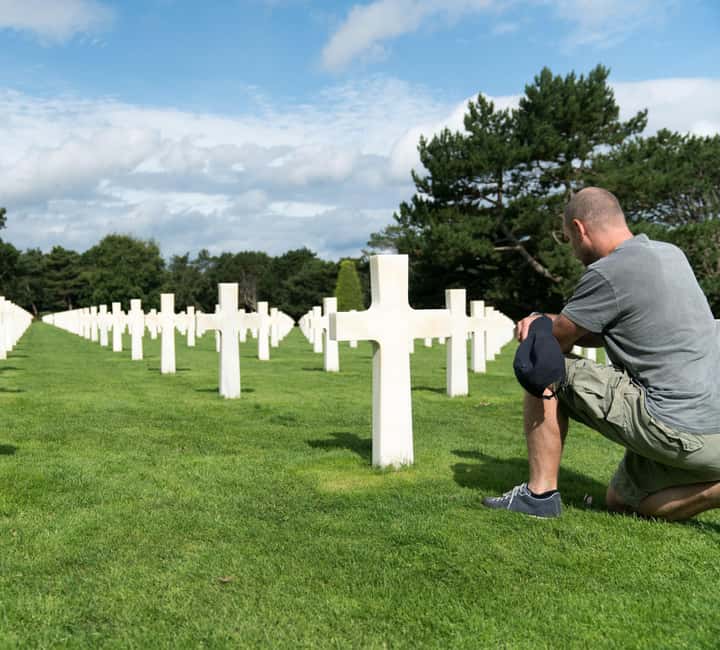
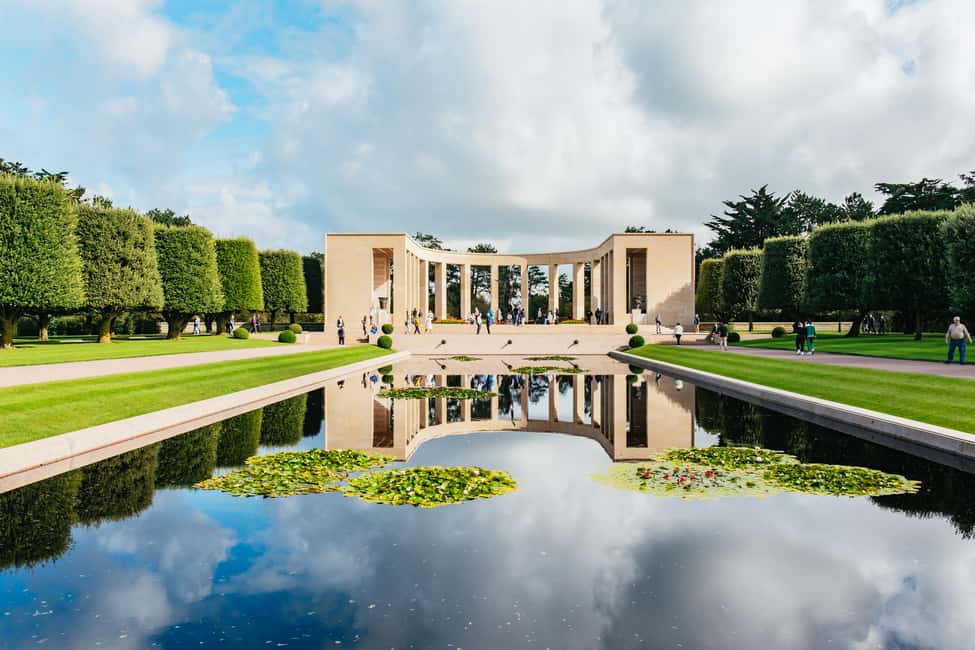
The final stop is the Normandy American Cemetery at Colleville-sur-Mer, overlooking Omaha Beach. Plan on about 75 minutes here, including a guided tour plus free time.
This is where the tour lands its meaning. The grounds are beautifully kept, but the focus isn’t landscaping. It’s the nearly 10,000 American soldiers buried here, with memorial areas including the reflecting pool and names you can trace line by line.
One detail that tends to hit hard is Theodore Roosevelt Jr., the son of President Roosevelt and a Medal of Honor recipient. When your guide points out specific elements, the cemetery stops feeling like a big symbol and becomes a collection of real people.
You’ll also notice how the memorial space includes Stars of David alongside the crosses—an important detail for understanding that multiple faiths are part of the story here.
If you remember only one thing from this whole trip, make it this: you’re given real time to walk and pause. Not a drive-by. Not just photos. A proper ending.
Price and value: why $117 works on a one-day timeline

At $117 per person for about 14 hours, this isn’t a budget bargain. But for what’s included, it’s fair value—especially if you’re comparing it to DIY travel.
You’re paying for:
- Roundtrip transportation from Paris by air-conditioned coach
- An English-speaking expert guide
- Entrance to the Utah Beach Museum
- Guided visit at Pointe du Hoc
- Visits to the American Cemetery with guided context
- A 2-course lunch with one glass of cider
The big value isn’t just time saved. It’s that a guided structure helps you understand what you’re seeing. Battlefield sites can feel confusing without context, and the guide’s job is to translate the geography and decisions into something you can actually follow.
Also, Normandy is not close to Paris in a practical sense. A coach day trip spreads the cost across transport plus organized stops, rest pacing, and pre-booked lunch. When you total what you’d spend on gas, parking, tickets, and a driver or rental effort, the math usually starts to look better for a guided day.
Who this Normandy D-Day day trip is best for
This tour fits best if you:
- Want the major D-Day sites in one day without planning headaches
- Prefer an organized route that tells the story in a clear order
- Appreciate respectful, factual guidance that connects Operation Overlord to what happened on the ground
You might want to think twice if:
- You need wheelchair-accessible routes. The tour is not suitable for wheelchair users or people with mobility impairments.
- You’re traveling with strollers. Baby strollers aren’t allowed, and non-folding strollers are also not permitted.
- You strongly dislike long days. At 14 hours, this is a full commitment.
Booking tips that make the day smoother
A few small moves can make your experience more comfortable and more meaningful:
- Bring comfortable shoes. The day’s pacing includes walking at memorial and battlefield terrain.
- Plan for a weather shift. Coastal conditions can change, so layers help.
- If you have dietary needs, tell the tour operator during booking so the lunch can be handled correctly.
- Expect an emotionally serious tone. The stops are designed for reflection as much as sightseeing.
If you’re a history fan who also cares about storytelling quality, look for guides praised for respectful explanations and strong pacing. Some groups have highlighted guides such as Maja (Maya), Sam, Lawrence, Raymond, and Ash for keeping the day both clear and moving.
Should you book this Paris to Normandy D-Day tour?
If you only have one day to do Normandy, I’d say yes—this is one of the more efficient ways to hit Utah Beach, Pointe du Hoc, Omaha Beach, and the American Cemetery without losing hours to logistics. The guide-led structure and the early museum stop help the whole operation click into place.
Skip it only if your priorities are totally different. If you want a slow, linger-all-day beach vacation, or you need mobility-friendly access beyond what this route provides, you’ll likely feel rushed or constrained.
For most visitors coming from Paris who want the core D-Day experience with real context and a properly timed lunch, this is a strong choice.
FAQ
How long is the Normandy D-Day day trip from Paris?
The tour duration is 14 hours.
Where do I meet in Paris, and where does the tour end?
You meet at Place du Général Kœnig, 75017 Paris beside Église Notre-Dame de Compassion. The tour finishes at Pl de la Porte Maillot, Paris.
What are the main stops on the tour?
The day includes Utah Beach Museum, lunch at a port restaurant in Grandcamp-Maisy, Pointe du Hoc, Omaha Beach, and the American Cemetery at Colleville-sur-Mer.
What time is spent at each major site?
Utah Beach Museum is about 75 minutes, Pointe du Hoc is about 1 hour, Omaha Beach has about 20 minutes of visit time, and the American Cemetery visit is about 75 minutes.
What’s included in the $117 price?
Inclusions are an English-speaking expert guide, roundtrip coach transport from Paris, Utah Beach Museum entrance, guided Pointe du Hoc visit, American Cemetery visit, and a 2-course local lunch with 1 glass of cider.
Is lunch included, and what does it include?
Yes. Lunch is a 2-course local Norman-style meal with 1 glass of cider included.
Do I need to bring anything?
Comfortable shoes are recommended.
Is this tour suitable for wheelchair users or limited mobility?
No. The tour is not suitable for people with mobility impairments or wheelchair users.
What’s the stroller policy?
Baby strollers aren’t allowed, and non-folding strollers are also not allowed.
Can I get a refund if I cancel?
The tour offers free cancellation up to 24 hours in advance for a full refund. It also supports reserve now & pay later.