REVIEW · PARIS
Tour in Italian of the Montmartre district with local guide
Book on GetYourGuide →Operated by Visita Parigi Diversamente · Bookable on GetYourGuide
Montmartre with an Italian guide feels like a local detour. This 2-hour walk is built for small-group attention and guided storytelling in Italian, starting at Place des Abbesses and finishing at Sacré-Cœur. I like how the route focuses on the neighborhood beyond the usual postcard stops, with photo moments at spots like Maison Rose and the Wall of Love. The one catch: it’s a hill walk, so if stairs or steep streets are tough for you, plan carefully since the tour isn’t suitable for wheelchair users.
You’ll also get practical guidance for your stay, not just sights. The pace includes scheduled stops for photos and viewpoints, and reviews highlight the guide’s friendly, flexible approach (even adding extra time when someone needed it). It’s a smart pick for first-timers who want Montmartre’s charm without feeling rushed or lost in crowds.
In This Review
- Key things you’ll notice on this Montmartre walk
- Why Montmartre works best with an Italian local guide
- Price and what you actually get for $34
- Meeting at Abbesses: the start point that sets the tone
- Stop-by-stop: Maison Rose, Place du Tertre, and the Wall of Love
- Place des Abbesses (start)
- La Maison Rose (photo stop, about 5 minutes)
- Place du Tertre (photo + guided tour, about 5 minutes)
- Wall of Love / I Love You (photo + guided tour, about 7 minutes)
- Dalida, Montmartre mills, and the countryside-in-the-city moment
- Dalida statue (photo stop, about 10 minutes)
- Vigne du Clos Montmartre (photo stop, about 6 minutes)
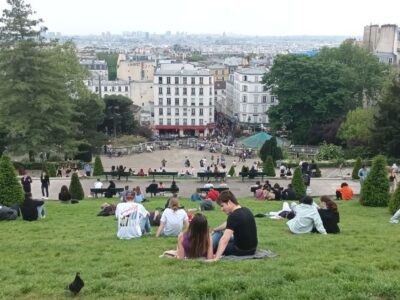
- Montmartre viewpoint area (photo stop, about 7 minutes)
- Sacré-Cœur and panoramic views, plus the famous crooked house
- Sacré-Cœur Basilica (photo stop + scenic views, about 10 minutes)
- The pacing: photo stops, small-group comfort, and real-life flexibility
- Practical tips for your own Montmartre experience
- If you want more Paris in Italian, check the other routes
- Should you book this Montmartre tour?
Key things you’ll notice on this Montmartre walk
- Italian-led, native-style explanations from a guide who has lived in Paris for over 20 years
- Small group (up to 8 people), so questions don’t get swallowed by the crowd
- Classic Montmartre sites plus “in-between” corners, not just Sacré-Cœur and Place du Tertre
- The Montmartre vineyard moment (Vigne du Clos Montmartre), with countryside-in-the-city views
- Smart photo stops at Maison Rose, Dalida’s statue area, and panoramic viewpoints
- Local tips for restaurants and more, useful immediately after the tour
Why Montmartre works best with an Italian local guide
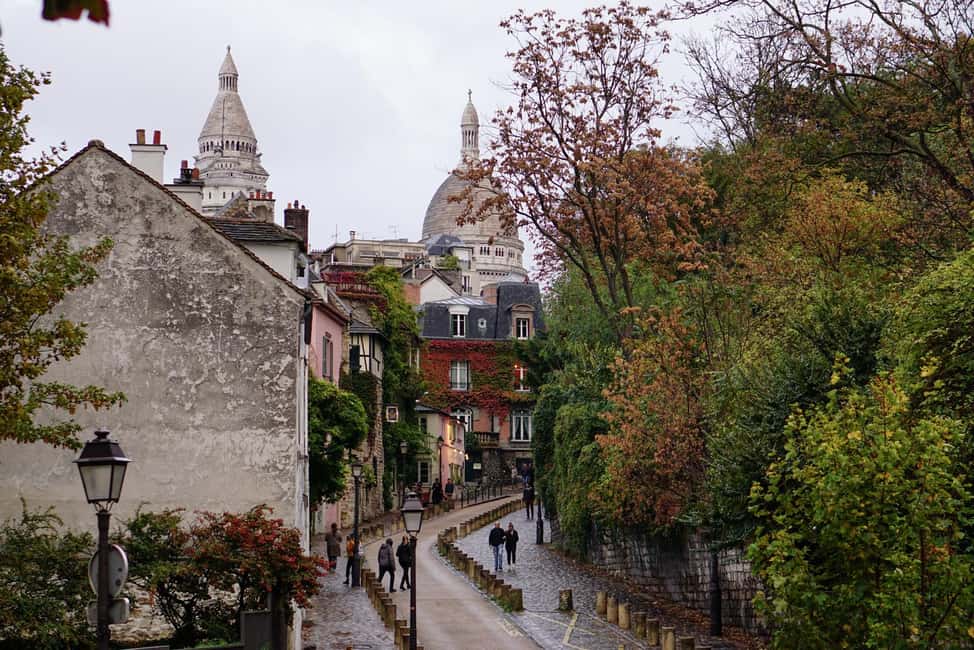
Montmartre is famous for a reason, but it can also feel like a theme park if you only hit the loudest viewpoints. What I like about this tour is that it’s guided in Italian by someone who’s truly embedded in Paris life. Having a guide who has been a Parisian for more than 20 years changes the tone: the stories land as neighborhood history, not a script.
The tour is also small, limited to 8 participants, which matters on a hill where things get crowded fast. You can ask about streets, photo angles, or where to go next without competing with 30 people. Reviews emphasize how the guide can keep the mood light while still staying professional, with fast-moving, interesting anecdotes.
And this is one of those rare tours where the human factor shows up. In the supplied feedback, the guide handled an older family member with empathy and took a couple of extra pauses to keep things comfortable, without tearing up the itinerary. That tells you the pacing is flexible enough for real life.
You can also read our reviews of more guided tours in Paris



Price and what you actually get for $34
At $34 per person for a 2-hour guided walk, you’re paying mainly for interpretation and planning: someone maps the route, explains what you’re seeing, and points out where to look. This isn’t a museum ticket type of tour, so the price isn’t inflated by admissions.
What’s included is practical: a guided tour of an iconic neighborhood plus tips for restaurants, museums, and more. Those “what to do after” suggestions can save you time, especially in Paris where you can easily waste an afternoon bouncing between places that don’t fit your style.
What’s not included is also important. You won’t get museum entrances, monument admissions, or public transport coverage. So think of this as a walking + storytelling experience, with photos and viewpoints built in, not as a ticketed sightseeing package.
Meeting at Abbesses: the start point that sets the tone
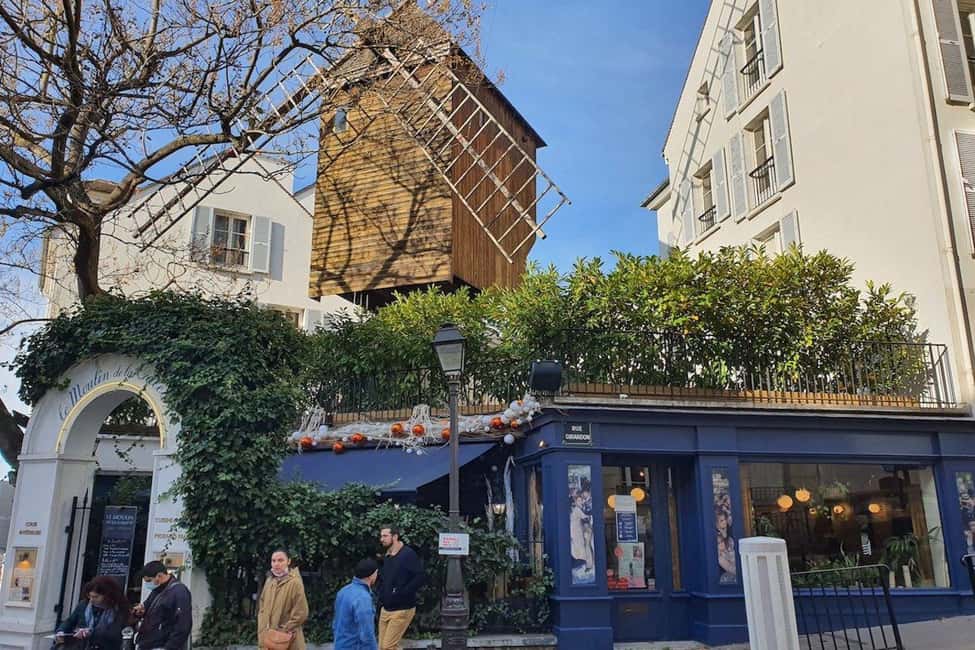
The tour begins at the exit of Abbesses metro (line 12). Starting here is a smart choice because it drops you into Montmartre right away, before the area gets too “performance-y.” It also means you can orient yourself near a major transit stop without needing a private taxi or complex planning.
You’ll be able to spot the guide because they send a message once they’re on site describing what they’re wearing. That sounds small, but it reduces the usual stress of meeting up in a busy neighborhood.
From the start, you’re not just moving from attraction to attraction. You’re getting a feel for Montmartre’s layout—steep streets, little squares, and sudden viewpoint openings—so later, when you’re climbing toward Sacré-Cœur, you understand why the streets twist the way they do.
Stop-by-stop: Maison Rose, Place du Tertre, and the Wall of Love
This is the kind of itinerary that makes sense on foot, because each stop adds a layer.
Place des Abbesses (start)
You begin at Place des Abbesses, the neighborhood’s lively entry point. It’s a good launchpad for a guided walk because the guide can set context early—what Montmartre looked like historically and why it became such an artistic magnet.






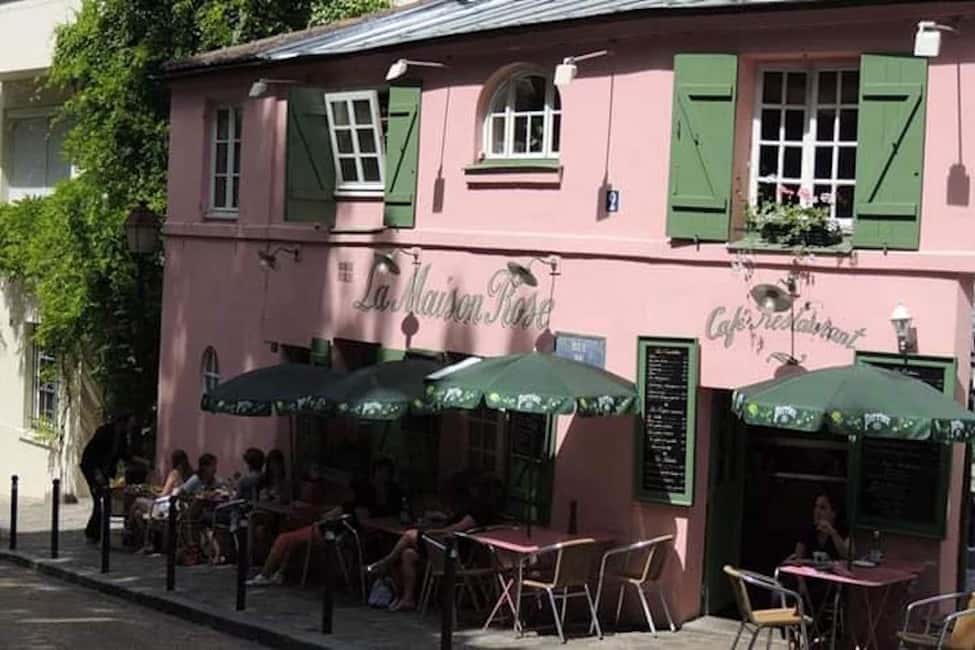
La Maison Rose (photo stop, about 5 minutes)
Next comes La Maison Rose. You’ll get a short window to capture it and move on, but the point isn’t only the photo. The guide uses stops like this to show how Montmartre’s identity is built from everyday streets, not just famous buildings.
Practical note: it’s a popular photo spot, so keep an eye on timing. If you want the cleanest shot, stand where the guide suggests rather than fighting for prime angles.
Place du Tertre (photo + guided tour, about 5 minutes)
Then you reach Place du Tertre, the postcard square tied to Montmartre’s artists. This stop is where the tour helps you read what you’re seeing. Instead of treating it as one big spectacle, you’ll understand the area’s appeal and the reasons people keep returning.
The tradeoff is simple: this is one of the busiest parts of Montmartre. The tour’s short stop works in your favor because it keeps you moving while you still get the story.
Wall of Love / I Love You (photo + guided tour, about 7 minutes)
After Place du Tertre, you’ll visit the Wall of Love, starting a shift from the square into the more intimate backstreets. The guided time here is longer than at some photo spots, which usually means it’s more than just a snapshot opportunity.
This is also where you’ll notice Montmartre’s “layers”: street art and public emotion, wrapped inside a neighborhood that still has old-corner charm.
Dalida, Montmartre mills, and the countryside-in-the-city moment
As you climb, the tour turns from street icons to Montmartre’s character: music, agriculture, and everyday life shaped by geography.
Dalida statue (photo stop, about 10 minutes)
You’ll spend time at Dalida’s statue area. This stop is longer than most photo moments, and that’s a clue it’s meant for context. Montmartre isn’t only about painters; it also sits in the cultural world of French music and celebrity history.
If you care about understanding why certain names matter locally, this is a good use of your time. A short look isn’t always enough to appreciate why a place gets remembered.
Vigne du Clos Montmartre (photo stop, about 6 minutes)
Then you reach Vigne du Clos Montmartre, the neighborhood’s vineyard. This is one of my favorite ideas in the itinerary because it delivers a surprising side of the city: yes, you’re in Paris, but you’re also walking through a pocket of countryside.
That vineyard stop pairs perfectly with Montmartre’s hill geography. It’s the kind of contrast that makes the whole walk feel less repetitive. You’re not only looking up at viewpoints; you’re also seeing how people historically shaped the land.
Montmartre viewpoint area (photo stop, about 7 minutes)
The itinerary includes a further Montmartre photo stop, which keeps you moving upward while giving breathing room for photos and views. This is where you’ll start feeling the relief of reaching the top zone soon.
Sacré-Cœur and panoramic views, plus the famous crooked house
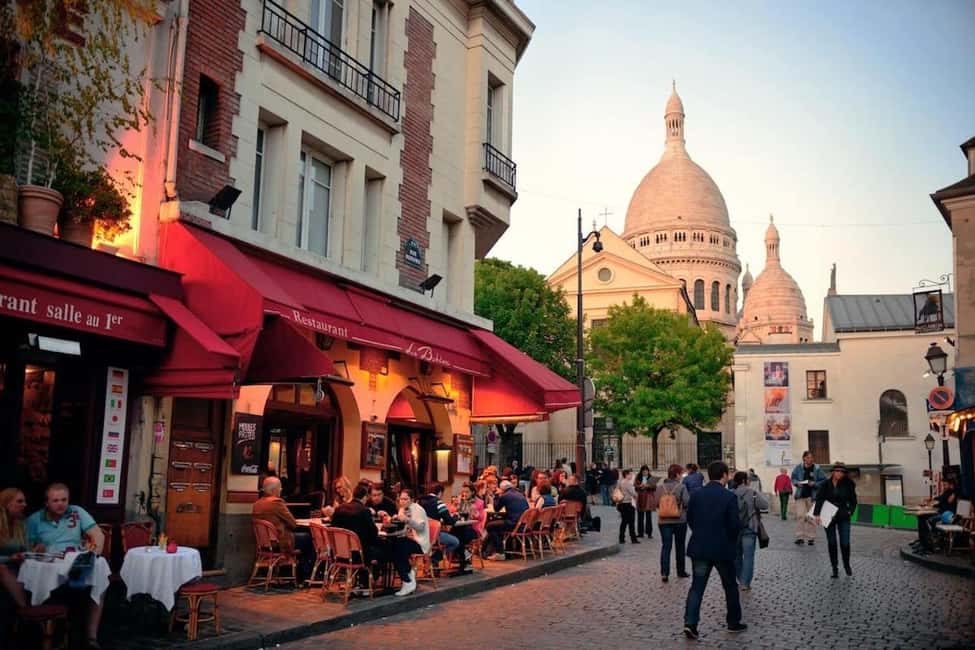
As you near the finish, the tour turns into pure “look at this” territory, with time for both scenery and the classic end-of-walk payoff.
Sacré-Cœur Basilica (photo stop + scenic views, about 10 minutes)
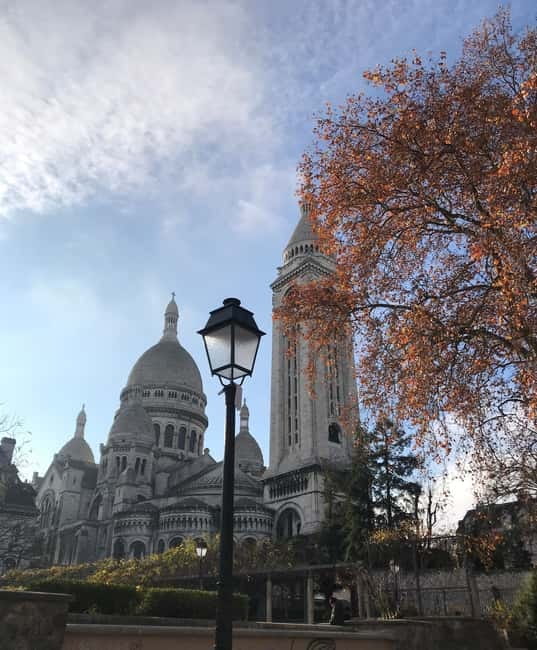
The walk ends at the Basilica of the Sacred Heart of Paris. Even when you’re not focused on entering buildings (and this tour doesn’t include monument admissions), the exterior viewpoint experience is a big deal.
You’ll also have scenic viewpoints built into the route on the way up, which is essential in Montmartre because the views are scattered. The schedule includes about 10 minutes here for photos and panorama time.
One extra detail worth knowing: the guide will help you spot the crooked house made famous on Instagram. It’s the kind of quick stop that doesn’t take much time but gives you a fun payoff photo at the end.
The pacing: photo stops, small-group comfort, and real-life flexibility
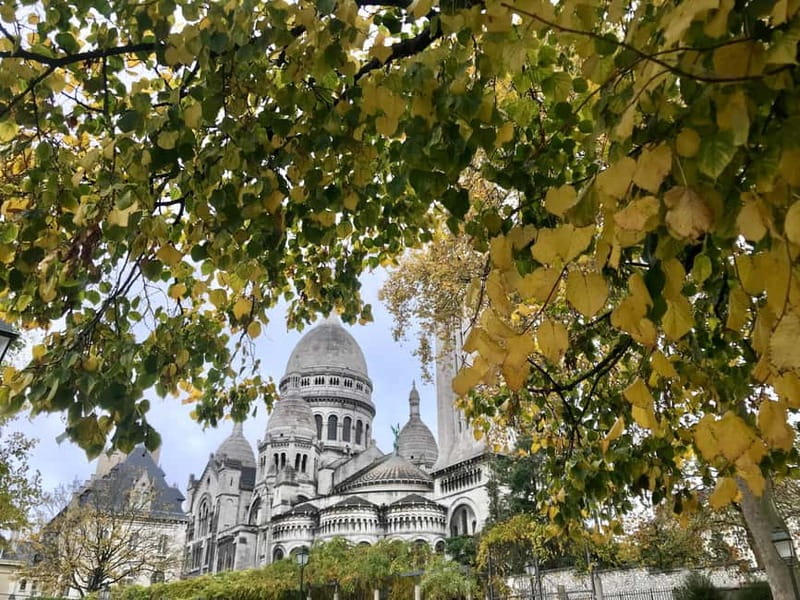
This walk is 2 hours, and the itinerary is broken into short, practical segments. That design matters because Montmartre can exhaust you faster than you expect: steep slopes, cobblestones, and sudden crowd clusters.
The schedule gives you:
- enough time at key photo points without turning the walk into a standstill
- guided minutes where you actually learn something, not just shuffle along
- a climb that should feel manageable for most people with normal walking ability
And the group size helps. With a maximum of 8 people, the guide can keep an eye on the energy level. The feedback you provided shows the guide can adjust pace when someone needs extra time, which is rare in structured tours.
Practical tips for your own Montmartre experience
Even with a guide, you’ll enjoy it more if you plan around Montmartre’s reality.
- Wear good shoes. The tour is not designed for wheelchairs, so treat it as a proper hill walk with uneven surfaces.
- Use the guided photo windows. If you wait until you’re wandering on your own, you may miss your best angle and run into crowds.
- Ask about next steps. The tour includes tips for restaurants and museums, so don’t be shy asking what fits your schedule after the walk.
- Plan your timing. Since this is a popular area, you’ll have more fun if you’re not rushing straight into other big-ticket attractions right afterward. Use the tour as your orientation, then choose what matches your mood.
If you want more Paris in Italian, check the other routes
This experience is part of a set of Italian tours from the same provider, and it can be a great way to cover more of Paris without switching guides or languages mid-trip.
Other options include:
- Notre Dame + Latin Quarter on Monday and Friday
- Seine Riverfront + Opera District on Tuesday and Saturday
- In July and August, a Wednesday walk that includes the Marais plus Père Lachaise Cemetery (described as private)
If you’re staying several days and you like the Italian-led format, pairing this Montmartre walk with one of the others is an easy way to build a coherent itinerary.
Should you book this Montmartre tour?
Book it if:
- you want Montmartre’s highlights plus the quieter corners that make the neighborhood feel real
- you prefer an Italian-speaking guide and a small group
- you value restaurant and museum tips you can use immediately after the walk
- you’d rather understand what you’re seeing than just collect photos
Consider skipping (or choosing another style of tour) if:
- your mobility is limited by stairs or steep walking, since it’s not suitable for wheelchair users
- you’re expecting included museum/monument entry or public transport as part of the price
- you want long, sit-down time at a single attraction rather than a guided circuit
For most people, though, this is strong value: $34 for a guided, structured 2-hour orientation of Montmartre, ending at Sacré-Cœur with viewpoints and that vineyard-countryside twist. It’s the kind of walk that helps you feel confident roaming the area afterward.