REVIEW · PARIS
Paris: Père Lachaise Cemetery Guided by the Great Sibylle
Book on GetYourGuide →Operated by Epok'Tour · Bookable on GetYourGuide
Death stories, delivered like theater, in Paris. I love the theatrical Marie-Anne Lenormand character guiding you through Père Lachaise, and I also like how the tour mixes big names with surprising, human-sized anecdotes. One thing to consider: it’s a walking cemetery tour, in French, and it is not suitable for wheelchair users.
You’ll spend two hours moving through this famous Paris cemetery with a performer in historical costume. The vibe is part history, part mystery show, and it runs rain or shine, so plan for real walking time and real weather.
In This Review
- Key Highlights You Can Expect From the Great Sibyl Tour
- Meeting Miss Lenormand at Père Lachaise’s Eastern Entrance
- Two Sides of Père Lachaise: Romantic Paths and a Modern Section
- Crematorium and Columbarium: Where Modern Memory Lives
- The Wall of the Federates and Political Grief
- The Muslim and Jewish Sections: A Broader Sense of Community
- Famous Graves You’ll Actually Be Able to Find
- The Theatrical Guide: Humor, Mystery, and Clear Storytelling
- Value for the Price: Is $28 Worth Two Hours in a Cemetery?
- Timing, Practical Tips, and Who This Tour Fits Best
- Should You Book Père Lachaise by the Great Sibyl?
- FAQ
- How long is the Père Lachaise guided tour?
- What is the price per person?
- Where does the tour start?
- What is the nearest metro stop?
- What language is the tour in?
- Does the tour run in bad weather?
- What will we see during the tour?
- Is it suitable for children?
- Is the tour wheelchair accessible?
- What is included, and can I cancel for a refund?
Key Highlights You Can Expect From the Great Sibyl Tour
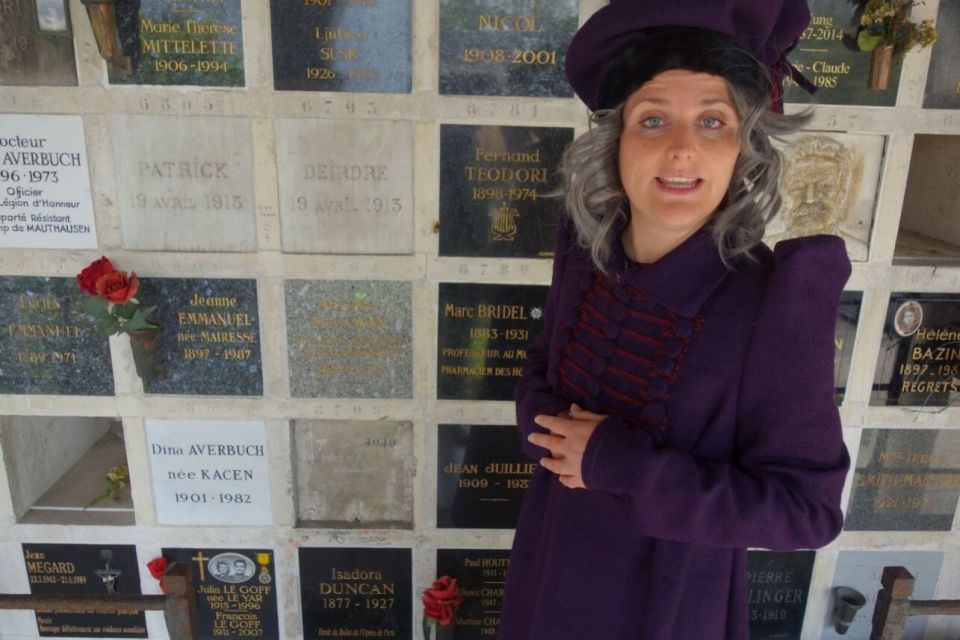
- A living character, Marie-Anne Lenormand, leads the story with divination-flavored mystery.
- Romantic and modern sections of Père Lachaise are both on the route, so it feels like two different eras.
- Crematorium and columbarium stops give you a look at how memory works in the present.
- Wall of the Federates plus the Muslim and Jewish sections add powerful context beyond celebrity graves.
- Big-name graves are included, including Oscar Wilde, Edith Piaf, Chopin, Jim Morrison, and more.
- Humor that keeps the pace moving makes the cemetery feel less heavy and more readable.
Meeting Miss Lenormand at Père Lachaise’s Eastern Entrance
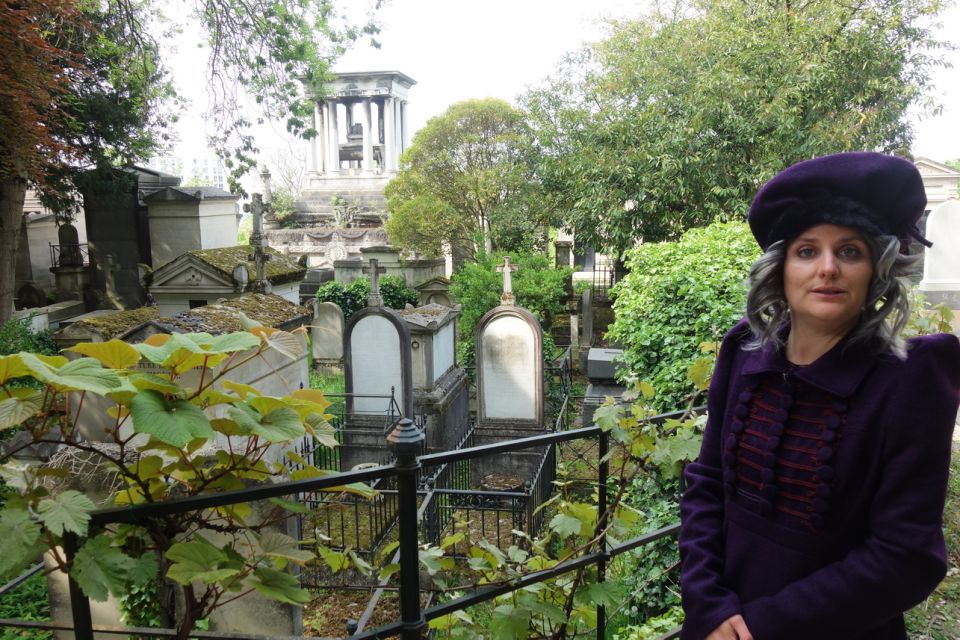
This tour is all about the meeting moment. You start at the eastern entrance of Père Lachaise, near 56 Rue des Rondeaux, with Gambetta as the closest metro stop. It’s a straightforward setup, and once you’re inside, you can forget the logistics and focus on what the guide is doing.
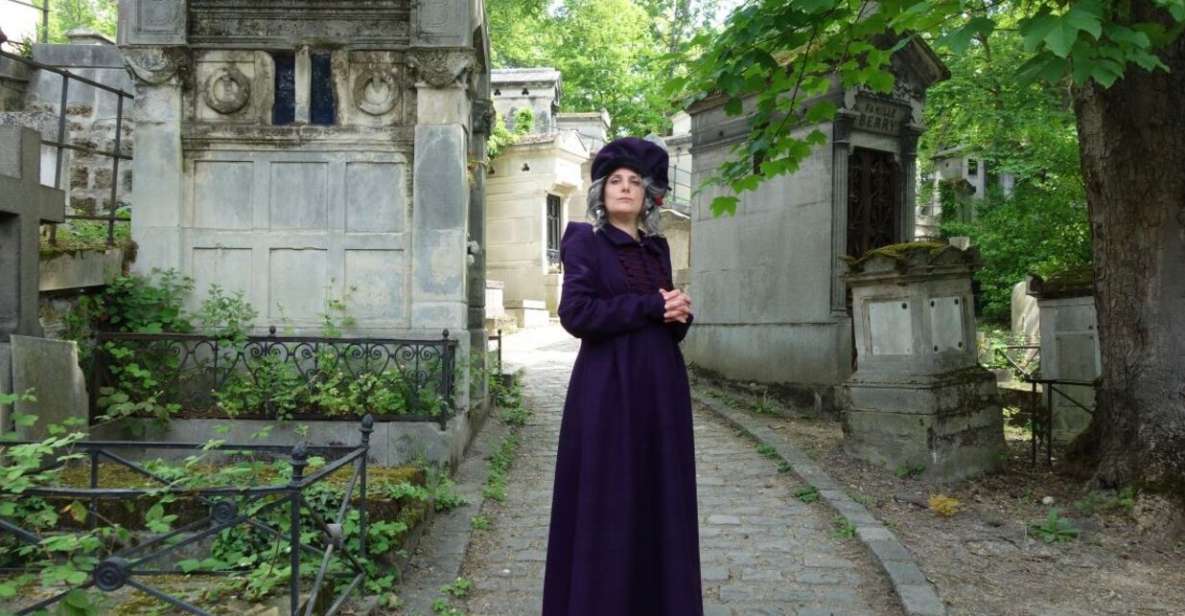
Your guide wears a historical outfit and performs as Marie-Anne Lenormand, a famous figure tied to the French Revolution era and known for divination. The effect is simple but smart: you stop treating the cemetery like a museum and start treating it like a story you can follow.
A practical tip: wear shoes you trust. Père Lachaise paths can be uneven, and the tour is 2 hours with no mention of frequent sitting breaks. If your feet are sensitive, this matters.
You can also read our reviews of more guided tours in Paris


Two Sides of Père Lachaise: Romantic Paths and a Modern Section
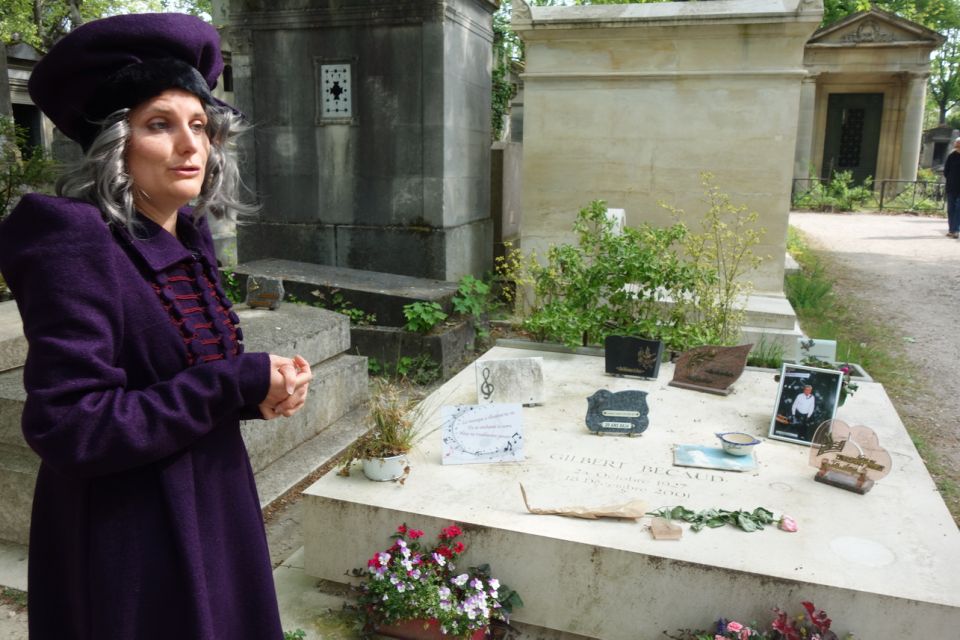
What I like most about this tour is the clear sense of “two halves.” The route is built to show you romantic corners alongside the modern section of the cemetery. That contrast helps you understand why people remember places like this differently—some come for love stories, others come for art, politics, or modern memorial life.
In the romantic side, the tour points you toward names like Eloise and Abelard. It’s the kind of stop where you’ll feel the cemetery’s storytelling power: you’re not just looking at a marker, you’re getting a narrative thread. You also see the cemetery as a place where love and loss are treated as part of public memory.
Then the tour shifts gears toward the modern side, where the sights become less about legend and more about how remembrance is organized today. That’s where stops like the crematorium and columbarium come in—more practical spaces, but still emotional, still human.
The route is designed so you don’t feel stuck in one mood for too long. Even if you came expecting only famous graves, you’ll likely appreciate how the tour balances the poetic with the real.
Crematorium and Columbarium: Where Modern Memory Lives
You’ll see the crematorium and the columbarium as part of the modern-side portion. These places can be intimidating if you approach them as just architecture. But on this tour, they’re treated as part of the same continuum as older graves—how a city handles grief changes, but the need to remember doesn’t.
Think of this as the tour’s “present-day” reality check. You’re walking among names that everyone recognizes, and then you hit spaces connected to how remains are handled now. That shift makes the older monuments land harder, because you realize the cemetery isn’t frozen. It keeps functioning.
If you’re traveling with kids over 8, this is also a good anchor point. It turns abstract ideas into something concrete: you can point and say, this is what happens next, this is how people store memory.
One consideration: the tour keeps moving. So if you like to linger for long photo sessions, build in your own extra time outside the tour.
The Wall of the Federates and Political Grief
The Wall of the Federates is on your route, and it changes the mood quickly. This stop brings a political edge to the visit, reminding you that cemeteries are not only personal. They’re also where a society stores conflict and consequence.
The Great Sibyl storytelling approach works well here. Instead of lecturing you like a textbook, the guide frames the place through narrative, which helps you process serious subject matter without it turning into a slog. You’ll likely catch why this area matters even if you only know a few names tied to French history.
If you tend to avoid heavy topics at the start of a trip, this is a good tour to experience after you’ve already warmed up to the cemetery setting. Your first impression won’t be the political wall—it’s built into the flow after you’ve seen other kinds of memorials.
The Muslim and Jewish Sections: A Broader Sense of Community
You’ll also visit both the Muslim section and the Jewish section. These stops widen the frame in a way that celebrity-grave tours often skip. Even if you don’t know the religious details going in, you’ll come away seeing that the cemetery reflects more than one thread of Paris life and faith.
The benefit here is balance. Famous names can pull your attention away from everything else. But these sections push you to look at the cemetery as a living community space, not only a catalog of famous deaths.
What makes it work is the guide’s method: mystery and curiosity aren’t just for entertainment. They’re used to guide your attention toward details you might otherwise miss. The result feels respectful, and you’ll likely leave with a bigger mental map of what Père Lachaise is.





Famous Graves You’ll Actually Be Able to Find
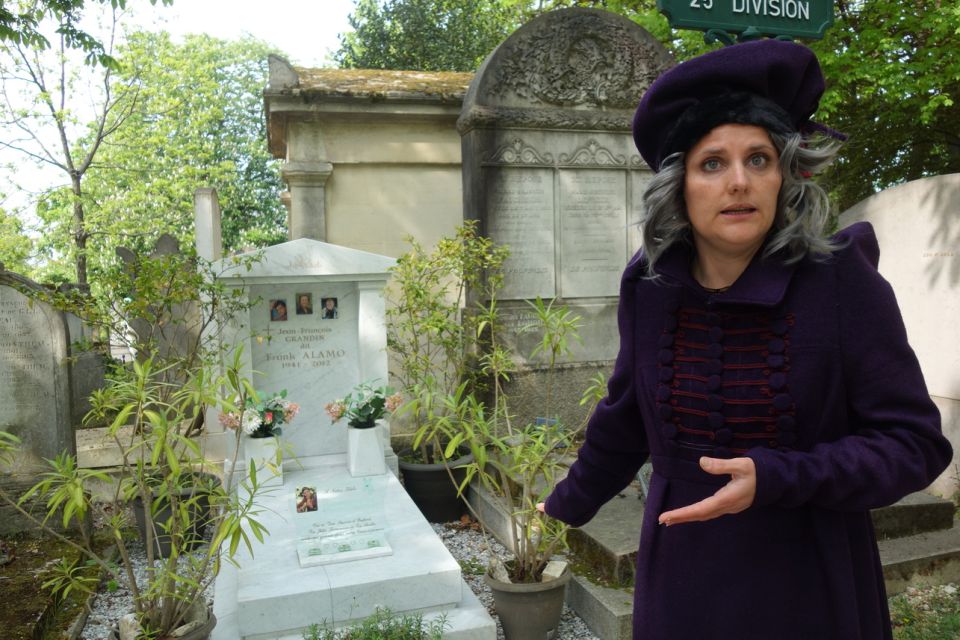
A big reason to book this tour is the lineup of well-known graves. Instead of trying to hunt them down yourself, you get a guided route that helps you connect names to place.
Here are some of the featured stops you can expect:
- Oscar Wilde
- Edith Piaf
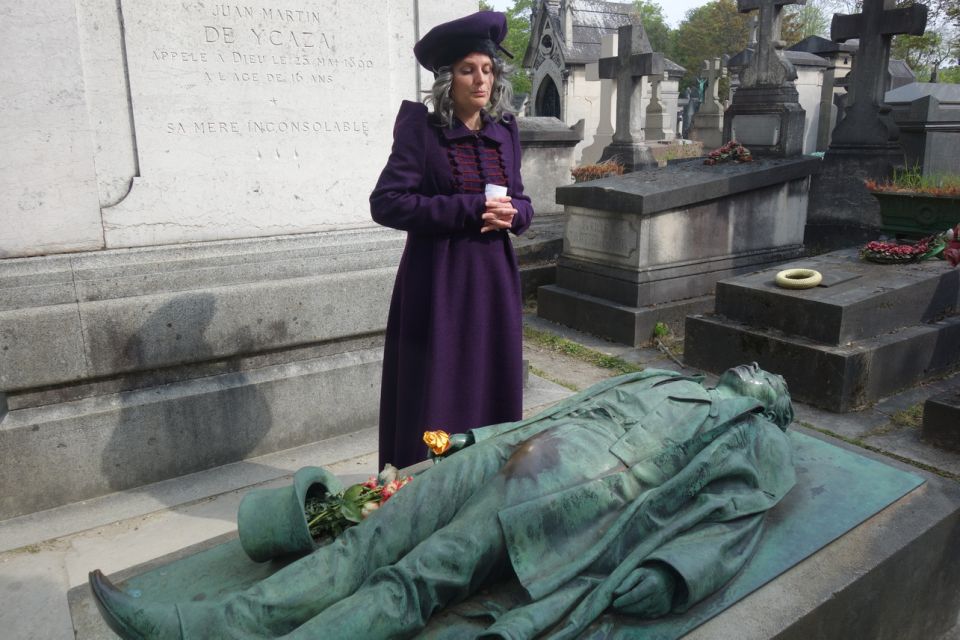
- Victor Noir
- Frédéric Chopin
- Théodore Géricault
- Jim Morrison
- Eloise and Abelard
This list hits different kinds of fame: literature, music, visual art, romance legend, and modern pop-culture myth. That matters, because not everyone visits Père Lachaise for the same reason. By covering these varied figures, the tour keeps you from feeling like you’re only seeing one kind of story.
I also like that you’re not just reading names off stone. The guide ties each place to an anecdote and keeps the energy moving with humor and theatrical flair. Past visitors have praised the guide for being funny and for sharing surprising stories, and that matches what the format is aiming for.
The only real drawback with a stop-list like this is the pacing. You won’t spend hours at each grave. You get a strong orientation and a story, then you move on.
The Theatrical Guide: Humor, Mystery, and Clear Storytelling
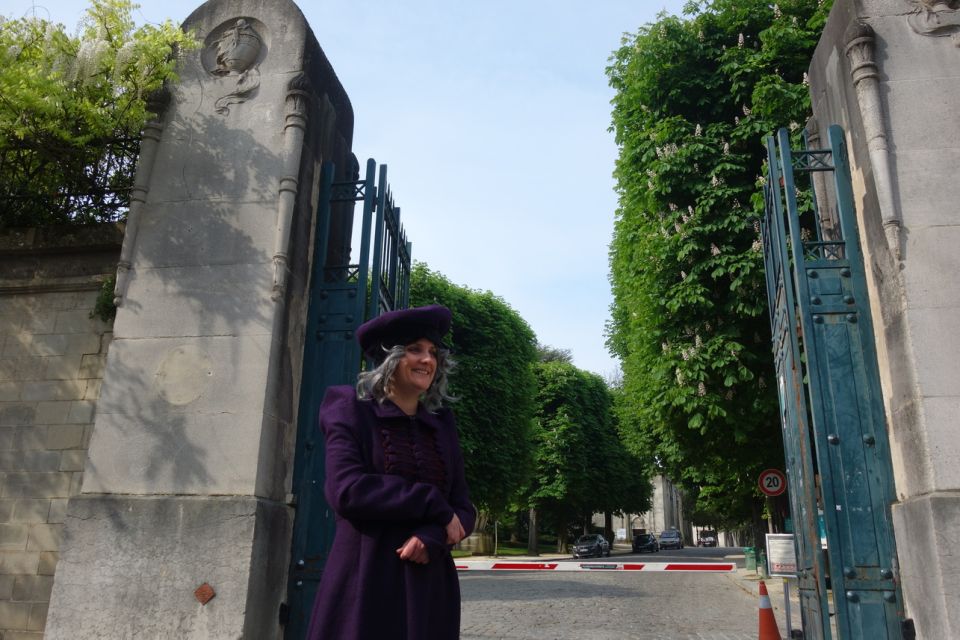
The star of the show is Marie-Anne Lenormand as performed by a guide in historical costume. This isn’t a quiet, whisper-at-the-plaques type of cemetery walk. It’s more like a small live theater performance with a clear route attached.
From the way the tour is described, the guide focuses on mystery and curiosity, with historical costume adding instant atmosphere. It’s the kind of approach that makes a cemetery feel less like a chore and more like an experience you’ll talk about after dinner.
You’ll also notice the guide uses attention and responsiveness. The strongest praise centered on humor, surprising anecdotes, and an attentive, listening style. One consistent theme: you should come expecting stories, not just facts.
If you prefer strict academic history delivered in a lecture tone, this might feel too theatrical. But if you want history that feels alive, this is the point. You’re not only learning names. You’re learning how to read the space.
And yes, the tour is in French, so if your French is limited, you’ll rely on context, gestures, and the visual clues around each stop.
Value for the Price: Is $28 Worth Two Hours in a Cemetery?
At $28 per person for a 2-hour guided tour, you’re paying for more than access. You’re paying for a performer-led narrative, a structured route through major sections, and an itinerary that hits both the memorial and the famous-grave highlights.
For me, the value comes from the concentration of stops. You get to see the crematorium, the columbarium, a political memorial wall, religious sections, and a long list of famous names in one go. If you tried to assemble that route yourself, you’d spend time orienting and still might miss key areas or lose the story thread.
The tour also promises humor and unusual anecdotes. That matters because cemetery visits can feel repetitive if the guide is dry. Here, the theatrical approach is part of the product you’re buying.
So the question isn’t only price. It’s what you get: a timed route plus a story-driven guide presence. If that matches your travel style, the cost feels fair. If you want complete independence and lots of quiet time alone, then a guided format might feel limiting.
Timing, Practical Tips, and Who This Tour Fits Best
This is a rain-or-shine tour, which is great for Paris planning. Bad weather won’t cancel the experience, so you’ll need to bring appropriate gear and accept that your shoes may get damp.
You’ll also want to keep expectations realistic. Two hours moves quickly through a place that’s naturally easy to want to wander in. That’s why the tour works best when you treat it as an orientation plus a story. Afterward, if you want, you can return and linger on your favorite names.
Who it suits:
- History and art lovers who like stories with personality
- People who want a guided route instead of cemetery navigation
- Adults, and families with kids over 8 years old
Who should think twice:
- Wheelchair users, since it is not suitable
- People who struggle with walking on cemetery paths
- Anyone who needs a fully bilingual experience, since the tour is in French
- Families with very young kids, since it’s not suitable for children under 7
Should You Book Père Lachaise by the Great Sibyl?
I’d book this if you want Père Lachaise to feel like a living story, not a list of coordinates. The Marie-Anne Lenormand character adds energy, and the route covers exactly the kinds of places you’d otherwise have to piece together: romantic legends, modern memorial spaces, political memory, and religious sections.
It’s also a strong pick if you’re traveling with people who get bored by lectures. Humor and surprising anecdotes are part of the reason it scores so highly.
Skip it if you want quiet, independent wandering or full wheelchair accessibility. And if your French is shaky, consider whether you’re okay following the vibe more than every word.
If your goal is to leave with a clearer map of Père Lachaise and a set of stories you’ll remember, this tour is a smart, value-driven choice.
FAQ
How long is the Père Lachaise guided tour?
The tour lasts 2 hours.
What is the price per person?
The price is $28 per person.
Where does the tour start?
The tour starts at the eastern entrance of the cemetery, near number 56 of Rue des Rondeaux.
What is the nearest metro stop?
Gambetta is the nearest metro stop.
What language is the tour in?
The guide gives the tour in French.
Does the tour run in bad weather?
Yes, it takes place rain or shine.
What will we see during the tour?
You’ll visit key areas such as the crematorium, the columbarium, the Wall of the Federates, the Muslim section, and the Jewish section, plus graves of famous personalities including Oscar Wilde, Edith Piaf, Victor Noir, Frédéric Chopin, Théodore Géricault, Jim Morrison, and Eloise and Abelard.
Is it suitable for children?
It is ideal for adults and children over 8 years old, and it is not suitable for children under 7.
Is the tour wheelchair accessible?
No, it is not suitable for wheelchair users.
What is included, and can I cancel for a refund?
The included items are a 2-hour guided tour of Père Lachaise with a professional guide wearing historical outfit. You can cancel up to 24 hours in advance for a full refund, and there is a reserve-and-pay-later option.