REVIEW · PARIS
Paris: Macaron Baking Class
Book on GetYourGuide →Operated by ExperienceFirst · Bookable on GetYourGuide
Paris is best when you get your hands messy. This macaron class turns a famous Paris treat into a skill you can actually repeat, in a small hands-on group inside a well-known bakery in the Marais.
I like that you’re guided step by step while you mix, pipe, and bake your own macarons. And I really like that the class includes a tasting moment plus a box of your personalized macarons to bring home.
One thing to consider: it’s in a historic building with multiple steps, and the experience requires standing for a while, so it’s not a great fit for wheelchair users.
Key highlights worth planning for
- Small group size (8 max) keeps the pace friendly and the questions from getting lost.
- Customize flavors and colors using the options they offer, so your box feels personal.
- Historic bakery setting in the Marais, with behind-the-scenes access to the working kitchen area.
- English instruction and hands-on coaching from a local pâtisserie expert.
- A take-home souvenir box plus a guided tasting and refreshments at the end.
In This Review
- Where You Start in Le Marais: Chez Manon, Ready to Bake
- The Bakery Backstage Setup: Basement Steps and a Real Kitchen Feel
- What You Learn to Make: Authentic French Macarons from Scratch
- The Interactive Part: Mix, Pipe, and Make Your Colors and Flavors Yours
- The Macaron Method Plus Home-Success Tips
- The Tasting Moment: Taste What You Made, Learn What to Adjust
- Your Take-Home Box: A Paris Souvenir You Can Actually Enjoy
- Price and Value: Is $117 Worth Two Hours in a Small Group?
- Who Should Book This Macaron Class (and Who Should Skip)
- Quick Practical Tips Before You Go
- Should You Book This Paris Macaron Baking Class?
- FAQ
- Where is the meeting point for the Paris macaron class?
- How long is the experience?
- Is the class taught in English?
- What is the group size?
- What’s included in the price?
- Is hotel pickup and drop-off included?
- Can you substitute ingredients or change the recipe?
- Are the macarons gluten-free?
- Are there dairy or almond ingredients?
- Are kids allowed to join?
- Is the class wheelchair accessible?
Where You Start in Le Marais: Chez Manon, Ready to Bake
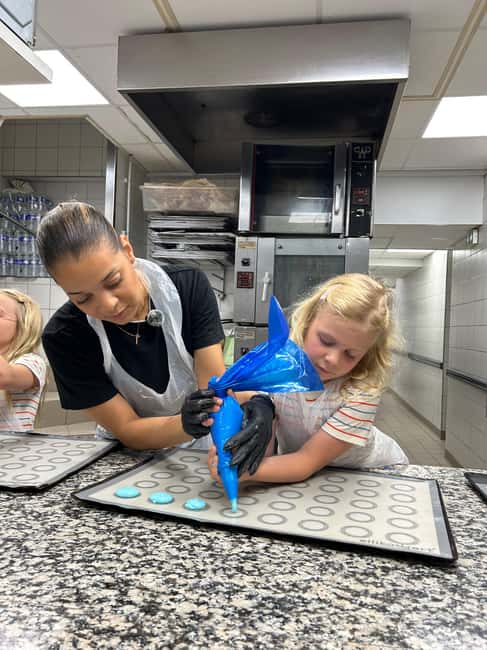
This class starts right where many Paris food lovers like to base themselves: the Marais. Your meeting point is inside the bakery at Chez Manon, 25 Rue de Bretagne, 75003, Paris. When you arrive, tell the staff you’re there for the baking class, and they’ll direct you to the right spot.
Le Marais is lively, but this experience has a calmer rhythm. You’ll check in, get oriented, and settle in before you move to the working area. One pleasant detail: you may be greeted with a complimentary macaron and a drink while you wait, which helps you get into the right mood for the real thing—making macarons, not just eating them.
Plan for a bit of standing time before the baking begins. The class runs in a historic building, and that matters here.
The Bakery Backstage Setup: Basement Steps and a Real Kitchen Feel
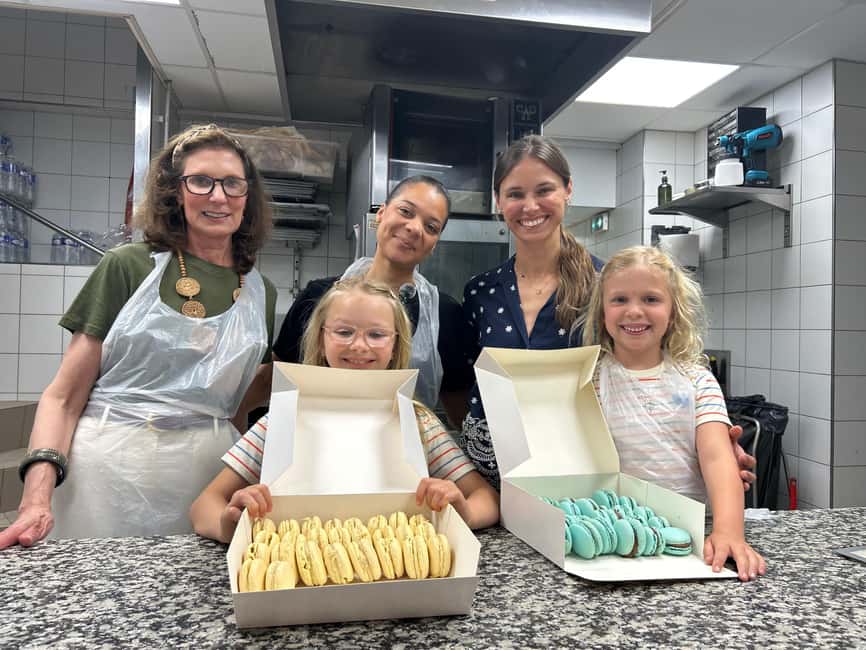
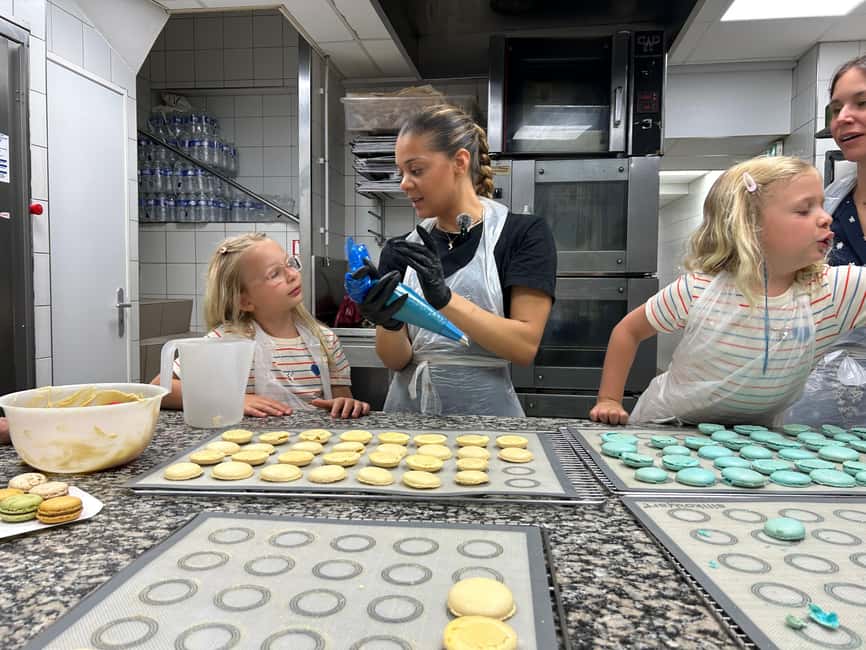
One reason this class feels more authentic than a simple demo is the setting. You get access to the bakery’s working spaces, including a basement kitchen area where you’ll do the hands-on work.
That is also the main practical downside. The building has multiple steps, and the basement access involves steep steps, so it’s not wheelchair accessible. You’ll want comfortable shoes and an honest look at how long you can stand.
If you’re the type who hates tight workspaces, or you get uncomfortable in older buildings, this might be something to think about in advance. On the upside, you’re not in a generic classroom. You’re learning the macaron method in a kitchen environment that’s part of the bakery’s daily world.
You can also read our reviews of more cooking classes in Paris



What You Learn to Make: Authentic French Macarons from Scratch
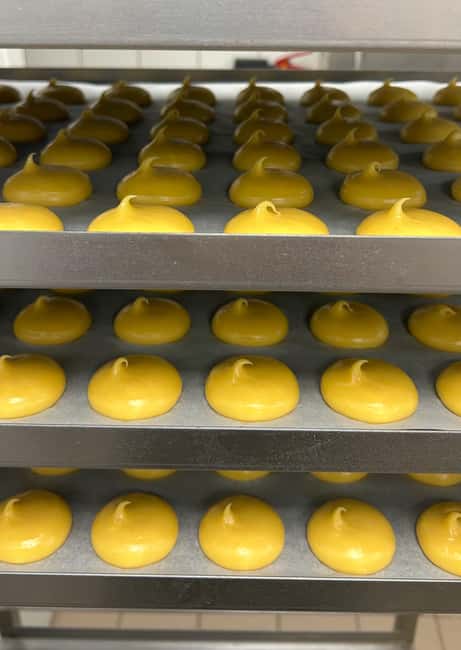
The core of the experience is straightforward: you’ll learn to make French macarons from scratch. This is not just mixing a batter and hoping for the best. The class is designed around the stages that make macarons tricky: preparation, mixing, piping, and baking.
You’ll work with ingredients the bakery considers high quality, including organic ingredients wherever possible. You’ll also learn the “why” behind the method through guidance from the pâtisserie expert in the room.
And you get to do it in a small group (limited to 8 participants), which means the instructor can actually see what you’re doing. That’s where this kind of class earns its keep: macarons are all about tiny changes—texture, timing, consistency—and those are easier to fix when someone can point and explain.
The Interactive Part: Mix, Pipe, and Make Your Colors and Flavors Yours
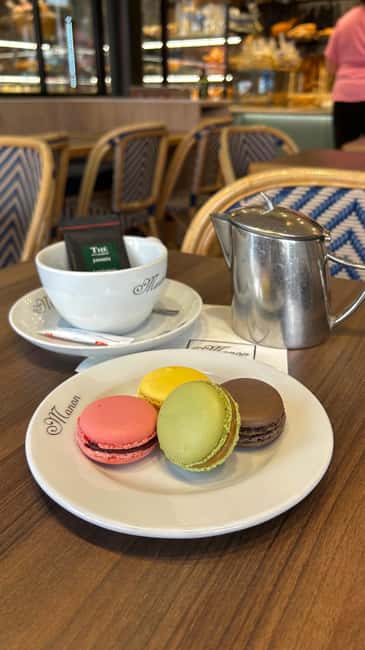
Macarons are basically a personality test you can eat. The class lets you customize flavors and colors using the options available in the session. You’ll follow their set recipe, but you’re still making choices that affect the final look and taste.
During the hands-on section, you’ll:
- Mix your macaron batter
- Pipe the shells
- Bake them
The instructor will guide you through the process, and you’ll get time for questions. One standout from past experiences is that the session doesn’t feel rushed. People point out they had a chance to ask follow-up questions and get practical tips for improving results at home.
You’ll also want to note the ingredient reality upfront. The macarons use dairy and almond powder. They’re described as gluten-free, but the bakery itself is not a gluten-free facility because wheat is used in other products. So if gluten sensitivity is a big deal for you, plan carefully and consider whether cross-contact is a risk you can accept.
The Macaron Method Plus Home-Success Tips
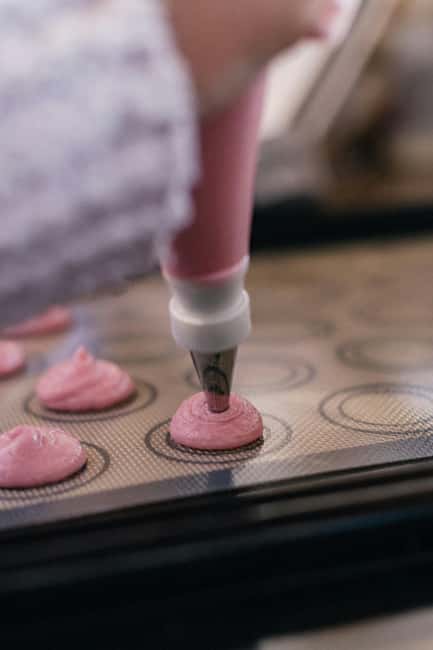
This class isn’t just about getting a box of macarons today. The better version of a macaron class teaches you how to think when yours don’t turn out the way you expected.
Here, the coaching includes:
- Guidance while you work
- Opportunities to ask questions
- Tips intended to help your results improve when you try again later
That matters because macaron success at home is mostly about consistency. Even if you use the same ingredients, you can get different outcomes depending on humidity, technique, and timing. The class aims to help you understand what to watch for, so you’re not stuck repeating the same guess-and-check cycle.
In some sessions, the instructor has been Paulette, and in others, Jess. Whoever leads your group, the style you should expect is interactive and supportive—help that keeps you moving without making you feel rushed.
The Tasting Moment: Taste What You Made, Learn What to Adjust
When your macarons are ready, you finish with a guided tasting session and refreshments. This is the part that turns baking into learning.
You’ll taste your own batch, compare the result to what the class is aiming for, and get help understanding what you did well and what you might tweak next time. It’s also a nice way to slow the pace for a moment after the concentrated work.
This end section can be a relief if you’re new to baking. You get to enjoy the fruits of the effort without immediately launching into the next task. And because you’re tasting the macarons that came out of your own piping, you can actually connect flavor and texture with technique.
You can also read our reviews of more tours and experiences in Paris

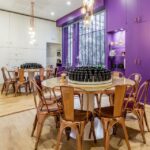
Your Take-Home Box: A Paris Souvenir You Can Actually Enjoy
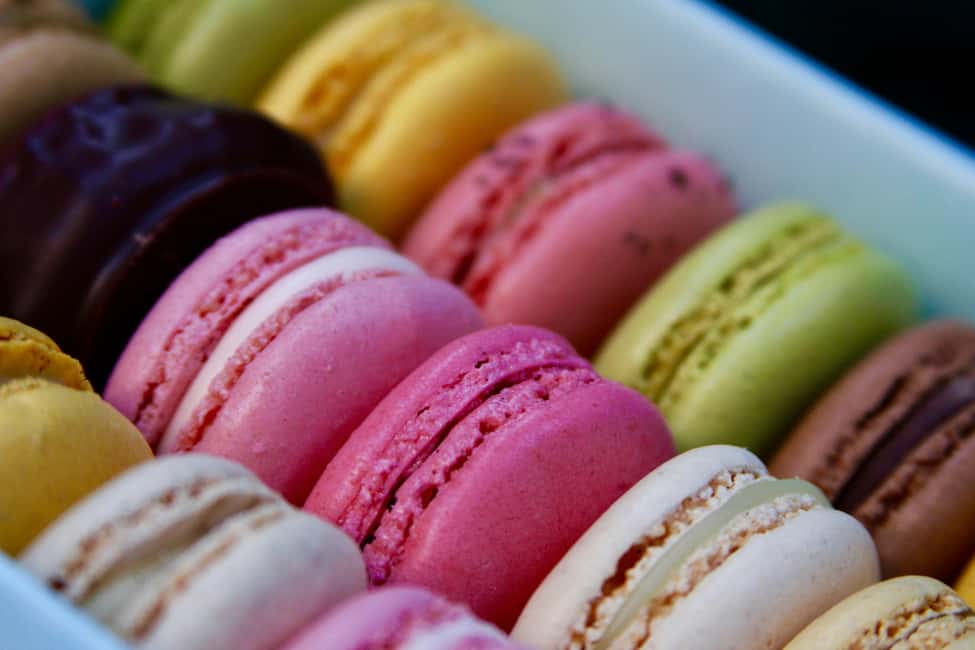
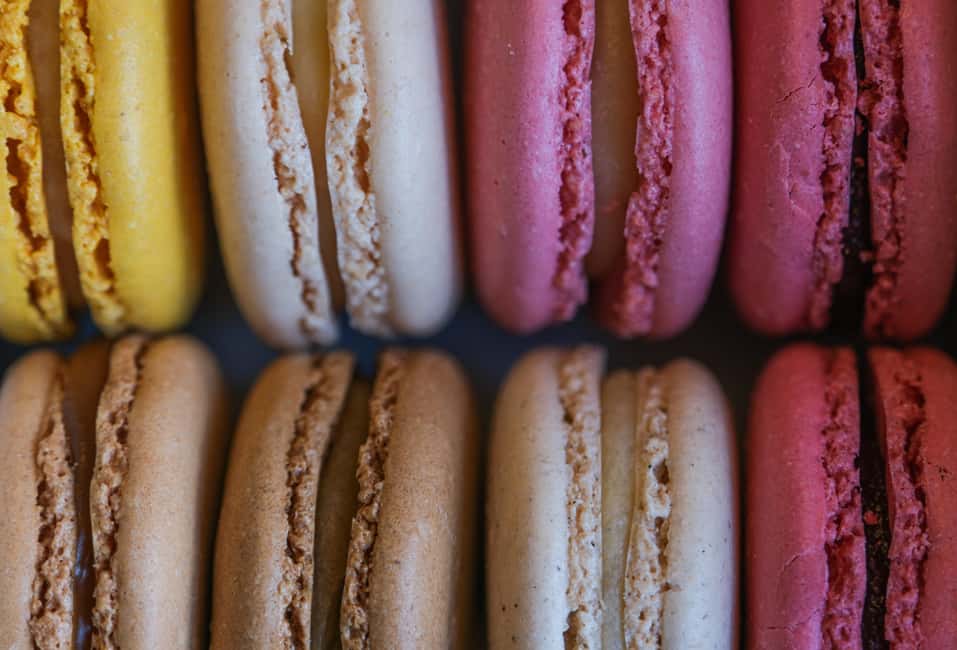
The best souvenir is usually edible, and this one has extra value because it’s personal. You’ll take home a box of your customized macarons made during the class.
That box is also a practical win. You don’t have to figure out how to transport fragile pastries from a shop window to your hotel. You’ll pack your own sweets right after the tasting, so you can treat them as your made-in-Paris gift to yourself (and maybe your travel crew).
It also makes the time feel worth it. Two hours in a kitchen can sound short, but when you leave with a real take-home result, it doesn’t feel like a brief activity—it feels like you completed something.
Price and Value: Is $117 Worth Two Hours in a Small Group?
At $117 per person for a 2-hour experience, you’re paying for more than ingredients. You’re paying for:
- A small group setting (8 participants max)
- Direct instruction from a local pâtisserie expert
- Hands-on coaching while you mix, pipe, and bake
- A guided tasting and refreshments
- A take-home box of your personalized macarons
If you compare this to buying macarons from a shop, the price is obviously higher. But this isn’t a purchase—it’s instruction plus a finished edible souvenir. For a lot of people, the value is in the skill transfer: you leave with a method and a clearer sense of what creates good shells and filling balance.
If you’re a confident cook who already makes macarons well, you may not feel the same value. But if you’re curious, you want a fun food activity, or you’d like a hands-on Paris moment that isn’t just eating, this price often makes sense.
Who Should Book This Macaron Class (and Who Should Skip)
This class is a great fit for:
- Food lovers who want more than a tasting
- People who like interactive classes and want to learn a “showpiece” recipe
- Families with older kids who can participate and follow instructions
Kids are allowed, but there are limits. Children under 5 can join free of charge, but they won’t be able to participate in the hands-on baking due to safety concerns. Also, kids must be accompanied by an adult.
You should skip (or at least think hard) if:
- You can’t stand for an extended period
- You need wheelchair accessibility
- Gluten-free is a strict medical requirement, since the macarons are described as gluten-free but the bakery uses wheat in other products
Quick Practical Tips Before You Go
A few things will make your experience smoother:
- Wear shoes you can stand in comfortably. The space involves steps and a basement area.
- Keep expectations realistic. Macarons take practice; the goal is guided success, not perfection on your first try.
- If dietary restrictions matter to you, double-check what the macarons contain (dairy and almond powder) and remember the bakery isn’t fully gluten-free.
Should You Book This Paris Macaron Baking Class?
If you want a hands-on Paris food lesson that results in a take-home box and teaches you a real technique, this is a strong choice. The small group size, guided mixing/piping/baking, and the tasting add up to more value than a basic tour.
I’d book it if you’re excited to customize flavors and colors, and if you’re comfortable with a kitchen setting in a historic building with stairs. I’d think twice if standing is hard for you or if wheelchair access is needed.
Overall, this is the kind of class that turns a famous sweet into an experience you can talk about long after you’ve finished the last macaron shell.
FAQ
Where is the meeting point for the Paris macaron class?
You meet inside the bakery at Chez Manon, 25 Rue de Bretagne, 75003, Paris. When you arrive, tell the staff you’re there for the baking class.
How long is the experience?
The class lasts 2 hours.
Is the class taught in English?
Yes. The instruction is in English.
What is the group size?
It’s a small group limited to 8 participants.
What’s included in the price?
You get a local pâtisserie expert, hands-on macaron instruction, a box of your personalized macarons to take home, and a macaron tasting with refreshments.
Is hotel pickup and drop-off included?
No. Hotel pickup and drop-off are not included.
Can you substitute ingredients or change the recipe?
No. The class follows a set recipe with various flavor options, but substitutions can’t be made.
Are the macarons gluten-free?
The macarons are described as gluten-free, but the bakery is not a gluten-free facility, and wheat is used in other products.
Are there dairy or almond ingredients?
Yes. The macarons use dairy and almond powder.
Are kids allowed to join?
Yes, kids can join, but they must be accompanied by an adult. Children under 5 can join free of charge, but they can’t participate in the hands-on baking due to safety concerns.
Is the class wheelchair accessible?
No. It’s not accessible for wheelchairs because the bakery is in a historic building with multiple steps.