REVIEW · PARIS
Paris: Local Secrets and Passageways Walking Tour
Book on GetYourGuide →Operated by Dayin · Bookable on GetYourGuide
Paris has secret doorways, and you can find them. This 2-hour passageways walking tour guides you through the covered corridors and old-world shopping streets that most visitors miss, with stops that feel like Paris slowed down on purpose. I love how quickly you transition from busy streets into calmer, quieter lanes, and I really like the way a local guide turns each turn into a story you can picture.
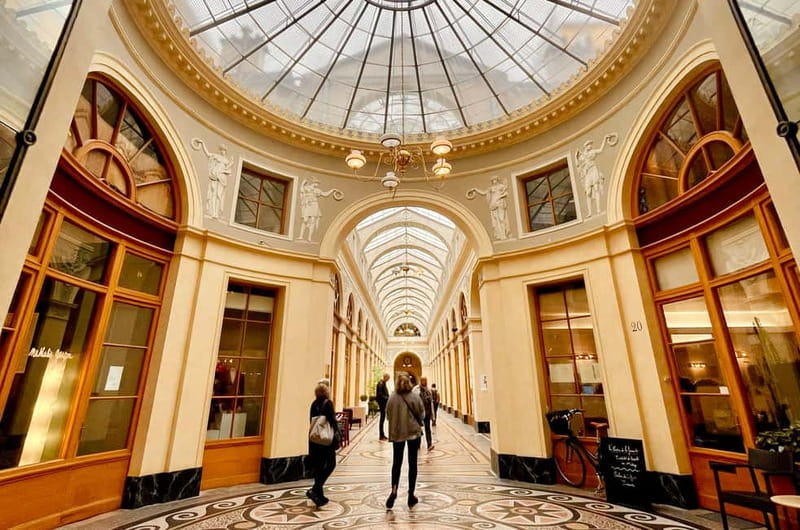
Two things I value most here: you get a small group (six people max), so questions don’t get lost in the crowd, and you’re guided through multiple iconic passageways and landmarks in one efficient loop. The route also leans hard on the city’s 19th-century elegance, especially around Galerie Vivienne and Palais-Royal, where the atmosphere does a lot of the talking.
One drawback to plan around: the walk isn’t set up for everyone unless you choose the private option, since wheelchair access is only available with that private format.
In This Review
- Key highlights you’ll actually feel on the ground
- Why Paris passageways are such a smart way to see the city
- Starting on Rue Cadet and getting oriented fast
- Passage Verdeau: the first “wait, where does this go?” moment
- Passage Jouffroy and Passage des Panoramas: where the tour gets more dramatic
- Palais Brongniart: a pause that widens the perspective
- Galerie Vivienne and Palais-Royal: the two stops you’ll remember later
- Galerie Véro-Dodat: short stop, strong vibe
- Bourse de Commerce and Saint-Eustache Church: shifting from arcades to landmarks
- Les Halles de Paris and Passage du Grand Cerf: ending on a charming note
- What makes the guide matter (and why Benoir’s style is a big deal)
- Group size, pacing, and why 2 hours is the sweet spot
- Price and value: is $91 for a 2-hour passageway walk worth it?
- Who should book this passageways tour
- Should you book this Paris Local Secrets and Passageways tour?
- FAQ
- How long is the Paris passageways tour?
- Where do I meet the guide?
- Where does the tour end?
- What’s the group size?
- What languages are available for the live guide?
- Is the tour good for rainy days?
- Do I need hotel pickup or drop-off?
- Is wheelchair access available?
- How much does it cost?
Key highlights you’ll actually feel on the ground
- A compact 2-hour loop that hits many passageways without turning the day into a full-day march
- Rain-friendly routing, built around cobblestones and covered arcades
- Small-group pacing (max six), so your guide can answer real questions
- Storytelling focus, with talk about artists, writers, and intellectuals tied to these spaces
- A classic Paris mix: passageways, shopping galleries, and major stops like Palais-Royal and Saint-Eustache
Why Paris passageways are such a smart way to see the city
Paris looks simple until you try to move through it. The normal streets can feel crowded, noisy, and kind of one-note. Passageways flip that. You walk through narrow corridors that shift the sound, block the rain, and change the light. Suddenly you’re in a different rhythm—more like wandering than sightseeing.
I also like that this tour doesn’t treat the passageways like museum props. The spaces are built for people to linger: storefronts, small routes to discover, and that semi-private feeling you don’t get in the open streets. If you’ve had a day where you’re tired of fighting crowds, this is the kind of route that helps your feet and your brain feel better.
And because the guide focuses on the human side—artists, writers, and intellectuals—you don’t just memorize locations. You start to understand why these places mattered, and why the “secret” part isn’t only about hiding. It’s about a different layer of daily life in Paris.
You can also read our reviews of more walking tours in Paris



Starting on Rue Cadet and getting oriented fast
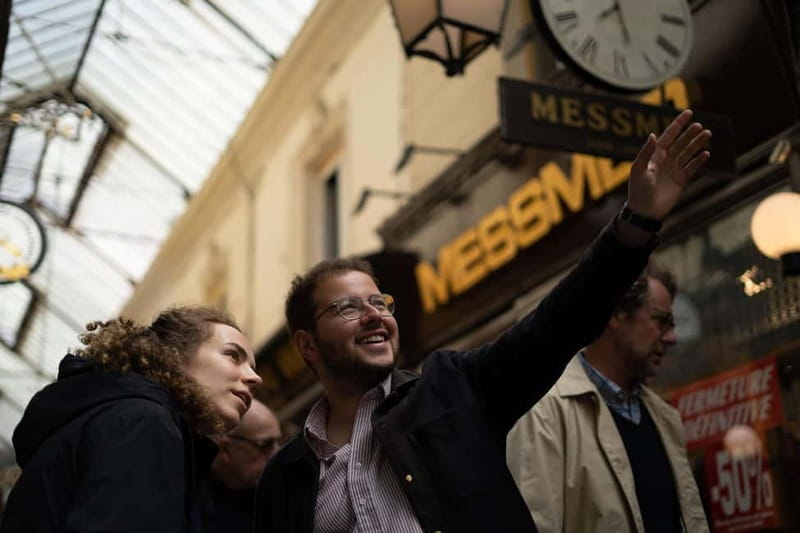
You meet your guide in front of an Optic 2000 shop at 26 Rue Cadet. That’s a practical starting point: it’s easy to find, and you’re already in a neighborhood where you can feel local Paris around you.
From the first minutes, the pace matters. A good passageways tour isn’t about rushing from photo to photo. It’s about learning how to read the city in sections—how to spot the entrances, how to tell when you’ve moved from a street into a covered arcade, and how to slow down long enough to notice details.
You’ll also get a taste of what the guide will do throughout the walk: quick context, then time to look. That blend is what makes the tour work, especially if you only have a couple hours and you still want variety.
Passage Verdeau: the first “wait, where does this go?” moment
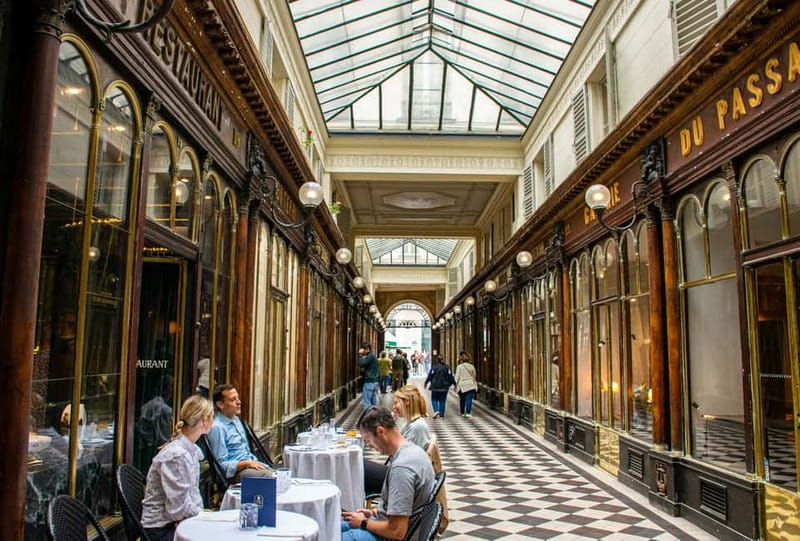
Your first stop is Passage Verdeau. Expect a short photo pause, then guided time to walk the space and get oriented. This early stop is important because it sets expectations for the rest of the route: you’re not just seeing one pretty corridor. You’re learning the logic of how Paris hides routes in plain sight.
In my view, Passage Verdeau is a great warm-up if you’re new to Paris passageways. It helps you understand what to pay attention to—entrances, the way the walkway guides you, and the sense of moving through something older than the street you started from.
Passage Jouffroy and Passage des Panoramas: where the tour gets more dramatic
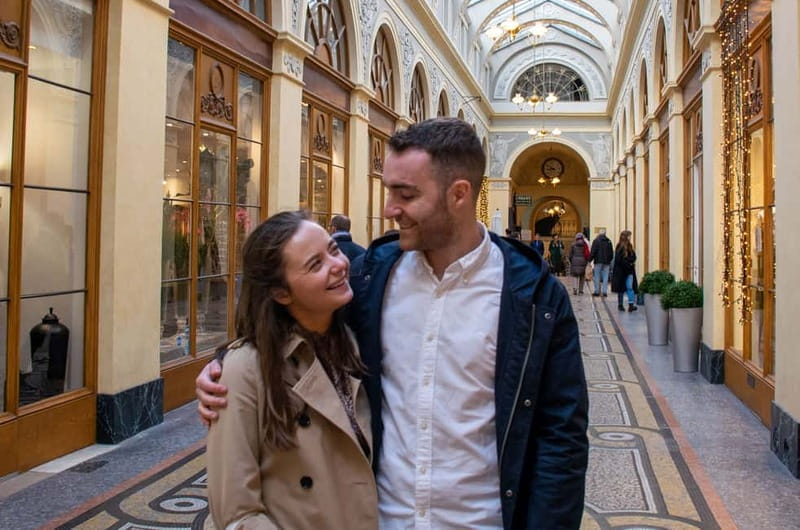
Next you head to Passage Jouffroy for another guided look, with time for photos and a short walkthrough. This stop keeps the momentum. By the time you reach it, you’re already “in” the idea of passageways, so you’ll enjoy the contrast between different corridors rather than feeling like you’re repeating the same scene.
Then comes Passage des Panoramas, where you get more time—about double the previous stop. This is where the tour starts to feel like a proper gallery walk. The extra minutes matter because passageways reward slower attention: you can stand, look back, and notice how the space frames the street you came from.
Practical tip: bring your camera settings ready. Passageways can shift light quickly—bright entry, softer interior—so you’ll be happier if you don’t fumble with your phone every time the light changes.
Palais Brongniart: a pause that widens the perspective
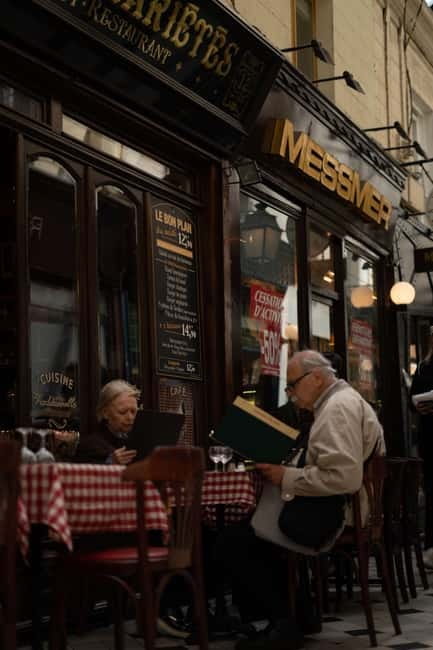
Palais Brongniart is next. You’ll have time for a photo stop and a guided visit. Even without turning this into a lecture, this stop adds a different scale to the route. Up to this point you’ve been living mostly in narrow passageways. Here you get a more formal landmark feel, which makes the whole walk more complete.
This is one of those stops that’s useful even if you’re not a “buildings person.” It helps you connect the passageway world to the wider city: these corridors weren’t isolated fantasies. They were part of how Paris moved culture and commerce through the city.



Galerie Vivienne and Palais-Royal: the two stops you’ll remember later
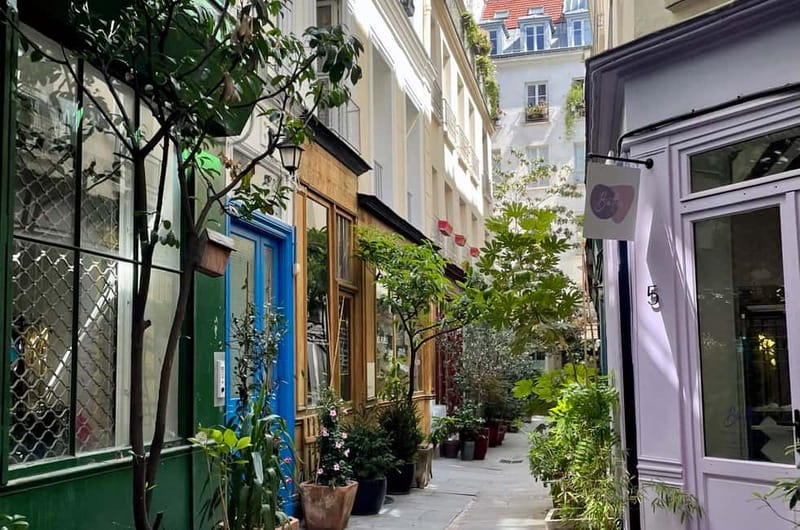
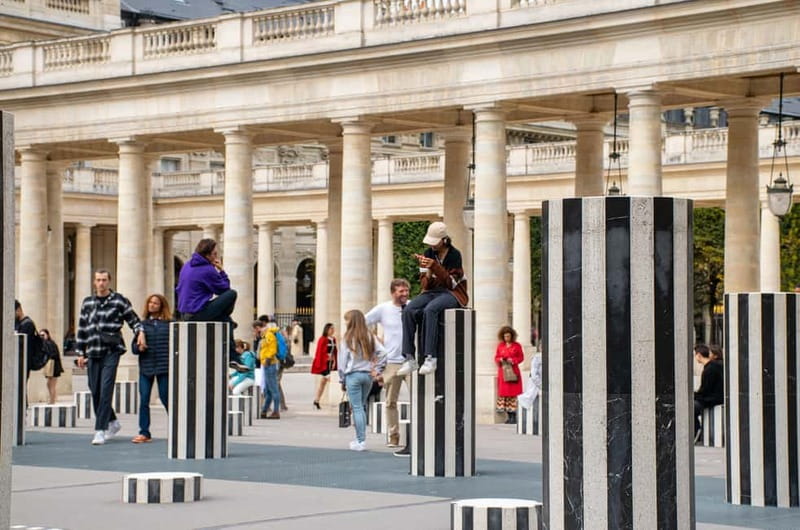
Two of the best-loved portions of this tour center on Galerie Vivienne and Palais-Royal.
At Galerie Vivienne, you get a guided visit and time to look around. What I like about this stop is the way it feels like a stage set that still works for real people. The passageway-to-gallery transition is exactly the kind of Paris detail you want to understand in person.
Then you move to Palais-Royal, with a longer visit window. This is where you’ll likely feel the tour doing its job: you’re not only seeing an address on a map. You’re experiencing a space where people slow down, pause, and take their time. That extra time on-site helps you step out of “tour mode” and just enjoy the atmosphere.
If you’re traveling with anyone who finds typical big-sight tours exhausting, these two stops are a strong argument for doing something different. They offer a lighter kind of Paris sightseeing—still historic, but less rigid.
Galerie Véro-Dodat: short stop, strong vibe
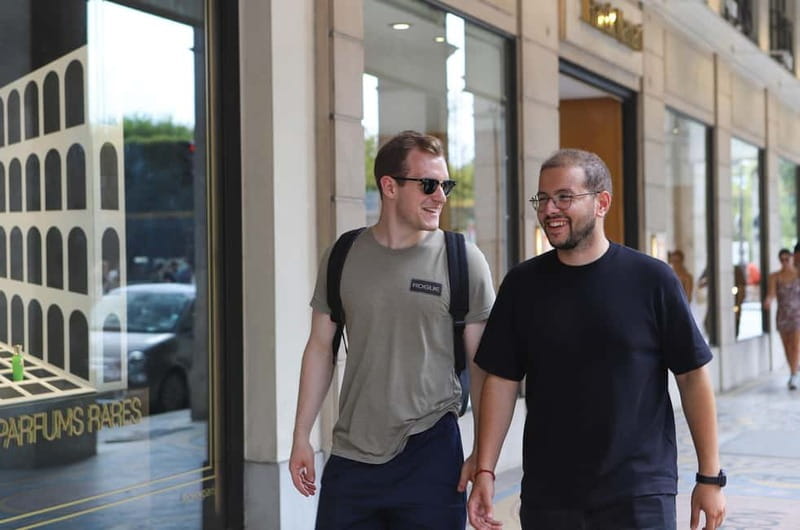
Next up is Galerie Véro-Dodat. It’s shorter than some stops, but it works well as a reset point. By now, you’ve got the rhythm down. You know what to look for and how to move through narrow spaces without feeling like you’re getting bounced around.
This stop is also helpful if you’ve been tempted to treat passageways as just pretty backdrops. A guided walk reminds you that these galleries are functional spaces—meant for movement, browsing, and lingering.
Bourse de Commerce and Saint-Eustache Church: shifting from arcades to landmarks
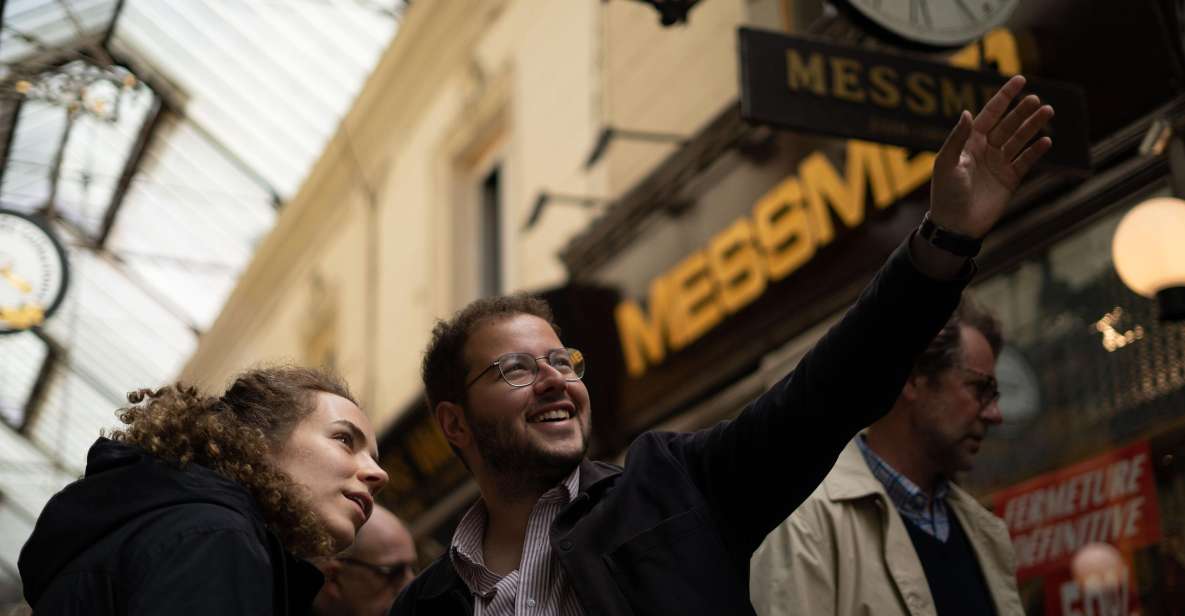
After the galleries, the tour shifts again with Bourse de Commerce, followed by Saint-Eustache Church. Both come with photo moments and guided time.
I like this segment because it prevents the walk from feeling like a single-note “passageway parade.” Once you’ve experienced the covered corridors, it’s refreshing to return to a bigger landmark presence. You’ll get a sense of how the passageways connect to the broader city fabric.
Saint-Eustache adds a different tone too. If your trip needs balance—some elegance, some noise, some quiet—that kind of contrast keeps your head clear and your photos varied.
Les Halles de Paris and Passage du Grand Cerf: ending on a charming note
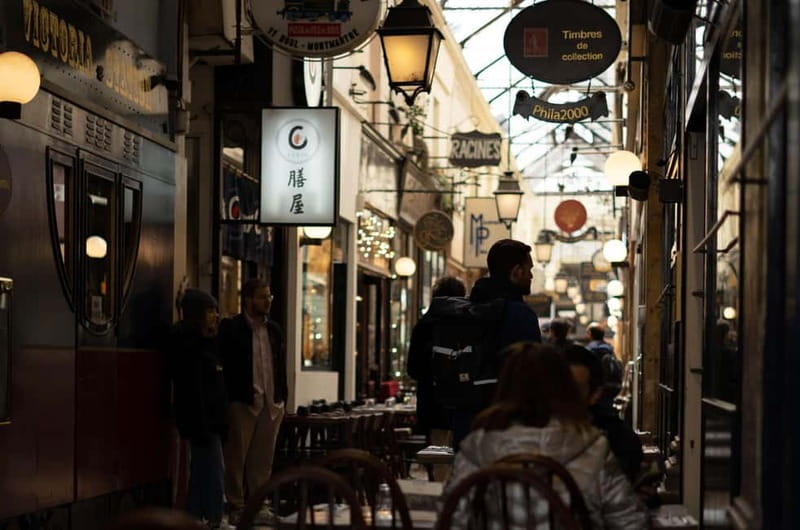
You’ll finish the main run at Les Halles de Paris for a guided visit and a short photo stop. This is a good closing contrast: it grounds the story in the city’s everyday energy, where food and daily life still do the heavy lifting.
Then the tour ends at Passage du Grand Cerf. Even if your last moments feel like a blur, ending in a passageway fits the theme perfectly. It’s the kind of final sight that makes the whole walk feel like a complete loop rather than a scatter of stops.
What makes the guide matter (and why Benoir’s style is a big deal)
The tour includes a local guide, and the experience lives or dies on how that guide connects the spaces. If you get a guide like Benoir, you’re in good hands. The standout quality is making the tour a pleasure, not a checklist.
That matters because passageways can feel similar at first glance. A strong guide helps you notice differences: how one corridor feels more intimate, how another section reads like a small interior world, and how the stories behind the places make you understand why artists, writers, and intellectuals were drawn to these settings.
So when you think about value, don’t focus only on “how many stops.” Focus on how much sense you make of them by the end. A good guide helps you leave with a mental map of Paris layers, and a better idea of where to wander next.
Group size, pacing, and why 2 hours is the sweet spot
This is a 2-hour walking tour with an intimate group—six people max—with private options also available. That time window is important. It’s long enough to feel like you did something substantial, but short enough that you can still enjoy the rest of your day without leg fatigue taking over.
The small group also changes the way you move. You’re not stuck behind a line of people, and you can pause for questions without the guide rushing to catch a schedule. It’s also friendlier for first-time visitors: you’ll likely feel less lost.
If you’re planning a tight Paris itinerary, 2 hours is a realistic block that doesn’t require you to restructure your whole day around it. Pair it with an evening meal in a nearby neighborhood and you’ve got a balanced day: structured enough to guide you, open enough to let Paris happen around you.
Price and value: is $91 for a 2-hour passageway walk worth it?
At $91 per person for roughly two hours, the price can feel steep if you compare it to free wandering. But compare it to what you get for that money: a local guide, a small group, and a route that hits multiple named passageways and key stops in one go.
Here’s the practical value math:
- You’re paying for time savings—you don’t have to figure out what connects to what.
- You’re paying for context—the guide’s stories about artists, writers, and intellectuals turn architecture into understanding.
- You’re paying for ease—the route is built to work well, including on rainy days when wandering on your own can get annoying.
If your goal is to experience Paris in a way that feels local and specific—without spending half your vacation inside queues—this price is easier to justify.
Who should book this passageways tour
I think this tour is a strong fit if:
- you want a calmer Paris experience that feels more intimate than the major landmarks loop
- you’re visiting in bad weather and want a route that works in rain
- you like stories tied to places, not just photos
- you want a compact plan that still feels personal thanks to the small group
It’s also a good choice if you’ve already seen some big sights and want something lighter that still feels authentically Paris.
Should you book this Paris Local Secrets and Passageways tour?
If you enjoy exploring streets at a human pace, I’d book it. The route focuses on covered passageways, named stops like Galerie Vivienne and Palais-Royal, and a guide who knows how to connect what you see with why it mattered.
I’d skip it only if you dislike walking through multiple short stops, or if mobility needs mean you should go private for better wheelchair accessibility.
If you’re even slightly curious about Paris beyond the postcard streets, this tour gives you a smart, rainy-day-friendly path into the city’s quieter side.
FAQ
How long is the Paris passageways tour?
The tour lasts about 2 hours.
Where do I meet the guide?
Meet your guide in front of the Optic 2000 shop at 26 Rue Cadet.
Where does the tour end?
The tour finishes at Passage du Grand Cerf, and the activity ends back at the meeting point.
What’s the group size?
It’s designed for an intimate group of up to 6 people, or you can choose a private option.
What languages are available for the live guide?
The live guide is available in English, French, and Spanish.
Is the tour good for rainy days?
Yes. It’s ideal for rainy days, with time spent on cobblestone alleys and covered arcades.
Do I need hotel pickup or drop-off?
No. Hotel pickup and drop-off are not included.
Is wheelchair access available?
Wheelchair accessibility is only available with the private option.
How much does it cost?
The price is $91 per person.