REVIEW · PARIS
Paris: Guided City Tour by Electric Bike
Book on GetYourGuide →Operated by XL Tour Paris · Bookable on GetYourGuide
Paris on an e-bike is the fast way to feel the city. I love how this 2-hour tour gives you a real, local-style circuit through Paris big hitters, with electric help doing the heavy work and a guide turning monuments into stories. Two things stand out fast: the route is mostly on bike lanes and sidewalks, and the stops hit iconic places like the Louvre, Notre-Dame, and the Eiffel Tower view from Trocadéro. The main drawback to think about is simple: it is not for everyone, especially if you have mobility limits or you are not comfortable sharing space near busy roads.
To make it easy, you start with helmet and bike fitting plus a safety briefing, and you even get a quick test ride so you feel steady before the sightseeing starts. On top of that, you get a raincoat, which matters because Paris weather can flip without warning. In reviews, guides like Roman and Thomas come up again and again for keeping the ride calm and the information clear, with a focus on safety even when traffic gets heavy.
If you want a smooth “see a lot, learn a bit” day, this is a strong pick. If you’re expecting a slow, museum-only pace or a fully accessible route, you’ll want to look at other options.
In This Review
- Key highlights worth aiming for
- Starting at 10 Rue de la Paix: e-bike fit and the short safety prep
- Louvre to Tuileries Gardens: the classic Paris postcard, seen from the saddle
- Pont Neuf and Pont des Arts: oldest bridge vibes and love-lock energy
- Sainte-Chapelle and Notre-Dame: Gothic power while you’re still moving
- Musée d’Orsay and Orsay Docks: the station story and the river pace
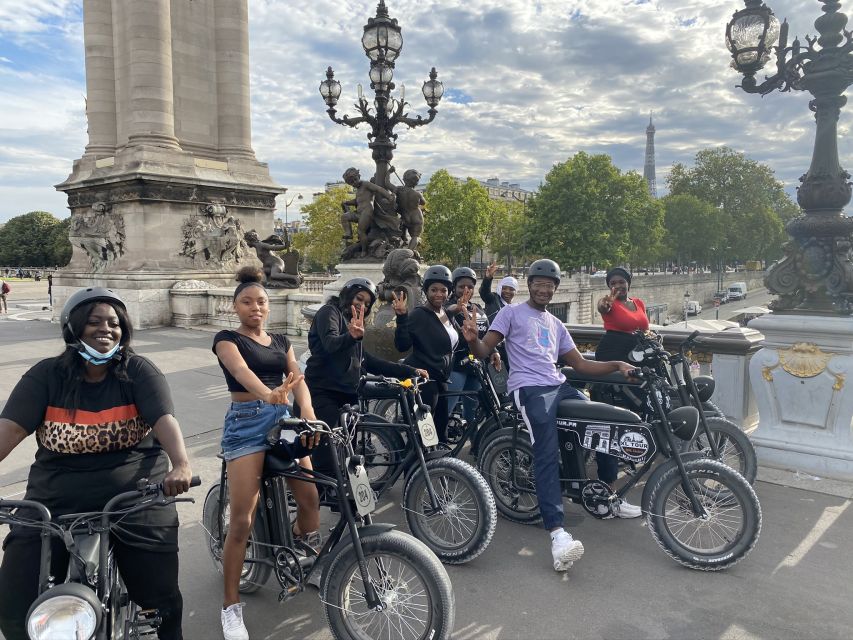
- Pont Alexandre III to Grand Palais/Petit Palais: scale, geometry, and straight-up drama
- Eiffel Tower from Trocadéro Gardens: the view that hits hardest
- Palais de Chaillot to Palais de Tokyo: classic meets modern in minutes
- Lady Diana Square Liberty Flame and the long sightlines to Les Invalides
- Place de la Concorde and Place Vendôme: Paris grand squares by bike
- The ride itself: electric assist, traffic nerves, and what to wear
- Price and value for a $76, 2-hour highlights loop
- Should you book this electric bike tour?
- FAQ
- What’s the duration of the Paris electric bike city tour?
- Where do I meet for the tour?
- What’s included with the booking?
- Do I get a guide and what languages are available?
- Is there a helmet and safety setup before riding?
- What should I wear or bring?
- Who can ride the e-bike?
Key highlights worth aiming for
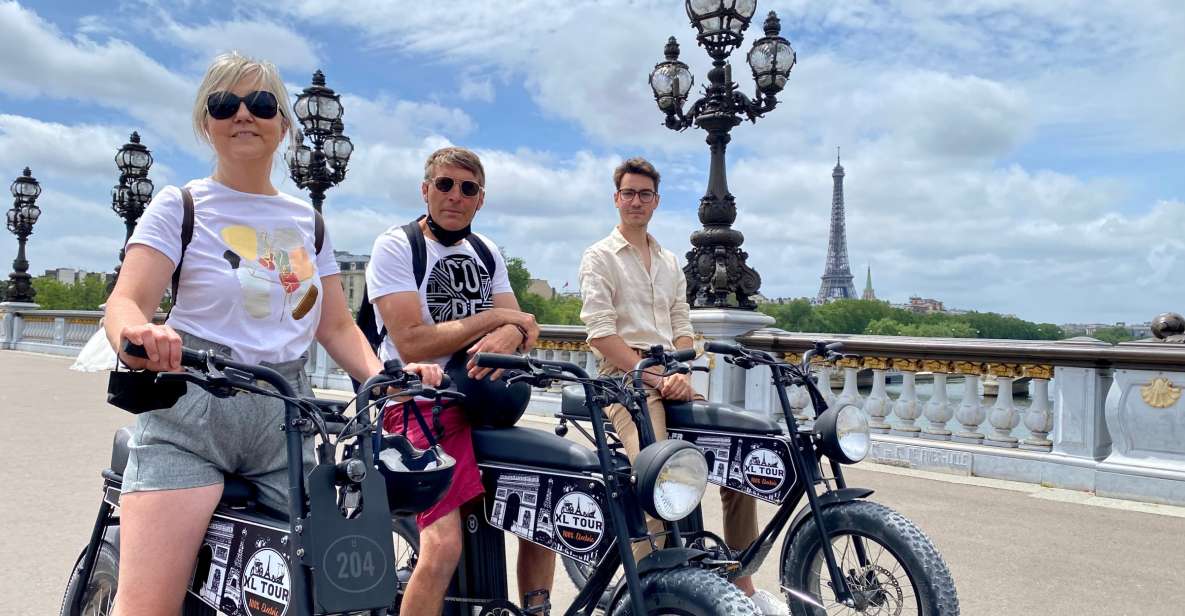
- Electric assist that keeps you moving without exhausting your legs
- Mostly car-light routes on bike lanes and sidewalks, not nonstop traffic crawling
- A guided loop through the Seine’s greatest hits with quick stops and photo moments
- Big landmark coverage in only 2 hours so you still have time left in Paris
- Gothic architecture and bridge views from Sainte-Chapelle to Pont des Arts
- Eiffel Tower views from Trocadéro with space to actually take it all in
Starting at 10 Rue de la Paix: e-bike fit and the short safety prep
Your tour begins at 10 Rue de la Paix, and the meeting setup is a little unconventional. The safety briefing area is inside a parking structure, so you might not see bikes or the team right away. Go there, arrive about 10 minutes before your start time, and wait for someone to come upstairs to start things.
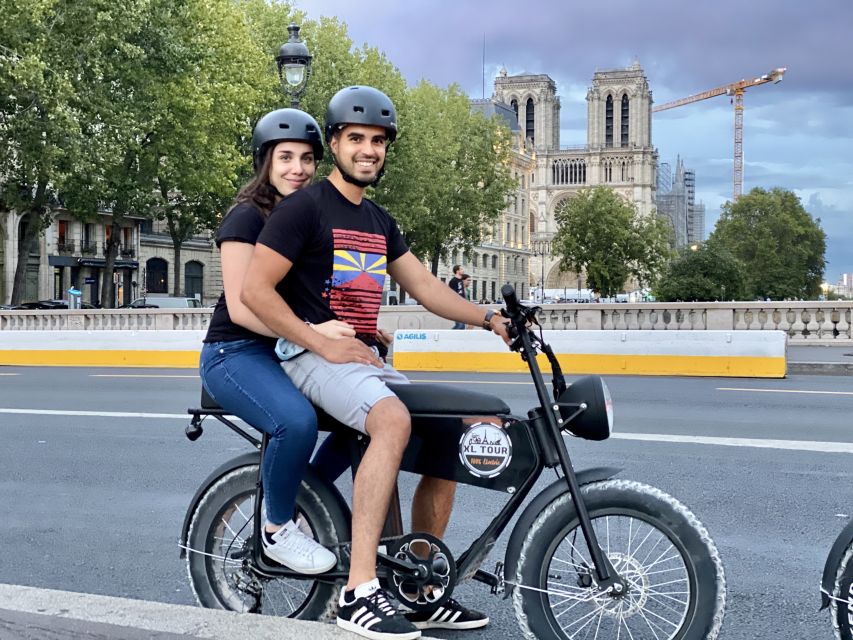
Before you roll, you’ll get geared up with a helmet and gloves, plus a raincoat that’s ready if the sky decides to participate. The group gets a safety briefing first, then you’re fitted with the e-bike and given time to test how it handles. That test ride is more important than it sounds, because e-bikes feel different from standard bikes once you factor in motor assist, weight, and braking.
One practical detail that makes the tour feel well-run: the guide leads the ride at a pace that keeps people together and confident. In past experiences shared by riders, guides like Roman have been praised for staying attentive and patient on the road, and for making sure everyone feels secure even if you pass areas with busier traffic.
You can also read our reviews of more cycling tours in Paris

Louvre to Tuileries Gardens: the classic Paris postcard, seen from the saddle
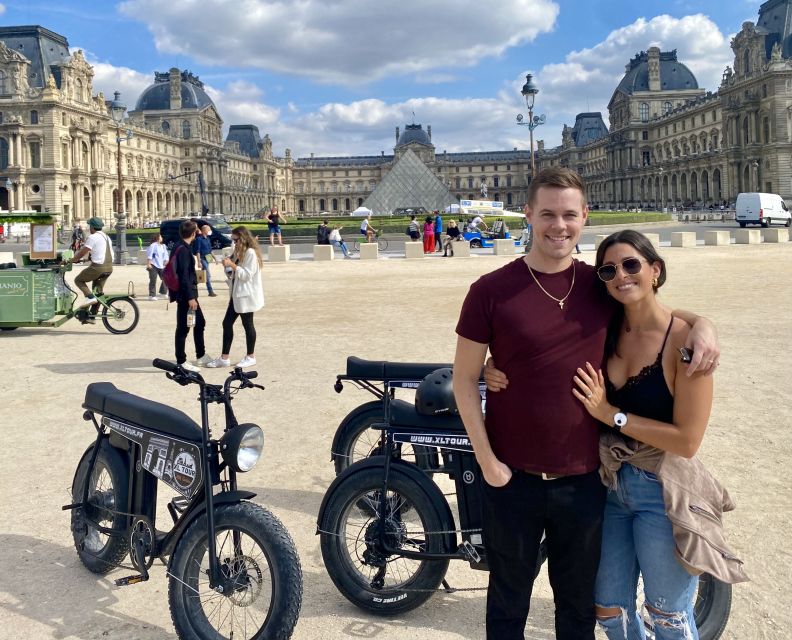
Once the tour starts moving, you’re set up for one of the easiest “wow streaks” in Paris: the central landmarks close enough to reach fast, but linked in a way that feels like a stroll with wheels.
You pass through the Louvre area, and the tour includes guided sightseeing with quick landmark context. You’ll also get a view toward spots around the Louvre and the Carrousel, including a moment where the guide points out the famous art focus near the museum. If you’ve ever wondered how to connect the dots between streets and what you see inside the museum, this is the prep you want before you go back on your own time.
Then you move into the Tuileries Gardens, where the bike route gives you a different angle than walking. You’re basically using the gardens like a green corridor, with room to breathe for a few minutes and space to look around rather than just power through crowds. This is one of the reasons I like short e-bike tours: you can enjoy the city texture without burning half your day getting between sights.
At this stage, keep an eye on the “rhythm” your guide sets. With electric assist, it’s tempting to coast without paying attention, but the guided stops are where you get the payoff. Stay alert, listen for what’s coming next, and you’ll get more out of the ride than just photos.
Pont Neuf and Pont des Arts: oldest bridge vibes and love-lock energy
From the Louvre/Tuileries zone, you head toward Pont Neuf, which is one of those bridges that feels like it belongs in a history book and a movie scene at the same time. It’s also a great example of why bridges matter in Paris: they’re not just crossings, they’re viewpoints and neighborhood connectors.
You’ll get guided context while you pass, and you’ll likely notice how the bridge positions you for the river perspective without needing to stop for long. The tour keeps things moving, but the guide makes sure you don’t miss the “why” behind each spot.
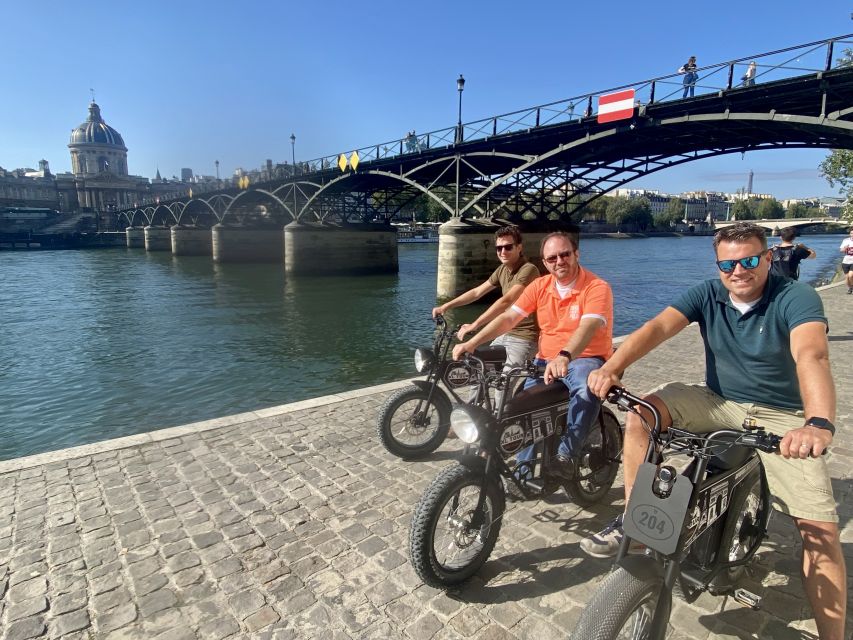
Next comes Pont des Arts, famous for the love locks. I like this stop because it’s a small visual detail with a big story weight: it’s modern behavior layered on top of a classic setting. Even if you’ve seen images before, it reads differently in person. From the saddle, the bridge feels like a stage where multiple camera angles are possible without you hunting for the perfect spot.
Then the route heads onward toward the river’s core sights, transitioning from “pretty bridges” to “Paris layers of time.” That is the tour’s main strength: it stitches the city together so the order of stops feels logical, not random.
Sainte-Chapelle and Notre-Dame: Gothic power while you’re still moving
This stretch is where the tour turns from sightseeing to “wow, that’s real.” You pass Sainte-Chapelle, and the guide points out the Gothic architecture and key visual elements, including the rose-window scale associated with this area’s landmark style.
Then you ride into the zone around Notre-Dame Cathedral. The tour highlights the rose window and the cathedral’s place in the city’s story. Seeing these features from a bike route means you’re not stuck behind a slow-moving line for every angle, but you still get the guided explanation that walking tours sometimes skip because they move too slowly between stops.
A quick note on how to enjoy this segment: don’t rush your face-time with the details. Even with a short stop window, you’ll get the most value if you pause for the best sightline the guide suggests and let your eyes catch up. A tour like this works because it gives you “good enough time” to look, learn, and move on, all in the same flow.
Musée d’Orsay and Orsay Docks: the station story and the river pace
As you continue, you reach Musée d’Orsay, which the tour frames with a useful bit of context: the museum was once a train station. That matters because it changes how you interpret what you’re seeing. If you later visit on your own, you’ll already understand why the building feels both elegant and industrial.
You also pass by the Orsay Docks, and the guided route includes a bit of river-area watching, including the idea of ships passing along the docks. This is a nice break from landmark staring. It lets you feel the Seine as a working river, not just a backdrop.
From a comfort standpoint, this segment can feel slightly more “stop-and-look” than earlier parts because you’re dealing with a cluster of museum-front views and bridge connections. If you’re nervous about riding in a city, this is where the guided leadership matters most. In reviews, riders praised the way guides manage safety and keep the ride predictable.
You can also read our reviews of more guided tours in Paris




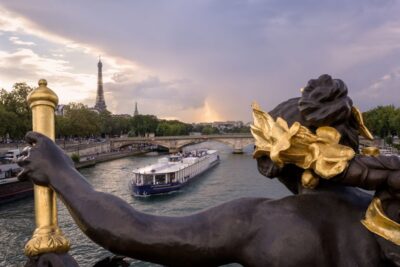
Pont Alexandre III to Grand Palais/Petit Palais: scale, geometry, and straight-up drama
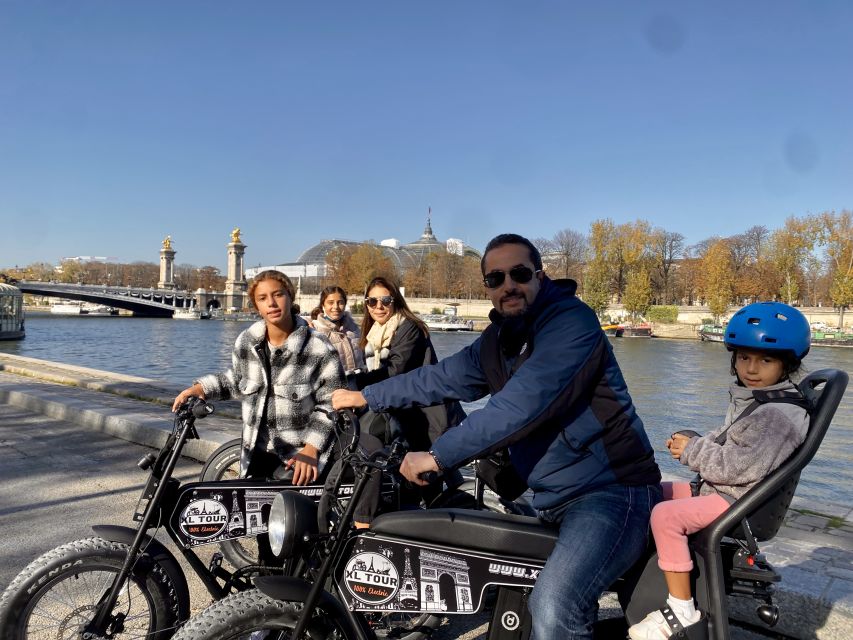
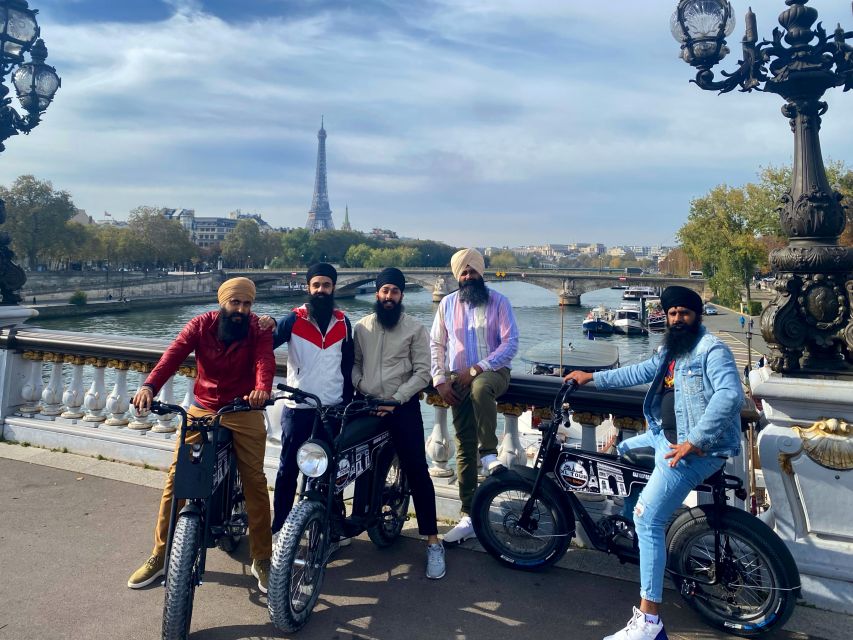
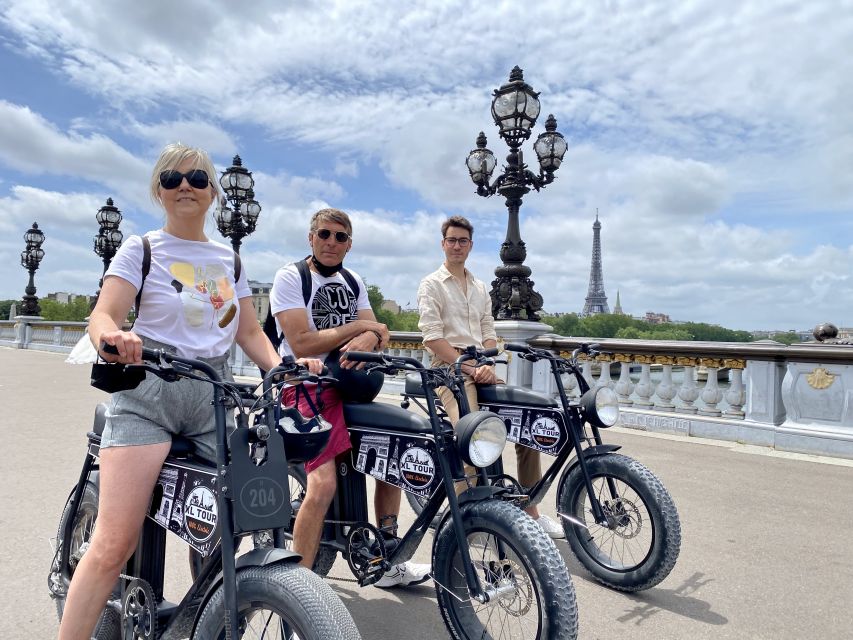
Next up is Pont Alexandre III, an iconic bridge where the architecture practically announces itself. You get guided sightseeing as you cross and then move through the grand-axis feel of Paris toward Grand Palais and Petit Palais.
This is where I think the e-bike shines. Walking between these points can be slow and stop-start. On the e-bike, you keep momentum and still take in the buildings. You also get to compare sizes and styles without feeling like you’re doing a marathon.
The tour’s design helps you understand how Paris uses space: these structures aren’t just pretty facades; they define the “stage” for the city’s famous views. The guide’s commentary helps you notice what you might otherwise miss, like how the bridges and squares line up visually.
If you want a quick way to orient yourself for later exploring, this is a great segment to pay extra attention. After you’ve ridden through it, the map in your head starts making sense.
Eiffel Tower from Trocadéro Gardens: the view that hits hardest
You’ll get up close to the Eiffel Tower area, but the best part is the viewpoint across Trocadéro Gardens. This is the classic “see it the way posters see it” moment, except you get it in motion and with the guide telling you where to look.
The tour includes guided time near this zone, plus sightseeing as you pass Palais de Chaillot and take in the Eiffel Tower view from across the gardens. In practice, this means you get a strong chance to appreciate the tower’s scale without needing to solve the puzzle of where to stand or which direction gives the best perspective.
This stop is also where the tour feels most special compared to a bus ride. On an e-bike, you’re close enough to understand the surrounding streetscape. The view is still big and cinematic, but you’re also experiencing how the city frames it.
And yes, you’ll probably want more time here. But that’s the point of a 2-hour highlights tour: it gives you the emotional anchor, then lets you decide later if you want a second visit for deeper exploration.
Palais de Chaillot to Palais de Tokyo: classic meets modern in minutes
After the Eiffel Tower viewpoint, the route continues into the Palais de Chaillot area and then on to Palais de Tokyo. The tour highlights the contrast between these spaces, including how the “Great” versus “small” palace feel creates an interesting visual and architectural comparison.
Even if you’re not a museum person, this is a fun stop because it shifts the tour’s personality. You go from the most famous symbol in Paris to the city’s modern art energy without the transition feeling weird. It’s also a useful reminder that Paris isn’t stuck in one era, even when the landmarks look like they belong to one long postcard series.
Lady Diana Square Liberty Flame and the long sightlines to Les Invalides
You pass by Place Diana and the Liberty Flame in Lady Diana Square. It’s a smaller landmark compared to the Eiffel Tower, but that’s exactly why it’s a smart inclusion. The ride doesn’t only chase the biggest names. It also gives you a few “story points” that feel like they connect Paris to the wider world.
Then you head toward Les Invalides, guided sightseeing included. This is one of those places where the architecture and setting give you a sense of Paris as a capital, not just a sightseeing park. Even with quick stop time, you’ll understand why this area is part of the city’s national identity.
If you’re traveling with kids or teens, this section tends to work well because it offers variety. In reviews, families mentioned that the information keeps younger riders interested without turning the tour into a long lecture.
Place de la Concorde and Place Vendôme: Paris grand squares by bike
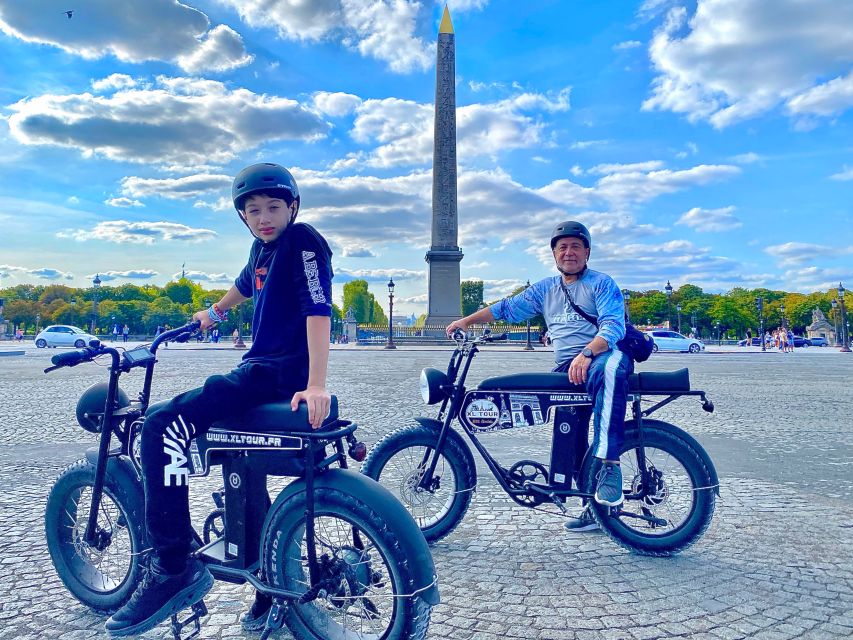
Near the end of the route, you ride through major squares like Place de la Concorde and Place Vendôme. The guide adds context about how these spaces work together, including the idea of how Paris uses wide open areas and architectural symmetry.
This is a good “breather” segment if you’ve been riding and listening for a while. The squares give you space to look around and reset your pace. It’s also a practical moment to take photos, because the layout tends to offer clean sightlines from bike lanes and sidewalks.
Even if you’ve seen these places in photos, being on the ground helps you feel the scale. Paris squares can trick your eye from afar. On the e-bike, you get the right perspective faster.
The ride itself: electric assist, traffic nerves, and what to wear
The route is mostly bike lanes and sidewalks, and the ride is designed as family-friendly. Still, this is a city. You’ll go through areas where traffic exists, and the success of the tour depends on your guide’s approach to safety.
In reviews, riders repeatedly praised guides like Thomas for being very aware of safety and for leading in a way that made the experience feel confident. That lines up with what you want from a guided bike tour: clear communication, predictable movement, and enough stopping to keep the group together.
How it feels: the e-bike does the hard work, so hills and longer stretches are manageable without turning into a sweat-fest. But you still need to pedal at times, and you should be comfortable steering and braking while looking ahead.
What to bring is straightforward: comfortable shoes and comfortable clothes. Avoid high heels, and don’t wear sandals, flip-flops, or open-toed shoes. Also, keep things simple and don’t bring alcohol or drugs on the ride.
One more important guideline: adults must be at least 155 cm (5’01) to ride. Also, the tour is not suitable for pregnant women, people with mobility impairments, or wheelchair users. If you fit within the height and mobility comfort zone, this tour is a great way to cover big territory without suffering through cramped walking time.
Price and value for a $76, 2-hour highlights loop
At $76 per person for 2 hours, this is not a “cheap and cheerful” outing, and I think that’s fair to say. You’re paying for a guide, a proper e-bike setup (helmet, gloves, raincoat), and a route that strings together major landmarks in a short window.
Here’s how I judge value: you get a dense concentration of top sights, not just one neighborhood. The route includes the Louvre/Tuileries axis, bridges over the Seine, Gothic landmarks like Sainte-Chapelle and Notre-Dame, the Orsay area, and an Eiffel Tower viewpoint from Trocadéro. If you were trying to do the same loop on foot, you’d spend far more time walking between stops, then still have to figure out where the best views are.
You also get the “guide advantage,” which is hard to replicate on your own. The guide doesn’t just point at buildings. They add context and anecdotes that help you understand what you’re looking at. Riders specifically called out guides being both entertaining and highly focused on safety.
So, is it worth it? If you want an efficient highlights day and you’d rather spend your energy enjoying Paris than hauling yourself across the city, the math usually works out. If you prefer deep museum time or you don’t like riding bikes in a crowded city environment, you may feel better with a walking tour or a small-group museum day instead.
Should you book this electric bike tour?
Book it if you’re in Paris for a short stay or you want an easy first-day orientation. This tour is built to get you bearings fast, connect landmarks into a logical route, and deliver that Eiffel Tower payoff without turning your legs into rubble. It also fits well if you travel with teens, since the pace and variety keep attention up.
Skip it if you don’t feel comfortable riding an e-bike, if your mobility needs don’t match the setup, or if you’re expecting long indoor museum time. It’s a highlights loop, not a slow dive.
If you’re deciding between this and a bus tour, I’d lean electric bike when weather is decent and you want a more street-level feel. You’ll get the iconic views and the in-between Paris texture, with a guide like Roman or Thomas (or someone with a similar style) keeping things safe and fun.
FAQ
What’s the duration of the Paris electric bike city tour?
It lasts 2 hours.
Where do I meet for the tour?
Meet at 10 Rue de la Paix.
What’s included with the booking?
You get the electric bikes, helmets and gloves, and a raincoat.
Do I get a guide and what languages are available?
Yes. There’s a live tour guide in French, English, and Spanish, and an audio guide is also included in Dutch, Japanese, German, Hebrew, Arabic, Chinese, Italian, and Portuguese.
Is there a helmet and safety setup before riding?
Yes. You’ll be fitted with a helmet, start with a safety briefing, and you should get time to test that you’re comfortable handling the electric bike.
What should I wear or bring?
Bring comfortable shoes and comfortable clothes. Avoid high-heeled shoes, sandals/flip-flops, and open-toed shoes.
Who can ride the e-bike?
Adults need to be at least 155 cm (5’01). The tour is not suitable for pregnant women, people with mobility impairments, or wheelchair users.