REVIEW · PARIS
Paris and the Art of Music, 1.30 hour Walking Tour
Book on GetYourGuide →Operated by Not a Tourist Destination · Bookable on GetYourGuide
Paris plays like a score. This 2-hour small-group walk strings together the lives of the musical greats who studied, performed, and hung around Paris. I love the way the route connects Mozart, Stravinsky, and Piaf to real addresses, and I love that the guide can personalize the stories to what you care about.
The only real downside is simple: you cover a lot of ground in 2 hours, so plan on steady walking. And since luggage or large bags are not allowed, travel light with comfortable shoes.
In This Review
- Key things that make this tour worth your time
- Turning Paris streets into a music timeline
- Starting at Relais Odeon Café near Metro Odeon
- Saint-Germain-des-Prés: from Benedictine abbey to troubadours
- Luxembourg Gardens and Palace: the Renaissance court music setting
- Carrefour de Buci: cabarets between the World Wars
- Cour du Commerce Saint-André: a charming arcade and the oldest café link
- Saint-Sulpice Church: the 7,000-pipe organ and a pop-culture wink
- Furstenberg Square: the romantic finish tied to Piaf and Chevalier
- Price and value: what $99 buys you in the real world
- Who this tour is for (and who should skip it)
- Quick practical tips before you go
- Should you book Paris and the Art of Music?
- FAQ
- How long is the Paris and the Art of Music walking tour?
- How big is the group?
- Where does the tour meet?
- What language is the guide available in?
- What should I bring or avoid?
- Is there free cancellation?
Key things that make this tour worth your time
- Small group (8 max) keeps the conversation going and makes personalization easier
- Music-by-era route links Middle Ages, Renaissance court life, cabarets, and classical religion
- A true street-level finish at Furstenberg Square, tied to Edith Piaf and Maurice Chevalier
- The oldest café stop at Cour du Commerce Saint-André, connected to street musicians
- Saint-Sulpice’s massive organ is a big moment, including a pop-culture wink
- Easy start point at Relais Odeon Café near Metro Odeon (line 4)
Turning Paris streets into a music timeline

This is a walking tour for people who want music to feel physical. You’re not stuck in a museum room. Instead, you move block by block through places tied to composers, singers, and entertainers, spanning centuries of Parisian taste.
What makes it work is the guiding theme: you’re tracing “who played where” and “how the city shaped the sound.” That approach gives you a cleaner mental map than a generic highlights walk. When you stop at one place, you immediately understand what kind of music world it belonged to—church, court, café, or cabaret.
It also helps that the group is limited to 8. On some departures the group can be tiny, which means you get real back-and-forth instead of listening to one-size-fits-all narration. The result is a tour that can feel tailored, not just delivered.
You can also read our reviews of more walking tours in Paris



Starting at Relais Odeon Café near Metro Odeon
You meet at Relais Odeon Café, 132 Boulevard Saint-Germain, 75006. The Metro station is Odeon on line 4, so it’s a straightforward arrival whether you’re staying nearby or riding in from another area.
I like starting here because Boulevard Saint-Germain sets the tone immediately. It’s central, historic, and walkable, and it puts you in the same rhythm as the rest of the tour—easy city navigation, not complicated logistics.
One practical note: since luggage or large bags are not allowed, keep your meeting plan simple. Think daybag only, because Paris sidewalks can get crowded.
Saint-Germain-des-Prés: from Benedictine abbey to troubadours
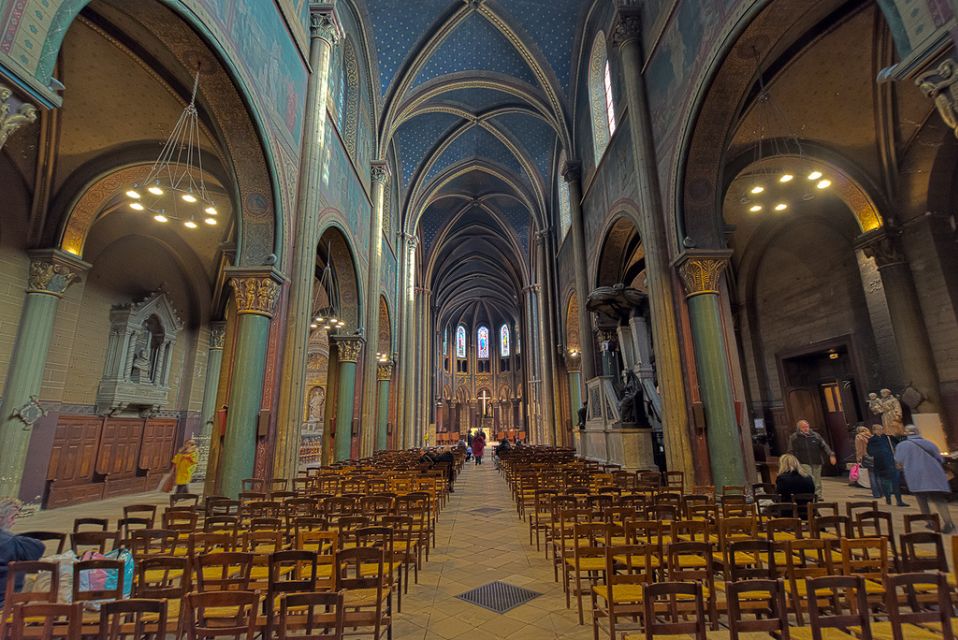
The tour’s first big anchor is the 6th-century Benedictine Abbey of Saint-Germain-des-Prés. Even if you only know the name from school or guidebooks, it hits you as a real early “soundscape” location—religious institutions were major cultural centers long before concert halls became common.
What I find smart about this stop is the way it frames music as part of daily life, not just entertainment. This is where you can understand why troubadours and early performers had meaningful stages in the Middle Ages. You’re learning the logic of the era: where audiences gathered, where performance was socially accepted, and how music traveled through the city.
If you’re hoping for nonstop famous-person name-dropping, you’ll still get plenty—but this stop grounds it all. It gives you the cultural setup behind the big later figures you’ll hear about as you walk.
Luxembourg Gardens and Palace: the Renaissance court music setting
Next up is a very scenic shift: Marie de Medici’s Luxembourg Gardens and Palace. This is the kind of place where you can almost picture music as protocol—something tied to court life, power, and carefully organized entertainment.
The tour connects this area to court music during the Renaissance. That detail matters. Court music wasn’t just background noise; it was tied to status, education, and the image a royal household wanted to project.
Even if you’re not a Renaissance music specialist, the location does the teaching. You can sense how music would fit into ceremonial moments and controlled gatherings. It’s a good stop for anyone who likes “why it happened” context, not just “who the stars were.”
Carrefour de Buci: cabarets between the World Wars
Then you roll into Carrefour de Buci, a crossroads known for cabarets between WWI and WWII. This is where the tour stops feeling like a timeline lesson and starts feeling like a street-culture story.
Crossroads matter in Paris because they concentrate movement—people passing through, people stopping for a drink, people choosing nightlife. Cabarets thrived on that mix, and the tour uses the geography to explain the vibe.
I like this segment because it broadens your idea of music. You’re not only learning about the formal world of church and court. You’re also seeing how Paris built spaces for performers to connect with everyday audiences, especially during tense decades when entertainment carried extra weight.





Cour du Commerce Saint-André: a charming arcade and the oldest café link
One of the most memorable stops is the Cour du Commerce Saint-André, an 18th-century picture-perfect street arcade. The tour highlights it for a specific reason: it’s home to Paris’s oldest café, a meeting point for street musicians during the French Revolution.
This is a great place to slow down. Arcades like this are made for wandering and observing, and they also explain why street musicians congregated where they did. People needed audience proximity. Cafés offered warmth, foot traffic, and a place to be heard without needing an official concert hall.
If you’re the kind of traveler who loves turning a pretty photo spot into something with a story, you’ll enjoy this. It’s easy to look at the architecture and forget the human reason it mattered. The guide keeps the focus on the performers and the crowd energy.
Saint-Sulpice Church: the 7,000-pipe organ and a pop-culture wink
The tour’s biggest classical-period moment is Saint-Sulpice Church, known for its 7,000-pipe organ. The guide also points out an impressive detail: it’s one of only three 100-stop organs in the world.
This stop is valuable even if you don’t know much about pipe organs. Hearing music tied to a place this size helps you grasp scale. A giant organ isn’t just an instrument; it’s a statement about what the church wanted sound to do in the space.
There’s also a connection to The Da Vinci Code as the church had a recent appearance in a supporting role. That kind of reference can make the place feel instantly familiar and helps you connect what you’ve seen on screen with the real-world setting.
If you’re short on time in Paris, this is a tour that gives you a meaningful reason to care about Saint-Sulpice beyond the postcard facade.
Furstenberg Square: the romantic finish tied to Piaf and Chevalier
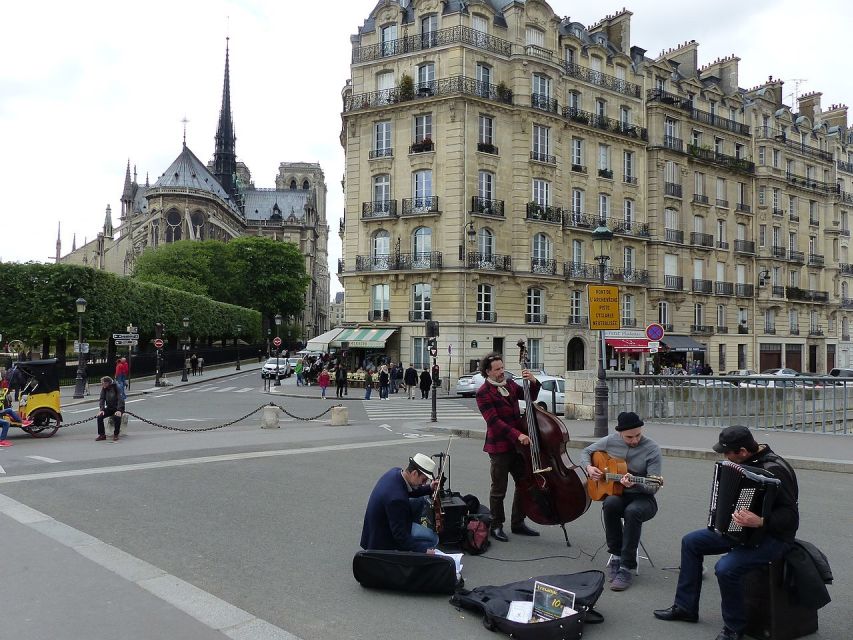
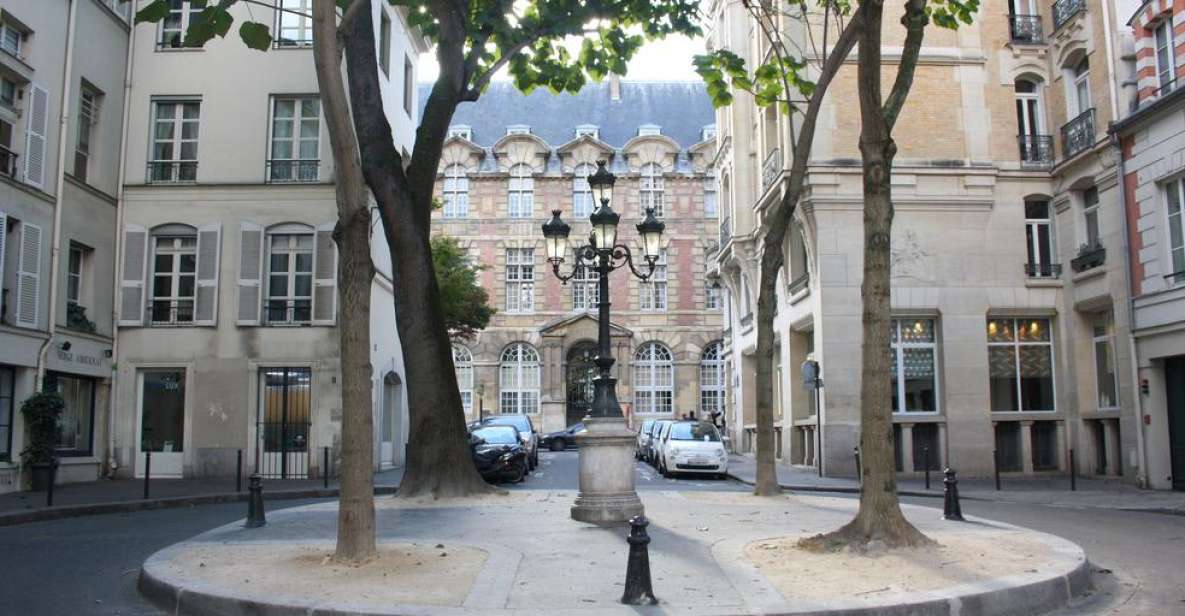
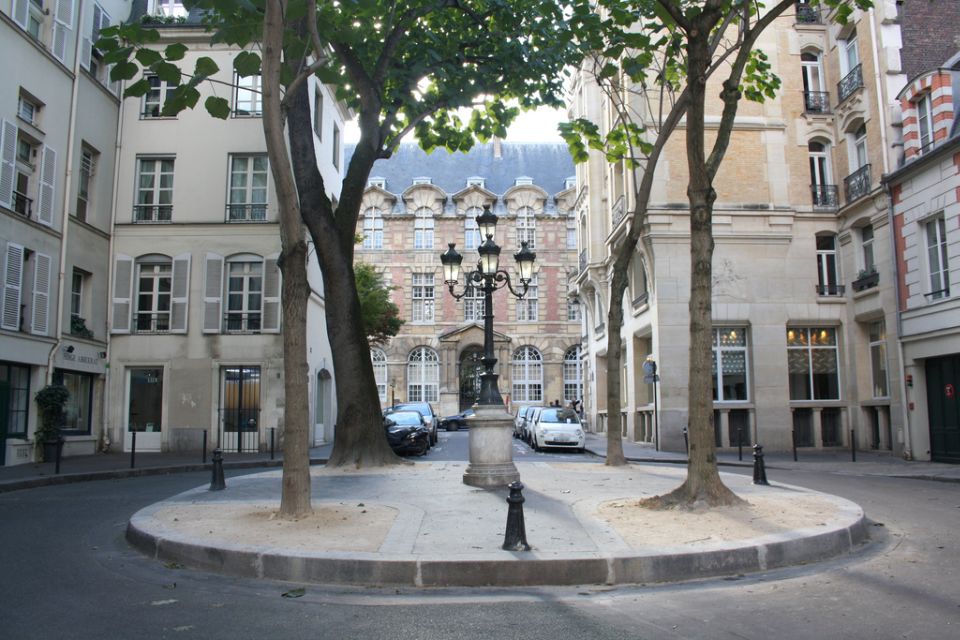
The walk ends at Furstenberg Square, one of the smallest and most romantic squares in Paris. It’s a favorite of both Edith Piaf and Maurice Chevalier, and the tour uses the finish to land the story on performers you likely already feel connected to.
Ending in a square like this is smart. It gives you a breather after churches, palaces, and cabaret streets. More than that, it gives you a “close the loop” moment—music as lived experience, not just historical artifact.
If you’re wondering what to do next after the tour, this ending spot is helpful. You’re dropped into a calmer pocket of Paris that still feels central, so you can keep wandering on your own without immediately hitting sensory overload.
Price and value: what $99 buys you in the real world
At $99 per person for a tour that runs around 2 hours, you’re paying for more than a route. You’re buying a focused music lens plus an expert local guide in a tight group.
This matters because the “best” part of the experience isn’t just the landmarks—it’s the interpretation. The guide’s ability to tailor information to your interests is part of the value, and it’s the kind of thing you can’t get from a generic audio app. When the group is small and the guide can respond, the tour speeds up in the best way. It doesn’t feel slow or padded.
It’s also not an all-day plan. If you want long museum time, this isn’t that. If you want to feel Paris music as a walking map, it’s a strong use of a half morning or late afternoon.
Who this tour is for (and who should skip it)
This works especially well if you:
- like music history tied to actual streets and buildings
- enjoy guides who can shape the story toward your interests
- want a compact way to cover multiple eras without planning museum days
It might be a less perfect fit if you:
- hate walking and want a mostly seated experience
- expect a deep, technically heavy lecture on music theory (this is place-and-story focused)
- travel with large luggage and don’t want to rearrange your bag plan
Also, if you’re visiting Paris for the first time, this tour gives you a quick emotional map. It helps you understand how different kinds of music life fit into the city’s geography.
Quick practical tips before you go
- Wear comfortable shoes. You’ll be on foot for the full tour.
- Travel light since luggage or large bags are not allowed.
- Bring an interest in at least one performer or composer name; the guide can steer the story from there.
- Plan to arrive a bit early at Relais Odeon Café so the start stays calm.
Should you book Paris and the Art of Music?
If you want a guided walk where Paris feels like it has a soundtrack—played across centuries—this is an easy yes. The small-group size helps, the guide’s ability to personalize the story improves the experience, and the stops are varied enough to keep you from zoning out.
I’d book it if you like history that’s tied to people and places, not just dates and facts. I’d think twice if you’re trying to pack in a ton of museum time and you hate walking. But for most people who enjoy music and want a smart use of 2 hours in Paris, this is a very solid pick.
FAQ
How long is the Paris and the Art of Music walking tour?
The tour lasts about 2 hours.
How big is the group?
It’s a small group limited to 8 participants.
Where does the tour meet?
You meet at Relais Odeon Café, 132 Boulevard Saint-Germain, 75006, near Metro Odeon (line 4).
What language is the guide available in?
The tour runs with a live guide in English, and Spanish is also offered.
What should I bring or avoid?
Bring comfortable shoes. Luggage or large bags are not allowed.
Is there free cancellation?
Yes, you can cancel up to 24 hours in advance for a full refund. Tours canceled less than 24 hours in advance are not refunded.