REVIEW · PARIS
From Paris: Normandy D-Day Beaches Day Trip with Lunch
Book on GetYourGuide →Operated by ParisCityVision · Bookable on GetYourGuide
D-Day means more than photos. On this full-day trip from Paris, you move through the key Allied sites of June 6, with Pointe du Hoc and Omaha Beach set up in a way that helps everything click. I like that the day has a clear pace, so you spend time seeing the places instead of getting lost in logistics.
Two big wins for me: the guided stops at Omaha Beach and the tribute at the Normandy American Cemetery. Standing where the landings unfolded, then walking the rows of white crosses, makes the story feel human, not like a chapter in a textbook.
One possible drawback: the lunch is included, but the specific Normandy-style meal you get can be hit-or-miss. If you’re picky about food, don’t assume it will match exactly what you imagine under the banner of Normand specialties.
In This Review
- Key things to know before you go
- From Paris to the Beaches: what the 13-hour rhythm really means
- Pointe du Hoc: the cliffs attack that turns Omaha into context
- Omaha Beach guided focus: why timing matters on the most famous shore
- Colleville-sur-Mer: walking the American Cemetery and reading every detail
- Arromanches and the Mulberry Harbour: how supplies made victory possible
- The possible Juno Beach stop: what you’ll gain if it’s on the schedule
- Price and value: is $222 worth it for this kind of day?
- Who this tour suits best (and who should consider alternatives)
- Should you book this D-Day beaches day trip?
- FAQ
- How long is the Normandy D-Day Beaches Day Trip from Paris?
- What major sites does the tour visit?
- Is the Juno Beach stop guaranteed?
- What is included in the price?
- Where do I meet in Paris, and when should I arrive?
- Is the tour wheelchair accessible, and are pets allowed?
Key things to know before you go

- Pointe du Hoc first: you start at the cliffs the Rangers attacked, which puts Omaha into context fast
- Guided Omaha Beach time: you get a focused tour (not just a quick stop for pictures)
- Normandy American Cemetery in Colleville-sur-Mer: guided visit with memorials, a chapel, and the Garden of the Missing
- Arromanches and the Mulberry Harbour: you’ll see how supplies reached the front after the landings
- English live guide, small-group feel: one guide named Stephen was singled out for passion and strong communication
- Juno Beach is not guaranteed: it depends on the day’s schedule
From Paris to the Beaches: what the 13-hour rhythm really means
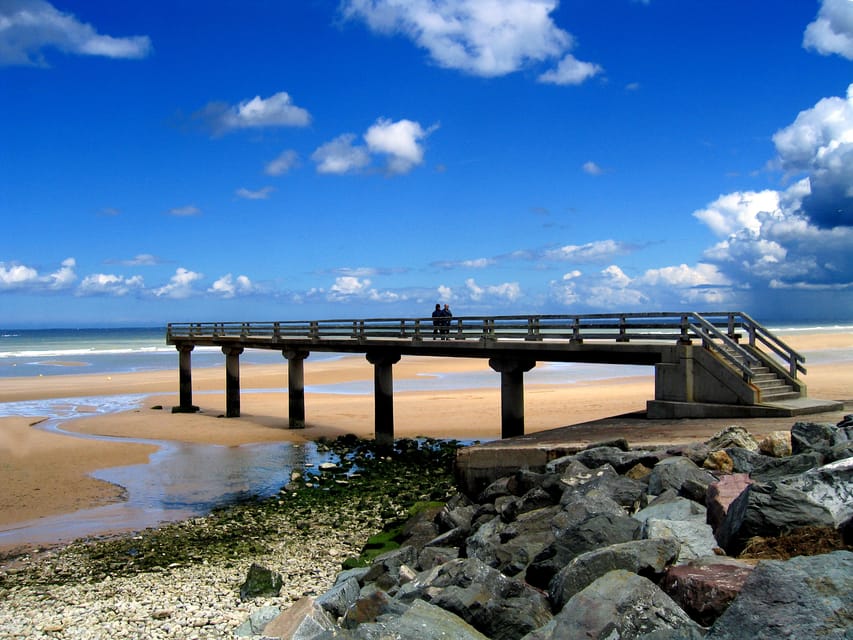
This is a long day, and that’s the tradeoff for seeing the main D-Day sites in one shot. The trip runs about 13 hours, with a round-trip coach ride from central Paris and several guided stops across Normandy. If you want a relaxed pace, this one won’t feel that way—but if you want the most important places with guidance, it’s a smart format.
The coach is air-conditioned, and the route is set up so you don’t burn time transferring on your own. You also avoid hassle with skip-the-ticket-line access, which matters when your day is already packed. Expect a lot of time outdoors and on your feet: beaches, cliffs, and a cemetery all ask for some walking.
You should also know what kind of tour this is. It’s built around a live English guide and timed site visits, not open-ended wandering. That’s good if you like structure and want context, especially at places like Omaha and the American Cemetery where the details can feel overwhelming without someone to guide your attention.
You can also read our reviews of more tours and experiences in Paris


Pointe du Hoc: the cliffs attack that turns Omaha into context
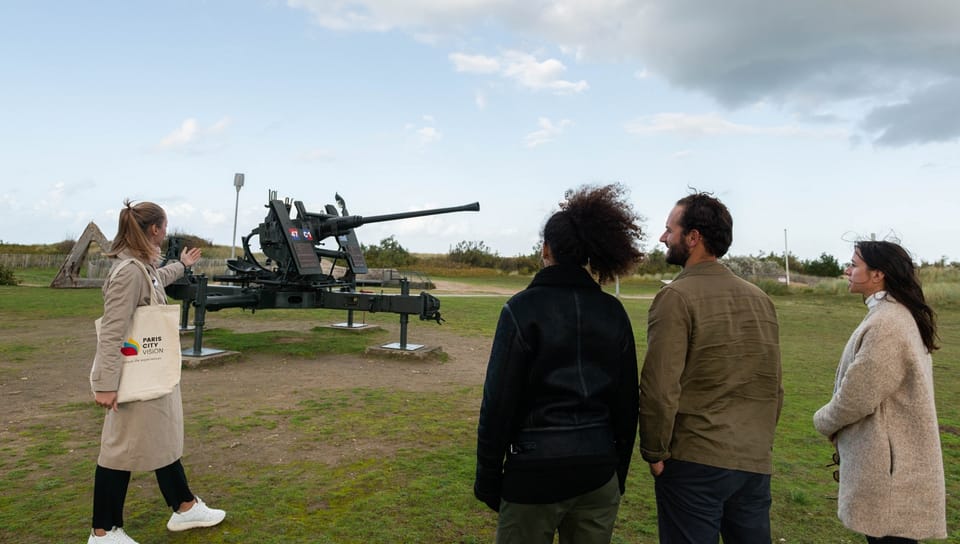
Pointe du Hoc is where your day starts for a reason. You spend about one hour at the site, and the experience is built around a simple idea: once you understand what happened on those cliffs, you get more from the rest of the Normandy story.
This is one of the most strategic areas of the Allied landings. The scale is gripping—high ground, exposed positions, and a sense of how hard it must have been to take and hold anything under fire. Even if you’ve seen photos before, being there changes how you read the battle. You stop thinking only in terms of beach landings and start understanding the wider plan: eliminating threats, controlling key points, and enabling follow-on forces.
From a practical standpoint, this is also a good early stop. By going first, you’re not trying to figure out the map of the day while you’re already emotionally drained from Omaha. You arrive with energy, get the story framed, and then the rest of the sites feel connected instead of separate.
Omaha Beach guided focus: why timing matters on the most famous shore
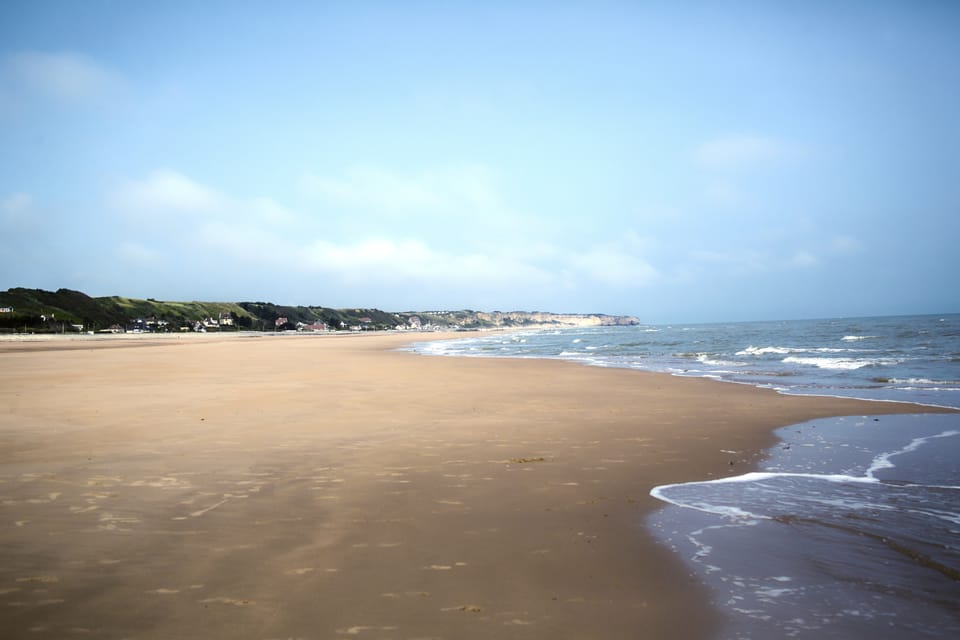
Omaha Beach is the headline stop, and the tour treats it like one. You get a guided tour of about 105 minutes, which is enough time to do more than stand on wet sand and hope it all makes sense.
The guide’s job here is crucial. Omaha isn’t just famous—it’s intense. The area faced stiff resistance during the Normandy landings, and if you’re there on your own, it’s easy to get stuck on the shock of it while missing the operational details that explain the struggle. With a guide, you get help translating what you’re seeing into what it meant: where forces landed, why specific positions mattered, and how the day unfolded.
What I like about having a guide on Omaha is the attention shift. Instead of only looking outward, you learn how to look around—at the shape of the shoreline, the relationship of the positions, and how the land itself influenced the fight. You also end up spending more time at the meaningful viewpoints instead of defaulting to the spots that are just easiest for photos.
One more plus: the tour includes round-trip transportation from Paris by luxury coach, so you don’t lose part of your Omaha time to travel confusion. When you’re on-site for a guided block, you’re there to absorb—not to rush.
Colleville-sur-Mer: walking the American Cemetery and reading every detail
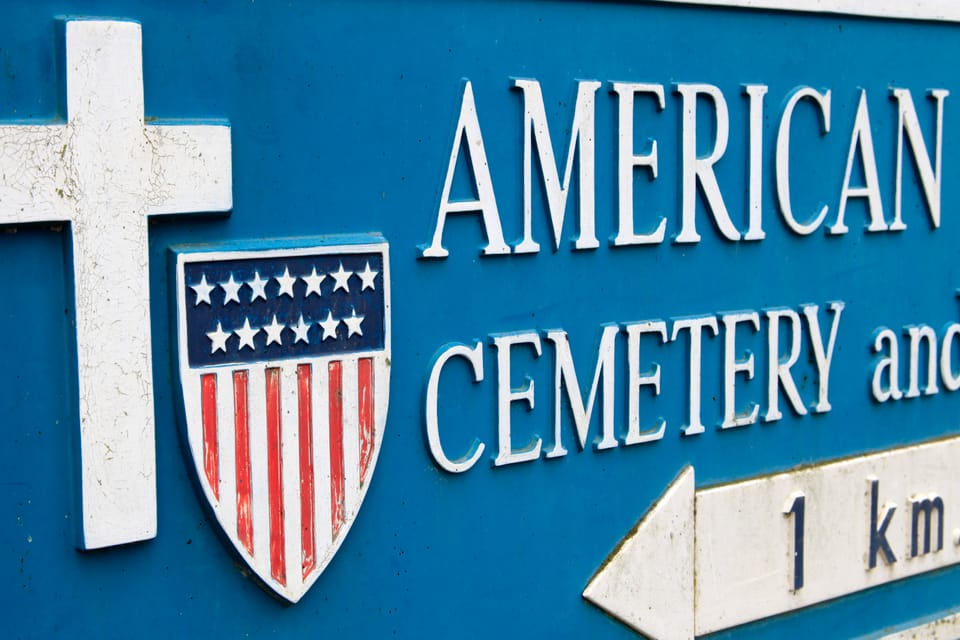
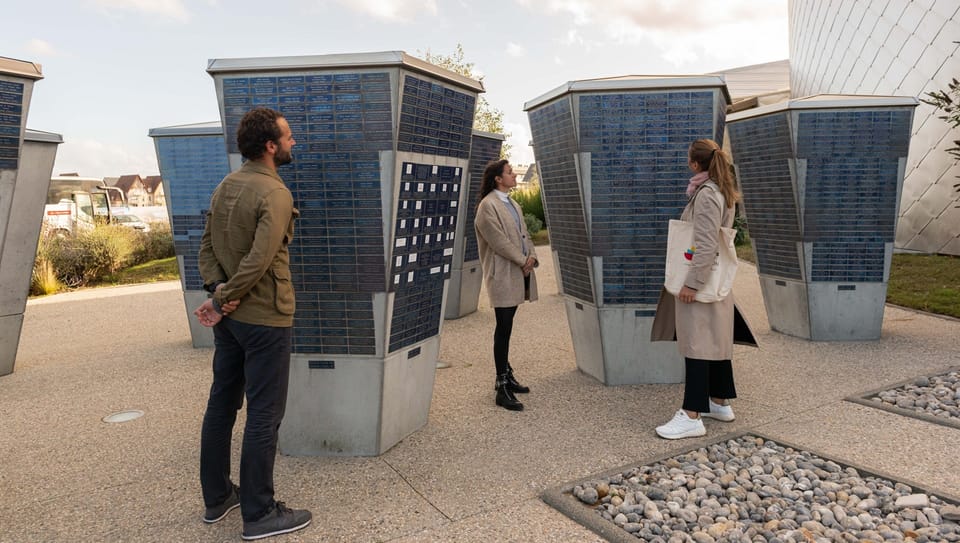
If you want one site that changes your emotional temperature, it’s the Normandy American Cemetery in Colleville-sur-Mer. The tour includes a guided visit of about one hour, and you’ll have time to slow down and actually take it in.
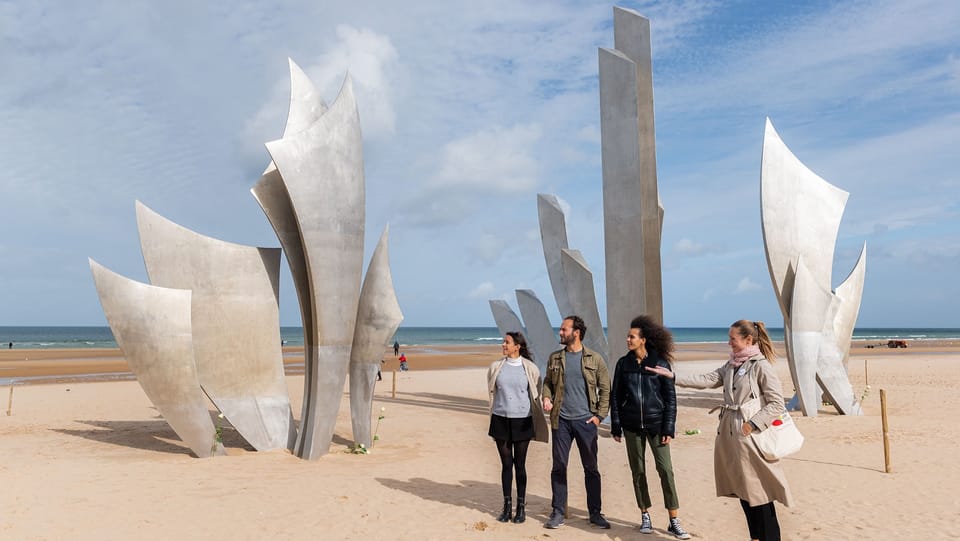
This isn’t just a memorial in the abstract. It’s set up with clear components: a memorial area, a chapel, and the Garden of the Missing. You’ll also walk among the graves—more than 9,000 white crosses plus Stars of David—honoring soldiers who made the ultimate sacrifice during the Battle of Normandy.
I appreciate how the guide frames the visit. At a cemetery like this, you’re never only sightseeing. You’re asked to pay attention to names, symbols, and placement. With guidance, you understand what you’re looking at and why the design matters, so it doesn’t feel like you’re merely passing through rows.
The cemetery also overlooks Omaha Beach, which creates a powerful visual loop for your day. You see the connection between the fight and the resting place. That view doesn’t just add a nice backdrop—it turns the landings into something personal.
Tip from how this day is structured: pace yourself. Omaha can be heavy, then the cemetery layers in that weight in a different way. Take your time during the guided hour, and don’t feel you have to force your emotions into neat boxes.
Arromanches and the Mulberry Harbour: how supplies made victory possible
After the intensity of Pointe du Hoc, Omaha, and the cemetery, Arromanches offers a different kind of meaning. It’s practical history—the how of keeping an invasion moving.
You’ll visit Arromanches-les-Bains and enjoy lunch there, plus time for sightseeing. The schedule leaves about one hour for lunch and around 45 minutes for the visit, which is a workable chunk. It also matters that this stop is calmer than the beaches. You can reset your head a little and still keep learning.
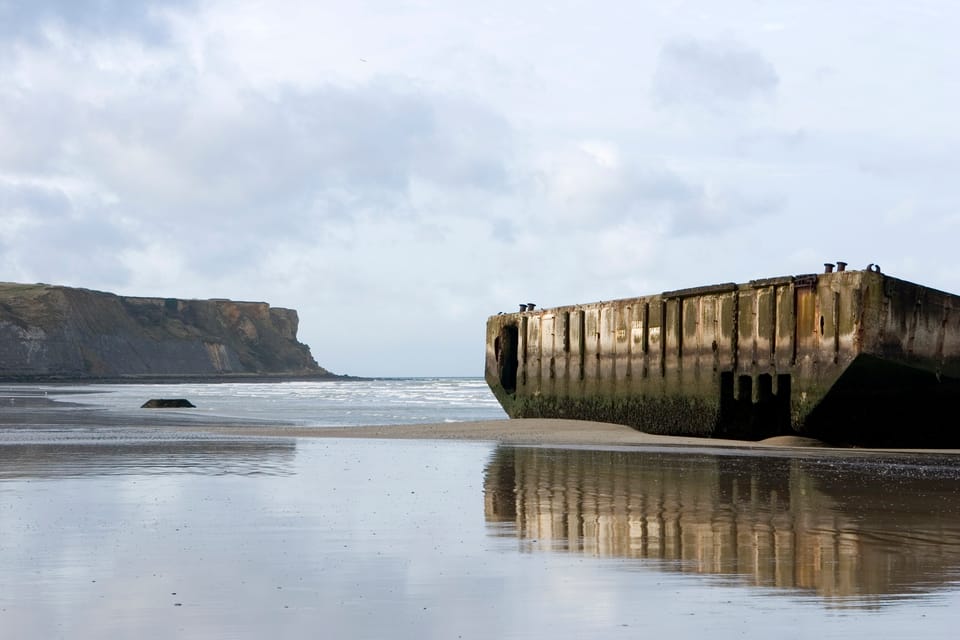
Here’s what makes Arromanches stand out: it’s associated with the remains of the artificial Mulberry Harbour used by the Allies to supply troops after the landings. That detail turns the story from one day of fighting into a longer operation of engineering, logistics, and persistence. Seeing the harbor remnants helps explain why the Allies could keep pushing after landing. Without supplies moving reliably, even brave beach victories wouldn’t have mattered.
The lunch is part of the value here because it breaks up the day. You get a Normandy lunch experience tied to the region, so you’re eating where the history happened instead of rushing to a random stop. That said, one review noted that the lunch didn’t match the promise of specifically Normand food. So if food expectations are a big deal for you, keep it flexible.
You can also read our reviews of more tours and experiences in Paris





The possible Juno Beach stop: what you’ll gain if it’s on the schedule
Sometimes the tour includes a stop near Juno Beach and its cemetery, tied to Canadian forces at D-Day. The key word is sometimes: the Juno stop is not guaranteed and depends on the day’s schedule.
When it is included, it adds a new layer to your understanding. You’re not only seeing American landing points; you’re seeing how the Allied landings spread across multiple sectors with different pressures and tactics. It also gives you a broader map of sacrifice, not just a single national perspective.
However, because Juno isn’t guaranteed, you shouldn’t plan your emotional arc around it. Plan to appreciate what you will definitely see: Pointe du Hoc, Omaha, the American Cemetery, and Arromanches. If Juno happens, it’s a bonus. If it doesn’t, the day still covers the core sites that anchor the Normandy story.
Price and value: is $222 worth it for this kind of day?
At $222 per person, this is not a budget excursion. You’re paying for several things working together:
- Round-trip coach from Paris (so you don’t spend energy on trains and transfers)
- Live English guide during key sites, including guided time at Omaha Beach and the American Cemetery
- Guided visit of Pointe du Hoc, plus site support across the day
- Lunch in Arromanches or Omaha (included)
- Skip-the-ticket-line, which saves time during a schedule-heavy trip
For me, the main value driver is the guide-led approach at places that can feel confusing without context. D-Day sites are powerful, but they’re also geographically spread out and loaded with details. Paying for a guide is what turns the day from a scenic drive into understanding.
There’s also a real “long-day efficiency” value. A day like this would be harder to recreate well on your own because you’d be managing transport, timing, and interpretation while trying to keep emotional attention on track. Here, the structure does that work.
The one thing I’d keep in mind is the lunch variability. If lunch quality is your top priority, consider that it may not perfectly match your idea of a full-on Normandy feast. Everything else is more clearly anchored: the main sites are fixed, guided, and timed.
Who this tour suits best (and who should consider alternatives)
This tour is a great match if you want a guided D-Day day trip from Paris that hits the major sites without you having to plan every transfer. It works especially well for:
- First-timers to Normandy who want the story straight and in order
- People who like a structured schedule and don’t want to guess where to look at Omaha
- Anyone who values the American Cemetery visit as more than a photo stop
- Travelers who appreciate a guide’s communication style (Stephen was praised for passion and strong delivery)
It may be less ideal if you prefer a slow pace, more free time, or if you’re traveling with strict food needs and lunch expectations. Since you’re moving through multiple sites in one day, patience helps.
Also, because pets are not allowed, plan accordingly if you’re used to bringing your animal along.
Should you book this D-Day beaches day trip?
I’d book this if your goal is clear: see the key D-Day places from Paris with a guide and walk away with a coherent understanding. The guided focus at Omaha Beach and the American Cemetery is the heart of the day, and the Arromanches stop adds the practical story of how the operation continued after the landings.
I’d think twice if your priority is maximum flexibility or a guaranteed, ultra-specific lunch experience. The tour is well-paced and worth it for many people, but it’s still a full-day schedule with some elements that depend on timing—especially the Juno option.
If you want a one-day Normandy reset with real context, this is a strong pick.
FAQ
How long is the Normandy D-Day Beaches Day Trip from Paris?
The total duration is 13 hours.
What major sites does the tour visit?
You’ll visit Pointe du Hoc, Omaha Beach (with a guided tour), the Normandy American Cemetery in Colleville-sur-Mer (with a guided visit), and Arromanches-les-Bains for lunch and sightseeing. Depending on the day’s schedule, you may also stop near Juno Beach and its cemetery.
Is the Juno Beach stop guaranteed?
No. The stop at Juno is not guaranteed and depends on the day’s schedule.
What is included in the price?
Included are round-trip transportation from Paris by luxury air-conditioned coach, guided visits (including Omaha and Juno or Pointe du Hoc, with a guided tour of Pointe du Hoc), the American Cemetery visit, lunch in Arromanches or Omaha, a live English tour guide, and skip-the-ticket-line access.
Where do I meet in Paris, and when should I arrive?
You meet your representative outside Hôtel Pullman Paris Tour Eiffel with a Paris City Vision sign. Plan to arrive 30 minutes before the tour starts.
Is the tour wheelchair accessible, and are pets allowed?
The tour is wheelchair accessible, and pets are not allowed.