REVIEW · PARIS
Paris: Macarons Class, Teatime and To-Go Box
Book on GetYourGuide →Operated by Le Foodist · Bookable on GetYourGuide
Macarons get easier once you learn the method. This hands-on macaron class at Le Foodist teaches you the more reliable Italian meringue way, plus you get to pipe shells, choose a color, and fill them your way, all in a small group. I especially like the tight instructor-to-student feel (so questions don’t get lost), and the fact that you leave with a to-go box full of macarons you made. One possible drawback: it’s very hands-on for the full 2 hours, so plan to focus—people describe it as working pretty non-stop while you’re piping, drying, and managing timing.
You’ll meet at Le Foodist, 59 Rue Cardinal Lemoine (75005 Paris), then step into a real working kitchen setup. In English, your host shows the technique, then you put your hands on the piping bag and dough—no vague watching-and-wishing.
After the baking part, you sit down for teatime with tea, coffee, fruit juices, and stories about the macaron and French culture (often with a tongue-in-cheek tone). Then you go home with recipes in both hard copy and electronic format, so you can try again before your shells and filling lose their magic.
In This Review
- Key highlights to plan for
- Enter Le Foodist: a practical start in Paris
- The 3-hour flow: from piping station to tea stories
- The Italian meringue technique: why this class focuses there
- Piping shells and building fillings you control
- Piping: the skill you’ll actually repeat at home
- Fillings: ganache or curd, your choice to practice
- Why the teacher matters (and how you’ll notice)
- Teatime: what you get besides sugar
- The take-home box: turning class skills into gifts
- Price and value: is $152 worth it?
- Who should book this class in Paris?
- Getting the most out of your macaron day
- Should you book this macaron class?
- FAQ
- What will I make during the class?
- How long is the experience?
- How many people are in the class?
- Where is the meeting point?
- Is the class taught in English?
- Can children participate?
- What do I take home?
- Is there free cancellation or a pay-later option?
Key highlights to plan for
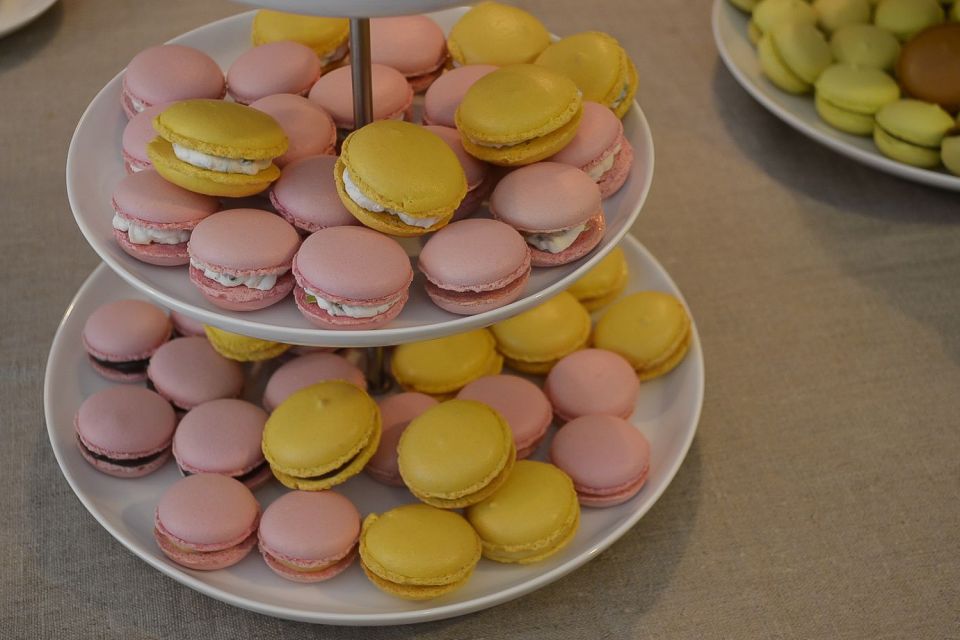
- Italian meringue technique for more reliable macarons than the softer approach
- Piping practice plus adding shell color the way professionals think about it
- Make your own filling (ganache or curd) and learn how to pipe it cleanly
- Small group size (limited to 6) so your instructor can slow down for you
- Teatime with stories—you eat your work while learning the why behind French pastry
- Take-home box so your macarons survive the trip to your next meal plan
Enter Le Foodist: a practical start in Paris
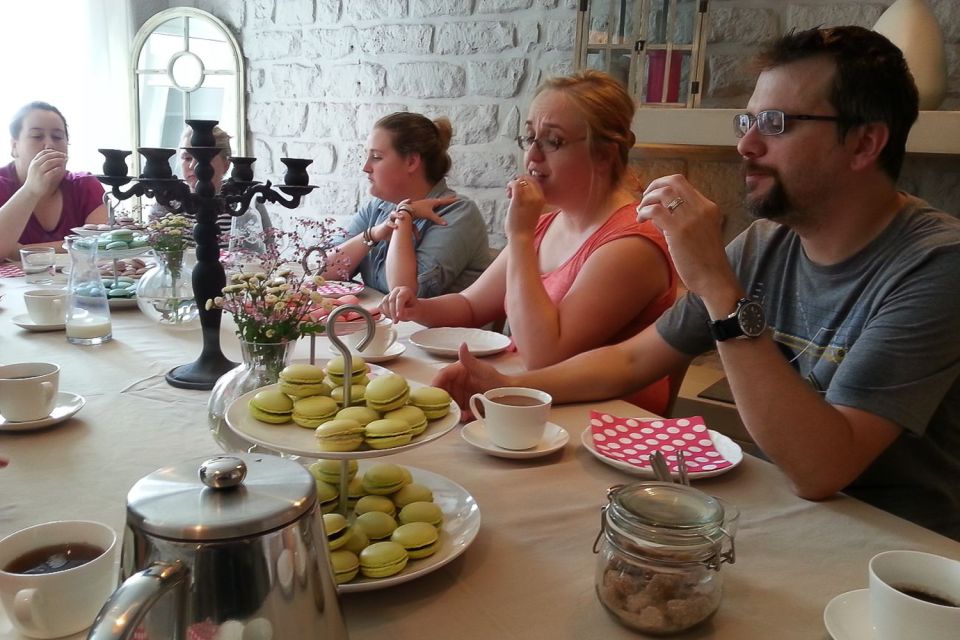
Le Foodist is the kind of place you want for a baking class: you don’t just get a classroom, you get a kitchen. That matters with macarons because the work is technical and fussy—timing, texture, and temperature all play together. The setup helps you see each step clearly, and it keeps your hands moving instead of waiting around.
You meet at 59 Rue Cardinal Lemoine, 75005 Paris, and the class is run in English. The kitchen is limited by design: only participants enter the kitchen, so even if you’re traveling as a group with non-participating friends, they’ll need to wait outside rather than hover over your station.
That rule also keeps the pace from collapsing. If you want a calmer, spectator-friendly experience, this probably isn’t it. But if you want to actually learn how macarons work, it’s exactly right.
You can also read our reviews of more tours and experiences in Paris


The 3-hour flow: from piping station to tea stories
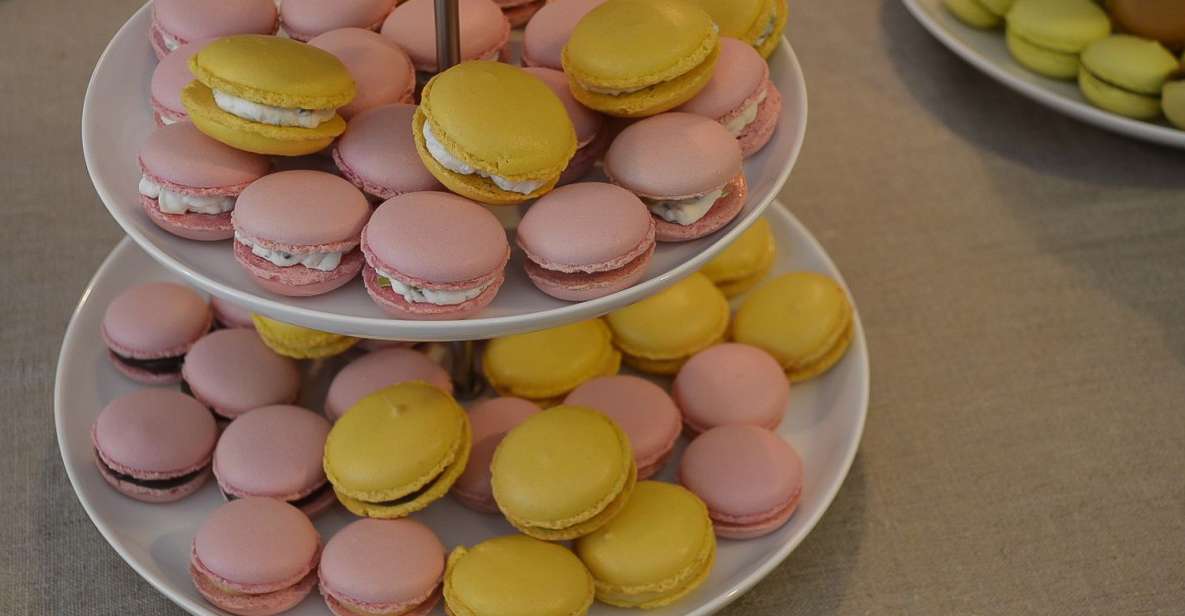
This experience runs about 3 hours total, with 2 hours of macarons class inside the kitchen. The rest of the time goes to set-up, instruction transitions, and the tasting/teatime portion where you slow down and enjoy what you made.
Here’s what the pacing feels like in plain terms:
First, you get shown how to produce the macaron shell batter using the Italian meringue method. That’s a key point: Italian meringue means you’re cooking sugar into the egg whites (rather than folding in raw sugar). The payoff is that the meringue tends to be more stable, which helps you chase the right batter consistency and gives you a better shot at the classic macaron “feet.”
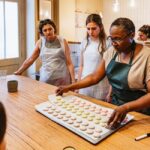
Then you move into the part that feels the most like pastry magic: piping. You’ll learn how to load the bag, how to guide the swirl, and how to make shells that bake more evenly.
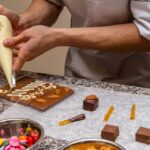
After baking, you shift to the filling work—usually ganache or curd—and then you assemble. That’s when your shell practice becomes real food, not just practice blobs.
Finally comes the teatime: you’re served tea, coffee, fruit juices, and a spread that includes a selection of your macarons. The host shares stories tied to the macaron and French culture, often with humor, so it’s not just a snack break. It’s a way to understand why these little sandwich cookies are taken so seriously in France.
The Italian meringue technique: why this class focuses there
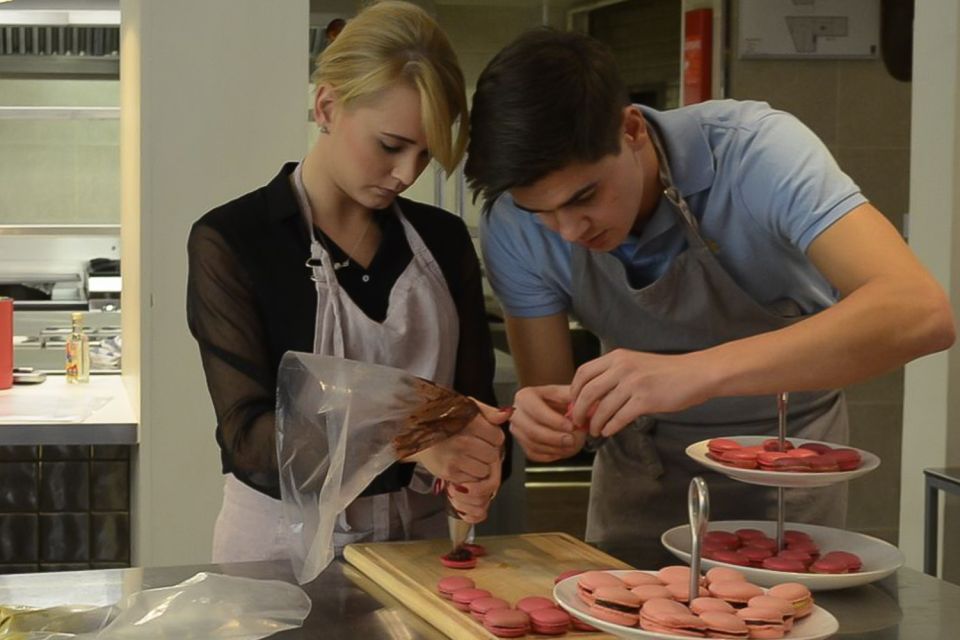
If macarons have ever defeated you, it’s usually because the method is sensitive. Too runny, too thick, too humid, too rough with mixing—any one of these can spoil your shell texture.
This class teaches the Italian meringue approach because it’s considered more reliable for getting the batter structure you need. The steps are very specific: you’re not just “mixing until it looks right.” You’re following a process designed to get a batter that pipes consistently and bakes into shells that hold their shape.
I like that the class frames it as technique, not luck. Once you see the logic—how the meringue’s structure affects the batter flow and the final shell—you stop guessing. That’s the real value if you plan to bake again later at home.
You also get instruction on incorporating a color into the shells. That sounds simple, but it’s practical: color affects how you judge the batter and how it looks under different lighting. It’s easier to learn this in a class where someone corrects your technique while you’re still standing at the counter.
Piping shells and building fillings you control
The class isn’t just about “making macarons.” It’s about learning the two big skills that separate a decent shell from a great one: consistent piping and clean assembly.
Piping: the skill you’ll actually repeat at home
You learn how to pipe shells and then you practice enough that you’ll understand how small adjustments change the result. People often come in thinking piping is the hardest part. In a good class, the instructor makes it feel less mysterious and more mechanical: pressure, timing, and how you finish the piped circle.






Fillings: ganache or curd, your choice to practice
After the shells are done, you create a filling. The class includes ganache or curd options, and you learn how to pipe the filling too. That’s important because even if your shells are perfect, sloppy filling can ruin the clean sandwich look.
This is also where you get creativity without going off-road. You’re not inventing recipes from scratch. You’re learning a method you can repeat, then you can swap flavors later when you’re confident.
Why the teacher matters (and how you’ll notice)
In past sessions, instructors have included people like Stéphane Jimenez, Anne, Luc, Fanny, Frederic, Amanda, Hugo, Florence, and Anna. The through-line is patience and hands-on attention—especially for people who aren’t confident in the kitchen.
That “slow down and help you” vibe is a big deal. Macarons reward repetition, and a good instructor makes you repeat the right thing.
Teatime: what you get besides sugar
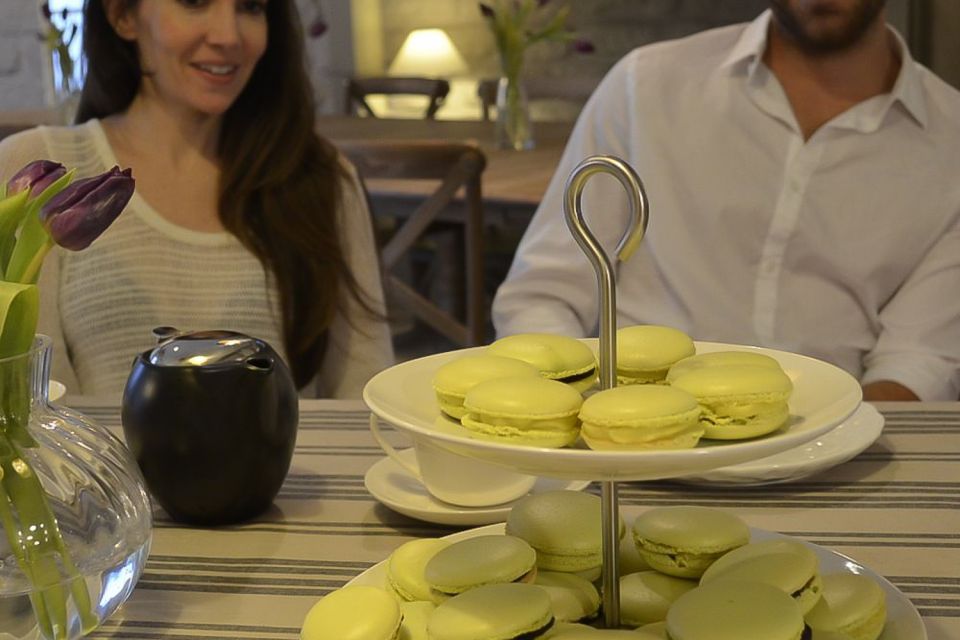
The edible payoff is obvious, but the teatime part is what makes the class feel like an actual Paris experience instead of just another cooking workshop.
You’re served drinks like tea, coffee, and fruit juices, and you eat a selection of your macarons while your host shares macaron history and French culture stories—often lightly teasing, the kind of narration that makes pastry feel human.
This matters because it gives you context for what you’re learning. You’re not just chasing a perfect foot because it looks pretty. You’re learning how technique, ingredients, and culture shaped one of France’s most recognizable sweets.
It also gives you a built-in moment to compare batches. You can look at your shells and others’ and notice the tiny differences that come from technique. That visual feedback is one of the fastest ways to learn, even when you’re just enjoying a cup of tea.
The take-home box: turning class skills into gifts
You leave with a to-go box of your macarons. That changes how you experience the class, because you’re not only baking for the room—you’re baking to share.
The simplest practical advice: treat the box like part of the lesson. Macarons are delicate, and they can get crushed if you shove the box into a bag with heavy items. If you’re heading to another neighborhood after class, pack the box in a stable spot and avoid stacking it under anything you wouldn’t put on your face.
Also, you’ll have recipes in English in two formats: hard copy and electronic copy. That’s perfect for recreating your results later without hunting down notes you scribbled on a napkin.
Price and value: is $152 worth it?
At $152 per person, this is not a cheap bite of Paris. But you’re paying for a few things that add up:
- Hands-on instruction in a small group limited to 6 participants
- A technical method (Italian meringue) with time to practice piping and assembly
- Cooking equipment and an apron included, which saves you the hassle of sourcing anything
- Teatime with drinks and stories
- A take-home box of macarons
- Recipes in English (hard copy plus electronic)
For me, the value hinges on what you want from the experience. If you only want dessert, you can buy macarons for less. But if you want a realistic shot at making macarons at home, the tuition buys time with an instructor and a structured method, not just the final product.
If you’re coming with beginners, the small-group format makes it more likely everyone actually finishes with confidence—not just someone at the front learning while others watch.
Who should book this class in Paris?
This works best for people who want to learn by doing, not by watching.
- Beginners: The format is hands-on and structured, and instructors have a reputation for making skills feel approachable.
- Teenagers and families: The kitchen rules are specific, but many families make it a highlight—especially when teens take pride in doing the work.
- Food lovers who like technique: If you enjoy understanding how something works (not just eating it), the Italian meringue focus plus filling practice will feel satisfying.
Here are the age constraints you need to know:
- Unaccompanied minors are not allowed.
- Children under 12 can’t participate.
- Children ages 12–16 must be accompanied by a participating adult.
- No crèche or childcare facilities are provided.
- Only participants can enter the kitchen, so the experience isn’t set up for a whole entourage hovering at the counter.
So if your plan includes young kids who want to “sit and watch,” this may not match your expectations.
Getting the most out of your macaron day
You don’t need to be a baker before you go. But you’ll have a better time if you come ready for concentration.
- Wear comfy clothes and expect to stand at your station for much of the hands-on portion.
- Keep your phone away during mixing and piping steps, because the work is timing-based.
- If you’re nervous about baking, good. That’s usually when the instruction helps the most. People describe instructors like Anne and Luc as patient and attentive, with real help for each participant.
One small heads-up from an experience described by a participant: having clear written direction plus a space for personal tips matters. You’ll get recipes in English (hard copy and electronic), but if you like extra printed steps or instructor notes, plan to take your own notes during class.
Should you book this macaron class?
Book it if you want a real skill, not just a photo moment. The Italian meringue method, guided piping, filling practice with ganache or curd, and the to-go box make it a high-return Paris activity. The small group size helps you get answers while you’re still in the middle of the process, not after it’s over.
Skip it (or adjust expectations) if you’d rather watch than participate, or if you’re traveling with kids who don’t meet the age rules. And if you’re looking for a very laid-back afternoon, know that the hands-on part is active for about 2 hours—you’ll be working, not drifting.
If you’re the type who wants to learn how French pastry actually gets made, this is one of the best “hands-on Paris” bets you can make.
FAQ
What will I make during the class?
You’ll learn to make macaron shells using the Italian meringue method, including how to pipe and add a color to the shells. You’ll also make a filling (ganache or curd) and assemble your macarons.
How long is the experience?
It runs about 3 hours total, with a 2-hour hands-on macarons class.
How many people are in the class?
The experience is a small group limited to 6 participants.
Where is the meeting point?
Meet at Le Foodist, 59 Rue Cardinal Lemoine, 75005 Paris.
Is the class taught in English?
Yes. The instructor teaches in English, and you’ll receive recipes in English as well.
Can children participate?
Children under 12 years old cannot participate. Ages 12 to 16 must be accompanied by a participating adult. Unaccompanied minors are not allowed.
What do I take home?
You’ll take home a to-go box of the macarons you made, plus you’ll receive recipes in English (hard copy and electronic copy).
Is there free cancellation or a pay-later option?
Yes. You can cancel up to 24 hours in advance for a full refund, and you can reserve now and pay later.