REVIEW · PARIS
Paris: Kids in the Kitchen – Croissant
Book on GetYourGuide →Operated by MUCURISA · Bookable on GetYourGuide
Croissant making for kids can be surprisingly smooth. Here, the focus is hands-on baking with simple tools that feel doable at home, all in a small group meant for families. You start with la mise en place, get guided through Viennoiseries and the story behind croissants, then end with what you made (plus tea or coffee). One thing to know up front: it happens in a 5th-floor walk-up with no elevator, so plan accordingly with strollers or mobility needs.
I especially like how the class is built for younger kids, starting around age 3, without turning into a babysitting session. The instructor style comes across as calm and patient, which matters a lot when you’re dealing with sticky hands and curious questions. I also like that the experience aims to recreate the process you can repeat later, instead of using industrial-grade gadgets that leave you clueless when you get back home.
A possible drawback: with a price of $182 per person and a small class size, it’s best when you’re sure everyone in your group will actually bake (or at least participate). If you’re just looking for a quick foodie snack stop, this may feel like more commitment than you want.
In This Review
- Key things to know before you go
- A small Paris apartment where kids actually bake croissants
- From Austria to the oven: what you learn beyond the recipe
- The la mise en place moment that makes the class feel doable
- Simple tools, not industrial magic: how you can recreate it at home
- A hands-on croissant flow designed for kids (and adults with time limits)
- Private apartment logistics: the part you should plan for
- Language + small-group energy for families
- Price and value: is $182 per person worth it?
- Who should book this croissant class?
- Should you book this croissant experience?
- FAQ
- FAQ
- How long is the Paris Kids in the Kitchen Croissant class?
- How many people are in the group?
- What languages does the instructor speak?
- Is this class suitable for very young children?
- Where does the class take place?
- What is included in the price?
- Do I need to arrange equipment or ingredients?
- What’s the cancellation policy?
- Is there a way to keep my plans flexible?
Key things to know before you go
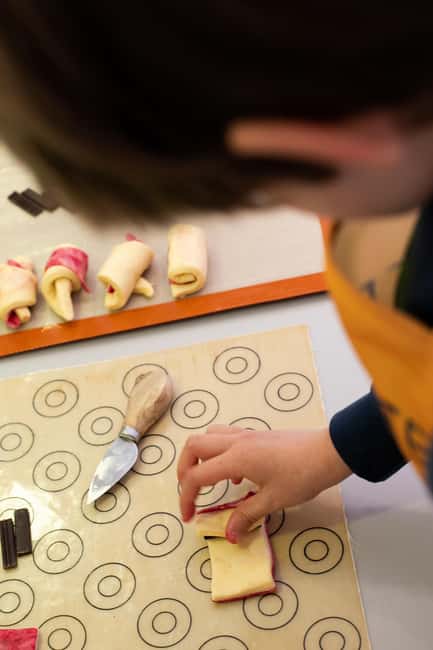
- Kid-first pacing for ages 3+: the activity is designed so kids can handle the steps and stay engaged.
- Simple, at-home tools: you won’t rely on industrial equipment, which makes the technique easier to repeat later.
- A small group of up to 4: you get attention and breathing room, not a factory-feel class.
- La mise en place to the final bake: you’ll learn the workflow, not just the result.
- English/Spanish instruction: useful if your family mixes languages.
- Private apartment setting in Le Marais area: a local feel, but it’s a 5th-floor walk-up.
A small Paris apartment where kids actually bake croissants
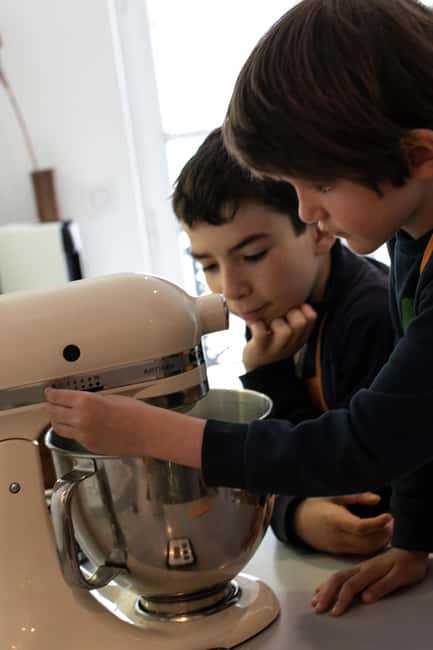
This isn’t a big studio with metal counters and conveyor-belt energy. It’s a private Parisian apartment setting, which makes the class feel closer to a real home meal prep night than a themed show. The whole setup is meant for families: kids join in, adults help guide, and the instructor keeps the work practical and manageable.
The structure is also family-friendly by design. The materials are provided, and kids start with steps that fit their attention span and coordination. You’re not just watching someone else do the hard part while your child presses buttons for entertainment. The goal is for you to leave with real technique, even if you keep it simple.
One practical detail that can affect your day: the meeting location is on a 5th floor with no elevator. That’s not a deal-breaker for many families, but it’s worth planning for. If you’re traveling with a stroller, heavy bags, or a child who gets tired on stairs, go in with a realistic plan for the climb.
You can also read our reviews of more tours and experiences in Paris.



From Austria to the oven: what you learn beyond the recipe
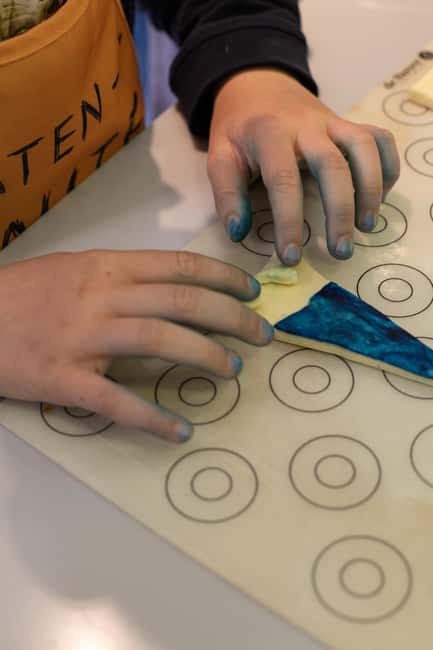
You’ll start the class with a quick origin lesson, because croissant lore doesn’t begin in a Paris bakery. In this course, you’ll cover the idea that croissants were created in Austria, then you’ll move through the timeline and techniques behind Viennoiseries.
That sounds broad, but it’s not just trivia tossed out for fun. The point is to connect the dough to the broader pastry tradition. When you understand what the technique is trying to do, the steps make more sense. For example, dough handling and folding aren’t random. They’re part of how you build texture and layers.
Then the practical side kicks in: you begin with la mise en place, which means you set yourself up to work smoothly. You’ll learn how to organize what you need, when you need it, and how to avoid the classic home-baker problem of stopping mid-step because you can’t find something or don’t know the next move.
For families, this workflow lesson is a win. Kids get a clear sequence, and adults get fewer surprises. No one wants to be improvising flour emergencies in a Paris apartment with limited time.
The la mise en place moment that makes the class feel doable
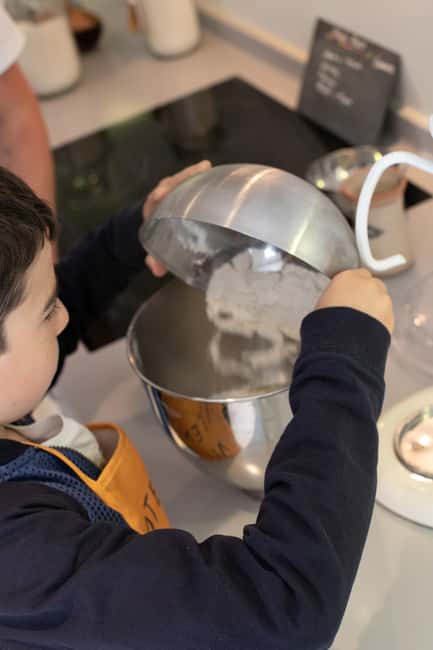
La mise en place is one of those cooking terms that can sound fancy until you actually use it. Here, it’s where the class becomes practical and repeatable. Before the dough gets worked, you’ll get everything you need laid out, explained, and ready.
Why this matters: croissant dough isn’t forgiving in the way a quick bread recipe can be. If you’re scrambling for tools, forgetting steps, or letting things sit too long, the final result suffers. The class helps you build a rhythm so you can keep moving even with kids in the room.
You’ll also get a feel for the pace that works with younger participants. The instructor breaks tasks into manageable chunks, so kids aren’t stuck waiting while adults do all the labor. That’s one of the reasons the experience is recommended for families with smaller kids.
If your goal is to bake at home later, this is the part that really sticks: you’re learning how to set up, work through, and keep control, not just which ingredients to buy.
Simple tools, not industrial magic: how you can recreate it at home
One of the most valuable promises of this class is that you use simple tools, the kind you might actually have at home. This is huge. Many cooking classes use equipment that feels impossible to replicate unless you’re setting up a pastry workshop.
Here, the emphasis is on recreating the experience with what you already can find. That means you can take home a technique mindset instead of a wish list of bakery-only gadgets.
Why that matters for real-life value: if you can repeat what you learned, your $182 per person has a longer payoff than a one-time activity. You’re not just buying an evening out. You’re buying skills you can try again when you’re back in your own kitchen.
It also keeps things realistic for kids. If they understand the process with tools that behave like normal kitchen tools, they’re more likely to feel confident about participating again in the future.
A hands-on croissant flow designed for kids (and adults with time limits)
The class is 90 minutes, so it’s paced to move. That time limit is actually helpful. Croissant-making can be a multi-day project at home, but this experience is designed to teach the core steps in a way kids can experience in one session.
You’ll work through enough of the process to feel the logic behind the dough. You’ll also get practice with the steps that are easiest to learn early: preparation, careful handling, and following instructions in order. Adults will still lead, but kids get meaningful participation.
From the tone of the experience, the instructor approach matters. People highlight patience and kindness, and that shows up in how the class likely handles the inevitable: flour spills, questions mid-step, and the need to slow down when a child is learning by doing.
In practical terms, a small group of up to 4 participants makes a difference. With fewer people, it’s easier to guide each set of hands and correct issues without turning it into a rushing line.



Private apartment logistics: the part you should plan for
Let’s talk practical comfort, because it’s the difference between a smooth class and a stressful one.
- You’re meeting at a private apartment on the 5th floor with no elevator. Plan for stairs.
- The environment is compact compared to a large cooking studio. That can be great for family bonding, but it does mean space is shared.
- The class is limited to 4 participants, so it’s not crowded, but you should still dress for a hands-on food activity.
You’ll also borrow an apron, and you’ll have coffee or tea included. That’s a small detail, but it helps with the overall pace. After the work, you’re not immediately rushing off with nothing to sip.
Finally, the instructor is listed as teaching in English and Spanish. If your family includes either language, you should feel comfortable asking questions and following along.
Language + small-group energy for families
If you’re traveling with kids, language isn’t just about comfort. It’s about confidence. When instructions land clearly, kids can participate instead of freezing.
The class being offered in English and Spanish makes it a good option for mixed-language families. It also likely helps the instructor explain steps more clearly and correct technique without confusion.
The small group size (maximum 4 participants) also keeps the class from feeling like a performance. Kids can hear directions, ask questions, and stay focused. Adults get time to help rather than feeling like they’re holding up the whole table while waiting for the next cue.
And because it’s kid-oriented, you can expect an environment where messy learning is part of the deal. Croissants are delicate enough without treating the class like a museum.
Price and value: is $182 per person worth it?
At $182 per person for a 90-minute class, this is not the cheapest cooking activity in Paris. But it also isn’t trying to be.
Here’s the value logic that makes sense for the right family:
- You’re paying for hands-on learning, not a passive tasting.
- You get all main materials plus an apron and coffee/tea included.
- The instruction is in small-group format (up to 4), which is usually where quality comes from.
- Most importantly, the tools are not industrial, so you can actually try again at home.
If your kids are around the intended age range (starting from about 3 years old), and you want a memorable family activity that feels local and practical, the price can feel reasonable. If your main goal is just a quick taste of Paris, you’ll probably want a different type of experience with lower commitment.
Who should book this croissant class?
This experience is a strong match if you want a family activity that has structure and real participation.
It’s especially suitable for:
- Families with kids 3+ who can sit through a guided cooking session
- Parents who want a repeatable skill, not only a fun night out
- Friends or family groups looking for a private-style class in a home setting
- Anyone comfortable with a small group and ready to work a bit with dough
It’s not suitable for children under 2 years old. If you’re traveling with very young children, the apartment setting and focused cooking process probably won’t be the right fit.
Should you book this croissant experience?
If you want a Paris activity where kids actively participate, not just watch, this is the kind of class that fits. The combination of kid-friendly design, a small group, and simple tools you can replicate at home makes it more than a one-off souvenir evening.
I’d book it if your family enjoys hands-on food, you can handle stairs to a 5th-floor walk-up, and you’re ready for a guided baking session that teaches technique. I’d skip it if your group is mainly looking for a low-effort tasting stop or if mobility limits make the stair climb tough.
FAQ
FAQ
How long is the Paris Kids in the Kitchen Croissant class?
The class lasts 90 minutes.
How many people are in the group?
It’s a small group limited to 4 participants.
What languages does the instructor speak?
The instructor teaches in English and Spanish.
Is this class suitable for very young children?
It is not suitable for children under 2 years old. The experience is designed for kids starting 3 years old and families.
Where does the class take place?
It takes place in a private Parisian apartment in Ile-de-France, on a 5th floor with no elevator. You’ll follow the provided directions for reaching the apartment.
What is included in the price?
The class includes all main materials, a borrowed apron, and coffee/tea.
Do I need to arrange equipment or ingredients?
No. All main materials are included, so you won’t need to bring ingredient supplies for the class.
What’s the cancellation policy?
There is free cancellation up to 24 hours in advance for a full refund.
Is there a way to keep my plans flexible?
Yes. You can reserve now and pay later, meaning you can book without paying immediately.