REVIEW · PARIS
Paris Guided Bike Tour
Book on GetYourGuide →Operated by ParisCityVision · Bookable on GetYourGuide
Paris by bike feels like cheating—in the best way. This 3-hour ride pairs iconic monuments with calmer lanes and the kind of guide-led stories that actually stick. I especially like the small group size (max 12) and the fact that guides keep the pace thoughtful, so you’re pedaling when it matters and pausing when it doesn’t. One thing to consider: you do need a solid enough cycling level, and this isn’t set up for wheelchair users.
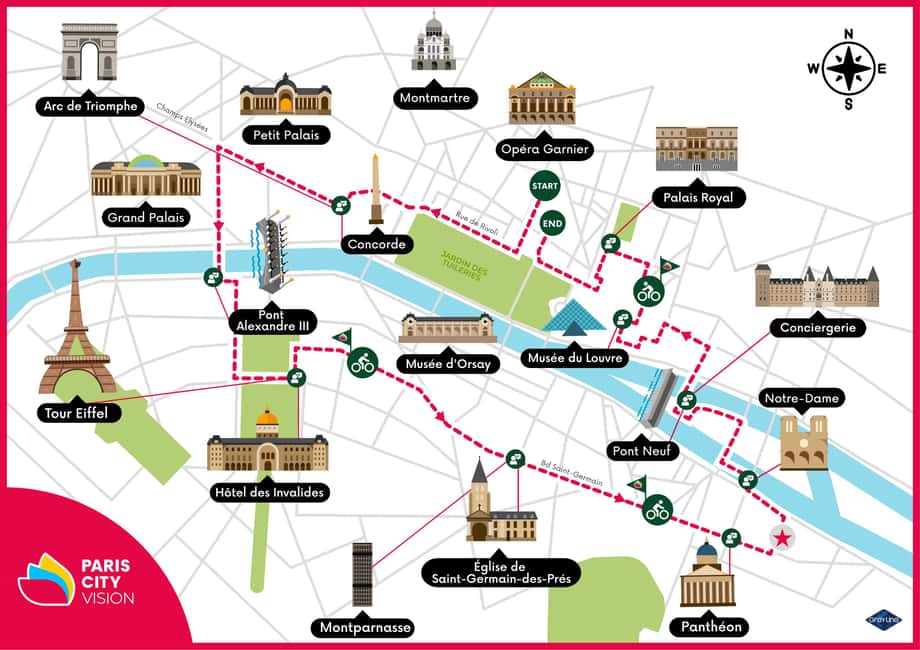
Starting near the Louvre and ending back at the Louvre, the route is designed to help you cover a lot of ground without turning your day into a slog. You’ll glide past big-ticket landmarks and also slip through more confidential, residential-feeling streets where you can breathe and take photos. A likely drawback is also the same reason it’s fun: since it’s a bike tour, entrance fees aren’t included, so you’ll be admiring many sites from the outside.
If you like history, but also like when it comes with real street-level color, this tour fits well. You can ask questions, get filming-location notes, and hear Parisian habit explanations along the way. Dress for weather, arrive about 15 minutes early, and plan for a ride that’s active enough to feel like doing something, not just watching.
In This Review
- Key highlights
- Starting at Paris City Vision: getting rolling fast near the Louvre
- Palais-Royal and the Louvre zone: where the tour finds its rhythm
- Pont Neuf to Île de la Cité: bridges, angles, and Notre-Dame from the bike
- The Latin Quarter and Saint-Michel: stories you can feel in your legs
- Les Invalides, the Seine, and Pont d’Alma: classic Paris viewpoints on two wheels
- Eiffel Tower to Arc de Triomphe: big monuments, measured pacing
- Place de la Concorde to Saint-Germain-des-Prés: culture in the calmer back half
- Finishing at the Louvre: a tour that ends where the day starts
- Guides, pace, and the “small details” that make it worth $43
- Who should book this bike tour—and who should skip it
- Quick practical tips before you ride
- Should you book this Paris guided bike tour?
- FAQ
- Where does the tour start?
- How long is the Paris guided bike tour?
- How much does the tour cost?
- What languages are offered for the live guide?
- Is monument entrance included?
- Are food tastings included?
- What cycling ability is required?
- What is the minimum age for the tour?
- Is the tour wheelchair accessible?
- What is the group size limit?
Key highlights
- Small groups (max 12) that make stop timing feel human
- Expert guides who match the pace and answer questions on the fly
- A route that mixes icons and quieter streets for photos that don’t look like everyone else’s
- Lots of “look here” moments from bridges to palaces to viewpoints along the Seine
- Sweet-food inspiration from your guide (tastings are not included)
Starting at Paris City Vision: getting rolling fast near the Louvre
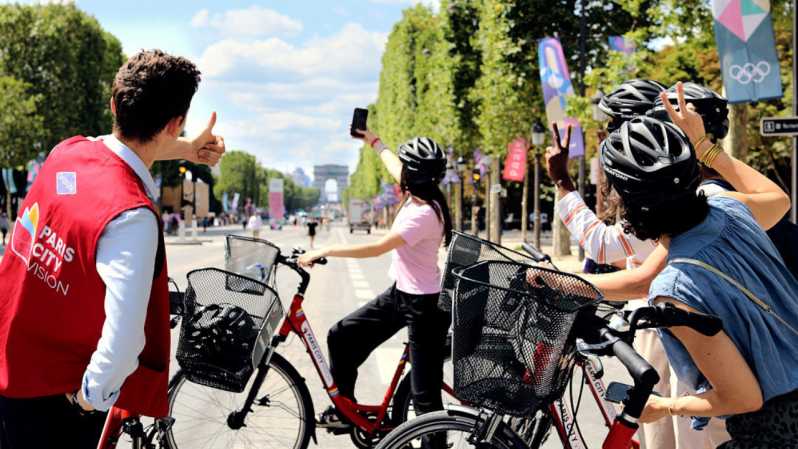
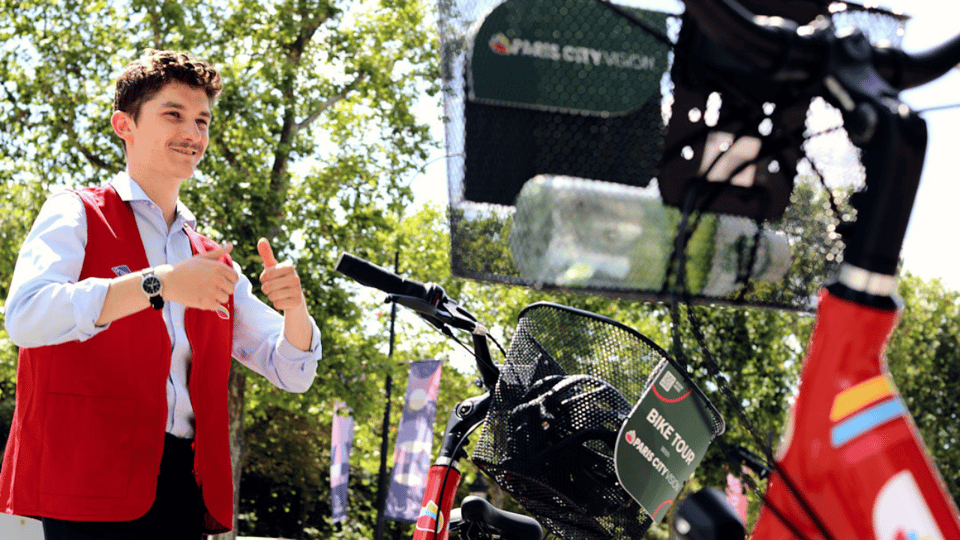
The tour launches at ParisCityVision, 3 Place des Pyramides (75001), right in the central zone where you want to be if you’re trying to maximize time. Plan to arrive roughly 15 minutes early so you’re not rushed when the group is getting bikes sorted and everyone is getting comfortable.
What I like about this setup is the logic: you start close to the Louvre area, where the city is dense with landmark energy, then you move through the core without wasting time crossing faraway neighborhoods. And because you end at the Musée du Louvre, it’s easy to fold this into a broader day plan—like a museum visit right after, or a late stroll when the crowds thin.
The ride is built for a group, but it’s not rigid. Stops can vary in frequency depending on how the group is doing. That matters more than people think. In Paris, you want brief pauses for photos and stories, but you don’t want to spend half your time waiting at intersections.
You can also read our reviews of more cycling tours in Paris
Palais-Royal and the Louvre zone: where the tour finds its rhythm
Your first stretch takes you through the Palais-Royal area, a spot that helps you understand the “Paris layers” feeling fast: grand architecture nearby, side streets and passageways around the edges. From a bike, you can spot viewpoints and angles you might miss walking through busy areas.
Then you roll into the Louvre area itself. You’re not going in for a ticketed visit on this tour, but you’re in position to see how this part of Paris works spatially: the wide boulevards for scale, the surrounding streets for texture. A good guide will point out details and explain why certain views matter historically and culturally, without turning it into a lecture.
If your priority is monument photos, this first phase is efficient. If your priority is biking comfort, it’s also a smart warm-up: you’re pedaling in a controlled, guided environment while everyone gets synced.
Pont Neuf to Île de la Cité: bridges, angles, and Notre-Dame from the bike
Crossing Pont Neuf is one of those Paris moments that feels instantly recognizable, even if it’s your first time here. The bike format helps because you pass it with momentum—you’re not stuck at a standstill. You get that “moving postcard” effect, plus the chance to stop briefly for pictures with a guide telling you what to notice.
Next up is Place Dauphine, which gives you a quieter pause before the big emotional payoff: the Cathédrale Notre-Dame de Paris and Île de la Cité. From the bike, the river geography clicks. You’re seeing how the island sits in the Seine, and why it has been such a central stage for centuries of Paris life.
Practical note: this portion is visually intense, so it’s worth keeping your phone accessible but not stopping too often on your own. Let the guide manage the timing. That’s part of why the tour feels smooth.
The Latin Quarter and Saint-Michel: stories you can feel in your legs
Once you head into the Latin Quarter, the vibe shifts. The area around the Sorbonne and the Fontaine Saint Michel is where Paris history has a student-and-street energy. Bikes help here because you can cover the blocks quickly while still getting the sense of how people actually move through the neighborhood.
Your guide doesn’t just point at landmarks. You’ll get anecdotes and historical and cultural facts that are meant to connect to what you’re seeing, not just recite dates. If you’re the type who asks questions—about local habits, film locations, or why a street is laid out a certain way—this tour is set up for that. The guide is dedicated to the group and answers what you ask.
One highlight is the stop passing by Restaurant La Fontaine Saint Michel. Even though tastings aren’t included, it’s a useful waypoint because it anchors you in the real “this is where people go” side of Paris, not only the sightseeing postcard version.
Les Invalides, the Seine, and Pont d’Alma: classic Paris viewpoints on two wheels
As you roll toward Les Invalides, you get a sense of Paris as a city of ordered grandeur. Les Invalides isn’t just a building here—it’s a focal point that frames the next river views.
Then comes the stretch along the Quai de la Seine. This is one of the reasons bike tours in Paris work so well: you’re moving through the city’s main “spine” without waiting in line for a single viewpoint. You also get chances to see how bridges connect neighborhoods, not just as structures but as movement corridors.
You’ll pass Pont d’Alma, and from there the route builds toward the Eiffel Tower. You don’t need to be inside to feel the scale. In fact, the bike angle can be better than standing still, because it gives you a sense of distance and approach.
A drawback to keep in mind: this area can be busy, like most central Seine zones. That’s why group size and guide control matter. With max 12 people and stop flexibility, the tour generally keeps you from feeling swallowed by the crowd.
You can also read our reviews of more guided tours in Paris

Eiffel Tower to Arc de Triomphe: big monuments, measured pacing
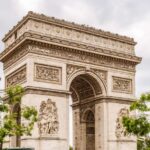
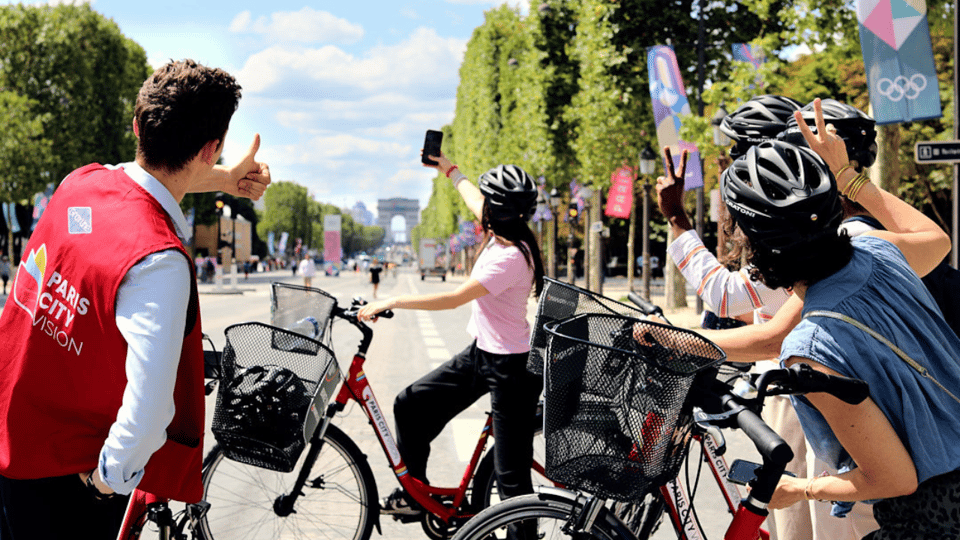
After you’ve built up the Eiffel Tower moment, the ride pushes you into the grand axis territory: Arc de Triomphe and Champs-Élysées. These are iconic enough that you already know what they look like—but the value here is the way you experience them as part of a continuous Paris walk/bike system.
You’ll pass Alexandre III Bridge before reaching the area of the Arc. That bridge detail matters because it’s one of those “Paris loves symmetry and spectacle” places. Seeing it while moving helps you appreciate the design rather than just the name.
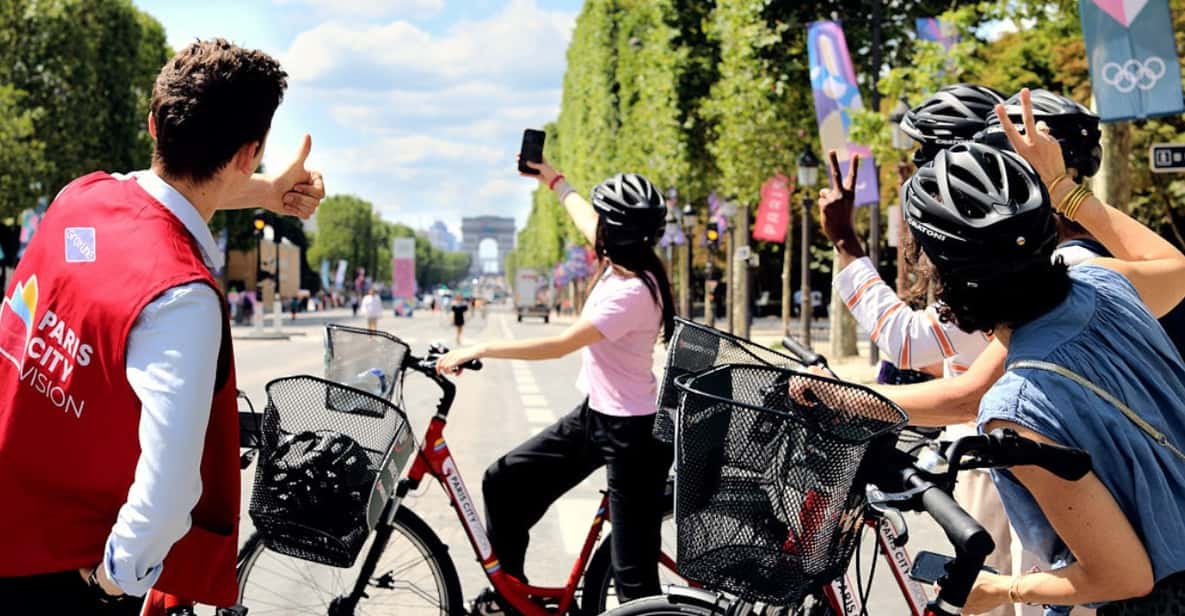
Then you glide through Champs-Élysées, with pauses that let you orient yourself. You’ll also pass Grand Palais and Petit Palais, two buildings that work like bookends for how Paris blends showmanship with civic architecture. From a bike, you can catch the proportions quickly, and your guide can help you understand what you’re looking at and why it matters.
Place de la Concorde to Saint-Germain-des-Prés: culture in the calmer back half
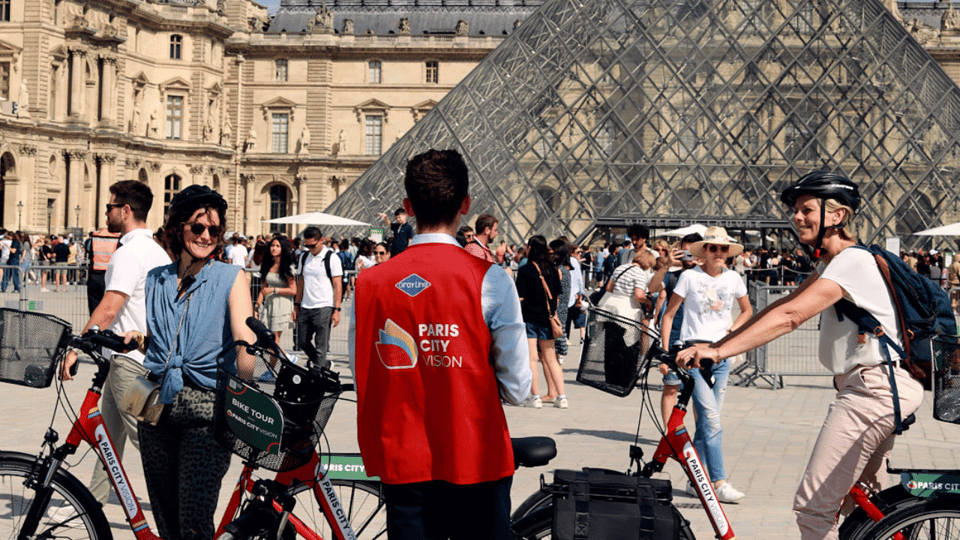
Next is Place de la Concorde, a huge open space that can feel intimidating if you’re walking alone. On a bike with a guide, it becomes a breather point: wide views, easy orientation, and enough room to take photos when it fits the group.
From there, you transition into Saint-Germain-des-Prés, where the tone gets more literary and neighborhood-like. This is a good moment to refocus your brain: less “main monument runway,” more “Paris as everyday culture.”
You’ll also pass La Comédie-Française, a landmark that adds a different kind of history—performance and arts—into the mix. The value isn’t just that it’s famous. It’s that it keeps your afternoon from becoming only stone-and-steel sightseeing.
Finishing at the Louvre: a tour that ends where the day starts
You end back at the Musée du Louvre. I like endings that make practical sense. You’ve already oriented yourself through the city core, so wrapping at the Louvre area lets you continue naturally: museum time, café time, or an evening walk with less need to figure out transport.
Because the tour is designed around efficient coverage, it’s ideal as a first-day anchor. You’ll understand the city’s layout—rivers, bridges, and the big monuments axis—so later you can explore on your own with less guesswork.
Guides, pace, and the “small details” that make it worth $43
This tour is priced at $43 per person for 3 hours, and it’s worth looking at what’s included rather than just the number. You get a guided visit by an experienced guide, plus a bike-based way to cover a tight loop of major landmarks and quieter streets.
You’re not paying for entrance tickets. You are paying for:
- someone choosing the route and pacing,
- interpretation along the way,
- and the chance to see more with less time spent stuck in transport.
That guide-led part is what really drives the value. You’ll hear facts that are meant to interest you, anecdotes that help places make sense, and practical “how locals think about this” color. Guides like Andrea and Hugo are described as friendly, attentive, and skilled at combining facts with fun stories, and that fits the tour’s overall feel: clear, engaging commentary that doesn’t waste time.
Also, you’re told to expect flexibility: stops can be more frequent or fewer depending on the group. That’s a small detail, but it changes everything about how the tour feels when you’re tired or if your group is enthusiastic about photos.
Who should book this bike tour—and who should skip it
This is a strong fit if you:
- want to see the big Paris sights without spending the day in taxis or transit,
- enjoy stories and want a guide who can answer questions,
- like a ride that includes photo moments but keeps moving,
- are comfortable cycling enough to handle a city biking environment.
It may not be the best match if you:
- need wheelchair accessibility (this tour isn’t suitable for wheelchair users),
- are nervous about cycling for 3 hours and changing speeds with the group,
- want a ticketed inside monument experience (entrances aren’t included).
There’s also a clear age guideline: minimum age is 13. Children’s bikes are suitable for ages 13 to 17 or about 130 cm / 4’2″, depending on height and cycling ability.
Quick practical tips before you ride
- Check the weather. A bike ride in rain or wind can feel longer than planned, even if the tour is only 3 hours.
- Wear comfortable cycling-friendly clothing and shoes you can move in.
- Keep your expectations realistic: you’ll see many landmarks, but not all monuments from the inside.
- Bring a good attitude for tight-core city cycling. The guide helps you through it.
Should you book this Paris guided bike tour?
Yes, if you want the smartest “first taste of Paris” by bike and you’re comfortable cycling in a group. The small-group approach, the mix of monuments with calmer streets, and the guide’s ability to keep the content practical are the reasons to pick it. At $43 for 3 hours, it’s also a good value if you’re trying to pack a lot into one day without getting worn out.
If you mainly want museum tickets or full monument entry, consider pairing this with separate timed entries. And if cycling makes you nervous, you may want to look for a less active option. But for many people, this is one of the most efficient ways to see central Paris with a real human guide doing the thinking for you.
FAQ
Where does the tour start?
It starts at ParisCityVision, 3 Place des Pyramides, 75001 Paris.
How long is the Paris guided bike tour?
The duration is 3 hours.
How much does the tour cost?
The price is $43 per person.
What languages are offered for the live guide?
The live tour guide is available in English, Spanish, and French.
Is monument entrance included?
No. The tour does not include entrance to the monuments.
Are food tastings included?
No. Tastings are not included.
What cycling ability is required?
A certain level of cycling ability is required, and the tour is for everyone but not described as beginner-free. You should be comfortable cycling with the group.
What is the minimum age for the tour?
The minimum age is 13.
Is the tour wheelchair accessible?
No. It is not suitable for wheelchair users.
What is the group size limit?
Groups are reduced to a maximum of 12 people.