REVIEW · PARIS
Paris: Eiffel Tower and Notre Dame Night Tour by E-Bike
Book on GetYourGuide →Operated by XL Tour Paris · Bookable on GetYourGuide
Paris is prettier after dark, and this ride is the shortcut. You glide past big-name landmarks with less street stress than daytime traffic, using mostly bike lanes and sidewalks. The moonlit Eiffel Tower and the Gothic drama of Notre-Dame are the main draws, with your guide filling in the story as you go.
Two things I especially like: you get a proper guided flow through downtown sites without spending time figuring out transport, and the e-bikes make it realistic for a wide range of fitness levels. The main drawback to think about is simple: it’s not for everyone. This tour isn’t suitable for pregnant women, people with mobility impairments, or wheelchair users, and there’s also a height minimum of 155 cm / 5’01 for adults.
If you want to see the classics in a compact window, this is one of the more practical ways to do it—especially if you like city lights, bridges, and river views more than museum time.
In This Review
- Key points worth knowing before you ride
- Paris at night on an e-bike: why this format works
- Meet at 10 Rue de la Paix: setup, gear, and first moments
- How the route keeps you comfortable: bike lanes, motor help, and timing
- From the Louvre area to Trocadéro: the core landmarks you’ll actually see
- Eiffel Tower magic at night: Trocadéro viewpoints and what to watch for
- The guide factor: stories, safety, and Tomas taking your photos
- Price and value: what $116 includes, and what it doesn’t
- Weather, safety, and who should skip this ride
- Should you book this Paris e-bike night tour?
- FAQ
- How long is the Eiffel Tower and Notre-Dame night e-bike tour?
- Where do I meet the guide?
- What’s included in the price?
- Do I need to pay for museum or attraction entry during the tour?
- Is the tour only for good weather?
- What should I wear or bring?
- Are there footwear restrictions?
- Is there a height requirement?
- Who is this tour not suitable for?
Key points worth knowing before you ride
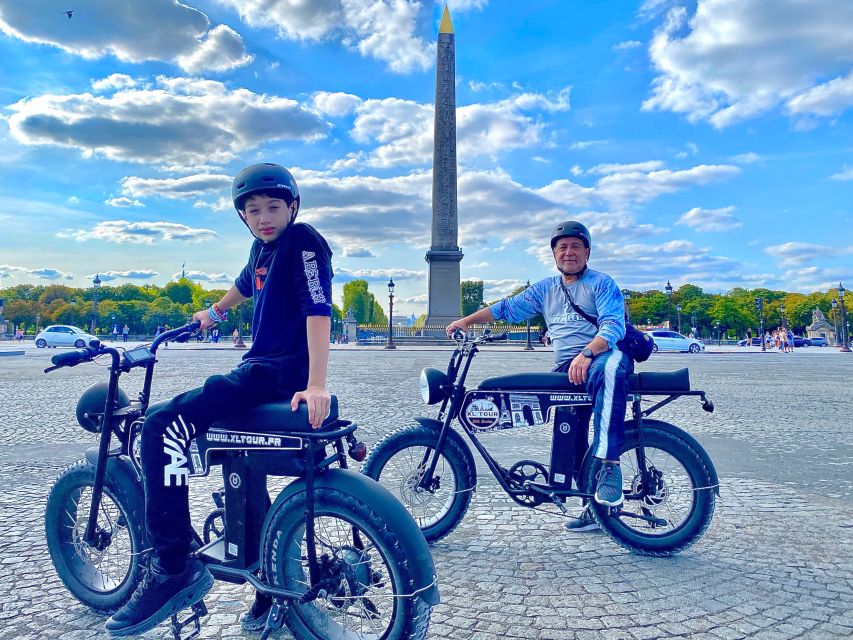
- Mostly bike lanes and sidewalks keep the ride calmer than you’d expect on major streets
- E-bike assist + a quick test ride help you feel steady before the route really starts
- Photo-friendly stops at major landmarks, with the guide taking pictures (and sharing them after)
- Rain or shine means you need to dress for weather, not for perfect skies
- A guided “lights and landmarks” route covers the Louvre area to Notre-Dame to the Eiffel Tower in about 2 hours
Paris at night on an e-bike: why this format works
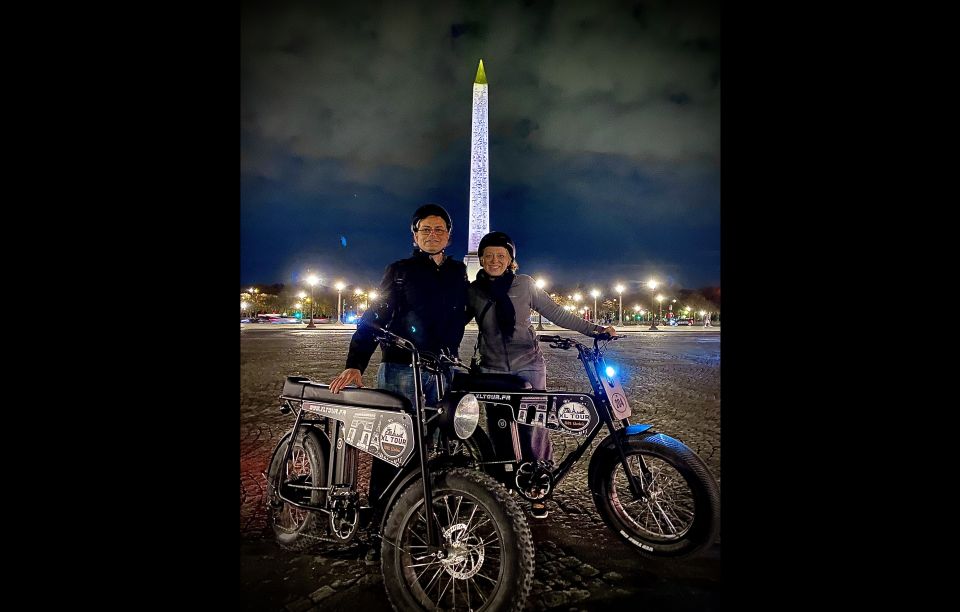
Night tours in Paris can fall into two buckets: slow walking lines that burn time, or bus rides where you barely feel connected to the streets. This one sits in the middle. You move fast enough to hit the big sights, but you’re still close to the city—curbs, gates, bridges, and glowing facades.
The real win is that it feels like an easy local rhythm. The e-bike motor takes the edge off hills and stop-and-go traffic, so the ride stays fun instead of turning into a workout you regret. And because the route is planned around bike paths and sidewalks, you spend less time dodging lanes and more time enjoying the nighttime atmosphere.
This also suits travelers who want a structured plan without losing the feeling of being out in the open. You’ll see a lot of Paris in 2 hours, but you’re not stuck in one view forever.
You can also read our reviews of more cycling tours in Paris
Meet at 10 Rue de la Paix: setup, gear, and first moments
Your tour begins at 10 Rue de la Paix, at a technical area inside the car park. If you don’t spot the guide or bikes right away, don’t panic. The guide will come upstairs to meet you once you arrive at the park.
After you meet up, there’s a safety briefing and then the practical part: you get helmet and equipment, and you’ll do a quick test drive. This matters because e-bikes behave differently than you might expect at low speed—especially when you’re navigating curbs, turns, and tight corners. If it’s your first e-bike, that test ride is the difference between feeling relaxed and feeling rushed.
Before you go, prepare for the clothing reality. Bring comfortable shoes and comfortable clothes. Avoid high-heels and avoid sandals or flip-flops and any open-toed footwear. Also, no alcohol or drugs, and no alcoholic drinks in the vehicle. It’s a straightforward riding tour, not a party bus.
One more requirement: adults need to be at least 155 cm (5’01) to ride.
How the route keeps you comfortable: bike lanes, motor help, and timing
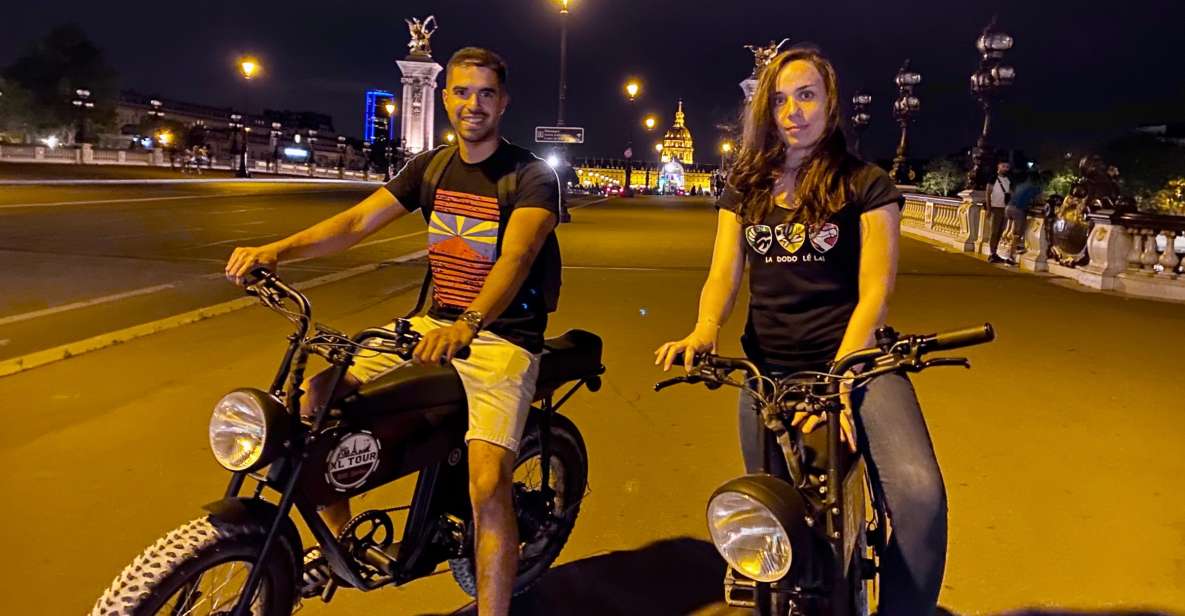
The route is designed to be mostly on bike lanes and sidewalks. That’s not just comfort—it changes how you experience Paris at night. You get calmer motion, fewer chaotic lane changes, and more time to look at details around you.
You’ll also get guide pacing, which helps in a city where streets can feel unpredictable after dark. The flow is built around sightseeing stops with short guided moments, so you can focus on the view instead of the logistics of where to turn next.
As a rule, plan to be alert but not stressed. E-bike assist lets you keep up without sprinting, and your guide can explain what to watch for—like which bridge to look at, or which church facade carries the best nighttime angle.
If you’re the type who enjoys seeing a lot of places without spending the entire evening sitting, this route’s structure fits well.
From the Louvre area to Trocadéro: the core landmarks you’ll actually see
This tour is a guided loop through central Paris, stitched together by ride time that feels quick and continuous. Here’s the heart of it, in the order you’ll experience it.
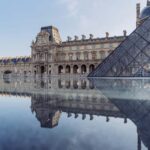
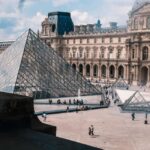
Louvre area (Louvre Museum + Carrousel shopping center)
You start by heading toward the Louvre zone, where the city energy shifts from quiet residential streets to the big landmark area. The guide points out what matters visually and historically, but the main goal here is orientation: you’re learning where Paris’s major sight lines and royal-court geography sit relative to each other.
Tuileries Gardens
This stretch gives you greenery and open space without losing the skyline. It’s a nice pause in the ride rhythm, especially at night when street noise drops. You’ll also catch views tied to the nearby river area—handy if you like Paris in layers: gardens up close and monuments in the distance.
Pont Neuf (and the river’s viewpoint rhythm)
Pont Neuf is one of those bridges you feel instantly, even if you don’t know all the specifics yet. Your guide helps you read it—why this bridge matters and what to notice as you ride through the line of sight between banks.
Pont des Arts and Conciergerie
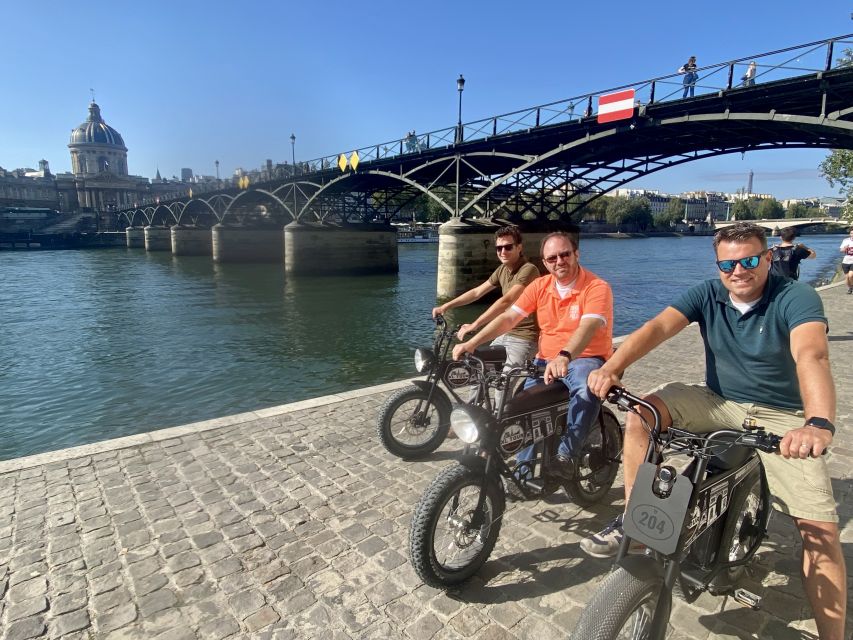
Pont des Arts is a classic photo zone, and the timing at night can make it less overwhelming than daytime. The Conciergerie stop adds architectural and historical context while still keeping things moving. You get the feeling of Paris not as a list of icons, but as a city built on layers of changing power.
Sainte-Chapelle and Notre-Dame Cathedral
These are the cathedral stops, and they’re visually dramatic at night. Sainte-Chapelle is a Gothic showpiece, and Notre-Dame is the headline: your guide highlights the facade and the rose window details, so you know what you’re looking at instead of just admiring the outline.
Short guided stops help here. Cathedral exteriors can be busy visually, and a guide turns what could be a quick glance into something you’ll remember.
Institut de France and love locks on the Arts Bridge area
After Notre-Dame, you ride through the Seine corridor again, where bridge culture and city symbolism show up fast. You’ll see the Institute of France area and the love locks on the Arts Bridge. Even if you don’t obsess over the locks themselves, the stop is a reminder that Paris isn’t frozen in time—it’s constantly reinterpreted by people passing through.
Musée d’Orsay (and the former station idea)
Orsay is a smart stop because it changes how you think about the building. The museum sits in a structure tied to trains and the way the city moved in earlier eras. At night, that contrast—grand architecture with modern-day museum life—feels especially clear from the street.
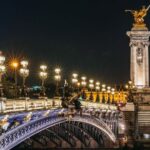
Pont Alexandre III
This is one of those bridges where scale and design do the talking. Riding past it with the guide’s pointers helps you notice the space and the way the bridge frames the surrounding landmarks.
Grand Palais and Petit Palais
These two stops add variety. Grand Palais is the bigger, more monumental feeling. Petit Palais is smaller and easier to overlook if you’re only chasing the biggest names. Having both in one evening is a good way to keep your mental map accurate.
Eiffel Tower approach from the riverbank angles
As you get closer, the route is built around viewpoints that make the Eiffel Tower feel like part of the city rather than an isolated object. You’ll end up near the Trocadéro Gardens viewpoint and see the tower up close in the night light.
Palais de Chaillot, Palais de Tokyo, and the modern classic contrast
This is where the tour stays interesting. You’ll see the immensity of Palais de Chaillot, then pass by Palais de Tokyo for a modern-art contrast. The guide also helps you appreciate how the “great and small palace” idea plays out in scale and design—useful if you tend to get numb from too many monuments.
Place Diana (Liberty Flame in Lady Diana square)
This stop connects the US and France through the Liberty Flame. It’s not just a symbolic moment. It gives you a quick emotional break from the big stone landmarks and makes the route feel less like a checklist.
Alexandre III bridge again in spirit, then Vendôme and Concorde squares
You’ll ride by and see space planning in action, particularly around Place Vendôme and Place de la Concorde. These are the kinds of places where you can understand Paris’s planning approach better when you experience them from moving bike-level perspective.
Place de la Concorde and Les Invalides
Concorde is wide, bright, and night-friendly—perfect for seeing the city’s scale. Les Invalides adds a different mood: more solemn, more anchored, with a distinct historic presence.
Then you finish back where you began at 10 Rue de la Paix.
Eiffel Tower magic at night: Trocadéro viewpoints and what to watch for
The Eiffel Tower is the reason many people choose this tour, and it delivers in a specific way: you’re not just seeing a tower. You’re seeing it set against the Seine corridor and the grand architectural stage around it.
From the viewpoint across the water in the Trocadéro Gardens, the tower’s scale lands differently than from street level. It looks taller, cleaner, and more “composed” in the frame. Your guide also helps you time what to look for as the city lights reflect and shift.
If you’re photographing, this is the moment to slow down and let your eyes adjust. The best shots often come from steady framing rather than snapping while you’re still figuring out your angle.
You can also read our reviews of more evening experiences in Paris

The guide factor: stories, safety, and Tomas taking your photos
A lot of night tours promise knowledge. The real value here is that your guide keeps things moving while still adding meaning.
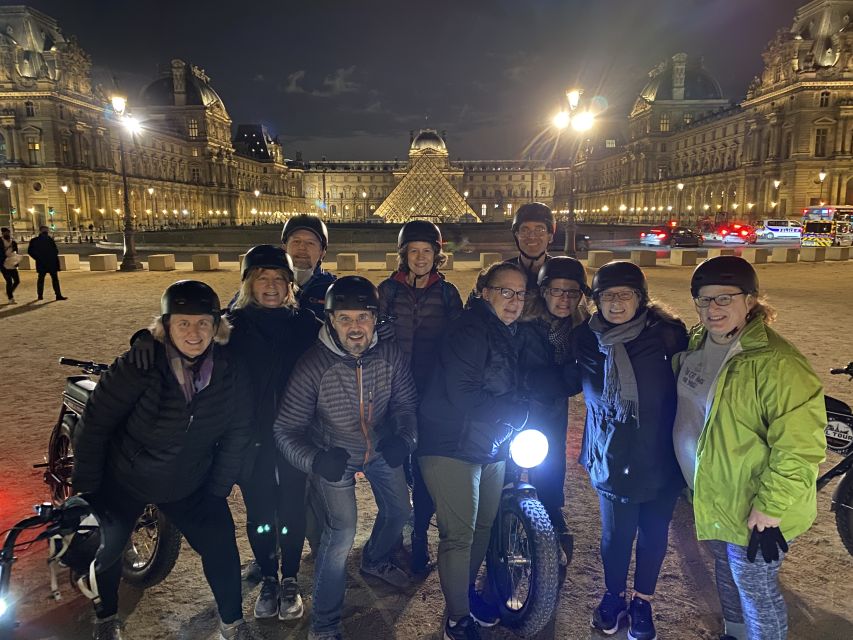
In particular, I’d count on Tomas (or another English/French/Portuguese/Spanish-speaking guide) to handle the group smoothly, explain what matters at each stop, and keep you feeling safe on busy roads at night. One repeat theme from past rides: the guide takes pictures at the major locations and helps you get everyone in frame, then shares them afterward.
That matters because on a night e-bike tour, you’re focused on riding. Having someone handle the photo moments means you’re actually present for the landmark, instead of wrestling with your phone every time you stop.
You also get an audio guide included in several languages: Dutch, Japanese, German, Hebrew, Arabic, Chinese, Italian. If you want extra context without interrupting the ride rhythm, that’s handy.
Price and value: what $116 includes, and what it doesn’t
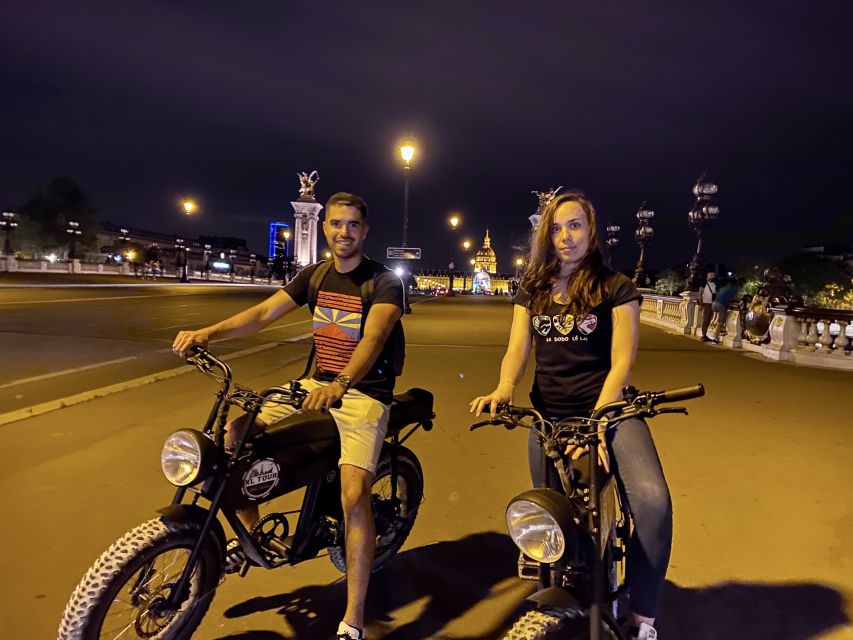
At $116 per person for a 2-hour experience, you’re paying for a very specific bundle:
- a live guide
- an electric bike
- helmet and equipment
What you don’t pay for here is entry to attractions. That keeps the tour lightweight and fast, but it also means you shouldn’t expect museum access during the ride.
So the value calculation becomes simple: you’re buying time-saving city coverage. In two hours, you see a long list of central Paris icons—Louvre area, Tuileries, major bridges, Sainte-Chapelle, Notre-Dame exterior views, Orsay zone, Palais de Chaillot, and the Eiffel Tower viewpoint—without waiting around for transit or doing multiple separate tickets.
If your goal is to get your bearings quickly and have an evening highlight built around lights and landmarks, the price feels more justified than a collection of short standalone activities.
Weather, safety, and who should skip this ride
This tour runs rain or shine. That’s a plus if you hate wasting a perfect day sitting on the fence. It also means you need to dress for damp streets and cooler nighttime air. Keep your shoes secure and your clothing practical for movement.
Safety basics are straightforward: you wear a helmet, listen to a briefing, and ride at a group pace. Still, this is biking through central Paris at night, so you’ll want to be comfortable riding and turning confidently.
It also isn’t for everyone:
- Not suitable for pregnant women
- Not suitable for people with mobility impairments
- Not suitable for wheelchair users
If you have any doubts about riding comfort, be honest with yourself before booking.
Should you book this Paris e-bike night tour?
Book it if you want a 2-hour hit of the most famous downtown sights, with an e-bike that makes it feel manageable. It’s a great pick for first-time visitors who want the big names—Eiffel Tower, Notre-Dame, Louvre area, Orsay zones—and for anyone who prefers moving through the city rather than standing in one spot.
Skip it if you can’t comfortably handle riding (or if you fall into the stated unsuitability categories). Also think twice if you hate any chance of getting wet—because the tour happens in rain.
If your schedule is tight and you want a guided evening that actually covers ground, this is a strong choice.
FAQ
How long is the Eiffel Tower and Notre-Dame night e-bike tour?
The tour lasts 2 hours.
Where do I meet the guide?
Meet at 10 Rue de la Paix at the technical area inside the car park. The guide will come upstairs to meet you if you don’t immediately see them.
What’s included in the price?
You get a live guide, an electric bike, and helmet and equipment.
Do I need to pay for museum or attraction entry during the tour?
Entry to attractions is not included.
Is the tour only for good weather?
No. It runs rain or shine.
What should I wear or bring?
Bring comfortable shoes and comfortable clothes.
Are there footwear restrictions?
Yes. High heels are not allowed, and you can’t wear sandals, flip-flops, or open-toed shoes.
Is there a height requirement?
Yes. Adults must be at least 155 cm (5’01) tall to ride.
Who is this tour not suitable for?
It’s not suitable for pregnant women, people with mobility impairments, and wheelchair users.