REVIEW · PARIS
Louvre & Mona Lisa Morning Tour with Reserved Access
Book on GetYourGuide →Operated by City Wonders Ltd. · Bookable on GetYourGuide
Morning at the Louvre feels like a hack. You get reserved access plus a guide who keeps the day moving, so you’re not stuck fighting the worst lines. I also like the built-in headset, which means you can actually hear the art talk even when crowds press in.
Best of all, the tour hits the names you came for—Mona Lisa, Venus de Milo, Winged Victory—without turning the visit into a scavenger hunt. The main drawback is that English quality can vary by guide, so if language clarity is your top priority, you’ll want to set expectations and be ready to work with your headset.
In This Review
- Key points to know before you go
- Reserved entry and a smart way to beat Louvre chaos
- The 3-hour hit list: what you’ll actually see
- Mona Lisa and the Renaissance you came for
- Classical collection power: Venus de Milo and Winged Victory
- Big sculpture moments: Michelangelo’s Dying Slave and Canova
- Where Louvre palace rooms matter: Apollo Gallery and Napoleon Apartments
- Meeting point: how not to lose the group at Arc de Triomphe du Carrousel
- Price value: what $80 buys (and when it’s worth it)
- The “English-speaking” part: it’s great when it clicks
- Practical rules that affect your morning
- Who this tour is best for
- Should you book this reserved-access Louvre morning tour?
- FAQ
- How long is the Louvre & Mona Lisa Morning Tour with Reserved Access?
- Where do I meet the tour group if it is not at the Louvre entrance?
- Is there an English-speaking guide and will I be able to hear them?
- Does the price include the museum ticket and reservation?
- What is not included in the tour price?
- What items are not allowed inside the Louvre for this tour?
- Is the tour wheelchair accessible?
- Is there skip-the-line access?
- Can I cancel, and is the booking flexible?
- Is Louvre admission free for some visitors?
Key points to know before you go
- Reserved morning entry helps you reach major rooms faster than walk-up visitors.
- Headsets included so you can keep listening even when the group funnels through tight spaces.
- A tight 3-hour highlights plan focused on the Louvre’s biggest crowd magnets and classic sculptures.
- Renaissance and antiquities mix includes Da Vinci, Caravaggio, Michelangelo, and key Greek/Roman works.
- You’ll walk a lot and there’s no stroller or large-bag option.
- Some groups may split if your party size is 7+ at the meeting point.
Reserved entry and a smart way to beat Louvre chaos
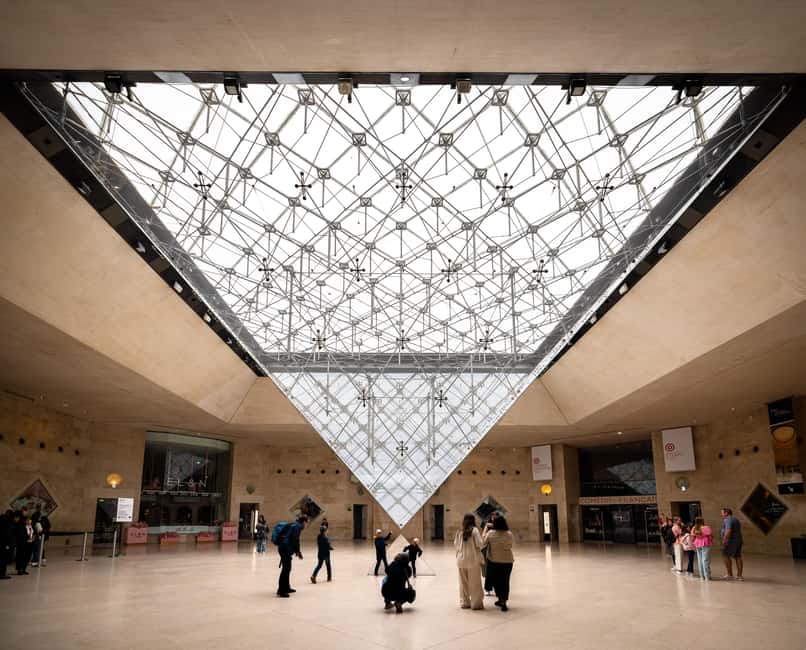
The Louvre is not a museum you casually “wander” through. Even in the morning, it’s a high-energy maze of people, security lines, and signage that can make your brain feel like it’s buffering. This tour’s big value is that it gives you reserved morning access, so you can get moving quickly once you’re inside.
I also like that you’re not relying on luck for audio. With the provided headset, your guide’s voice stays clear, which matters in rooms where other tours and school groups compete for attention. That one detail alone turns a stressful museum into something you can actually follow.
There’s another quiet advantage: the guide’s route is built for speed. You’re going where the crowds naturally choke up first, but you do it in a controlled flow. That means you spend your time looking at art, not watching other people cut through your path.
You can also read our reviews of more tours and experiences in Paris


The 3-hour hit list: what you’ll actually see
A 3-hour tour won’t cover the entire Louvre. That’s not a downside if you understand the goal: see the most famous works, plus a few major supporting stars, in a way that makes sense. The best plan for the Louvre is usually a “greatest hits” morning, then free time later if you want to go deeper.
Here’s what the morning tour is built around.
Mona Lisa and the Renaissance you came for
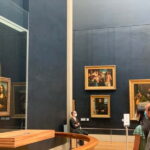
Your route includes Da Vinci’s Mona Lisa as a headline stop. This is the painting that draws the longest lines and the most intense crowd behavior, so reaching it efficiently is the whole point. Once you’re there, your guide can help you look beyond the basics—things like composition, why the work became so famous, and how it fits into Renaissance thinking.
You’ll also see major Renaissance stops tied to big names, including Caravaggio and Michelangelo. Even if you don’t know every term, the guide’s job is to connect the art to what you can notice with your own eyes: contrasts in light and realism for Caravaggio, and sculpture energy for Michelangelo. The headset helps here because the details are what separate “I saw it” from “I understood it.”
Classical collection power: Venus de Milo and Winged Victory
The tour also focuses on classic sculpture, including Venus de Milo and Winged Victory of Samothrace. These statues have a way of shrinking the distance between ancient history and your present-day eye. Even if you only learn one or two framing ideas, you’ll still leave with a better sense of why these forms survived as icons.
Venus de Milo gives you a chance to look at idealized proportions and pose. Winged Victory is all about movement and tension—how the body suggests motion even when the figure is fixed in stone. It’s the kind of stop where a guide can point out what’s easy to miss when everyone is rushing to take their photo.
Big sculpture moments: Michelangelo’s Dying Slave and Canova
On top of the “greatest hits,” the tour includes sculpture highlights such as Michelangelo’s Dying Slave and Canova’s Psyche Revived. These works work best when you can actually slow down for a minute, so timing matters. The reserved access and curated pace help here, because you’re not wasting time second-guessing where to go next.
Michelangelo’s work can feel dramatic even if you don’t know the story. Your guide can help you notice how the figure seems caught between struggle and release. Canova’s Psyche Revived, by contrast, tends to reward close viewing of expression and surface finish—again, perfect for a headset-led walkthrough where the guide can translate what you’re seeing.





Where Louvre palace rooms matter: Apollo Gallery and Napoleon Apartments
The Louvre isn’t only about art. It’s also a former royal palace, and you’ll pass through major areas that shaped the building itself. The tour brings you through the Apollo Gallery and the Napoleon Apartments, so you see how the museum’s layout and prestige evolved over time.
This is valuable because it changes your mental map. Instead of thinking of the Louvre as one giant warehouse of paintings, you start to see it as a palace with a changing role. That context helps you understand why certain works feel placed for impact—because they were, historically.
Meeting point: how not to lose the group at Arc de Triomphe du Carrousel
One small detail can ruin the first five minutes of your morning: the meeting point is not at the Louvre entrance. You meet beside the Arc de Triomphe du Carrousel, near the horse-drawn chariot on top.
Here’s the clearest way to orient yourself:
- Stand with your back to the Louvre Pyramid.
- Look across the road toward the Tuileries Garden entrance area.
- You should spot the arc across the way.
- Coordinators stand to the left of the Arc, along the wall railing.
This matters because “meet by the entrance” is the default expectation for many people. Here, it’s not that. Give yourself a few extra minutes and you’ll feel calm instead of sprinting in a crowd.
Price value: what $80 buys (and when it’s worth it)
This costs $80 per person for a morning 3-hour tour with reserved access, an English-speaking expert guide, and a headset. The included fee structure is clear: the Louvre entrance ticket (22€) plus a reservation fee (70€ per group) are part of what you’re paying.
That means you’re not just buying a guide’s time—you’re also buying a smoother path into the museum. For many people, that’s the difference between a stressful morning and a productive one.
Is it always the best value? If you’re an EU resident aged 18–26, Louvre entry can be free on your own. In that case, you might compare the cost of a separate ticket/reservation strategy versus paying for the tour package. The tour still has value because of the guided route and headset, but it’s smart to do the math for your situation.
Also consider your walking tolerance. The Louvre is a stamina test. If you’re okay with that trade, the reserved entry can pay off fast. If you want a slow, pick-your-own pace, you may prefer flexible self-guided time.
The “English-speaking” part: it’s great when it clicks
The tour is advertised with an English-speaking guide and headsets. That combination should make the experience feel easy to follow.
Still, real life varies by person leading the group. Some guides have been described as enthusiastic and clear—people like Lily and Summer were specifically mentioned for energy and simple explanations. On the other hand, there have been reports of guides whose English wasn’t clear enough to enjoy the storytelling fully.
So here’s my practical take: the headset helps, but it can’t fix a truly hard-to-follow delivery. If you’re picky about narration and you’re traveling with someone who needs clear English, it’s worth booking a time that fits your comfort and arriving early enough that you’re settled when the tour starts.
Practical rules that affect your morning
Louvre security and museum rules shape your experience whether your tour is great or not. Here are the limitations you should plan around:
- No baby strollers
- No luggage or large bags
- Items larger than 55 x 35 x 20 cm aren’t permitted
- You still must pass security before entering the museum
Bring a small bag you can manage, and keep the day simple. If you’re traveling with a bigger suitcase, you’ll need another plan because this tour won’t work with oversized baggage.
Also, this tour isn’t suitable for wheelchair users. If accessibility is a priority, you’ll need a different option.
One more thing: the tour involves a fair amount of walking. The 3-hour duration is fixed, so you’ll move between areas fairly briskly. If you need frequent breaks, plan them in advance (water, a quick bathroom stop before you start, and a pace you can sustain).
Who this tour is best for
This reserved-access morning works especially well if you:
- Want to see Mona Lisa, major antiquities, and key Renaissance works without spending hours plotting a route
- Like having someone point out what to notice, instead of guessing in a sea of signs
- Value a guided flow with headsets for clear listening
- Have limited time in Paris and want a high-impact use of your morning
It’s not the best fit if you:
- Want to roam the Louvre at your own pace for hours on end
- Need step-free or wheelchair-friendly access
- Carry large bags or strollers
- Expect the tour to replace a full museum day
If you’re the kind of person who loves art but also wants to decompress, the sweet spot is often: do this morning tour for structure, then add a separate afternoon for anything that caught your attention.
Should you book this reserved-access Louvre morning tour?
Book it if you want the Louvre’s headline works in a short, organized morning, with the comfort of reserved entry and a headset. The tour’s focus on top masterpieces plus major classical and Renaissance sculpture makes it a strong use of time.
Skip it or choose another format if you’re sensitive to guide language quality, you’re traveling with accessibility needs, or you need a very slow pace. And because it’s only 3 hours, come with the mindset of “greatest hits and context,” not “complete Louvre coverage.”
If you decide to go, show up at the Arc de Triomphe du Carrousel meeting point on time, travel with a bag that fits the Louvre size limits, and plan for security. Then you’ll get the best version of the morning: fast access, smart guidance, and enough time to actually look at the art instead of just sprinting past it.
FAQ
How long is the Louvre & Mona Lisa Morning Tour with Reserved Access?
The tour lasts 3 hours.
Where do I meet the tour group if it is not at the Louvre entrance?
You meet beside the Arc de Triomphe du Carrousel. Stand with your back to the Louvre Pyramid and look across the road; coordinators stand to the left of the Arc, along the wall railing.
Is there an English-speaking guide and will I be able to hear them?
Yes. The tour includes an English-speaking expert guide, and you receive a headset so you can always hear your guide.
Does the price include the museum ticket and reservation?
Yes. The Louvre entrance ticket (22€) and the reservation fee (70€ per group) are included, along with the reservation access.
What is not included in the tour price?
The tour does not include hotel pick-up and drop-off.
What items are not allowed inside the Louvre for this tour?
Baby strollers are not allowed, and you can’t bring luggage or large bags. Items exceeding 55 x 35 x 20 cm are not permitted in the museum.
Is the tour wheelchair accessible?
No, this tour is not suitable for wheelchair users.
Is there skip-the-line access?
Yes. This tour offers reserved access and helps you skip the ticket line, though you still must pass security at the Louvre.
Can I cancel, and is the booking flexible?
You get free cancellation up to 24 hours in advance for a full refund. The tour also offers reserve now & pay later to keep your plans flexible.
Is Louvre admission free for some visitors?
Louvre entry is free for EU visitors aged 18 to 26 years old.